
Wear a tennis bag by placing the racket side close to your body, adjusting the straps until the bag sits high and stable, and keeping heavy gear near your back. For buyers asking how to wear a tennis bag, this is not only a user comfort question. It also affects strap design, pocket placement, product photos, return rates, and retail confidence. A player may love the look online, then feel shoulder pull on the walk from car to court. ZWbags helps OEM, ODM, private label, and wholesale teams plan tennis bags with practical structure, sample testing, logo options, and 100% pre-shipment inspection.
How to wear a tennis bag without shoulder strain?
To answer how to wear a tennis bag without shoulder strain, keep the bag close to the upper back and balance racket weight before walking. A low-hanging bag pulls on one shoulder and makes the player adjust it every few steps.
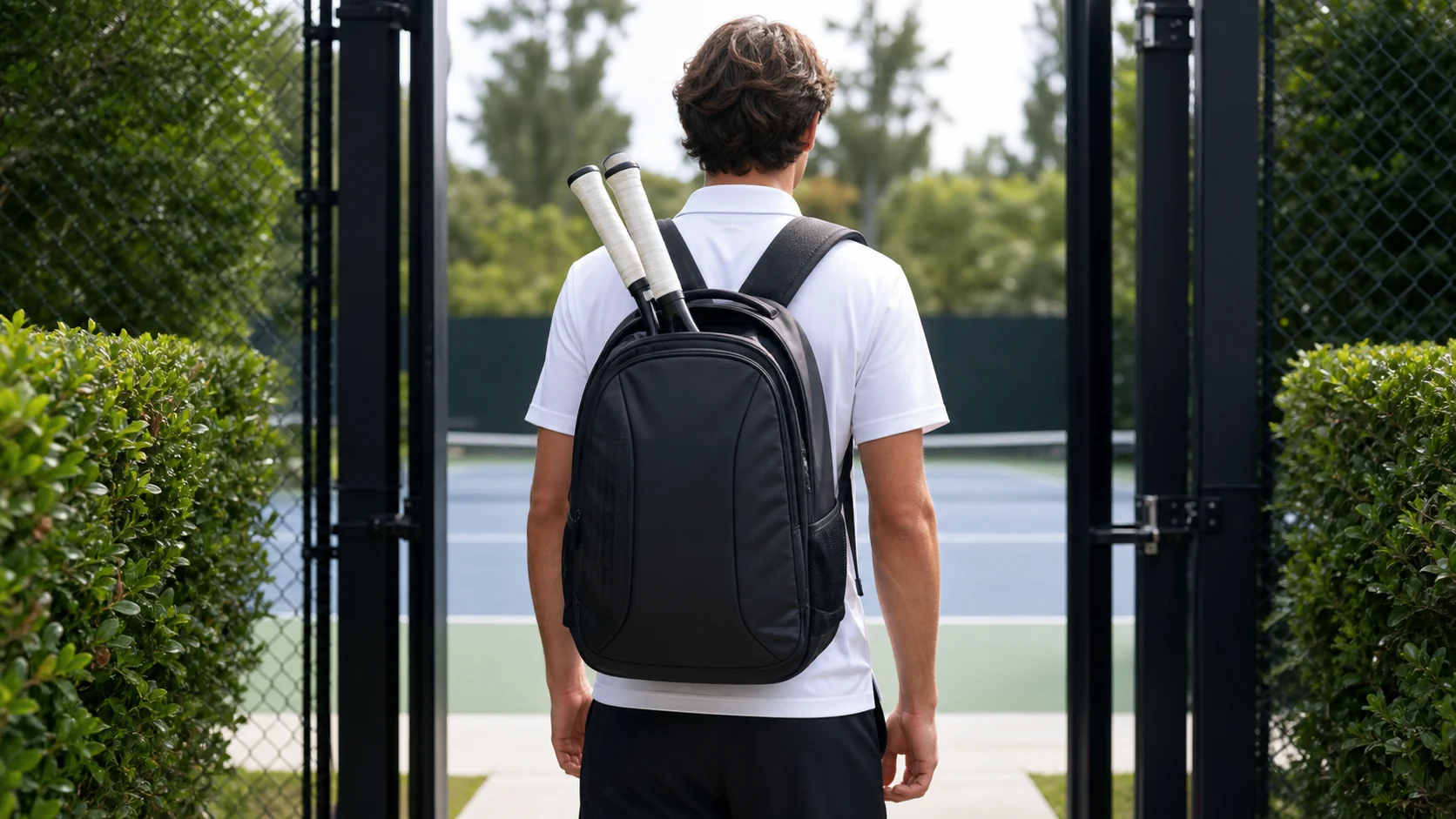
What fit details should buyers test?
Here is the useful test: pack the sample with rackets, balls, towel, bottle, and shoes, then walk for ten minutes. You will see whether the strap angle feels natural.
- Shoulder straps should feel padded but not bulky
- Back panels should reduce hard racket pressure
- Strap adjusters should hold position after movement
- A chest strap may help larger backpack styles
- Weight should sit high, not near the lower back
| Fit area | What to check |
|---|---|
| Strap angle | Does it follow the shoulder curve? |
| Back contact | Does the racket frame press through? |
| Load height | Does the bag stay near the upper back? |
This table gives buyers a fast sample-review path before bulk approval. Key Takeaway: comfort starts with strap geometry, not only soft padding.
How to wear a tennis bag with two shoulder straps?
To answer how to wear a tennis bag with two shoulder straps, use both straps when the bag carries two rackets, shoes, and daily gear. For sports brands, the sports bag market context shows why comfort specs matter for repeat players and club retail buyers.
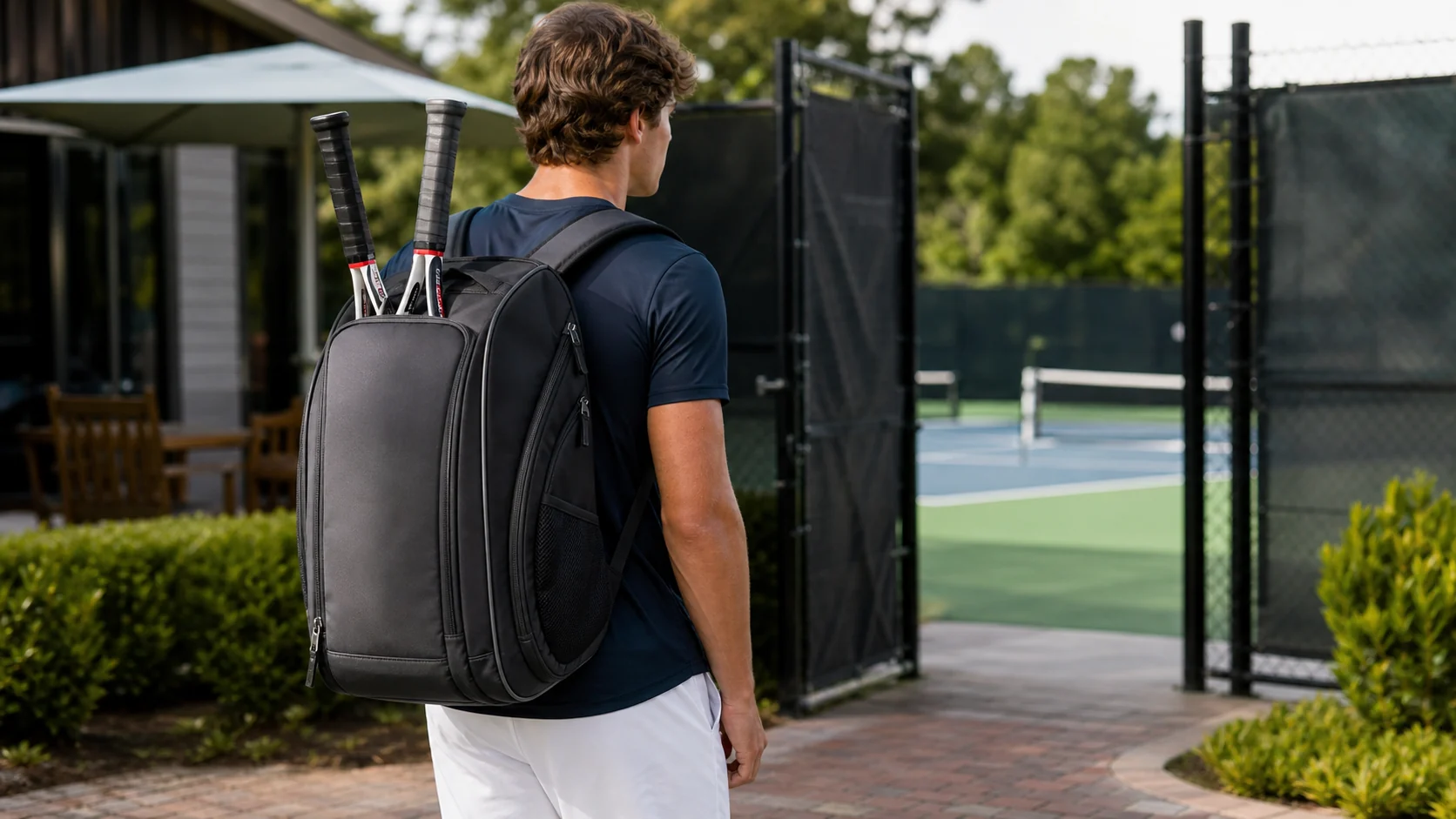
How should the two-strap fit be designed?
You might be wondering: does a tennis bag need the same fit as a hiking pack? Not exactly. It needs stable movement, fast racket access, and a cleaner sports-lifestyle look.
- Keep strap length easy to adjust with one hand
- Avoid straps that twist near the top seam
- Add enough padding where pressure lands
- Keep zipper pulls reachable while worn
- Test fit on different body sizes
| Design choice | Player benefit |
|---|---|
| Wide padded straps | Lower shoulder pressure |
| Stable top handle | Easier car-to-court carry |
| Structured back panel | Cleaner worn shape |
These details make two-strap carry feel planned rather than accidental. Key Takeaway: two straps work best when the bag keeps rackets stable during movement.
How to wear a tennis bag across one shoulder?
To answer how to wear a tennis bag across one shoulder, place the strap on the stronger shoulder and keep the racket heads angled behind the arm. One-shoulder carry works for short walks, product photos, and lighter loads.
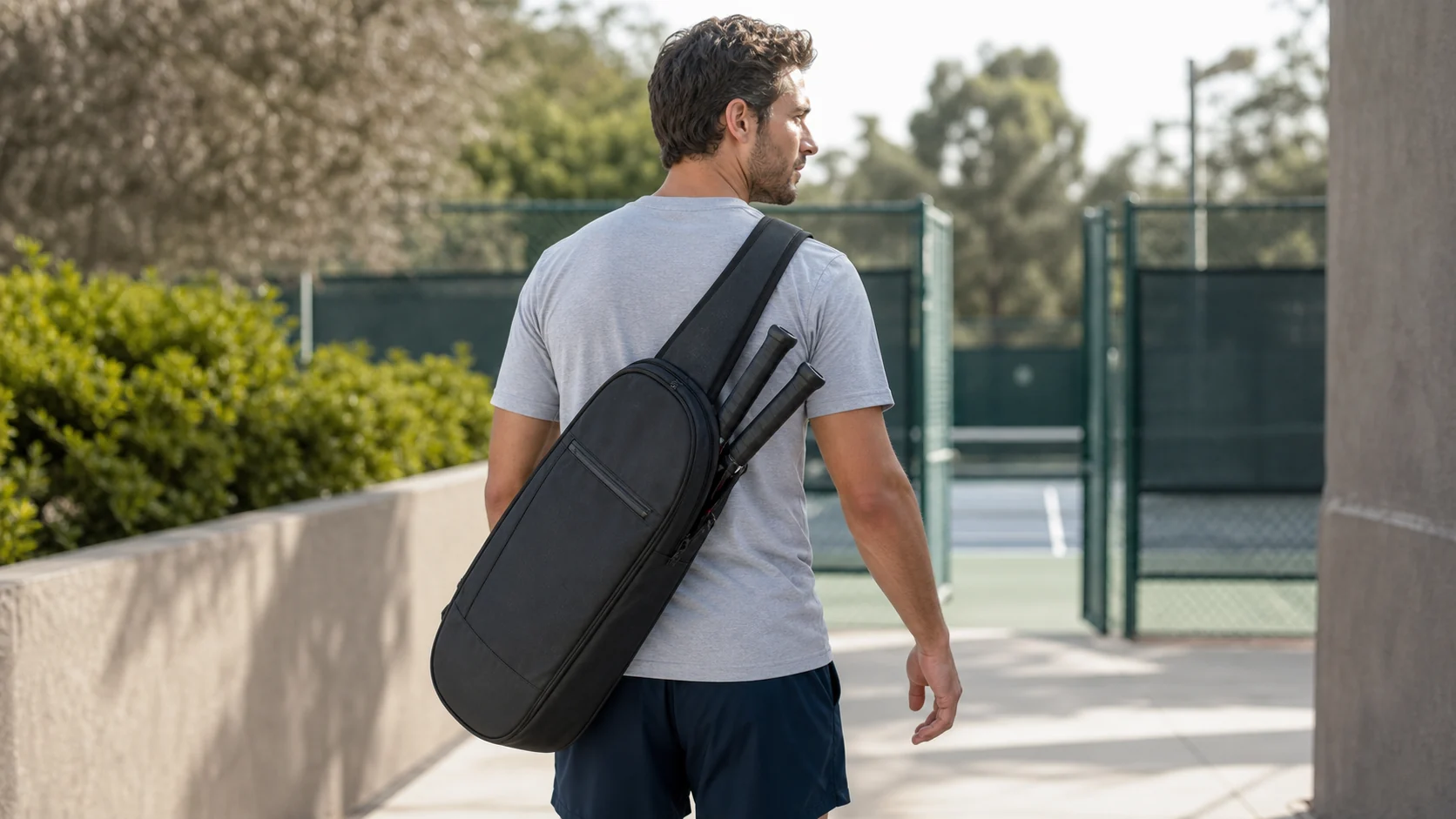
When does one-shoulder carry make sense?
Here is the catch: one-shoulder carry looks relaxed, but it can feel uneven when the bag is overpacked. Buyers should treat it as a short-distance mode.
- Use it for a single racket or light practice kit
- Keep water bottles on the body side if possible
- Avoid sharp racket-frame pressure near ribs
- Confirm strap material does not slip on jackets
- Use a wider strap for premium lifestyle models
| Carry mode | Better use case |
|---|---|
| One shoulder | Short walks and light loads |
| Two straps | Daily practice and heavier loads |
| Hand carry | Quick moves from car to locker |
This comparison helps brands write clearer listing copy and hangtag claims. Key Takeaway: one-shoulder carry should look clean, but it should not be the only comfort solution.
How to wear a tennis bag from court to gym?
To answer how to wear a tennis bag from court to gym, wear it high on both shoulders and keep shoes or wet items in a separate zone. If your tennis line overlaps fitness use, OEM gym bags can guide shoe-pocket, wet/dry, and towel-storage logic.
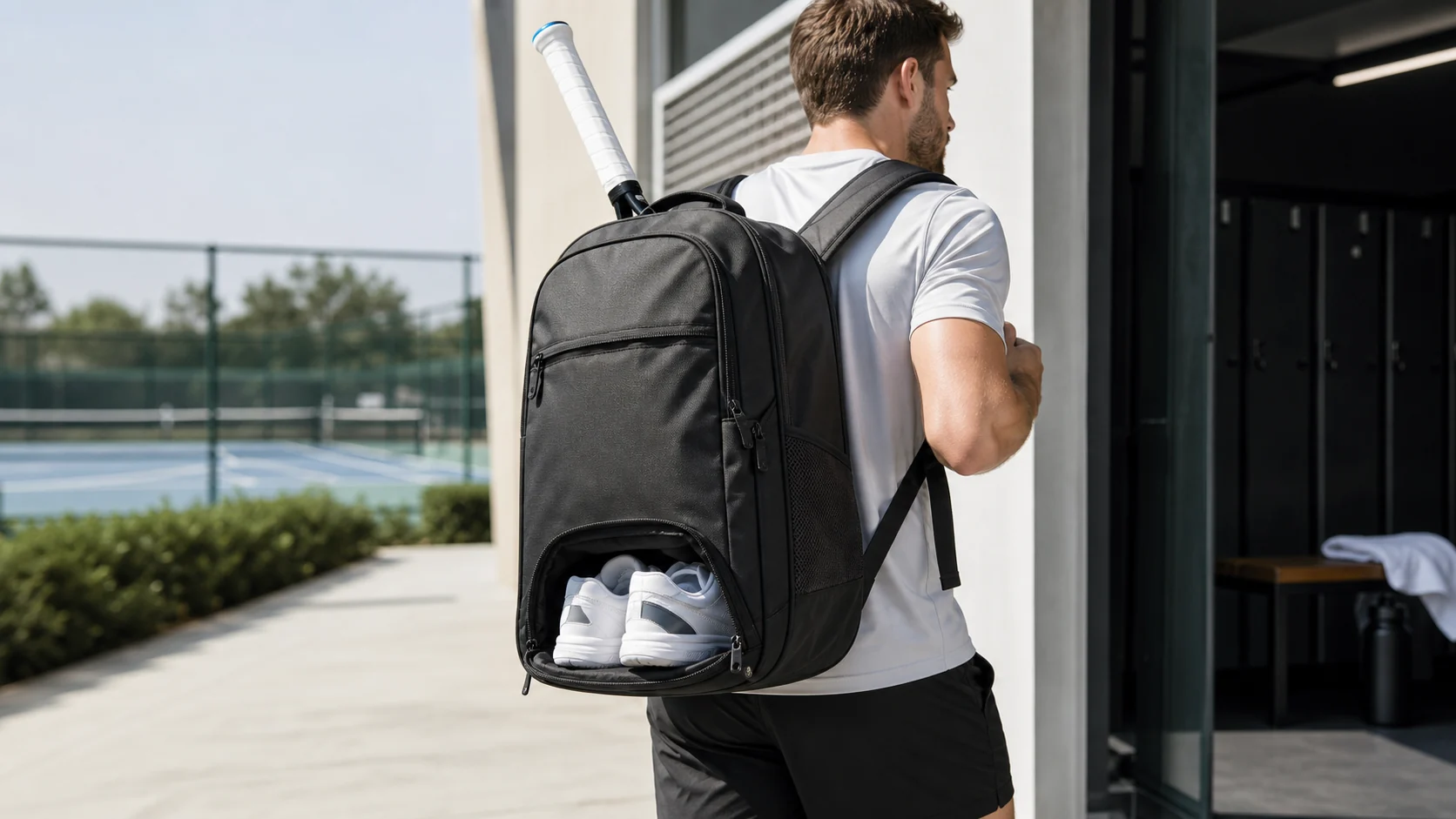
What storage layout supports gym carry?
The smart move: design the worn experience around real transitions. A player may move from court, to car, to gym, then back home with mixed clean and damp gear.
- Add a ventilated shoe section when size allows
- Use wipe-clean lining for wet towels
- Keep personal items away from shoes
- Place bottle pockets where they do not hit elbows
- Keep straps clean when the bag sits on court
| Storage zone | Why it matters |
|---|---|
| Shoe pocket | Separates dirty gear |
| Dry pocket | Protects phone and wallet |
| Bottle pocket | Keeps weight balanced |
This layout helps buyers connect storage with comfort rather than adding pockets at random. Key Takeaway: court-to-gym carry needs separation, balance, and easy cleaning.
How to wear a tennis bag with rackets inside?
To answer how to wear a tennis bag with rackets inside, place racket handles where they do not hit your arm and keep frames padded against the back panel. Racket position controls both comfort and product quality perception.
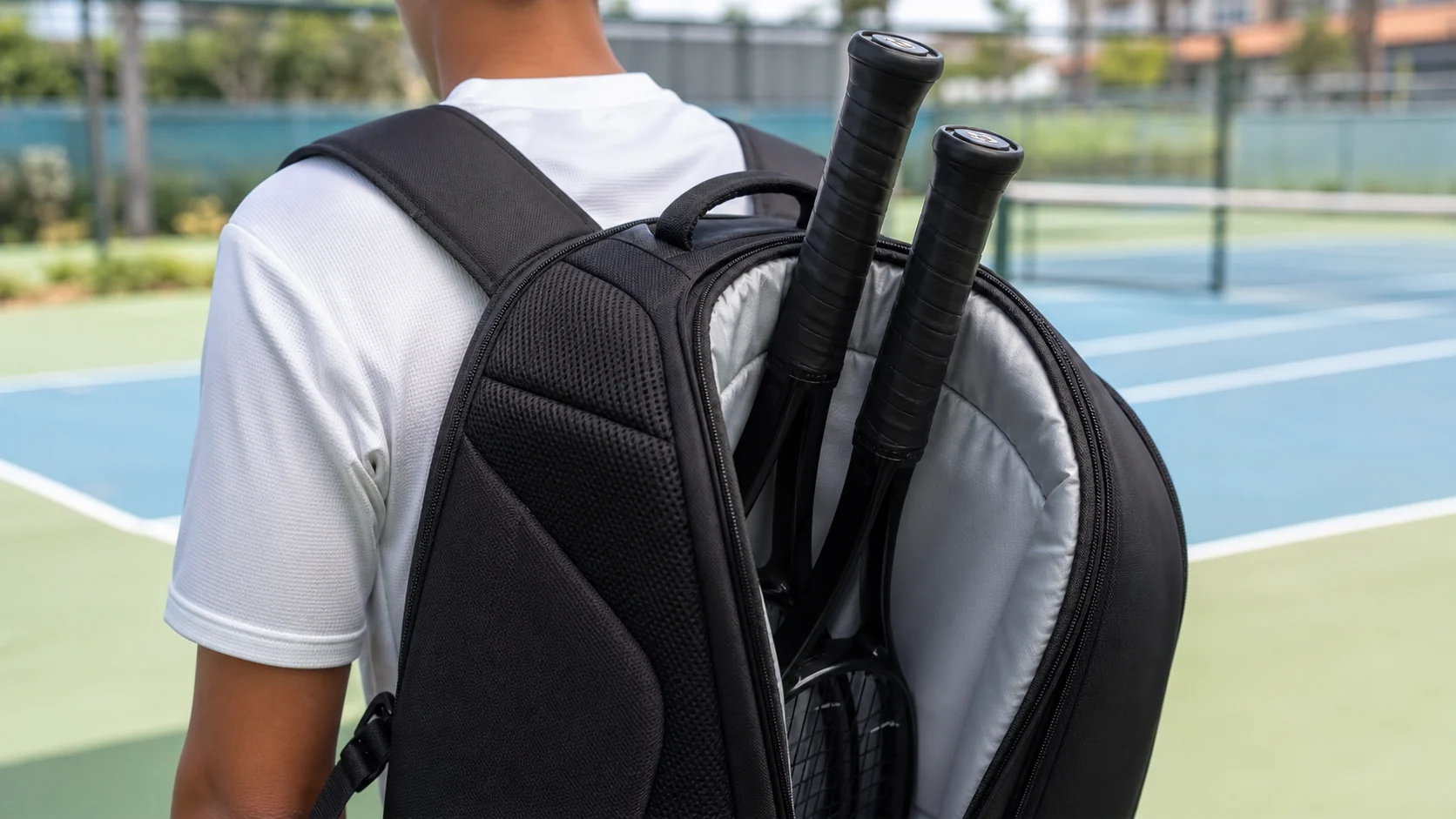
How should racket placement be checked?
Keep this in mind: a bag can look good empty and fail when rackets go inside. Sampling should always include real racket dimensions.
- Test one-racket and two-racket packing
- Check handle clearance while walking
- Add soft lining near racket frames
- Reinforce seams around racket openings
- Avoid zipper paths that scratch handles
| Racket detail | Factory check |
|---|---|
| Sleeve depth | Rackets do not bounce |
| Padding | Frames feel protected |
| Opening shape | Handles are easy to grab |
These checks reduce complaints that come from hidden fit problems. Key Takeaway: racket carry should feel secure without making the bag stiff.
How to wear a tennis bag for travel days?
To answer how to wear a tennis bag for travel days, choose a backpack-style fit, tighten both straps, and keep small valuables in secure inner pockets. Sellers planning e-commerce bag projects can turn travel comfort into stronger product images and clearer feature copy.
Which travel features matter most?
Here is where buyers can win: travel features should support movement without turning a tennis bag into luggage. Keep the design sport-focused and easy to carry.
- Add a hidden phone pocket
- Use a trolley sleeve for larger bags
- Choose water-resistant outer fabric
- Keep lining light for shipping control
- Test packed weight before price approval
| Travel feature | Sourcing value |
|---|---|
| Hidden pocket | Better small-item security |
| Trolley sleeve | Stronger weekend-use story |
| Water-resistant fabric | Better outdoor confidence |
This table helps teams decide which travel upgrades match the target price tier. Key Takeaway: travel use should add convenience without hurting court function.
How to wear a tennis bag for retail product photos?
To answer how to wear a tennis bag for retail product photos, show the bag worn naturally with visible straps, racket position, and pocket access. Photos should teach shoppers fit faster than text can.
What photo angles reduce buyer confusion?
A quick reality check: many returns start because shoppers guessed the scale wrong. A worn photo set can answer size, comfort, and styling questions before purchase.
- Front three-quarter view for silhouette
- Back view for strap and panel shape
- Side view for racket angle
- Close-up of strap padding
- Packed view with real tennis gear
| Photo angle | What it proves |
|---|---|
| Back view | How the bag sits on shoulders |
| Side view | Racket angle and bag depth |
| Detail view | Strap, zipper, and pocket quality |
These images also help retail buyers judge whether a sample fits their shelf and online style. Key Takeaway: worn photos should prove comfort, not only show fashion.
How to wear a tennis bag after packing it fully?
To answer how to wear a tennis bag after packing it fully, test the loaded sample with real gear before approving structure, straps, and seams. A product upgrade case can help teams think about QC, durability, and review risk before launch.
What loaded tests should factories run?
This is where small flaws show up: a full bag changes how straps pull, how zippers move, and how the base sits. Empty-sample approval can miss these issues.
- Walk test with full daily gear
- Strap pull test at anchor points
- Zipper cycle test around curved openings
- Base stability test on flat ground
- Carton compression review for shipping
| Loaded test | Risk it catches |
|---|---|
| Walk test | Shoulder pull and sway |
| Strap pull | Weak anchor stitching |
| Zipper cycle | Sticking under packed pressure |
These checks protect both user comfort and brand reputation. Key Takeaway: a tennis bag should be judged packed, not empty.
How to wear a tennis bag by body size?
To answer how to wear a tennis bag by body size, adjust strap length so the bag sits between the shoulder blades and does not drop below the lower back. Different users need fit range, not one fixed strap position.
Which size details should buyers specify?
Think about the end user: a junior player, adult club player, and coach may all wear the same product differently. Adjustable fit keeps one SKU useful across more buyers.
- Provide enough strap range for smaller users
- Avoid oversized back panels on compact styles
- Keep handles reachable for shorter players
- Review bag depth against body width
- Test with light jackets and summer shirts
| Body-size factor | Spec response |
|---|---|
| Shorter torso | Higher strap adjustment range |
| Wider shoulders | Curved strap shape |
| Junior use | Lighter fabric and smaller depth |
This sizing logic helps brands avoid making a bag that fits only one model photo. Key Takeaway: strong fit range can make one tennis bag more retail-friendly.
How to wear a tennis bag when choosing a supplier?
To answer how to wear a tennis bag when choosing a supplier, use the wearing test as part of supplier evaluation, not only final product review. Ask for a packed sample, test fit, review materials, then confirm MOQ, sample timing, and QC standards before bulk orders.
What should your sourcing brief include?
Here is a simple path: define target player, choose carry style, pack real gear, test comfort, then refine the sample. For OEM tennis bag planning, contact us today to compare materials, strap construction, logo methods, and production details with ZWbags.
- Target user and sales channel
- Racket count and pocket map
- Strap padding and adjustment range
- Fabric, lining, and zipper choices
- MOQ, lead time, sample review, and QC plan
| Brief item | Supplier output |
|---|---|
| Carry style | Backpack, shoulder, or hybrid sample |
| Comfort target | Strap and back-panel proposal |
| Brand plan | Logo, color, and packaging options |
This brief turns a simple wearing question into a repeatable development process. Key Takeaway: the right supplier helps the bag feel good when worn and look ready for market.
FAQ
Can I wear a tennis bag like a normal backpack?
Yes, you can if it has two balanced straps and a stable back panel. This works well for heavier loads because both shoulders share the weight.
What's the right height for a tennis bag on my back?
The right height is high enough that the bag sits near your upper back. If it drops near the lower back, tighten the straps and check whether heavy items are packed too far away from your body.
How do I know if a tennis bag is too heavy to wear?
It is too heavy if the straps dig into your shoulders or the bag swings while you walk. A packed sample test gives a better answer than product dimensions alone.
Can I wear a tennis bag on one shoulder?
Yes, you can for short walks or light loads. For daily practice gear, two straps usually feel more stable and reduce shoulder pressure.
What's the right tennis bag style for private label buyers?
A backpack or backpack-hybrid style often gives the broadest retail use. It can support comfort, racket protection, product photos, and private label branding in one design.