

Pickleball Bag Manufacturer for Custom Brand Programs
Develop a custom pickleball bag from the equipment list, carry format, compartments, materials, private-label delivery, and approved sample.
- MOQ from 300 pieces
- Sampling in 7-10 days
- Bulk production in 25-35 days
- Initial response within 12 hours
Pickleball Bag Styles for Different Market Positions
From compact pickleball carry bag concepts to larger pickleball gear bag structures, different styles serve different customers, price points, and retail channels.

O5 Neoprene Embossed Paddle Bag

PD01 Compact Paddle Carry

PD03 Multi-Compartment Backpack Style

R1 Court-Ready Gear Bag

R8 Structured Duffle Format

S02 Neoprene Simple Carry

U2 Nylon Gear Bag

V1 Tote / Crossbody Inspired Concept
Start with the Pickleball Equipment List
Start with the exact equipment: paddle count and dimensions, balls, shoes, bottle, and towel. Phone, keys, apparel, and any wet items should be placed in the same capacity plan. The item list determines the bag format and prevents unnecessary compartments.
- Separate must-carry items from optional features.
- Identify retailer or marketplace size constraints.

Choose the Bag Format and Carrying Style
Choose a backpack, sling, crossbody, tote, paddle cover, duffle, or hybrid format from the use sequence. Think through travel to the court, play, item access, and return. The carry style should match capacity and target customer.
- Check left/right access where relevant.
- Review the loaded sample on-body.


Select Materials, Linings and Hardware
Select exterior fabric, lining, mesh, padding, reinforcement, zippers, buckles, webbing, and hardware around the target use. Then check price, appearance, weight, and brand position.
- Compare polyester, nylon, neoprene, or other confirmed constructions as appropriate.
- Approve actual swatches and components.

Build and Approve the Tech Pack and Sample
The production tech pack and approved sample should agree on dimensions, capacity, item fit, compartments, materials, and hardware. Carrying, branding, packaging, and quality points should be locked in the same version.
- Sampling baseline: 7-10 days after inputs are confirmed.
- Changes after approval create a revised version.

Real Pickleball Bag Project Gallery
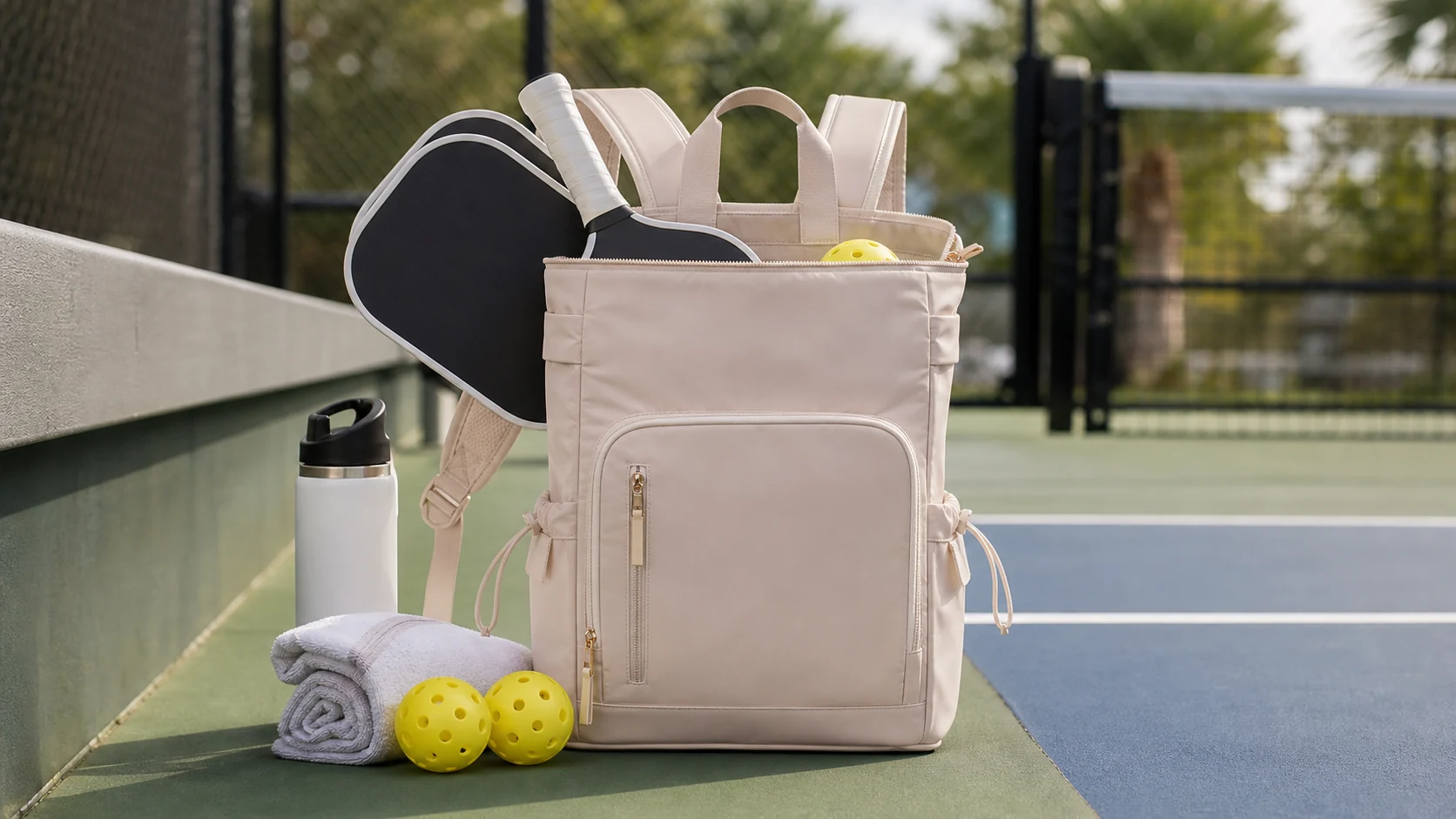
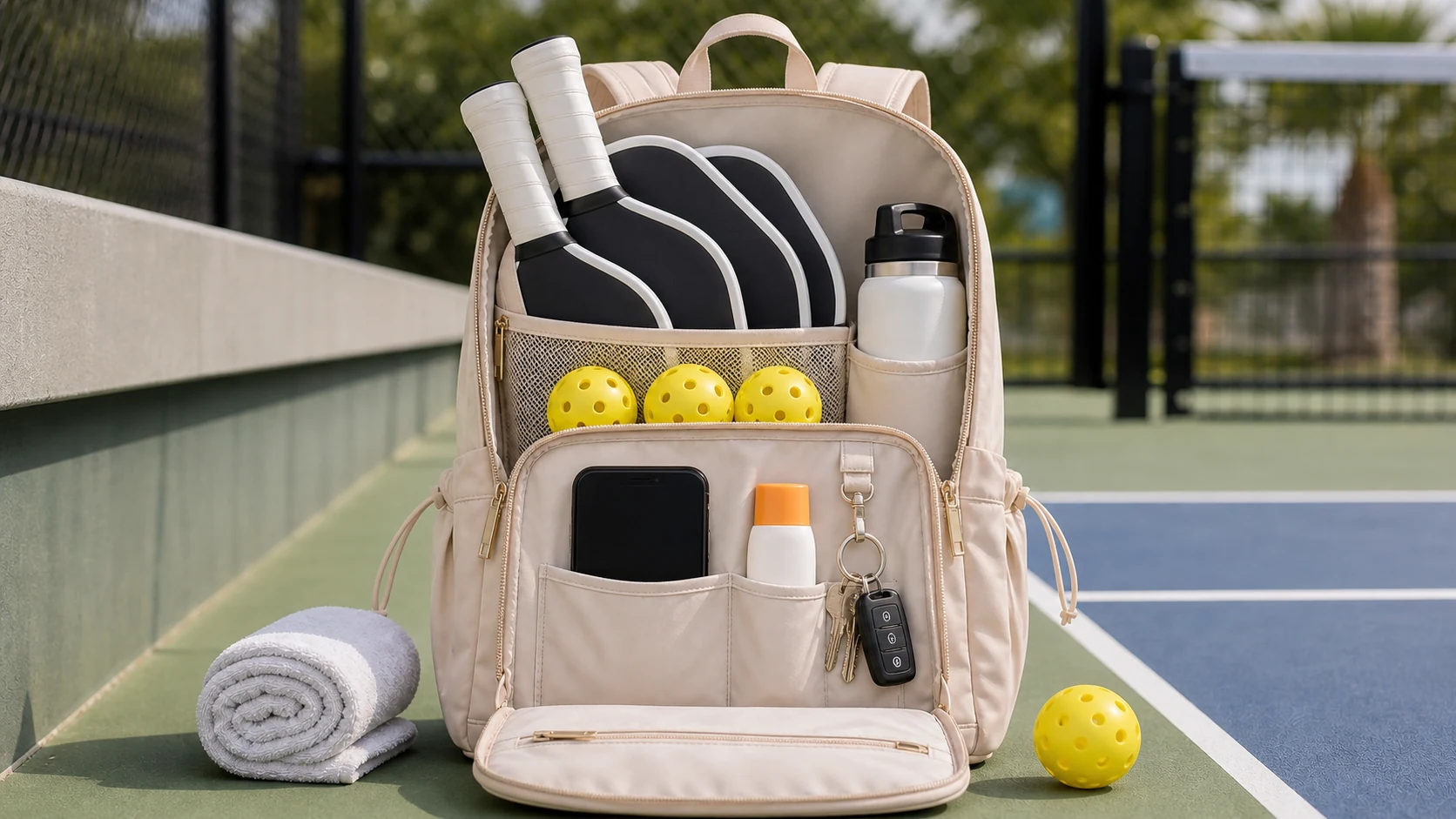
Use this gallery to compare pickleball bag directions before preparing the spec. Look at paddle storage, shoe or wet zones, bottle pockets, carrying style, and branding areas.
Treat the photos as direction, not a finished spec sheet. Your paddle count, pocket plan, materials, quantities, and branding files still need their own sample and approval path.


Buyer questions
What should I define before developing a pickleball bag?
Define the paddle count, ball storage, shoe pocket, bottle area, wet or towel compartment, personal-item pockets, carrying style, target buyer, and retail position. The best format depends on how players pack for court use.
Can pickleball bags include shoe and wet compartments?
Yes. Shoe zones, wet pockets, paddle protection, ball pockets, insulated bottle areas, and organizer panels can be developed. The sample should confirm access, separation, ventilation, and how the bag carries when loaded.
How is a pickleball bag different from a tennis bag?
Pickleball bags usually start from paddle shape, paddle count, ball storage, court-to-daily carry, and shoe or towel separation. Tennis bags often start from racket length and racket capacity. The structure should follow the sport equipment, not just the name.
What branding options work for pickleball bags?
Branding can include embroidery, heat transfer, woven labels, rubber patches, zipper pulls, hangtags, and retail packaging. The best method depends on material, artwork detail, price position, and the approved sample.
Plan a Pickleball Bag for Your Product Line
Share the paddle capacity, footwear and ball storage, bottle placement, carry format, materials, branding, quantity, packaging, and target market.
Tell Us About Your Pickleball Bag
We will review the organization and construction needed for a useful sample.