

Canvas Bag Material Selection for Custom Bag Projects
Separate canvas construction from fiber content and define weight, weave, finish, shrinkage, and branding compatibility for sampling.
- MOQ from 300 pieces
- Sampling in 7-10 days
- Bulk production in 25-35 days
- Initial response within 12 hours
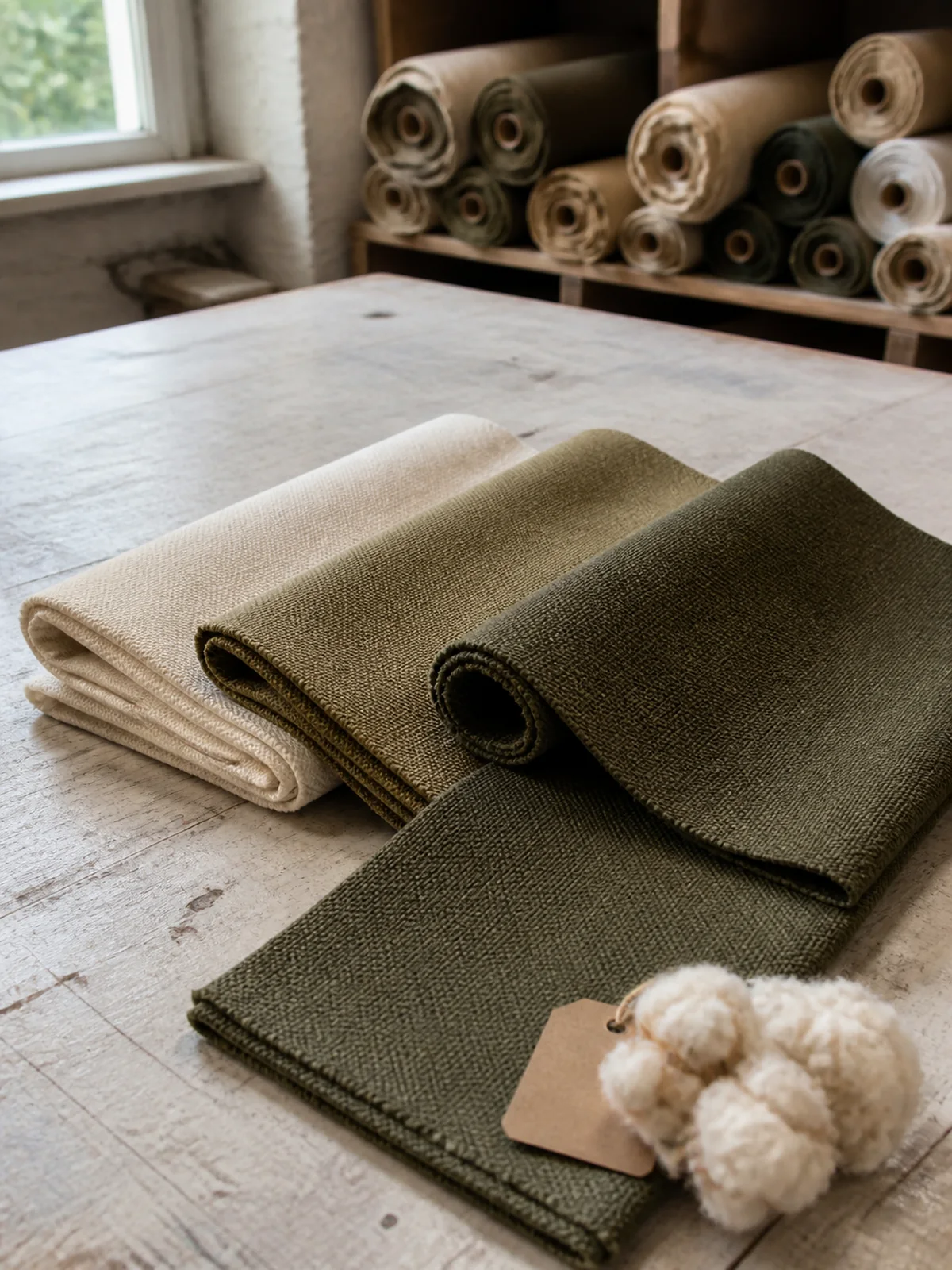
Canvas as a Fabric Construction
Canvas is a fabric construction, while cotton is a fiber. Canvas may be made from cotton or other fibers and blends, so a “canvas bag” specification should identify both the construction and fiber content.
- Record composition, weave, weight, finish, and color.
- Do not use canvas and cotton as interchangeable material claims.
- Construction
- Canvas (a fabric construction)
- Fiber content
- Cotton, or other fibers and blends
Compare Ounces, GSM and Weave
Canvas is commonly compared by ounces per area, GSM, weave, density, finish, and resulting hand feel. Conversion between units does not make two constructions equivalent.
- Approve a swatch.
- Record the test or supplier basis for weight.
- Evaluate the material in the intended bag structure.

- Ounces per area
- Approve a swatch and record the test or supplier basis for weight before locking the comparison.
- GSM
- Conversion between units does not make two constructions equivalent, so record the basis whether ounces or GSM.
- Weave and density
- Evaluate weave, density, finish, and hand feel in the intended bag structure, not as a single number.

Plan Shrinkage, Dyeing and Surface Finish
Shrinkage, dyeing, washing, coating, and other finishes can change size, color, hand feel, and print behavior. Sample the selected fabric and process before locking patterns or public claims.
- Set color tolerance and wash treatment if relevant.
- Pre-test the planned decoration method.
- Recheck dimensions after the chosen finish.

Choose Printing, Embroidery and Logo Methods
Screen printing, heat transfer, digital methods, embroidery, woven labels, and other branding options interact differently with the fabric. Weave, color, weight, and finish all affect the result. Approve the actual artwork on the selected canvas.
- Screen printing / heat transfer Check ink or transfer appearance.
- Embroidery / woven labels Review stitch density and backing for embroidery.
- Digital / other methods Test adhesion or wash performance when claimed.
Match Canvas to Bag Applications
Canvas may suit tote bags, promotional programs, lifestyle products, and other structures where its appearance and hand feel support the product position. The finished-product page should define handles, gussets, closure, lining, and reinforcement.
- Use the Tote page for a custom tote project.


Canvas, Cotton or Polyester
Compare canvas, cotton, and polyester by separating construction from fiber. Look at appearance, hand feel, weight, care, shrinkage, and print method first. Then check structure, cost, availability, and any claim support the finished bag will need.
- Choose an actual fabric construction, not a label.
Define a Canvas Specification for Sampling
Send fiber composition, fabric weight, weave, finish, color, and shrinkage or wash requirements. Add logo method, product dimensions, quantity, and a reference swatch or image.
- MOQ starts at 300 pieces.
- Approve the material and decoration in the production-accurate sample.
Buyer questions
What does canvas mean in a bag project?
Canvas is a fabric construction, often made with cotton or blended fibers. For a custom bag, the important details are fabric weight, weave, shrinkage, finish, color, hand feel, lining, reinforcement, logo method, and intended use.
How should ounces, GSM, and weave be compared?
Ounces and GSM describe fabric weight, while weave affects texture, stiffness, and appearance. They should be compared through swatches and a finished sample because washing, dyeing, coating, and construction can change the final result.
Is canvas suitable for tote bags and daily carry?
Canvas can be suitable for tote bags, promotional bags, retail carry, and some daily-use products when the weight, handle construction, seams, and reinforcement match the load. Heavy use may require lining, base support, or reinforced handles.
Which logo methods work on canvas?
Screen printing, embroidery, woven labels, patches, and heat transfer may be considered depending on fabric texture, color, artwork detail, and price position. Approve the actual logo method on the selected canvas before bulk production.
Choose a Canvas Construction for Your Bag Program
Tell us the product type, intended use, preferred weight and hand feel, color direction, washing expectations, branding method, quantity, and packaging needs.
Share Your Canvas Bag Brief
We will review the material direction and the details that should be confirmed in a sample.