Two suppliers can quote “canvas” and deliver fabrics with different fibers, weights, finishes, and production behavior. The name alone cannot control a bag program.
Canvas is usually a firm, closely woven fabric, commonly made with a plain weave. Cotton is traditional and common, but canvas may also use hemp, polyester, other fibers, or blends. The supplier must confirm both the exact fiber content and the finished fabric construction.
Once those layers are separated, you can approve one traceable material rather than an ambiguous market label.
What Is Canvas Fabric Made Of?
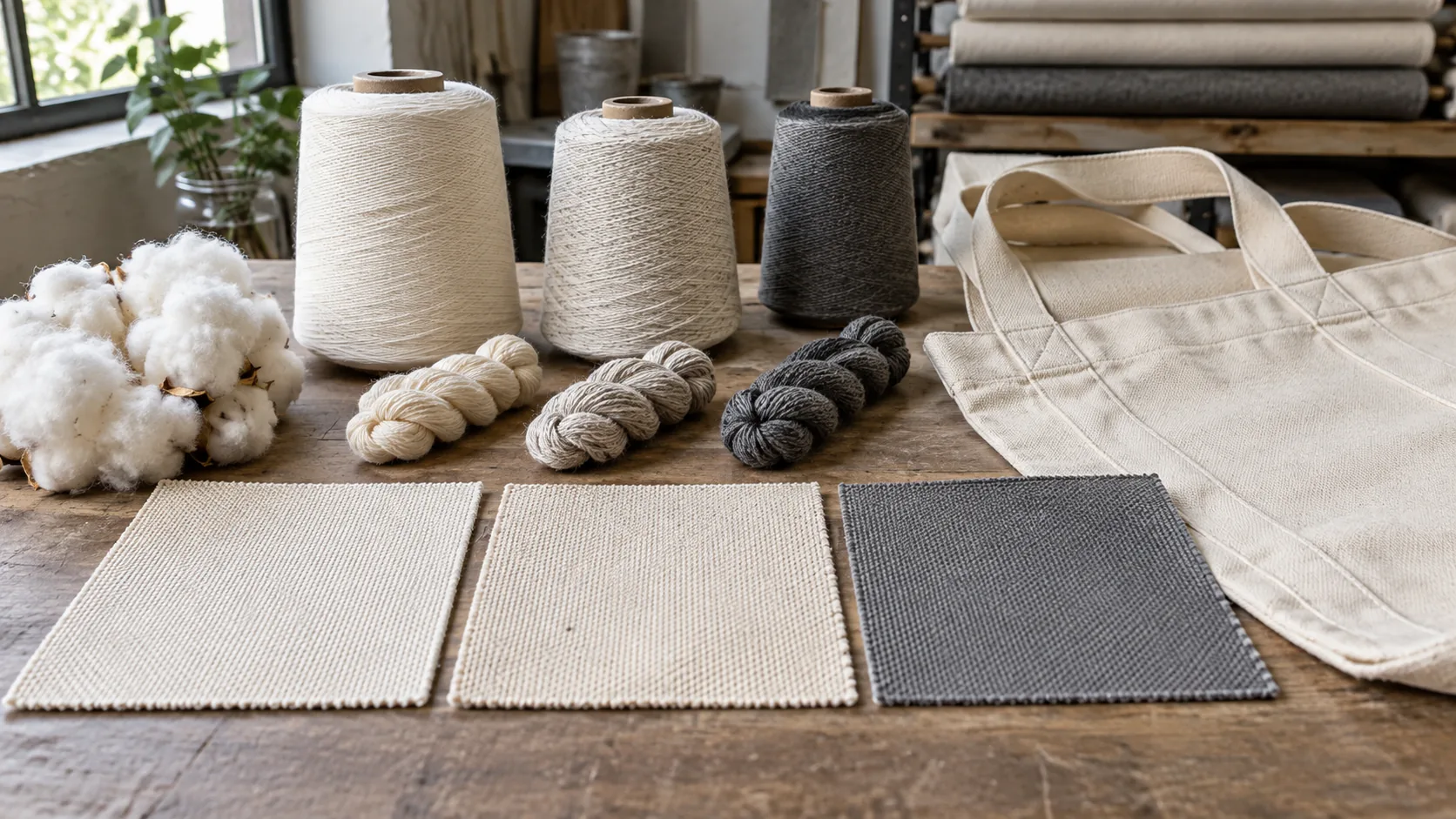
Canvas is made from the fiber or blend selected for a particular woven construction. The word “canvas” does not itself mean 100% cotton.
Common commercial possibilities include cotton, cotton-rich blends, cotton/polyester blends, hemp or other bast-fiber blends, and synthetic canvas made from polyester or nylon. The label may describe a familiar appearance and firm woven structure while leaving the actual composition unstated.
For sourcing, separate these fields:
- Fiber composition: the generic fiber names and percentages in the finished textile.
- Yarn: spun or filament construction, yarn size, plies, and any direction-specific differences.
- Fabric construction: weave, warp and weft density, finished mass, width, and thickness where relevant.
- Finish and layers: dyeing, washing, softening, compacting, wax, coating, laminate, or backing.
- Material identity: mill, supplier code, lot, technical sheet, and approved physical swatch.
For covered products in the United States, the FTC Textile Fiber Rule requires disclosure of generic fiber names and percentages by weight, along with other specified information. The FTC’s cotton labeling guidance also explains that cotton descriptions must reflect the actual content. Regulatory applicability still depends on the product and market, so labeling records should stay tied to the finished article.
Identity checkpoint: “Cotton canvas,” “duck,” and “washed canvas” are starting labels. None of them freezes the full construction, finish, or performance evidence.
How Is Canvas Fabric Woven and Finished?
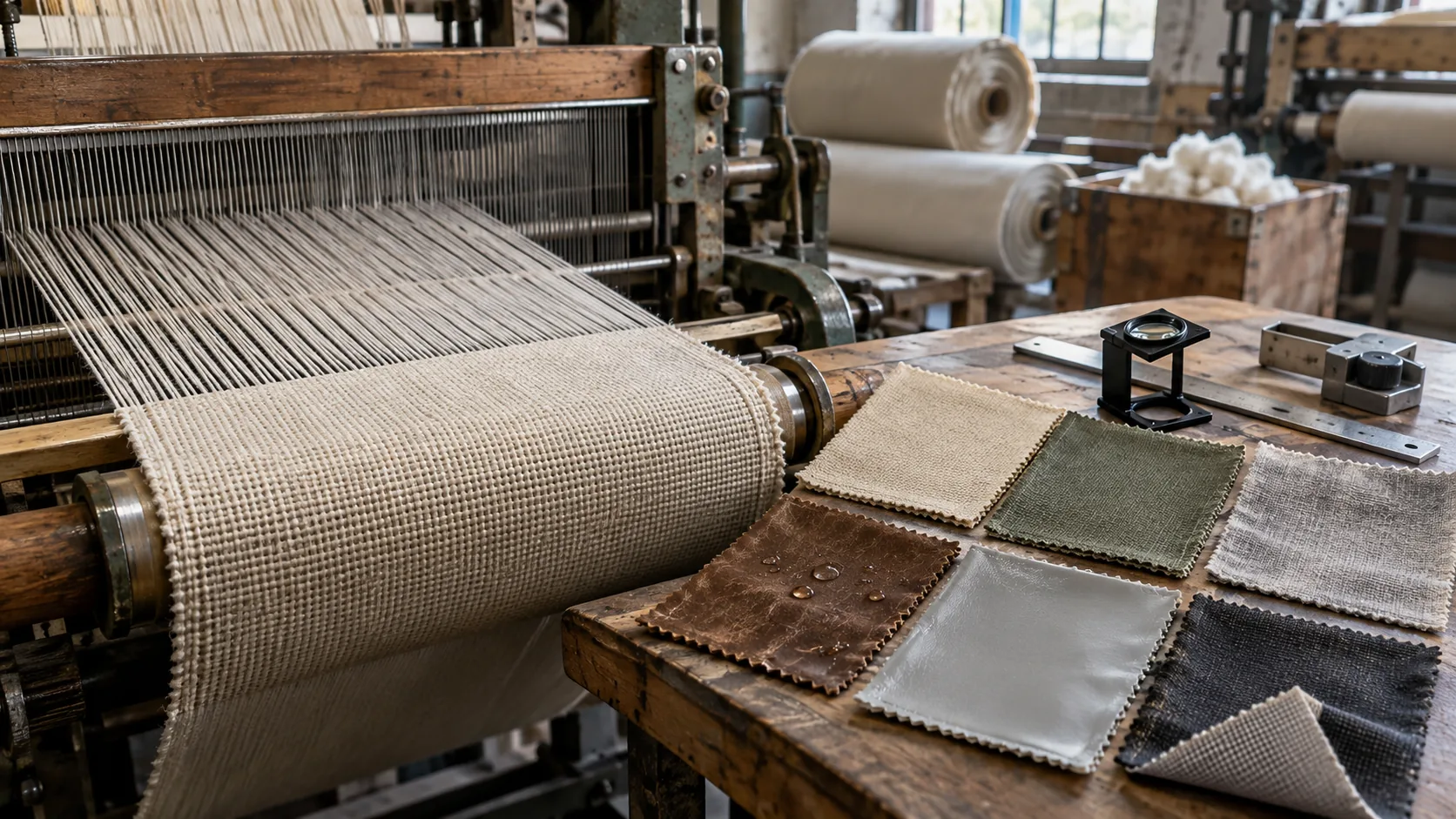
Canvas is commonly associated with plain weave. In a basic plain weave, each warp yarn alternates over and under successive weft yarns. CottonWorks includes canvas among common examples in its explanation of basic woven fabric designs.
That shared weave logic does not make all canvas interchangeable. Mills can change:
- yarn size, plies, twist, and fiber blend;
- warp and weft density;
- greige construction and finished width;
- piece, yarn, or pigment coloration;
- washing, softening, or compacting;
- face-side repellent or wax finish;
- back coating or bonded film; and
- knit, woven, foam, or film backing.
Canvas weight also needs units and a measurement basis. Ounces per square yard and grams per square meter are area-mass units. A number quoted per linear yard depends on fabric width. A historical duck grade number is not an area-mass unit. Record whether the value applies to greige or finished fabric because dyeing, wax, coating, laminate, and backing can change the finished mass.
Do not approve a bare weight number. Retain the stated unit, basis, fabric stage, width where necessary, test or measurement record, and the exact swatch that the number describes.
Which Types of Canvas Matter for Bags?
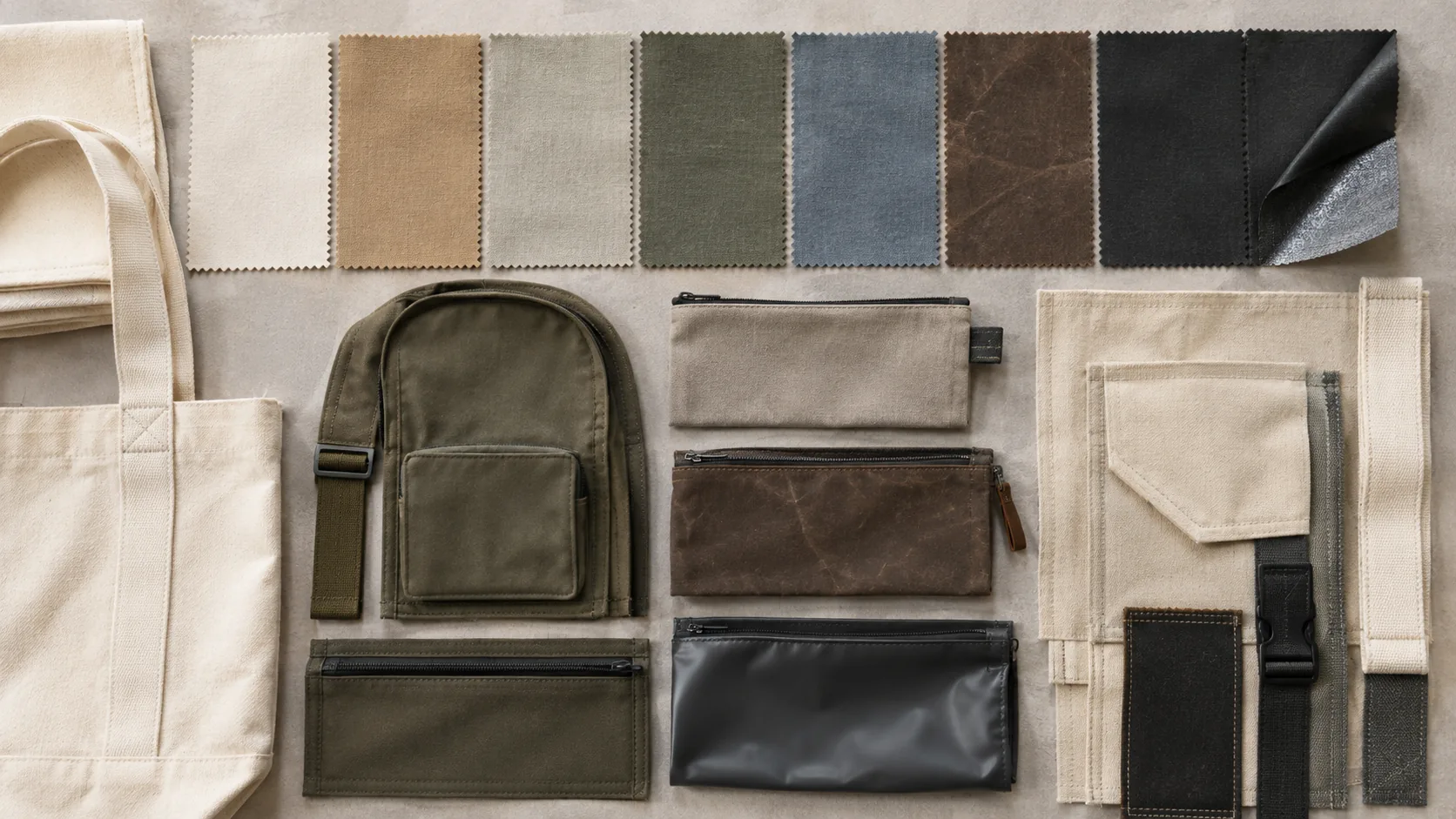
Commercial labels narrow the conversation but do not close the specification.
| Canvas label | What it may describe | What the buyer still needs |
|---|---|---|
| Cotton canvas | A cotton or cotton-rich woven canvas | Fiber percentages, yarn, weave, finished mass, finish, dimensional evidence, and swatch |
| Duck cloth | A firm, closely woven, often heavy plain-weave fabric | Supplier definition, fiber, construction, unit-based mass, finish, and physical reference |
| Blended canvas | Two or more fibers in the same textile | Blend ratio and location, yarn arrangement, finish, labeling record, and revalidated care evidence |
| Synthetic canvas | Canvas-style construction using a manufactured fiber | Exact fiber, spun or filament yarn, heat and finish compatibility, coating, and test evidence |
| Washed canvas | Fabric subjected to a wash or softening process | Process identity, residual dimensional behavior, shade and hand reference, and approved lot |
| Waxed canvas | Canvas with a wax finish | Base fabric, wax system, application, surface appearance, maintenance instructions, and water evidence |
| Coated or laminated canvas | Canvas combined with a polymer layer or film | Layer identity, side, thickness or add-on where specified, adhesion, flex response, seams, and cleaning limits |
A cotton/polyester canvas is a different test object from a 100% cotton version even when both carry the same nominal finished mass. If composition changes, reopen the evidence for finishing, dimensional stability, print or process compatibility, labeling, and care instead of copying the previous approval.
Duck Cloth vs Canvas: What Is the Difference?
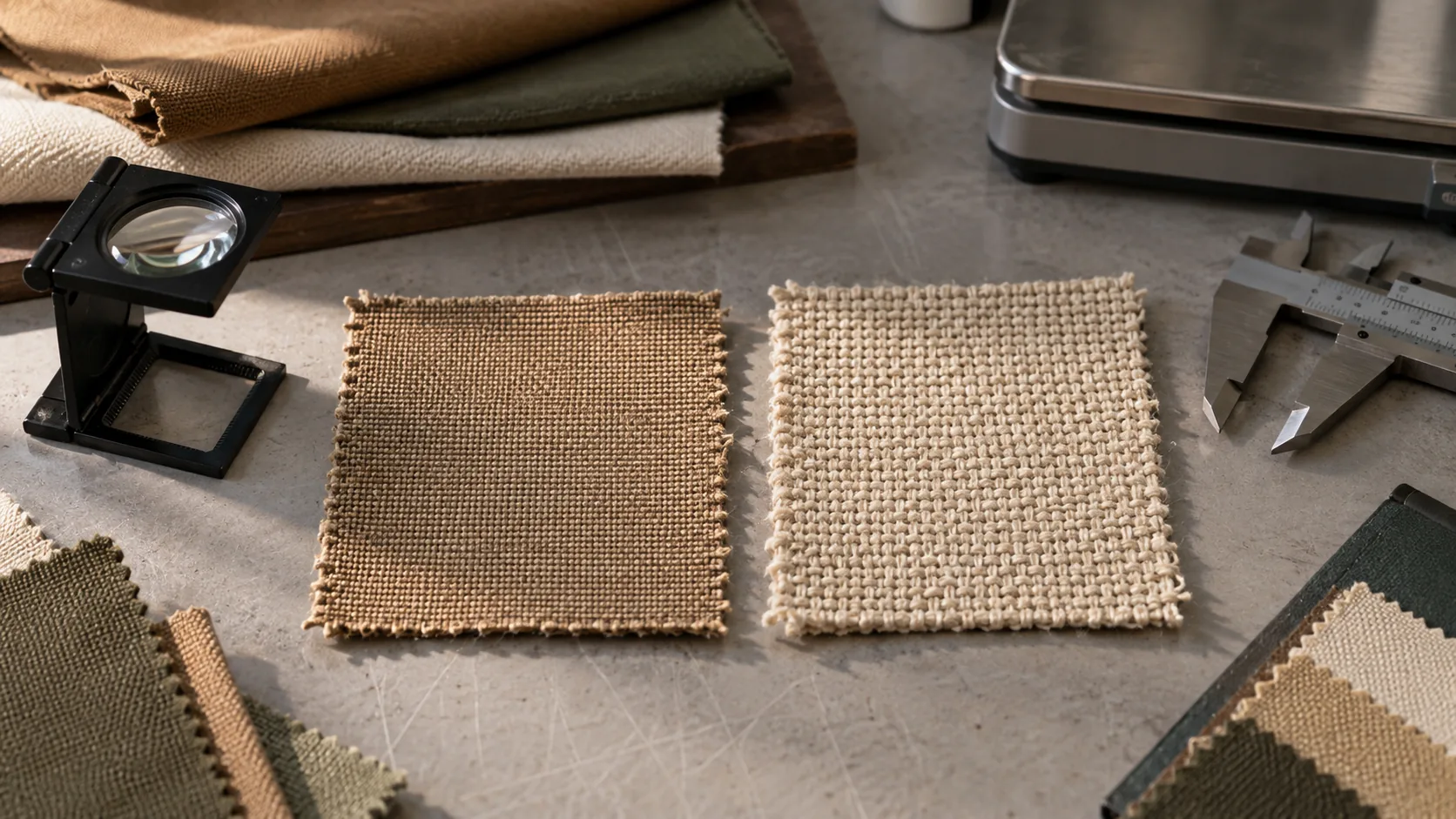
Duck is generally described as a closely woven, firm, heavy plain-weave fabric within the broader canvas family or a closely related market category. Supplier, regional, and historical usage can overlap, so the terms do not create a universal technical boundary.
A historical US government publication defines duck as a “closely woven, firm, heavy, plain-weave fabric.” That historical duck-fabric reference helps explain the terminology, but it should not be treated as a current universal bag-grade chart.
If a quotation includes a duck number, ask which published system or supplier scale it uses. Then record the actual fiber composition, yarn and weave construction, finished mass with units and basis, width, finish, and material code. Do not invent a conversion from the grade number or assume that the same number means the same fabric across mills.
Neither name is automatically superior. Compare traceable swatches and production-equivalent samples against the same use requirements and evidence, not the words “duck” and “canvas.”
What Changes Canvas Performance in a Bag?
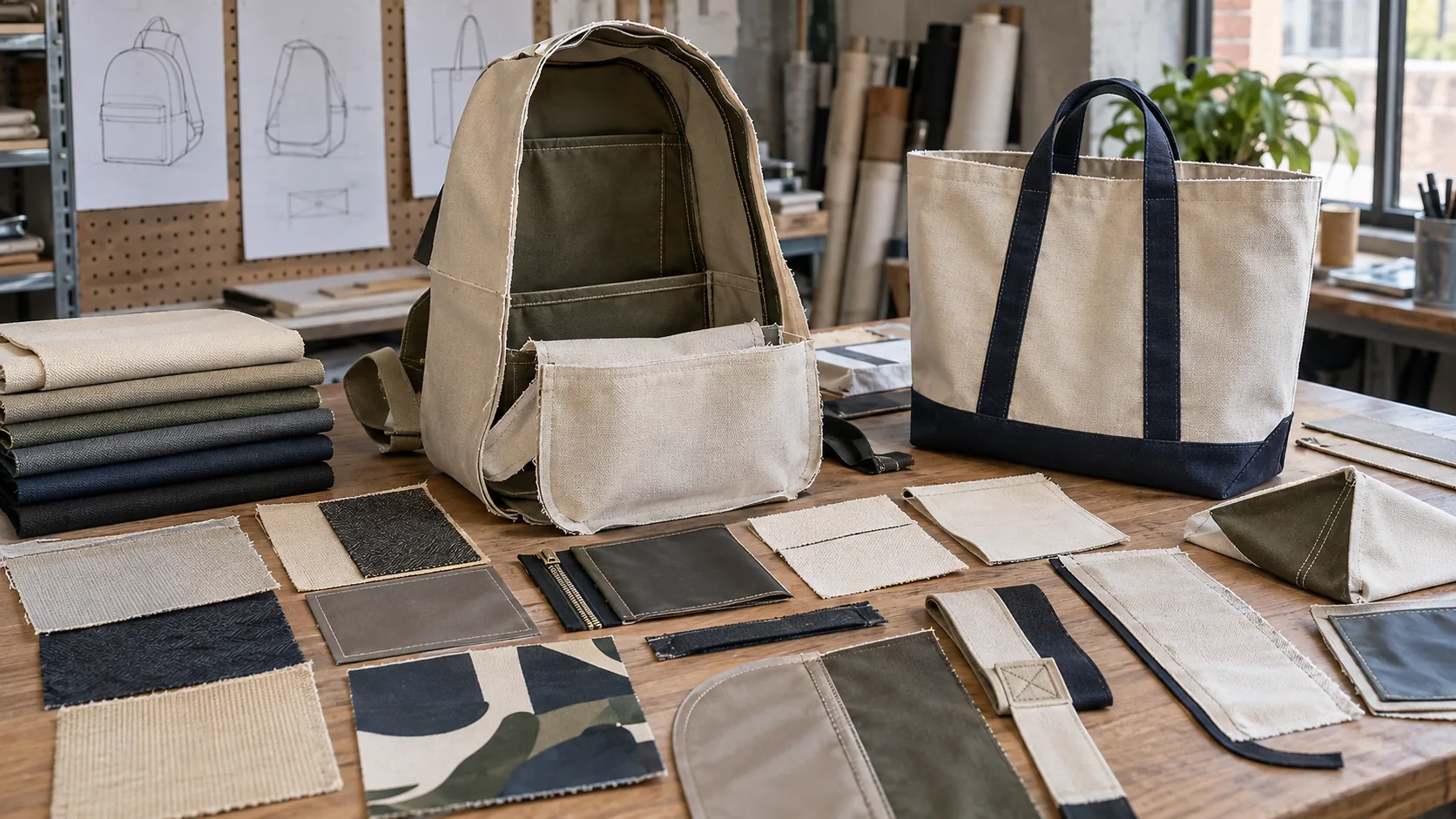
Bag performance comes from the material and assembly together.
On the material side, fiber composition, yarn, weave, density, finished mass, thickness, finish, coating, backing, and conditioning can change hand, drape, air permeability, water behavior, dimensional response, and manufacturing compatibility. None should be inferred from the word canvas alone.
On the construction side, pattern geometry, seam type, stitch density, edge treatment, reinforcement, handle or strap anchors, base and corner design, lining, interlining, hardware, and load path all affect the finished result. A fabric test does not include these assembled details.
Breathability and structure are conditional. An open untreated construction may transmit more air than a compact, waxed, coated, laminated, or backed construction. A firm swatch may also drape differently after washing, sewing, folding, or adding a lining. Confirm both properties on the exact material and finished sample.
Color, print, embroidery, adhesive, and heat-applied decoration must be treated as construction-specific processes. Because current approved research does not establish universal colorfastness, migration, ultraviolet, or print-performance rankings for canvas families, request evidence for the exact fabric, color, finish, decoration process, and endpoint.
Reviewing how a backpack is made helps connect the material record to cutting, sewing, reinforcement, assembly, and production inspection.
Is Canvas Waterproof?
No, not automatically. Canvas is not waterproof by definition, and a fiber name does not prove a barrier.
- Untreated canvas: has no specified repellent or continuous barrier layer. Its water behavior depends on the exact fiber, weave, density, finish, and condition.
- Waxed canvas: uses a surface treatment that may improve water shedding or penetration resistance. Results depend on the base fabric, wax system, coverage, use, care, and maintenance.
- Coated canvas: adds an applied polymer layer. Barrier performance depends on layer continuity, adhesion, flexing, abrasion, folds, and the tested specimen.
- Laminated canvas: bonds a film or other layer to the textile. The layer pair, bonding system, edge and seam construction, flex response, and delamination risk remain separate decisions.
Even when an intact fabric specimen resists penetration, a bag includes needle holes, seam intersections, zippers, closures, openings, bindings, and hardware penetrations. AATCC TM127 addresses fabric resistance to water penetration under hydrostatic pressure; its result does not automatically qualify a finished bag.
Define the exposure scenario and the test object before selecting evidence. Surface shedding, rain, directional spray, wet contact, and immersion are different requirements. A waterproof backpack construction must align the material, seams, closures, openings, assembly, and finished-product validation.
Does Canvas Shrink, and How Should It Be Cleaned?
Cotton-rich canvas can change dimensions after moisture, agitation, heat, or a defined care process, but “canvas shrinks” is not a complete specification. Fiber composition, yarn and weave, finishing, compacting, dyeing, coating, backing, print, seams, lining, adhesives, trims, and the chosen laundering procedure all influence the finished result.
The current AATCC TM135-2025 applies to dimensional changes of fabrics after home laundering. AATCC TM150-2025 applies to garments. They are different test objects, and neither should be presented as an automatic finished-bag method.
For a bag program:
- decide whether evidence is needed for fabric, a sewn assembly, or the complete bag;
- record method and edition, procedure combination, cycles, specimen identity, measurement locations, and endpoint;
- include all layers, trims, prints, adhesives, and hardware in finished-sample validation; and
- release a care instruction only for the construction and procedure that were actually assessed.
Do not promise that machine washing or tumble drying is safe from the canvas name. Follow the validated finished-product instruction. Likewise, no general “unshrinking” method can guarantee restoration of a sewn bag to its original dimensions because materials and components may not respond uniformly.
How Should Buyers Compare and Specify Canvas for Sampling?
Compare complete candidate constructions at the same intended component and use. Cotton canvas, polyester bag material, and nylon bag material can each be woven, finished, coated, backed, and assembled in different ways. Do not rank entire fiber families for weight, strength, abrasion, moisture, cleaning, printing, consistency, cost, or service life without matched specimens and evidence.
Use this controlled sampling record:
- component, bag type, load, exposure, care, and destination market;
- generic fiber names, blend ratio, and location where relevant;
- spun or filament yarn, size, plies, and warp or weft differences;
- weave and yarn density;
- finished mass with unit, basis, fabric stage, and width where needed;
- thickness and agreed measurement method where relevant;
- color and a traceable visual reference;
- dye, wash, softening, compacting, repellent, wax, coating, laminate, and backing;
- supplier, mill, material code, lot, technical sheet, and retained swatch;
- hand, drape, structure, and appearance reference;
- print, embroidery, adhesive, or heat-process compatibility;
- pattern, seam, edge, reinforcement, lining, interlining, and hardware details;
- test object, method and edition, conditioning, direction, endpoint, result, and acceptance criterion;
- labeling and care records for the actual finished product; and
- production change triggers that require reapproval.
Approve the material swatch and the production-equivalent finished sample against the same record. A custom bag manufacturer can then quote and sample the named construction instead of interpreting a generic canvas label.
Frequently Asked Questions
What is canvas made of?
It depends on the specified fabric. Canvas is often cotton or cotton-rich, but it can use polyester, nylon, hemp, other fibers, or blends. Confirm the generic fiber names and percentages.
Is duck cloth the same as canvas?
Duck is generally a firm, closely woven, heavy plain-weave fabric within or closely related to the canvas family. Usage varies, so approve an exact construction and swatch rather than relying on the name.
Is canvas breathable or waterproof?
Neither is automatic. Air and water behavior depend on fiber, weave, density, finish, wax, coating, laminate, backing, seams, closures, condition, and test evidence.
Does canvas shrink, and can it be washed or tumble-dried?
Some canvas constructions can change dimensions, but the safe care method belongs to the complete finished product. Use the validated care instruction; do not infer machine washing or tumble drying from the word canvas.
Is canvas better than polyester or nylon for a bag?
Not universally. Compare exact candidates for the intended component, appearance, construction, exposure, care, manufacturing process, cost, and matched test evidence.
Conclusion
Canvas is a fabric and market category, not a complete material specification. Move from the generic name to a controlled record of fiber composition, yarn, weave, finished mass, finish, layers, supplier code, and physical swatch.
Then connect that material to the pattern, seams, reinforcement, decoration, water requirement, care validation, and finished sample. When composition or construction changes, reopen the affected evidence instead of carrying the old approval forward.
With those fields ready, start your custom bag project using the traceable canvas specification and acceptance criteria.