
A buyer who treats “rucksack” and “backpack” as fixed specifications can approve the wrong opening, harness, capacity, or access system.
Rucksack and backpack usually overlap. Merriam-Webster marks rucksack as chiefly British and lists backpack as a synonym. In US product language, backpack is generally the broader label, while rucksack often signals outdoor or military positioning. Neither name guarantees a construction feature.
The useful decision is not which word is universally correct. It is which design, carrying system, and validation plan fit the intended user and load.
Is a Rucksack the Same as a Backpack?
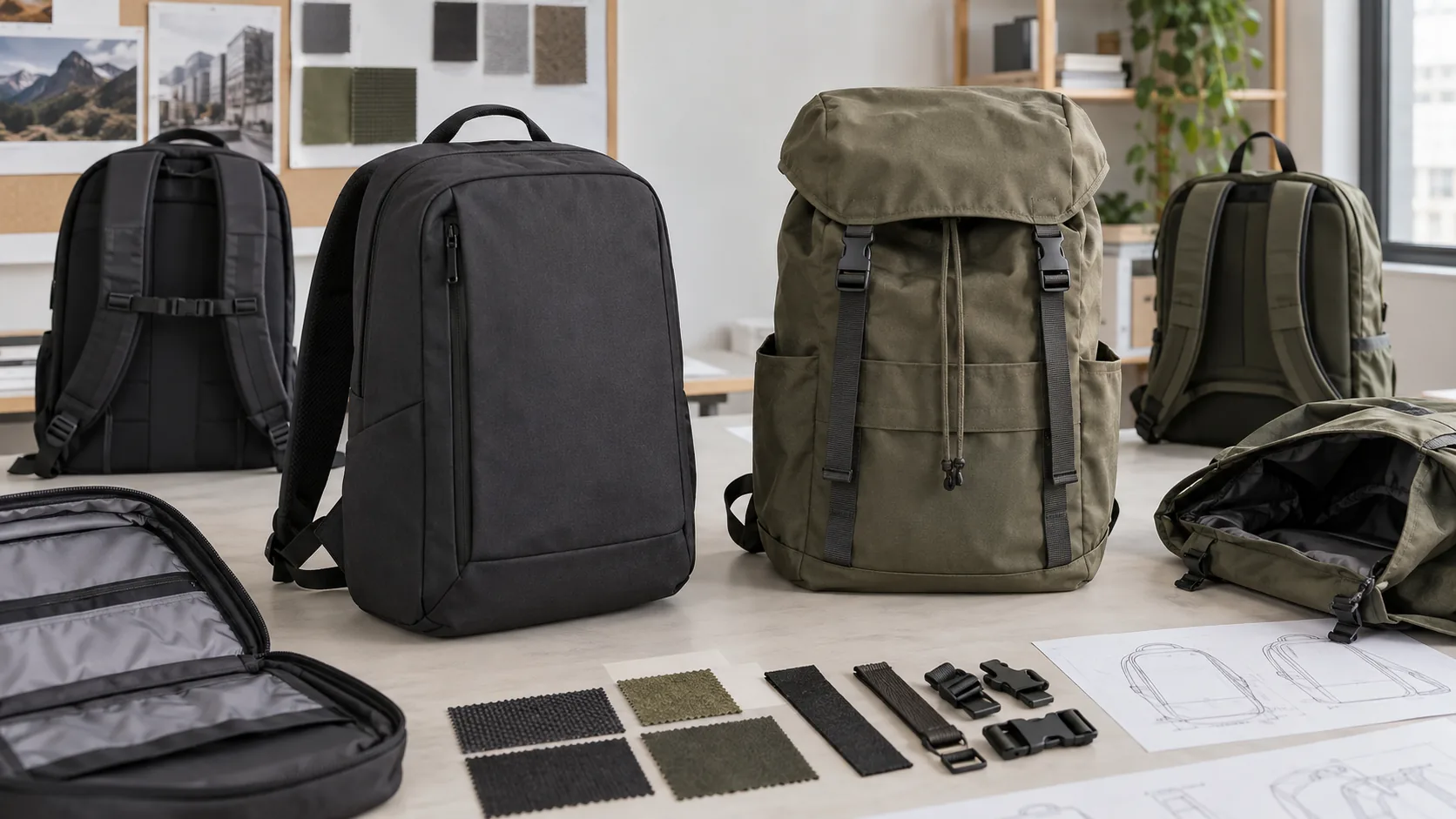
Usually, yes. Merriam-Webster defines a rucksack as a two-strap bag carried on the back, marks the word “chiefly British,” and lists backpack as a synonym. Its backpack definition covers both framed hiking packs and smaller bags for personal belongings.
Those definitions establish language overlap, not a product standard. A retailer or supplier may use either word for a panel-opening commuter bag, a top-loading hiking pack, a canvas day bag, or a modular load-carrying design.
Consequently, the label alone does not establish volume, packed dimensions, opening, frame, harness, materials, load support, weather performance, or intended use.
What Does Rucksack Mean in Product Listings?
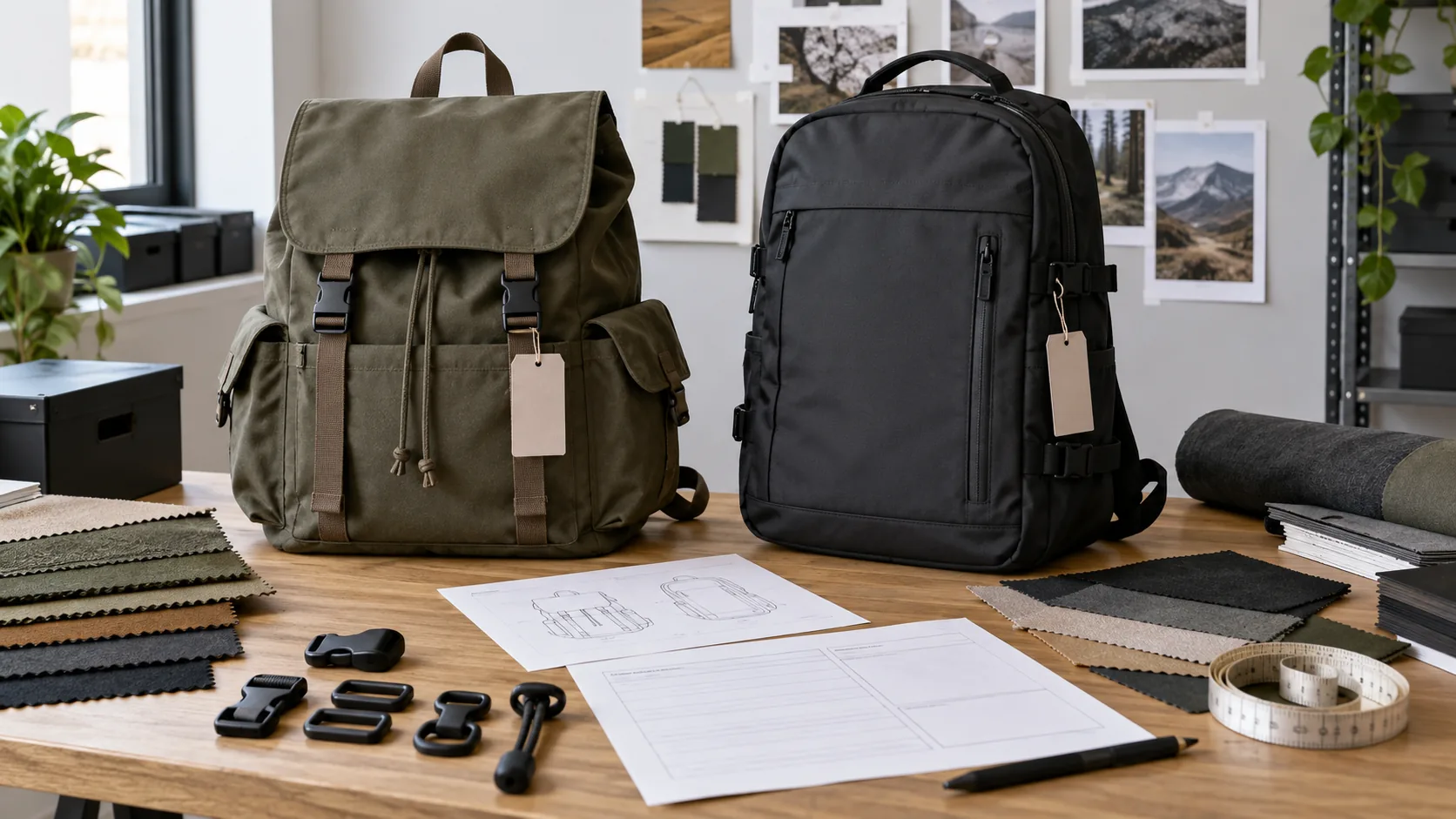
In product listings, rucksack is a market label for a bag carried on the back. It may suggest a top-loading opening, flap, compression straps, external attachment, or outdoor styling, but those associations are not guaranteed.
For a US audience, backpack is normally the clearer generic category word. Rucksack can still be useful when it matches the product concept or the buyer’s search language, particularly for outdoor, heritage, or military-influenced positioning.
Use the market name for navigation and presentation. Use observable construction fields for the quotation, sample, and approval record.
Why Do People Use Different Names?
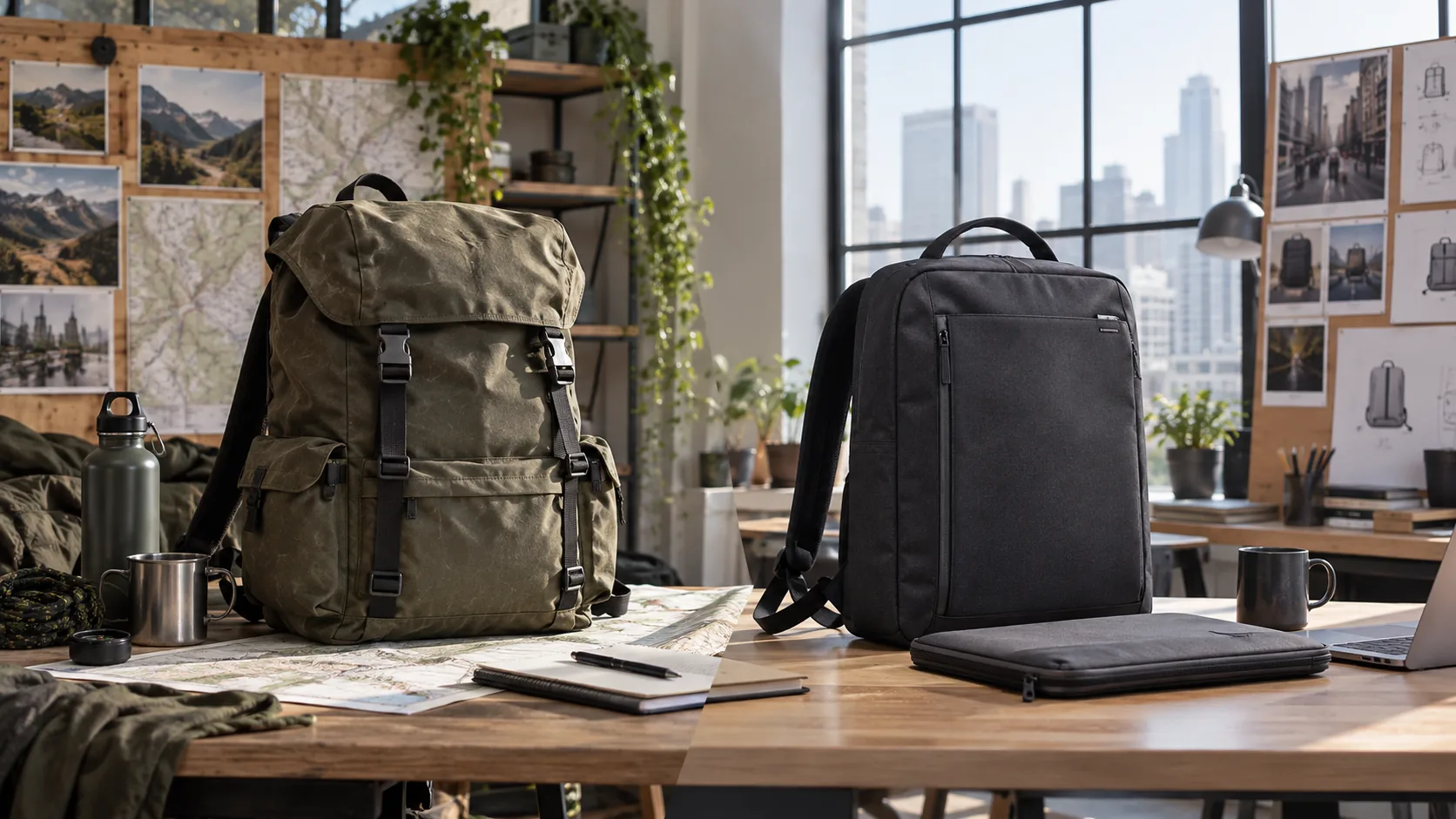
Three forces keep both terms in circulation:
- Regional usage: an American dictionary marks rucksack chiefly British, while backpack has no equivalent regional label.
- Product positioning: rucksack often conveys outdoor, expedition, heritage, or military styling; backpack covers a wider range of school, work, travel, sport, and outdoor products in US copy.
- Retail convention: sellers can apply different category names to similar silhouettes, so current listing language does not create an engineering definition.
The word rucksack comes from German elements meaning back and sack, according to Merriam-Webster’s etymology record. That history explains the term; it does not assign a modern closure, capacity, or performance level.
Which Design Differences Are Common in the Market?
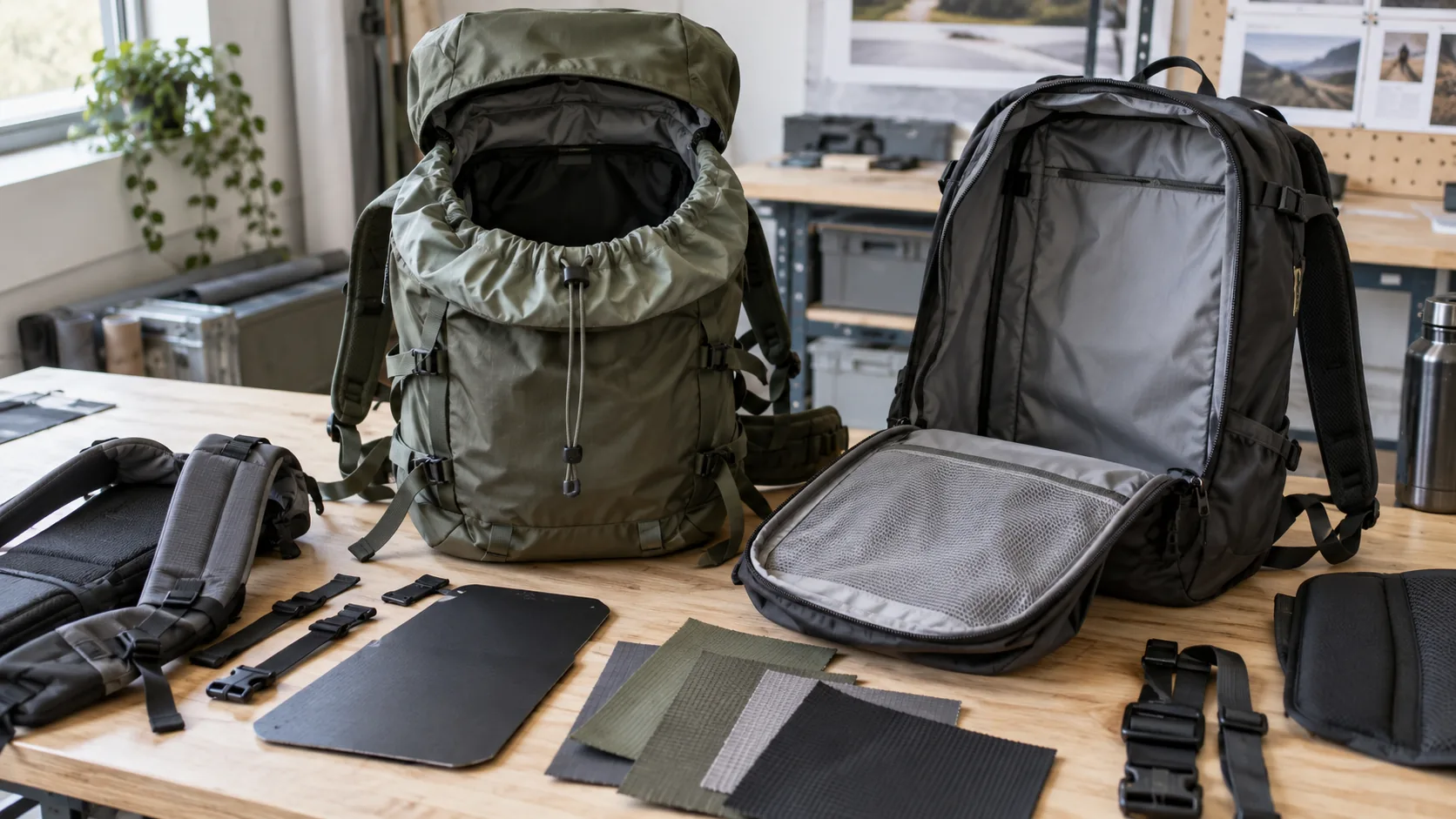
The following patterns can help readers interpret a listing, but they should never replace the specification.
| Feature | Commonly associated with rucksack listings | What the name does not guarantee |
|---|---|---|
| Main opening | Top-loading collar, drawstring, or flap | Opening geometry, access speed, or weather protection |
| Harness | Padded shoulder straps; sometimes a sternum strap or hip belt | Fit range, load transfer, comfort, or strength |
| Frame and back panel | Frame sheet, stays, padding, or ventilation channels on some outdoor designs | Any particular support structure |
| Compression | Side or front compression straps | Strap count, anchor strength, or usable adjustment range |
| External attachment | Webbing, lash points, loops, or modular panels | Interface compatibility or load rating |
| Materials | Canvas or technical woven fabrics are common visual signals | Fiber, denier, coating, durability, or water resistance |
A flap can cover an opening, but it does not prove water protection. Likewise, heavier-looking fabric does not prove durability. Compare drawings, material records, component specifications, and a physical sample.
When size affects the decision, use the same packed state and measurement points for both samples. The guide to measuring a backpack explains why external dimensions, usable space, and stated capacity are different fields.
How Should You Compare Carrying Comfort and Load Support?
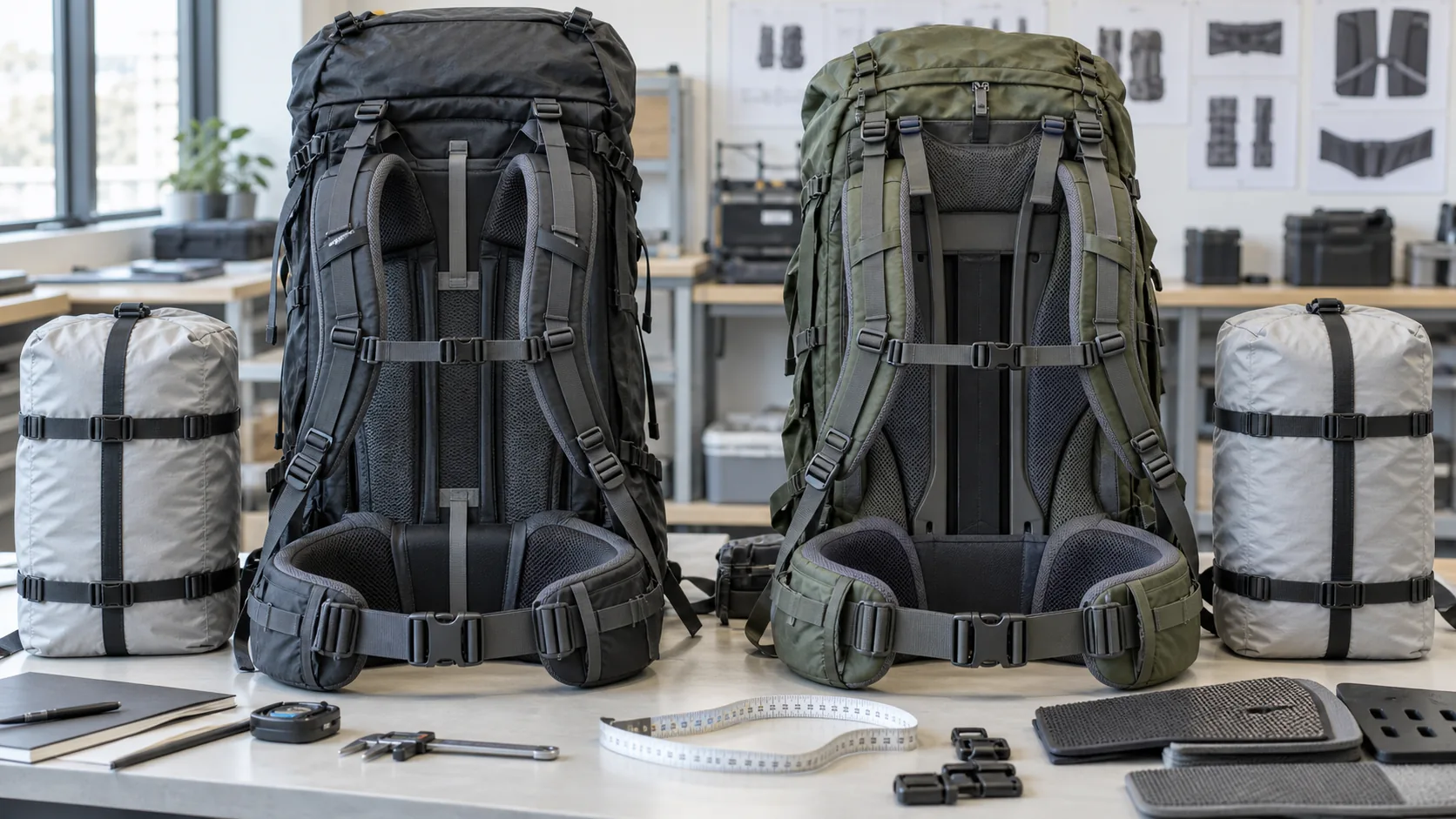
Compare the complete carrying system with the intended user, packed load, and activity. Inspect:
- shoulder-strap geometry, adjustment range, padding, and attachment points;
- torso relationship and back-panel length;
- sternum-strap range and hardware;
- hip-belt shape, structure, location, and adjustment;
- frame sheet, stays, or other support elements;
- load position inside the bag; and
- movement, access, and stability when the sample is packed as intended.
Adding a hip belt does not guarantee that a fixed percentage of the load moves to the hips. A PLOS ONE load-carriage study compared 12 configurations of one hip-belt backpack and measured several endpoints, including pressure, strap forces, and pack movement. Its findings are tied to those configurations and conditions, not every rucksack or backpack.
Define the endpoint before validation. Shoulder load, strap tension, contact pressure, relative movement, perceived comfort, and component strength answer different questions. Use a controlled sample and intended load rather than replacing these checks with “comfortable” in a product brief. For outdoor products, the same task-first approach applies when choosing a hiking backpack by use and fit.
Which Term Fits Travel, Hiking, Work, and Daily Use?
Start with the carry task, then select the required features. Choose the market name after the construction is clear.
| Use case | Decision-relevant features | Suitable naming direction in US copy |
|---|---|---|
| Hiking and overnight use | Harness fit, load control, access, attachment, weather requirement | Hiking backpack or rucksack, depending on positioning |
| Travel | Packed dimensions, opening, organization, device access, carrying duration | Travel backpack is usually the clearer generic term |
| Work and commuting | Device protection, access, organization, clean exterior | Backpack |
| School and daily carry | Contents, base, access, fit, simple adjustment | Backpack |
| Tactical or modular use | Interface geometry, attachment locking, reinforcement, evidence for the intended load | Tactical backpack or rucksack |
For tactical positioning, a product still needs defined webbing, attachment, reinforcement, hardware, and validation. The name is not a substitute for tactical backpack construction.
What Does Knapsack Mean?
Knapsack is another overlapping term. Merriam-Webster defines a knapsack as a bag strapped on the back for supplies or personal belongings and points readers to its backpack definition.
The word may appear in heritage, school, or casual product language, but it does not establish a smaller size, simpler construction, or lower position in a three-level backpack-rucksack-knapsack hierarchy. Sort candidate products by construction and use, not by an invented naming ladder.
How Should Brands Specify a Rucksack or Backpack?
Before requesting a quote or sample, record the fields that make the intended product identifiable:
- user, use environment, carrying duration, and intended contents;
- target load and the load arrangement used for evaluation;
- volume claim, packed external dimensions, measurement points, and measurement state;
- main opening, secondary access, closures, pockets, and compartment purposes;
- shoulder straps, sternum strap, hip belt, back panel, frame, and adjustment ranges;
- compression and external attachment, including the intended accessory interface;
- shell, lining, reinforcement, coating or laminate, thread, zippers, and hardware;
- weather claim and the material-, component-, seam-, or finished-product evidence needed;
- branding method, location, color, and finish reference;
- approved sample, change triggers, and production traceability; and
- validation object, load, activity, conditions, endpoint, and acceptance criterion.
This is a risk-based product record, not a universal mandatory template. A simple stock daypack may need fewer controlled fields than a custom load-bearing program. For custom work, backpack manufacturing programs can turn the selected fields into drawings, material decisions, and samples.
Keep validation evidence attached to the correct object. A fabric report, buckle test, seam specimen, static loaded sample, and user carry evaluation do not prove the same thing. Reviewing relevant bag project case studies can help teams frame project-specific checks without copying unrelated acceptance limits.
Frequently Asked Questions
Is rucksack British and backpack American?
Broadly, yes, but not exclusively. Merriam-Webster marks rucksack chiefly British, while US outdoor and military-influenced listings may still use it. Backpack is usually the safer generic US term.
Is a rucksack bigger than a backpack?
No fixed definition makes it bigger. Products under both names span many sizes. Compare capacity method, packed dimensions, opening, and intended contents.
Is a rucksack better for hiking?
Not by name. Hiking suitability depends on fit, harness and load control, access, weather requirement, attachment, and validation with the intended load.
Can a rucksack be used for school or work?
Yes, when its access, organization, device protection, dimensions, and carrying system fit the task. A flap-top style may look different from a commuter backpack without being unsuitable.
Can you identify a bag’s construction from its name?
No. The name cannot confirm the frame, harness, opening, materials, capacity, strength, or water protection. Use the specification and approved sample.
Conclusion
Rucksack and backpack are overlapping product labels, not two fixed technical classes. Regional habits and market positioning influence the name; observable construction determines what the product actually does.
Define the user, load, opening, harness, frame, dimensions, materials, interfaces, and validation plan before approving the label. When those requirements are ready, start your custom backpack project with a buildable specification rather than a naming assumption.