
When were backpacks invented? There is no single invention date. Back-carried containers predate modern patents by thousands of years; the familiar backpack developed through changes to its frame, straps, closures, materials, and intended use.
The useful history separates an archaeological find from a patent, and a patent from a product people actually adopted. Those distinctions also help when reading a modern backpack specification: a familiar name does not tell you how the bag is built.
Is There One Date When the Backpack Was Invented?
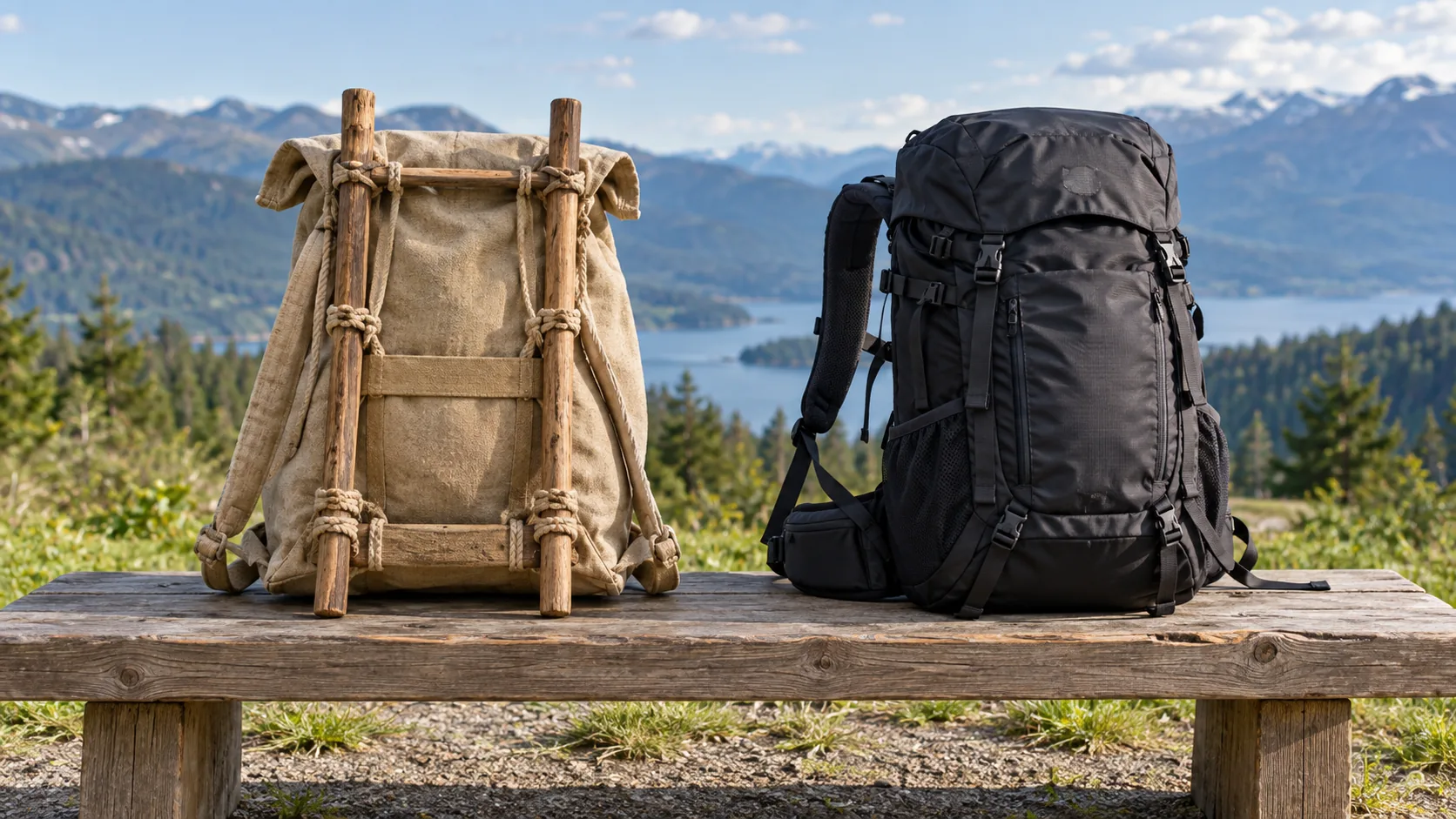
No single date explains the whole product. A container carried on the back, a patented support system, and a school daypack answer different questions. Calling all three the invention of the backpack makes their histories look contradictory when they are describing different things.
The records reviewed here establish that framed back-carry is prehistoric, that nineteenth- and twentieth-century inventors documented particular constructions, and that outdoor packs later found everyday uses. They do not establish one inventor for every form of backpack.
Dates need the same care. A patent application can be filed in one year and granted in another. A surviving object may be much later than the design’s introduction. A company’s founding date is not automatically the date a particular backpack appeared.
Keep four questions separate:
- What physical evidence survives?
- Which construction does a patent describe, and when was it filed or granted?
- What does a collection record say about an individual object?
- When and where did people adopt a pack for a new use?
What Counts as an Early Backpack?
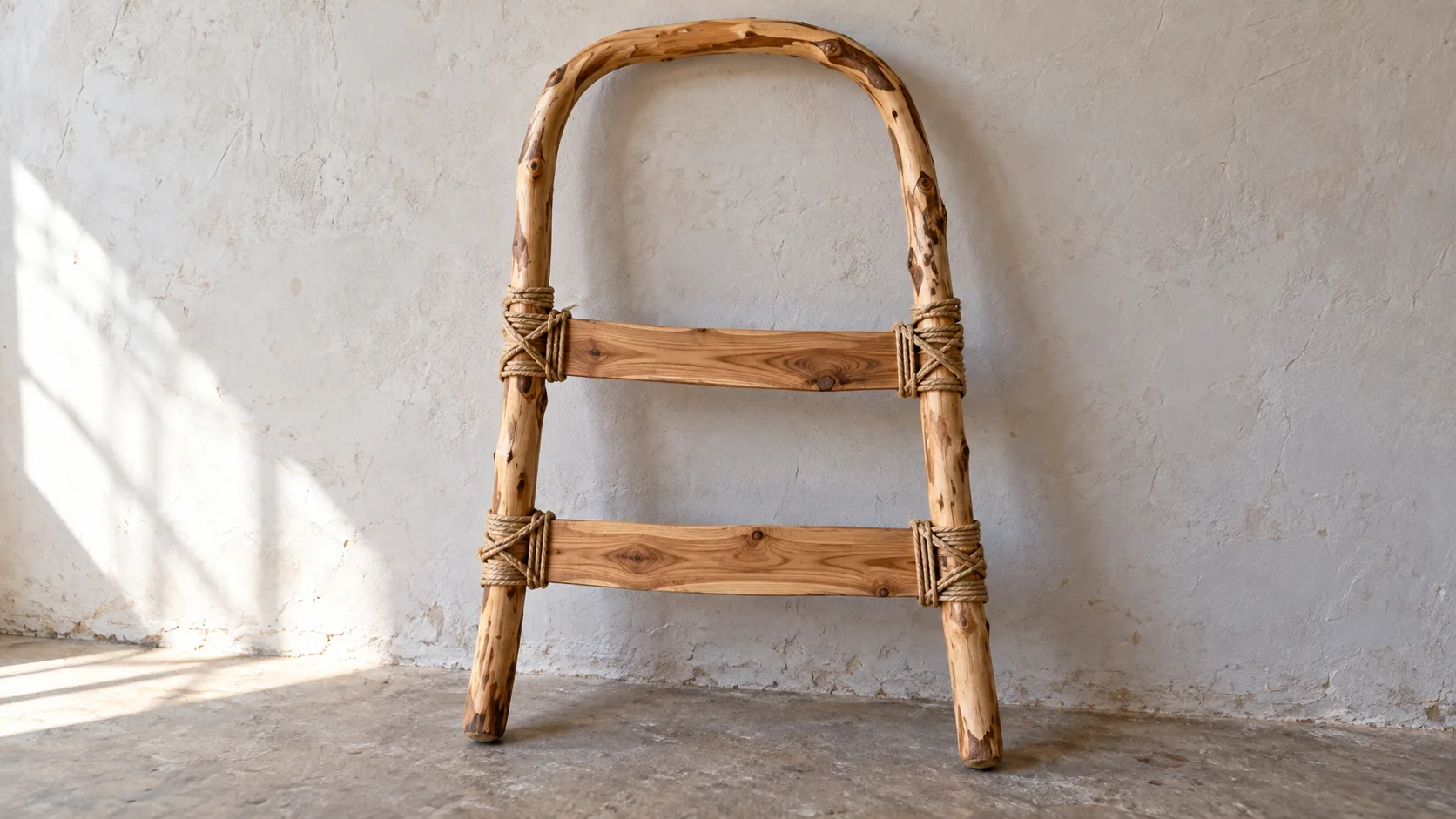
Ötzi provides a prehistoric example. The South Tyrol Museum of Archaeology’s account of the Iceman places his life more than 5,300 years ago and records the discovery of his body and equipment in 1991.
Its equipment catalogue describes a curved hazel branch about two metres long and two slim boards measuring 38-40 cm. These are the surviving backpack parts. The museum interprets them as a frame, likely joined with cord, that carried an attached hide container or net. The soft container does not survive.
That is evidence for an early carrying construction, not proof of the first backpack ever made. Nor does the catalogue establish that this frame transferred weight to the hips in the way a modern hiking harness can. The missing parts limit what can be reconstructed.
An archaeological find tells us a design existed. Establishing when people first conceived it is a different, much harder question.
Which Milestones Led to the Modern Backpack?
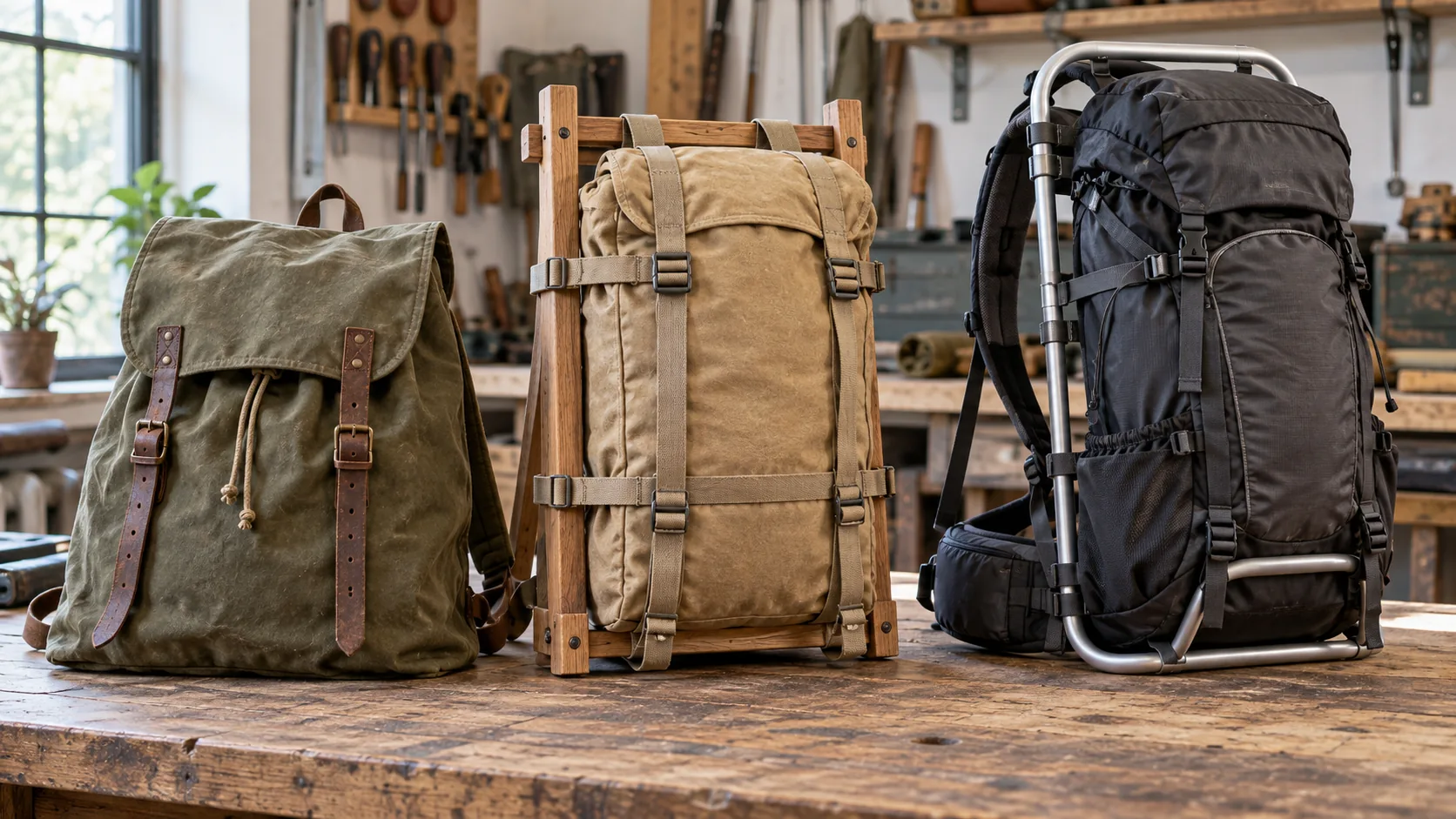
This timeline selects documented examples rather than claiming to list every innovation. Read the evidence column with the date: the entries describe different kinds of records.
| Date | Documented example | Evidence and limits | Design question it illustrates |
|---|---|---|---|
| More than 5,300 years ago | Wooden carrier parts found with Ötzi | Archaeological collection; the soft container is reconstructed, not preserved | How could a container be supported on the back? |
| 1876 | Merriam’s knapsack-supporter patent, US178545A | Patent granted June 13; describes a wooden frame, side braces, and hip strap | How could supports connect a pack to its wearer? |
| 1877-1878 | Merriam’s US204066A | Filed June 18, 1877; granted May 21, 1878 | How could a frame and equipment attachments be combined? |
| Around 1908-1909 | Bergan’s metal-frame development | Approximate introduction story recorded in a heritage collection; not an independently checked patent date | How could metal framing change the carrying structure? |
| 1922-1924 | Nelson’s US1505661A | Filed July 31, 1922; granted August 19, 1924 | How could a sack attach to a ventilated rack? |
| 1969 | A hiking daypack taken up by University of Washington students | The university’s account of its own campus history; not the first use by any student anywhere | How could an outdoor bag become a book bag? |
These entries do not prove a straight line of invention from one maker to the next. Similar carrying problems can produce different solutions. They also do not date the first zipper, the first nylon bag, or the first internal frame; those claims require their own evidence.
Who Is Commonly Credited With Backpack Innovations?
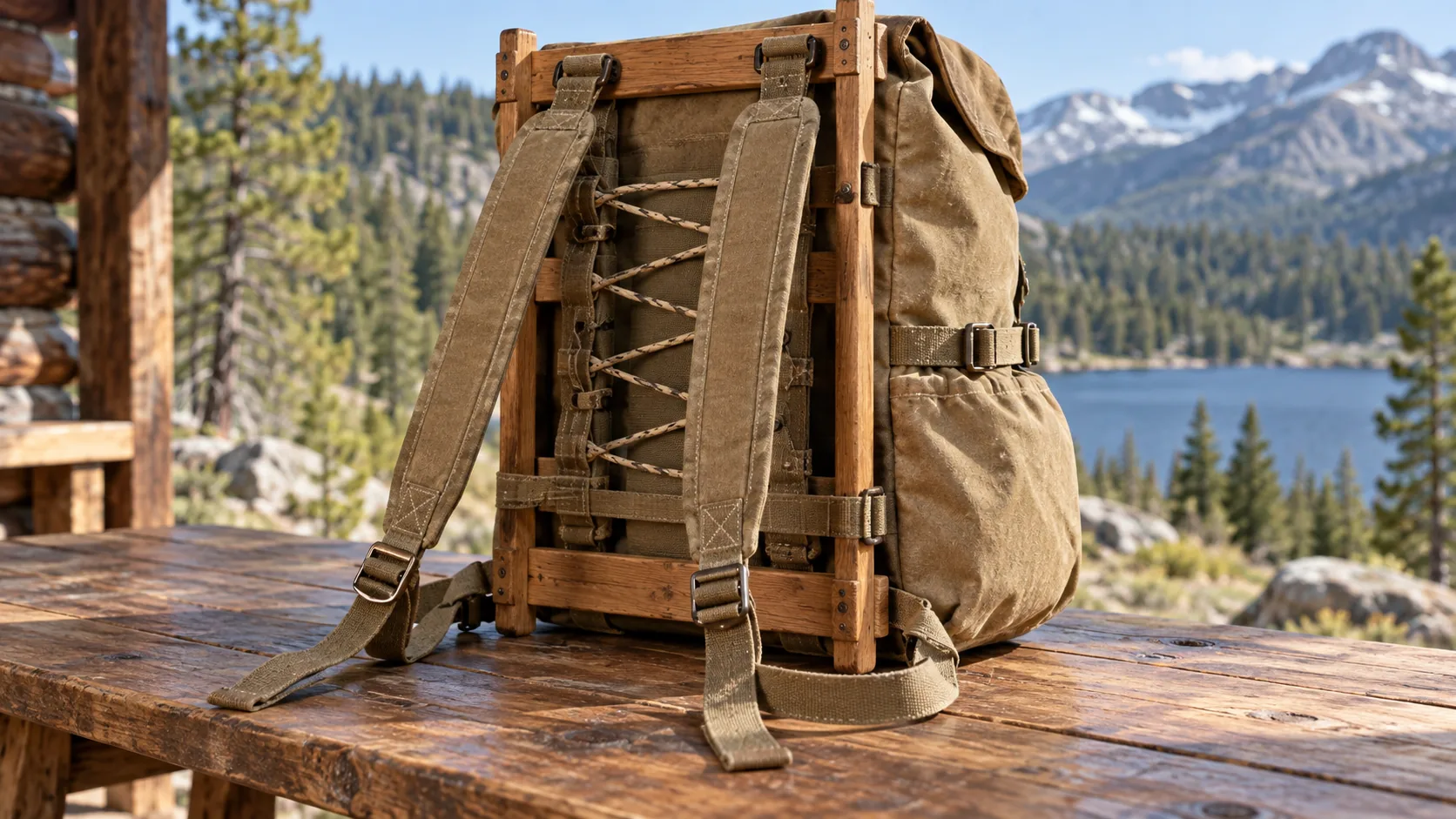
Henry C. Merriam is associated with nineteenth-century knapsack supports. His 1876 patent already describes braces connected to a hip strap. His later knapsack patent gives the 1877 filing and 1878 grant dates and describes a sheet-metal frame with associated equipment attachments. The earlier document is a clear reason not to call the 1878 grant the first backpack patent.
Ole F. Bergan is associated with metal pack frames. The Scottish Mountain Heritage Collection’s Bergan rucksack record places the development story around 1908-1909, while estimating its own canvas, leather, and metal specimen to be from the 1950s. The object date and the design story are not interchangeable. The catalogue does not establish an exact patent day or worldwide priority.
Lloyd F. Nelson’s 1924 patent for a pack documents a rack, a tensioned fabric support that forms an air space, and a removable sack retained by rods and eyelets. It supplies a construction and a dated record, not evidence that no earlier pack was mass-produced.
Other makers feature in histories of zippered packs, lightweight materials, and internal frames. Naming an inventor is useful only when the attribution states what changed and which record supports it. A company history alone is not enough to turn a product milestone into an uncontested worldwide first.
| Common claim | More accurate reading |
|---|---|
| One person invented the backpack | The selected records document particular objects and component improvements, not a sole inventor of the entire category |
| Merriam’s backpack patent dates to either 1877 or 1878 | The later application was filed in 1877 and granted in 1878; he also had a supporter patent in 1876 |
| A patent proves military adoption | A patent records a proposed invention; adoption needs separate procurement or service evidence |
| A product’s introduction date is the date of every surviving specimen | A later specimen can preserve an older design; check the collection’s provenance |
How Did Frames, Closures, and Materials Change the Design?
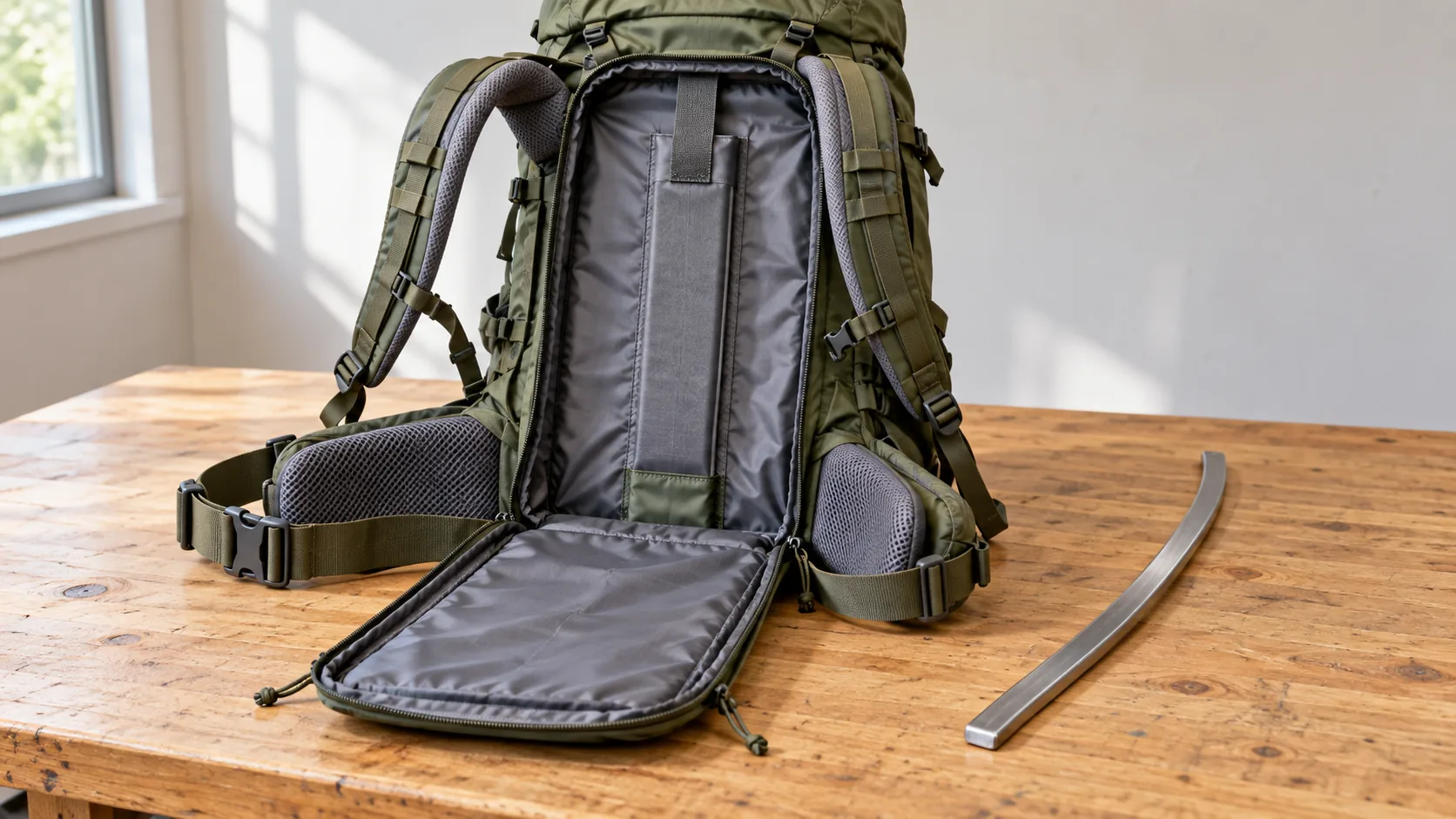
Each component has its own design history. A pack can change its closure without changing its frame; it can change its fabric without changing how the shoulder straps are anchored. There is no single ladder on which every newer bag is automatically better.
The following is a construction comparison, not a claim that every early pack used the same parts or that each modern feature has one inventor.
| Component | Historical example in the records above | Modern construction choice | What a buyer should check |
|---|---|---|---|
| Container | Interpreted hide sack or net; later canvas sacks | Shaped fabric panels and linings | Composition, construction, finish, and usable space |
| Frame | Wooden elements, metal structure, or a pack rack | External frame, internal stays or sheet, or no rigid frame | Geometry, attachment points, fit, and intended load |
| Harness | Merriam’s supports and hip strap; Nelson’s shoulder straps | Padded straps, adjusters, and an optional hip belt | The actual load path and how the parts connect |
| Closure | Nelson’s flap and buckle | Zippers, drawcords, buckles, or roll-top arrangements | Opening access, compatible components, and repair access |
| Compartments | Separate equipment attachments or a removable sack | Sleeves, pockets, and divided interiors | Which contents must be separated or reached quickly |
| Materials | Wood, canvas, leather, and metal in these examples | Different fabrics, coatings, foams, and frame materials | Evidence for the property being claimed, not the material name alone |
For the individual terms, see our guide to backpack parts and accessories.
A frame does not automatically move a stated percentage of weight off the shoulders. Its relationship with the harness, belt, anchors, load, and wearer matters. A loose stabilizing belt is not the same construction as a belt intended to carry load.
Trace the actual components and interfaces: straps, adjustment hardware, stitched anchors, reinforcement, frame connections, and any load-bearing belt. Include only the nodes present in that pack. A webbing or buckle result cannot establish the carrying performance of the complete assembly.
Closures and compartments address access and organization. Their placement still needs checking with the intended contents; adding a zipper or sleeve is not, by itself, evidence of greater carrying capacity or durability.
When Did Backpacks Become Everyday and School Products?
Everyday use has its own history. A pack built for hiking does not become a school product merely because its fabric is lighter; it must also suit the things students carry and how they use it.
The University of Washington’s campus account describes a JanSport hiking daypack offered locally in 1969 that students took up for carrying books. It also credits co-founder and UW alumna Jan Lewis with adapting the design for heavier loads. This is a documented campus example, not a date for the first school backpack worldwide.
The change is useful to understand as a change of use: outdoor carrying equipment was being judged against books, weather exposure, and repeated daily access. A historical introduction story cannot establish how a present-day school bag performs under those conditions.
Names also need care. The nineteenth-century patent titles use “knapsack”; the heritage collection uses “rucksack.” A word’s recorded history is not the invention date of the object it describes.
What Does This History Teach Product Buyers Today?
The practical lesson is to ask what changed in the construction, rather than treating a category or historical name as a specification. The frame, harness, opening, compartments, and materials can each be chosen for a different job.
Start with the contents and carrying conditions. Then describe the components that need controlling. For a frame-and-harness program, that might mean the stay geometry, anchor location, strap adjustment range, and belt attachment. For a book bag, usable dimensions, opening clearance, and sleeve placement may need more attention.
Keep supplier or item codes, material construction, finish, dimensions, quantity, and placement in separate specification fields where the risk warrants them. Drawing callouts can point to those controlled records rather than repeating conflicting descriptions. This is a project documentation approach, not a compulsory industry template or a guarantee of batch performance.
For a carrying or durability claim, agree the relevant evidence before accepting a sample. Identify the product configuration, payload and distribution, attachment or fixture, conditions, endpoint, and result as required by the chosen method. Mark genuinely non-applicable fields accordingly; unresolved values remain open items. Do not convert a cycle count into years of service.
Use how to measure a backpack to record dimensions consistently; external dimensions alone do not establish tested litre capacity. Our guide to how a backpack is made covers the production sequence. If you are developing a current product, the backpack manufacturing page is the commercial route for discussing its construction and sample requirements.
Frequently Asked Questions
Who invented the backpack?
There is no single inventor established by the records reviewed here. Archaeological evidence predates modern patents, and later inventors documented particular support systems, racks, and attachments rather than the whole category.
Was Merriam’s backpack patent filed in 1877 or granted in 1878?
Both dates describe US204066A: it was filed June 18, 1877, and granted May 21, 1878. His separate knapsack-supporter patent was granted in 1876, so the later document should not be described as the first backpack patent.
When did students start using backpacks for books?
The University of Washington records a local example involving a hiking daypack in 1969. That establishes one campus adoption story, not the first use by students everywhere.
Did the military invent the backpack?
The evidence does not support crediting the military with the whole product. Merriam was an Army officer and described knapsack improvements, but his patents alone do not establish service adoption.
Is Ötzi’s carrier the first backpack?
It is a prehistoric example with surviving wooden parts. The equipment catalogue cannot establish that no earlier carrier existed, and the attached soft container is an interpretation rather than a preserved sack.