
`Bookbag` and `backpack` often describe the same school bag, but the two words emphasize different things.
In US usage, a bookbag is a bag for books and school supplies. A backpack is defined by how it is carried: on the back with shoulder straps. Many school products are both. The name alone does not establish size, support, organization, durability, or device protection.
Use the comparison below to choose the right term for shopping or marketing, then evaluate the actual bag by load, fit, access, materials, and construction.
What Does Bookbag Mean?
`Bookbag`, also written `book bag`, describes a bag used especially by students to carry books. It describes the purpose of the bag, not one required shape or carrying system.
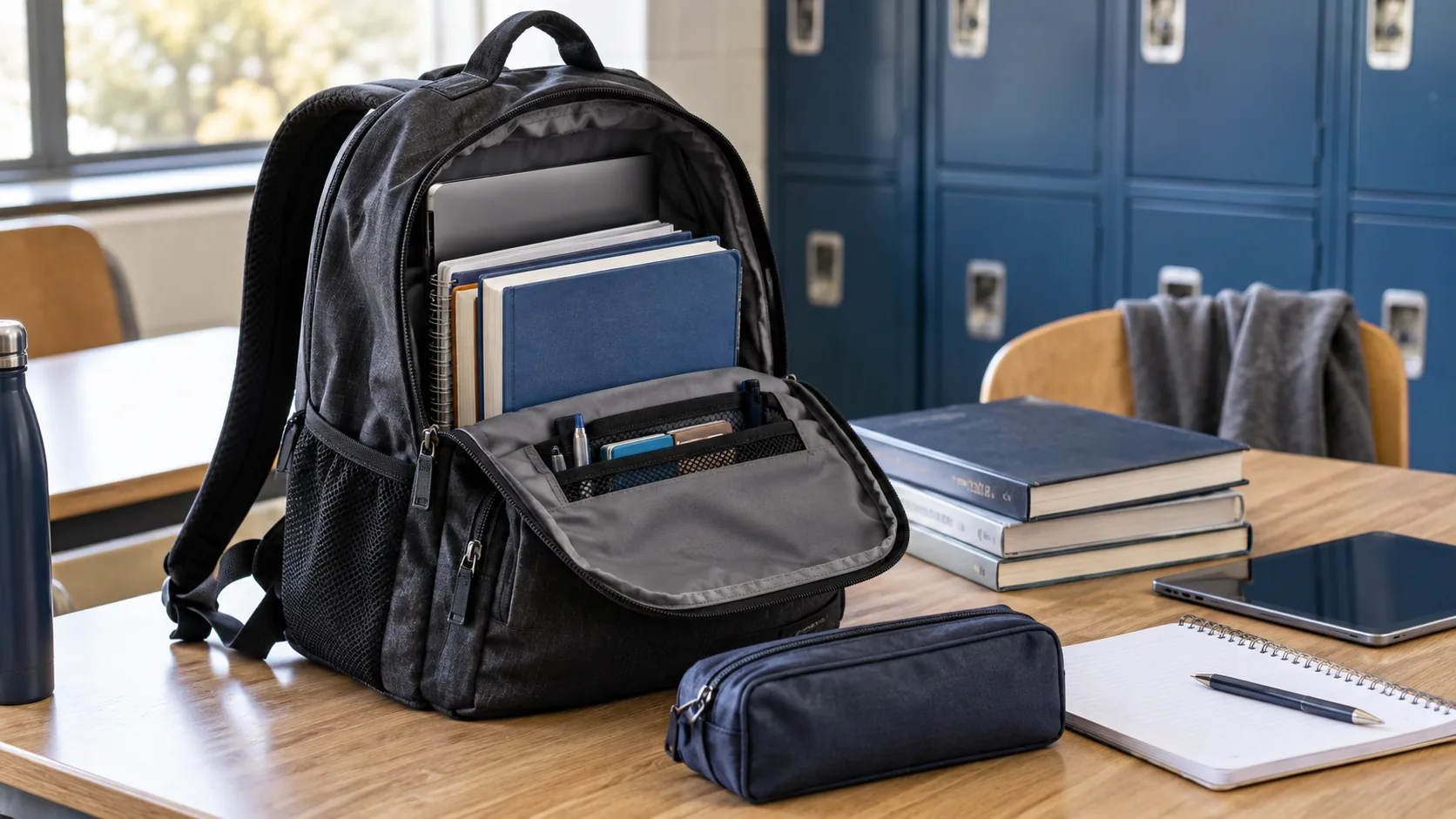
Dictionary.com defines a book bag as a bag or satchel used especially by a student for carrying books. That definition leaves the construction open. A bookbag may have two shoulder straps, a crossbody strap, short handles, or a combination of these features.
In current US retail language, the word usually points to school use. A product called a bookbag may be a simple two-strap pack, a structured children’s school bag, or a general backpack sold for books and classroom supplies. The word is useful for search and merchandising, but buyers still need the product dimensions and feature list.
Industry insight: Use `bookbag` or `backpack` in consumer-facing copy according to the audience. Use dimensions, opening type, carrying system, materials, hardware, and reinforcement in the specification and quotation.
Is a Bookbag the Same as a Backpack?
Often, yes. A two-strap school bag can reasonably be called both a bookbag and a backpack. The terms overlap because one describes purpose and the other describes carry format.
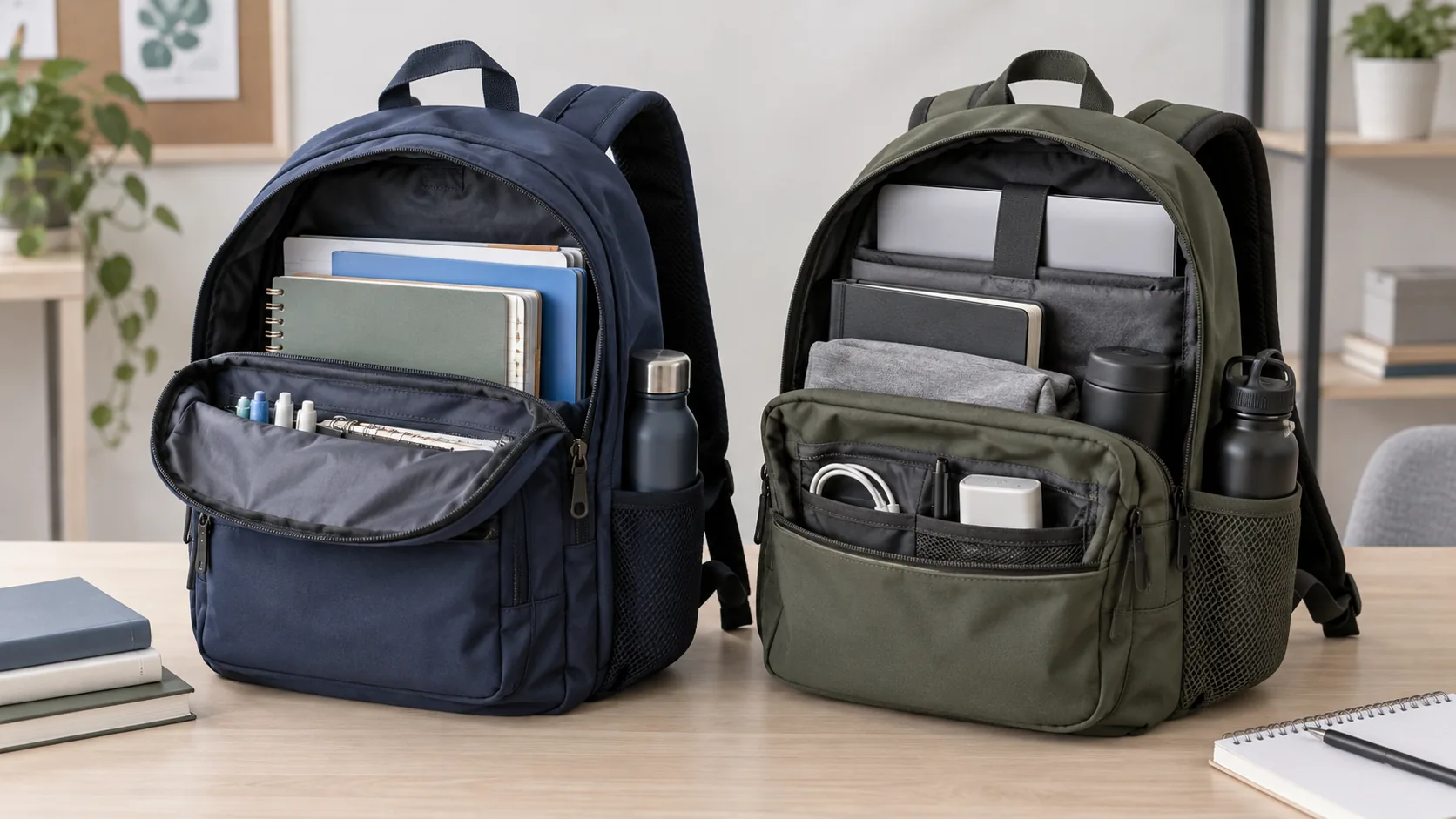
The terms are not perfectly interchangeable in every context. A hand-carried school satchel can be a bookbag without being a backpack. A hiking or camera backpack is a backpack but would rarely be called a bookbag because books are not its main use.
This is similar to the overlap explained in our rucksack vs backpack comparison: a market name can suggest a use or style, but it does not create a complete technical definition.
| Question | Bookbag | Backpack |
|---|---|---|
| What does the word emphasize? | Books, schoolwork, and student use | A bag carried on the back |
| Does it require two shoulder straps? | No | Normally yes |
| Can it be used outside school? | Yes | Yes |
| Does the name define capacity? | No | No |
| Does the name prove comfort or durability? | No | No |
How Do Bookbags and Backpacks Differ in Use?
A bookbag usually serves a school-day load. `Backpack` covers a wider range of daily, work, travel, sport, and outdoor uses. The intended load creates more meaningful differences than the label.
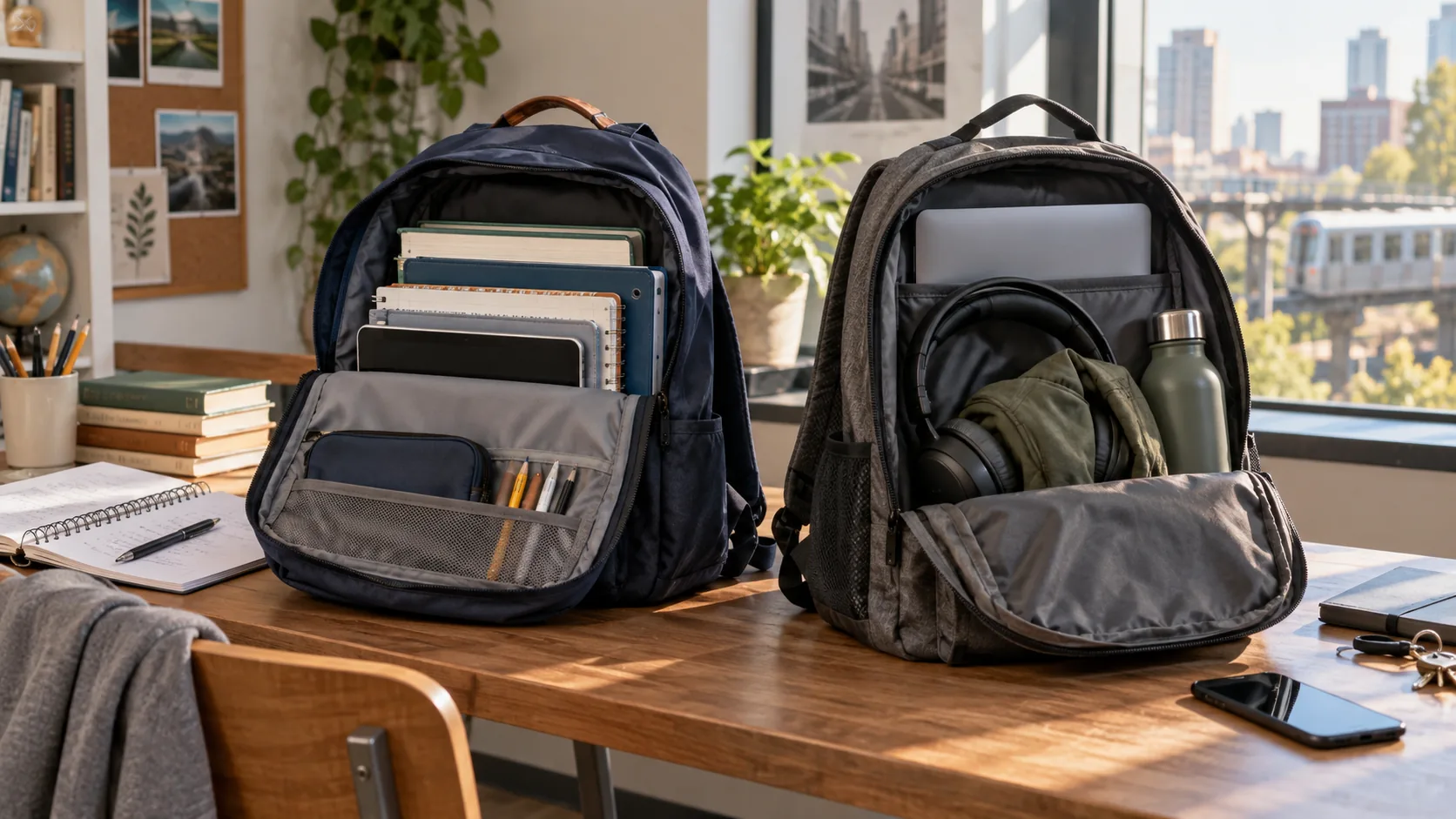
A school load may include textbooks, folders, a tablet or laptop, lunch, a bottle, stationery, and clothing. These rigid rectangular items favor an opening that provides clear access and a compartment that holds folders without bending their corners.
An everyday or commuter backpack may give more space to a laptop, cables, personal items, a jacket, and quick-access pockets. A travel backpack may add a wider opening, compression, and a carrying system intended for longer periods. An outdoor pack may prioritize torso fit, load control, ventilation, and external attachment.
These are use-based directions, not guaranteed differences between two product names. When the intended load changes, the appropriate dimensions, access, pockets, base construction, and carrying system change with it.
What Features Matter in a School Bookbag?
The most useful school-bag checks are fit, usable dimensions, opening access, device protection, organization, strap adjustment, and base construction. Check them with the intended contents inside the bag.
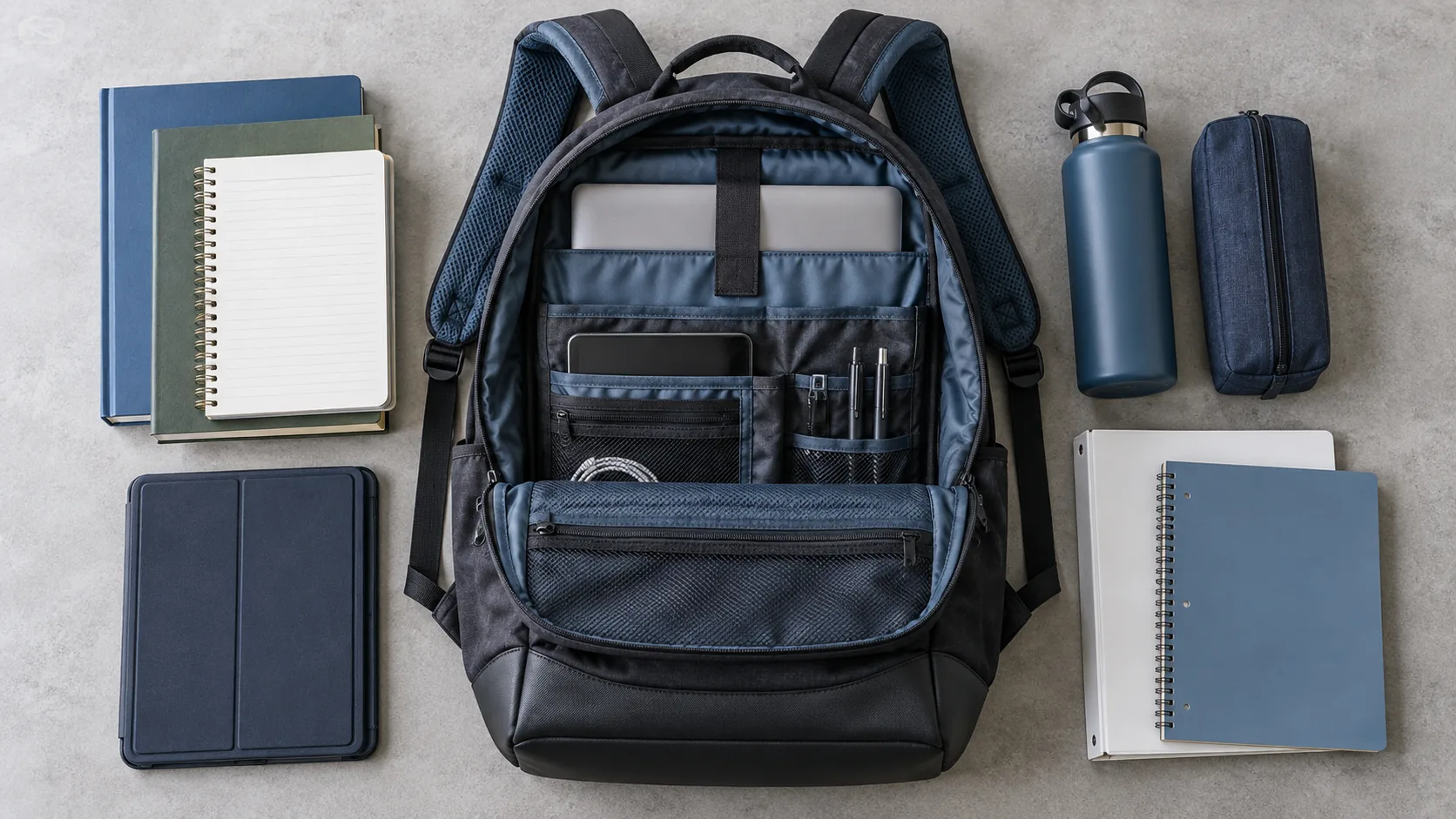
The American Academy of Pediatrics’ school backpack guidance recommends choosing a bag that is proportional to the child, using both broad adjustable shoulder straps, and placing heavier items close to the body. Its guidance also notes that compartments can help distribute contents.
For buying or product approval, translate that advice into observable checks:
- User fit: Compare the back-panel length, bag width, shoulder-strap spacing, and adjustment range with the intended user group.
- Usable dimensions: Test the largest binder, folder, book, and device in the actual compartment. External dimensions do not prove internal fit.
- Opening access: Confirm that books and folders enter without forcing the zipper or folding the contents.
- Device protection: Check the sleeve’s internal size with the device in its case. A suspended base and appropriate padding can reduce direct contact with the bottom panel.
- Organization: Give frequently used items a clear place without adding pockets that reduce usable space.
- Loaded carry: Adjust both straps and check whether the bag stays close to the body without sharp pressure or repeated strap slippage.
- Base construction: Inspect the bottom panel, seams, and corners after the bag has been set down with a representative load.
Our guide to measuring a backpack explains why external dimensions, internal usable space, sleeve size, and stated capacity should be recorded separately.
Which Materials and Construction Details Affect a Bookbag?
Fabric names and denier values do not determine finished-bag performance by themselves. Shell construction, lining, foam, webbing, zippers, seams, reinforcement, and the base panel work as a system.
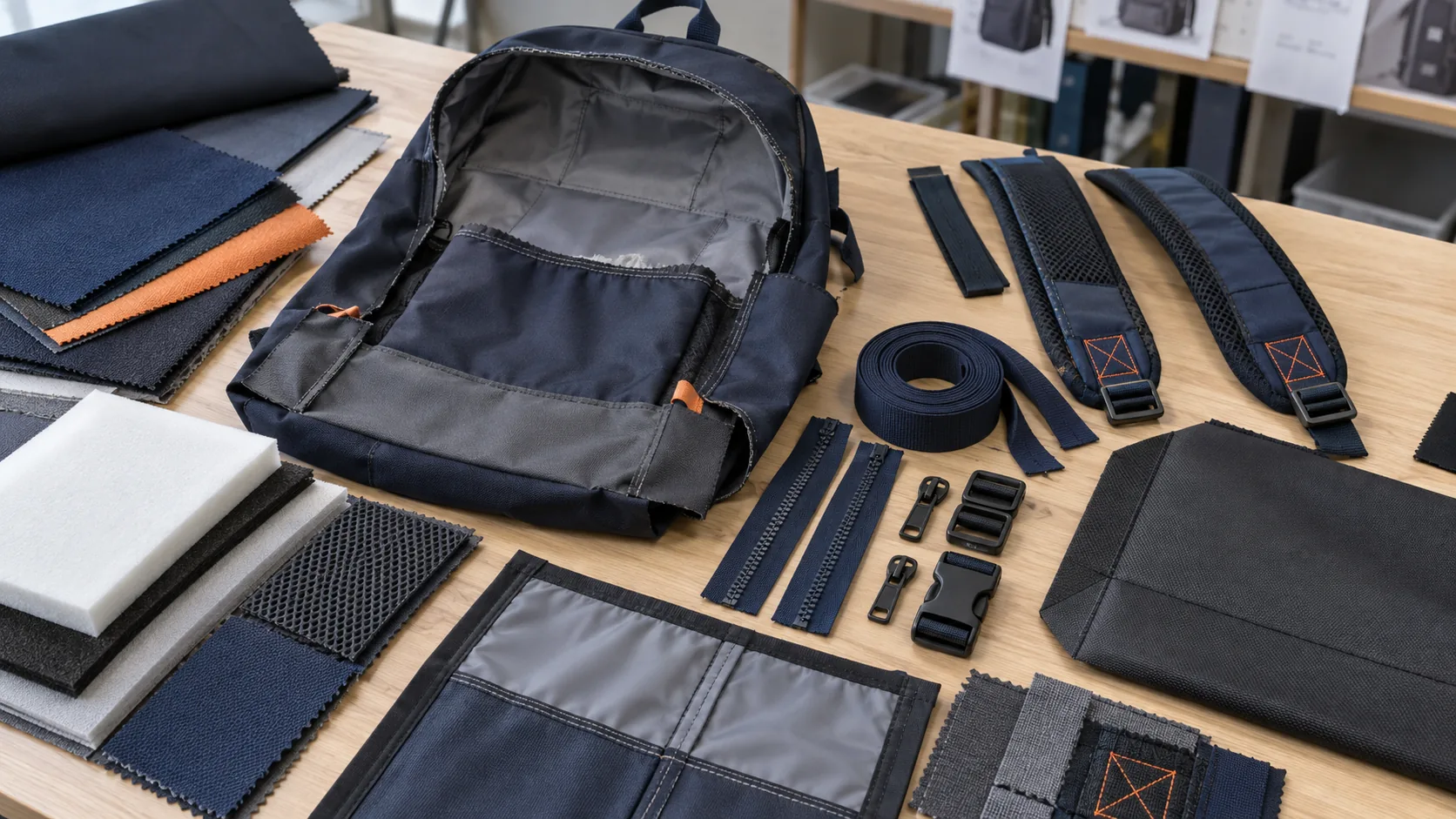
Start with the use conditions. A bag carried between classrooms has different exposure from one used for cycling in rain or regular airline travel. Define abrasion areas, expected cleaning, weather exposure, device protection, and representative load before choosing components.
Check these construction fields on the sample and specification:
| Field | What to record | What to confirm on the sample |
|---|---|---|
| Shell and lining | Fiber, construction, finish, backing, color reference | Hand, appearance, seam behavior, cleaning compatibility |
| Base panel | Material, layers, reinforcement area | Shape retention and contact wear after representative use |
| Shoulder straps | Width, curve, foam, webbing, adjustment range | Fit, symmetry, slippage, and anchor construction |
| Zippers | Chain type and size, slider, opening length | Smooth operation around curves with the bag loaded |
| Seams and reinforcement | Seam type, allowance, binding, reinforcement locations | Stitching consistency and distortion around stress areas |
| Device sleeve | Usable dimensions, padding, suspension, closure | Device fit in its normal case and separation from hard contents |
If component terminology is unfamiliar, Backpack Features Explained covers straps, webbing, adjusters, zippers, frames, and common optional features in more detail.
What Should a Brand Put in a Bookbag Specification?
A factory-ready bookbag specification should define the user, load, dimensions, opening, organization, carrying system, materials, hardware, reinforcement, branding, packaging, tolerances, and approval method.
| Specification item | Required detail |
|---|---|
| Target user | Age or user profile, relevant body-size range, sales channel |
| Representative load | Complete contents list with largest book, folder, device, bottle, and expected total load |
| Dimensions | External height, width, depth, measurement state, and tolerance |
| Internal fit | Main-compartment and sleeve dimensions measured at usable points |
| Access | Opening type, zipper path, and required opening width |
| Organization | Pocket purpose, position, size, closure, and interaction with the main load |
| Carrying system | Strap geometry, foam, webbing, adjusters, back panel, and optional chest strap |
| Materials | Shell, lining, backing or coating, foam, webbing, base, thread, and color references |
| Hardware | Zipper and slider details, buckles, adjusters, pullers, and attachment method |
| Reinforcement | Locations, construction drawings, and inspection points |
| Branding | Method, artwork, size, placement, color, and acceptable variation |
| Approval | Prototype and pre-production sample records, measurements, checks, and revision control |
Avoid specifications such as `school bookbag, 20 L, durable fabric`. The wording leaves too many choices unresolved. A useful brief states what must fit, how the bag will be carried, which construction is approved, and how the finished sample will be checked.
Brands comparing backpack manufacturers can use the same specification for every quotation. That keeps differences in price, materials, construction, testing, and service visible instead of letting each supplier quote a different interpretation.
Frequently Asked Questions
Is it bookbag, book bag, or backpack?
`Book bag` and `bookbag` are both used in American English. `Backpack` is the broader carry-format term. Choose the wording your audience uses, then describe the actual product features.
Can any backpack be used as a school bookbag?
Many can. Confirm that the largest school items fit, the opening is practical, the carrying system suits the user, and the bag remains stable with the intended load.
Does a bookbag have to have two shoulder straps?
No. The word describes a bag for books and school supplies. A two-strap school bag is both a bookbag and a backpack, while a school satchel can be a bookbag without being a backpack.
How should a laptop or tablet fit in a bookbag?
Measure the device in its normal case and compare it with the sleeve’s usable internal dimensions and opening. Check padding, suspension above the base, closure, and contact with books or hardware.
Which word should a brand use on a product page?
Use `bookbag` when school use is central to the product and audience. Use `backpack` for the broader category. Both terms can appear naturally when a two-strap product is designed for school.
Final Decision
For most US school products with two shoulder straps, bookbag and backpack are both accurate. Bookbag emphasizes what the bag carries; backpack emphasizes how it is carried.
Choose the market term after defining the product. Start with the user and representative load, then set usable dimensions, access, carrying-system geometry, materials, hardware, reinforcement, and sample checks. The manufacturing sequence in How to Make a Backpack shows how those decisions move from a brief into patterns, samples, approval, and production.