
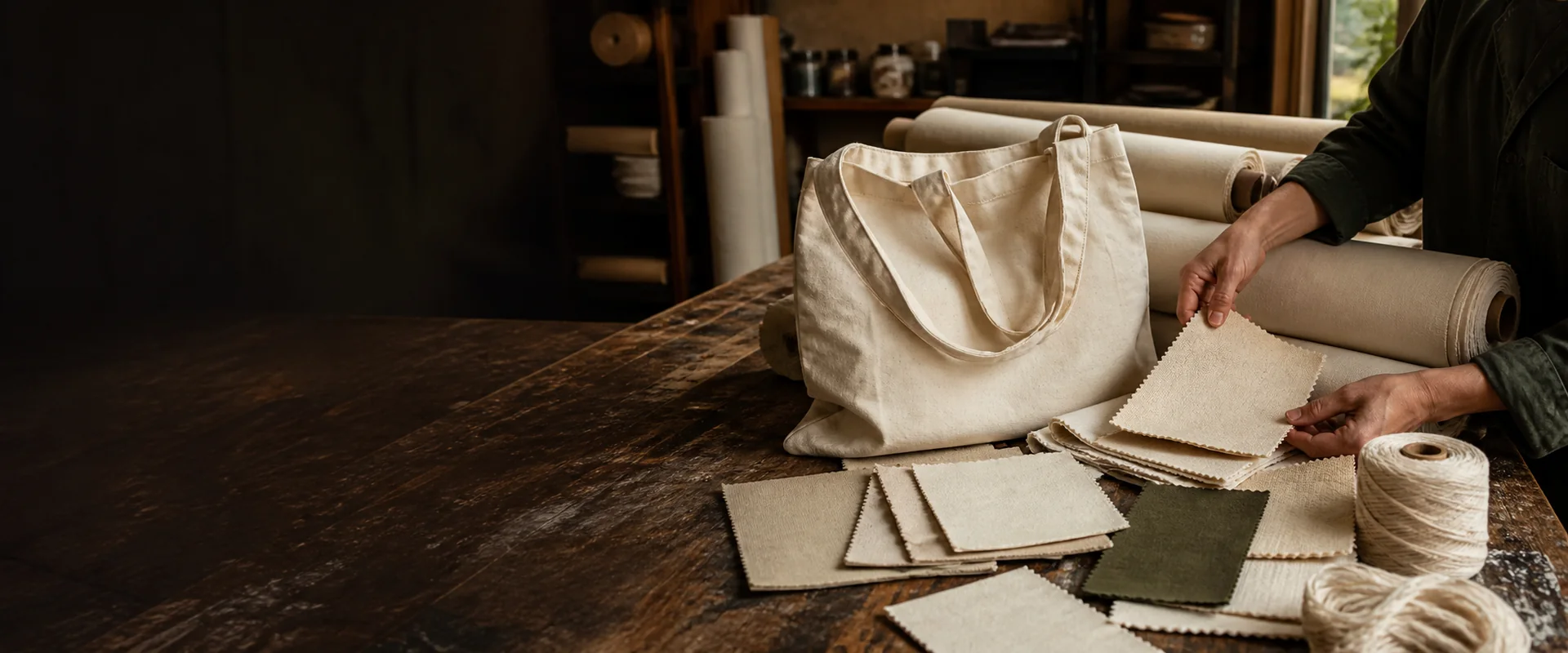
Cotton Bag Material Selection for Custom Bag Projects
Define cotton composition, weave, weight, finish, color, shrinkage, and branding evidence for a custom bag project.
- MOQ from 300 pieces
- Sampling in 7-10 days
- Bulk production in 25-35 days
- Initial response within 12 hours
What Cotton Bag Material Means
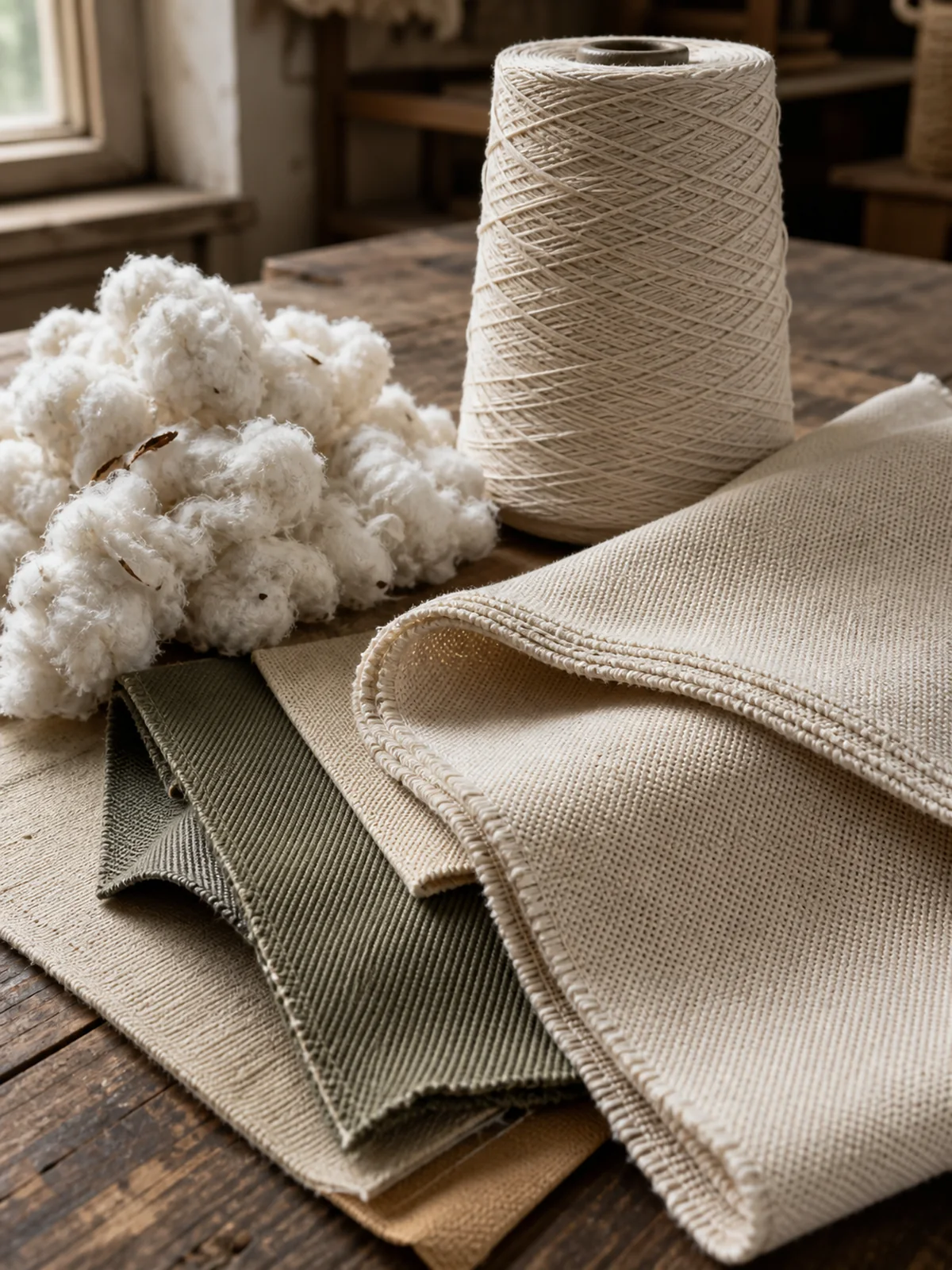
Cotton identifies the fiber content; canvas identifies a fabric construction. A cotton material specification therefore needs the weave or fabric type, composition, weight, finish, color, and intended product use.
- Use the Canvas page when the construction itself is the main decision.
- Use this page when cotton content and related processing are central.
Compare Fabric Weight and Weave
Compare cotton fabrics by composition, yarn and weave, weight, density, finish, opacity, hand feel, and structure. GSM or ounces are helpful only when the measurement basis and construction are known.
- Review physical swatches.
- Approve the selected fabric after finishing.
- Composition, yarn and weave
- Compare composition, yarn, and weave as the first basis for any cotton fabric, since the construction sets the basis for weight and finish.
- Weight and density
- GSM or ounces are helpful only when the measurement basis and construction are known, so record the basis for every comparison.
- Finish, opacity and hand feel
- Read finish, opacity, and hand feel on a physical swatch and recheck them after the selected fabric is finished.


Plan Shrinkage, Dyeing and Hand Feel
Cotton can change through dyeing, washing, printing, and use. Define shrinkage and color expectations, sampling method, and any care or finishing requirement before the pattern and artwork are frozen.
- Do not promise zero shrinkage or perfect batch color unless the evidence supports it.
- Record the approved shade and finished dimensions.

Select Printing and Branding Methods
Select printing and branding around the fabric weight, weave, color, finish, artwork, and target appearance. Sample screen print, transfer, digital methods, embroidery, and labels on the actual cotton construction.
- Approve artwork size, placement, and color.
- Use suitable test evidence before making wash or durability claims.
Verify Cotton and Sustainability Claims
Treat cotton, organic, recycled, certified, traceable, and sustainability wording as separate statements that need support. A fiber name or supplier description alone does not confirm origin, chain of custody, environmental impact, or certification.
- Request documents that identify material, supplier, scope, and validity.
- Use only the wording that the file actually supports.

Match Cotton to Tote and Promotional Applications
Cotton may suit tote, promotional, retail, and lifestyle applications when the selected construction supports the use. After choosing the fabric, use the Custom Tote Bag page to define dimensions, gussets, handles, closures, pockets, and reinforcement.
- Material and product specifications should reference each other.
 Custom Tote Bags
Define a Cotton Specification for Sampling
Send composition, weave or fabric type, weight, finish, color, and shrinkage or care needs. Add logo method, product structure, quantity, and any material-document requirement.
- MOQ starts at 300 pieces.
- Sampling baseline: 7-10 days after specifications are confirmed.
Buyer questions
What does cotton bag material usually mean?
Cotton bag material can refer to different woven fabrics, including plain cotton, twill, canvas-like constructions, or blended materials. The project should specify weight, weave, finish, shrinkage, color, hand feel, and intended use.
Is cotton always the most sustainable choice?
No. Sustainability language depends on verified material source, processing, dyeing, certification, durability, and the full product context. Avoid broad environmental claims unless the exact cotton material and supporting documents are confirmed.
What should I confirm before sampling a cotton bag?
Confirm fabric weight, weave, shrinkage, color, dyeing or printing method, lining, handle construction, logo process, packaging, and use scenario. Cotton can change after washing or finishing, so the finished sample is important.
Which bag types commonly use cotton material?
Cotton may be considered for tote bags, promotional bags, drawstring bags, lifestyle pouches, and light retail packaging. Heavier carry or outdoor use may need canvas construction, reinforcement, lining, coating, or a different material.
Plan the Right Cotton Bag Construction for Your Market
Share the bag format, fabric weight or reference, color and finish, print or embroidery method, quantity, packaging, and use conditions that matter to the project.
Describe Your Cotton Bag Project
We will identify the material, branding, and sampling questions needed before quotation.