
PU Leather Bag Material Selection for Custom Bag Projects
Choose PU leather for the appearance and construction of your custom bag. ZWbags reviews the coated surface, backing, thickness and finish with the seams, edges and branding.
- MOQ: 300 pieces per style per color
- Samples: typically 7–10 days
- Bulk production: typically 25–35 days
- Initial response within 12 hours

Specify the Coated Material and Backing
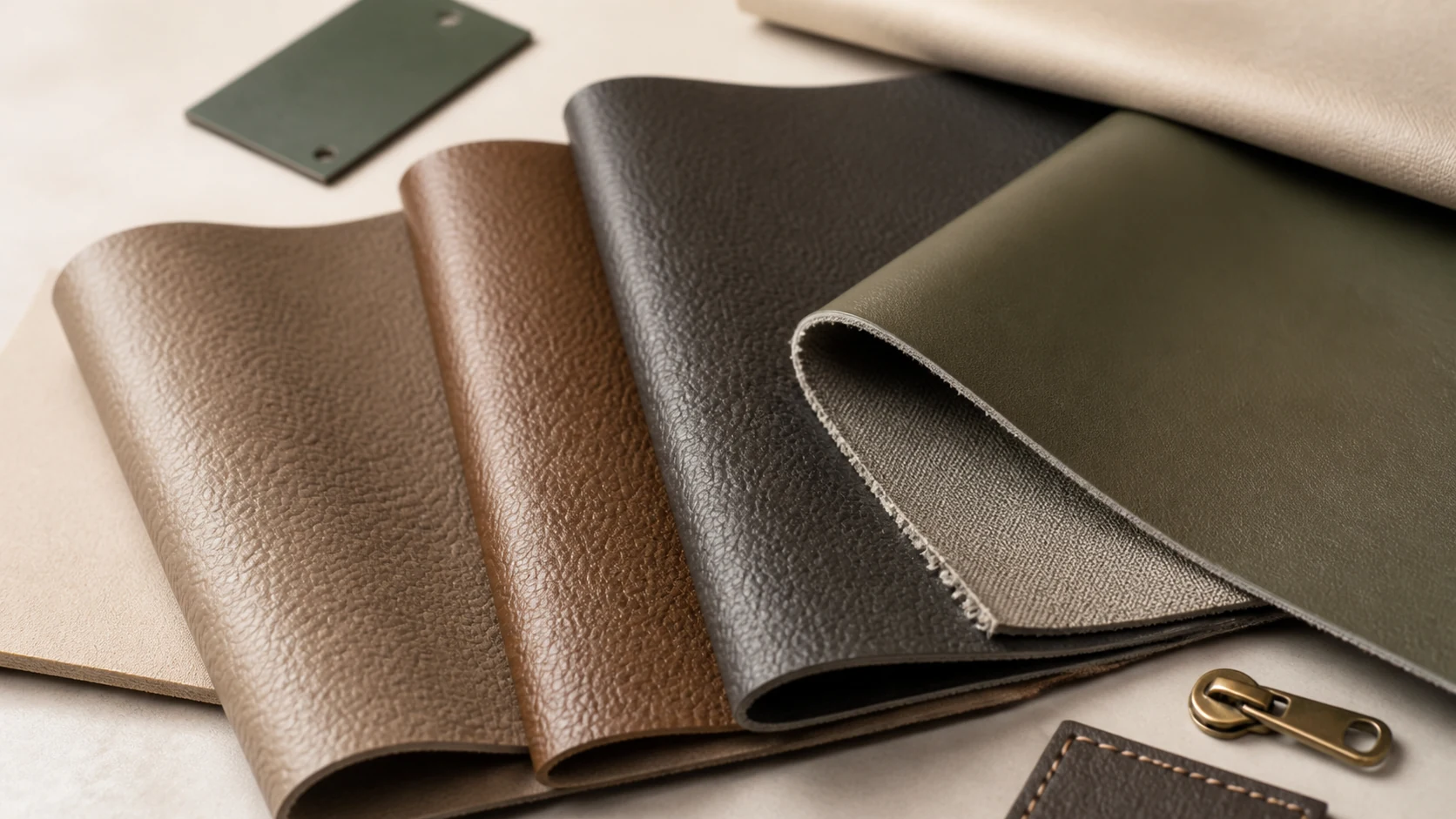
For these projects, PU leather means a synthetic material with a polyurethane surface over a textile backing. The backing, coating, finish and thickness together affect how it bends, sews and holds the intended shape.
Record the full material composition and reference. A description such as PU leather or faux leather does not by itself document every component of the finished bag.
We use supplier documentation for the selected PU material specification. We confirm the color swatch and keep the material and approval records. A change to the approved material or specification needs your confirmation.
Start with a swatch or reference for the texture and feel you want, plus the use and storage conditions the bag will face.

Match Backing and Thickness to the Construction
For a panel that must fold, compare the PU material with its proposed backing and lining at the intended fold. For a side that needs to hold its shape, review the material with the supporting layers. Keep the construction that meets the required folding or shape before comparing surface finishes.
Check the total thickness at corners where layers overlap. Review stitch appearance, seam allowance, edge treatment and how the backing behaves around hardware attachments. Adding thickness can change bulk and folding without establishing better durability.
Approve Texture, Color, Gloss and Feel Together
A screen reference can start the discussion, but use a physical swatch to approve the surface. Compare it under agreed lighting and record the grain, color, gloss and acceptable variation.
Check how the finish looks when bent around the intended shape and how adjacent panels match. For a crosshatch texture, our Saffiano leather guide explains the surface term. The underlying material and backing still need their own specification.


Sample the Seams, Edges and Logo Process
Review stitched, folded or painted edges against the selected PU construction. Check tight corners, needle holes, hardware attachments and areas where the backing might remain visible.
Choose a pressed logo, print or label to suit the selected surface and panel shape. For a pressed logo, include a reference for the appearance you want so the proposed process can be reviewed. Approve the logo at its intended size and placement, including the effect of heat or pressure on color, texture and gloss.
For an unfamiliar combination, a small process sample can help resolve the edge or logo treatment before the complete bag sample is made.
Choose Full Panels or Selected Details
PU leather can be reviewed for the shell, panels, trims or handles of a suitable custom tote or gym bag.
If you want the PU finish across the outside of the bag, start with a full shell and review its folding, opening and lining together. If only selected areas need that finish, mark the panels or trims on the drawing and specify the surrounding fabric separately.
For handles, review the material with the reinforcement, attachment points and intended carrying load. A matching surface does not establish the handle's strength.

Approve the Material in the Finished Construction
Review the packed sample, including folds, edges, closures, carrying points and the decorated surface. Approve the material reference and sample version before bulk production.
Our Dongguan team has 88+ workers. Bag production is handled 100% in-house, with no outsourced bag production steps. Every unit is inspected before shipment against the approved sample and agreed inspection points. Share your target market and any required test standards so we can review them alongside the material and product specifications.
- MOQ: 300 pieces per style per color for custom bags.
- Samples: typically 7–10 days after the required specifications are confirmed.
- Bulk production: typically 25–35 days after sample approval and once production inputs are ready. Shipping is planned separately.
Tooling, special materials, additional testing or sample changes may require more time.
Questions about PU Leather for Bags
Is this PU leather genuine leather?
No. The PU leather discussed here is a synthetic coated material with a textile backing. The quotation and material specification should describe the selected construction accurately.
Does PU leather automatically make the whole bag vegan?
No. A whole-product claim needs documentation for the complete bill of materials, including the surface, backing, lining, adhesives and trims. State the claim you require before materials are selected.
Does thicker PU leather last longer?
Thickness alone does not establish service life. The formulation, backing, finish, construction, use and storage conditions also matter. Review the selected material and the relevant test evidence.
What is the minimum order for a custom PU leather bag?
The MOQ is 300 pieces per style per color. Send the design, material reference, colors and quantity breakdown for review before quotation.
What are the key facts for PU leather bags at ZWbags?
| Thickness | About 0.6–1.2 mm |
|---|---|
| Backings | Knitted and woven backings |
| Surfaces | Pebbled, crosshatch, smooth, matte and other embossed textures |
| Colors | Any Pantone color can be matched; fabrics not stocked in the required color can be dyed |
| Other specifications | Sourced from our fabric mills on request |
| Used in | Tote bags, tennis bags and gym bags |
| MOQ | 300 pcs per style per color |
| Supplier facts | Factory location, workforce, inspection and testing |
Review PU Leather Options for Your Bag Design
Tell us the product type, surface appearance, hand feel, backing, color, hardware, logo method, quantity, and market requirements you want the sample to represent.
Share Your PU Leather Brief
We will review the material direction and the construction details that need approval.