
Saffiano usually describes a fine crosshatch surface associated with structured leather goods. It does not, by itself, identify the animal, leather layer, polymer, backing, coating system, or performance of the supplied material.
That boundary explains why one product page may describe Saffiano calf leather while another lists “Saffiano PU.” Buyers should keep the familiar name, then record the construction and evidence behind it.
What Is Saffiano Leather?
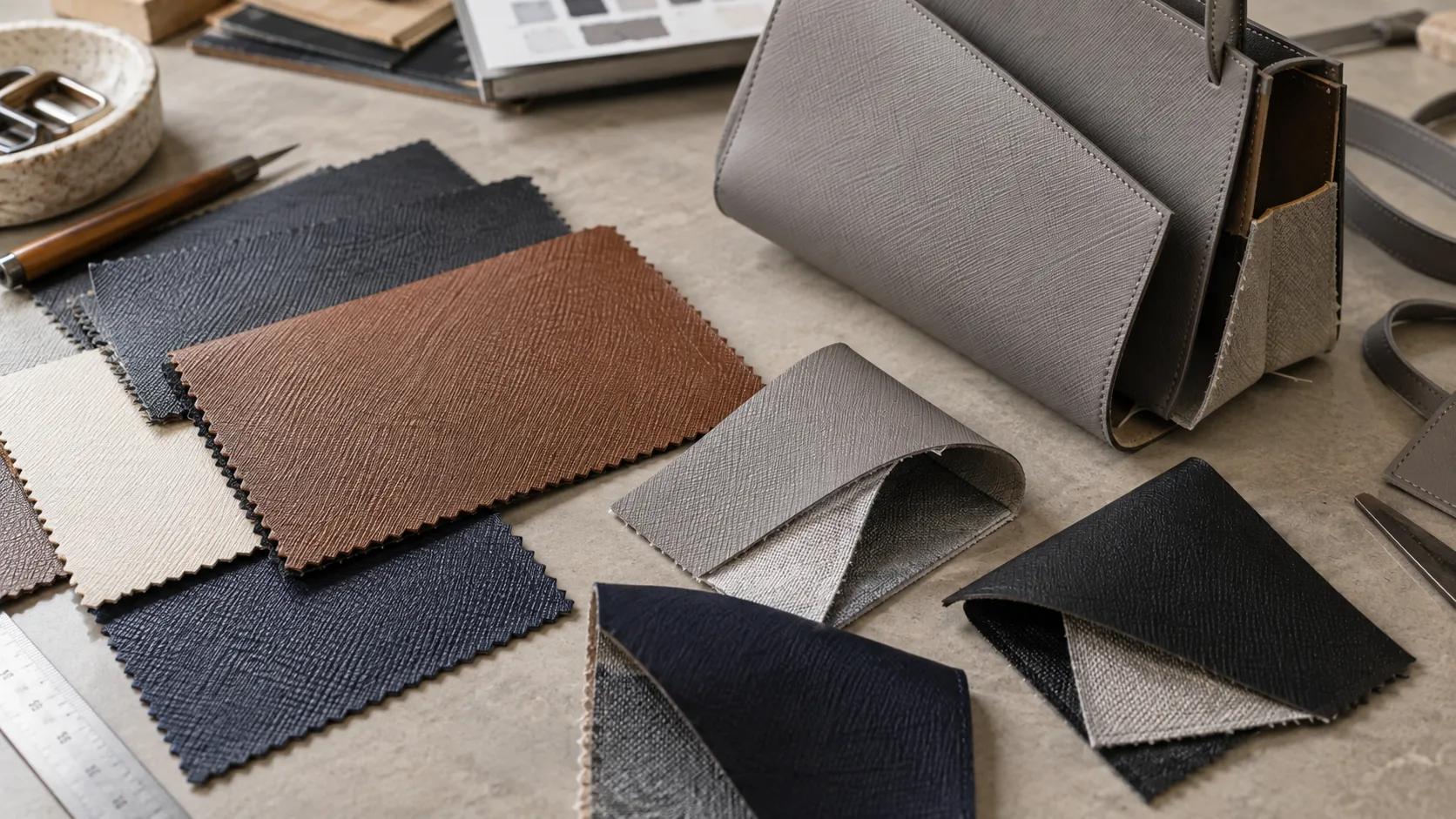
Saffiano is a market name for a regular crosshatched surface used on bags and small leather goods. The classic association is embossed, finished leather. Current product listings also apply Saffiano wording to synthetic materials that carry a similar visual texture.
Prada describes its own Saffiano as calf leather with a crosshatched surface. The brand also describes that material as scratch and water resistant and says the pattern was patented by Mario Prada. Those statements document Prada’s material and history; they do not establish a universal specification for every material sold under the same word.
The other side of current market use is visible on a Charles & Keith product page, where the material field says “Saffiano PU.” That pairing shows why the word cannot prove animal origin or substrate on its own.
For sourcing, treat Saffiano as the supplier’s stated surface name. Add the substrate or leather description, layer, coating or finish, backing, total thickness, material code, lot, and approved physical sample before comparing prices.
What Can the Saffiano Name Tell a Buyer?
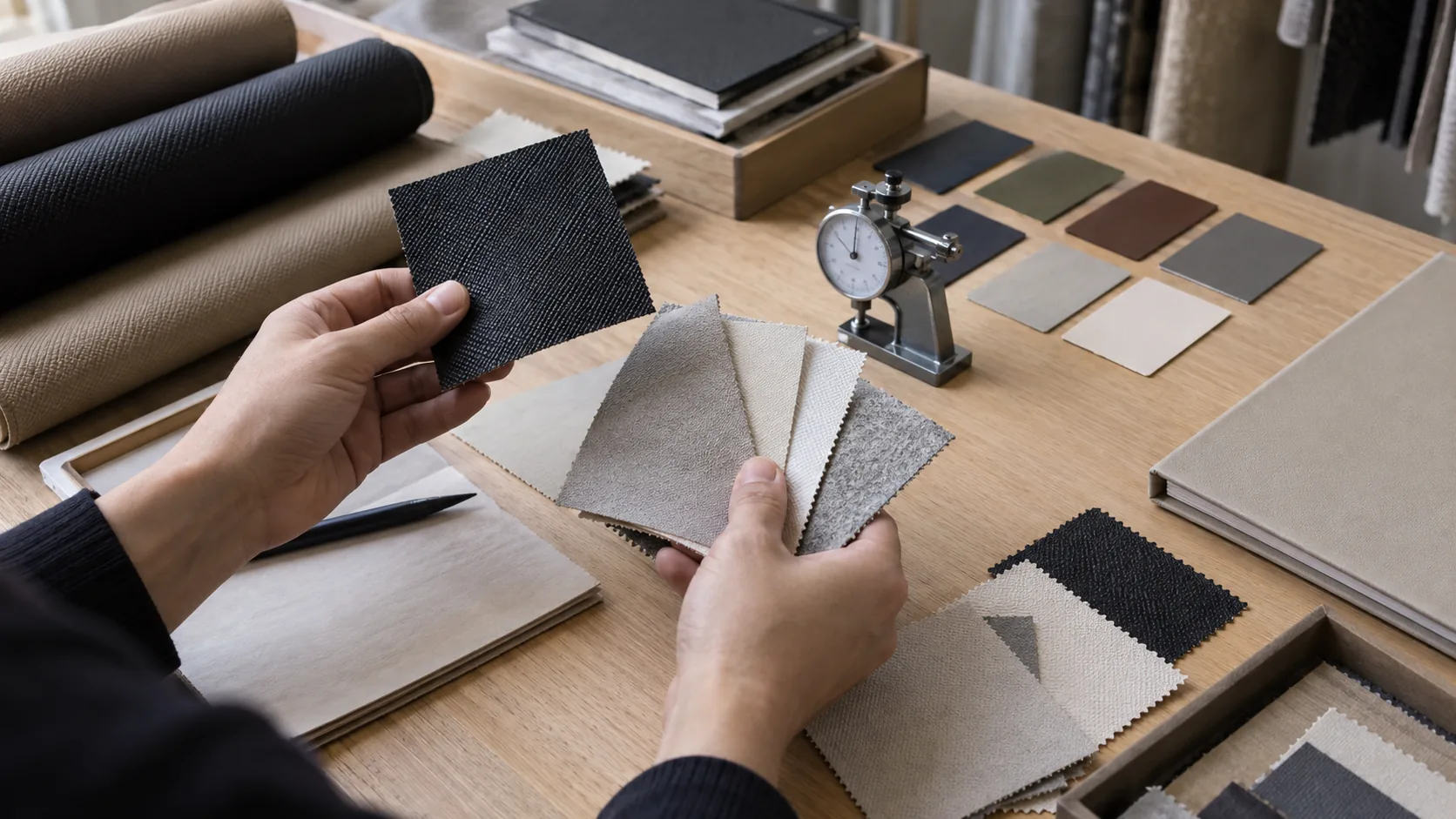
The name can guide a visual brief. It usually points toward a fine, regular crosshatch rather than a smooth or irregular pebbled face. It may also signal that the buyer expects consistent pattern scale, surface color, and sheen across bag panels.
It leaves most purchasing fields open.
| Field | What “Saffiano” may suggest | What still needs to be recorded |
|---|---|---|
| Surface | A regular crosshatch appearance | Emboss reference, scale, depth, sheen, color standard |
| Material identity | Nothing conclusive | Animal and leather layer, coated split, PU, PVC, or another construction |
| Layer structure | Nothing conclusive | Face layer, substrate, backing, bonding, total thickness |
| Performance | No test result | Actual object, method, condition, endpoint, acceptance basis |
| Product use | Often seen on structured goods | Bag shape, bend zones, seams, edge method, reinforcement, hardware |
| Label wording | A supplier or market term | Target-market review of composition and product-part disclosures |
A photograph can help lock the pattern. It cannot reveal a textile backing, confirm a leather layer, identify the coating, or prove how the surface behaves at a folded gusset. Keep a retained swatch or material sample with the written fields so a future reorder does not depend on the name alone.
Is Saffiano Always Real Leather?
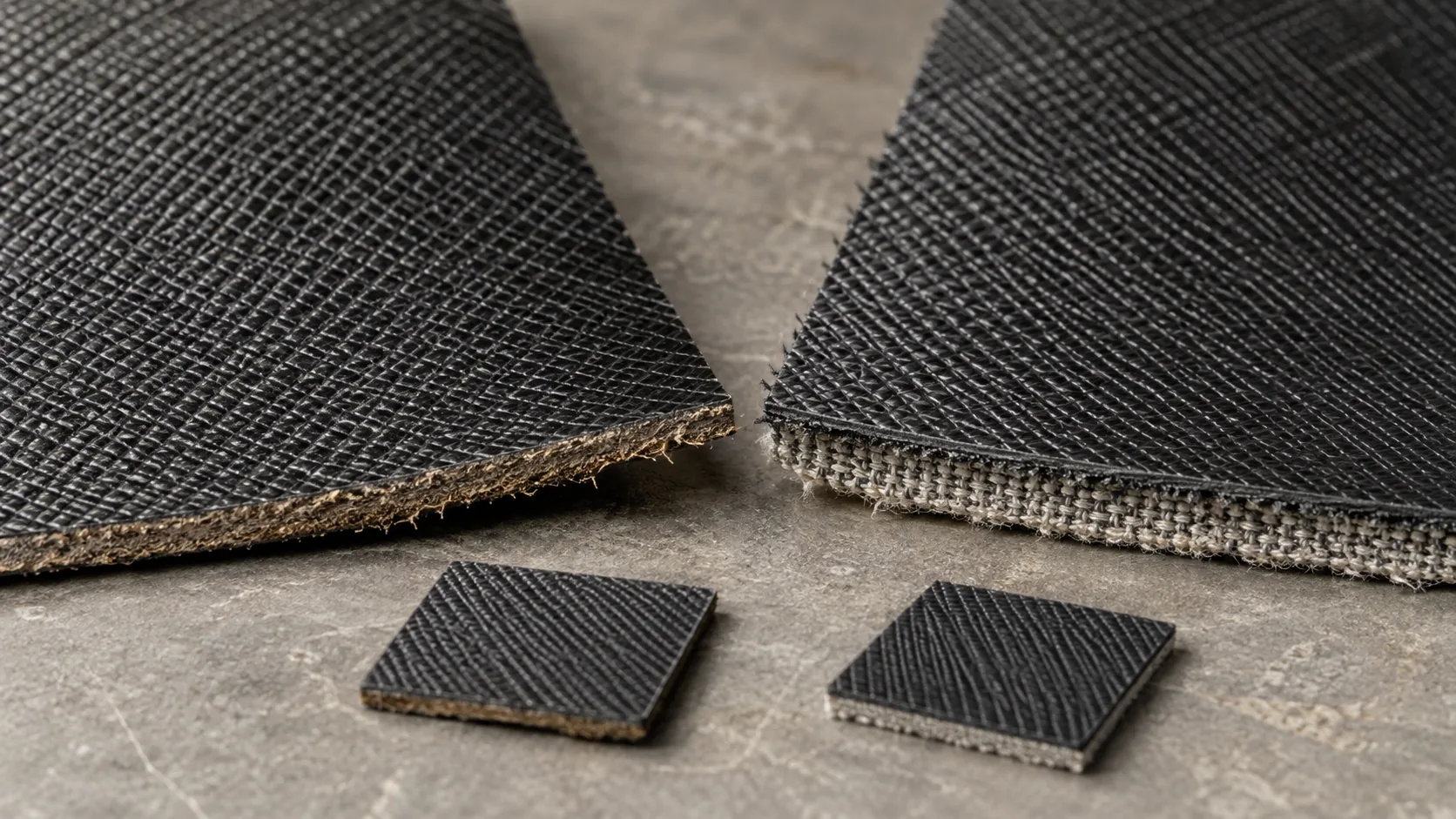
No. Current commercial use includes Saffiano leather and Saffiano PU. A quote that says only “Saffiano” is incomplete until the supplier states the underlying construction.
For a leather version, ask for the animal source, leather layer, finish, backing, substance or thickness, and material code. For a synthetic version, ask for the surface polymer or coating, textile or other substrate, backing, layer construction, and total thickness. The PU leather material guide explains why the surface layer, base fabric, finish, formulation, and bag process need separate control. The PU leather vs faux leather comparison then separates the broader market category from polyurethane-based constructions before a buyer compares quotations. If a quotation uses PVC wording instead, the PVC material guide helps separate the polymer name from the supplied film, coated fabric, or laminate.
Composition also affects public wording. For products marketed in the United States, 16 CFR 24.2 says that non-leather material made to look like leather should be disclosed and addresses backing, embossed or processed leather, and claims about particular product parts. That is a US disclosure framework, not a global labeling rule.
ISO 15115:2019 is the current published international leather vocabulary, confirmed in 2025 and marked for revision while a second edition is under development. A buyer using leather terminology across markets should check the current vocabulary and the applicable local disclosure rules at the time the product copy is approved.
How Is a Saffiano Texture Made?
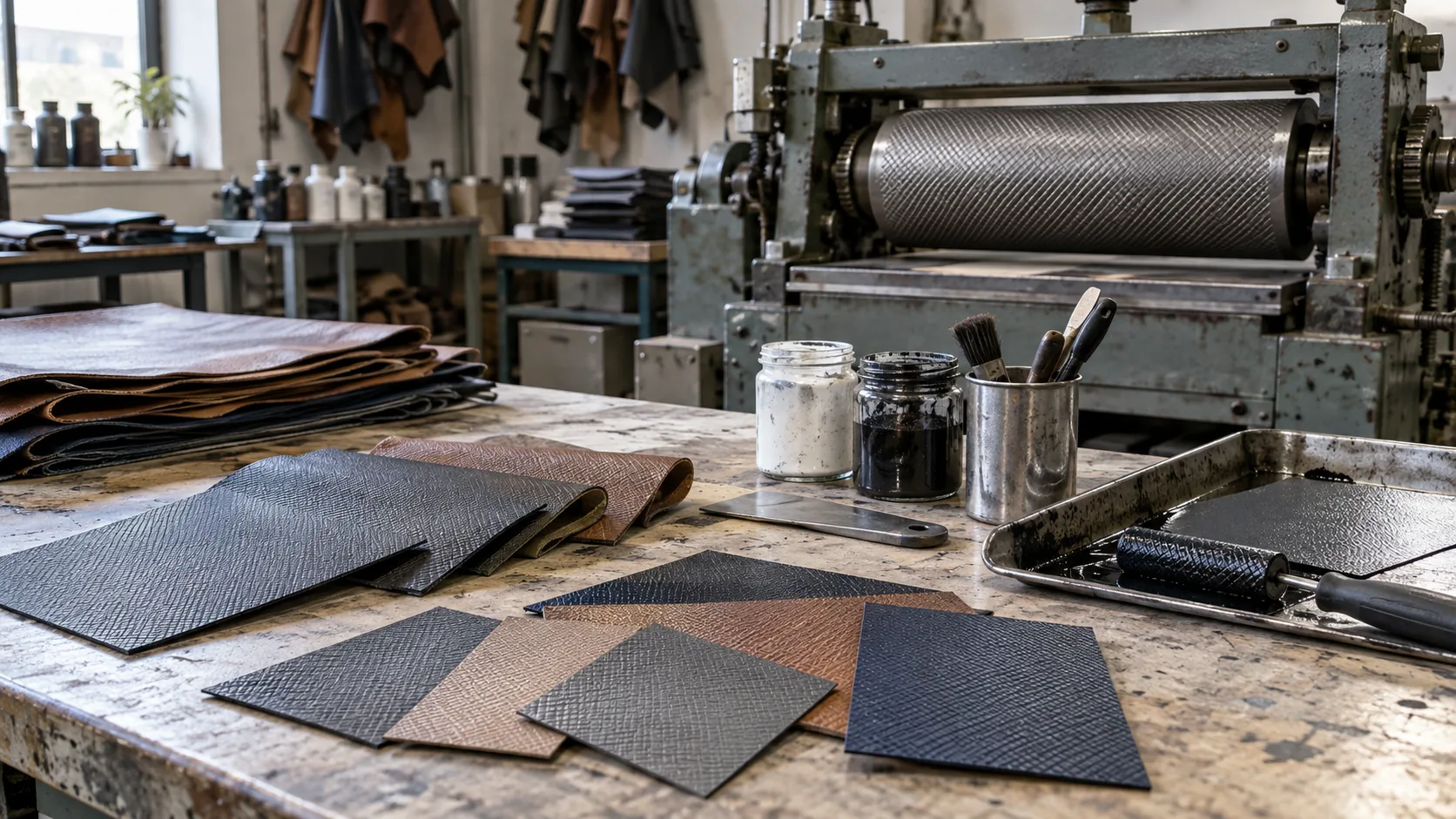
The visible grid is created through an embossing or patterned-surface operation. The exact sequence depends on the material system and supplier. Leather may be colored, embossed, coated, and finished in a sequence chosen for that article. A synthetic version may carry the pattern in a polymer surface bonded to a textile or other backing.
Do not turn one brand’s process into a universal recipe. Heat, pressure, a patterned plate or roller, pigments, waxes, resins, and other finish systems can appear in commercial descriptions, but the word Saffiano does not freeze those variables.
Separate four questions during development:
- What is underneath? Record the leather or synthetic construction and the relevant layer or backing.
- Where is the pattern formed? Confirm whether the crosshatch is embossed in leather, a coating, a film, or another surface layer.
- What controls color and sheen? Keep a physical color and gloss reference for the actual material code.
- What protects the face? Record the stated finish or coating and request evidence for any performance claim that matters.
For finished leather, ASTM D6182-23 evaluates finish flexibility and adhesion by examining cracking, delamination, and discoloration under repeated flexing. Its scope is finished leather, not every Saffiano PU construction and not a complete bag. Match any test method to the actual material and intended claim.
How Does Saffiano Compare With Pebbled and Smooth Surfaces?
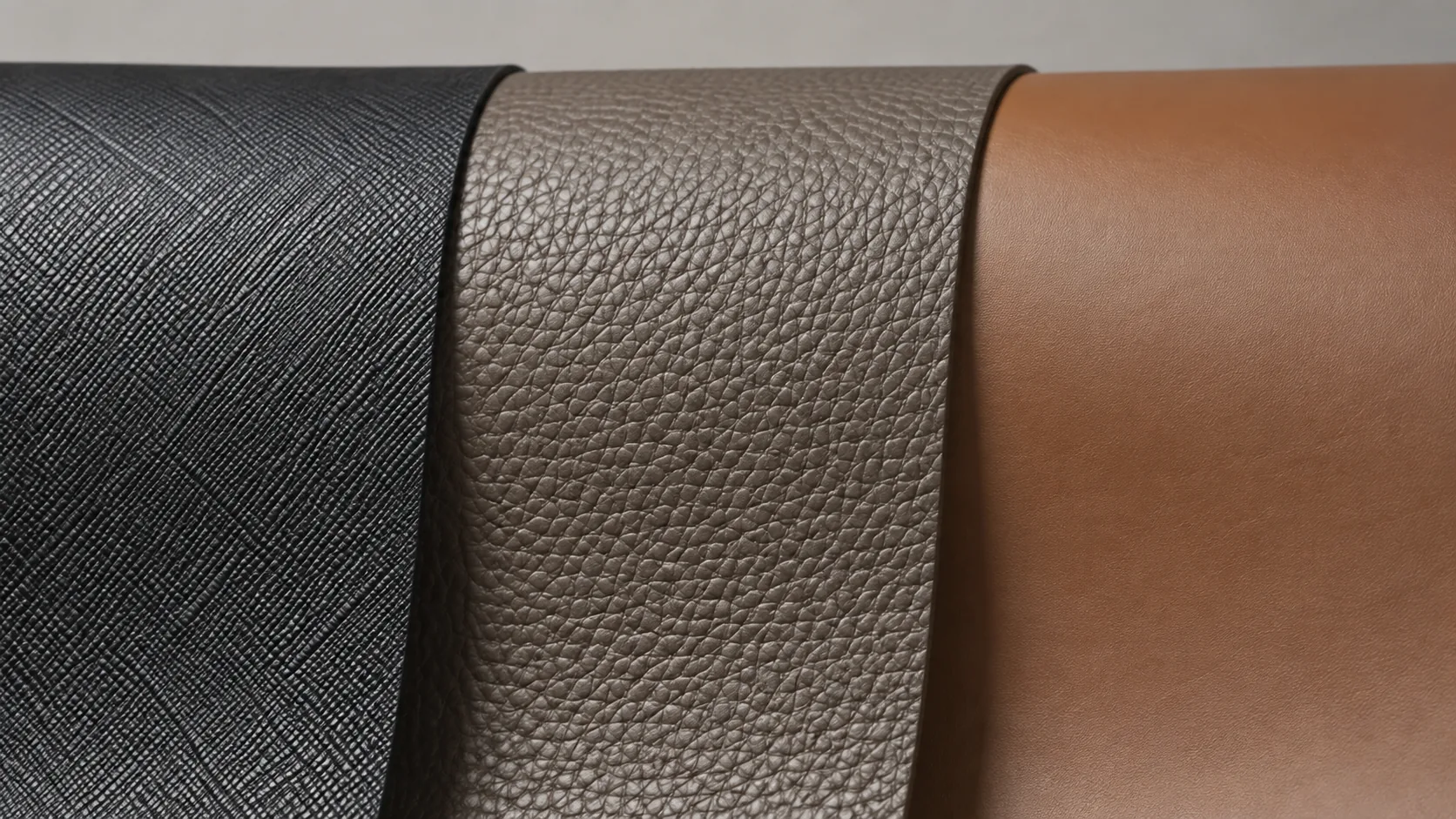
Saffiano, pebbled, and smooth are surface descriptions rather than a dependable quality ranking. Each can appear on different substrates and with different finish systems.
| Surface | Visual character | Approval focus | What the name does not prove |
|---|---|---|---|
| Saffiano | Fine, regular crosshatch | Pattern reference, sheen, fold response, edge behavior | Substrate, layer, coating, resistance, service life |
| Pebbled | Raised, irregular or repeated grain | Grain scale, repeat, softness, cleaning at relief | Whether grain is natural or embossed, leather grade, durability |
| Smooth | Flat face with little visible relief | Surface uniformity, gloss, marking, color consistency | Substrate, coating flexibility, scratch performance |
The choice should follow the product’s visual direction and construction. A structured work tote may use a firm crosshatched panel, while a soft pouch may need a more flexible article. The finish name cannot decide temper, thickness, fold radius, edge construction, or reinforcement.
For a Saffiano tote program, define the actual panel and handle construction alongside the surface. The custom tote bag manufacturing page shows how material, opening, handles, decoration, structure, and sampling have to work as one build.
Which Saffiano Performance Claims Need Evidence?
Scratch resistance, water resistance, flex life, abrasion, color transfer, finish adhesion, peel behavior, seam performance, and finished-bag durability are separate questions. The Saffiano name supplies none of their test conditions or results.
Brand descriptions of a specific product can be accurate for that product without transferring to another supplier’s material. In the United States, 16 CFR 24.3 sets conditions for terms including waterproof, scratchproof, scuff resistant, and scratch resistant. A broad claim needs an appropriate basis for the object being sold.
Define the evidence record before accepting a result:
- the exact material code, lot, layer construction, and sample state;
- the test method and edition;
- conditioning, direction, cycle, load, exposure, or other stated conditions;
- the measured endpoint and acceptance basis;
- whether the result applies to a flat material, finished seam, component, or complete bag.
A finish-flex result does not prove abrasion resistance. A water result for a panel does not cover seams, zipper gaps, edges, or openings. A material pass does not establish the service life of a finished bag.
What Should Buyers Specify Before Sampling?
Write the RFQ so that two suppliers cannot hide different constructions behind the same surface name.
| RFQ field | Information to request |
|---|---|
| Supplier-stated name | Preserve the exact commercial term used in the quotation |
| Material identity | Animal source and leather layer, or polymer/coating and substrate |
| Construction | Coated, laminated, backed, split, or other applicable layer description |
| Material code and lot | Traceable supplier reference for sampling and reorder |
| Thickness or substance | Target, unit, measurement method, and tolerance if required |
| Surface reference | Approved crosshatch scale, depth, direction, color, and sheen |
| Backing | Type, color, and whether it remains visible at cut edges or inside the product |
| Bag-part allocation | Body, trim, handles, gussets, base, or specified components |
| Process compatibility | Sewing, folding, edge paint, skiving, embossing, printing, adhesives, and hardware |
| Claim evidence | Test object, method, conditions, endpoint, result, and acceptance basis |
| Confirmation record | Approved material swatch and production-representative bag sample |
Review the selected material where the product stresses it. Fold a gusset at the intended radius, sew the planned seam, finish the edge, apply the logo process, and install representative hardware. Record observations without turning a visual check into a laboratory claim.
The retained swatch controls appearance, while the written fields preserve identity and repeatability. A test report remains a separate evidence layer and covers only its stated object and conditions.
How Should a Saffiano Bag Be Cared For?
Care instructions should come from the confirmed material supplier and the completed bag construction. Leather Saffiano and Saffiano PU may need different cleaners, storage conditions, and responses to moisture or heat.
Until the supplier provides a product-specific method, avoid strong universal instructions. A conservative care note can tell the user to remove loose dust with a soft dry cloth, test any approved cleaner in a hidden area, avoid soaking and harsh solvents, allow the bag to dry away from direct heat, and store it without crushing permanent folds.
The lining, edge paint, adhesives, printed decoration, hardware, and internal stiffeners may set a stricter limit than the exterior face. Approve the care statement on a production-representative sample rather than copying it from another Saffiano product.
Frequently Asked Questions
Is Saffiano a type of animal leather?
No. The term is associated with a crosshatched surface and does not identify an animal species by itself. A leather quotation should still state the animal, leather layer, finish, backing, material code, and sample reference.
Is Saffiano PU real leather?
No. “Saffiano PU” describes a PU-based material carrying Saffiano-style surface wording. The supplier should state the surface layer, substrate or backing, total construction, and the bag parts where it will be used.
Is all Saffiano leather scratch resistant?
No universal conclusion follows from the name. A brand may support that claim for its own material, but another material needs evidence tied to the actual code, surface, method, conditions, and acceptance basis.
Is Saffiano leather waterproof?
The word does not prove waterproof performance. Water behavior depends on the material and finish, while the finished bag also includes seams, closures, edges, and openings. Test and describe the correct object for the intended use.
Does Saffiano develop a patina?
Do not predict aging from the name alone. Visible change depends on the underlying leather or synthetic construction, pigmentation, top finish, color, use, cleaning, storage, and exposure. Approve the material for the desired appearance rather than promising one aging pattern.
Is Saffiano suitable for custom bags?
It can be considered for structured totes, work bags, small accessories, panels, and trims when the confirmed material fits the design. Sampling still needs to check folds, seams, edges, decoration, hardware, reinforcement, and the required evidence.
Turn the Surface Name Into a Buildable Specification
Keep “Saffiano” as the visual reference, then add the fields that control the product: substrate, layer construction, backing, thickness, finish, material code, lot, bag-part allocation, process compatibility, confirmed swatch, and evidence for any public claim.
Once those decisions are recorded, the custom bag manufacturing process can evaluate the material inside the actual pattern, seam, edge, reinforcement, decoration, and hardware plan. The approved swatch and production-representative sample should remain linked to the written specification.