
A quotation that says only “PVC material” can hide whether the buyer is receiving clear film, coated cloth, a laminate, or synthetic leather. If the brief names a PEVA material instead, the same rule applies: confirm the grade, physical form, thickness, construction, and claim evidence.
PVC, or polyvinyl chloride, is a thermoplastic polymer. In bags it may appear as flexible film, a coating or laminate on a textile carrier, a synthetic-leather surface, or a semi-rigid component. These constructions are not interchangeable and need different specifications and evidence.
Identifying the actual construction lets you decide which material, joining, water-protection, and compliance records are needed before sampling.
What Is PVC Material?
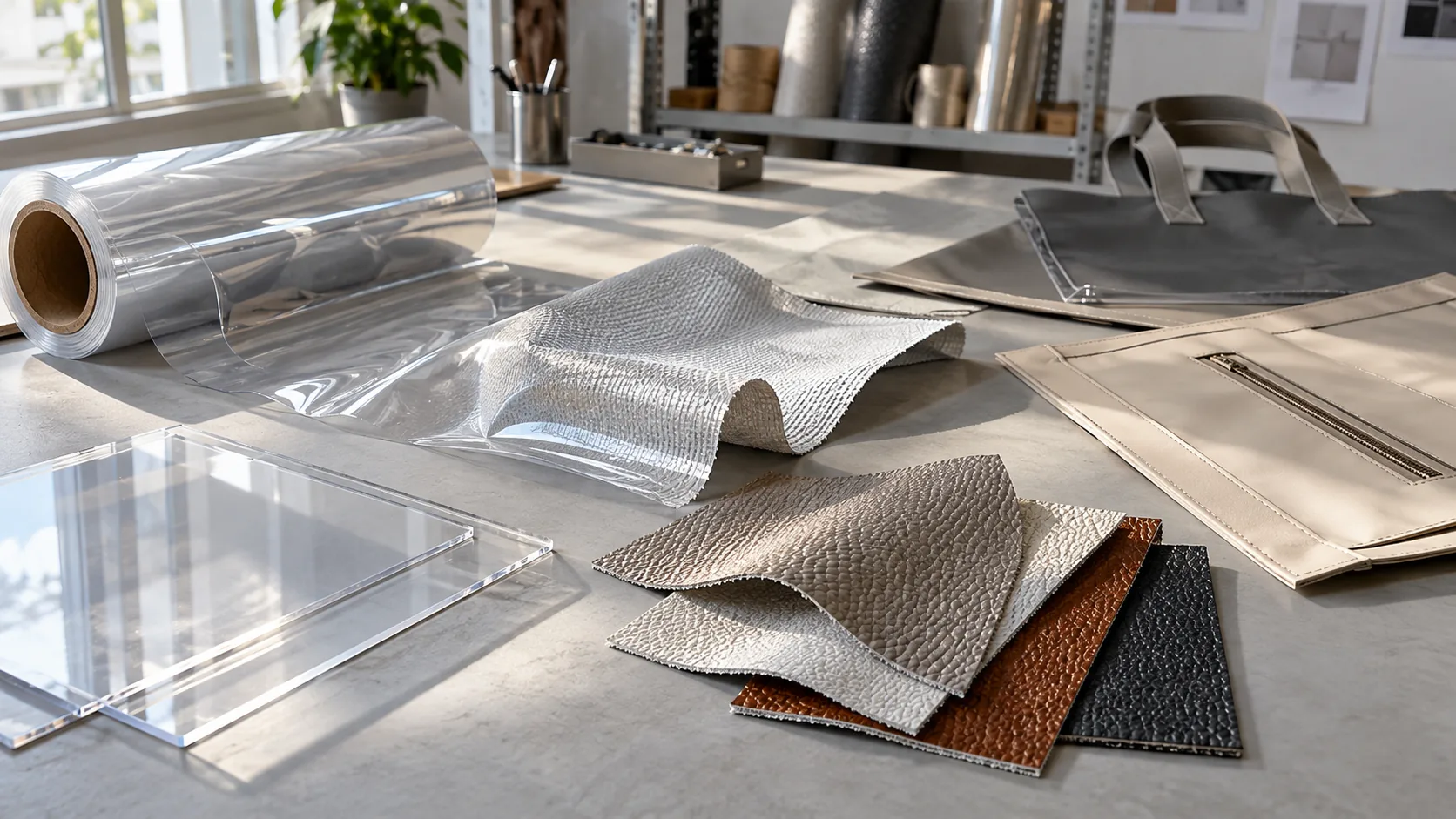
PVC names the base polymer polyvinyl chloride. It does not define one finished bag material. In sourcing conversations, the same label may refer to:
- clear or colored flexible film used without a textile carrier;
- a PVC layer coated directly onto woven or knitted fabric;
- a preformed film laminated to a textile carrier;
- PVC synthetic leather with a surface, possible foam layer, and backing; or
- a rigid or semi-rigid sheet or component.
“PVC fabric,” “PVC leather,” and “PVC film” therefore are not synonyms. PVC fabric usually describes a textile-and-polymer composite, PVC leather is a particular synthetic-leather construction, and PVC film may contain no fabric at all.
Material-identity checkpoint: Treat PVC as the beginning of the specification. Freeze the grade or supplier product code, formulation disclosure available for the project, physical form, carrier, layer position, thickness, surface, and intended component separately.
How Does PVC Become a Flexible Bag Material?
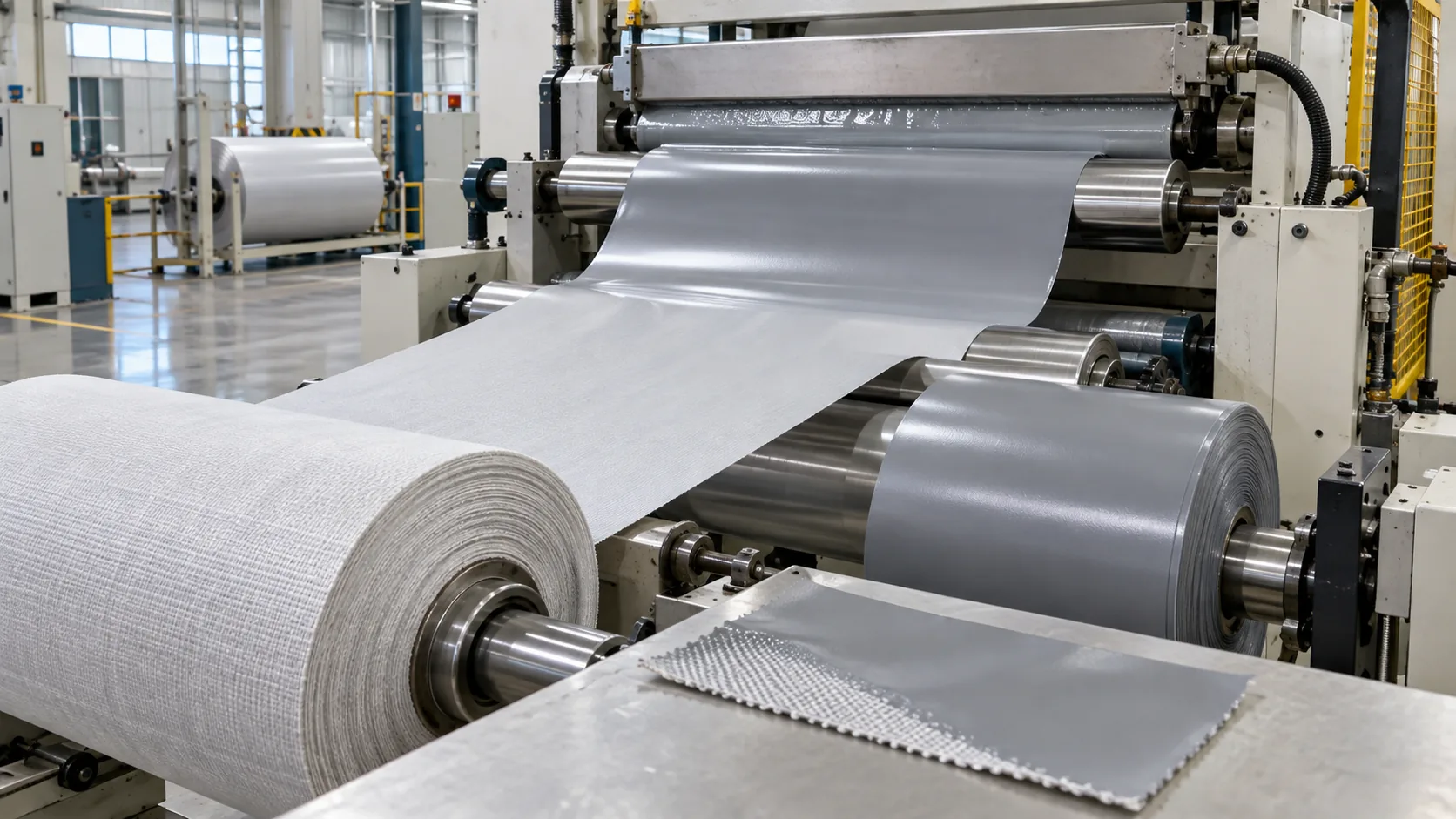
Unmodified PVC resin is not a complete flexible-film recipe. A manufacturer selects a resin grade and combines it with an application-specific additive package. Depending on the formulation, that package may include one or more plasticizers, stabilizers, pigments, processing aids, fillers, or other ingredients. Not every flexible PVC construction uses the same substances or proportions.
The formulated material can then become a bag component through different routes:
- Calendered film or sheet. Heated material passes through rolls to form a controlled film or sheet.
- Direct coating. A PVC layer is applied and fused to a textile carrier.
- Lamination. A separate PVC film is bonded to a carrier with heat, pressure, adhesive, or a defined combination.
- Synthetic-leather construction. The surface layer is combined with a textile or knit backing and may include another layer to create the target hand and structure.
- Finishing. Embossing, printing, surface treatment, and top finishes create the required appearance and cleanability.
Layer checkpoint: A PVC-coated or laminated textile is a multilayer test object. Record the carrier fiber and construction, PVC layer, coated or laminated side, process type, adhesive where relevant, total construction, and which layer each claim or test covers.
Which Types of PVC Material Are Used in Bags?
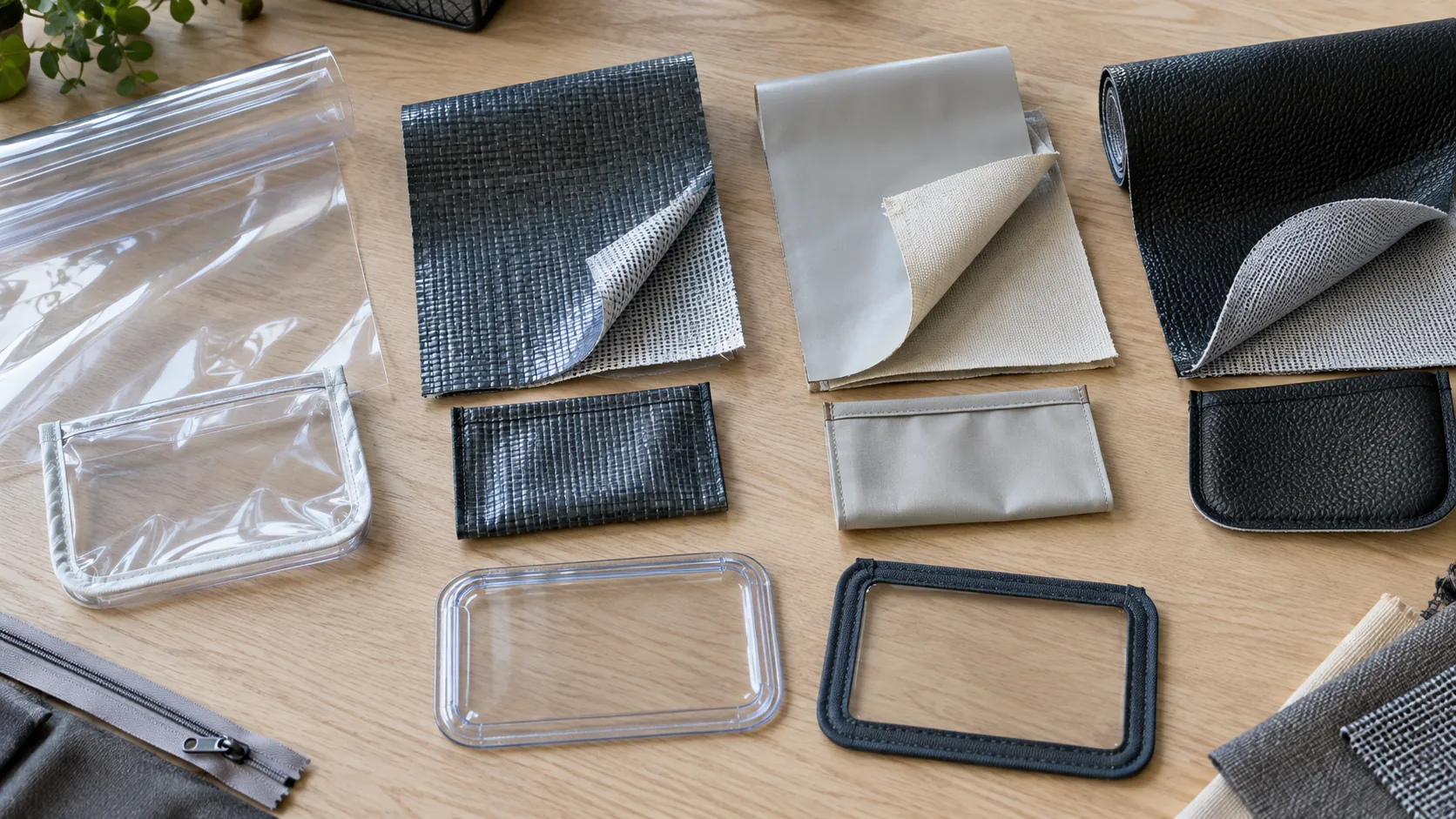
The construction changes joining, appearance, failure modes, and the evidence a buyer should request.
| Construction | Conditional bag role | Joining considerations | What the label does not prove |
|---|---|---|---|
| Clear flexible film or sheet | Visibility panels, clear pouches, and clear totes | May be sewn, heat sealed, or welded when the exact material and process are compatible | Thickness, clarity retention, flexibility, or seam performance |
| PVC-coated woven textile | Utility totes, covers, and structured coated panels | May be stitched or joined with a compatible welding process; stitched holes remain part of the water path | Carrier identity, coating mass, adhesion, or water resistance |
| Laminated textile | Low-permeability panels where a separate film is bonded to a carrier | Bond durability depends on the layer pair, adhesive or thermal process, and exposure | Long-term adhesion, cold-flex response, or backing strength |
| PVC synthetic leather | Exterior panels needing a leather-like grain or wipeable face | Usually cut and sewn; edges, backing, reinforcement, and fold lines need approval | Surface-layer thickness, backing, flex life, or genuine-leather identity |
| Rigid or semi-rigid PVC component | Windows, sleeves, inserts, or local structure | Commonly captured, bonded, or mechanically fixed within the component design | Impact performance, long-term dimensional stability, or regulatory suitability |
The table is a routing tool, not a universal use chart. A supplier’s named construction still needs an exact sample, technical record, and joining trial.
What Properties and Water-Protection Limits Matter?
PVC constructions can be made transparent or opaque, smooth or embossed, flexible or relatively stiff, printed or solid-colored, and backed or unsupported. Those options depend on the exact formulation, thickness, carrier, surface treatment, and manufacturing route.
Buyers commonly review:
- Clarity and appearance. Confirm haze, color, gloss, texture, print, and an approved visual reference.
- Hand and structure. Film thickness, coating, backing, and any intermediate layer work together.
- Cleaning compatibility. A wipeable surface still needs a cleaning method validated for the selected top finish, ink, adhesive, and assembled bag.
- Temperature response. Flexibility in cold or heat belongs to the named construction and test conditions, not to PVC as a universal category.
- Surface and layer behavior. Flexing, abrasion, coating adhesion, and laminate adhesion answer different questions.
- Odor and appearance change. Record the sample, exposure, storage, layer, and timeline before assigning a cause.
Some plasticizers in flexible PVC are not covalently bound to the polymer and can migrate under particular combinations of time, heat, ultraviolet exposure, and contact materials. Hardening, tackiness, cracking, yellowing, or odor can have several possible causes, so one symptom is not proof of plasticizer migration.
Blocking is also separate: it means unwanted adhesion between contacting material surfaces under defined conditions. It should not be treated as another name for surface tack, migration, or delamination.
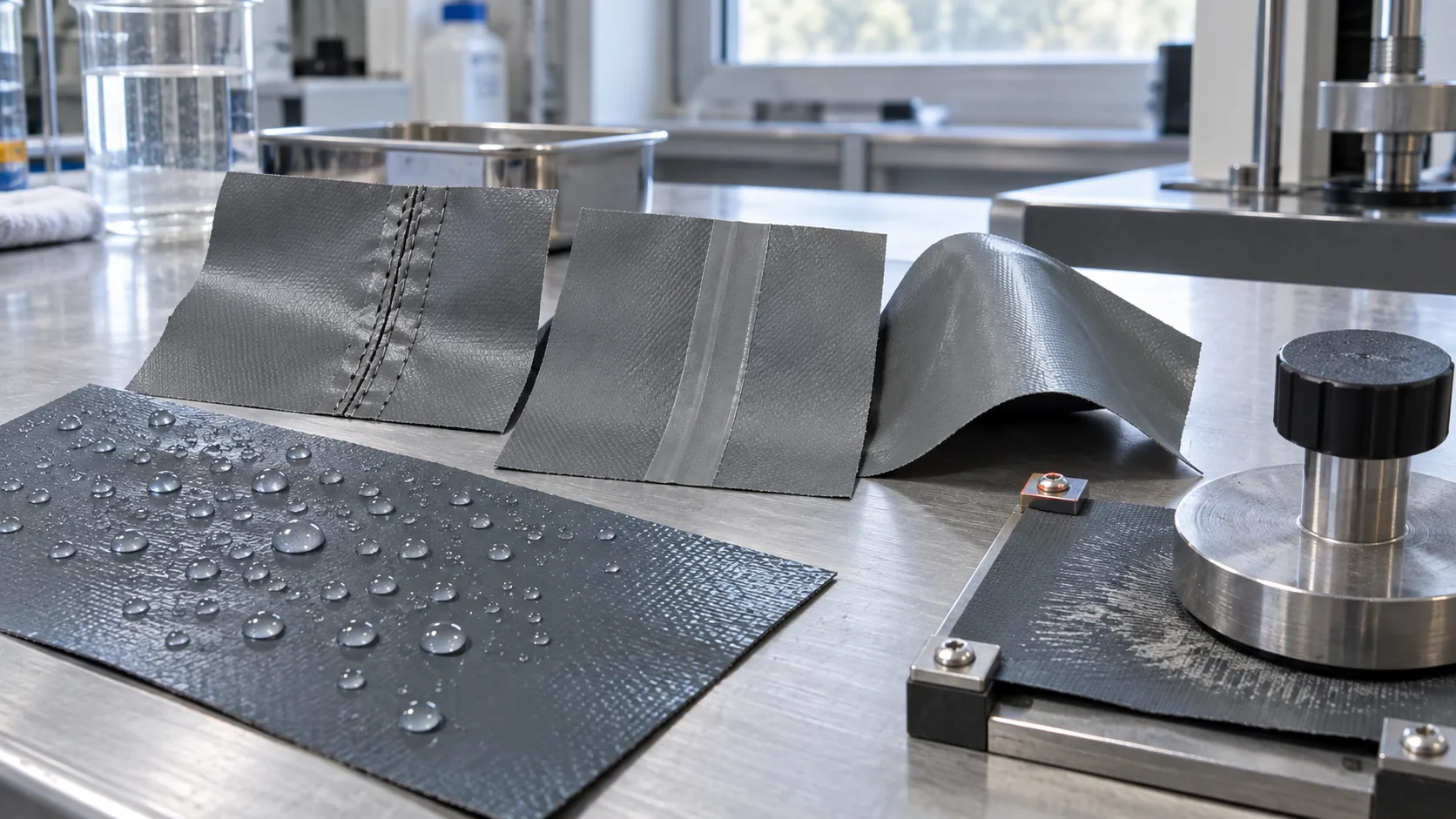
An intact PVC film or coating can resist liquid penetration, but that fact does not make a finished bag waterproof. Stitching creates needle holes; welding works only when material, settings, seam geometry, and workmanship are compatible; and zippers, closures, openings, abrasion, and repeated folds remain separate paths.
The current ASTM D751-26 coated-fabric methods separate dimensions and mass, breaking, tear, puncture, hydrostatic resistance, coating adhesion, low-temperature behavior, seam strength, aging, and blocking into different tests. A result from one test does not represent the complete quality or water performance of a coated fabric, and citing the method does not mean ZWbags ran it.
Test-object checkpoint: Record whether evidence applies to raw film, coated fabric, a laminated layer pair, a seam specimen, a panel, or the finished bag. Water-protection claims should be tested at the level experienced by the user. This is why custom waterproof backpack projects treat material, seam, zipper, opening, and assembly as one system.
Is PVC Material Safe for Bags?
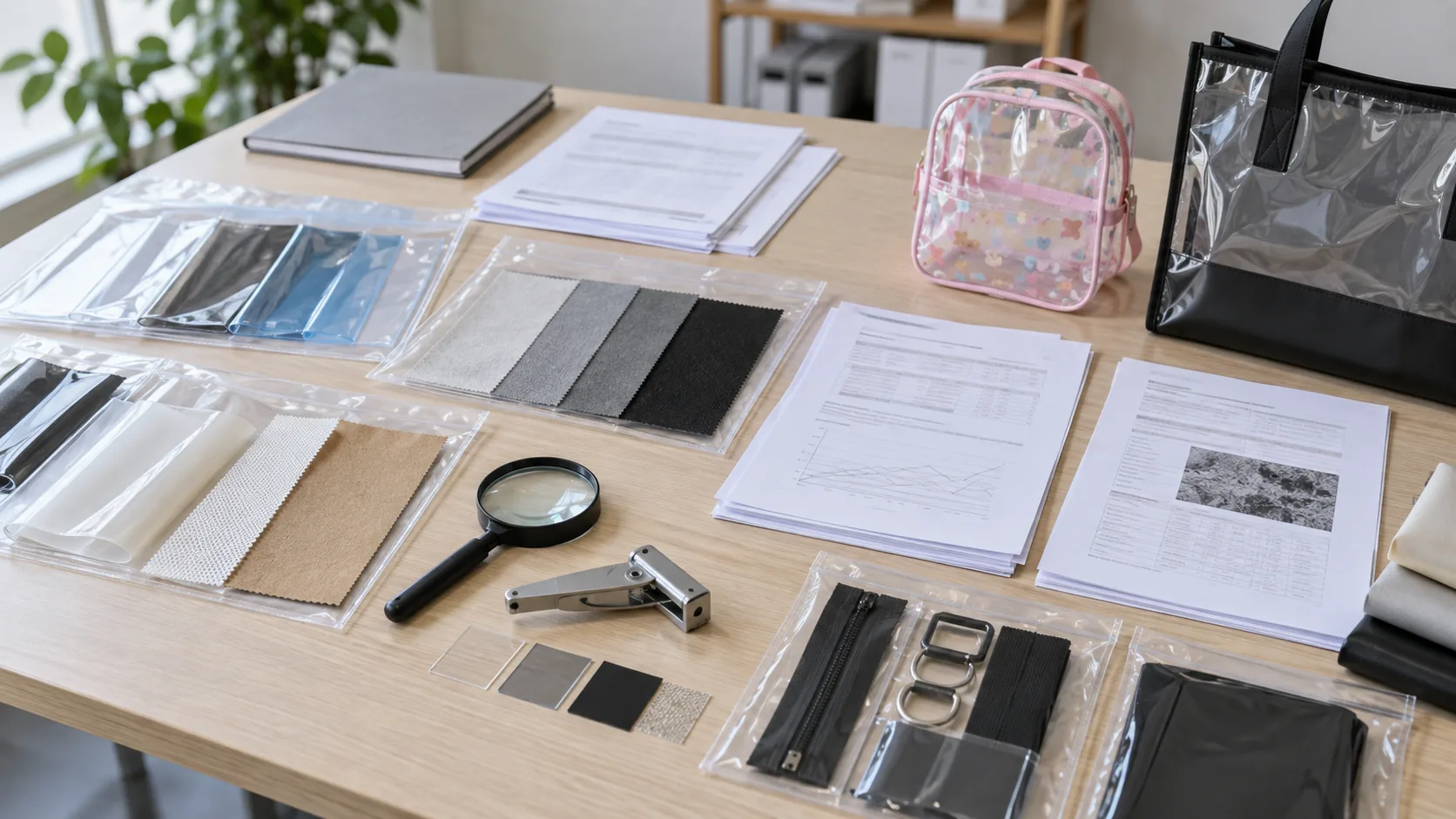
PVC as a polymer name does not prove that a bag is safe, unsafe, compliant, food-contact suitable, child-safe, phthalate-free, or suitable for every market. The decision depends on the formulation, additives, carrier, adhesive, print, surface finish, exposure route, intended use, user age, and destination-market requirements.
For the United States, the CPSC phthalates business guidance applies specific restrictions and certification requirements to children’s toys and child care articles as those categories are defined by law. A bag’s marketing, intended use, age grading, accessible plasticized components, and applicable product category must be assessed before assuming that rule does or does not apply.
When a PVC construction includes a textile carrier or other regulated textile content, the FTC Textile Fiber Rule may also affect fiber-content, responsible-company, and country-of-origin labeling for covered products. That labeling question is separate from chemical testing and performance testing.
For an EU destination, ECHA’s investigation into PVC additives and microparticle releases illustrates why PVC resin and individual additives should not be collapsed into one safety judgment. Current legal requirements for the actual product and market still control.
Before approval, record:
- the complete product category, intended user, age group, and destination market;
- each accessible material layer and supplied formulation or product code;
- applicable restricted-substance requirements and current legal citations;
- the tested sample identity, laboratory, method, date, and result;
- whether evidence covers the film, coating, backing, adhesive, print, trim, or finished bag; and
- the exact claim the documentation is expected to support.
This is a product-specific compliance review, not legal advice. Recheck requirements close to ordering and release because classifications and rules can change.
PVC, PU, TPU, or Polyester: What Should a Buyer Compare?
These names do not sit at the same specification level. PVC, PU, and TPU may describe polymer layers, films, coatings, or complete market categories. Polyester may describe the textile carrier underneath one of those layers.
That makes a generic “polyester vs PVC” question incomplete. A PVC-coated polyester bag material contains both. The same applies when PVC or another polymer layer is carried on nylon bag material.
Compare candidate constructions on:
- carrier fiber, weave or knit, mass, and thickness;
- polymer grade or supplier product code;
- film, direct coating, transfer coating, or lamination route;
- layer side, thickness, finish, backing, and adhesive;
- hand, clarity, grain, color, and print compatibility;
- seam or welding process and component geometry;
- cleaning, repair, and storage requirements;
- use temperature and exposure conditions;
- regulatory documents for the actual market and product; and
- matched test evidence for the buyer’s decision.
Do not select TPU, PU, PEVA/EVA, PVC, or a coated textile by a universal hierarchy. Select the exact construction that meets the written use, evidence, appearance, manufacturing, and compliance requirements.
Where Is PVC Used in Bags?
- Clear totes and pouches. Flexible transparent film supports visibility where the relevant venue, retailer, or customer requirement permits it. Confirm the actual dimensions and construction rule rather than assuming one universal clear-bag policy.
- Cosmetic and utility pouches. A compatible wipeable surface can simplify spill cleanup when the chosen print, trim, and seams tolerate the approved cleaning method.
- Lunch-bag components. A PVC-faced lining or panel may be considered in custom lunch bag manufacturing, but food-contact, age-group, cleaning, odor, and destination-market requirements need separate evidence.
- Coated totes and covers. PVC-coated textile may suit low-permeability utility panels when carrier, coating, seams, and openings match the use.
- Synthetic-leather exteriors. Embossed PVC constructions can provide a leather-like surface while remaining technically distinct from genuine leather.
- Windows and local reinforcement. Clear or semi-rigid components can create viewing areas, ID sleeves, or structure when the attachment and edge design are controlled.
No one PVC form suits every role. Assign the form, specification, evidence, and approval sample to the specific component.
How Should Buyers Specify PVC Material for Sampling?
Record the following before requesting a comparable quote:
- intended component, user, age group, and destination market;
- film, coated textile, laminate, synthetic leather, or rigid component;
- supplier grade or product code and available formulation declaration;
- textile carrier fiber and construction where present;
- every layer, its position, side, thickness, and agreed tolerance;
- mass, thickness, hand, flexibility, color, clarity, gloss, grain, and print reference;
- coating or lamination route and adhesive where relevant;
- stitch, edge, weld, reinforcement, and seam design;
- cleaning, odor, storage, temperature, and exposure requirements;
- restricted-substance and labeling evidence required for the product and market;
- test object, method, edition, conditioning, endpoint, and acceptance criterion; and
- traceable swatch and finished-sample identifiers.
Approve the exact material swatch, joined seam or component where relevant, and finished sample before production. A custom bag manufacturer can then quote and sample against the same controlled construction instead of interpreting the word “PVC.”
Frequently Asked Questions
What does PVC mean, and is it a fabric or plastic?
PVC means polyvinyl chloride, a plastic polymer. It becomes part of a fabric construction when it is coated onto or laminated with a textile carrier; unsupported film and rigid components are not fabrics.
Is PVC material waterproof?
An intact PVC layer can resist liquid penetration, but a finished bag also depends on seam type, needle holes or welds, zippers, closures, openings, flexing, abrasion, and complete-product testing.
What is PVC leather?
PVC leather is a synthetic-leather construction with a PVC surface over a textile or knit backing, sometimes with another layer for structure or hand. It is not genuine leather, and the name does not prove backing, thickness, or durability.
Is PVC material safe for bags?
The polymer name alone cannot answer that. Review the exact formulation and all accessible layers against the intended use, age group, exposure, destination market, and current product-specific requirements.
Is PVC better than polyester, and how should it be cleaned?
It is usually not a direct comparison because polyester can be the carrier inside PVC-coated fabric. Compare complete constructions, and approve a cleaning method for the selected surface, print, adhesive, trims, and assembled bag rather than using a generic solvent or detergent rule.
Conclusion
“PVC” identifies a polymer family, not an approved bag-material specification. First identify whether the quoted item is film, coated textile, laminate, synthetic leather, or a rigid component. Then freeze its carrier, layers, thickness, finish, joining method, intended use, market, and required evidence.
Approve the traceable material and finished sample against the same written record. When the construction and acceptance criteria are ready, start your custom bag project with those requirements clearly defined.