
A fabric quote that says only “600D” can look precise while leaving the buyer without the weight, construction, coating, or performance evidence needed for approval.
Denier measures yarn linear density: one denier equals one gram per 9,000 meters of yarn. A higher denier means more yarn mass per unit length, not automatically a stronger, thicker, heavier, or more waterproof finished fabric.
Once that boundary is clear, you can compare 600D, 900D, and other options as complete fabric specifications instead of treating the D number as a quality grade.
What Is Denier?
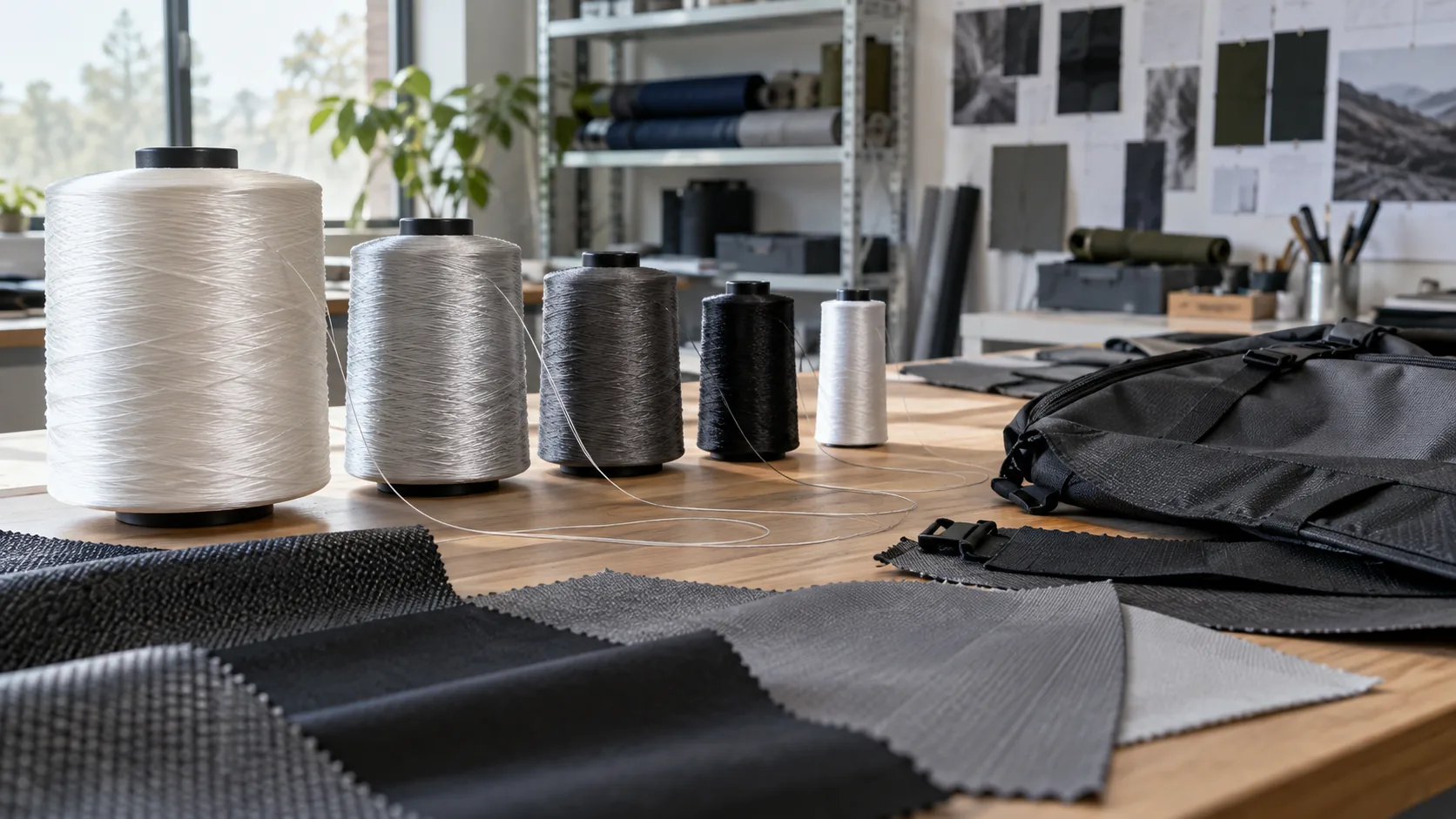
Denier (D) is a direct unit of linear density. It describes how much a fixed length of yarn weighs. The definition is one gram per 9,000 meters, so a 600-denier yarn has more mass per unit length than a 210-denier yarn when both values describe comparable yarn systems.
The current ASTM D2260-24 yarn-number conversion tables place denier among the systems used to express and convert yarn number. The separate ASTM D1907/D1907M-12(2025) skein method covers determining yarn linear density by weighing a measured skein. Citing these methods explains the measurement; it does not mean a particular supplier’s yarn or ZWbags material has been tested under either standard.
Measurement boundary: Denier is not fabric GSM, thickness, weave density, tensile strength, tear strength, abrasion resistance, coating quality, or finished-bag life. It belongs to the yarn before that yarn becomes a fabric.
How Is Denier Calculated?
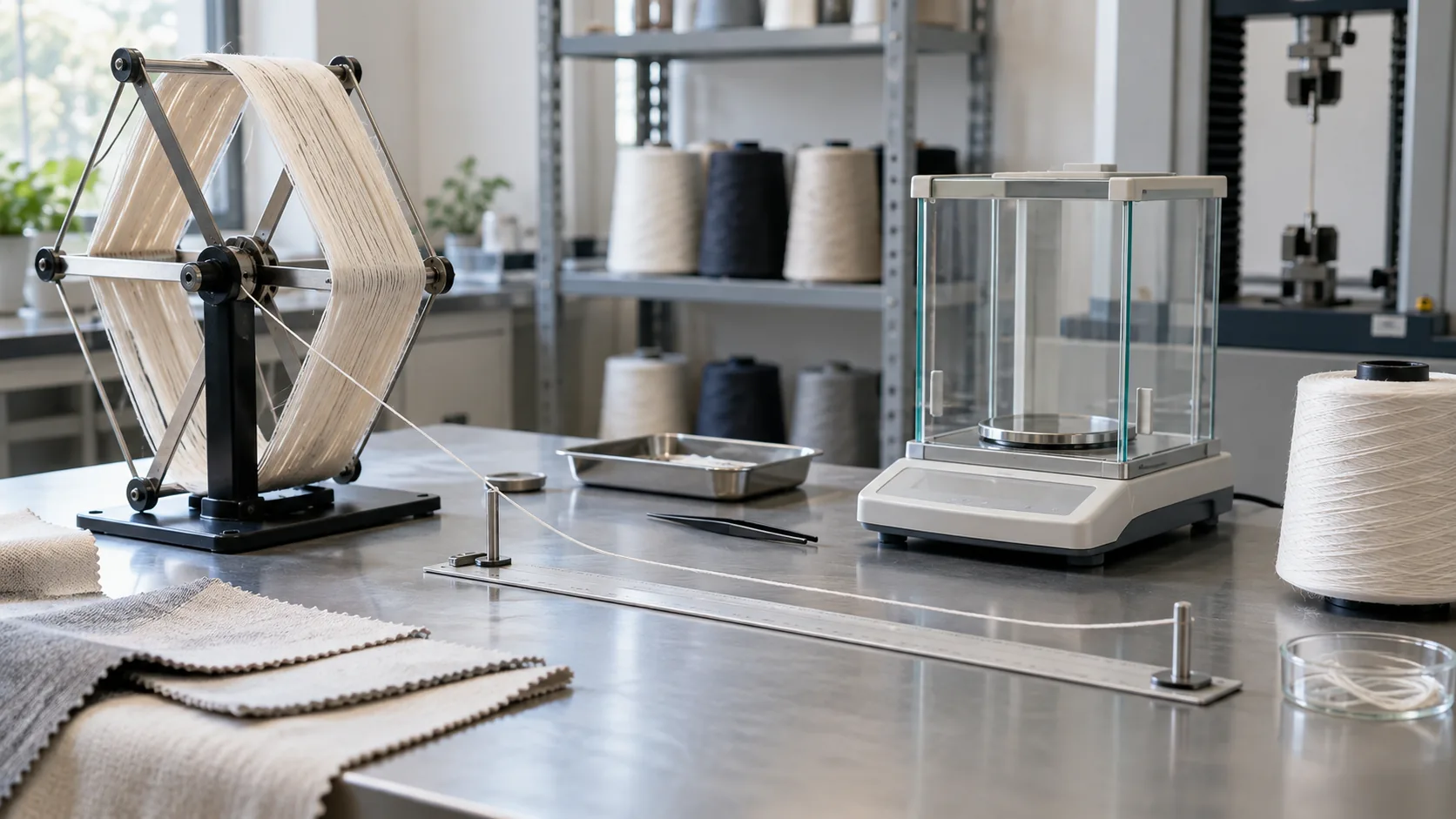
The basic formula is:
Denier = (mass in grams / length in meters) x 9,000
For a transparent example, a yarn sample that weighs 5 grams over 500 meters is (5 / 500) x 9,000 = 90 denier. A heavier sample at the same length produces a higher value; the same mass spread over a longer length produces a lower value.
In laboratory work, the sampling, conditioning, reel, weighing procedure, specimen count, and reporting rules matter. ASTM D1907/D1907M describes a skein method for yarn number, while ASTM D2260 provides conversions among yarn-numbering systems. A quotation that merely says “tested” should therefore name the method, edition, test object, and report.
What Does the D Mean on Bag Fabric?
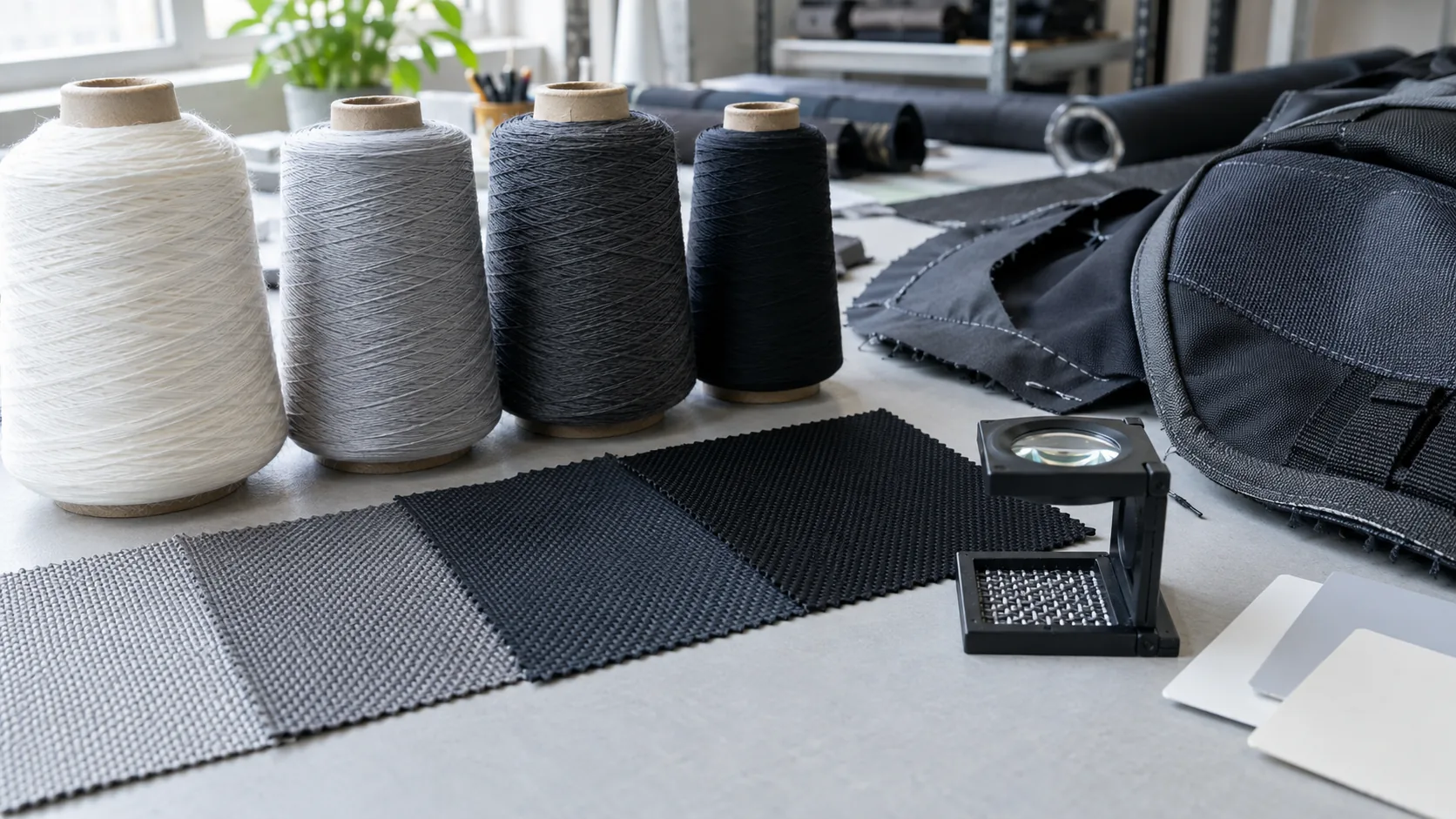
A label such as 210D, 600D, or 900D identifies the stated linear density of a yarn used in the fabric. Many commercial labels imply the same nominal value in both warp and weft, but some constructions use different yarns by direction. The technical sheet should say which value applies to which direction.
The D label does not identify:
- the generic fiber, such as nylon or polyester;
- the specific polymer or grade;
- filament count, twist, texturing, or high-tenacity construction;
- weave and ends or picks per unit length;
- finished fabric GSM or thickness;
- coating, laminate, surface finish, or backing; or
- strength, abrasion, water-penetration, or finished-bag test results.
Fiber identity and yarn size answer different questions. PA6, PA66, and PET name polymer families; they are not fabric performance grades. Likewise, buyers comparing nylon bag material with polyester bag material should not treat a shared denier value as proof that the finished fabrics are otherwise equivalent.
Does Higher Denier Mean Stronger or Better Fabric?
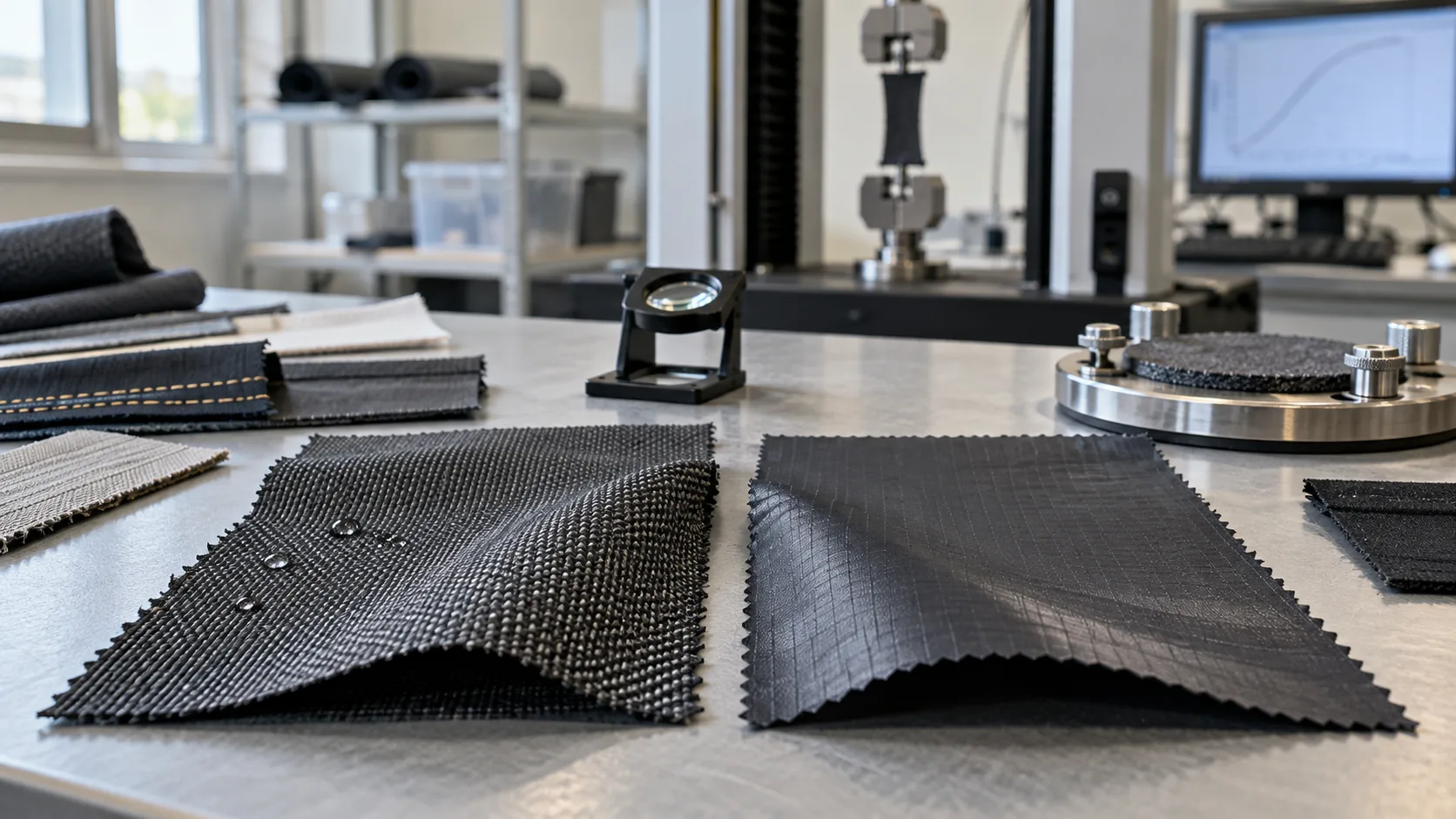
No, not by itself. Higher denier adds yarn mass per unit length, but the finished result also depends on:
- Fiber chemistry. Nylon and polyester are different fiber families, and neither becomes a universal durability winner because its D number is higher.
- Filament and yarn construction. Filament count, twist, texturing, and tenacity can differ within the same nominal denier.
- Weave and yarn density. Construction changes how yarns share load and how compact the fabric becomes.
- Finished fabric mass. GSM reflects the complete area of fabric and may also include finish, coating, or backing.
- Coating and lamination. These can alter stiffness, surface behavior, water resistance, and abrasion behavior without changing the base yarn’s denier.
- Component construction. Seams, reinforcement, edge treatment, and pattern geometry affect the assembled bag.
- Test method and endpoint. Tear, tensile, and abrasion methods measure different behaviors and cannot be substituted for one another.
Comparison checkpoint: Same-denier nylon and polyester are aligned only on stated linear density. Even fabrics with the same polymer and denier may be incomparable when filament structure, weave, fabric mass, coating, or finish differs. Compare matched specifications, specimens, methods, and results rather than ranking the D labels.
How Do Common Bag Denier Ratings Differ?
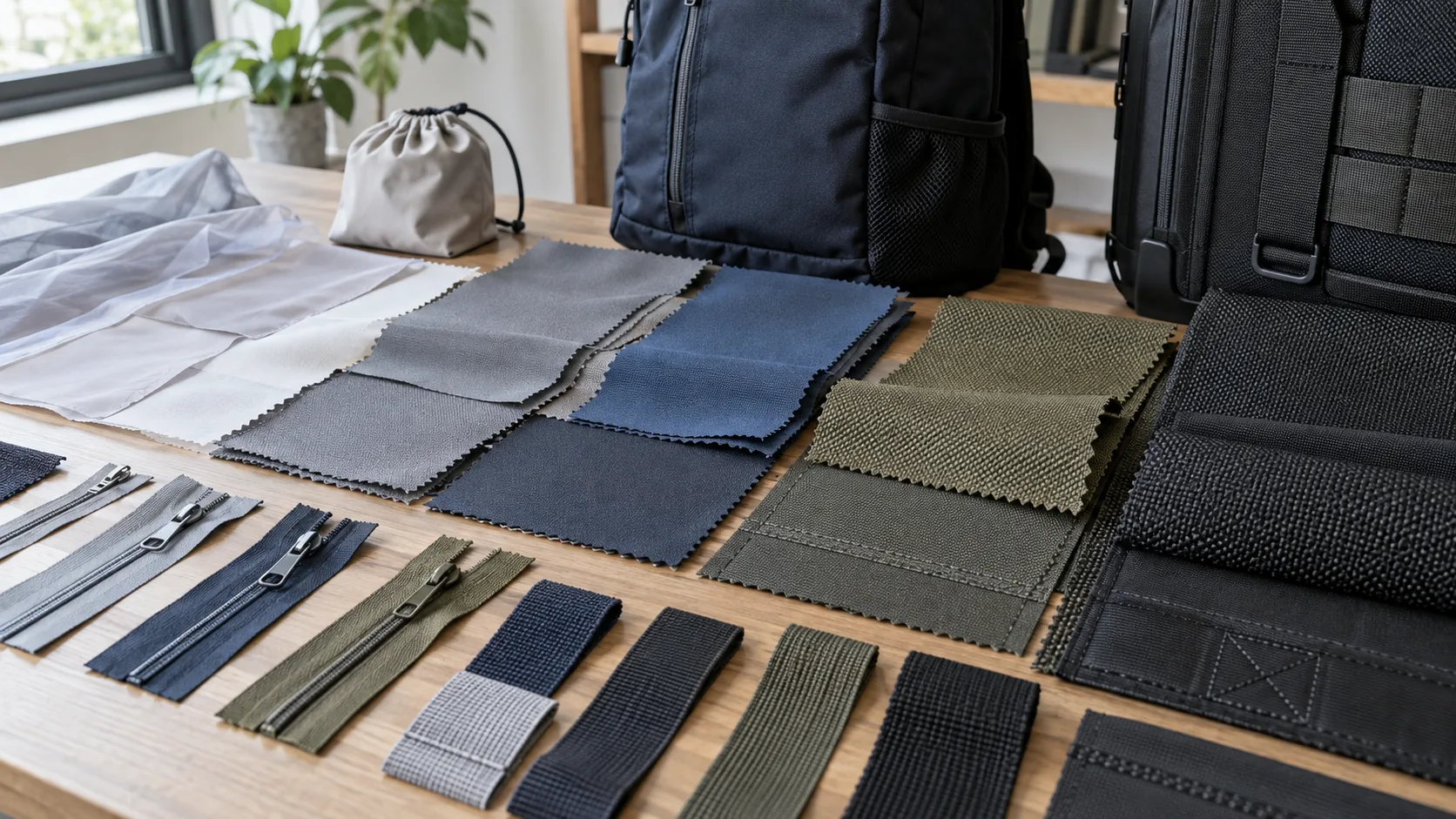
This fabric denier chart shows common market positioning, not universal performance classes. A supplier’s exact construction can sit outside the general pattern.
| Denier | Likely market positioning, conditionally | Questions to ask | What the number cannot prove |
|---|---|---|---|
| 150D | Often offered for lightweight linings, totes, or packable components | What fiber, weave, GSM, and finish are used? | Tear strength, opacity, or suitability for a specific lining |
| 210D | Common in lightweight lining and shell offers, including 210D Oxford fabric | Is the value warp, weft, or both? What coating is present? | Finished weight, exterior suitability, or water resistance |
| 420D | Often positioned for mid-weight everyday bag components | How do construction and GSM compare with the approved reference? | Abrasion life or superiority over a lower-denier fabric |
| 600D | Frequently quoted for general backpack and travel-bag shells | Which fiber, weave, GSM, coating, and test reports apply? | That 600 denier polyester is automatically strong or waterproof |
| 900D | Often marketed for heavier-duty shells and tactical backpack construction | What evidence supports the intended use and added mass? | Proportional strength or automatic superiority over 600D |
| 1000D | Commonly positioned among heavier bag fabrics | Does the use case justify the mass and hand of this construction? | Waterproofness, seam durability, or coating quality |
Use these labels to request more information, not to approve a fabric. Market positioning varies by supplier, construction, finish, and product program.
What Should Buyers Compare in 600D vs 900D Fabric?
A useful 600D vs 900D comparison holds the rest of the specification as constant as practical. Request:
- declared generic fiber and relevant polymer grade;
- yarn construction and whether either direction uses a different yarn;
- warp and weft denier;
- weave and yarn density;
- finished fabric weight with units and stage of measurement;
- coating or laminate type, side, and agreed construction;
- face finish and any backing;
- thickness and handfeel reference where relevant;
- test method, edition, specimen condition, direction, endpoint, and actual result;
- appearance under the agreed color and finish;
- a traceable physical swatch; and
- the component, load, exposure, and finished-bag use case.
A 600D and a 900D fabric can differ, but the D values do not predict the size or direction of every performance difference. Run the same relevant tests on the exact candidate constructions and approve them against the same product requirement.
Does Denier Determine Waterproofness?
No. Denier measures yarn mass, not resistance to water penetration. Whether a 600D polyester panel manages water depends on the complete construction:
- a coating or laminate, such as PU, PVC, or TPU;
- any face-side water-repellent finish;
- coating continuity and durability after flexing or abrasion;
- seams and needle holes;
- zipper, closure, pocket, and opening design;
- workmanship and assembly; and
- evidence from the exact material or finished sample.
ISO 811:2018 specifies a hydrostatic-pressure method for determining a fabric’s resistance to water penetration. That is a fabric-level test, not automatic proof that a sewn bag is waterproof.
Test-object checkpoint: Record whether a result applies to base fabric, coated fabric, a seam specimen, a panel, or the finished bag. For products where water protection matters, specify the full custom waterproof backpack system rather than inferring the claim from denier.
How Should Buyers Specify Denier Fabric for Sampling?
Send the supplier a controlled material record that includes:
- component and intended use;
- declared fiber and polymer information where relevant;
- yarn construction;
- warp and weft denier;
- weave and yarn density;
- finished GSM, thickness, and agreed tolerances;
- coating, laminate, finish, and backing details;
- color and visual reference;
- handfeel and stiffness reference;
- test evidence needed for the use case;
- traceability to the quoted and sampled material;
- target quantity and commercial assumptions; and
- acceptance criteria for the finished component.
Approve both a traceable swatch and a finished sample before production. Understanding how a backpack is made helps connect the fabric record to cutting, seams, reinforcement, and assembly. A custom bag manufacturer can then quote and sample against the same controlled specification.
Frequently Asked Questions
What does denier mean?
Denier is the mass in grams of 9,000 meters of yarn. It measures yarn linear density, not the finished fabric’s total weight, strength, thickness, or water resistance.
Is higher denier always better?
No. Higher denier means more yarn mass per unit length. Fiber, yarn construction, weave, density, finish, coating, component design, and test evidence determine whether a fabric is suitable.
What is the real difference between 600D and 900D fabric?
The number states a difference in nominal yarn linear density. The meaningful product difference requires a like-for-like comparison of fiber, construction, GSM, coating, finish, backing, test results, and samples.
What does 210D mean on Oxford fabric?
It identifies the stated linear density of a yarn used in that Oxford construction. It does not establish the fiber, weave details, coating, GSM, strength, use, or waterproofness.
Is 600D polyester waterproof?
Not automatically. A 600D polyester fabric or panel needs a specified coating or laminate and relevant test evidence; a finished bag also depends on seams, zippers, openings, design, and workmanship.
Conclusion
Denier is one controlled field in a fabric specification, not a finished-material score. Use it to identify yarn linear density, then confirm fiber, yarn construction, weave, GSM, coating, backing, finish, component design, and the evidence required for the intended use.
Approve the traceable swatch and assembled sample against the same written record. When those requirements are ready, start your custom bag project with the material and acceptance criteria clearly defined.