
A supplier can quote “Oxford fabric” and still leave fiber, weave, weight, coating, and performance undefined. That ambiguity appears when samples arrive.
Oxford is a fabric-construction and market label, not a fiber name or universal quality grade. Traditional Oxford cloth is associated with a basket-like weave; bag-market Oxford may be polyester, nylon, cotton, or a blend in many constructions, often with a finish or coating.
Treat the name as the first field in a specification. The material you approve should also have an identified fiber, yarn, weave, finished weight, layer system, and evidence matched to the bag component.
What Is Oxford Fabric?
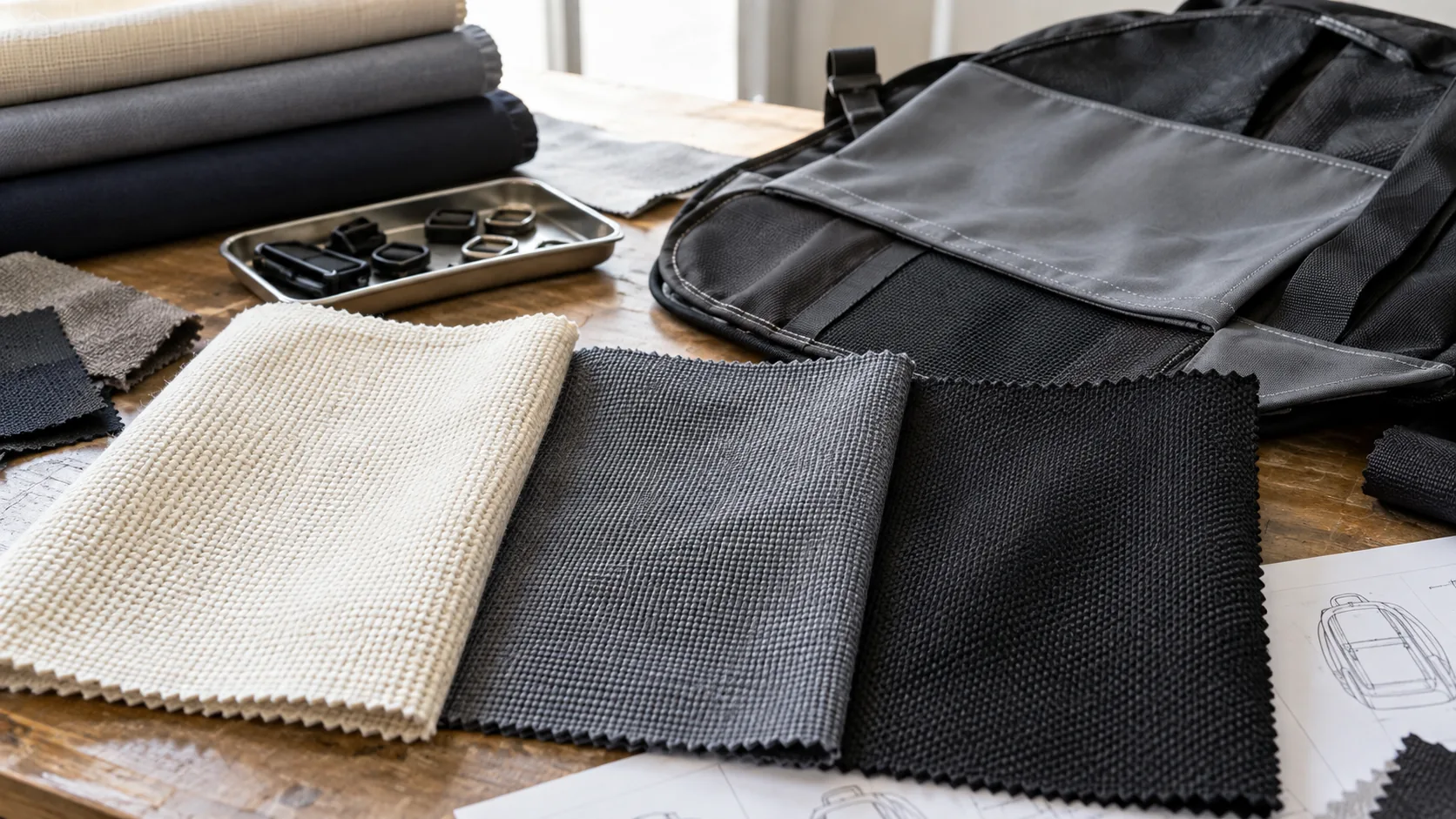
Oxford names a way of building fabric and, in the bag trade, a broad family of materials sold under that name. It does not identify one fiber, weight, coating, or performance level.
Traditional Oxford cloth is associated with a basket-like structure in which grouped yarns cross an opposing yarn system. CottonWorks describes traditional Oxford weave as a plain-weave derivative, commonly used for shirting, in which paired warp ends pass over and under single picks. Bag-market Oxford borrows the name and weave vocabulary but can use polyester, nylon, cotton, or blends, with different yarn sizes, densities, finishes, and backings; the market name does not prove that exact 2 x 1 construction.
Two suppliers can both quote “600D Oxford” and send fabrics that differ in fiber, weave, finished mass, coating, hand, and water or abrasion behavior. Oxford is therefore a useful starting label, not a repeatable production record.
How Is Oxford Fabric Constructed?
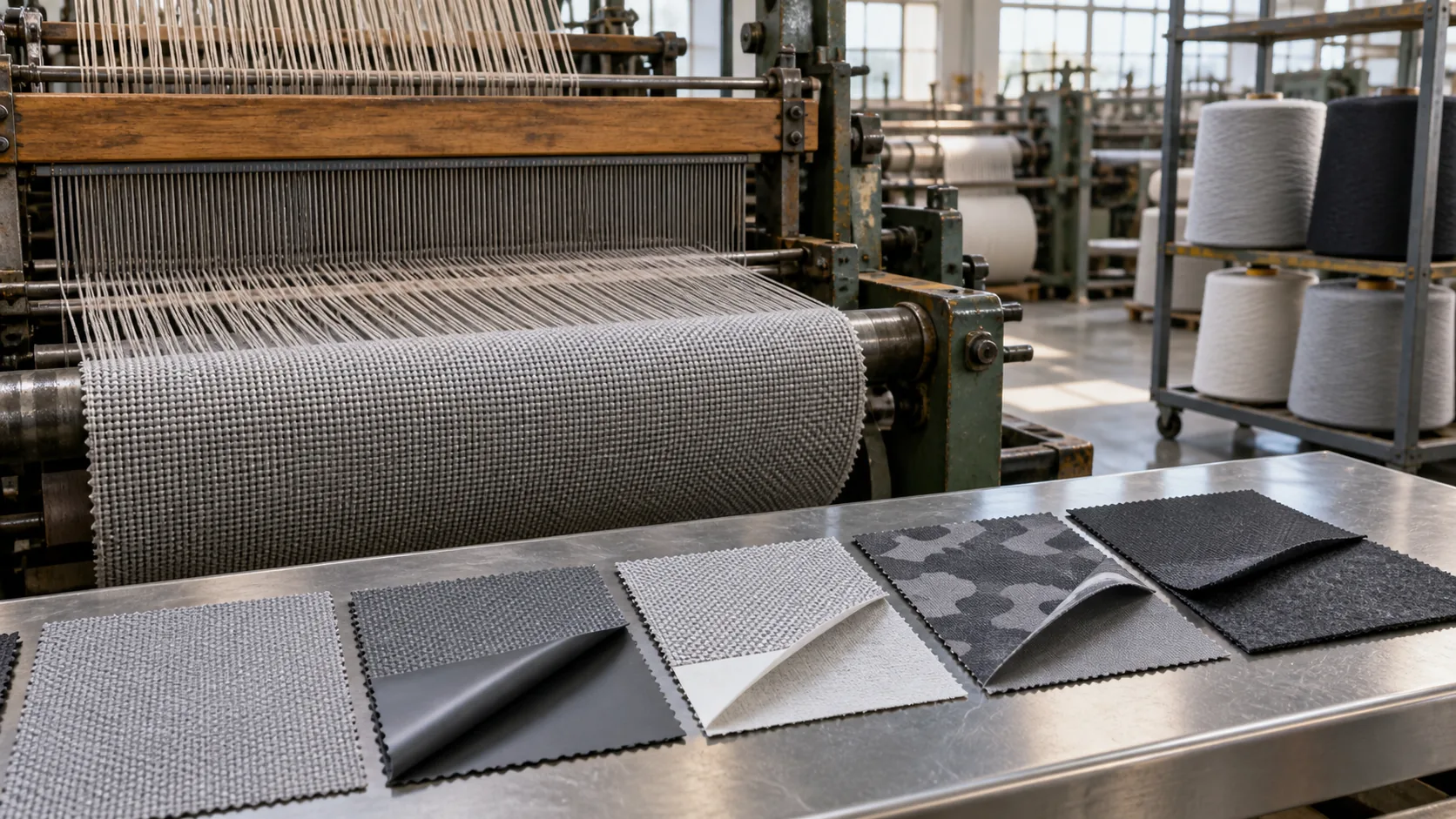
Read a bag-market Oxford as several independent decisions:
- Weave: traditional descriptions use basket-weave terminology, while bag-market constructions may keep a paired-yarn appearance or use a related plain, ribbed, or basket structure. Ask for the actual weave; do not assume one universal 2×2 pattern.
- Fiber and yarn: polyester, nylon, cotton, and blends can be spun or filament yarns with different sizes, plies, twist, texturing, and direction-specific yarns.
- Density and weight: ends and picks, finished mass per area, width, and thickness describe different attributes. Coating or backing can add mass without changing the base yarn.
- Dyeing and printing: solution-dyed, piece-dyed, and printed goods require different shade, registration, and colorfastness controls.
- Layers and finishes: PU, PVC, acrylic, or TPU systems may be applied as a coating, laminate, or backing. A face-side water-repellent finish is a separate treatment.
The FTC Textile Fiber Rule requires covered US textile products to disclose generic fiber names and percentages by weight. Confirm the actual fiber statement rather than inferring it from “Oxford.”
Which Types of Oxford Fabric Matter for Bags?
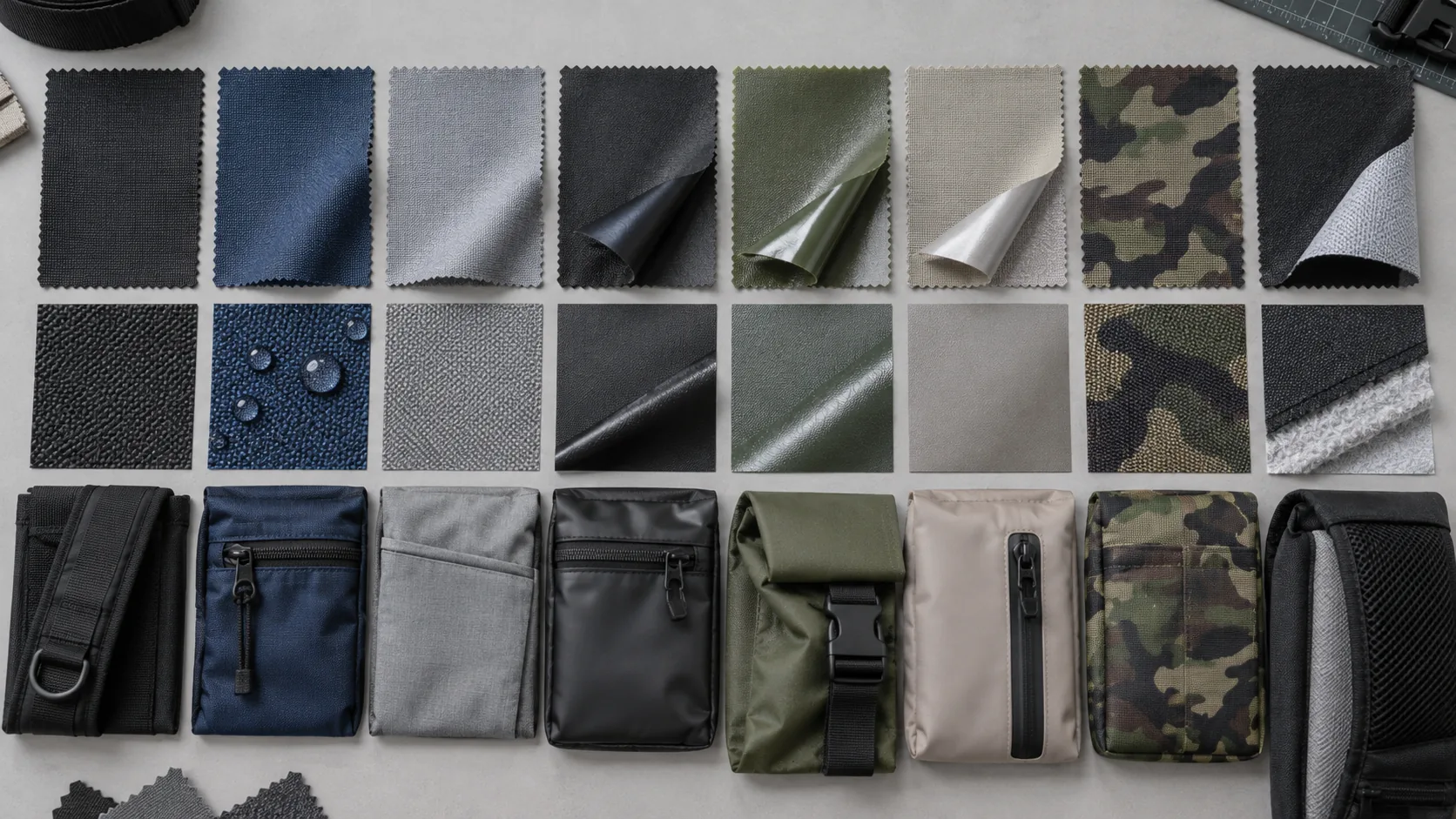
Each label states something real and leaves other facts open.
| Label | What it may state | What remains unproven |
|---|---|---|
| Polyester Oxford | Polyester is the declared fiber | Yarn, weave, density, finished mass, coating, and test evidence |
| Nylon Oxford | Nylon is the declared fiber | Nylon type, yarn construction, finish, coating, and wet-use behavior |
| Uncoated Oxford | No specified back coating or film | Face finish, permeability, water penetration, and lining suitability |
| PU-coated Oxford | A polyurethane coating is present | Coating mass, side, adhesion, flex response, aging, and hydrostatic result |
| PVC-coated Oxford | A PVC coating is present | Formulation, stiffness, cold response, cleaning, regulatory fit, and water evidence |
| TPU-laminated Oxford | A TPU film is bonded to the textile | Film thickness, bond durability, seam compatibility, and test result |
| Printed or backed Oxford | A graphic or secondary layer is attached | Print method, registration, backing identity, total thickness, and delamination risk |
A coating name tells you that a layer exists. It does not prove how much was applied or how it will behave after folding, abrasion, cleaning, or assembly.
What Do 210D, 600D, and 900D Mean on Oxford Fabric?
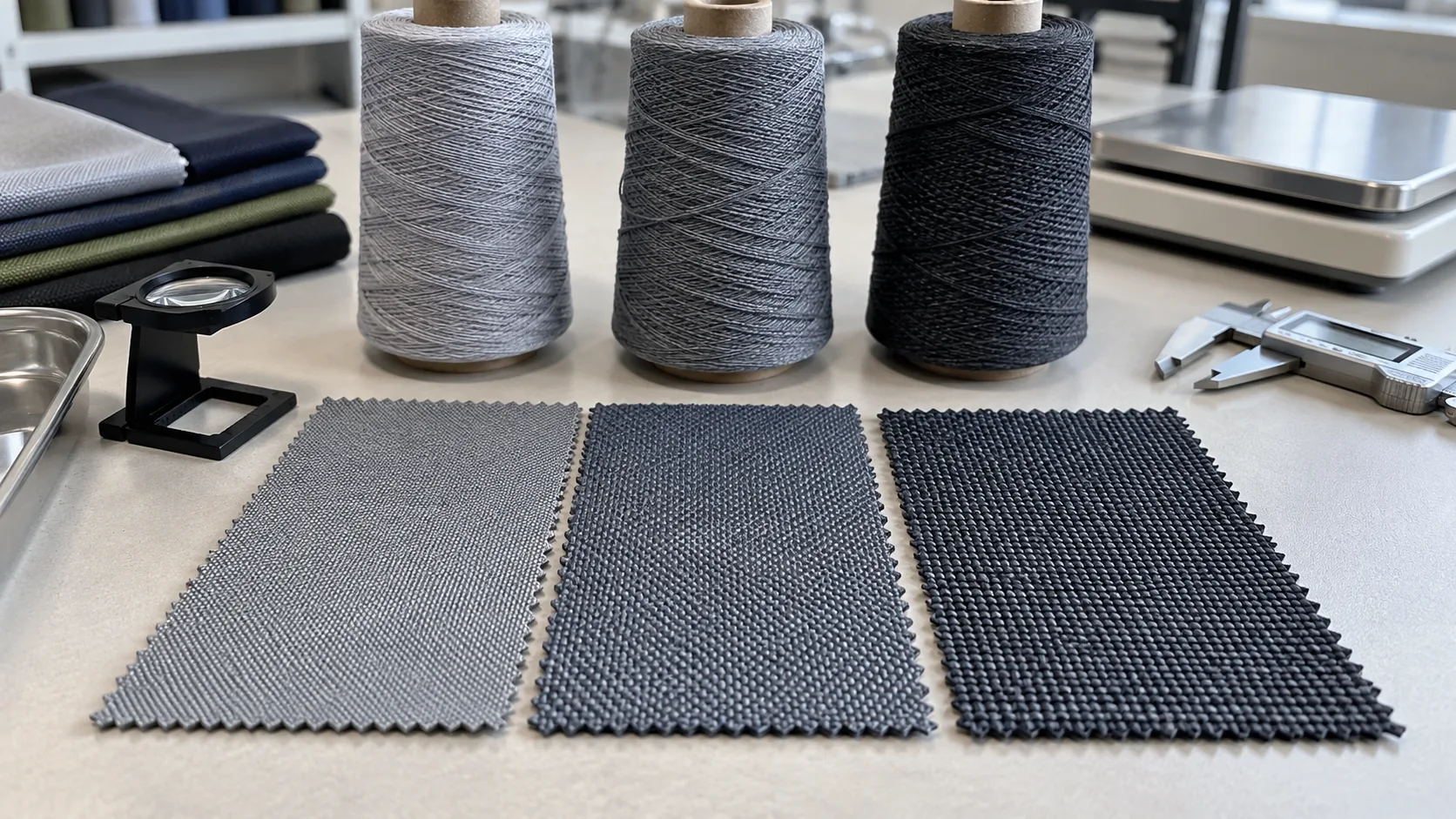
Denier is a yarn linear-density unit: the mass in grams of a defined 9,000-meter length. The active ASTM D1907/D1907M-12(2025) covers determining yarn linear density by the skein method. Citing it explains the measurement reference; it does not claim that a supplier’s yarn or a ZWbags material was tested under the standard. The definition is enough to decode the D label; it is not a finished-fabric score.
The number does not tell you the fabric mass per area, weave, thread density, fiber chemistry, filament construction, coating, tear strength, abrasion result, seam strength, or finished-bag durability. A higher D is not automatically stronger, heavier as a complete fabric, or more water-resistant.
Use denier as one field beside fiber, warp and weft yarns, weave, finished weight with units and basis, coating, finish, and evidence. The D value may correlate with another property inside one controlled supplier family, but that local relationship is not a universal conversion.
What Changes Oxford Fabric Performance?
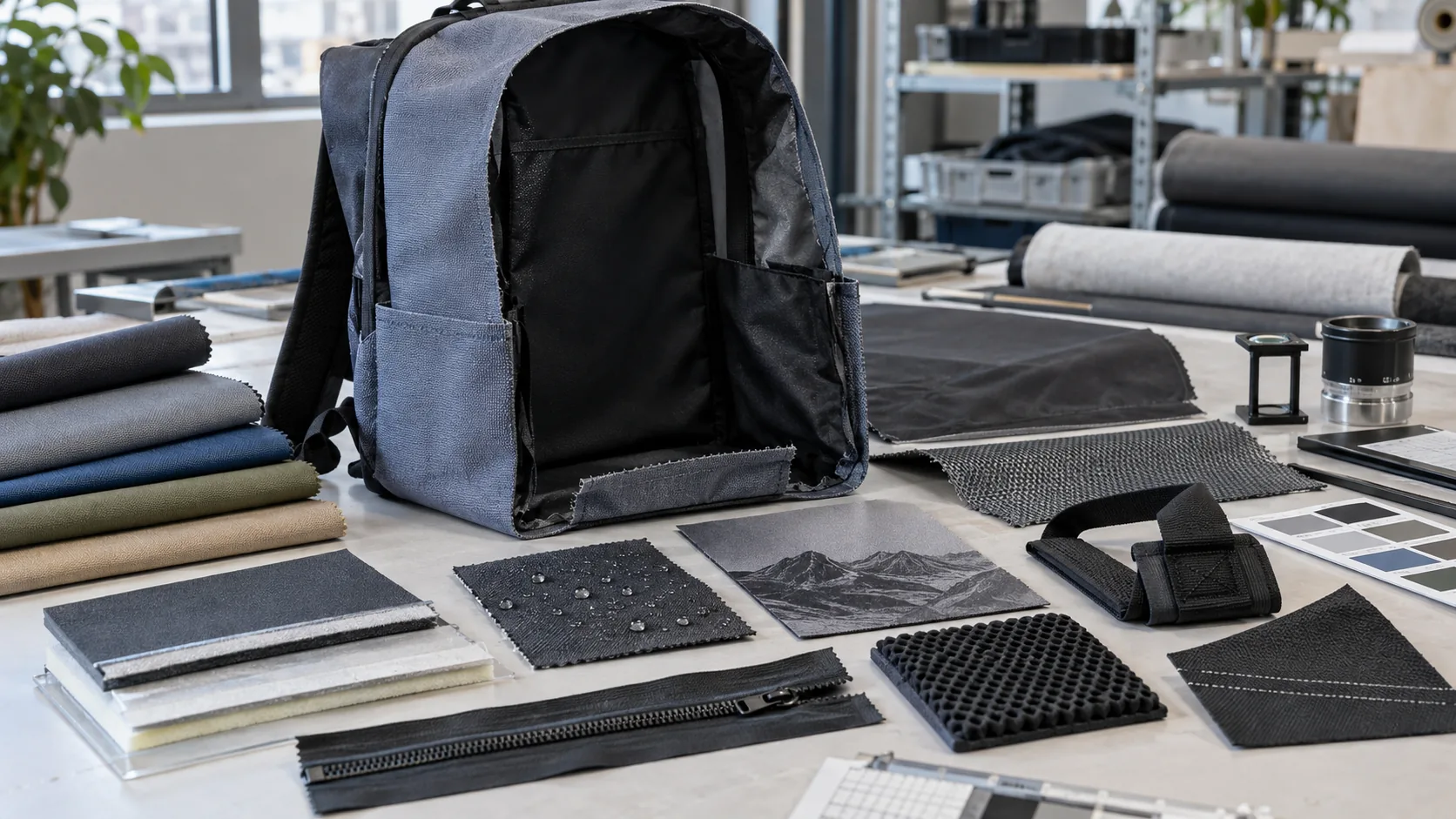
Performance comes from the fabric and the assembled bag together.
| Variable | Why it matters | What to require |
|---|---|---|
| Fiber and yarn | Changes moisture response, dye route, hand, and available constructions | Declared fiber, polymer where relevant, yarn size and direction |
| Weave and density | Changes compactness, stability, hand, and coating anchorage | Actual weave plus ends/picks or equivalent construction record |
| Finished mass and thickness | Affects body, shipping weight, and component fit | Unit, basis, stage, width, thickness method, and tolerance |
| Coating, laminate, or backing | Changes water behavior, stiffness, adhesion, and care | Type, side, layer identity, application, and durability evidence |
| Finish, color, and print | Affects wetting, shade, decoration, and cleaning | Finish name, shade standard, print method, and acceptance step |
| Seams and reinforcement | Assembly can fail before the fabric panel | Stitch, thread, sealing, bartacks, base, handle, and attachment details |
| Use and test evidence | A lining, daypack shell, and cover face different exposure | Component use, method, specimen, conditioning, endpoint, and result |
When a construction needs a production process review, how a backpack is made connects the fabric record to cutting, sewing, reinforcement, and assembly.
Is Oxford Fabric Waterproof?
Not by name alone. “Oxford” and a denier number carry no automatic waterproof rating.
An uncoated Oxford may shed a brief splash differently from a coated one, but it is still a textile construction whose penetration depends on the exact specimen and condition. A durable water-repellent finish changes surface wetting without necessarily sealing the fabric. A PU, PVC, or TPU layer can create a barrier across an intact panel, but continuity, adhesion, flexing, abrasion, aging, and cleaning still matter.
AATCC TM127 and ISO 811:2018 address fabric resistance to water penetration under hydrostatic pressure. Those are fabric-level methods. A finished bag adds needle holes, seam intersections, zippers, flaps, pockets, openings, binding, and hardware penetrations.
Define the claim and exposure before selecting evidence: surface wetting, rain, directional spray, wet contact, and immersion are different requirements. A waterproof backpack construction needs product-level validation matched to the chosen scenario, not a hydrostatic number copied from a swatch.
Oxford, Polyester, Nylon, or Canvas: What Is the Real Comparison?
This comparison mixes categories. Oxford can itself be polyester, nylon, cotton, or a blend; polyester and nylon are fiber names, while canvas is another construction and market label.
Compare complete candidates for the same component and use. Align declared fiber, yarns, weave, finished mass and thickness, coating or laminate, backing, finish, hand, structure, print, seam design, care, exposure, and test method. Do not import a universal nylon-versus-polyester ranking for abrasion, UV, moisture, cost, or service life without matched evidence for the exact fabrics.
The practical options in polyester bag material and nylon bag material should be compared at the construction level. A coated candidate and an uncoated candidate are not a fair fiber comparison.
How Should Buyers Use and Specify Oxford Fabric for Sampling?
Oxford is used across many bag components, but no single denier belongs to one application.
- Linings and interior panels: choose for hand, shade, cleanability, and compatibility with the shell and seam.
- Daypacks and school bags: select the shell, base, lining, and reinforcement as a coordinated construction.
- Sports and travel bags: review coating, scuff exposure, handles, corners, and closure details together.
- Organizers and pouches: prioritize stitchability, clean edges, hand, and panel stability.
- Luggage and structured panels: confirm backing, lamination, thickness, and attachment to the frame or insert.
- Utility, work, and outdoor products: define abrasion, water exposure, load paths, and finished-product checks instead of assigning a generic Oxford grade.
For a quote and approval sample, use this progressive record:
- bag component, user, load, exposure, care, and destination market;
- declared generic fiber and polymer type where relevant;
- warp and weft yarn size, filament or spun construction, and denier;
- actual weave and density;
- finished mass with unit, basis, stage, width, and thickness where needed;
- coating or laminate type, side, layer identity, and backing;
- finish, color standard, print method, and decoration tolerance;
- supplier or mill, stock code, lot, technical sheet, and retained swatch;
- seam, edge, reinforcement, lining, interlining, zipper, and hardware details;
- care instruction tied to the finished construction;
- test object, method and edition, conditioning, direction, endpoint, result, and acceptance criterion;
- target quantity and change triggers; and
- approved production-equivalent finished sample.
This is a progressive, risk-based checklist, not a mandatory seven-field standard for every stock order. A custom bag manufacturer can quote and sample the named construction when the record is complete.
Frequently Asked Questions
Is Oxford fabric polyester?
Often in bags, but not always. Oxford is a construction and market label; confirm whether the supplier is offering polyester, nylon, cotton, or a blend.
What is the difference between Oxford cloth and Oxford fabric?
The terms overlap. Oxford cloth commonly refers to traditional shirting associated with basket-like weave terminology, while Oxford fabric in bags often describes synthetic woven material sold with a denier and coating. Confirm the actual construction.
Does 900D Oxford perform better than 210D Oxford?
Not automatically. Denier describes yarn linear density, not complete fabric performance. Compare matched weave, mass, coating, finish, and test evidence.
Is Oxford fabric waterproof?
Not by name alone. Water behavior depends on finish, coating or laminate, seams, closures, openings, and finished-bag validation under a defined exposure.
Is coated Oxford fabric breathable, and how should it be cleaned?
Do not assume either. A continuous coating or film can reduce air and vapor movement, while cleaning depends on the exact coating, print, backing, and finished-product care instruction.
Conclusion
Oxford is the beginning of a material specification, not a quality grade. Confirm the fiber, yarns, weave, finished weight, coating or laminate, finish, backing, and supplier code, then connect them to the bag’s seams, closures, reinforcement, care, and intended exposure.
Approve a traceable swatch and a production-equivalent sample against the same written record. When the requirements are set, start your custom bag project with the material evidence and acceptance criteria defined.