
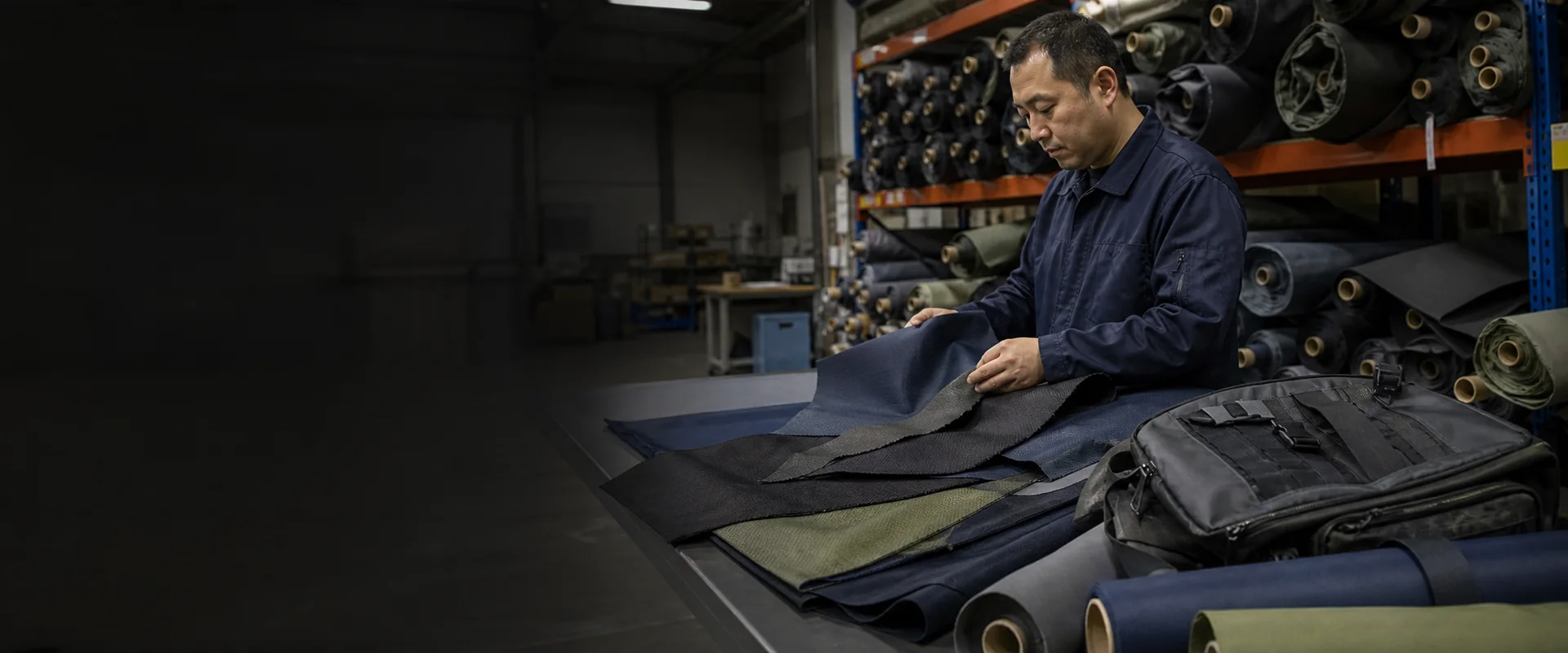
Polyester Bag Material Selection for Custom Projects
Compare polyester constructions, including 600D and 900D polyester Oxford, by specification and intended use rather than material name alone.
- MOQ from 300 pieces
- Sampling in 7-10 days
- Bulk production in 25-35 days
- Initial response within 12 hours
What Polyester Bag Material Covers
Polyester is a fiber family used in many woven and knitted bag constructions; it is not a finished specification by itself. A usable selection names the fiber, fabric construction, denier or yarn system, weight, backing or coating, finish, and color. It should also explain the role of lining or reinforcement.
- Specify the actual fabric rather than writing only “polyester.”
- Approve a swatch and sample in the intended construction.

Compare Denier, Weave and Fabric Weight
Denier describes yarn linear density, while fabric weight and weave describe other parts of the construction. Two fabrics with the same denier can differ in weight, density, finish, backing, hand feel, and performance.
- Compare side-by-side swatches.
- Record denier, weave, weight where relevant, finish, and supplier reference.
- Do not infer a performance rating from one number.

Where Polyester Oxford Fits
Oxford describes a woven construction and may be made with polyester or nylon. Confirmed ZWbags directions include 600D and 900D polyester Oxford, but the final specification still needs the exact fabric, backing, color, finish, and intended use.
- Do not create a separate “Oxford material” family.
- Keep polyester Oxford and nylon Oxford under the correct fiber specification.

Choose Coatings and Surface Finishes
Coatings and surface finishes change how the bag feels, sews, looks, and handles moisture. Define the use environment first, then sample the selected construction before making water-resistance or durability claims.
- Identify the coating or backing where known.
- Check fold, seam, print, and lamination compatibility.
- If sales copy mentions water resistance or durability, decide which test record supports it.
 Polyester
 Nylon
Nylon
Polyester or Nylon for Your Bag
Polyester is often evaluated for cost, color, construction range, and application fit; nylon may be compared for weight, hand feel, abrasion requirements, or a particular woven construction. Neither is automatically better.
- Compare equivalent constructions, not only fiber names.
- Use target performance, appearance, cost, and evidence to decide.
Match Polyester to Bag Applications
Polyester may be considered for backpacks, sports bags, lunch bags, pet carriers, totes, and other custom products when the construction fits the use. The product page should define structure; this page defines the material decision.
- Match fabric to lining, reinforcement, hardware, and branding.
- Validate the complete bag, not only the swatch.


Define a Polyester Specification for Sampling
For sampling, send the product, use scenario, reference fabric or swatch, known denier or construction, and weight or finish preferences. Add color, backing or coating, logo process, and quantity. Include any claim support the market expects.
- MOQ starts at 300 pieces.
- Sampling baseline: 7-10 days after specifications are confirmed.
Buyer questions
When is polyester a good bag material choice?
Polyester can work well for many custom bags when the construction, coating, lining, reinforcement, and price position fit the project. It is commonly considered for backpacks, sports bags, lunch bags, pet carriers, totes, and promotional programs.
Does polyester automatically mean the bag is waterproof?
No. Polyester alone does not make a finished bag waterproof. Water performance depends on coating or lamination, seams, zippers, openings, lining, and finished-product testing. Use the exact specification and sample evidence before making public claims.
What should I confirm in a polyester specification?
Confirm denier or fabric weight, weave, coating or backing, color, hand feel, lining, reinforcement, logo method, and the intended bag application. A swatch helps, but the finished sample is still needed to judge the complete bag.
Should I choose polyester or nylon?
Choose based on the target use, feel, abrasion needs, weight, price, structure, and available finishes. Polyester and nylon can both work in bag projects, but the final decision should be made from actual samples and specifications, not only from the fiber name.
Discuss Your Polyester Bag Project with Our Factory Team
Share the bag type, target use, preferred polyester construction, quantity, branding, packaging, and delivery target. We will review the brief and identify the next practical questions.
Tell Us What You Need
Send your polyester material direction or reference product. We will reply within 12 hours with the next quotation or sampling step.