
Nylon Bag Material Selection for Custom Projects
Evaluate nylon constructions through denier, weave, weight, finish, use, and evidence required for the finished bag.
- MOQ from 300 pieces
- Sampling in 7-10 days
- Bulk production in 25-35 days
- Initial response within 12 hours
What Nylon Bag Material Covers
Nylon bag material covers a family of constructions, not a single fabric grade. A useful specification identifies the nylon type where relevant, denier or yarn system, weave, weight, coating or backing, finish, and color. It should also state the material's role in the bag.
- Approve the actual fabric and supplier reference.
- Avoid using “nylon” alone as a durability guarantee.
- Construction
- Woven nylon
- Weight
- Per specification
- Finish
- Confirmed at sampling
Compare Denier, Weave and Fabric Construction
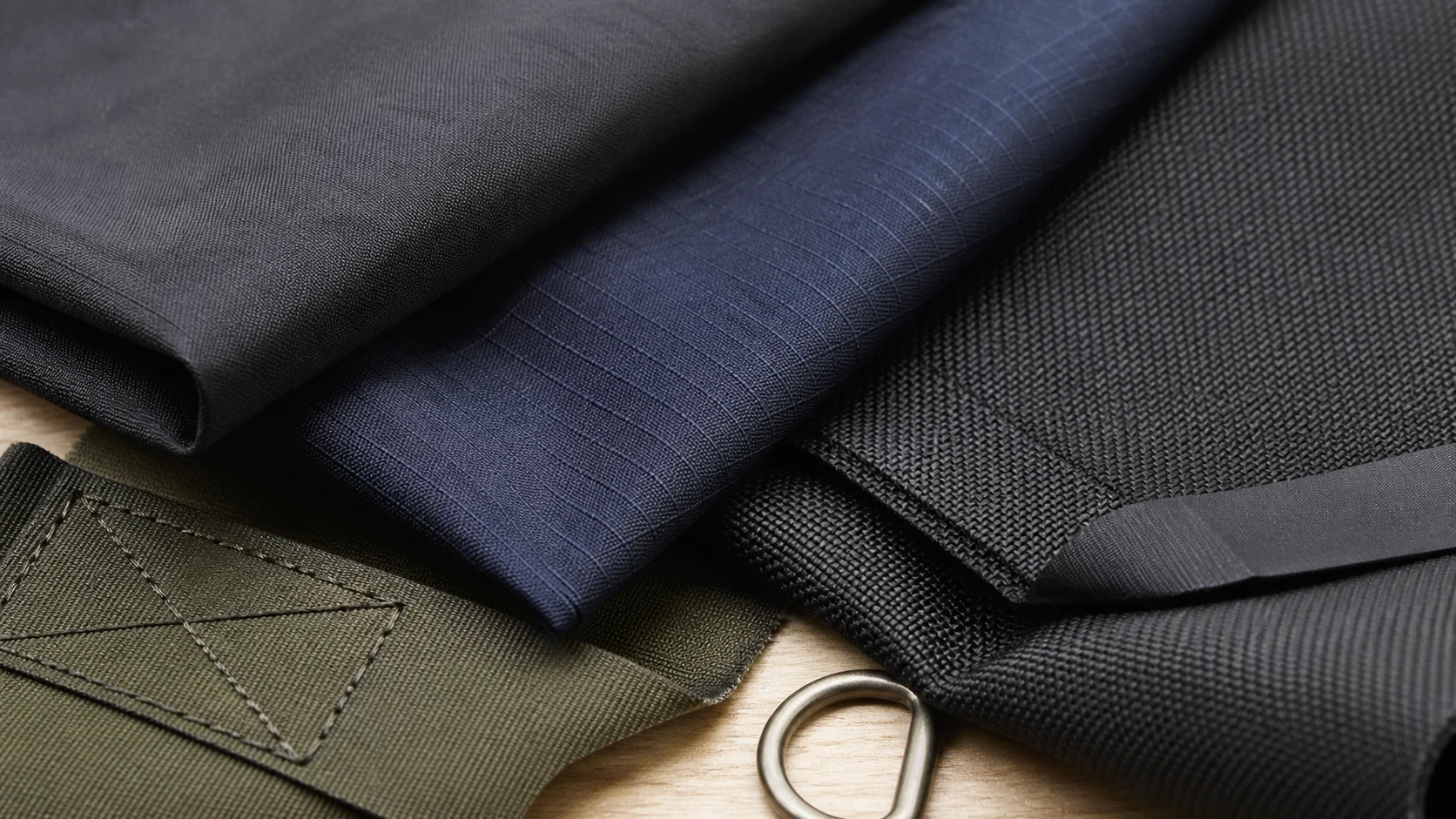
Denier, weave, fabric density, and weight describe different aspects of a nylon construction. Similar denier labels can produce different hand feel, opacity, stiffness, appearance, and sewing behavior.
- Compare equal-use alternatives.
- Record the full construction and finish.
- Use a sample or test for performance decisions.

- Denier
- Confirm the yarn reference before comparing strength or hand feel.
- Weave
- Read the surface structure together with the intended bag role.
- Density
- Check coverage, opacity, stiffness, and sewing behavior on a real swatch.
- Weight
- Record the finished construction, not a loose fabric label alone.

Evaluate Abrasion, Weight and Hand Feel
Evaluate abrasion, weight, and hand feel against the intended use and a named sample or test method. Sales copy should describe the selected construction and proof, not make a broad claim that all nylon is lighter or more durable.
- Set the use and risk first.
- Compare a physical swatch and finished sample.
- Document any test method and result before publishing it.

Select Coatings and Moisture Management
Moisture performance comes from the coating, backing, seam design, zippers, and openings working together. A coated fabric alone is not enough to call the finished bag waterproof.
- Define water exposure.
- Specify fabric, seams, closures, and construction.
- Validate the finished product for the intended claim.


Nylon or Polyester for Your Bag
Choose between nylon and polyester by comparing equivalent constructions. Look at weight, hand feel, appearance, cost, availability, color, processing, and claim support. The decision belongs to the complete product specification, not the fiber name alone.
- No universal winner
- Use swatches and production-accurate samples
Match Nylon to Backpack and Sports Applications
Nylon can be considered for backpacks, tactical directions, sports bags, and other projects that need a suitable woven construction. The exact fabric must still be matched to compartments, reinforcement, carrying system, hardware, and branding.
- Use the relevant product page to define the bag.


Define a Nylon Specification for Sampling
Send the product, use, reference construction, known denier or weave, and weight and finish preferences. Add coating or backing, color, branding, quantity, and any performance proof the market will expect.
- MOQ starts at 300 pieces.
- Sampling baseline: 7-10 days after specifications are confirmed.
Buyer questions
When should I consider nylon for a custom bag?
Nylon can be considered for backpacks, tactical directions, sports bags, and other projects that need a suitable woven construction. The final choice should match compartments, reinforcement, carrying system, hardware, coating, and brand position.
What do denier, weave, and construction actually tell me?
Denier describes yarn thickness, weave describes how the fabric is built, and construction includes density, coating, backing, finish, and weight. Similar denier labels can feel and perform differently, so compare actual samples.
Is nylon always stronger than polyester?
No. Nylon is often chosen for strength or abrasion-related applications, but finished-bag performance depends on the exact fabric, weave, coating, stitching, reinforcement, and use case. Do not treat one material name as a universal quality shortcut.
What should be tested before approving nylon for production?
Review the swatch, finished sample, seam behavior, folding, logo method, color, hand feel, abrasion or load evidence where relevant, and compatibility with the full bag structure. The material should be approved as part of the product, not separately.
Match Nylon Construction to Your Bag Application
Tell us the bag type, intended use, hand feel, weight, appearance, coating or backing, quantity, and performance questions that should be reviewed during sampling.
Share Your Nylon Material Brief
Send a reference product or specification and we will identify the next material and construction questions.