
A supplier can write “CORDURA fabric” on a quotation without telling you enough to approve the material. The brand name does not identify the exact fiber, denier, construction, weight, finish, coating, or tested performance.
CORDURA® is an INVISTA trademark used for a portfolio of approved performance fabrics, not one universal cloth. For a bag project, the usable specification is the exact technology and article, supported by a technical data sheet and sourcing records.
This guide explains what the name means, what it does not mean, and how to turn a vague material claim into a specification that can be checked during sampling and production.
What Is CORDURA Fabric?
CORDURA is a performance-fabric brand covering multiple approved fabric technologies. It is not a generic synonym for rugged nylon and it does not describe one weave, coating, or denier.
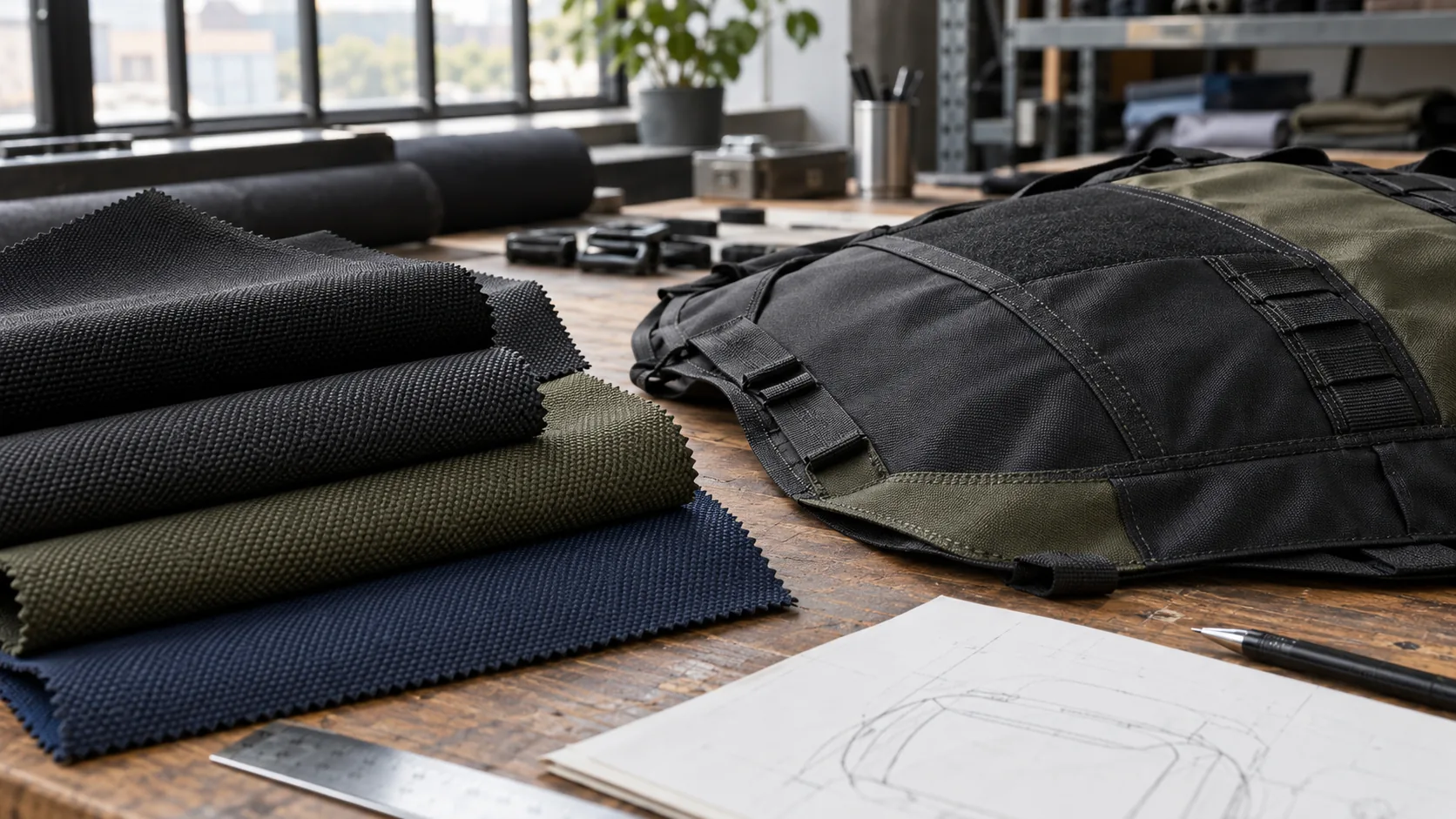
The official CORDURA About page states that only fabrics meeting the brand’s quality standards earn CORDURA certification. The brand works as an ingredient brand: certified mill partners produce fabrics, while the brand defines approval requirements and manages the trademark program.
That distinction matters in purchasing. A real material line needs more than the brand name:
- the CORDURA technology or collection;
- the mill’s article or style number;
- fiber composition and yarn type;
- denier and fabric weight;
- weave or knit construction;
- finish, coating, or laminate;
- width, color, and tolerance requirements;
- technical data and the test method behind each performance claim.
The brand began commercially with a high-tenacity nylon 6,6 technology in 1967, but the current portfolio is much broader. A classic heavy pack fabric, a lightweight fabric, a stretch construction, and a flame-resistant fabric can all sit under the same brand while behaving differently.
Treat “CORDURA” as the start of the material description, not the completed specification.
Is CORDURA Always Nylon?
No. The original CORDURA technology was based on high-tenacity nylon 6,6, but today’s portfolio includes different fibers, blends, constructions, and end-use technologies.
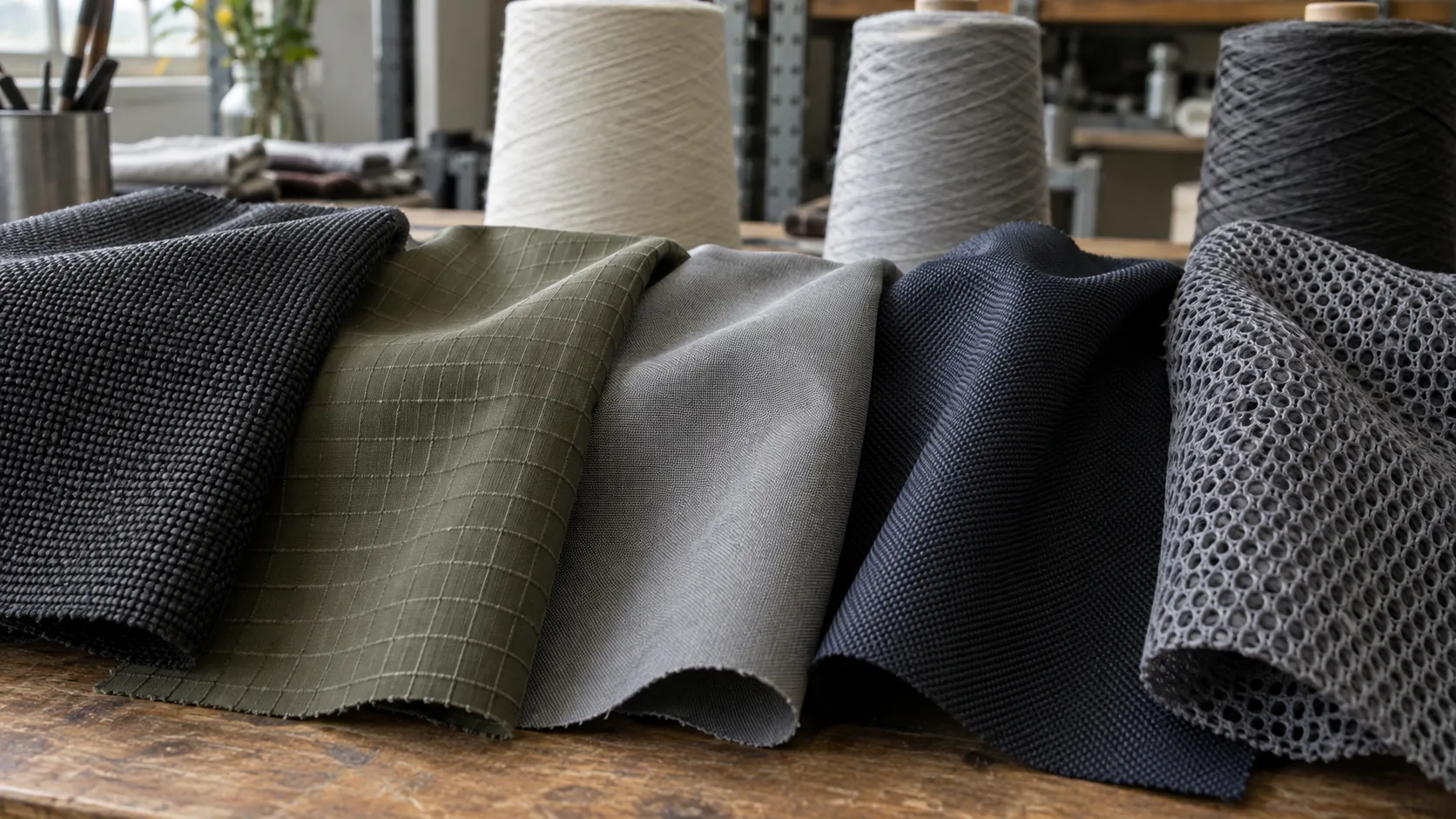
The brand’s current portfolio includes classic nylon constructions as well as lightweight, recycled, workwear, stretch, denim, mesh, and flame-resistant technologies. For example, CORDURA Classic Fabric is specifically described as high-tenacity, air-jet-textured nylon 6,6 in 330D to 1000D options. That description applies to the Classic line; it should not be copied onto every fabric carrying the brand.
This prevents two common specification errors:
- Using a brand when the requirement is actually a fiber. If the product needs high-tenacity nylon 6,6, state that fiber requirement. Do not assume every branded article matches it.
- Transferring one technology’s performance to another. A lightweight article and a heavy pack fabric may share a brand name, but they do not share the same construction or test results.
A quotation should therefore name both the branded technology and the exact article. If the supplier provides only “1000D CORDURA,” ask for the article number, composition, fabric weight, backing, technical data sheet, and source. If the intended material is a similar unbranded fabric, it should be described as such rather than presented as CORDURA.
What Do CORDURA Grades and Denier Numbers Mean?
Denier measures yarn linear density: one denier equals one gram per 9,000 meters of yarn. It is not a direct score for abrasion resistance, tear strength, fabric thickness, or waterproofness.
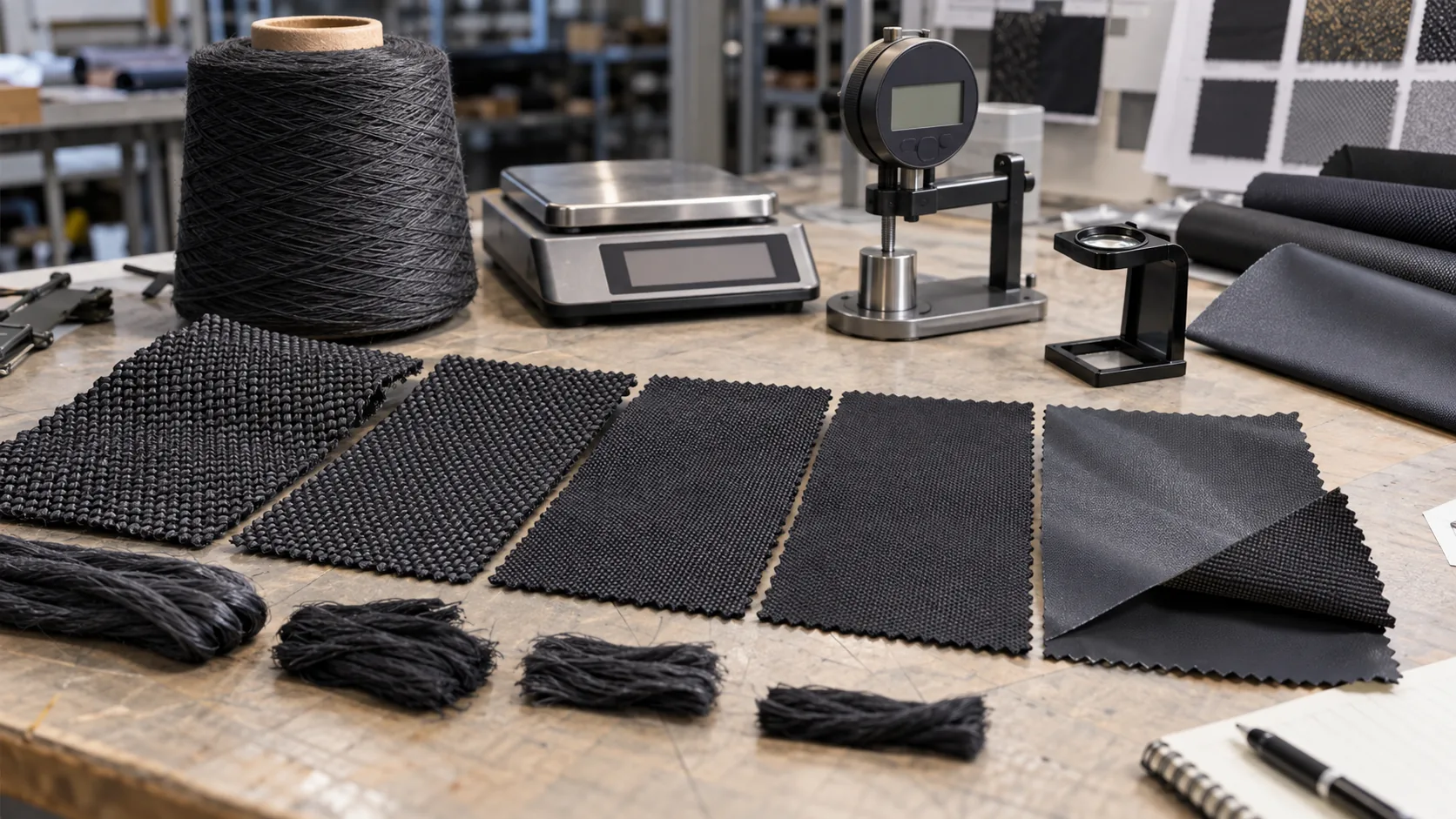
A higher denier normally indicates a heavier yarn when the compared yarns use the same measurement system. It does not reveal how tightly the fabric is woven, which polymer is used, whether the yarn is textured, how much the finished fabric weighs, or what coating is applied.
That is why two 500D fabrics can perform differently. Construction and finishing can change the hand, weight, abrasion behavior, tear behavior, water resistance, and sewing response.
| Specification level | What it identifies | What remains unknown |
|---|---|---|
| Brand | Approved participation in the CORDURA program | Exact technology and construction |
| Technology family | The product family, such as Classic or another named line | Exact mill article and finish |
| Article or style number | The specific fabric offered by a mill | Whether the supplied roll matches the approved sample |
| Fiber and yarn | Polymer, blend, and yarn type | Fabric construction and finish |
| Denier | Yarn mass per fixed length | Fabric weight, strength, thickness, and water behavior |
| Construction | Weave, knit, mesh, or other structure | Coating and verified test results |
| Fabric weight | Mass per unit area | How the finished bag will perform |
| Coating or laminate | Backing or surface treatment | Finished-product seam and water performance |
The article number is the most useful identifier because it connects the quotation, technical sheet, approved swatch, purchase order, and production roll. Denier remains one line within that specification.
The same principle applies when evaluating other nylon bag materials: compare fiber, yarn, construction, weight, finish, and test data together instead of using denier as a durability shortcut.
How Does CORDURA Compare With Generic Nylon or Polyester?
“CORDURA versus nylon” is not a like-for-like comparison. CORDURA is a brand portfolio; nylon and polyester are fiber families. A CORDURA article may itself be made from nylon or polyester.
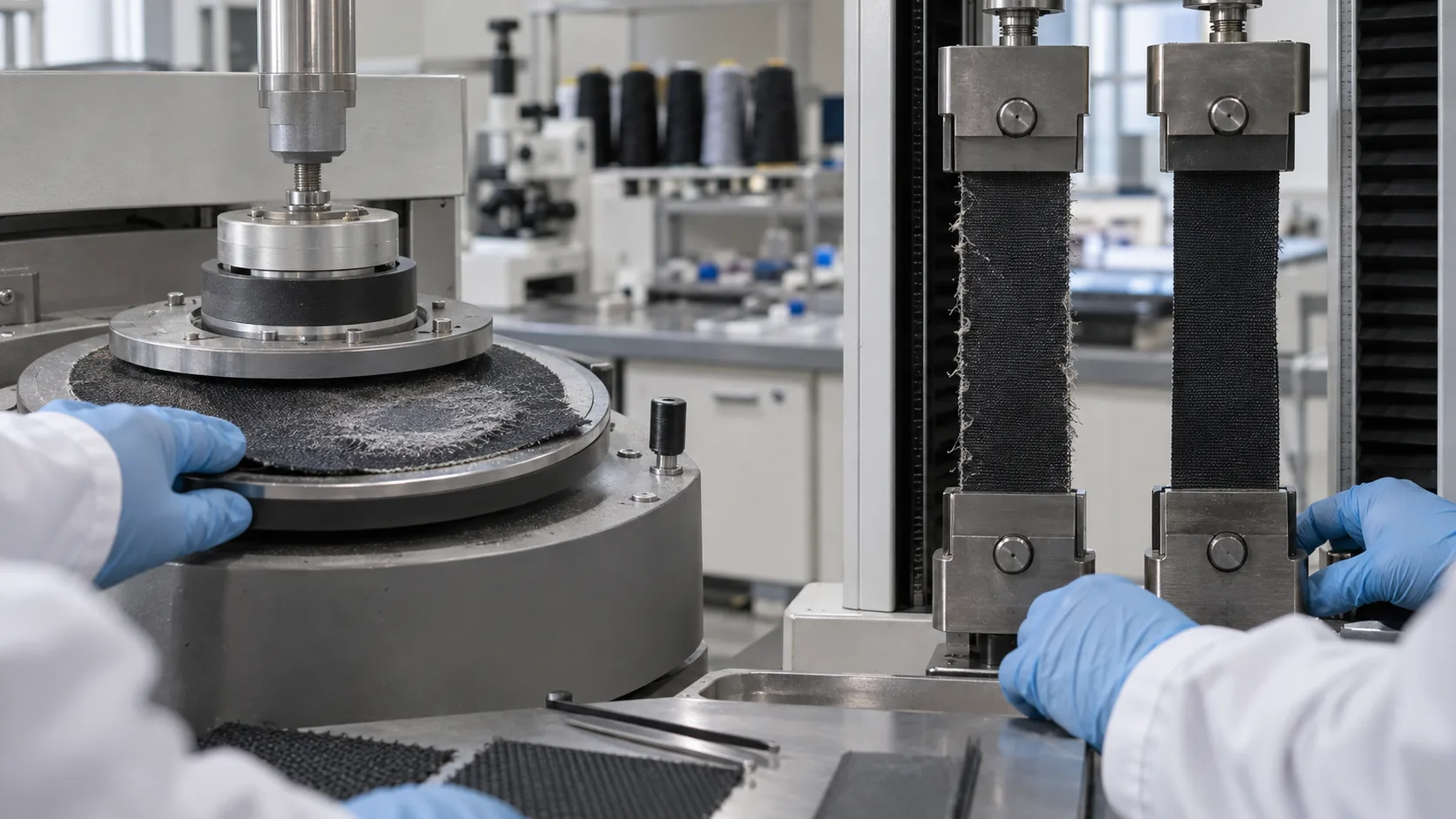
A branded article can offer a clearer approval and sourcing trail, but the name alone does not prove that it will outperform every unbranded fabric. A fair comparison uses two exact articles and the same test method.
Use this sequence:
- Match the intended fiber class and yarn size.
- Compare fabric construction and weight.
- Confirm the finish, coating, or laminate.
- Request results for the property that matters to the product.
- Check that both reports use the same test method and comparable conditions.
- Sew both materials into production-representative samples before deciding.
Avoid unsupported multipliers such as “three times more abrasion resistant.” Abrasion results depend on the test method, abrasive medium, load, endpoint, specimen preparation, and conditioning. A number without those details cannot support a purchasing decision.
The brand can still provide commercial value. Its certification program, mill network, Fabric Finder, official product branding, and standardized technical information can make sourcing and verification easier. Whether that value justifies the cost depends on the chosen article, the product promise, and the alternative fabric’s documentation.
Which CORDURA Constructions Suit Different Bag Areas?
The appropriate fabric depends on the bag zone, expected use, weight target, and required test evidence. One article does not need to cover every panel.
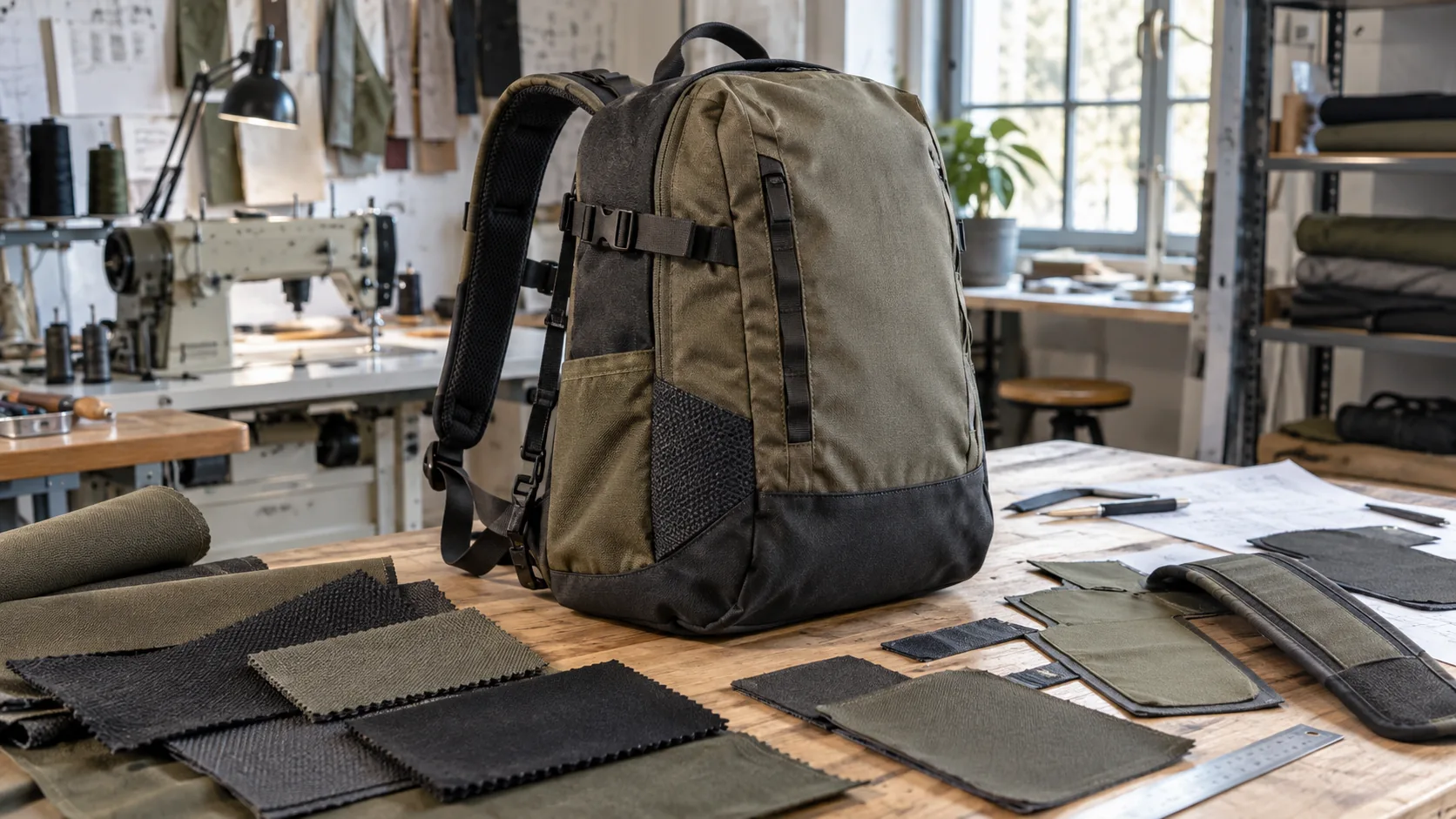
A zone-based material plan is more useful than specifying the heaviest available fabric throughout the bag:
- Main body panels: balance abrasion needs with weight, drape, color, and sewing behavior. A daily backpack may not need the same construction as checked luggage.
- Base and high-contact panels: consider a heavier or more abrasion-focused article where the bag regularly touches floors, rocks, or handling equipment.
- Pocket edges and attachment areas: use localized reinforcement where seams, lash points, or strap anchors concentrate force.
- Shoulder straps and handles: specify shell fabric, foam, webbing, thread, stitch pattern, and attachment reinforcement separately. Shell material alone does not determine load capacity.
- Lining and internal dividers: choose these for cleanability, hand, weight, visibility, and pocket construction rather than copying the outer-shell specification.
- Weight-sensitive panels: a lighter approved article may be suitable where contact and load are limited, provided its test data and sample performance support the use.
For tactical programs, heritage language such as “military grade” is not a measurable requirement. A tactical backpack supplier still needs an exact bill of materials, reinforcement map, seam construction, hardware specification, and finished-sample test plan.
Record every material zone in the bill of materials. If the body, base, and reinforcements use different articles, each one needs its own identifier and approved swatch.
How Can Buyers Verify a CORDURA Material Claim?
Verification should follow the material from the approved mill article to the production roll and finished sample. A logo, product photo, or loose hangtag is not enough on its own.
The official CORDURA FAQ explains that fabric approval requires an active Trademark Licensing Agreement, supporting fabric and yarn information, certifications, internal test documentation, and a Notice of Approval after the requirements are met. It also directs buyers to certified mill partners and the CORDURA Fabric Finder.
That framework creates three separate checks: buying the fabric, confirming the fabric’s certification status, and obtaining permission to use the CORDURA name or hangtag on finished goods. One does not prove the others. The brand also covers a portfolio rather than a fixed specification, so record the exact family and fabric article instead of transferring one line’s fiber, denier, weave, or performance language to every CORDURA product. Trademark ownership and licensing details can change; recheck the current official pages whenever branded wording will appear in a quotation, label, or marketing claim.
Ask the supplier for this chain:
| Required evidence | What to check |
|---|---|
| Exact technology and article number | Same identifier appears on quote, technical sheet, purchase order, and invoice |
| Mill or authorized source | Supplier can name the source and provide traceable purchasing documents |
| Current technical data sheet | Composition, denier, construction, weight, width, finish, and test information match the quotation |
| Approval or certification evidence | Document identifies the relevant fabric rather than only displaying a brand logo |
| Production-roll reference | Roll labels, lot information, and delivery records connect the received fabric to the ordered article |
| Approved swatch | Swatch is large enough to review face, back, construction, color, hand, and finish |
| Finished sample | Sample uses the recorded article in the correct zones |
Official hangtags and sew-in labels can help communicate the branded material, but they do not replace article-level records. The FAQ says labels are optional, so the absence of a hangtag does not prove that a fabric is false. Conversely, an unattached tag does not prove which fabric was used in a particular production run.
If the finished product will use the CORDURA name or logo in marketing, confirm the current trademark and branding permissions with the brand program. Do not assume that purchasing a fabric roll automatically grants unrestricted logo use.
What Performance Claims Need Test Data?
Every performance claim should point to the exact article, named test method, test conditions, and acceptance rule. Broad words such as “durable,” “waterproof,” or “military grade” are not substitutes for those details.
For bags, the useful properties may include:
- abrasion resistance for bases and contact panels;
- tear and tensile behavior for the selected construction;
- seam strength or resistance to yarn slippage;
- colorfastness where rubbing, light, or moisture matters;
- coating adhesion and hydrostatic or spray performance where a water claim is made;
- dimensional or appearance changes after the intended care process.
Do not combine results produced by different methods as though they were interchangeable. A report should state how the test was run, not only whether the sample “passed.”
A supplier or brand statement can establish that a claim exists, but it is not universal proof of the claim. Read every report within its own identity chain: the stated sample or lot, method and version, conditions, endpoint, date, and result. This is especially important when comparing abrasion figures or interpreting denier, which describes yarn linear density rather than finished-fabric or finished-bag durability.
Water performance deserves separate attention. The CORDURA name does not create one universal waterproof rating. Water behavior depends on the exact fabric, finish, coating or laminate, seams, zipper construction, and finished-product design. If a bag is marketed as water-resistant, the evidence should support the wording actually used.
What Should Be Tested on the Finished Bag?
Fabric approval does not certify the finished bag. Cutting, sewing, folding, coating, binding, hardware, and assembly can change performance or create new failure points.
A finished-sample plan should cover:
- Seams and stitch holes: review seam strength, yarn slippage, perforation, and abrasion at loaded joints.
- Strap and handle attachments: test the agreed representative load and inspect the fabric, webbing, thread, and reinforcement together.
- Base and corner wear: evaluate the real contact zones on the assembled shape.
- Closures and hardware: cycle zippers, buckles, adjusters, and snaps separately from the shell fabric.
- Water behavior: test the finished construction if the product carries a water-resistance claim.
- Appearance and dimensions: check color, surface marks, puckering, symmetry, measurements, and material placement.
- Representative packing: load the sample as a customer would and review balance, distortion, access, and pressure points.
The guide to how a backpack is made shows why material selection, pattern development, sewing, and sample approval need to be reviewed as one production system.
Define the pass criteria before the sample test. If a result fails, revise the material, construction, or claim rather than inventing a lower standard after testing.
What Should Go Into a CORDURA Fabric Specification?
A usable specification connects the commercial name to measurable purchasing and production details.
Include:
- CORDURA technology and exact article or style number.
- Mill or approved source.
- Fiber composition and yarn description.
- Denier, construction, and fabric weight.
- Finished width, color reference, and tolerances.
- Face and back identification.
- Finish, coating, laminate, and any post-treatment.
- Required test methods, report dates, and acceptance criteria.
- Approved swatch and production lot reference.
- Bag zones where the article is used.
- Branding or hangtag requirements, if applicable.
- Substitution rule requiring written approval before any change.
The supplier should not substitute a “similar CORDURA” article or an unbranded equivalent without approval. Even a visually close alternative can change weight, drape, sewing response, coating behavior, or test results.
When comparing factories, check whether the material controls are connected to the tech pack, sample, purchasing records, incoming inspection, and bulk production. The broader guide to evaluating backpack manufacturers explains how to review those controls before placing an order.
Frequently Asked Questions
Is CORDURA the same as nylon?
No. Nylon is a fiber family. CORDURA is a trademarked performance-fabric brand covering multiple technologies. Some well-known CORDURA fabrics use nylon 6,6, but the brand name alone does not identify the fiber or construction.
Is CORDURA better than generic nylon?
Not automatically. Compare two exact fabrics using the same test methods and similar construction, weight, and finish. The branded article may provide a stronger approval and sourcing trail, while performance still depends on the selected article.
What do 500D and 1000D mean?
They are denier values describing yarn mass per fixed length. They do not directly state fabric thickness, strength, abrasion life, or waterproofness. Construction, weight, yarn type, and finishing also matter.
Is CORDURA waterproof?
Not by name alone. The water behavior depends on the specific article, finish, coating or laminate, seam construction, closures, and finished-product test result.
How can a buyer check authenticity?
Ask for the exact technology and article number, named mill or source, technical data sheet, approval evidence, invoice trail, production-roll information, and an approved swatch. Confirm official branding permissions separately if the logo or hangtag will be used.
Conclusion
CORDURA is not one fabric and denier is not a durability grade. A reliable purchase starts with the exact approved article, then adds fiber, construction, weight, finish, test evidence, sourcing records, and a production-representative sample.
That approach protects both sides of the order. The buyer knows what is being purchased, and the factory has a material reference it can follow through sampling, incoming inspection, cutting, and bulk production.