
Two nylon fabric swatches can share the same fiber name and still behave differently in a finished bag. The missing information is usually in the construction, not the label.
Nylon fabric is made from manufactured polyamide fibers. The name identifies the fiber family, but it does not define the yarn, weave or knit, fabric mass, coating, finish, or finished-bag performance. Buyers need those fields before they can compare two materials fairly.
This guide shows how to move from a generic nylon label to a material specification that can be quoted, sampled, and checked.
What Is Nylon Fabric?
The fiber name is useful, but it answers only the first specification question.
Nylon is the generic name for a manufactured fiber whose fiber-forming substance is a long-chain synthetic polyamide. That definition comes from 16 CFR 303.7, which sets generic names for manufactured textile fibers in the United States.
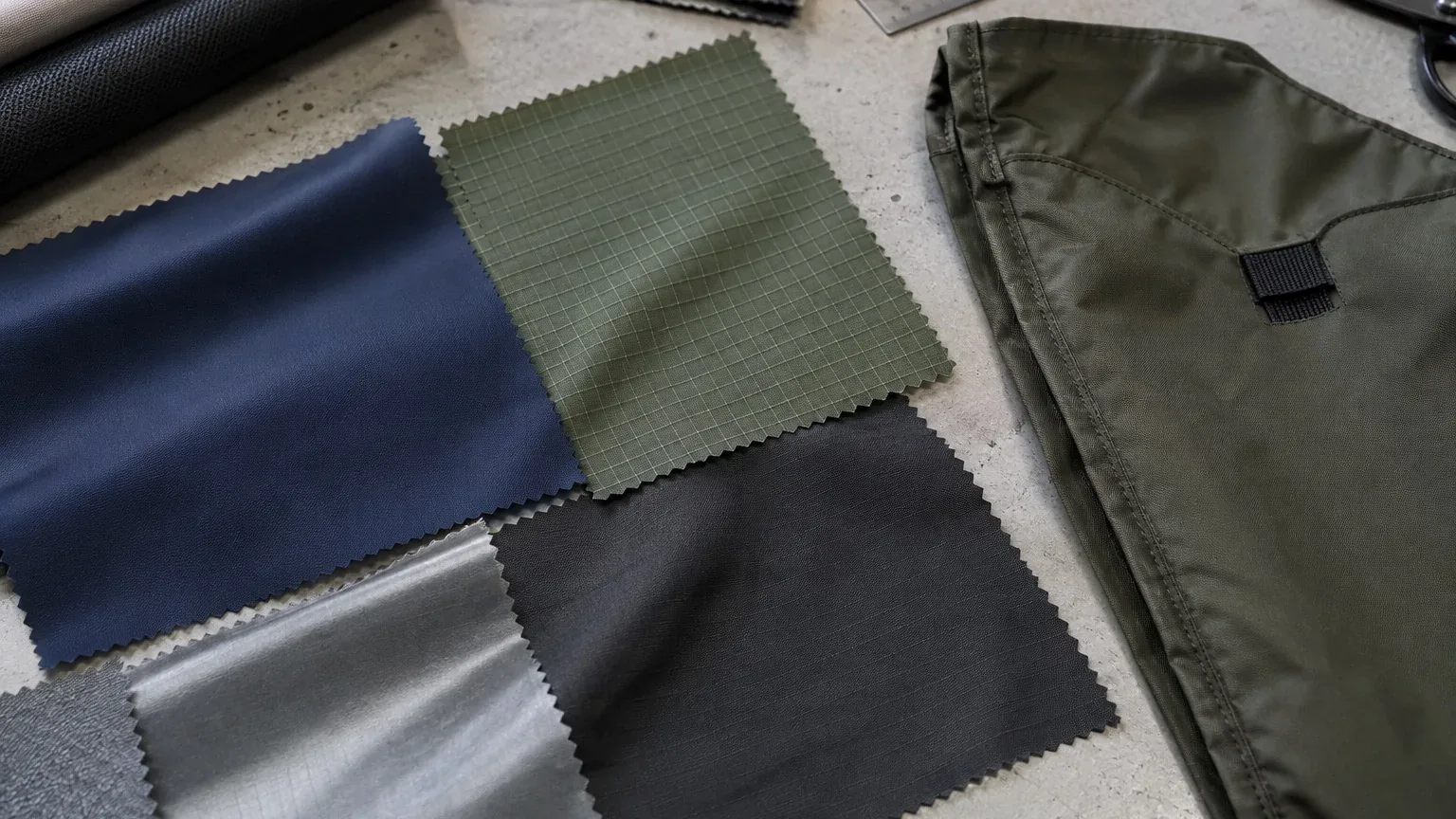
For sourcing, keep fiber identity separate from fabric construction. A complete nylon fabric record may also need:
- the declared polymer or grade, when relevant;
- yarn linear density and yarn construction;
- woven, knitted, or other fabric structure;
- finished fabric mass and thickness;
- coating, laminate, backing, or surface finish;
- color and decoration process;
- the material’s location and job in the bag.
The approved insight behind this distinction is simple: a polymer name does not prove fabric performance. PA6, PA66, and other material identities describe chemistry. They do not, by themselves, prove strength, water protection, UV resistance, service life, or environmental performance.
How Does Nylon Fabric Become a Bag Material?
Production decisions continue after the polymer is identified.
Manufacturers form nylon into filaments or fibers, prepare the yarn, build a woven or knitted textile, and then apply the required dyeing, heat setting, coating, lamination, or other finish. Each stage creates fields that belong in the material record.
Yarn construction affects the surface and handling of the textile. Weave or knit changes stability, drape, stretch, and the way loads move through the panel. Coatings and laminates can change stiffness, sewing behavior, moisture resistance, and care requirements. These are variables to specify and verify on the exact candidate material, not automatic results of the word nylon.
That separation also matters when evaluating neoprene bag material: the textile face, elastomer or foam layer, adhesive, and backing should not be collapsed into one material name.
I would not accept “same nylon” as proof of equivalence after a supplier change. I would compare the supplier article or grade, yarn, construction, finished mass, thickness, finish, and backing, then check the physical swatch and finished sample. That comparison explains why two materials with the same fiber name can still be different test objects.
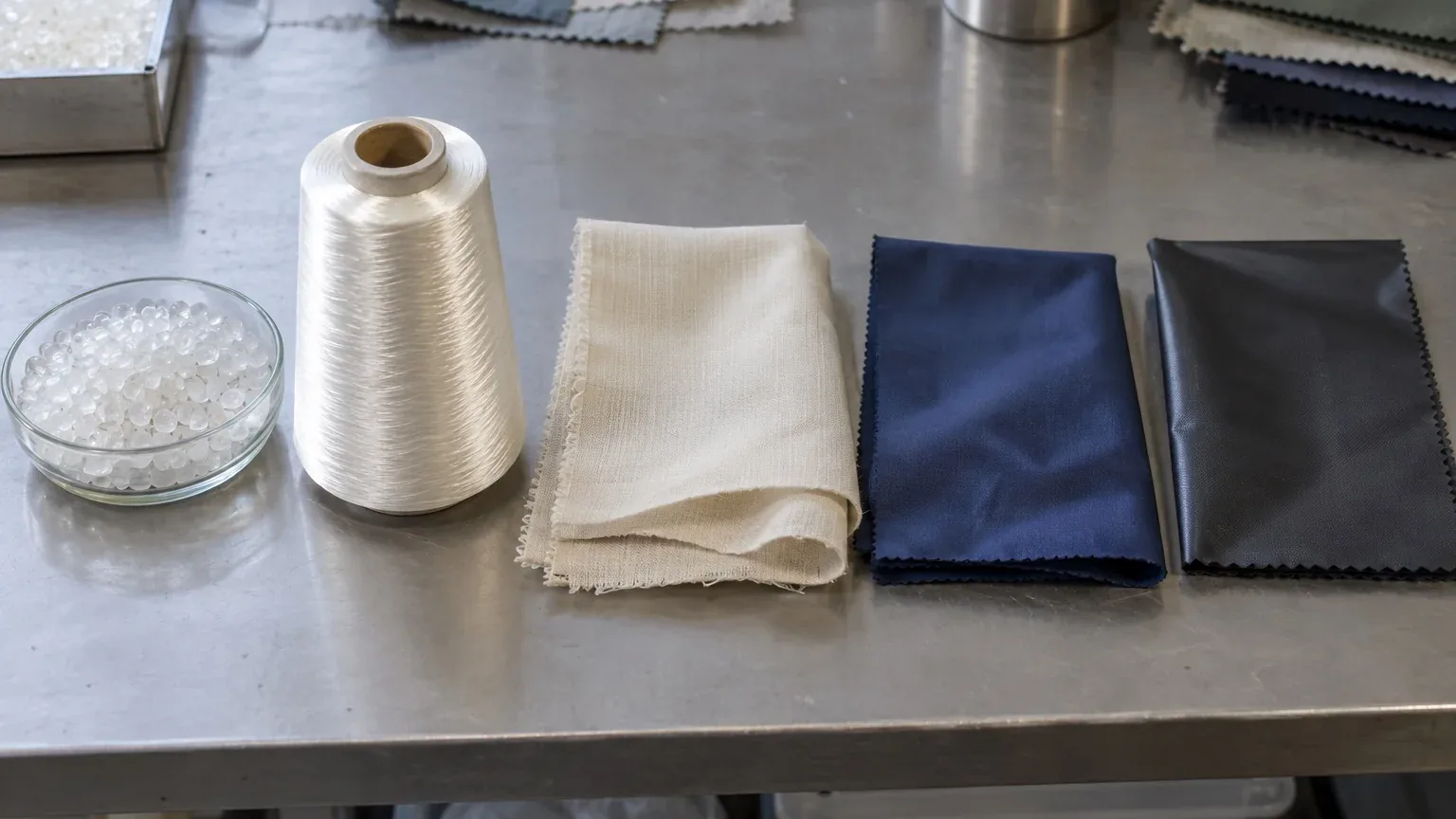
Which Nylon Types and Construction Names Matter?
Polymer names and construction names describe different layers of the specification.
Nylon 6 and nylon 6,6 are different polyamide structures, but their chemical identity does not create a universal ranking for bag fabric. A useful comparison needs the exact grade, yarn, fabric construction, finish, and evidence matched to the required performance. The label “nylon 6,6” is not a substitute for that work.
Construction names need the same discipline:
- Plain woven nylon describes a basic interlacing structure, not one fixed weight or performance level.
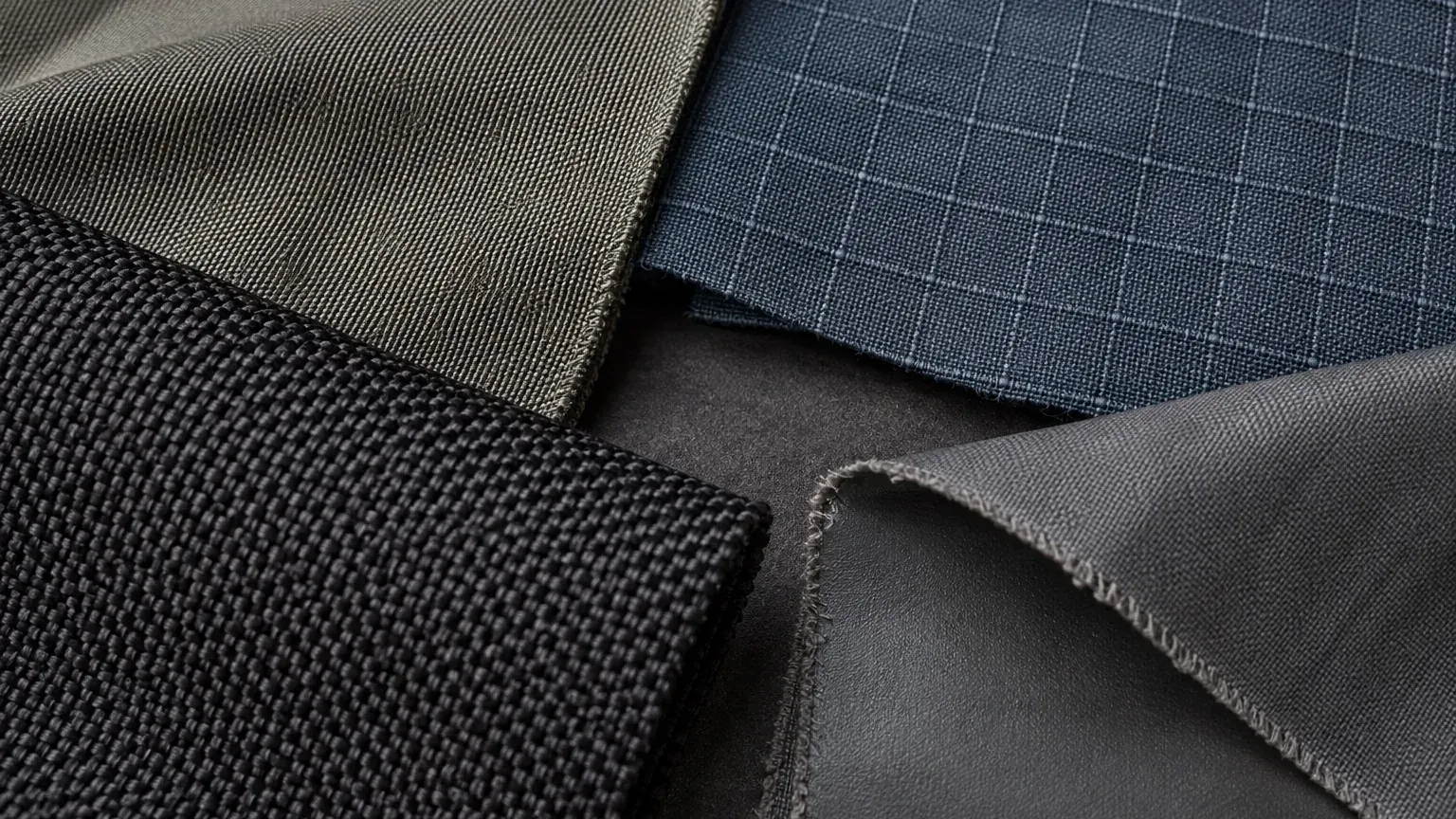
- Ripstop nylon uses a visible or subtle reinforcing-yarn pattern. Ripstop is a structure field; the grid does not prove a fiber, denier, coating, tear result, abrasion result, or finished-bag life.
- Ballistic-style nylon describes a construction direction. Unless a supplier defines the exact article and provides relevant evidence, the name is not a certified durability grade.
- Coated or laminated nylon combines a textile with another layer. The coating or laminate must be recorded separately from the nylon face fabric.
CORDURA is also not a generic synonym for nylon. The current CORDURA FAQ describes an ingredient-brand model involving certified mill partners and fabric approval. If a quote uses the brand name, ask for the exact certified fabric article and supporting documentation rather than accepting “CORDURA-grade” as an equivalent description.
What Does Denier Tell You About Nylon?
Denier describes yarn linear density. It is not a fabric quality score.
One denier corresponds to one gram per 9,000 metres of yarn. ASTM currently lists D2260-24 for conversion among yarn-numbering systems, while ASTM D1577 covers measurement of textile-fiber linear density. The practical buying boundary is more important than the formula: denier does not report weave density, finished mass, coating, tear performance, abrasion performance, seam strength, or bag durability.
| Field | What it identifies | What it does not prove |
|---|---|---|
| Polymer or fiber | Material family or declared grade | Finished-fabric ranking |
| Denier | Yarn mass per unit length | Fabric mass, strength, or durability |
| Yarn construction | Filament and yarn configuration | Finished performance without the fabric structure |
| Weave or knit | How the yarn forms the textile | Coating, water protection, or service life |
| Finished mass and thickness | Physical attributes of the completed fabric | A universal quality level |
| Finish, coating, or backing | Added surface or composite construction | Finished-bag performance by itself |
| Approved swatch and sample | The specific reference being accepted | Future-lot conformity without controls |
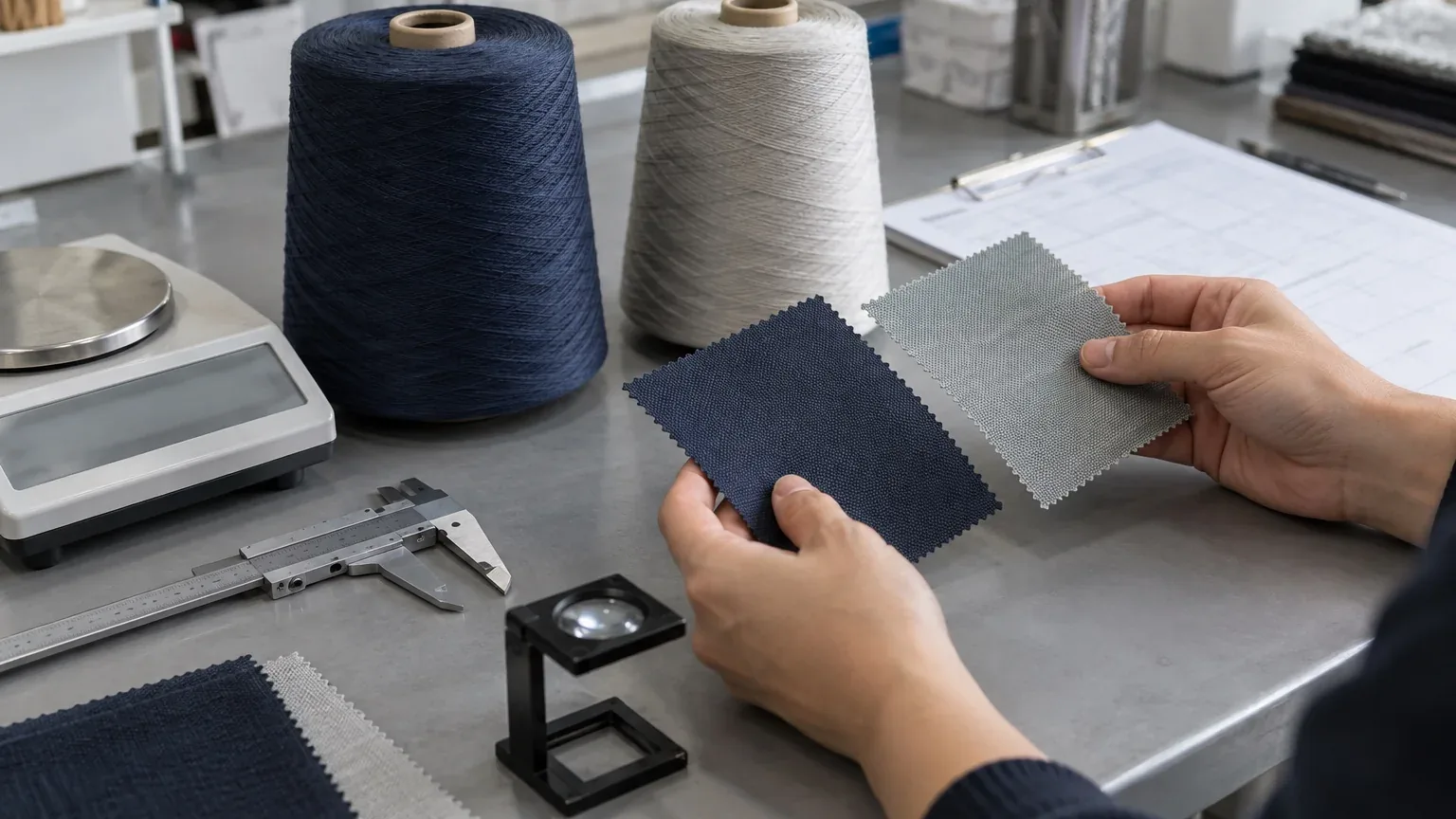
Two fabrics can share the same polymer and denier and still differ because filament count, yarn construction, weave or knit, mass, thickness, finish, or coating has changed. I would compare denier only inside an otherwise controlled specification, then use evidence that matches the intended failure mode.
Is Nylon Waterproof, Breathable, or Stretchy?
None of these properties can be decided from the fiber name alone.
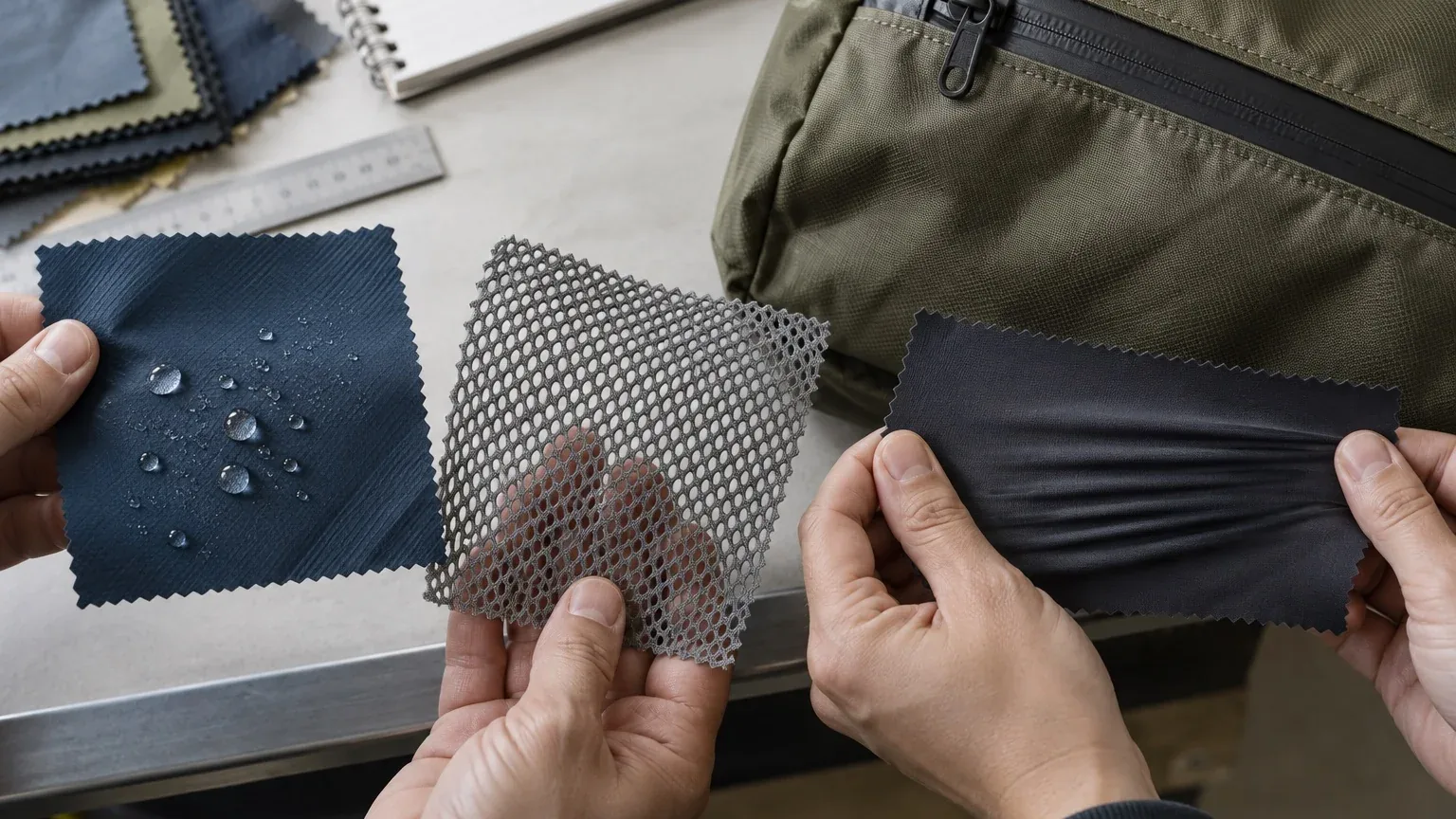
Water protection: A coating or laminate can improve a fabric’s resistance to water penetration, but fabric evidence is not finished-bag evidence. ISO 811:2018 applies a hydrostatic-pressure method to fabrics. A finished bag adds seams, needle holes, zipper ends, openings, bindings, logos, webbing anchors, and other attachment points. Its claim therefore needs product-level evidence matched to the intended exposure. For projects where water protection drives the design, review the complete construction used for custom waterproof backpacks rather than inheriting a claim from the fiber.
Breathability: Air and moisture-vapour movement depend on the complete fabric. A dense weave, membrane, back coating, perforation, or mesh construction can change the result. Request the exact construction and relevant test evidence when breathability matters.
Stretch: Stretch and recovery depend on yarn, knit or weave, blends, and finishing. Do not assume every woven nylon is rigid or every knitted nylon has the recovery needed for a loaded pocket. Approve the exact material in the intended panel.
Where Is Nylon Fabric Used in Bags?
The bag component should determine the material comparison.
Nylon fabric may be considered for shells, reinforcements, linings, pockets, organizers, straps, and lightweight accessories, but each location creates a different risk. A lining needs suitable hand feel, opacity, seam behaviour, and color transfer control. A base panel may need abrasion and moisture evidence. A shoulder-strap anchor combines fabric, reinforcement, stitching, and webbing, so fabric data alone cannot validate the load path.
| Bag area | Questions to resolve before approval |
|---|---|
| Main shell | Target mass, structure, abrasion exposure, coating, appearance, sewing behaviour |
| Base or reinforcement | Contact surface, moisture, folding, seam stack, abrasion evidence |
| Lining | Hand feel, opacity, snagging, color transfer, cleaning, seam finish |
| Pocket or organizer | Stretch or stability, access cycles, edge finish, contents |
| Load-bearing area | Reinforcement, seam construction, webbing interface, finished-sample validation |
Material choice also changes cutting, feeding, seam allowances, needles, thread, and reinforcement. The production guide on how a backpack is made shows why the fabric must be approved as part of the complete assembly.
For tactical applications, a branded or high-denier label still does not replace construction evidence. The tactical backpack development path is relevant when webbing, hardware, reinforcement, and carrying loads must be specified together.
How Should Buyers Compare Nylon and Polyester?
Compare two named fabric constructions for one bag component and use case.
The polymer names do not establish a universal winner for strength, abrasion, UV exposure, moisture, cost, or sustainability. Those conclusions require comparable constructions and evidence. A useful comparison aligns the following fields:
| Comparison field | Buyer check |
|---|---|
| Intended component | Compare shell with shell, lining with lining, or reinforcement with reinforcement |
| Polymer and yarn | Record the declared fiber or grade and yarn construction |
| Weave or knit | Confirm both candidates use structures suitable for the same job |
| Finished mass and thickness | Compare measured finished fabrics, not nominal labels |
| Finish and backing | Align coating, laminate, DWR, and surface treatment |
| Appearance and processing | Review color, hand, print, heat, cutting, and sewing behaviour |
| Performance evidence | Use the same test object, method, conditions, and endpoint |
| Commercial basis | Compare the same quantity, color, finishing, evidence, and delivery assumptions |
This is also the right way to evaluate polyester bag material. If the fields are not aligned, the result explains two different specifications rather than a nylon-versus-polyester decision.
How Should Buyers Specify Nylon Fabric for Sampling?
A sampling brief should turn the material name into controlled fields.
Record the bag type, component, use environment, intended load or exposure, approved reference, polymer or supplier grade, yarn and denier, weave or knit, finished mass, thickness, color, finish, coating or backing, decoration method, and required evidence. Add the measurement basis and tolerances where they affect acceptance.
Then keep three records together:
- the written specification and revision;
- the approved material swatch with a traceable supplier reference;
- the approved finished sample showing the material in the real seam and panel construction.
If a supplier proposes a substitute, reopen the affected fields instead of treating a similar name or appearance as automatic approval. The nylon bag material selection page is the relevant next step when the educational comparison becomes a live sampling and quotation task.
Frequently Asked Questions
Is nylon a synthetic fabric?
Yes. US textile rules define nylon as a manufactured fiber based on a long-chain synthetic polyamide. The fiber identity does not specify how the yarn and fabric are constructed.
Does nylon fabric make a bag waterproof?
No. A fabric coating may support a fabric-level water-resistance statement, but the finished bag adds seams, zippers, openings, and attachments that need their own validation.
Can nylon fabric be screen printed?
It can be compatible with several decoration systems, but adhesion, appearance, and curing depend on the exact finish, coating, ink, and process. Approve a production-size trial on the real fabric.
Can you bleach nylon?
Do not assume bleach is safe from the fiber name. Follow the finished product’s validated care instruction because dyes, coatings, prints, foam, thread, and hardware can change the acceptable method.
Is nylon always better than polyester for bags?
No. Compare two complete constructions for the same component and use. A material-family name cannot establish a universal performance or cost ranking.
Conclusion
The term nylon fabric identifies a manufactured polyamide fiber family, but a usable bag-material specification goes further: it records the yarn, denier, fabric structure, finished mass, thickness, finish, coating or backing, component, and evidence required for the intended use.
Compare candidate materials on aligned fields, approve the actual swatch, and verify the finished sample. When those decisions are ready for sampling and quotation, continue with the nylon bag material selection process.