
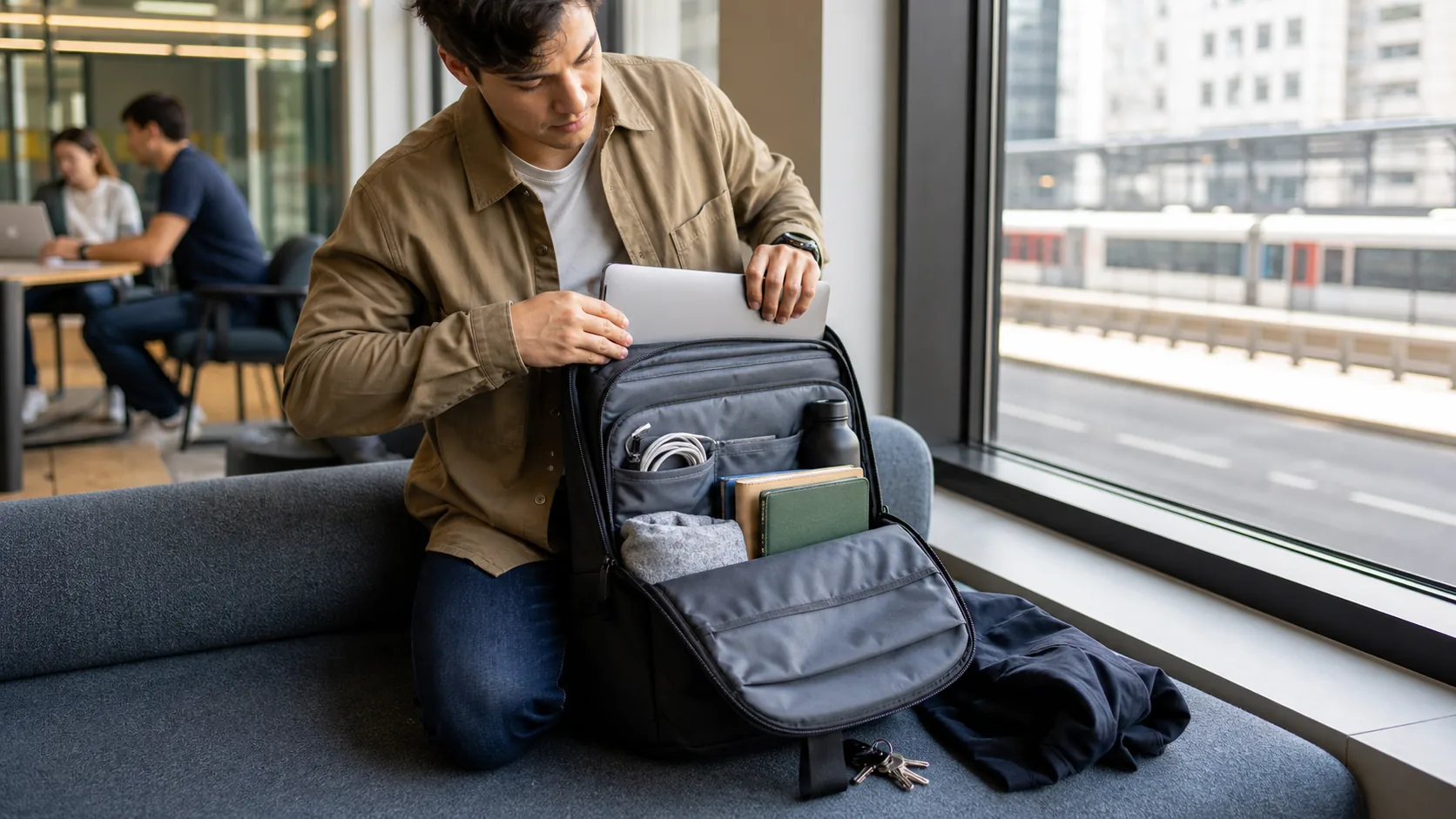
The best backpack is the one that fits the user’s torso, carries the intended load comfortably, organizes the required gear, and uses materials and construction that match the environment. There is no single best model for commuting, international travel, photography, hiking, fitness, school, pet transport, and rugged field work because each use places different demands on capacity, access, harness design, fabric, closures, and testing.
A backpack can look polished online and still fail in daily use if the zipper path is overloaded, the laptop compartment is poorly positioned, or the harness does not match the load. A stronger buying process evaluates structure, materials, hardware, comfort, access, and documented performance before aesthetics. The sections below show how those priorities change by use case and how sourcing teams can turn them into measurable specifications.
What Is the Best Backpack for Everyday Urban Commuting?

The best backpack for daily commuting combines clean organization, a manageable silhouette, and durable panel construction for public transit, office storage, and repeated desk-side use. Evaluate compartment logic first, fit and materials next, and appearance within the constraints of the user’s routine.
How Do You Know If a Commuter Pack Fits Your Workflow?
A commuter pack fits when the laptop enters without forcing the zipper, frequently used items remain accessible, and the loaded bag stays close to the body without restricting shoulder movement. Test it with the actual laptop, charger, bottle, lunch container, and clothing layer instead of relying only on stated capacity.
- Dedicated laptop compartment sized for the intended device and case
- Foam-protected or suspended sleeve that keeps the device away from the base
- Front organizer for small items that would otherwise collect at the bottom
- Luggage pass-through when the user regularly combines the bag with wheeled luggage
- Protected zipper construction suited to expected rain exposure
- Bottle pocket that retains the intended container without pushing into the laptop area
Why Do Small Design Details Matter So Much?
Small details accumulate across thousands of openings, shoulder lifts, and floor placements. Zipper alignment, seam allowance, reinforcement placement, edge finishing, webbing routing, and pocket geometry influence how the bag ages and whether it remains easy to use.
| Commuter Priority | Basic Direction | Higher-Spec Direction |
|---|---|---|
| Fabric | General-purpose polyester | Higher-abrasion fabric selected by test requirement |
| Zippers | Standard coil closure | Specified reverse-coil or protected closure |
| Laptop protection | Loose internal sleeve | Sized, padded, and suspended compartment |
| Service support | Undefined | Documented warranty or repair terms |
The correct specification depends on target price, expected load, climate, and warranty strategy. A more expensive component is useful only when the surrounding pattern, stitching, and quality controls support it.
What Is the Best Backpack for One-Bag International Travel?

For one-bag travel, the best backpack is a dimensionally controlled pack with efficient access, stable load support, and a harness that can be protected during transit. A clamshell opening can simplify packing, while compression and internal organization help the bag maintain its planned shape.
What Features Separate Travel Packs From Daypacks?
Travel packs usually handle longer carry periods, denser packing, and more frequent opening than small daypacks. Useful features include:
- Harness geometry and frame support matched to the intended load
- Stowable or protected shoulder straps for baggage handling
- Hip belt when the torso length, frame, and load justify transferring weight
- Dual zipper sliders that accept a user-supplied lock where appropriate
- Internal compression that controls shifting without crushing fragile contents
- Grab handles reinforced for the specified lift load
Product teams can review custom travel backpack construction when translating carry-on dimensions, weather protection, laptop organization, and harness requirements into an OEM brief.
Can You Trust a 40L Bag as Carry-On?
Not from volume alone. Airlines set their own size and weight limits, and a nominal 40L backpack can exceed them when overpacked, expanded, or measured across protruding pockets and handles. Confirm the current carrier rules for each trip and test the fully packed bag against the applicable external dimensions.
| Travel Feature | Why It Matters | Buyer Impact |
|---|---|---|
| Clamshell opening | Suitcase-style access | Easier packing and inspection |
| Protected harness | Reduces loose straps during handling | Cleaner transit setup |
| Frame sheet or stay | Helps control shape and load | More stable carry when correctly fitted |
| Lock-compatible sliders | Adds closure control | Does not replace supervision or secure storage |
Structured panels can help maintain dimensions, but no frame guarantees airline acceptance. Final packed size and the carrier’s current policy control the decision.
What Is the Best Backpack for Tactical and Rugged Use?

The best backpack for rugged use is defined by a verified load path, abrasion-resistant materials, reinforced stress points, dependable hardware, and a test plan tied to the field environment. Modular webbing, high-denier fabric, and heavy zippers can be useful, but a rugged appearance does not prove durability.
What Materials Hold Up in Rugged Conditions?
Material choices should be based on abrasion, tear, tensile, water exposure, temperature, weight, and repair requirements rather than one universal denier.
- High-tenacity nylon or polyester selected for the required abrasion and tear performance
- Reinforcement fabric or webbing at attachment points
- Zippers sized for expected opening cycles, load, and contamination
- Closed-cell or resilient foam validated for compression recovery
- Coatings selected for hydrolysis, flexing, and weather exposure
The appropriate direction for custom tactical backpacks depends on whether the project prioritizes field repair, modular attachment, water resistance, low weight, or sustained load carriage.
How Do You Verify Rugged Build Quality?
Ask for the bill of materials, construction specification, stitch and reinforcement drawings, incoming checks, and completed-product test report. Documentation should identify the sample, conditioning, load, duration, cycles, acceptance criteria, and observed failure mode.
| Rugged Specification | Baseline Direction | Higher-Exposure Direction |
|---|---|---|
| Shell fabric | General outdoor textile | Higher-abrasion textile verified by test |
| Stitch control | Operation-sheet requirement | Operation plus critical-seam inspection |
| Reinforcement | Local bartack or box stitch | Load-path reinforcement validated as a system |
| Water protection | Coated fabric | Compatible fabric, seams, closures, and test plan |
Specifications must work together. Strong fabric does not compensate for weak thread, misplaced reinforcement, unsuitable hardware, or a zipper seam that carries more load than intended.
What Is the Best Backpack for Photography and Creative Work?

The best backpack for photography combines configurable padding, controlled access, stable load support, and weather protection for dense, high-value equipment. Capacity matters, but access orientation and weight distribution often matter more because camera bodies, lenses, batteries, and laptops concentrate weight in a small space.
Why Do Access Points Matter More Than Total Capacity?
Access should match the shooting workflow without allowing equipment to fall out when one opening is used. Side access can support quick retrieval, rear access can improve security and overview, and top access can isolate frequently used items.
- Side opening sized for the intended camera body and grip
- Rear or full-panel opening for complete kit access
- Separate top compartment when loose personal items must stay away from optics
- Tripod attachment that does not unbalance the loaded bag
- Zipper stops or divider geometry that prevents equipment from reaching an open edge
How Should Internal Organization Be Structured?
Removable dividers offer flexibility when kits change, while fixed structures can improve repeatability and prevent users from creating unsafe layouts. The best approach depends on the equipment range and whether the bag is sold for a defined kit or general creative use.
| Photo Pack Feature | General Direction | Professional Direction |
|---|---|---|
| Divider system | Adjustable padded cells | Configurable system validated for target equipment |
| Access points | One controlled opening | Multiple protected openings with retention |
| Harness | General padded straps | Load-support system sized for dense equipment |
| Weather protection | Fitted rain cover | Layered shell, closure, seam, and internal protection |
Test the loaded bag with representative equipment. A well-organized smaller pack can outperform a larger pack when the larger interior allows weight to shift or forces the user to stack fragile components.
What Is the Best Backpack for Outdoor Adventure and Hiking?

The best backpack for hiking matches torso length, load range, trip duration, climate, and access needs. A ventilated back panel, supportive hip belt, and lightweight shell can improve comfort, but only when the harness is adjusted to the user and the load stays within the design range.
What Load Capacity Should You Target?
Capacity depends on weather, water availability, insulation, safety equipment, food, and whether group gear is shared. The following ranges are planning references rather than universal rules:
- Day hikes: approximately 18-25L for compact loads
- Overnight trips: approximately 30-45L depending on shelter and climate
- Multi-day trips: approximately 50-70L when bulkier food, shelter, or cold-weather gear is required
Fit the pack with the expected load. A larger volume can encourage overpacking, while an undersized pack can force gear outside the intended load path.
Can Lightweight Materials Last?
Yes, when the textile, seams, reinforcement, coatings, and use conditions are engineered together. Lightweight ripstop or composite fabrics can provide strong performance for their weight, but they do not automatically equal the abrasion resistance, puncture tolerance, or repair behavior of heavier fabrics.
| Trail Feature | General Direction | Higher-Demand Direction |
|---|---|---|
| Back panel | Foam or channel ventilation | Structured ventilation selected for load and climate |
| Hip belt | Light stabilization | Load-support belt matched to torso and frame |
| Fabric | General outdoor nylon or polyester | Lightweight technical fabric with targeted reinforcement |
| Frame | Frameless or sheet | Stay or frame selected for the intended load |
An outdoor backpack durability case can help sourcing teams connect material choices with reinforcement, field exposure, and completed-product testing.
What Is the Best Backpack for Gym and Fitness Routines?
The best backpack for the gym separates clean and damp items, supports ventilation where appropriate, and uses surfaces that can be cleaned according to the care label. Fitness use exposes linings, seams, foam, and zippers to repeated moisture, odor, detergent residue, and abrasion.
How Do You Control Odor and Moisture Buildup?
Ventilation, drying, removable components, and material selection work together. Antimicrobial claims should be supported by the treatment specification, test method, durability after cleaning, and destination-market requirements.
- Mesh or vent openings positioned without exposing valuables
- Coated wet compartment designed to be wiped and dried
- Removable shoe or laundry insert where washing is expected
- Light-colored lining when visibility and cleaning checks matter
- Drainage only when the product design prevents leakage into other compartments
What Layout Supports a Real Workout?
The layout should follow the routine: small secure pocket for keys and cards, main compartment for clothing, bottle retention, and a separate area for shoes or damp towels. A custom gym bag brief can define wet-dry zoning, cleanability, ventilation, and pocket access at the pattern stage.
| Gym Feature | Basic Direction | Performance Direction |
|---|---|---|
| Wet storage | Removable pouch | Coated compartment with controlled seams |
| Ventilation | Dry-after-use instructions | Purposeful vent panels |
| Shoe storage | Shared main compartment | Dedicated cleanable pocket |
| Lining | General polyester | Material selected for cleaning and moisture exposure |
The best specification is the one supported by cleaning tests and actual use trials, not an assumed cost premium or an unverified warranty-return claim.
What Is the Best Backpack for Sustainability-Conscious Buyers?
The best backpack for sustainability-focused buyers uses documented materials, durable construction, repairable components where practical, efficient packaging, and claims that can be traced to the relevant order. Recycled content can support the strategy, but longevity, chemical compliance, production waste, and end-of-life options also matter.
How Do You Verify Recycled Content Claims?
If a recognized recycled-content certification is claimed, request the supplier’s current scope documentation and the transaction documentation applicable to the order. Confirm the legal entity, site, material category, validity period, chain of custody, and whether the finished-product claim is permitted.
- Current scope documentation for the relevant facility and process
- Transaction or shipment documentation tied to the purchased material
- Purchase and lot records connecting the fabric to the production order
- Testing or composition evidence where required by the buyer or market
- Approved claim wording and logo use before packaging is printed
Does Recycled Fabric Sacrifice Performance?
Not necessarily, but recycled and virgin textiles should be evaluated against the same project requirements. Strength, abrasion, colorfastness, coating adhesion, hand feel, shade consistency, and availability vary by supplier and construction.
| Sustainability Area | Weak Claim | Verifiable Direction |
|---|---|---|
| Fabric | Unqualified `recycled` wording | Defined recycled content with traceable documentation |
| Documentation | Marketing copy only | Current records tied to supplier and order |
| Testing | Assumed equivalence | Project-specific material and finished-product checks |
| Durability | No repair or service plan | Construction and support aligned with expected use |
Documentation reduces claim risk, but certificates do not replace product testing or legal review for the destination market.
What Is the Best Backpack for Kids, Families, and Pet Owners?
The best backpack for children and family use is appropriately sized, easy to clean, visible when required, and designed around the actual user’s movement and load. Pet carrier backpacks require a separate safety and welfare assessment because they support both an animal and the person carrying it.
What Safety Features Matter for Children?
Priorities can include reflective elements, adjustable shoulder straps, a correctly positioned chest strap, controlled loose webbing, cleanable materials, and components evaluated for the destination market and intended age group.
- Reflective trim positioned for likely traffic exposure
- Harness dimensions suited to the target torso range
- Buckles and cords selected to reduce snag and entanglement risks
- Materials and coatings reviewed against applicable chemical requirements
- Load guidance and age-appropriate user instructions
Regulatory obligations vary by product, age grading, material, market, and claim. A general reference to US or EU requirements is not a substitute for a product-specific compliance assessment and current testing plan.
How Should Sizing Work for Young Users?
Use the backpack maker’s fit method and test the loaded bag on the intended user range. Back-panel length, shoulder-strap spacing, strap adjustment, bag width, load, and freedom of movement matter more than age alone.
| Child-Pack Feature | Basic Direction | Higher-Control Direction |
|---|---|---|
| Reflective elements | Limited trim | Visibility layout based on use environment |
| Chest strap | Optional | Adjustable and positioned for target users |
| Material safety | Supplier declaration only | Product-specific compliance documentation and testing |
| Cleanability | Wipe-clean surface | Tested care method for the complete bag |
What Is the Best Backpack-Style Carrier for Pets?
The best backpack-style pet carrier provides enough space and ventilation for the intended animal, maintains its shape, controls openings, supports the base, and gives the human carrier a stable harness. It must be treated as a specialized carrier, not a daypack with mesh added.
What Ventilation and Restraint Details Should You Review?
Ventilation area and placement should be evaluated for species, animal size, climate, trip duration, occupancy, and transport rules. An internal tether, when used, should connect only as directed to a suitable harness rather than creating neck or entanglement risk.
- Multiple airflow paths that remain open when the carrier is loaded
- Structure that prevents collapse into the animal’s space
- Secure entry with protected zipper or latch operation
- Removable, stable, and cleanable base pad
- Escape-prevention and tether details reviewed through a risk assessment
How Do You Balance Comfort for the Pet and Carrier?
The base and walls should support the animal without unstable sagging, while the human harness should manage the specified combined load. Test access, ventilation, balance, visibility, cleaning, and emergency removal with representative dimensions and weight. A pet carrier bag project should also account for applicable welfare, transport, labeling, and market requirements.
What Is the Best Backpack for Buyers Sourcing at Scale?
The best backpack for volume sourcing is one supported by a controlled specification from fabric receipt to packed shipment. Consistency depends on approved materials, pattern revision, operator instructions, in-process controls, sampling, traceability, and corrective action, not on one final inspection promise.
What Should a Serious Sourcing Buyer Ask Upfront?
Ask which documents and controls apply to this project rather than treating one audit or inspection percentage as universal proof of quality.
- Approved bill of materials, color standards, pattern revision, and construction sample
- Incoming, in-process, and final inspection plans with defined acceptance criteria
- Sampling level or full-inspection scope selected from risk, contract, and buyer requirements
- Current factory or social-compliance audit information when relevant
- Quality-management and corrective-action records applicable to the facility
- Test reports tied to representative materials and completed products
A 100% visual inspection can still miss latent, functional, intermittent, or poorly defined defects. Statistical sampling can also be misapplied. The buyer and factory should define what is inspected, how it is measured, who records it, and what happens when a result fails.
Why Do Smaller MOQs Help New Brands?
Smaller orders can reduce initial inventory exposure and support market testing, but feasibility depends on material minimums, colors, custom tooling, printing, hardware, packaging, and production setup. MOQ alone does not predict quality.
| Sourcing Priority | Risk-Prone Approach | Buyer-Ready Direction |
|---|---|---|
| Inspection | Undefined checks | Risk-based plan with measurable criteria |
| Certifications | Logo list without scope | Current documents verified for facility and project |
| MOQ | Marketing number only | Quantity confirmed after materials and customization review |
| Sampling | Verbal promise | Approved sample, revision record, and agreed timeline |
Choosing the right pack is ultimately choosing the right fit, use-case specification, and verification process. Commuter organization, travel dimensions, rugged reinforcement, camera access, hiking fit, gym hygiene, sustainability documentation, child sizing, pet safety, and production control all answer different parts of the same question.
Brands ready to translate these criteria into a product brief can contact ZWbags to discuss target users, dimensions, materials, construction, testing, quantity, and project-specific commercial requirements.
FAQ: What Is the Best Backpack for Common Buyer Questions?
Can I Trust a Lower-MOQ Supplier for Consistent Quality?
MOQ is not a quality score. Review the approved sample, material controls, pattern revision, inspection plan, test results, traceability, and corrective-action process. Confirm which customizations are feasible at the requested quantity before treating the quotation as final.
What Is the Best Fabric Weight for a Daily-Use Backpack?
There is no universal best denier. The correct textile depends on abrasion, tear strength, weight, coating, hand feel, structure, price, sewing construction, and expected service. Compare candidate fabrics using the same project tests and a completed sample.
How Do I Know Whether a Backpack Harness Will Fit?
Follow the manufacturer’s measurement and adjustment method, then test the backpack with the intended load. Torso length, shoulder-strap spacing, load-lifter geometry where present, hip-belt position, back-panel length, and freedom of movement all affect fit.
Can I Request Custom Features on a Lower-MOQ Order?
Often, but the available changes depend on stocked materials, color minimums, printing method, hardware, patterns, molds, packaging, and line setup. Logo or color changes may be easier than a new structure, but the factory must confirm feasibility, cost, lead time, and quantity for the specific project.
How Do I Know Whether a Supplier’s Environmental Claims Are Verifiable?
Request current documentation tied to the relevant legal entity, facility, material, and order. Check validity, scope, transaction records, claim wording, and supporting test or purchase records. Marketing copy alone is not sufficient evidence.