
Retail listings use “hobo,” “crescent,” and “slouchy shoulder bag” loosely, so the label alone does not tell you how the bag is built.
A hobo bag is a soft shoulder bag with a curved body that slouches when empty or loaded. Its shape comes from the panel pattern, material drape, strap anchors, closure, lining, and contents. The name does not define one size, material, closure, or strap length.
The useful question is not whether a supplier recognizes the style name. It is whether the drawing, material stack, measurements, and sample checks define the same silhouette.
What Is a Hobo Bag?
A hobo bag combines three visible traits: shoulder carry, a curved or crescent-like body, and enough flexibility for the body to dip or fold rather than stay rigid.
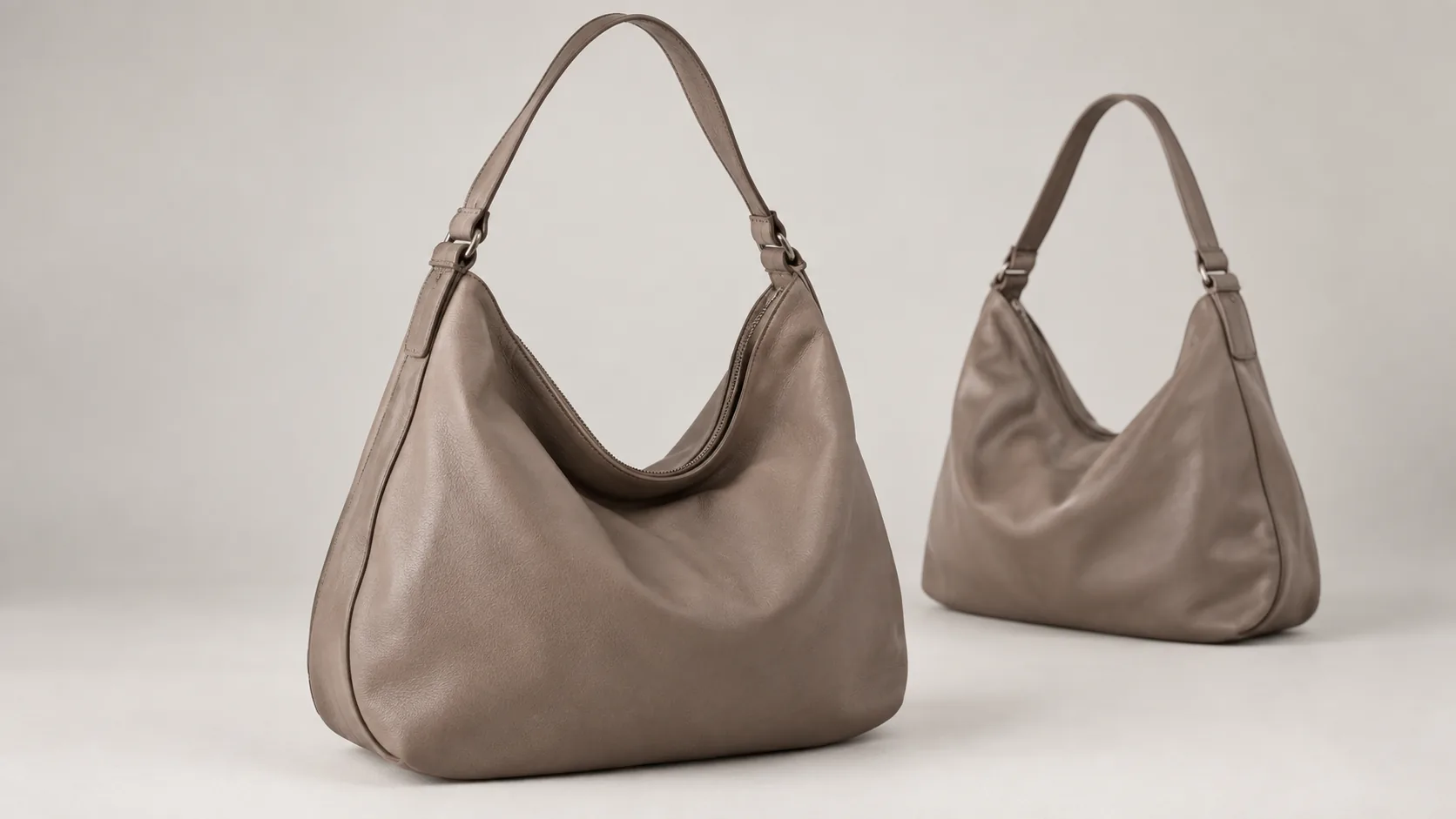
There is no single catalog rule used by every retailer. For example, Amazon’s handbag category guide classifies a hobo as a one-strap shoulder bag with a slight slouch, while reference definitions also emphasize a crescent shape and soft posture. Those descriptions overlap, but they are not a universal manufacturing specification.
For product development, use this working definition:
- Shoulder carry: the primary strap is designed to place the bag on one shoulder. A detachable longer strap can add crossbody carry, but it does not create the hobo shape.
- Curved body: the top line, lower body, or both form a rounded profile rather than a straight rectangular outline.
- Soft behavior: the body changes shape when empty, carried, or filled. A rigid crescent bag may share the outline without behaving like a hobo.
The name alone does not determine capacity, quality, gender, closure, price, or material. Use the broader types of bags guide to place the hobo within the shoulder-bag family, then describe the actual construction separately.
Which Features Create the Hobo Shape?
The recognizable slouch is produced by several decisions working together. A curved pattern can help, but material, strap anchors, opening construction, lining, and load determine how that curve appears in use.
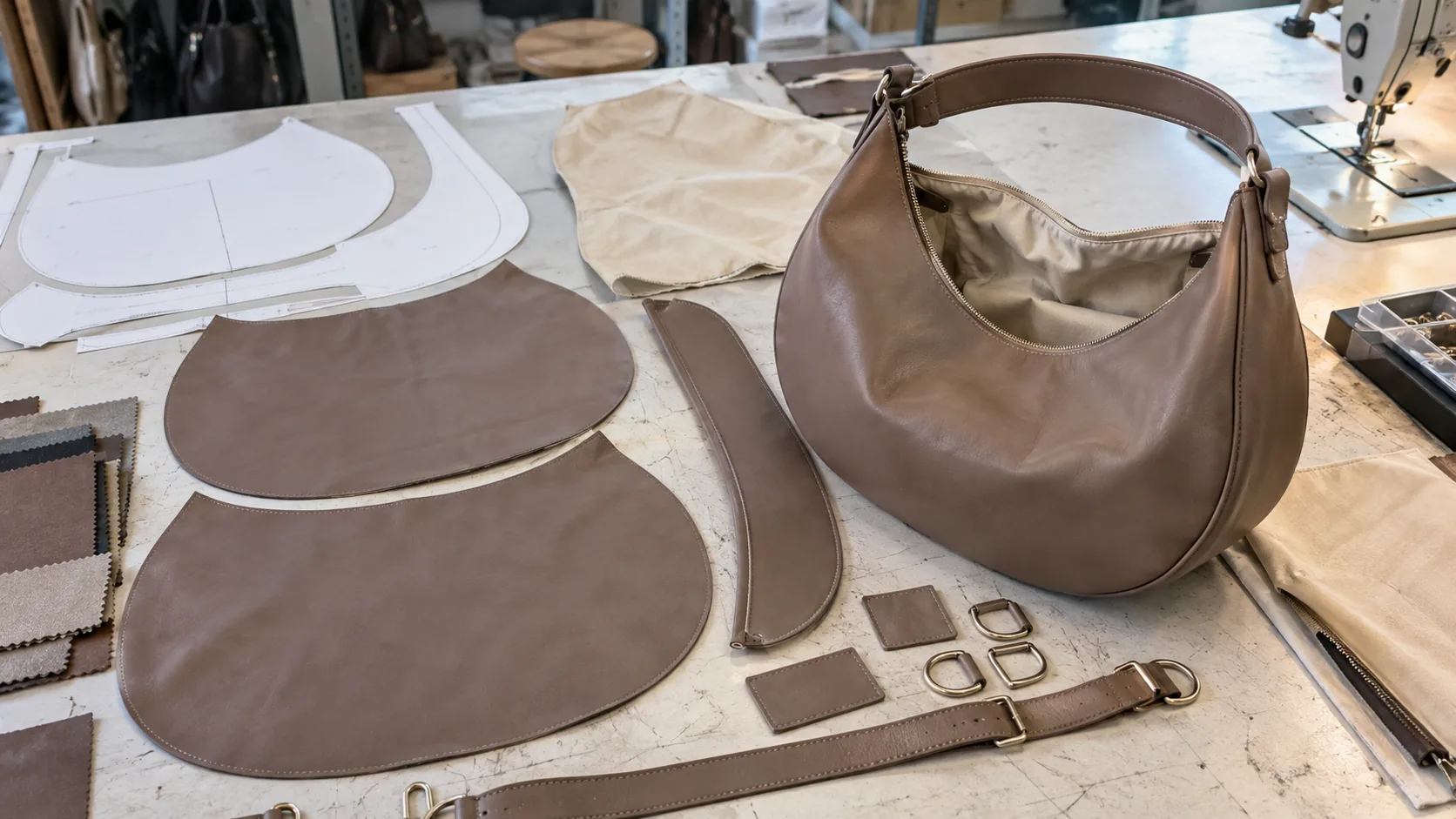
A supplier can create a hobo silhouette through different pattern routes. Some designs use curved front and back panels. Others use a softer rectangular panel with darts, pleats, or a shaped gusset that allows the center to sink. The brief should identify the intended result rather than assume one construction is mandatory.
Strap anchor position also changes the outline. Anchors placed near the upper ends of the body pull those areas upward during carry. The center can then dip if the shell and internal layers are flexible enough. Moving the anchors inward, outward, higher, or lower changes both the top line and the way the bag sits against the body.
Use this cause-and-effect check when reviewing a design:
| Design variable | What to define | What to inspect on the sample |
|---|---|---|
| Body pattern | Panel curves, seams, darts, pleats, or gusset geometry | Where the first folds appear and whether both sides hang evenly |
| Strap anchors | Position, angle, attachment area, and hardware | Top-line pull, twisting, and local distortion under the agreed load |
| Shell material | Exact material, thickness or weight reference, backing, and finish | Empty drape, loaded drape, surface creasing, and recovery after unloading |
| Lining and interlining | Materials, coverage area, and attachment method | Whether internal layers support the body or make it firmer than intended |
| Opening and closure | Open top, zipper path, snap, or other closure | Clear access and the amount of stiffness added along the top edge |
| Representative contents | Agreed items or load arrangement | Final silhouette, usable depth, and balance during carry |
A flat reference photo captures only one moment. Pair it with front and side drawings, the intended load state, and an approved sample so the supplier can reproduce how the bag hangs, not only how it looks on a table.
How Is a Hobo Bag Different From Other Shoulder Bags?
“Shoulder bag” describes a carry method. “Hobo” adds a soft, curved silhouette. Other names may describe shape, opening, structure, or a second carry mode, so overlap is normal.
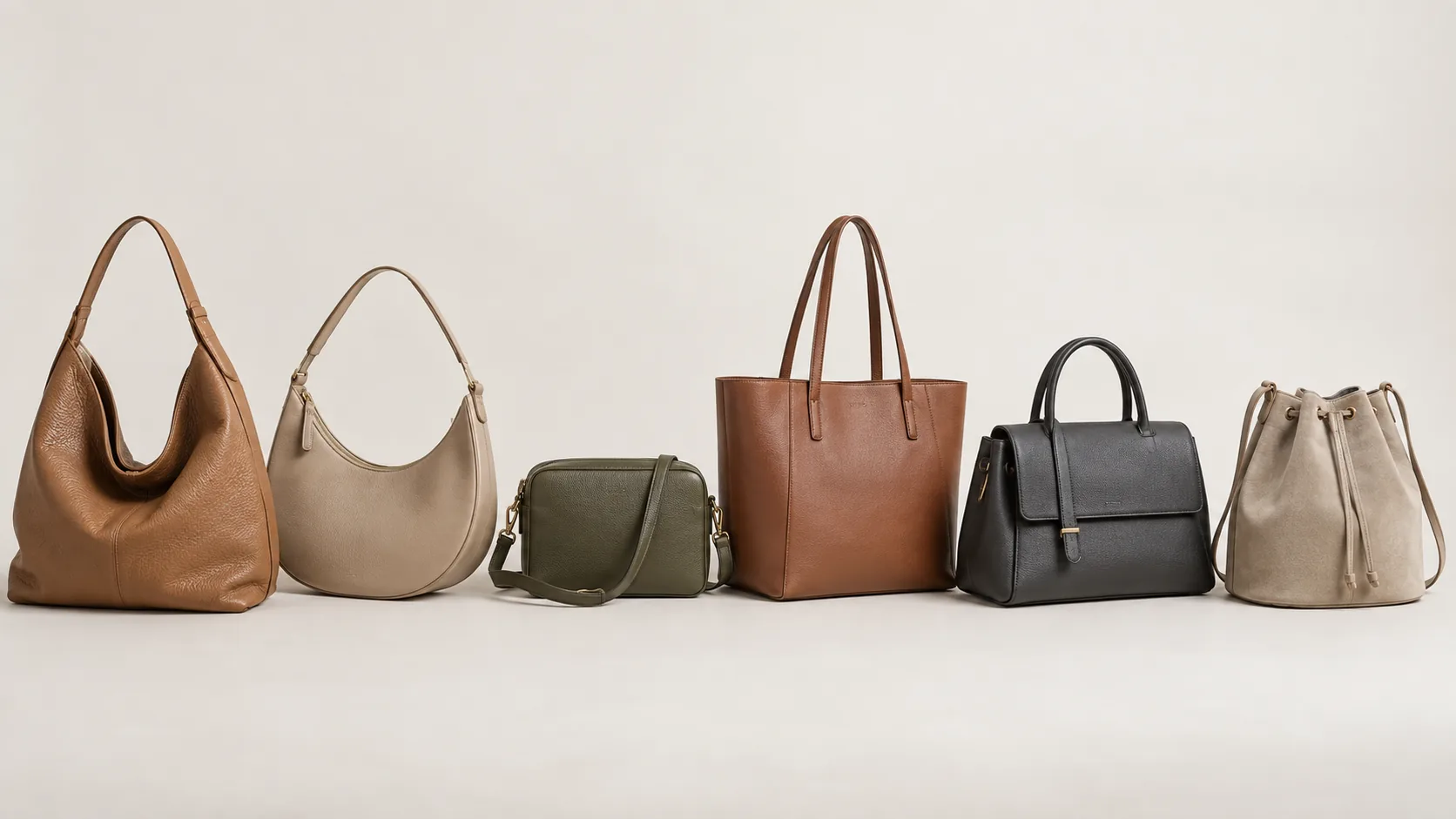
The table below uses construction boundaries rather than trend language:
| Format | Main naming cue | When it can overlap with a hobo | Useful boundary |
|---|---|---|---|
| Shoulder bag | Worn from one shoulder | A hobo is one type of shoulder bag | Shoulder bag is the wider carry category and can be rigid or soft |
| Crescent bag | Curved or half-moon outline | A soft crescent shoulder bag may also be sold as a hobo | Crescent describes shape; it does not by itself define drape or structure |
| Crossbody bag | Strap worn diagonally across the torso | A hobo with an adjustable or secondary long strap can offer crossbody carry | Crossbody describes strap range and carry position, not body construction |
| Tote bag | Open carryall body, commonly with two handles | A soft tote may slump when partly filled | A tote is normally organized around its opening and parallel handles rather than a single curved shoulder strap |
| Satchel | Defined body with a handle or strap, often with a flap or structured opening | Softer satchel interpretations can share materials or a shoulder strap | A satchel label usually points to a more defined body and opening than a hobo |
| Bucket bag | Rounded or oval base with a body that narrows or gathers at the opening | A soft bucket can have a slouchy body | The base and gathered opening drive the bucket form; the hobo is read through its side-to-side curve |
These are decision boundaries, not legal definitions. If a retailer uses two labels for the same design, the product specification should still state the body shape, structure, opening, strap, and load behavior directly.
What Materials Work for a Hobo Bag?
Leather, coated fabrics, woven textiles, nylon, canvas, and other flexible materials can all support a hobo design. The final drape depends on the full material stack, not the shell name alone.
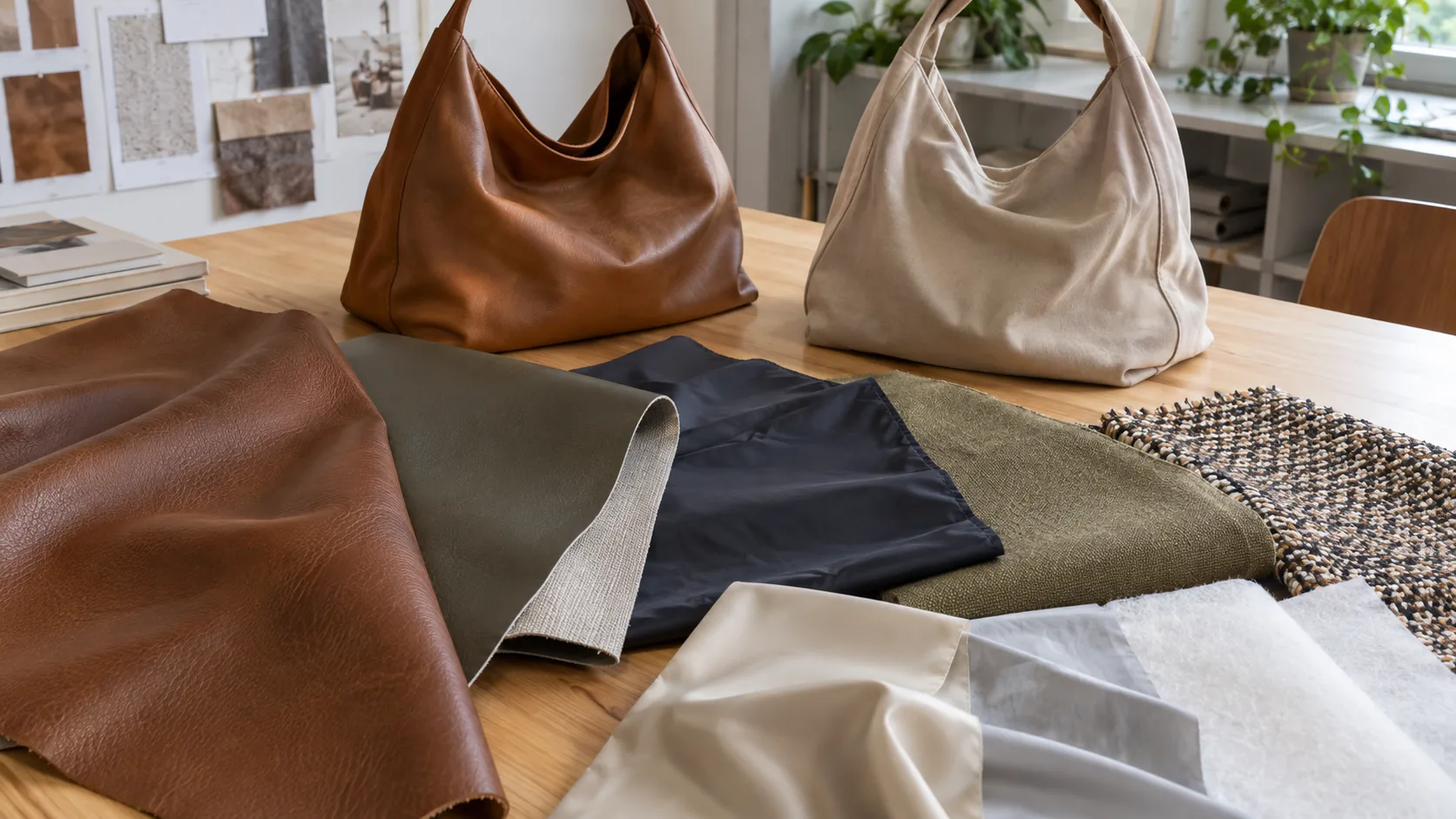
Separate four variables when choosing materials:
- Shell flexibility. Bend and fold the actual candidate swatch. Two materials with the same generic name may differ in thickness, weave, finish, or backing.
- Backing. A coating or bonded backing can change the way the shell folds. The PU leather bag material guide explains why the surface layer and textile base should be specified together.
- Lining. A lining can improve the interior finish and support pockets, but its weight, stiffness, and attachment also affect the body.
- Interlining and reinforcement. Foam, nonwoven interlining, base panels, or localized patches can add control. Coverage should be limited to the areas that need it if the design must remain soft.
For leather, the hide type alone does not predict the finished silhouette. Tanning, thickness, temper, surface treatment, splitting, and backing all affect the result. The overview of how leather is made helps separate the base material from later finishing steps.
Do not approve a material from a name or small color chip. Review a full swatch large enough to fold, then confirm the complete material stack in a production-representative sample. Record the exact shell, backing, lining, interlining, and reinforcement zones used in the approved version.
How Should You Choose the Size and Strap Drop?
There is no universal hobo-bag size. Start with the intended contents and carry position, then define the opening, internal depth, packed profile, strap drop, and adjustment range.
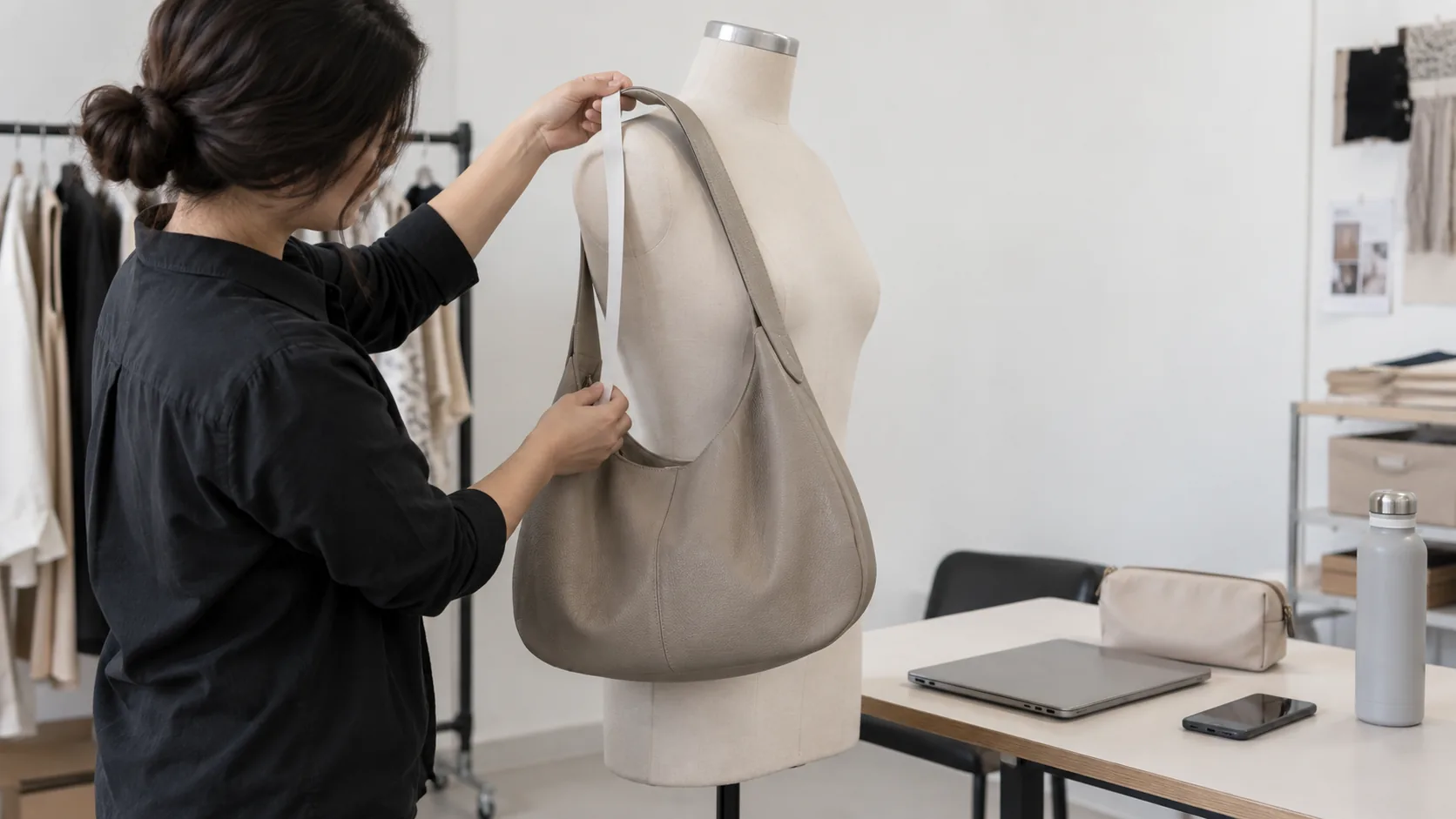
Use a contents-first sizing sequence:
- List representative contents. Record the largest item, smaller essentials, and the intended arrangement. A width-and-height label does not show whether those items pass through a curved opening.
- Define external measurement points. State where width, height, base depth, and any gusset are measured. Curved bodies need annotated drawings because the maximum and usable dimensions may be in different places.
- Measure the clear opening. Record the usable opening after the zipper, facing, seam allowance, and hardware are installed.
- Check internal depth. A deep center does not mean the full bag has the same height. Test tall contents at the actual positions where they will sit.
- Set strap drop and range. Strap drop is the vertical distance from the top of the strap to the top edge of the bag while positioned for measurement. For an adjustable strap, record the minimum and maximum setup and the buckle or hardware position.
- Approve the loaded position. Photograph the sample from the front and side with the agreed contents. Check whether the bag sits at the intended height and whether the load changes the opening or body balance.
If the bag is expected to fit over outerwear, include that clothing condition in the wear review. If crossbody carry is required, specify it as a separate strap configuration rather than assuming a shoulder strap will extend far enough.
What Should Brands Specify Before Sampling?
A useful RFQ defines both the visible silhouette and the construction used to reproduce it. Attach annotated drawings, a material schedule, measurement points, artwork, and the intended load state.
| RFQ field | What to provide | What it prevents |
|---|---|---|
| Product definition | Hobo shape, primary carry mode, intended user, channel, and use | Different interpretations of the style name |
| Silhouette references | Front and side drawings in a named load state | Quoting from an unexplained lifestyle image |
| Body construction | Panel shape, gusset or dart details, seams, and base treatment | A sample with the right outline but different volume or folds |
| Measurements | Annotated body dimensions, clear opening, internal depth, strap drop, and tolerances to agree | Conflicting measurement methods |
| Material stack | Shell, backing, lining, interlining, reinforcement, and approved swatches | Material substitutions that change the drape |
| Opening and closure | Zipper, snap, open top, facing, and usable opening | A top edge that is too firm or too narrow |
| Strap system | Length, drop, width, adjustment, anchors, hardware, and attachment method | Incorrect carry height or anchor geometry |
| Organization | Pocket count, position, dimensions, and access direction | Pockets that interfere with folding or usable space |
| Branding | Method, dimensions, placement, color reference, and artwork file | A logo that distorts on the loaded body |
| Packaging and labels | Brand, care, origin, packing, and presentation requirements | Late additions after the sample is approved |
| Approval conditions | Empty, lightly filled, and representative-load review; critical measurements | A visual approval that cannot be checked again during bulk production |
Localized reinforcement needs two instructions: where strength is required and where softness must remain. A supplier otherwise has to choose between a firmer attachment zone and a more relaxed drape without knowing which matters more.
Treat construction family as a visible specification field: fully soft, semi-structured, or structured. Then list the hidden support layers separately. Shell fabric alone cannot explain the finished shape when backing, foam, interlining, base support, and localized reinforcement are doing much of the structural work. For every critical dimension, keep the target, tolerance, and physical reference as separate approval objects; a sample can show the intended drape, but it does not replace a measurable requirement.
Once these fields are complete, they can move into a custom bag manufacturing discussion without asking the supplier to infer the design from a product photo.
How Should a Hobo Bag Sample Be Approved?
Review the same sample empty, lightly filled, and with the agreed representative contents. Each state reveals different issues in the body, opening, lining, strap anchors, hardware, and seams.
Empty state: Compare the top line, body curve, symmetry, seam shape, and surface appearance with the approved drawing. Record whether the bag should lie flat, fold inward, or keep a small amount of base shape.
Lightly filled state: Add a defined partial load. Check where the first folds form, whether the lining pulls or bunches, and whether the closure remains easy to align.
Representative-load state: Pack the agreed contents in the agreed arrangement. Check access through the opening, the loaded silhouette, strap position, anchor movement, hardware orientation, pocket access, and seam behavior.
Use an approval sheet with one photo per state and measurements taken at the same reference points used in the RFQ. Mark requested revisions on the image and drawing, then identify the final approved sample by revision number and date. Keep that version as the reference for bulk inspection.
Do not invent pass limits after the sample arrives. If opening width, strap position, dimensional tolerance, or appearance is critical, agree on the acceptance method before sampling and record the result on the approved specification.
How Should Bulk Production Preserve the Hobo Shape?
Bulk inspection should recreate the sample conditions used for approval. Use the same material stack, measurement points, and representative contents, then compare the empty, lightly filled, and loaded states. Record where folds form, how the opening behaves, whether the lining pulls, and whether strap anchors change the body curve.
If a material, hidden support layer, reinforcement area, strap anchor, or pattern piece changes after approval, log the change and identify the affected sample and production lots. Recheck the states that the change can influence instead of assuming the previous approval still applies.
Frequently Asked Questions
What is a hobo bag in one sentence?
A hobo bag is a shoulder bag with a soft, curved body that forms a visible slouch rather than retaining a rigid shape. Size, material, closure, and strap length vary, so those details must be checked separately.
Is every crescent bag a hobo bag?
No. “Crescent” describes an outline, while “hobo” normally adds soft construction and shoulder carry. A rigid crescent bag can share the same outer curve without producing the folds or relaxed body associated with a hobo.
Can a hobo bag have some structure?
Yes. A hobo can use a reinforced base, supported opening, or localized interlining if the body still produces the intended soft curve. Specify the coverage area so reinforcement protects stress points without making the entire bag rigid.
Is there a standard hobo bag size?
No universal size applies. Choose dimensions from the intended contents, usable opening, internal depth, carry position, and loaded silhouette. Record annotated measurement points because a curved body cannot be described reliably by width and height alone.
Which material is best for a hobo bag?
No material is universally best. Compare the complete stack, including shell, backing, lining, interlining, and reinforcement. Approve a large swatch and a production-representative sample because the material name alone does not show how the finished bag will drape.
Conclusion
Use “hobo” to set the design direction, then replace the label with measurable instructions. Define the panel geometry, material stack, opening, strap, measurement points, representative contents, and three sample states. That gives the supplier a buildable specification and gives the buyer a repeatable approval record.