
PU leather and faux leather are not two separate, opposing materials. Faux leather is a broad market term for materials made to resemble leather, while PU leather identifies a polyurethane-based member of that group.
That short answer matters when comparing bag quotations. A supplier may use “faux leather” for PU-coated fabric, PVC-coated fabric, a microfiber construction, or another leather-look material. The label does not reveal the backing, layer structure, thickness, finish, or test results.
What Does PU Leather vs Faux Leather Actually Mean?
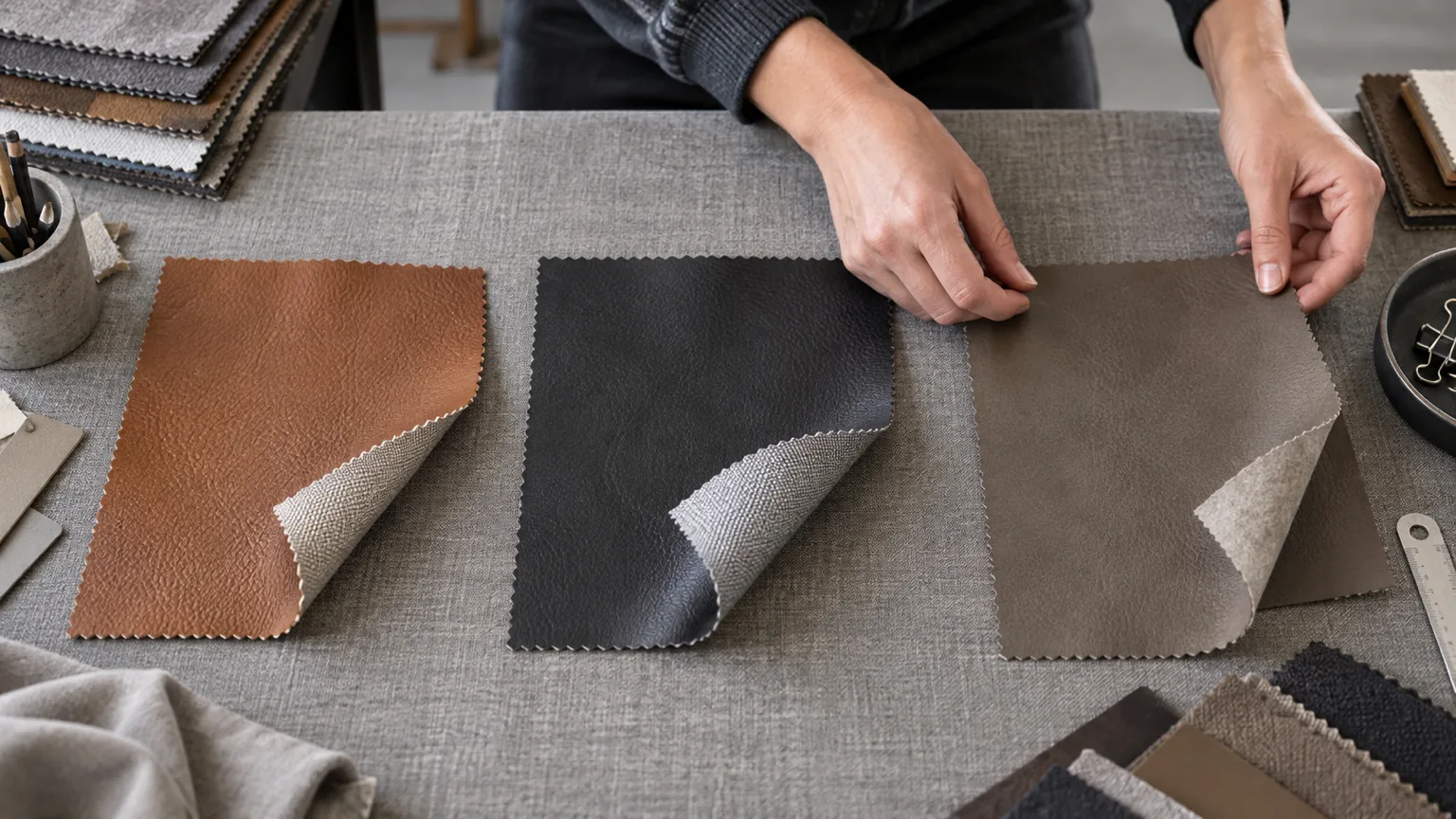
Faux leather is the broader market category. PU leather is one material family within it. The useful comparison is therefore not “PU or faux,” but “which faux-leather construction is being offered, and is it PU?”
The terms are not complete technical specifications. ISO 15115:2019, the current published international vocabulary for leather, defines leather as an animal-origin material whose original fibrous structure remains more or less intact after tanning. That boundary helps separate leather from polymer-coated textile substitutes, but buyers still need the supplier to identify the specific substitute being quoted.
For products marketed in the United States, the FTC Leather Guides address bags, luggage, handbags, wallets, and similar goods. They state that a non-leather material made to look like leather should be disclosed as non-leather or by its general material nature. In practical product copy, “imitation leather,” “vinyl-coated fabric,” and “plastic” do not all mean the same construction.
Use these terms as a starting point:
| Term on a quote | What it usually communicates | What it does not confirm |
|---|---|---|
| Faux leather | The material is intended to look like leather | Polymer, backing, layers, thickness, or performance |
| PU leather | Polyurethane is part of the leather-look surface system | PU type, coating weight, backing, finish, or durability |
| PVC leather or vinyl | PVC or vinyl is part of the leather-look surface system | Plasticizer system, backing, thickness, or performance |
| Vegan leather | The seller represents the material as animal-free | Whether it is PU, PVC, plant-derived, microfiber, or a blend |
| Bonded leather | Leather fibers are combined with non-leather substances | Fiber percentage, binder, backing, finish, or grade |
Keep the exact supplier wording in the RFQ, then add measurable fields beside it. Do not silently replace “vegan,” “synthetic,” “artificial,” “PU,” and “faux” as if they were interchangeable standards.
How Is PU Leather Built?
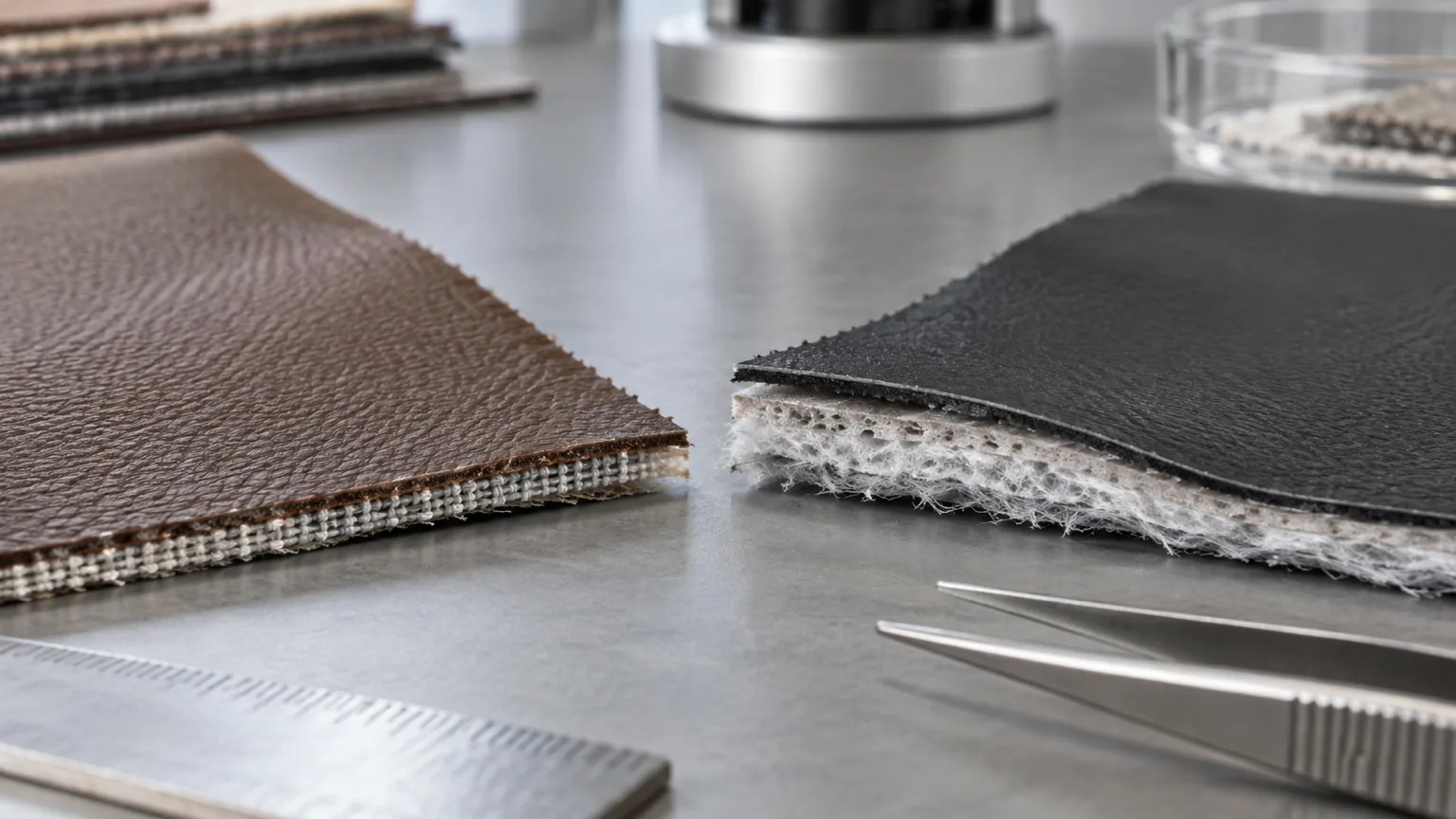
PU leather used for bags is usually an engineered layer system rather than a single sheet of polyurethane. A typical article combines a polyurethane surface or coating with a woven, knitted, or nonwoven backing. Some versions also include a skin, foam, adhesive, color, or protective top-finish layer.
That structure explains why two materials both called PU leather can feel and perform differently. The PU leather bag material guide covers the manufacturing side in more detail, but a buyer should record at least five fields:
- Surface system: Ask whether PU is used as a coating, film, skin, or part of a multilayer finish.
- Backing: Record the backing construction, fiber, weight, color, and whether it remains visible at cut edges.
- Layer stack: Identify foam, adhesive, reinforcement, reverse finish, and other supplied layers.
- Thickness basis: State whether the figure covers the whole material or only a particular layer, plus the measurement method and tolerance.
- Material code and lot: Connect the quotation, swatch, sample, test report, and reorder to one traceable article.
A surface name cannot replace those fields. The same principle applies to other bag textiles. A canvas material specification still needs fiber, weave, weight, finish, and sample controls even though everyone recognizes the word “canvas.”
Which Other Materials Fall Under Faux Leather?
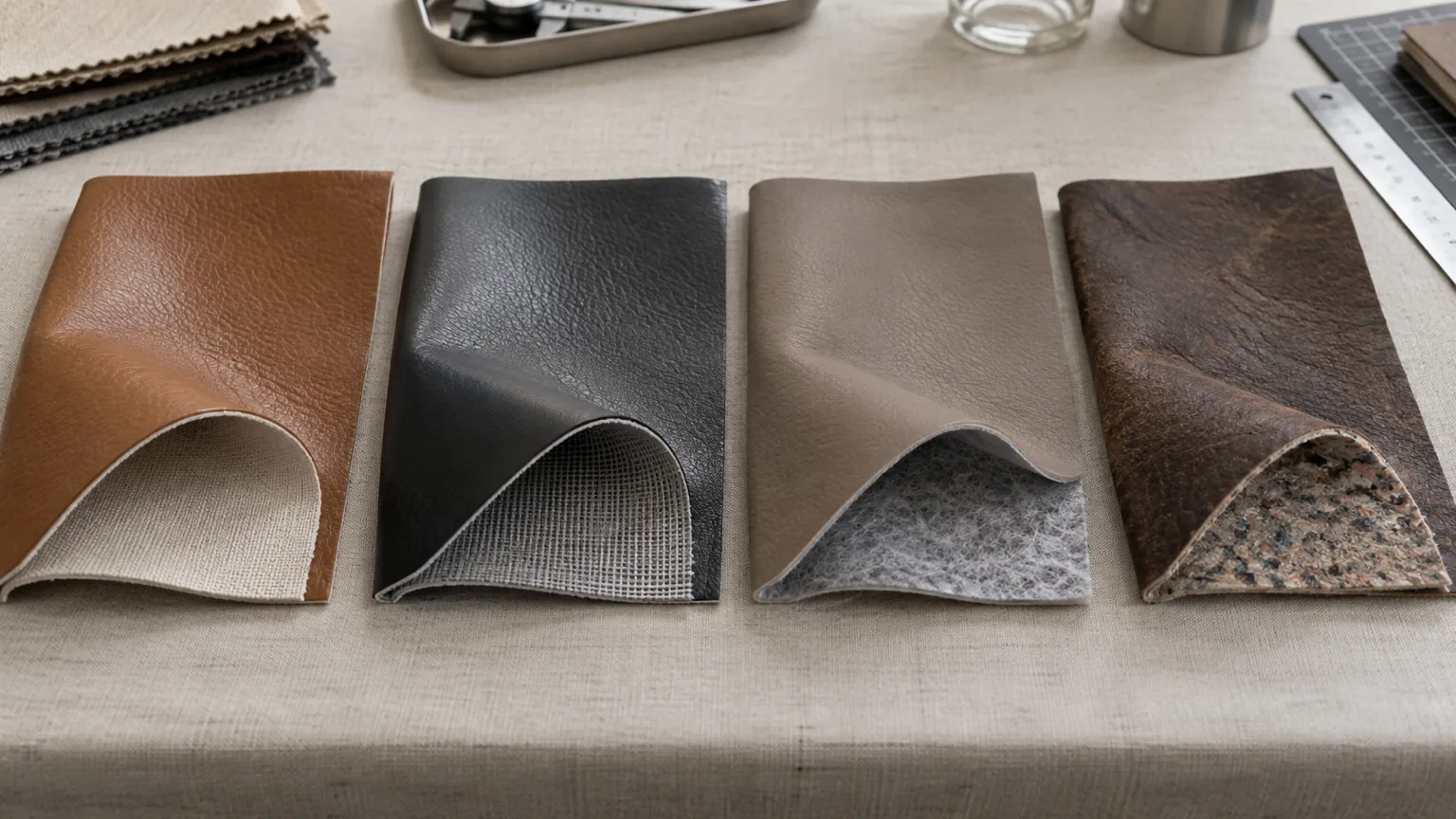
Faux leather can refer to several constructions. They should not share one durability, care, cost, or environmental conclusion.
PVC-coated fabric uses a PVC surface system over a backing. It belongs in its own comparison because polymer, formulation, backing, and layer construction differ from PU materials.
Microfiber synthetic leather generally uses a fine-fiber nonwoven structure with a polymer system. Ask for the complete composition and sample evidence rather than assuming that “microfiber” establishes a universal grade.
Plant-containing leather alternatives can combine plant-derived inputs with binders, coatings, textile backings, or other components. A plant reference does not disclose the complete formulation or prove a lower environmental impact.
Bonded leather contains leather fibers combined with non-leather substances. 16 CFR 24.2 addresses this separately and gives a percentage-disclosure example for leather fibers and non-leather substances. Bonded leather should not be grouped with fully synthetic PU-coated fabric or represented as unqualified leather.
Coated split or bicast constructions contain an animal-leather layer with a polymer surface. They sit on a different side of the material-identity boundary from fully synthetic PU-coated textiles. If animal material is present, the quotation and public copy should disclose the actual construction rather than shorten it to “PU leather.”
This is also why “vegan leather” needs a composition declaration. It is a sourcing claim, not a full bill of materials and not evidence of durability, chemical compliance, or environmental performance.
Is PU Leather More Durable Than Other Faux Leather?
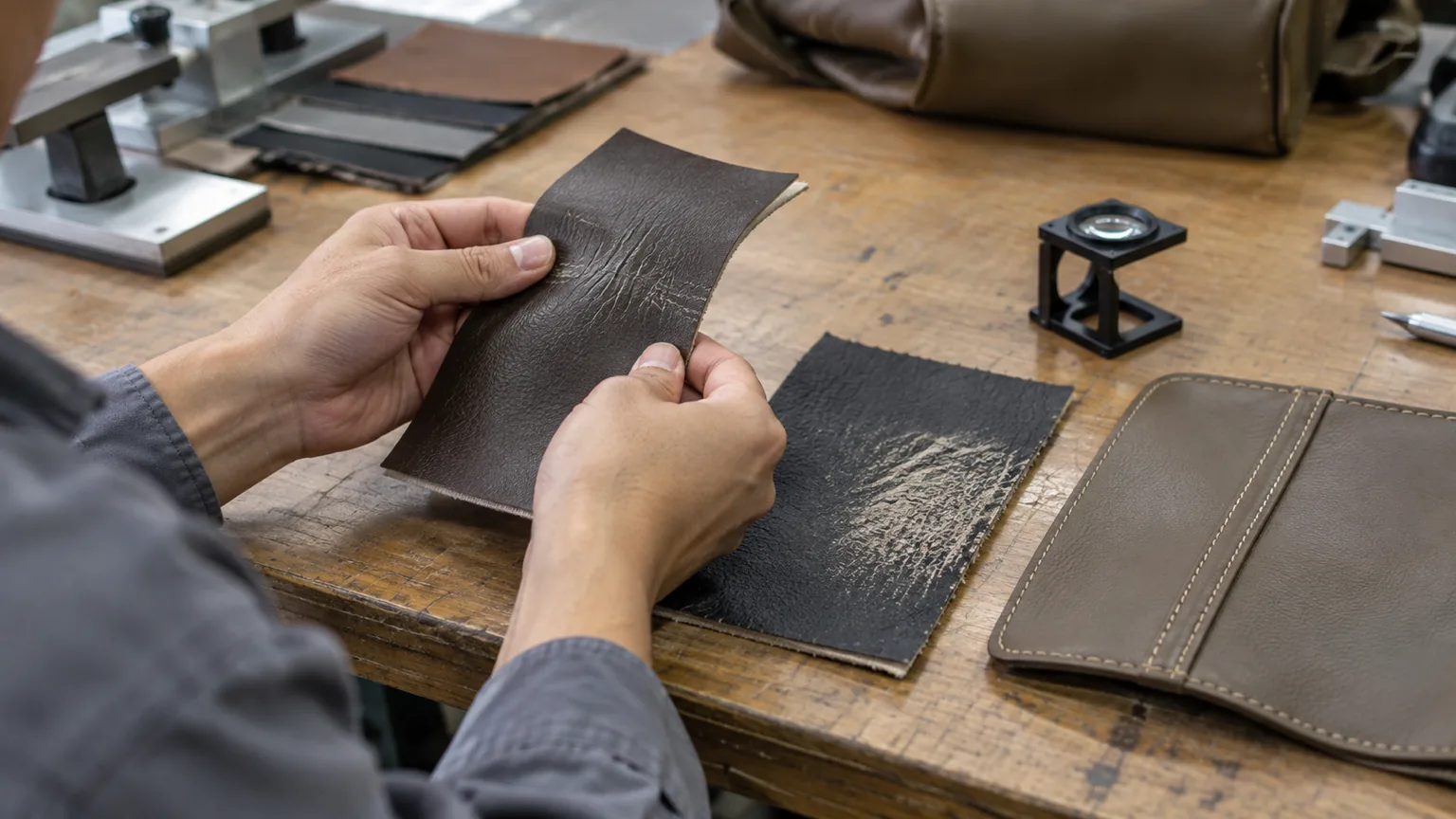
The name alone cannot answer that question. Durability depends on the supplied construction, including the coating or skin, backing, bonding, thickness, finish, bag geometry, edge treatment, sewing, exposure, and care.
Peeling, cracking, color change, abrasion, coating separation, and seam failure are different endpoints. One test result cannot stand in for all of them. For example:
- ISO 7854:1995 assesses coated fabrics for damage caused by repeated flexing.
- ISO 5470-1:2016 assesses coated-fabric abrasion resistance with a Taber abrader.
- ASTM D751-26 includes test methods for coated-fabric properties such as coating adhesion, tear strength, hydrostatic resistance, seam strength, and heat aging.
Those standards show why “tested” is incomplete. A useful record identifies the exact material code, method and edition, specimen preparation, conditioning, direction, load or cycle settings, measured endpoint, result, and acceptance basis. It also states whether the object was a flat material, a stitched component, or a finished bag.
US marketing claims need the same discipline. 16 CFR 24.3 sets conditions for terms such as waterproof, scratchproof, scuff resistant, and scratch resistant. A coated panel result does not automatically cover zipper gaps, seams, openings, edge paint, or the complete bag.
Do not accept a fixed service-life number without its basis. A claim such as “lasts five years” is not comparable unless the supplier identifies the material, use conditions, care, test or field evidence, and failure endpoint behind it.
Which Material Works Better for Different Bag Designs?
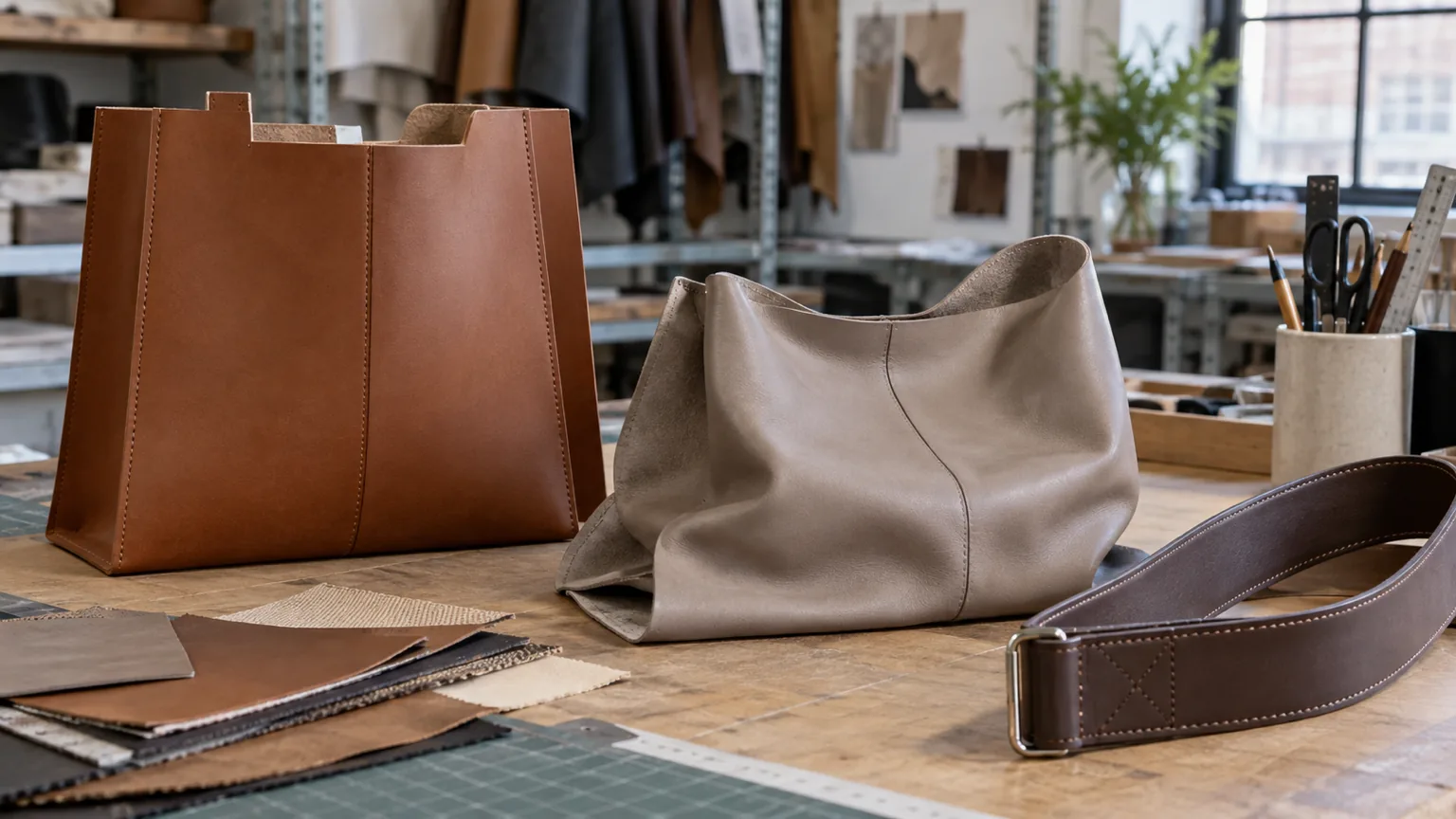
The better material is the one whose confirmed construction fits the bag part and the way that part moves. A single bag may need more than one material.
| Bag part or design | Construction question | Sample check |
|---|---|---|
| Structured body panel | Does the backing and total thickness hold the intended shape? | Assemble a full panel with the planned reinforcement and edge method |
| Soft crossbody or hobo panel | Does the material drape without unwanted buckling? | Hang and handle a full-size panel, not only a small swatch |
| Handle or shoulder strap | Can the coating and backing tolerate repeated folds near hardware and stitch lines? | Build the actual strap geometry with representative hardware |
| Gusset and corners | How does the surface respond at the intended bend radius? | Fold, sew, and turn the exact corner construction |
| Trim or logo patch | Is the material compatible with embossing, printing, adhesives, or edge paint? | Apply the final decoration process to the approved article |
| Wipe-clean exterior panel | What care method has the supplier approved for the complete finish? | Test the written method on the production-representative sample |
Mixed-material construction is often the practical answer. A bag may use a coated leather-look material for trims and structure, with woven fabric for the main body. The specification should therefore assign the material by product part, not simply list “faux leather” for the whole bag.
When the project moves into development, the commercial bag production process shows where material approval, component checks, pilot work, and finished-product inspection belong. The process is relevant even when the product is not a backpack because the evidence still needs to follow the actual material and assembled part.
What Should Buyers Ask for Before Sampling?
Turn the market label into a construction record before comparing price. This prevents two suppliers from quoting different materials against the same two-word description.
| RFQ field | What to request |
|---|---|
| Supplier-stated material name | Preserve the exact term used in the quotation |
| Material family | PU-coated textile, PVC-coated textile, microfiber synthetic, bonded leather, coated split, or another stated construction |
| Complete composition | Surface polymer, substrate or animal layer, backing, binder, foam, adhesive, and other relevant components |
| Layer structure | Order and purpose of each supplied layer |
| Thickness and weight | Target, unit, measurement basis, method, and tolerance where required |
| Surface reference | Grain or emboss pattern, color standard, gloss, hand feel, and approved swatch |
| Bag-part allocation | Body, gusset, trim, handle, strap, base, logo patch, or other component |
| Process compatibility | Sewing, folding, skiving, edge paint, binding, printing, embossing, adhesives, and hardware |
| Claim evidence | Test object, method, edition, conditions, endpoint, result, and acceptance basis |
| US composition wording | Proposed non-leather, bonded-leather, backing, or product-part disclosure where applicable |
| Confirmation record | Approved swatch plus a production-representative component and finished-bag sample |
Keep each evidence layer separate. A declaration records what the supplier states. A retained swatch controls appearance and feel. A test report covers the object and conditions written in that report. A finished-bag sample checks the assembled construction. None of them automatically proves that every bulk unit matches, so lot traceability and production inspection still matter.
For a new program, send these fields with the drawing, target use, artwork, packaging needs, and required approval stages. A custom bag manufacturer can then assess the material inside the actual seam, fold, edge, reinforcement, decoration, and hardware plan rather than pricing an undefined label.
Frequently Asked Questions
Is PU leather the same as faux leather?
PU leather is a type of faux leather, but faux leather is not limited to PU. The broader term can include PVC-coated fabric, microfiber synthetic materials, bonded constructions, and other leather-look alternatives. Confirm the exact composition before comparing quotations.
Is faux leather always vegan?
Do not infer animal-free composition from the faux-leather label alone. Ask for a written composition declaration that covers the surface, backing, binder, adhesive, and any leather-fiber content. “Vegan” is a sourcing statement, not a complete technical specification.
Is PU leather waterproof?
The material name does not prove waterproof performance. A coating may resist surface wetting while seams, stitch holes, zippers, edges, and openings still admit water. Define the test object and acceptance basis for the claim you intend to make.
Why does PU leather peel or crack?
Visible damage may involve the surface coating, a skin layer, bonding between layers, flex at a fold, abrasion, heat, moisture, cleaning, or the underlying backing. Examine the failed layer and test the actual material and bag construction instead of diagnosing from the name.
Is PU leather better than PVC leather for bags?
Neither name guarantees a better bag. Compare the offered constructions against the required drape, stiffness, flex zones, abrasion exposure, cleaning method, process compatibility, labeling, and approved test basis. The answer can differ by bag part.
Can two faux-leather quotations be compared directly?
Only after both suppliers complete the same specification fields. Polymer, backing, layer stack, thickness basis, finish, material code, test scope, and sample reference should match before the price comparison is meaningful.
Turn the Label Into a Buildable Material Specification
Use “PU leather” or “faux leather” as the familiar market name, then add the fields that control the product: composition, layer structure, backing, thickness basis, finish, material code, lot, bag-part allocation, process compatibility, test evidence, and approved samples.
The result is a specification that purchasing, sampling, quality control, and product-copy teams can use without guessing what the label means.