
Burlap is a coarse woven fabric most commonly associated with jute. The name describes a fabric category and appearance, not a complete material specification. Fiber content, yarn, weave, mass, finish, color, lining, and construction still need to be confirmed for each bag project.
That distinction explains why two suppliers can quote different materials under the same “burlap” label. For a buyer, the useful question is not only what burlap is, but which version fits the product and how to describe it clearly enough to sample and inspect.
What Is Burlap?
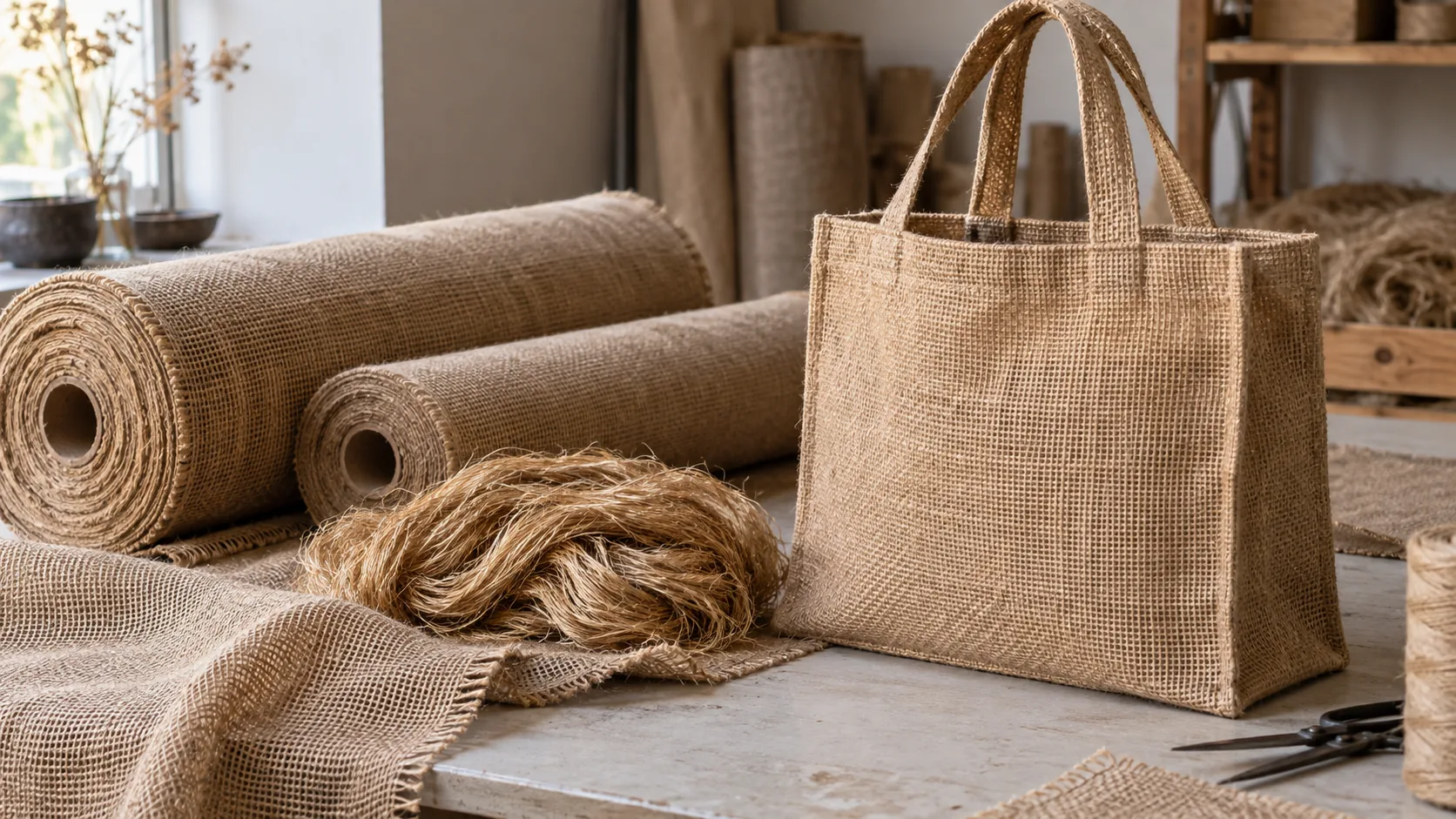
Dictionary.com defines burlap as a coarse fabric made from jute, hemp, or a similar fiber and commonly used for bags. In North American trade, the word often refers to the rough, open-looking cloth also called hessian in other markets.
The fabric name does not fix one recipe. A listing that says only “burlap” leaves several questions open:
- What is the stated fiber composition?
- How are the yarn and weave constructed?
- What is the fabric mass or supplier grade?
- Has the surface been dyed, printed, laminated, or otherwise finished?
- Is the cloth intended as the main structure, a decorative outer layer, or trim?
This is the first correction to the original draft: burlap is not treated as proof of 100% jute, a specific country of origin, or one production method.
Is Burlap the Same as Jute?
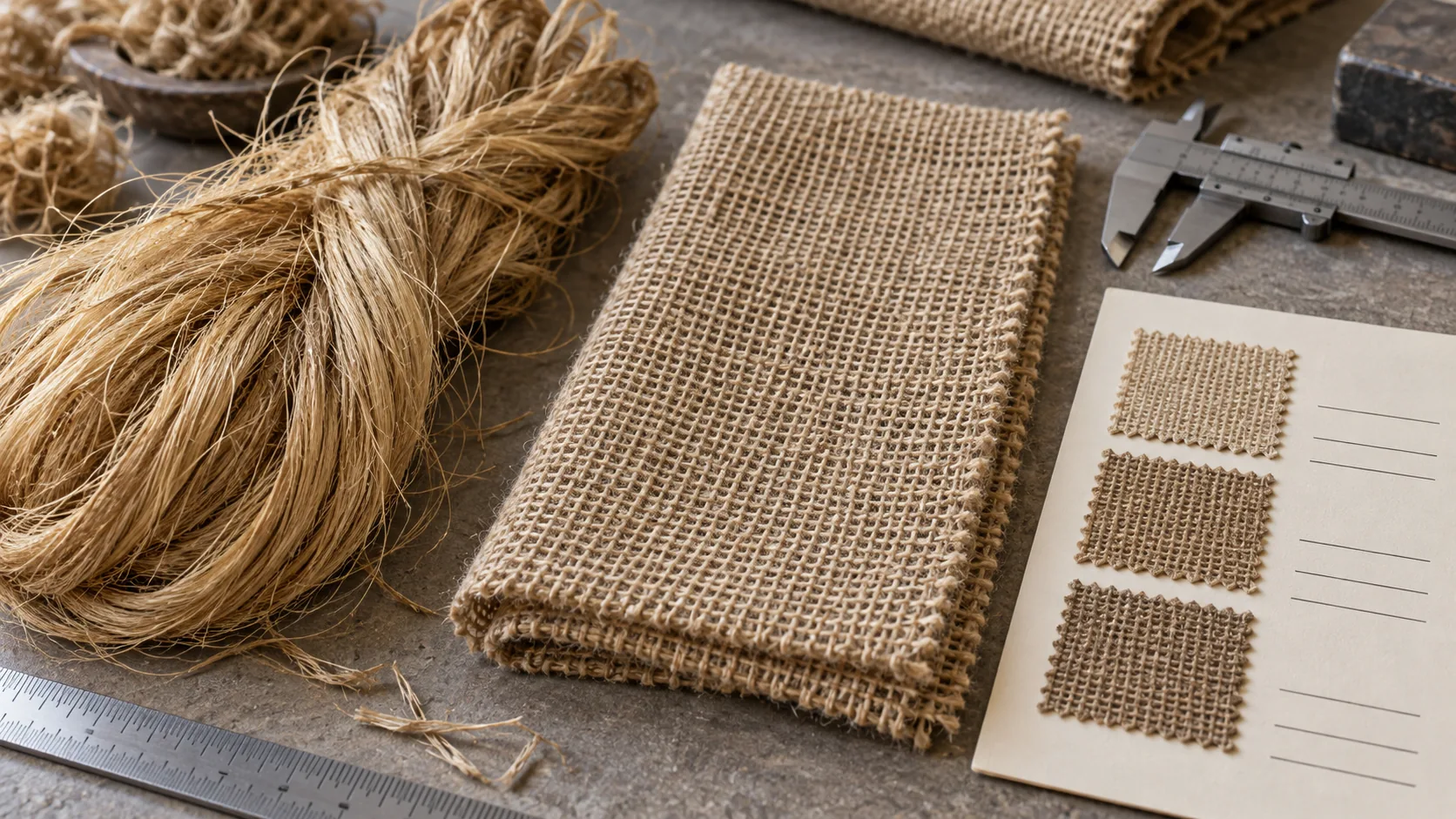
No. Jute names a fiber; burlap usually names a woven fabric. Jute can be spun into different yarns and made into hessian cloth, sacking, twine, carpet backing, and other products. Burlap-style fabric can also be sold with a different or blended fiber composition.
| Term | What it identifies | What still needs confirmation |
|---|---|---|
| Jute | A plant-based bast fiber | Grade, yarn, weave, finish, and product construction |
| Burlap or hessian | A coarse woven fabric name used in a market or document | Fiber percentages, fabric mass, weave density, color process, and finish |
| Sacking or gunny bag | A product or heavier packaging format | Exact cloth grade, seam design, contents, and acceptance criteria |
| “Natural burlap” | A commercial description | Whether “natural” refers to color, fiber, finish, or marketing language |
UNIDO describes conventional jute processing as separating bast fiber from the stem through retting and stripping before later spinning and weaving. That source explains one established processing route, but it does not prove that every commercial burlap follows the same route or has the same performance. See the UNIDO processing reference.
What Is Burlap Used For?
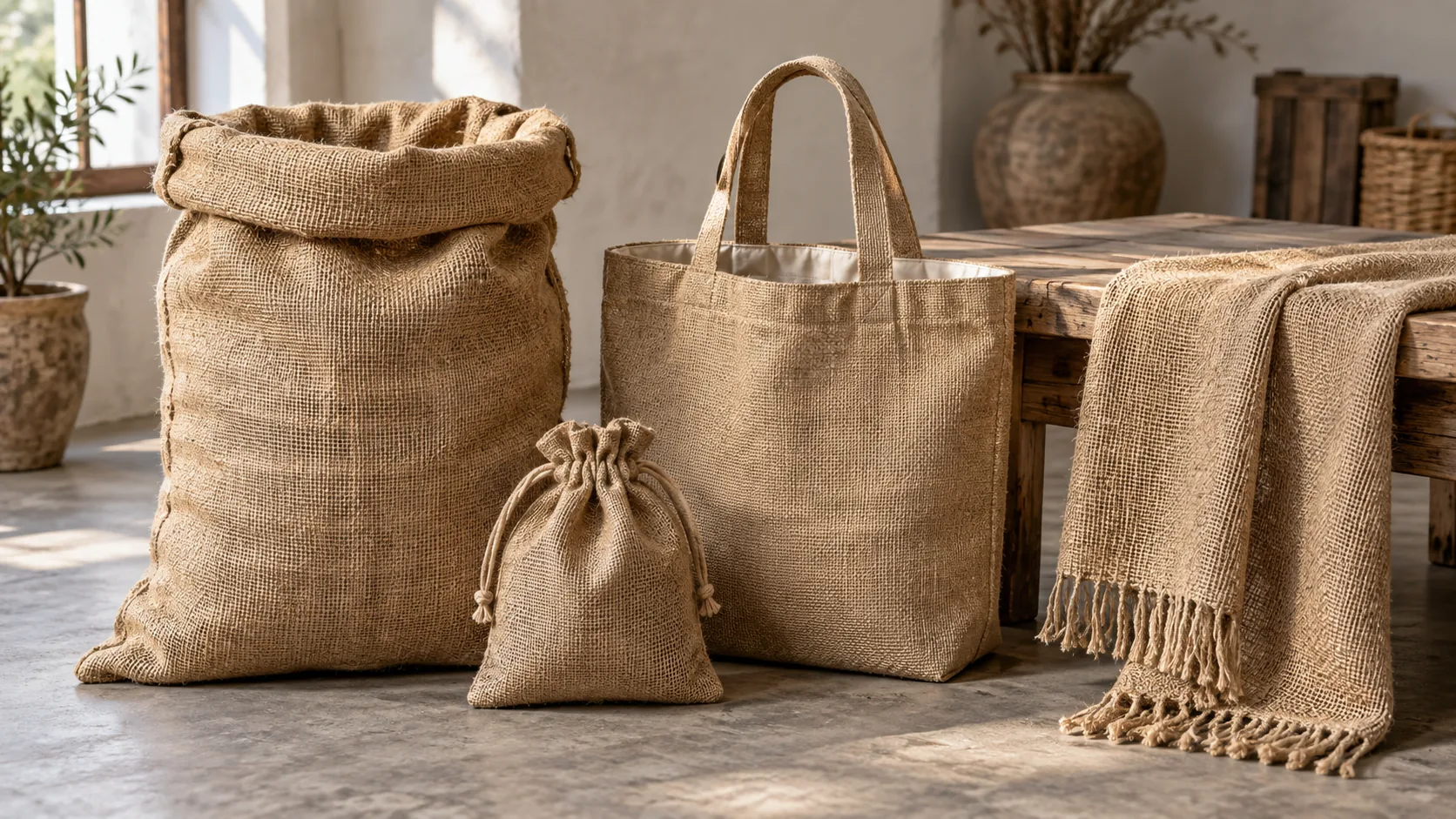
Burlap and hessian have long been used for sacks, wrapping, carpet backing, erosion-control products, home textiles, and shopping bags. A FAO symposium paper on natural fibers distinguishes heavy jute yarns used for sacks from lighter yarns used for hessian cloth and other fabric applications.
For bag development, typical formats include:
- simple sacks and drawstring pouches;
- gift, event, and promotional packaging;
- shopping totes with a rustic surface;
- decorative panels or outer layers combined with another structural fabric;
- garden and craft products designed around the coarse texture.
These are examples, not guarantees of suitability. A loosely woven decorative cloth may need an inner layer for a particular product, while a denser grade may work in a simple unlined format. The lining decision depends on the contents, required hand feel, shedding tolerance, seam design, and appearance target. It is not correct to say that lining is mandatory for most retail uses.
Brands comparing a rustic surface with a tighter woven option can review canvas as a bag material. If the intended product is a tote, the custom tote bag manufacturing page shows how material, lining, decoration, and construction choices enter the same product brief.
Which Burlap Properties Matter in Bag Design?
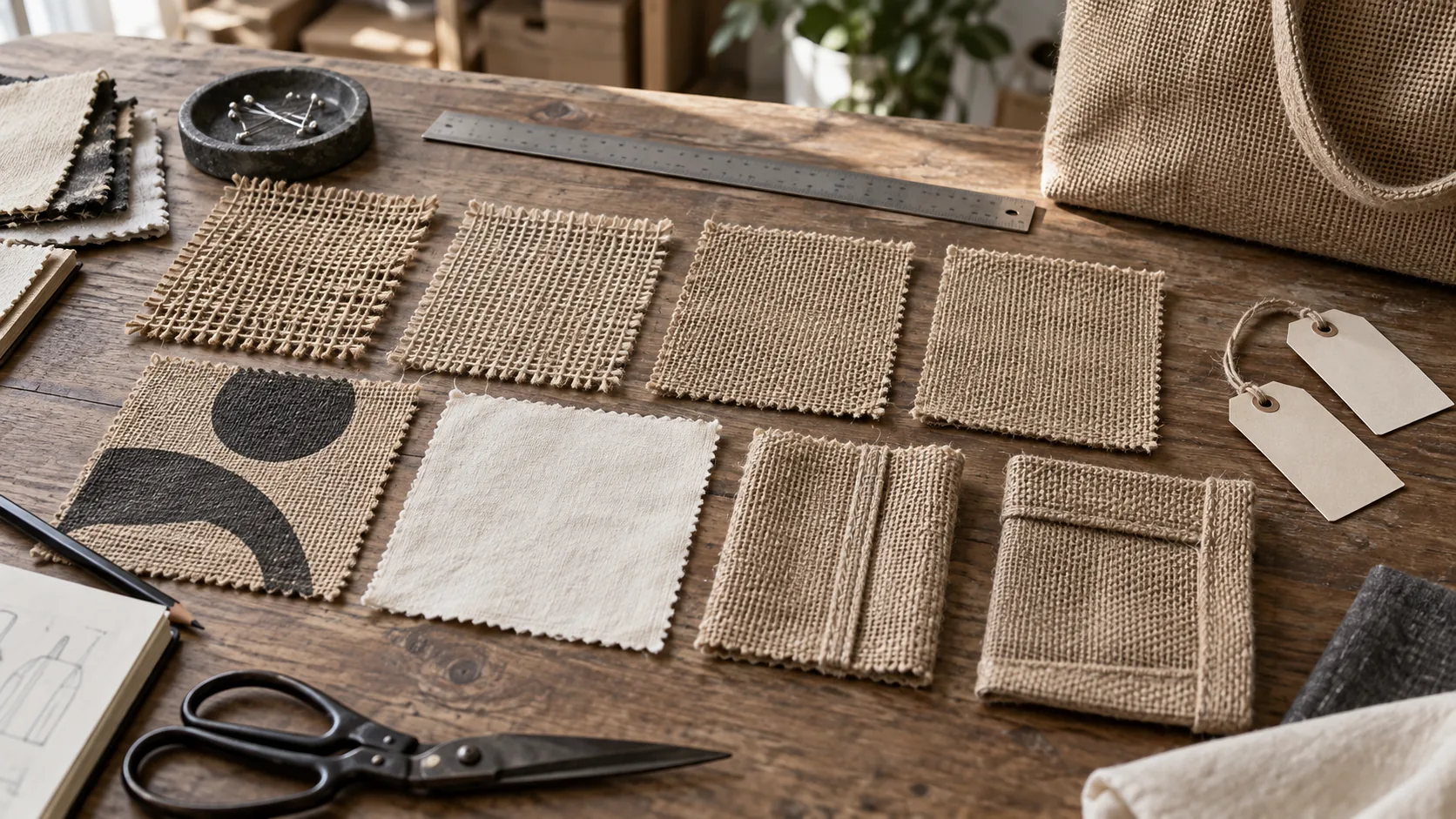
The word burlap does not predict a finished bag’s performance. Compare the actual candidate fabrics and samples using fields that can be recorded.
| Inspection field | What to record | Why it affects the bag |
|---|---|---|
| Fiber composition | Supplier statement and any supporting document | Prevents the fabric name from being treated as a composition certificate |
| Yarn and weave | Supplier construction code or approved reference swatch | Changes surface, openness, fraying behavior, and print appearance |
| Mass and thickness | Agreed value, tolerance, and method where relevant | Helps distinguish grades that may look similar in a small image |
| Color and finish | Undyed or dyed status, finish name, approved color reference | Controls what is being compared across lots |
| Surface variation | Allowed slubs, shade variation, and visible defects | Turns subjective “rustic” language into an approval decision |
| Cut-edge behavior | Edge treatment and approved seam sample | Open constructions may need a selected method to control the edge |
| Decoration | Method, artwork scale, strike-off, and acceptance sample | A coarse surface can change line definition and ink coverage |
| Odor and loose fibers | Project-specific observation method and limit | Keeps a visible or sensory issue tied to the actual fabric and packaging |
Do not turn a single observation into a universal rule. For example, a sample that sheds during cutting does not prove that every burlap grade sheds at the same rate. A printed strike-off that works on one fabric does not validate a new fiber blend, weave, finish, or ink system.
The same material-to-product sequence appears in how a backpack is made: the fabric choice, seam, reinforcement, hardware, decoration, and sample approval need to be evaluated as one construction rather than as independent labels.
Is Burlap Waterproof?
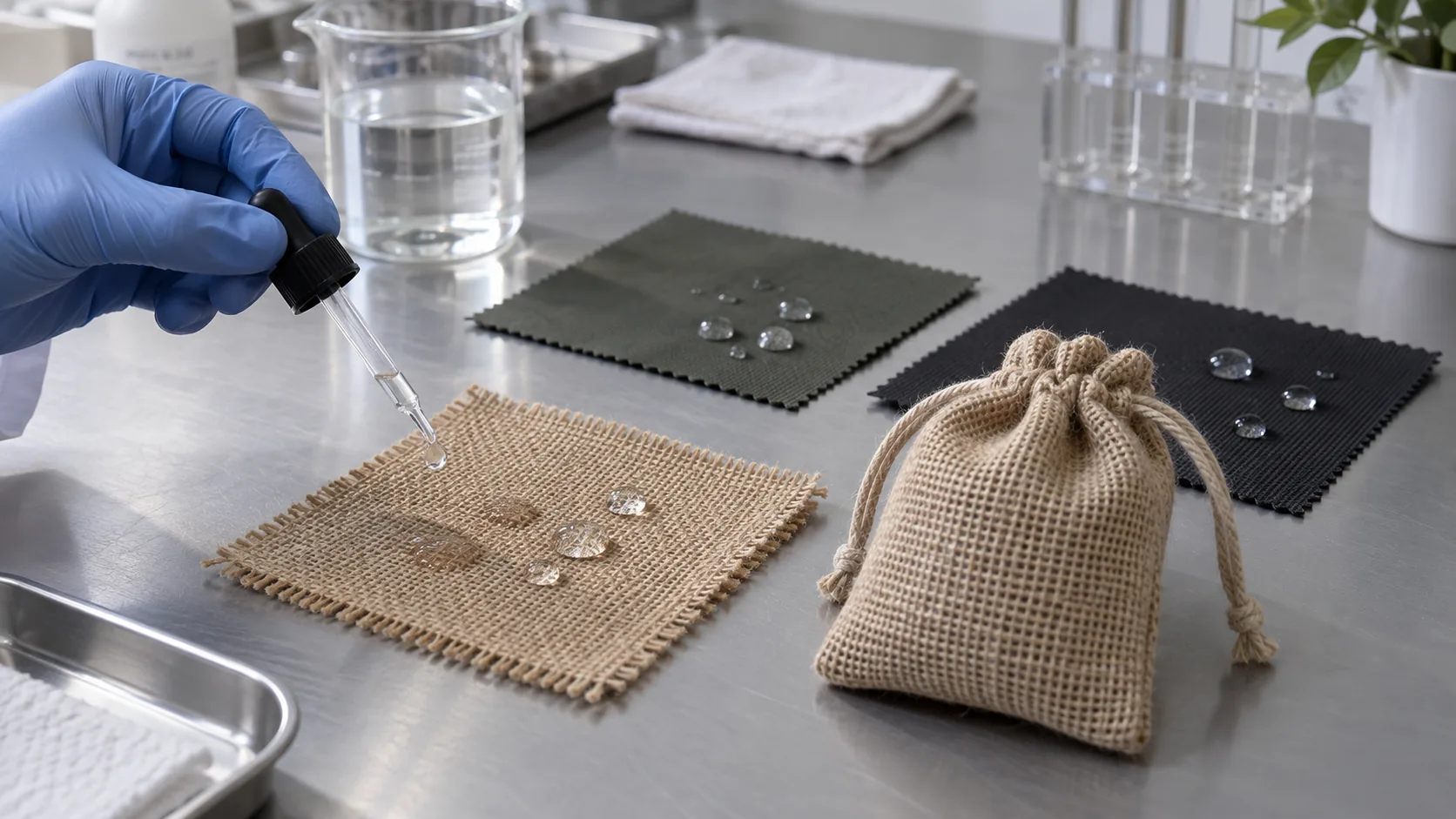
The name burlap does not establish water resistance or waterproofing. An open weave may allow water through visible gaps, while the fiber, finish, backing, seams, needle holes, and closure all affect what happens in a finished bag.
A coating or lining may change water behavior, but it also changes the material system. Buyers should record the exact layer structure and evaluate the finished sample under conditions that match the intended use. A result from raw fiber, a chemically modified laboratory fabric, or another burlap product cannot be transferred automatically to a commercial bag.
For rain-exposed products, compare the complete construction with alternatives rather than assuming one material name is better. Nylon bag material is one possible comparison, but its fiber name also does not guarantee waterproofing. Fabric, coating, seam, and closure still determine the result.
How Should Buyers Specify Burlap for a Bag?
A production brief should replace the word burlap with a set of fields that a supplier can quote, sample, and inspect.
Industry insight: `JUTE-01`, `JUTE-02`, and `JUTE-04` point to the same purchasing rule. Keep the supplier’s original market term, but record fiber composition, yarn or construction reference, mass, finish, and the actual test object separately. Water or moisture data from another fiber, modified fabric, or finished product should not be reused for the current bag without checking comparability.
Use this checklist:
- State the supplier’s material name and the market in which it is used.
- Record the stated fiber composition and blend percentages.
- Identify the supplier fabric code, yarn, weave, mass, thickness, and tolerances that matter to the project.
- Specify undyed, dyed, bleached, printed, laminated, or coated status without treating “natural” as a technical value.
- Define the lining, backing, reinforcement, seam, edge treatment, and closure.
- Approve artwork on the selected fabric rather than on a smooth substitute.
- Set sample-based limits for visible variation, loose fibers, odor, color, and workmanship where those issues matter.
- Describe packaging and storage conditions for the finished product.
- Keep an approved sample and link production inspection to the agreed fields.
This approach does not promise a fixed outcome. It gives the buyer and supplier the same object to evaluate. For a broader product-development route, custom bag manufacturing connects material selection with prototyping and production planning.
Can Burlap Support Environmental Claims?
Jute is plant-based, but a plant fiber does not make every finished burlap bag “eco-friendly,” biodegradable, compostable, chemical-free, or recyclable. A finished bag may also contain dye, coating, adhesive, ink, lining, sewing thread, labels, hardware, and packaging.
The US Federal Trade Commission advises marketers not to use broad, unqualified environmental benefit claims and requires evidence for compostable or degradable claims. Review the FTC Green Guides summary before turning fiber identity into product marketing.
For a specific bag, document what the claim covers, which materials and components are included, which disposal condition is assumed, and what evidence supports the wording. “Made with jute” is a composition statement only when the composition is verified. It is not a shortcut to a whole-product environmental conclusion.
Frequently Asked Questions
Is burlap always made from jute?
No. Jute is commonly associated with burlap, but the fabric name alone does not verify fiber composition. Ask for percentages and the supporting material record for the exact fabric.
Are burlap and hessian the same?
They often refer to similar coarse woven fabric in different markets. Keep the original term used by the supplier and confirm composition, construction, mass, and finish instead of assuming that two labels mean identical grades.
Does a burlap bag need a lining?
Not automatically. A lining may help with contents, appearance, feel, or loose fibers, but the decision depends on the selected fabric and product requirements. Approve the actual lined or unlined sample.
Can burlap be printed?
Yes, but print appearance depends on the chosen fabric surface, artwork, ink or process, curing, and acceptance standard. Use a strike-off on the production fabric instead of relying on a generic claim.
Is burlap suitable for outdoor bags?
Only after the intended exposure and construction are defined. The burlap label does not establish water resistance, drying behavior, dimensional stability, or service life.
Final Decision
Burlap can provide a distinct coarse texture for sacks, pouches, totes, and decorative bag panels. The sourcing risk begins when the name replaces the specification.
Keep the fiber, fabric construction, mass, finish, product layers, and approval sample separate. That gives suppliers a comparable brief and gives inspection a clear reference without promising performance that the material name cannot prove.