
A satchel is easy to recognize in one shop and difficult to define across five. The name covers both a traditional school bag and several modern handbag formats.
In general, a satchel is a bag associated with a shoulder strap and carrying books or personal items. Modern product listings may also use the name for a rectangular handbag with a flat base, top handles, and an optional long strap. The label alone does not fix the construction.
For a buyer or product developer, the useful task is to identify the body shape, opening, carry system, materials, and intended contents behind the name. The broader purse styles guide compares the same fields across totes, crossbody bags, hobos, clutches, bucket bags, and other common handbag formats.
What Does Satchel Mean?
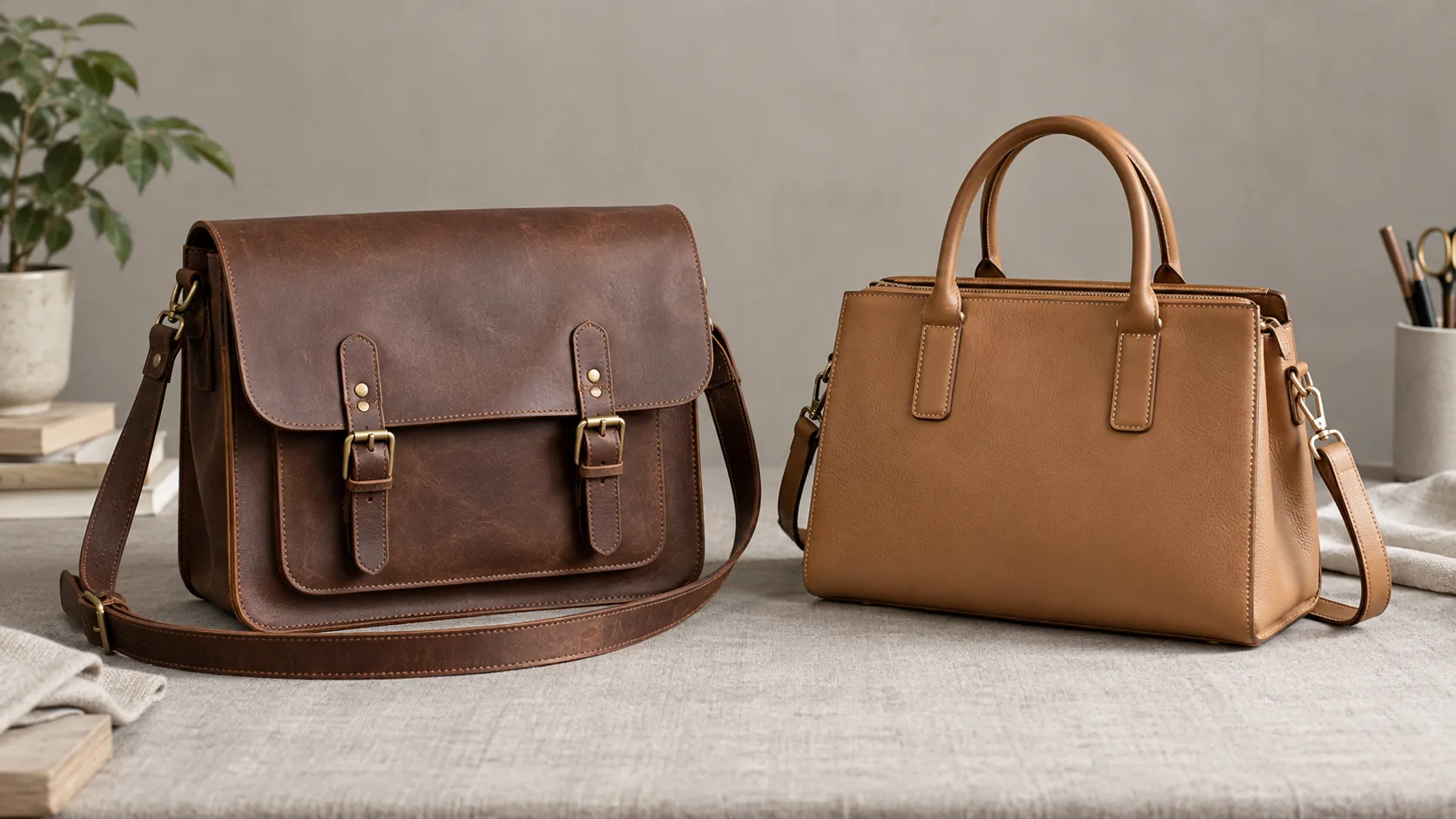
The Oxford Learner’s Dictionaries definition describes a satchel as a bag with a long strap, worn over the shoulder or on the back, especially for school books. Cambridge Dictionary gives a narrower traditional picture: a rectangular leather bag with a long strap used by children to carry books.
Modern American usage is broader. The American Heritage Dictionary entry includes both a small, sturdy bag that often has a shoulder strap and a handbag form with a rectangular body, flat bottom, double handles, and a hinged or zippered opening.
Those definitions describe overlapping uses rather than one mandatory pattern. A satchel may be:
- a traditional flap-front school bag with a long strap;
- a soft or semi-structured bag for books and daily items;
- a structured handbag with top handles;
- a convertible design with handles and a detachable shoulder strap.
`Satchel` is therefore a style-family name. It does not certify a flap, two handles, a particular material, a laptop compartment, or a fixed size.
What Does a Satchel Bag Look Like?
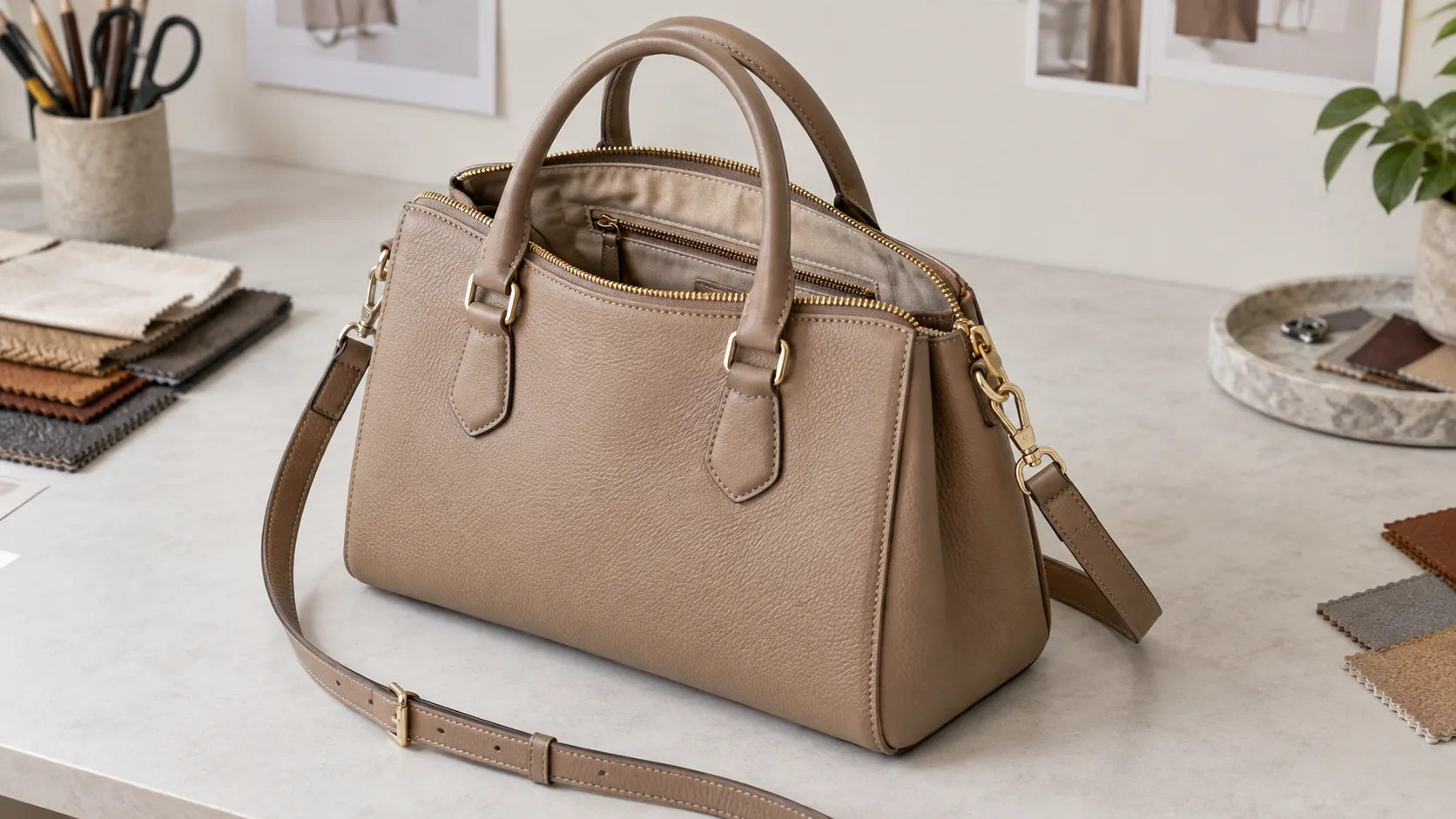
Many modern satchels have a rectangular or gently curved body, a defined base, and either a top opening or a front flap. Top handles are common in handbag-style satchels, while traditional school formats may rely on one or two shoulder straps.
The visible shape comes from several separate design decisions:
| Design field | Options to record | What it changes |
|---|---|---|
| Body construction | Flat panels, side gusset, full gusset, framed or box construction | Depth, silhouette, and assembly method |
| Opening | Full flap, partial flap, zipper, frame, or combined closure | Access and retention |
| Base | Soft base, separate bottom panel, or reinforced base | Loaded shape and how the bag rests |
| Carry system | Shoulder strap, top handles, two back straps, or convertible combination | Carry position and attachment layout |
| Hidden support | Interfacing, foam, stiffener, base insert, and lining | Shape and internal finish |
A product photo cannot confirm the hidden layers. A firm-looking body may use interfacing, foam, a stiffener, a frame, or a combination. The specification should name each layer and its location instead of treating “structured satchel” as a complete construction callout.
Is a Satchel the Same as a Messenger, Shoulder Bag, or Briefcase?
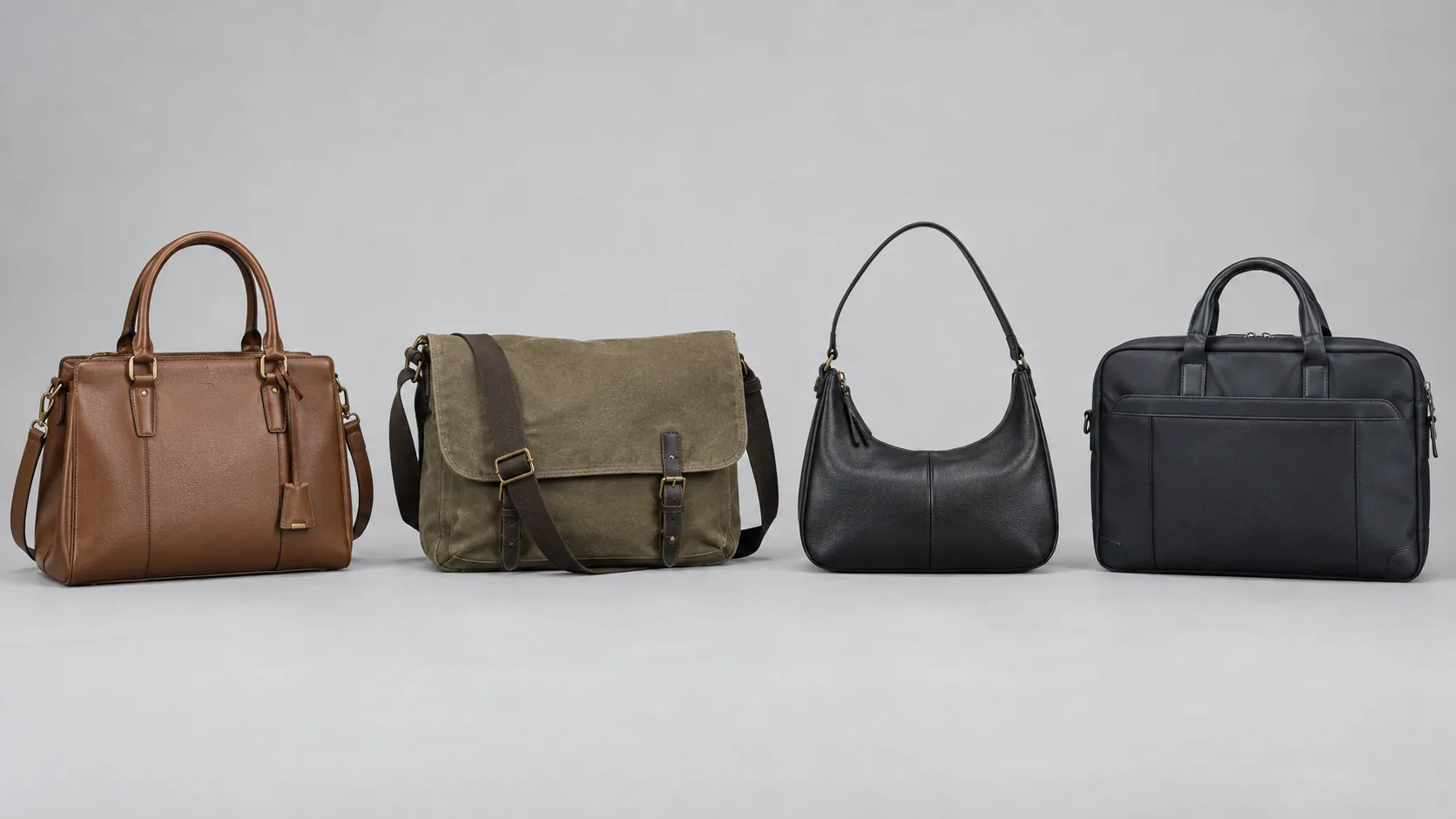
The terms overlap, but they do not classify bags in the same way. `Satchel` often describes a style family. `Shoulder bag` and `crossbody bag` describe how a strap is used. `Messenger bag` commonly suggests a flap-front rectangular body with a long strap. `Briefcase` usually signals work use and document-friendly proportions.
| Term | Main signal | Common construction clues | Do not assume |
|---|---|---|---|
| Satchel | Traditional school-bag or modern handbag family | Rectangular body, flap or top opening, shoulder strap and/or handles | Fixed size, material, rigidity, or capacity |
| Messenger bag | Access and carry format | Long strap, broad flap, rectangular body | Waterproofing, device protection, or a specific fabric |
| Shoulder bag | Carry position | Strap sized to hang from one shoulder | One body shape or opening type |
| Crossbody bag | Diagonal strap path | Longer adjustable strap and side attachment points | Small size, security, or comfort for every user |
| Briefcase | Work and document use | Structured rectangular body, handle, organized interior | Rigid construction or leather composition |
One product can fit more than one row. A structured satchel with a detachable long strap can also function as a shoulder or crossbody bag. A flap-front work satchel may sit close to the briefcase or messenger family. If the intended use points toward a two-strap format, choosing the right backpack provides a separate comparison route.
Use the category name for merchandising, then describe the physical product with measurable fields.
How Should a Satchel Be Carried?
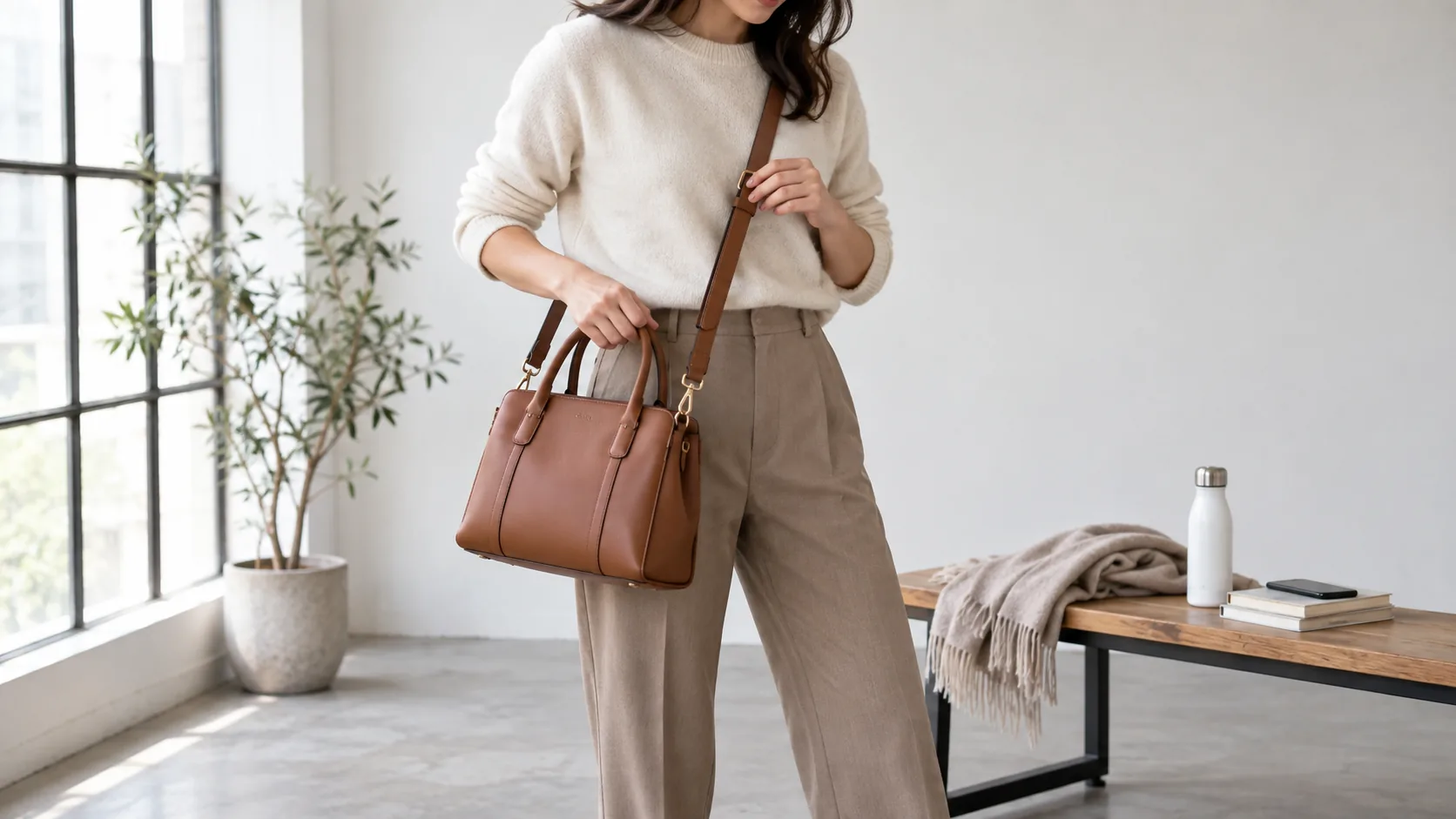
Carry the bag only in the modes supported by its handle, strap, hardware, and attachment layout. A top-handle satchel can be carried by hand. A long adjustable strap may support shoulder or crossbody use. A school satchel may use one shoulder strap or two back straps.
Check these points with representative contents inside:
- Handle clearance: confirm that the fingers or forearm fit without forcing the opening or handles apart.
- Strap range: record the usable adjustment range rather than calling a strap “adjustable.”
- Anchor location: check how the loaded bag hangs, rotates, and meets the body in each intended mode.
- Hardware orientation: confirm that clips, rings, and adjusters remain correctly aligned through the intended range.
- Access while worn: test the closure and outer pockets in the actual carry position.
A strap is a system of webbing or material, adjusters, rings, clips, stitching, reinforcement, and body fabric. A component claim does not prove the installed carry system. If the bag is intended for diagonal carry, the guidance on how to wear a sling backpack offers a useful comparison for strap adjustment and access, although a satchel remains a different product format.
Avoid universal comfort claims. Fit changes with the user’s body, clothing, strap geometry, load, and time carried.
Which Materials and Components Shape a Satchel?
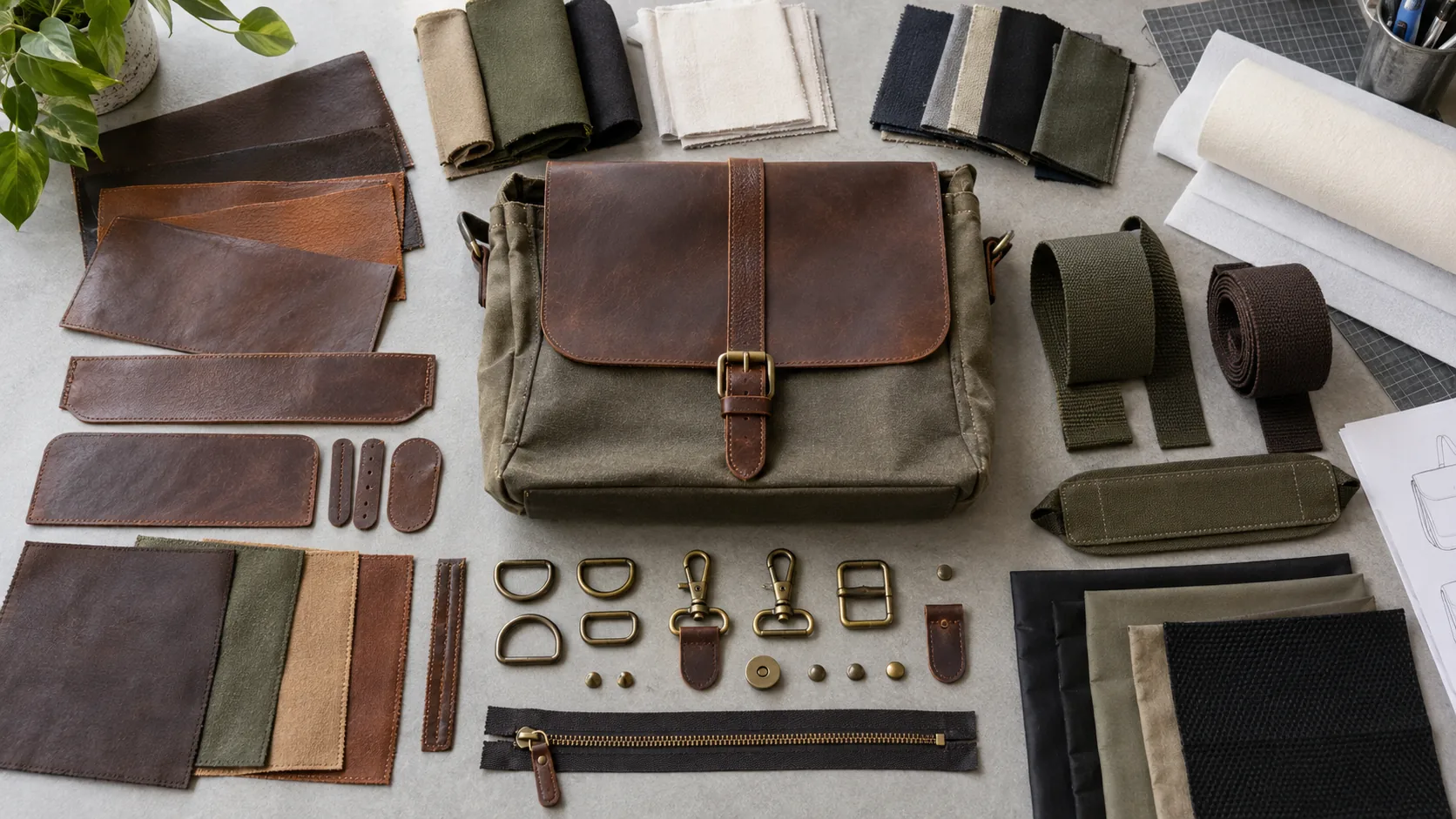
Satchels can be made from leather, coated or laminated materials, canvas, nylon, polyester, or combinations of these. The material name does not determine the final structure. Panels, hidden support, seams, edge treatment, hardware, and assembly decide how the finished bag holds its shape. For a natural-leather option, the cowhide leather guide explains the layer, finish, substance, and sample fields that still need separate confirmation.
For leather-looking products sold in the United States, composition language also needs care. The FTC Leather Guides address misleading claims about leather and imitation-leather products, including handbags and shoulder bags. A non-leather material that looks like leather should not be presented as unqualified leather.
Record these layers separately:
- outer material, grade or supplier code, thickness, color, and finish;
- reinforcement or interfacing by panel and position;
- lining, internal pockets, and seam finish;
- handle and strap material, hardware codes, and attachment method;
- closure components, including zipper, magnet, turn lock, or frame;
- base insert, feet, edge paint, binding, and other structural details.
For synthetic-leather development, PU leather bag material explains why the surface name is not a full layered-material specification.
What Should Brands Specify Before Sampling a Satchel?
Industry insight: Approved cards `SOFT-01` and `SOFT-04` treat the structure family and hidden support layers as visible specification fields. `LOAD-01` separates the carry path into components and interfaces, while `PROT-04` prevents a laptop screen size from being used as the device-compartment specification.
Build the brief around the intended contents and carry modes, then describe the construction that supports them.
| Specification area | What to define | What to approve on the sample |
|---|---|---|
| Intended use | User, contents, carry modes, and access frequency | Pack and use the sample in each intended mode |
| Body dimensions | External width, height, depth, measurement state, and tolerances | Measure the agreed points with the bag in the agreed state |
| Usable interior | Opening width, internal dimensions, partitions, and pocket sizes | Load the representative contents without forcing the opening |
| Body construction | Panel and gusset layout, base, target silhouette | Compare the assembled shape with drawings and approved sample |
| Hidden layers | Interfacing, foam, stiffener, lining, and location | Verify records or approved in-process evidence |
| Handles and strap | Drop, length range, width, material, hardware, anchor layout | Check fit, adjustment, alignment, access, and loaded behavior |
| Materials | Outer, lining, reinforcement, thread, edge finish, and controlled codes | Match approved swatches and written fields |
| Hardware and closure | Component codes, finish, placement, and operating direction | Open, close, adjust, and attach under representative use |
| Branding | Method, artwork, placement, and approval reference | Check placement and material interaction |
| Packaging | Stuffing, wrapping, and carton orientation | Confirm the target shape is maintained through the agreed pack-out |
The broader bag development process shows how specifications, patterns, samples, and production approvals connect. The product format is different, but the need to control revisions and approval references is the same.
Can a Satchel Carry a Laptop?
Yes, if the device and its case fit the usable opening and compartment, and the product has the intended support and retention. The word `satchel` provides no laptop-fit guarantee.
Record the closed device’s width, depth, and thickness, then compare those measurements with the usable internal dimensions and opening. Screen diagonal alone is not enough because devices with the same advertised screen size can have different body dimensions.
Also inspect the protection path around the faces, edges, corners, base, opening, and nearby hardware. Padding on one panel does not establish complete protection, and no generic foam thickness can guarantee a drop result. If device carry is central to the product, use a physical device or controlled dummy during sample approval and define any separate validation conditions.
Frequently Asked Questions
Is a satchel always a school bag?
No. Traditional definitions emphasize school books and a long strap, but modern American usage also includes structured handbag styles. Check the body, opening, handles, strap, and intended use rather than assuming that every satchel follows the school-bag format.
Does a satchel always have a flap?
No. A flap is common in traditional satchels, while modern versions may use a zipper, hinged frame, or combined closure. The product name does not establish the opening, so the closure type and usable opening width should be listed separately.
Is a satchel worn on the shoulder or across the body?
Either may be possible when the strap length and anchors support it. Some satchels are hand-carried, some use a shoulder strap, and others have two back straps. Approve every intended carry mode with the representative load inside.
Is a satchel the same as a messenger bag?
Not exactly. A messenger bag commonly signals a long-strap, flap-front access format, while satchel covers a broader traditional and handbag family. A single product can overlap both descriptions, so compare the structure and carry system rather than the category name.
What belongs in a satchel specification?
Include intended contents, external and internal dimensions, opening, panel and gusset construction, hidden support layers, handles, strap range, anchors, materials, hardware, branding, tolerances, packaging, and sample-approval references. Replace vague style words with fields that can be quoted and checked.
Final Decision
The most reliable satchel meaning is a bag-family description linked to shoulder carry and, traditionally, books. Modern usage also includes structured handbags with top handles and optional long straps.
Choose the retail name that matches the audience, but build the product brief around the actual body, opening, carry system, materials, contents, and approval sample. Brands moving from a style reference to a buildable specification can use custom bag manufacturing as the next development step.