
A “TSA approved toiletry bag” can look compliant yet fail the real packing test because the container limit, liquids-bag allowance, and larger toiletry organizer are separate decisions.
Under TSA’s current 3-1-1 guidance, carry-on liquids, aerosols, gels, creams, and pastes generally belong in one quart-size, clear, plastic, zip-top bag per passenger, with each container limited to 3.4 oz (100 mL). “TSA approved” is retail shorthand, not a pouch certification.
Once those boundaries are clear, travelers can pack correctly and product teams can specify a reusable pouch without turning convenience language into an unsupported approval claim.
What Size Toiletry Bag Does TSA Allow?
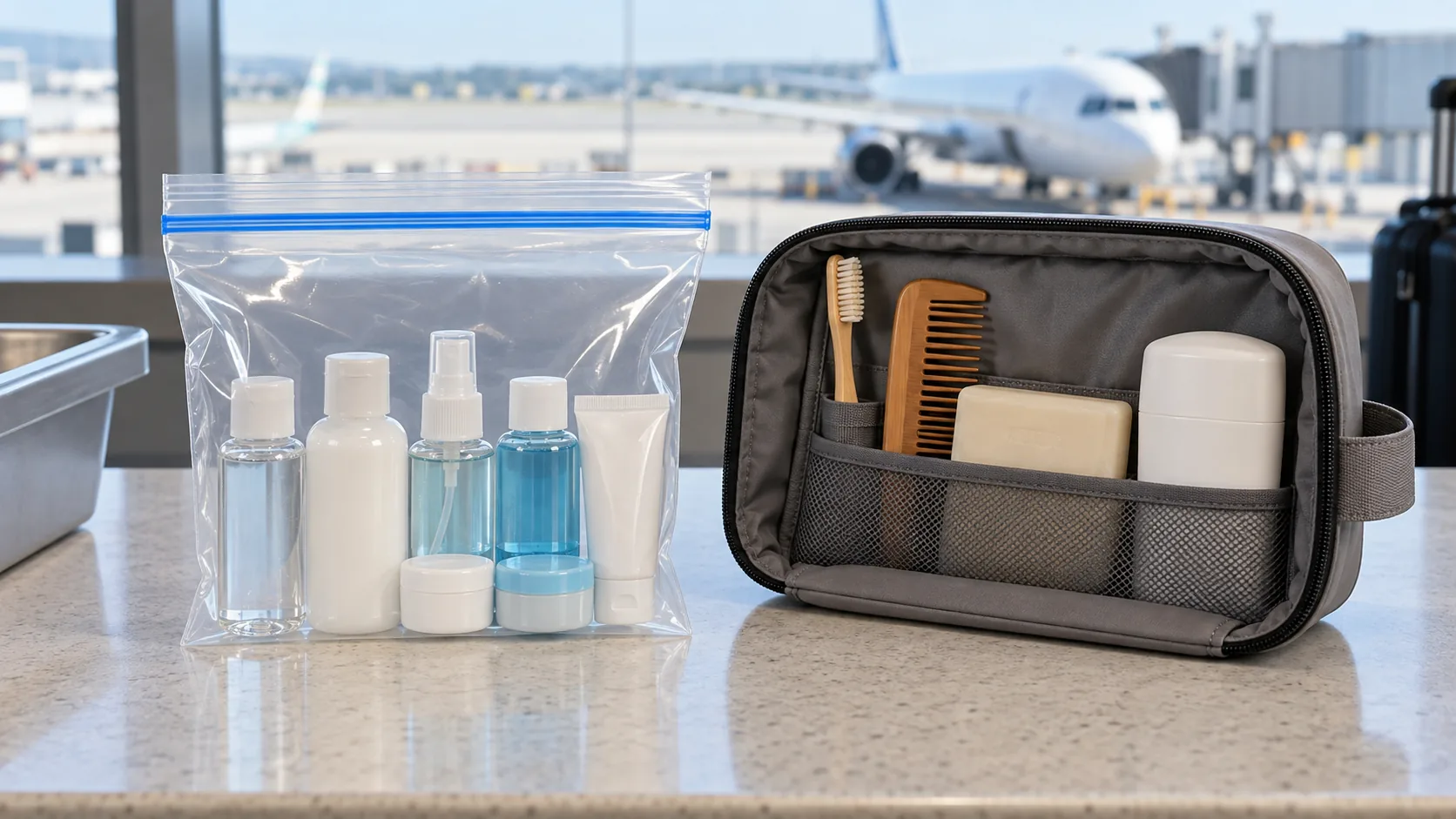
As checked on September 11, 2026, TSA’s 3-1-1 guidance uses three linked limits for liquids, gels, and aerosols in carry-on baggage:
- each covered container is 3.4 oz (100 mL) or less;
- the containers fit inside one quart-size, clear, plastic, zip-top bag; and
- each passenger has one such bag.
The current TSA travel checklist states all three points and advises keeping the 3-1-1 bag accessible. The rule applies to the covered contents, not automatically to the traveler’s whole toiletry kit.
That distinction creates two products:
- The liquids bag holds the limited containers of liquids, aerosols, gels, creams, and pastes for checkpoint screening.
- The larger toiletry organizer may hold a toothbrush, comb, bar soap, solid deodorant, wipes, and other items. It does not replace the liquids bag when carried through the checkpoint.
A compliant-looking pouch also cannot make an oversized container compliant. Container size and bag allowance are separate checks. Rules and item decisions can change, so travelers should recheck TSA’s official pages before departure.
Does a Toiletry Bag Have to Be Clear for TSA?
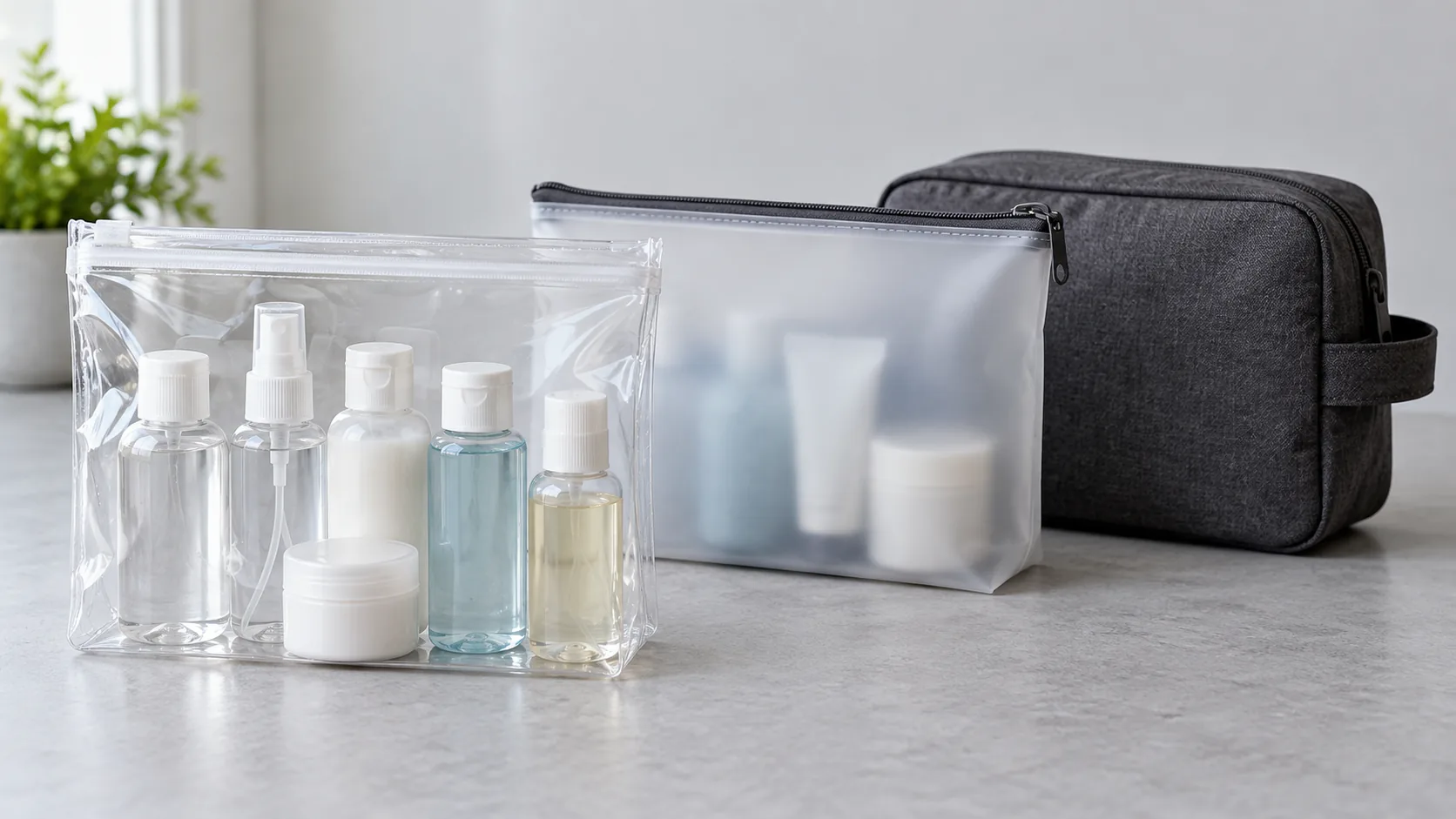
For the 3-1-1 liquids bag, TSA’s current travel tips and checklist specify a clear, plastic, zip-top bag. A separate organizer holding solid toiletries does not need to serve as that bag.
This is why a transparent reusable pouch can be useful: it presents the covered containers as one visible group. However, clear material does not override the quart-size allowance, and an open tote, drawstring pouch, or larger transparent organizer is not equivalent merely because its contents can be seen.
When the liquids pouch sits inside a carry-on, keep it reachable rather than buried beneath clothing or equipment. A product team developing both pouches and custom travel backpacks should treat liquids-bag access and luggage organization as related design decisions, while keeping TSA screening rules separate from airline cabin-bag limits.
What Does “TSA Approved Toiletry Bag” Actually Mean?
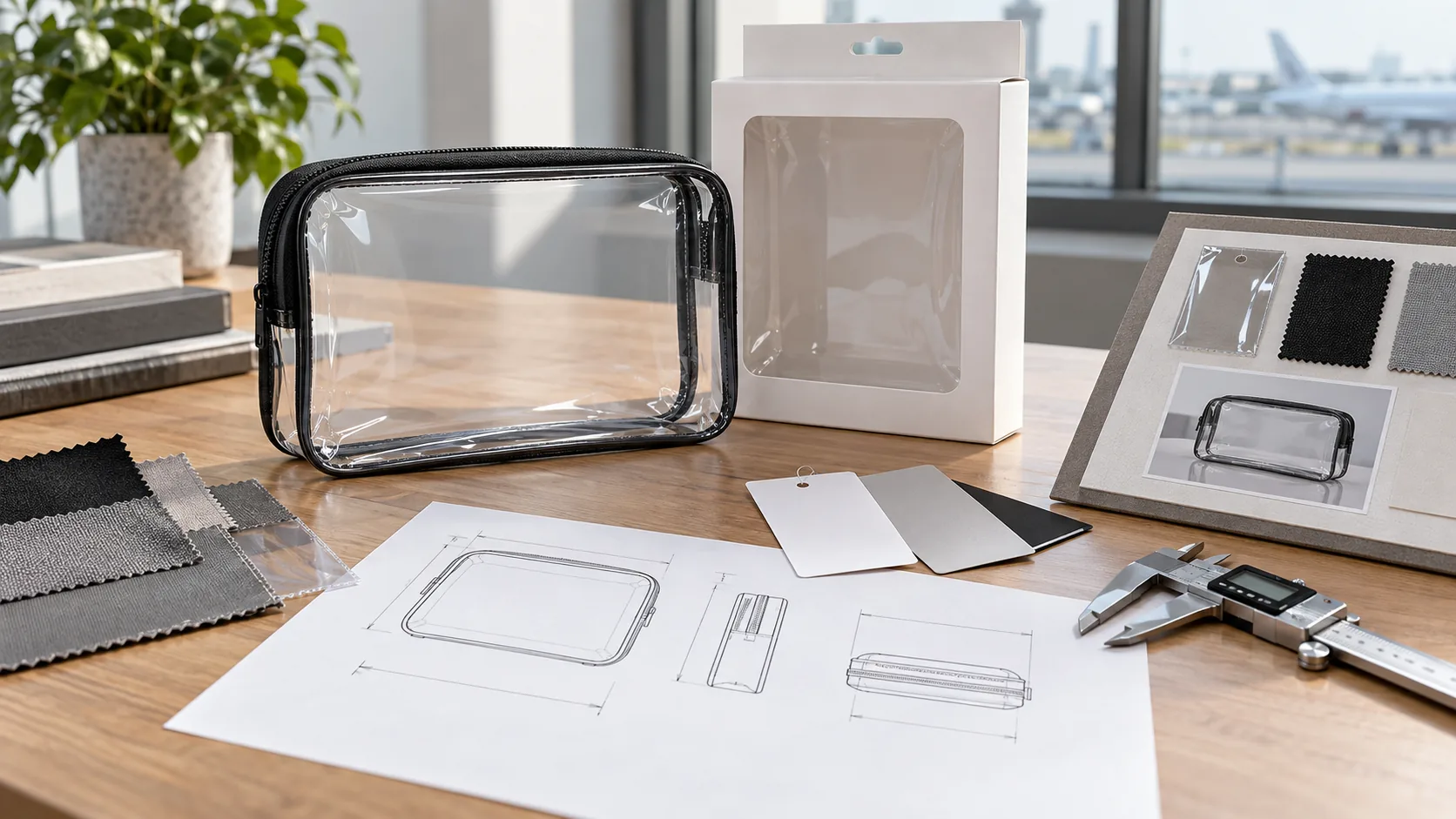
TSA’s published 3-1-1 sources describe how liquids must be packed; they do not present a consumer-pouch certification or endorsement program. In retail listings, “TSA approved toiletry bag” is therefore best understood as shorthand for a design intended around the 3-1-1 format.
That wording should not be converted into a government-certification claim. Safer, testable product language includes:
- “quart-size clear travel pouch”;
- “designed for travel-size liquid containers”; or
- “sized for use with the TSA 3-1-1 liquids rule.”
Even those descriptions require the sample to be checked in its filled and closed state. A factory inspection, material report, zipper test, or finished-pouch leak check answers a specific product question; none becomes evidence that TSA approved the product. Likewise, “TSA recognized” luggage locks are a different TSA program and do not establish approval of toiletry pouches.
Which Toiletries Go in the Clear Quart-Size Bag?
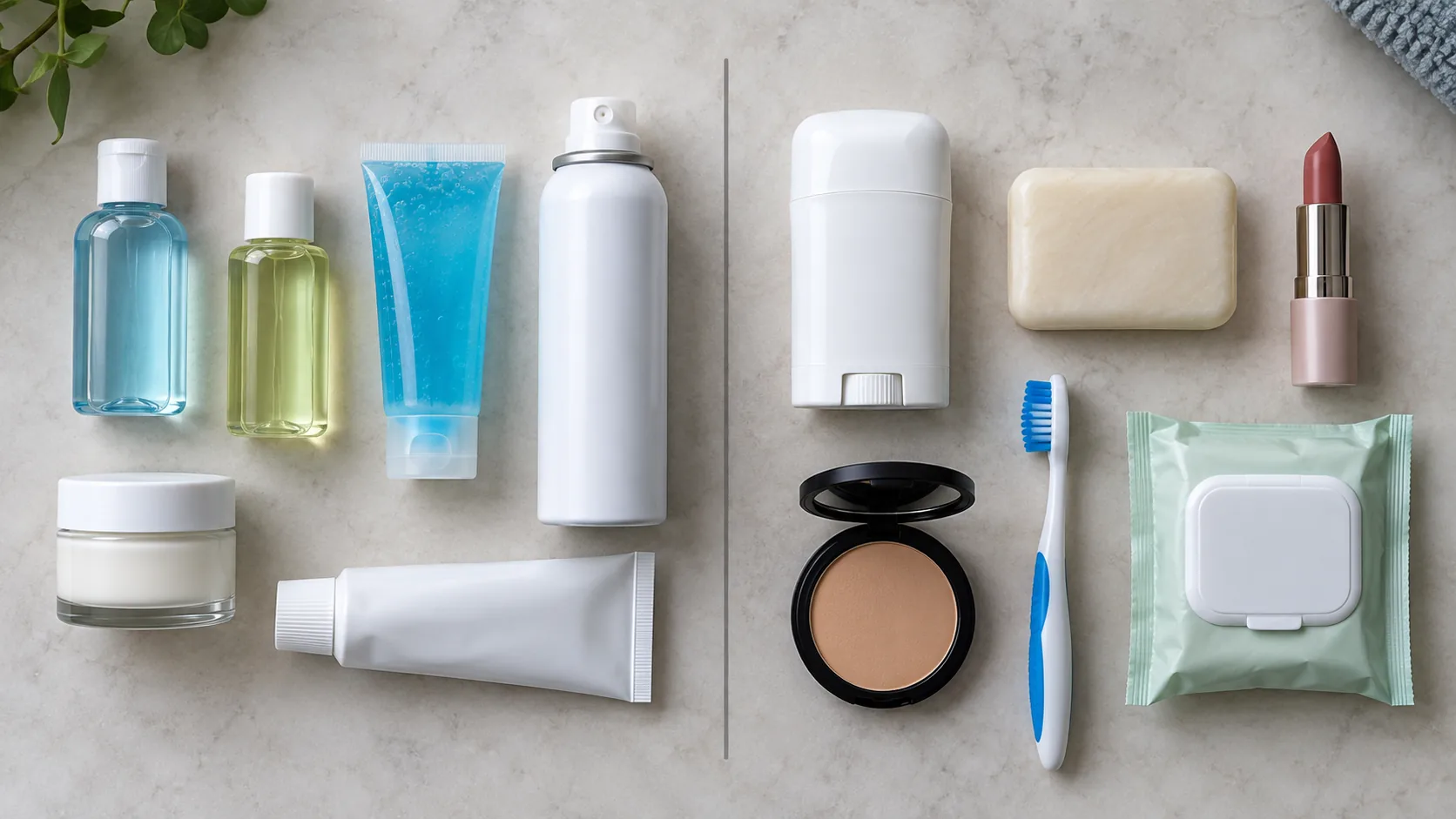
Classify the product by its form, not by whether the package says “toiletry.” TSA’s current What Can I Bring index lists item-level decisions and notes that officers make the final checkpoint determination.
| Form | Common examples | Carry-on liquids-bag treatment |
|---|---|---|
| Liquid | Shampoo, conditioner, mouthwash, liquid sunscreen, liquid foundation | Container at or below 3.4 oz / 100 mL; place in the quart-size bag |
| Gel | Hair gel, aloe gel, gel deodorant | Same container and bag limits |
| Cream or paste | Moisturizer, toothpaste, shaving cream, cream makeup | Same container and bag limits |
| Aerosol | Spray deodorant, hairspray, shaving foam | Same carry-on container and bag limits; other transport conditions may also apply |
| Solid | Bar soap, solid deodorant, lipstick, toothpaste tablets | No 3-1-1 liquids-bag requirement |
| Wipe | Makeup, baby, disinfecting, or wet wipes | TSA lists these as permitted in carry-on bags; they do not need the liquids bag |
| Powder | Solid makeup and other powders | Not a 3-1-1 liquid; larger powder quantities may receive separate screening |
The container’s maximum labeled capacity matters, not how little product remains inside it. A partly used 6 oz bottle is still a container larger than 3.4 oz. For unusual or borderline products, use TSA’s live item index or AskTSA rather than guessing from texture alone.
Does a Quart-Size Bag Have Fixed Dimensions?
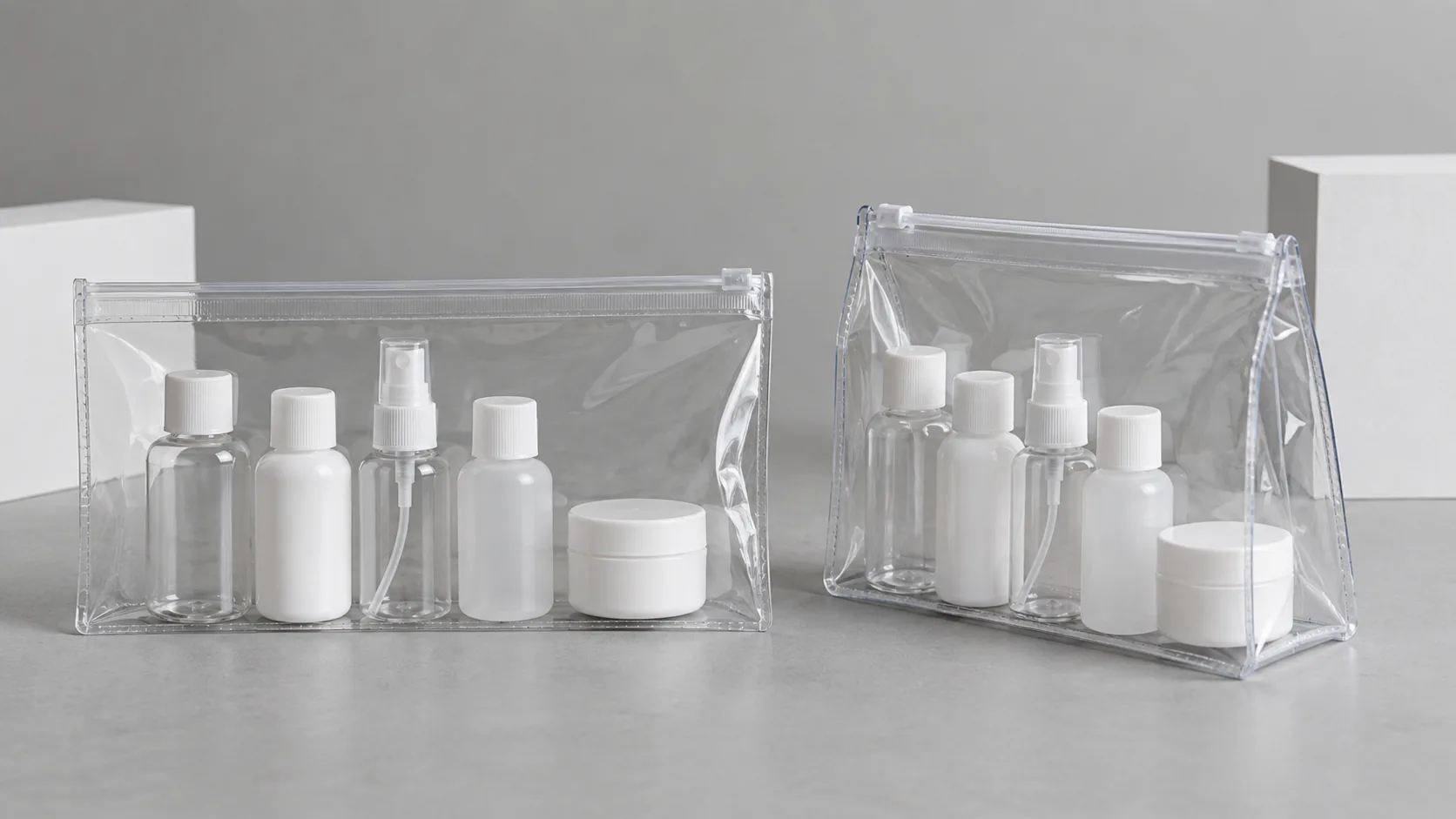
TSA’s cited guidance specifies a quart-size bag but does not publish one universal length-by-width dimension for every acceptable pouch. The search phrase “TSA approved toiletry bag dimensions” is therefore misleading if it is used to suggest one federally prescribed inch measurement. Capacity and shape are not the same field.
Outside length × width × depth describes a bounding box, not usable internal capacity. Rounded corners, seam allowances, film stiffness, zipper position, edge binding, and a gusset can all change what fits. A rigid or gusseted pouch may look compact from the front while holding more than a flat bag with a similar outline.
For a repeatable product comparison, record:
- empty external dimensions and where each point is measured;
- packed external dimensions at the stated fill condition;
- gusset depth and whether it is fully opened;
- the travel-container set used for the fit check;
- whether every item fits without forcing the closure; and
- the endpoint used to call the pouch full.
This does not create a new legal test. It makes the commercial capacity claim inspectable. A dimension becomes useful only when the measurement points, pouch state, loading rule, and acceptance condition are attached to it.
Which Exceptions Apply to the 3-1-1 Rule?
TSA permits medically necessary liquids, medications, and creams in excess of 3.4 oz or 100 mL in carry-on baggage. Its current travel tips for medication say these items should be removed for separate screening and that liquid medication does not have to be inside the plastic zip-top bag.
Formula, breast milk, toddler drinks, and baby or toddler food are also treated as medically necessary liquids. TSA instructs travelers carrying more than 3.4 oz to inform an officer at the beginning of screening and remove the items for separate screening. Cooling accessories required for these items may also be allowed under special instructions.
These are exceptions with handling conditions, not a way to relabel ordinary toiletries. Pack exception items separately, keep them accessible, and verify the latest instructions for the specific item before the trip.
How Should Travelers Pack Toiletries for Screening?
Use this sequence:
- Sort by form. Separate liquids, aerosols, gels, creams, and pastes from solids, wipes, and other permitted items.
- Read container capacity. Put only covered containers of 3.4 oz / 100 mL or less into the liquids bag.
- Use one clear quart-size zip-top bag. Make sure the contents fit and the closure shuts normally.
- Separate exceptions. Keep medically necessary liquids and infant or child nourishment accessible for declaration and separate screening.
- Place the pouch within easy reach. The TSA checklist recommends the front pocket of the carry-on for accessibility.
- Check unusual items and current rules. Use TSA’s live index before packing and follow officer instructions at the checkpoint.
This preparation supports an orderly screening presentation; it does not promise faster passage or guarantee an item will be accepted. Airlines separately control baggage size, weight, allowance, and fees.
What Should Brands Specify in a Reusable Clear Pouch?
A sourcing brief should translate the travel use case into measurable product fields. For custom bag manufacturing, record at least:
- target usable capacity and the exact fill set used to verify it;
- empty and packed external dimensions, measurement points, and gusset state;
- transparent panel area and any opaque border that reduces visibility;
- closure type, slider or press-seal details, and closed-state fill limit;
- film or coated-textile type, thickness, hand feel, odor expectation, and supplier documentation;
- seam or weld construction, corner treatment, zipper ends, edge finish, and attachment points;
- a project-specific containment check with sample state, liquid exposure, duration, orientation, and pass/fail endpoint;
- cleaning method, cleaner restrictions, rinse and drying expectations, and applicable care label;
- print location, ink or transfer system, and approved color and finish references;
- repeated-opening evaluation with the method and endpoint stated; and
- packaging language that describes intended use without claiming TSA certification.
Keep evidence attached to the object tested. The ISO 811 scope concerns resistance of textile fabrics to water penetration; a material result does not establish the performance of a finished pouch containing seams, corners, a closure, and attachment points. This same evidence boundary applies when specifying water-protective backpack construction.
“Leakproof” also needs a defined scenario. A successful upright test does not automatically cover inversion, compression, air transport, repeated use, or long-term storage. Cleaning language needs the same discipline: instructions for one PVC or PVC-PU coated fabric cannot automatically be applied to TPU film, foam laminates, printing, hardware, or the complete bag.
Before bulk production, compare the filled sample with the agreed record and decide which fields require measurement, testing, visual inspection, or document review. Relevant bag project case studies can help a team frame project-specific checks without copying unrelated acceptance limits. A bag factory capability review can then focus on the construction and evidence actually required by the project.
Frequently Asked Questions (FAQ)
Does makeup have to go in the TSA quart-size bag?
Liquid, gel, and cream makeup does. TSA’s item index lists foundation, concealer, mascara, and liquid eyeliner under the 3.4 oz / 100 mL carry-on limit. Solid lipstick and solid makeup do not use the liquids bag, although larger powder quantities may receive separate screening.
Does toothpaste count as a liquid for TSA?
Yes. TSA treats toothpaste as a paste, so a carry-on tube must be 3.4 oz / 100 mL or less and fit in the quart-size liquids bag.
Do deodorant, wipes, and soap bars need the clear bag?
It depends on form. Liquid, gel, and aerosol deodorants follow the liquids rule. Solid deodorant, bar soap, and wipes do not need the liquids bag.
Do liquid medications count against the quart-size allowance?
Medically necessary liquids may exceed 3.4 oz in reasonable quantities for the trip and do not need to be in the zip-top bag. Declare them and remove them for separate screening as TSA currently instructs.
Do all toiletries have to be in a clear bag?
No. The clear quart-size bag is for covered carry-on liquids, aerosols, gels, creams, and pastes. Solid toiletries and permitted wipes can stay in a separate organizer.
Conclusion
A “TSA approved toiletry bag” decision has three layers: the capacity of each covered container, the one clear quart-size zip-top bag holding those containers, and the larger organizer holding other toiletries. The retail phrase does not remove any of those checks and should not be presented as product certification.
For product teams, the reliable route is to specify usable capacity, packed dimensions, visibility, closure, seams, materials, cleaning limits, and validation endpoints. When a reusable travel-pouch specification is ready, contact the product team to review a buildable sample plan without unsupported approval language.