
A quote for “poly blend” leaves several choices open: which fibers, what percentages, and how the fabric is made.
Poly blend is marketplace shorthand for a blended textile. In polyester fabric listings, it refers to polyester combined with other fibers, but “poly” alone cannot establish fiber identity or composition. Request the full fiber names, percentages, and construction before choosing it for a bag.
The supplier’s composition statement starts the comparison. The yarn, weave or knit, weight, finish, and sewn sample determine what else you need to assess.
What Does Poly Blend Mean?
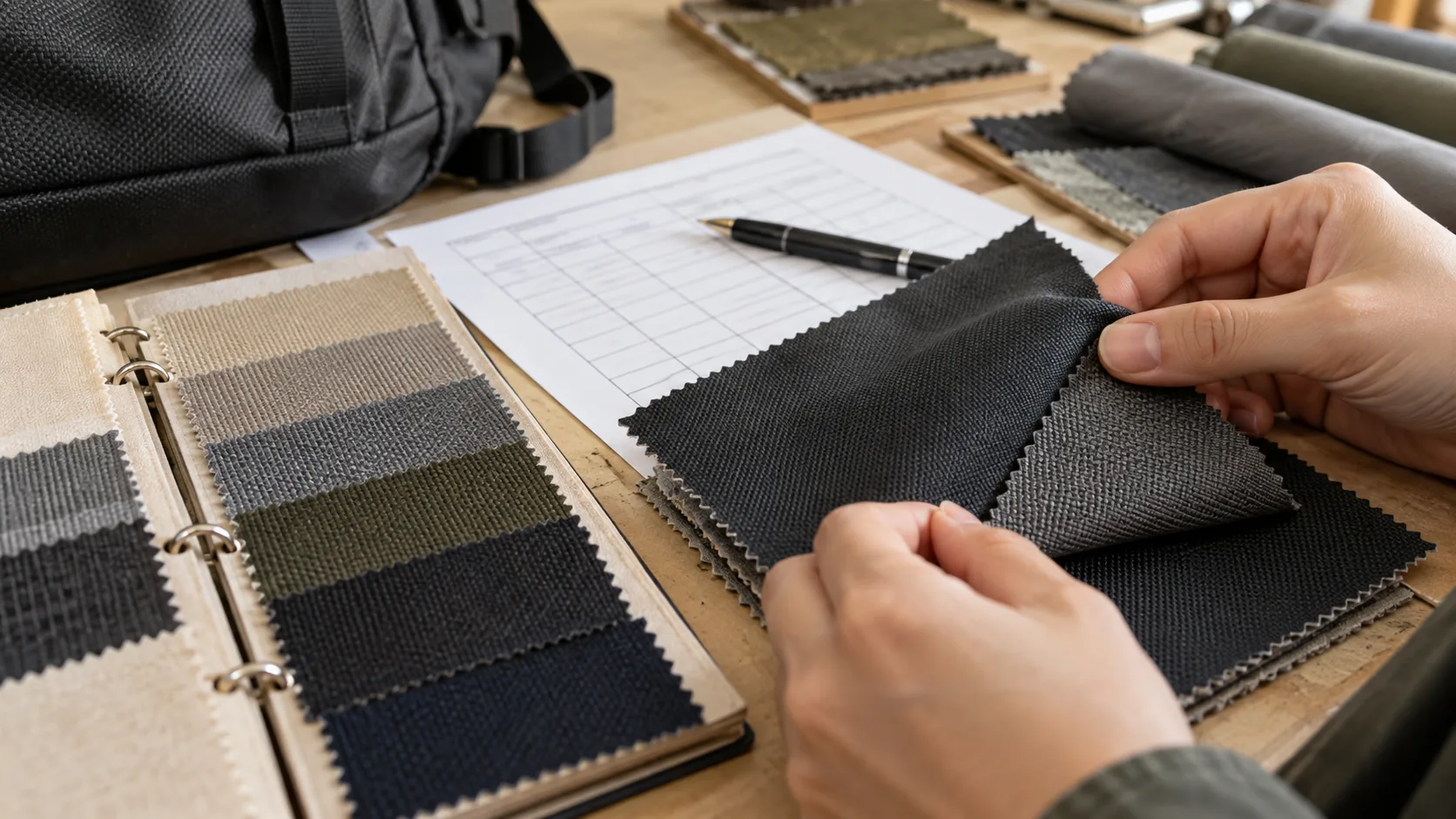
Treat “poly blend” as a prompt to ask for a complete material description. Confirm whether the supplier means polyester, identify every blend partner, and record the percentages by fiber weight. Also ask which part of the material that statement describes: the main fabric, a particular yarn, or a layer in a composite.
A composition statement such as “55% polyester / 45% cotton” is more specific than “poly blend,” but it still leaves the yarn and construction unresolved. The same total ratio can describe different arrangements of fibers and yarns. A coating or backing needs its own description rather than being silently included in the fiber shorthand.
For covered US textile products, the FTC’s labeling guidance calls for generic fiber names and percentages by weight in descending order. The guidance also lists bag-related exclusions. Use an exact composition statement as recommended purchasing documentation for a bag project; do not assume every finished bag has the same legal labeling obligation.
Once polyester is confirmed, the polyester bag material guide provides the next construction questions. Keep the supplier material code and confirmed swatch attached to the description so the quote refers to an identifiable material.
Is Poly Blend Always Polyester and Cotton?
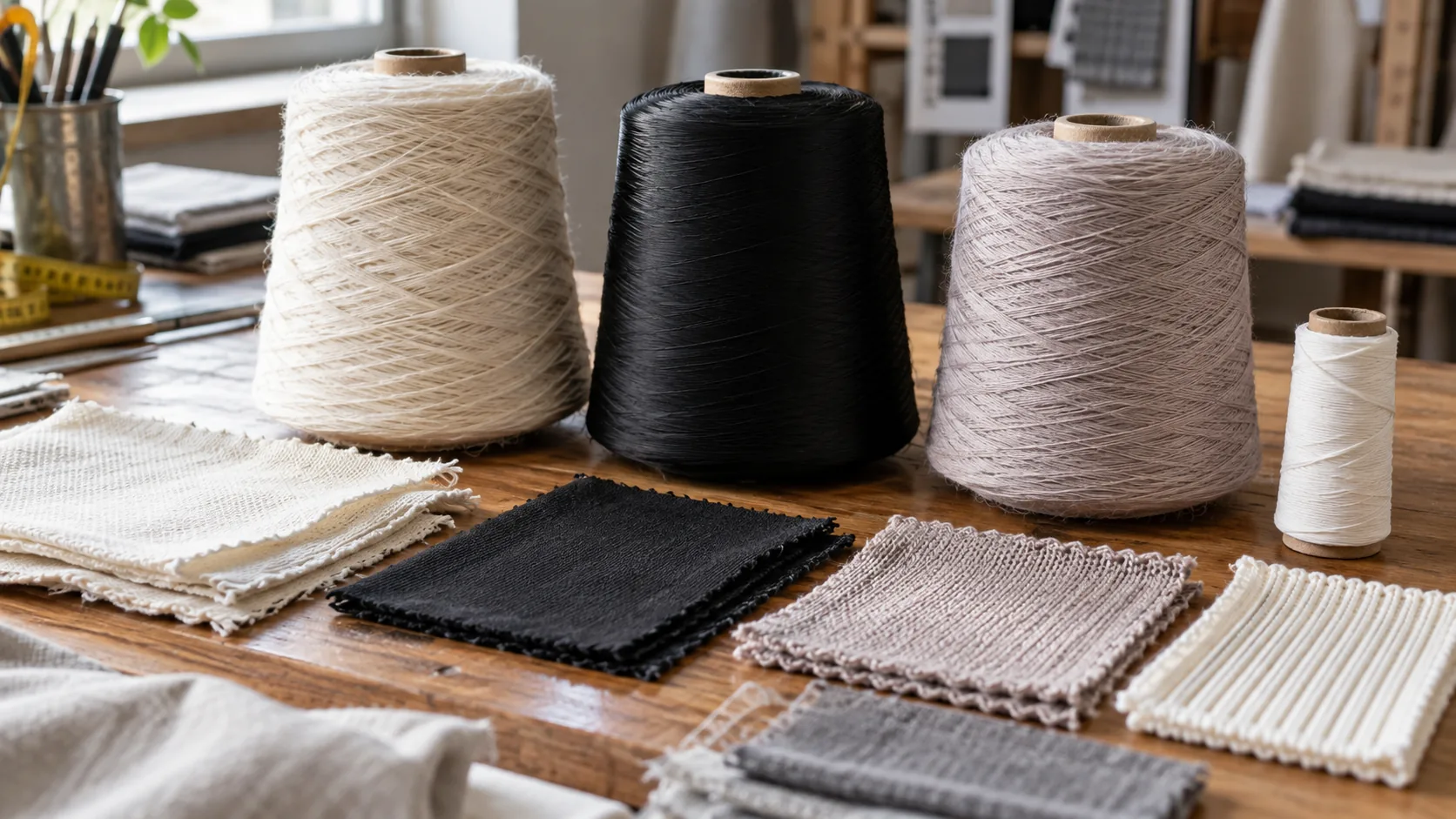
No. Polyester-cotton is one possible combination; polyester can also be offered with rayon, spandex, nylon, or other named fibers. A supplier’s full composition statement identifies the combination being proposed.
Do not list rayon and viscose as two unrelated fiber families. FTC guidance explains that viscose is the ISO name for the predominant form of rayon and permits either name. Likewise, it recognizes elastane as the ISO name corresponding to spandex. Retain the supplier’s stated terminology and clarify it where the project needs more detail.
| Supplier description | What it identifies | What remains to confirm |
|---|---|---|
| Poly-cotton | Proposed polyester and cotton components | Percentages, yarn arrangement, construction, weight, and finish |
| Polyester-rayon or polyester-viscose | Proposed polyester and rayon-family components | Exact fiber description, percentages, and fabric construction |
| Polyester-spandex or polyester-elastane | Proposed polyester and elastic-fiber components | Percentages, placement, construction, and measured stretch/recovery if required |
| Polyester-nylon | Two proposed synthetic fiber families | Exact material identities, percentages, yarns, and construction |
These descriptions do not establish strength, softness, shrinkage, drying, or price. Ask for evidence on the finished construction where those properties affect the decision. For a cotton component, the cotton bag material guide helps frame the weave, weight, finishing, and care questions.
How Do Fiber Percentages Change a Blend?
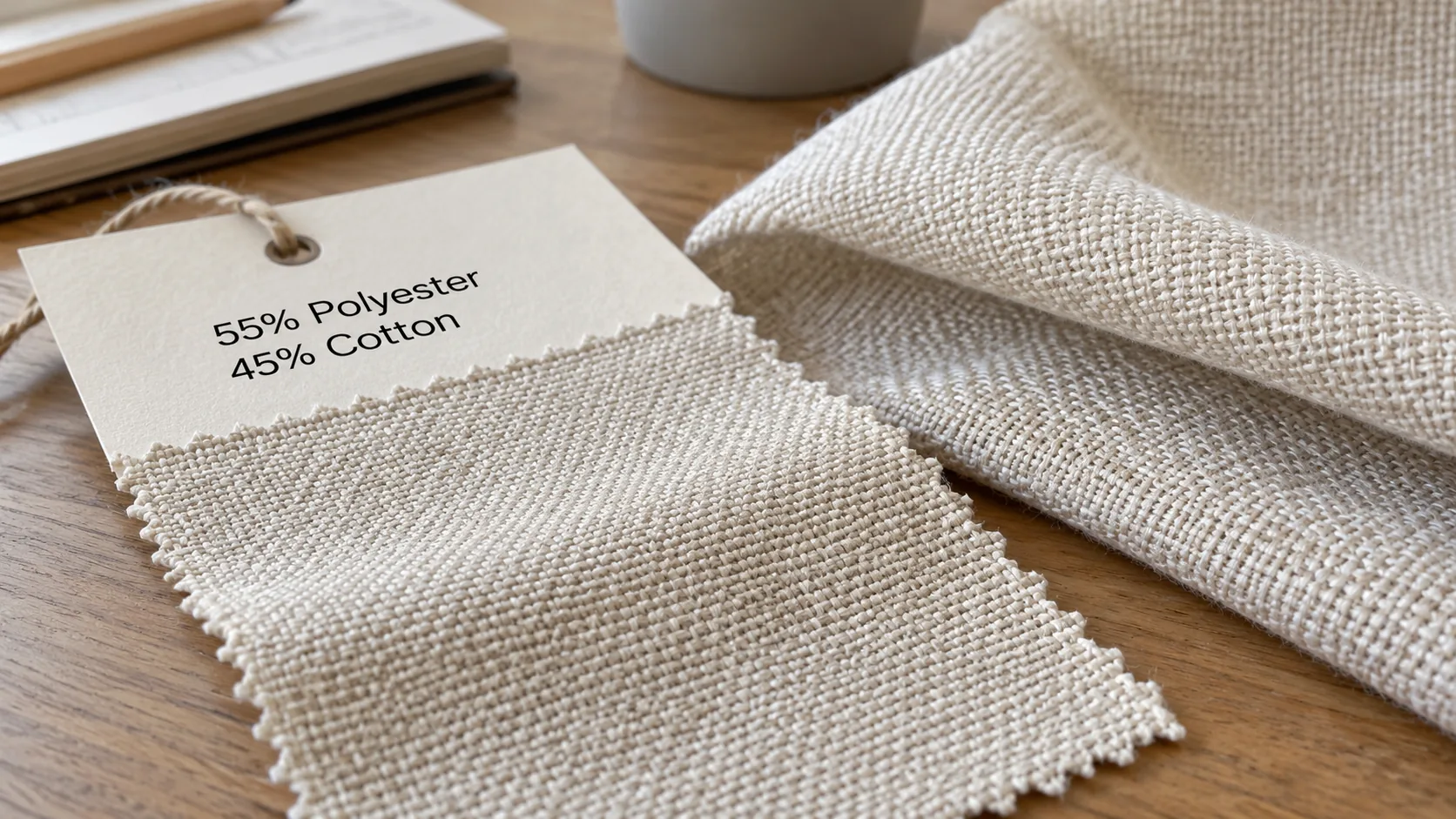
Percentages describe the relative fiber amounts by weight. In an illustrative 55/45 polyester-cotton statement, polyester accounts for 55% and cotton for 45% of the stated fiber content. This example is not a recommended ratio or a measured result for the pictured sample.
The ratio does not reveal whether the fibers are mixed within yarns, assigned to different yarns or directions, or distributed across described layers. Request that arrangement separately. It also leaves weave, knit, fabric weight, thickness, finishing, coating, and backing unresolved.
Keep label conventions separate from purchasing tolerances. 16 CFR 303.43 provides a fiber-content tolerance for covered multi-fiber textile products under its conditions. It is not a project-wide permission to substitute a different composition. FTC guidance explicitly says it does not permit knowing misrepresentation; its three-percentage-point example addresses unintended manufacturing inconsistency. A wholly single-fiber claim has a different boundary, subject to the rule’s ornamentation provisions.
For purchasing, write the intended composition and any agreed acceptance basis clearly. Do not import a legal label tolerance into a contract without checking its scope. Choose a ratio with the proposed construction and bag requirements in view, then assess the sample; this guide recommends no universal “best” blend ratio.
Why Can Two Fabrics With the Same Blend Ratio Perform Differently?
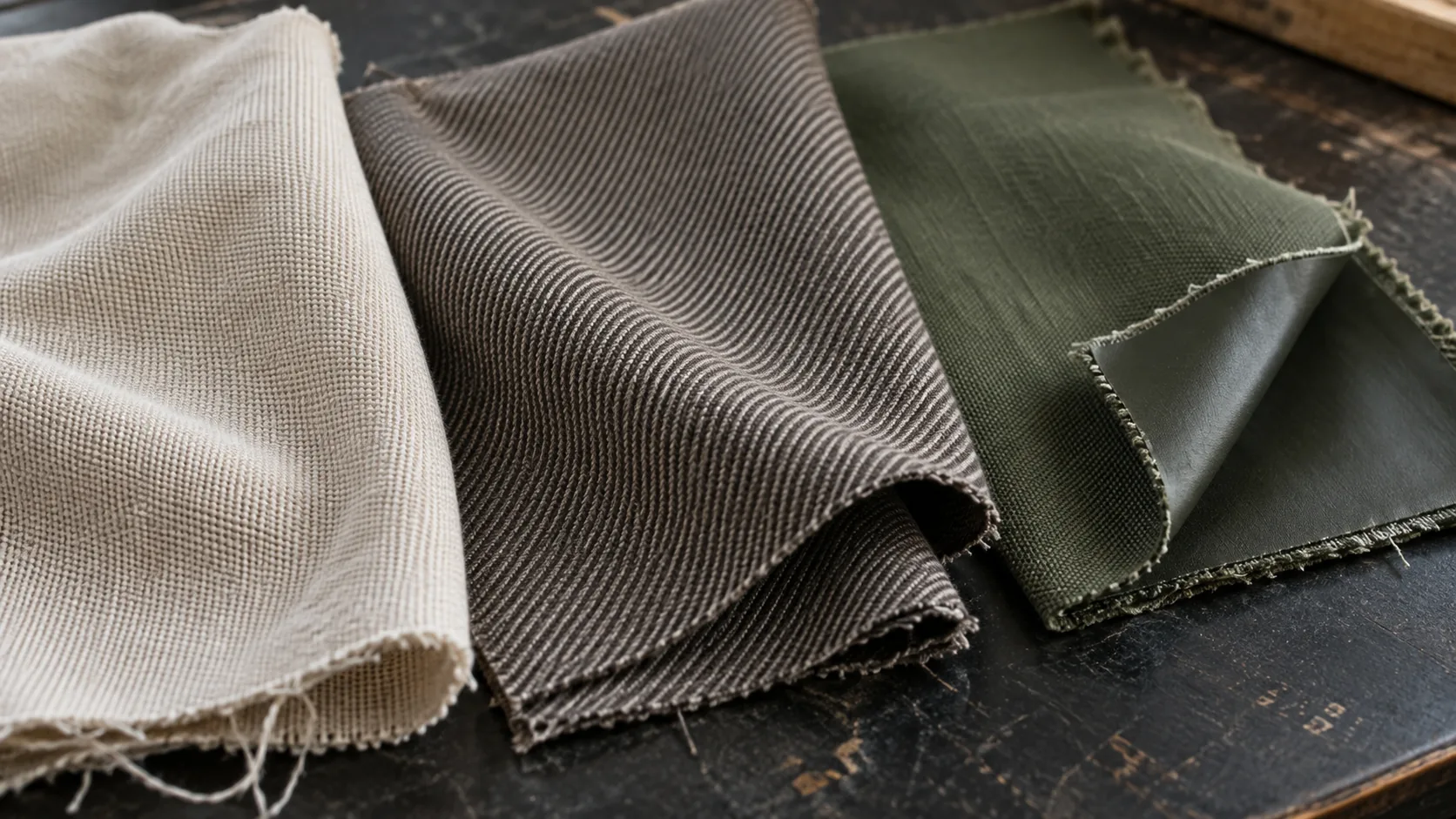
Two fabrics with the same stated fiber mix may have different yarns, constructions, weights, and finishes. Compare those fields before treating the materials as substitutes.
- Yarn form and arrangement: record spun or filament construction, relevant yarn specifications, and where different fibers occur.
- Weave or knit: identify the structure, direction, and density rather than judging it only from the blend name.
- Weight and thickness: record how each is measured. GSM describes mass per unit area; it cannot establish durability, hand feel, or cost by itself.
- Finish, coating, and backing: identify the process or layer, which face carries it, and the intended function.
- Color and branding: tie shade references, printing, and any required colorfastness evidence to the exact sample.
If durability is the comparison goal, request an applicable method, test conditions, measured endpoint, and acceptance criteria. A cycle count from one abrasion setup is not directly interchangeable with a result from another, and it does not establish bag service life.
Water claims need the same care with scope. AATCC’s spray-test scope concerns resistance of fabric to surface wetting. Its apparatus guidance explains that the test does not measure penetration through the fabric. Neither result, by itself, establishes waterproof performance of a sewn bag. The polyester waterproofing guide separates material, coating, seams, and closure questions.
Where Can Poly Blend Fabric Be Used in Bags?
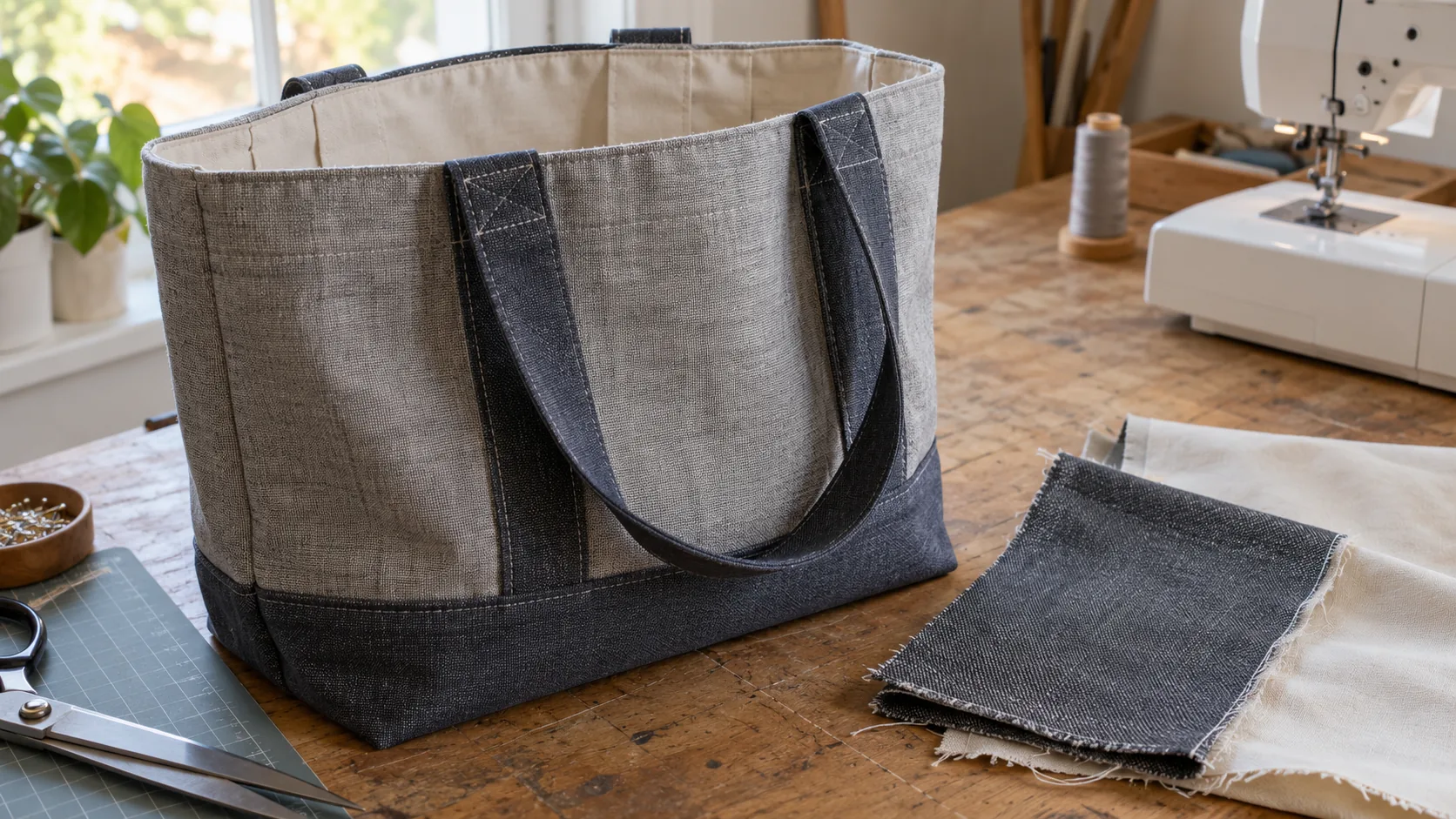
Evaluate the fabric for the particular panel or component. Approval of an exterior swatch does not automatically cover lining, base, straps, or seams.
| Bag zone or use | Decision to make | Evidence to request or check |
|---|---|---|
| Structured exterior | Required shape, surface appearance, and branding | Construction sheet, confirmed weight, finished panel and print trial |
| Base or contact zone | Expected rubbing and contact conditions | Applicable abrasion evidence and a sewn construction check |
| Lining | Required hand, opacity, snag behavior, and color transfer limits | Confirmed swatch, relevant reports, and assembled lining sample |
| Foldable or packable section | Folding pattern and acceptable appearance after use | Finished-panel folding and care checks under agreed conditions |
| Printed panel | Artwork, method, adhesion, and appearance | Trial of the actual print process on the specified fabric |
| Water-exposed section | Intended exposure and acceptable ingress | Material/layer records plus checks of seams, openings, and complete construction |
Check webbing, buckles, and handle attachments under their own specifications. The shell’s fiber mix says little about a separate strap assembly. Define each component’s task and evaluate the assembled bag where interaction between components matters.
What Should Buyers Request From a Supplier?
Request a composition statement, construction sheet, confirmed swatch, and the evidence needed for the proposed use. A small project can record these in one document; the information needs to remain traceable even when the paperwork is simple.
| Catalog phrase | Missing information | Document or clarification | Sample check |
|---|---|---|---|
| “Poly blend” | Exact fibers, percentages, and material identity | Composition statement and supplier material code | Match the swatch to the stated material; use suitable analysis if identity needs independent verification |
| “Poly-cotton” | Ratio, yarn arrangement, weave or knit, weight, and finish | Composition and construction sheet | Compare the identified construction and agreed measured fields |
| “Poly blend canvas” | Composition plus the specified canvas construction | Yarn, weave, weight, finish, and material reference | Confirm appearance, hand, and relevant performance of the actual sample |
| “Water-repellent poly blend” | Finish identity, exposure, and evidence scope | Finish specification and applicable report | Separate surface wetting, penetration, and complete-bag checks |
| “Quick-dry poly blend” | Drying definition, method, conditions, and endpoint | A claim-specific report or agreed protocol | Check the exact finished component under the stated conditions |
Record composition, construction, finish, color reference, intended position, and performance requirements as separate fields. Use the same material code in the quote, swatch record, and drawing callout. A changed coating or backing should not disappear behind an unchanged “poly blend” name.
Consumer label disclosures and supplier construction records serve different purposes. Ask for the detail needed to purchase the material, while checking the actual product’s legal obligations separately.
To discuss feasibility with a custom bag manufacturer, send the intended bag use, panel requirements, material references, artwork, and quantity. Identify unresolved choices so the sample request states what still needs approval.
How Should a Poly Blend Be Approved in a Finished Bag?
Approve material identity, fabric performance, and sewn-component behavior as separate decisions. A composition report does not establish abrasion resistance, and a fabric result does not cover the complete bag’s load path. Label compliance or an environmental claim needs its own applicable evidence.
- Match the material code, stated composition, construction, and confirmed swatch.
- Compare color under agreed viewing conditions and hand against the retained reference.
- Trial the chosen print, coating, or lamination on the actual material.
- Check seams and any required seam strength or slippage with the proposed sewing construction.
- For packable styles, document the intended folding sequence and acceptable changes.
- Assess rubbing or abrasion at the relevant zones with an applicable method and agreed endpoint.
- Check care using instructions appropriate to the complete component. Record dimensional and appearance changes; do not assume every blend permits machine washing.
- Evaluate the assembled bag under project-defined load and handling conditions. State the load, cycles or duration, configuration, and acceptance criteria rather than treating an informal trial as a rating.
- Retain the approved reference with its ID, specification version, date, and approval scope.
When a report supports approval, connect it to the sample or lot, method and edition, date, conditions, endpoint, and result. Confirm that the method can address the stated fiber combination or property; a percentage without that connection may be unsuitable for a substitution decision. Document completeness does not prove authenticity or applicability.
The retained sample provides a comparison reference, not a guarantee for future production. Agree the checks needed for each lot and keep the material and sample identities linked to those records. Close unresolved composition, care, or test questions before releasing the material for its intended component.
Frequently Asked Questions
What does poly blend mean on a fabric label?
It is shorthand that needs a full composition statement. In polyester listings it refers to a polyester blend, but the abbreviation alone cannot prove that identity. Confirm fiber names, percentages, and the material code before comparing quotations.
Is poly blend always polyester and cotton?
No. Cotton is one possible partner. Other stated combinations may include rayon or viscose, spandex or elastane, and nylon. Ask which fibers and percentages apply to the exact fabric; do not infer them from the shorthand.
Is there a best blend ratio for bags?
Choose the ratio together with yarn, construction, weight, finish, and the component’s requirements. Confirm suitability on the proposed material and sewn sample. A ratio alone cannot establish strength, softness, or durability.
Will poly blend fabric shrink or wrinkle?
The answer depends on the identified fibers, construction, finish, and care conditions. Check dimensional change and appearance using care appropriate to the finished component. Record the actual result instead of promising the same behavior for all blends.
Is poly blend fabric waterproof?
The name establishes no waterproof performance. Check the required water exposure, material or layer, seams, closures, and complete bag. A fabric surface-wetting result does not answer whether water enters through a bag opening or sewn seam.