
A dust bag is a soft fabric pouch used to cover a handbag, pair of shoes, or accessory during storage and presentation. It helps separate the product from settling dust and nearby surfaces. The fabric, fit, and closure determine how well it does that job.
For brands choosing a custom pouch, start with the product that will go inside it. Check the contact surface, usable opening, seams, and branding on a finished sample before approving the order. A material name alone cannot establish protection, care requirements, or service life.
What Is a Dust Bag?

A protective dust bag holds a handbag, shoes, or another accessory between uses. It can also form part of the retail presentation, with a brand logo on the outside. Drawstring and flap closures let the owner remove the item and put it back without discarding the pouch.
This guide covers those storage pouches. Vacuum-cleaner bags and industrial dust-collection bags use the same name for filter products with different jobs and specifications.
A pouch intended for a handbag should fit its stored shape, including handles and hardware. Shoes may need separate pouches so one shoe’s sole or fittings do not contact the other. A shared pouch design is possible, but each product needs its own fit and contact checks.
What Does a Dust Bag Protect Against?
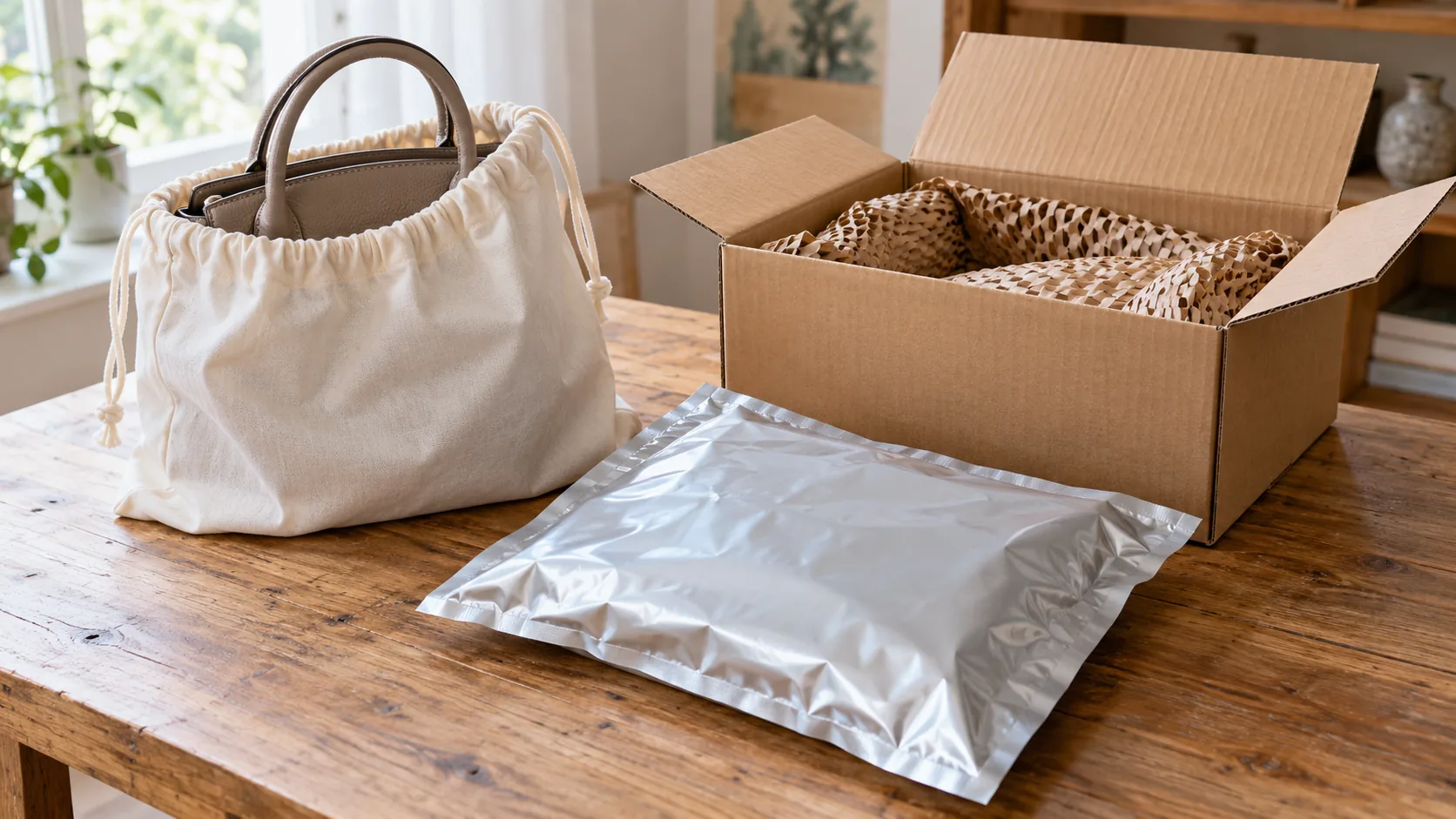
A suitable dust bag covers the product and provides a fabric layer between it and adjacent items. The intended benefits are less direct dust deposition and less contact with potentially abrasive surfaces. Neither benefit is guaranteed by the words “dust bag.” Check the finished pouch against the product’s finish and storage conditions.
The Canadian Conservation Institute recommends covering or enclosing stored objects to reduce dust deposits in its guidance on pollutants. That museum guidance supports the general principle of a protective covering; it does not certify the performance of a particular handbag pouch.
| Storage concern | What the pouch can contribute | What still needs checking |
|---|---|---|
| Settling dust | A covering over the product | Fabric construction, opening gaps, closure, and how the pouch is used |
| Surface rubbing | Separation from nearby objects | Interior texture, seams, loose fibers, print backing, and hardware contact |
| Light exposure | A covering that may reduce light reaching the surface | Actual opacity, coverage, and storage location; dark fabric alone proves little |
| Damp or mold | No established moisture-control function from the name alone | Product dryness and the surrounding storage environment |
| Shipping impact or compression | An inner contact layer | Outer packaging, support, cushioning, and validation for the shipping conditions |
CCI’s light guidance describes fading as irreversible and recommends reducing exposure. Keep light-sensitive products away from direct sunlight; do not assume any fabric pouch provides a specified light barrier.
Its relative-humidity guidance explains that damp conditions can damage leather and textiles, with risk varying by material and exposure. A dust bag does not establish a safe humidity level or prevent mold. Store the product and pouch clean and fully dry, following the product maker’s storage instructions.
For water resistance, evaluate the complete construction and the stated use conditions. A coating result on a fabric swatch does not cover the pouch’s seams and opening. Shipping protection also needs a separate packaging assessment.
Which Materials Are Used for Dust Bags?
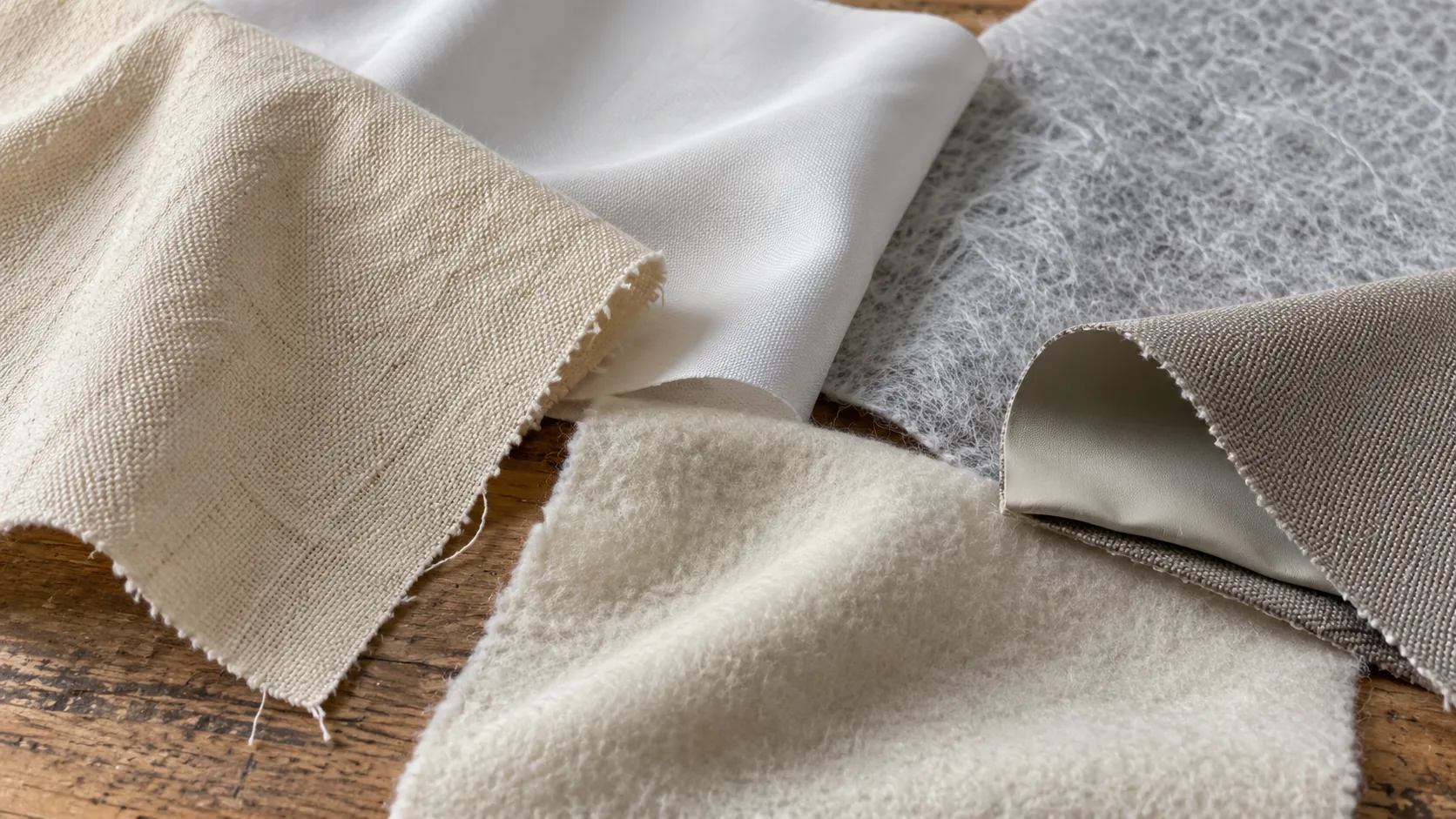
Cotton, polyester, nonwoven polypropylene, brushed fabrics, and coated constructions are possible choices. Compare actual samples rather than ranking these categories as universally softer, cleaner, or more protective.
| Material description | Details to request | Questions for the actual sample |
|---|---|---|
| Cotton, woven or knitted | Fiber composition, yarn construction, weight, finish, and color reference | Does the contact face leave lint, transfer color, or change after the proposed care process? |
| Polyester, woven or knitted | Fiber composition, filament or spun-yarn construction, weight, and finish | Is the surface suitable for the product finish, and does the chosen print method work on it? |
| Nonwoven polypropylene | Polymer identity, basis weight, bonding method, and edge construction | Do edges shed or tear during the intended handling, and is the pouch suitable for the planned reuse? |
| Flannel or another brushed fabric | Fiber content, base construction, nap, and finishing | Does the brushed face leave fibers or snag hardware? How does it change after care? |
| Felt | Fiber content, felt-making method, thickness, and surface finish | Are the contact face, edges, and bulk suitable for the product and closure? |
| Coated or laminated textile | Base fabric, layer material, layer position, and intended function | Which face touches the product? Does the finished pouch support the stated claim? |
INDA’s explanation of nonwovens describes bonded fiber or filament structures made without weaving or knitting. It also notes that nonwovens can range from limited-life products to durable fabrics. “Nonwoven” therefore leaves both material identity and intended life unresolved.
For a cotton option, the cotton bag material guide helps separate fiber identity from weave and finishing. For a synthetic option, compare the construction fields in the polyester bag material guide. Keep those material descriptions tied to the swatch being quoted.
Felt and flannel also need separate descriptions. Flannel has a brushed surface; felt describes a different fabric-making route. The felt fabric guide explains that distinction. A plush appearance alone cannot establish low lint or suitability for a delicate finish.
Ask suppliers to record fiber names and percentages for purchasing and repeat orders. This is a procurement recommendation, not a statement that every dust bag requires a US fiber-content label. FTC guidance lists product-specific exclusions, including several bags and textiles used in handbags or luggage. Check the actual product, material, and claims before deciding which labeling rules apply.
How Should a Dust Bag Fit the Product?

Derive the pouch size from the product as it will be stored. A small, medium, or large label does not describe the usable opening or tell you whether hardware will catch during insertion.
- Measure the product’s maximum stored length, height, and depth. Include handles, protruding hardware, and the intended strap arrangement.
- Choose the insertion orientation and try it with the actual product. A structured handbag and a folded accessory need different allowances.
- Specify the usable finished opening. Drawcord channels, flaps, and seam construction can affect access.
- Add enough clearance for insertion and removal without forcing the product or dragging vulnerable surfaces across seams. Check movement during normal handling rather than assuming that every loose fit causes damage.
- Record finished usable dimensions, measurement points, measurement state, and project-specific tolerances. For a flat pouch, explain how flat width and length relate to its three-dimensional fit.
Keep the nominal dimensions, allowed tolerance, and physical reference separate. A sample can show acceptable appearance and handling; it cannot replace written measurement requirements. No single clearance or tolerance suits every product.
Inspect contact around the faces, edges, corners, base, opening, and hardware. A smooth central panel leaves the drawcord channel or an exposed seam unchecked. Record any contact point that needs a different seam position or construction.
Which Closures, Seams, and Logo Methods Matter?
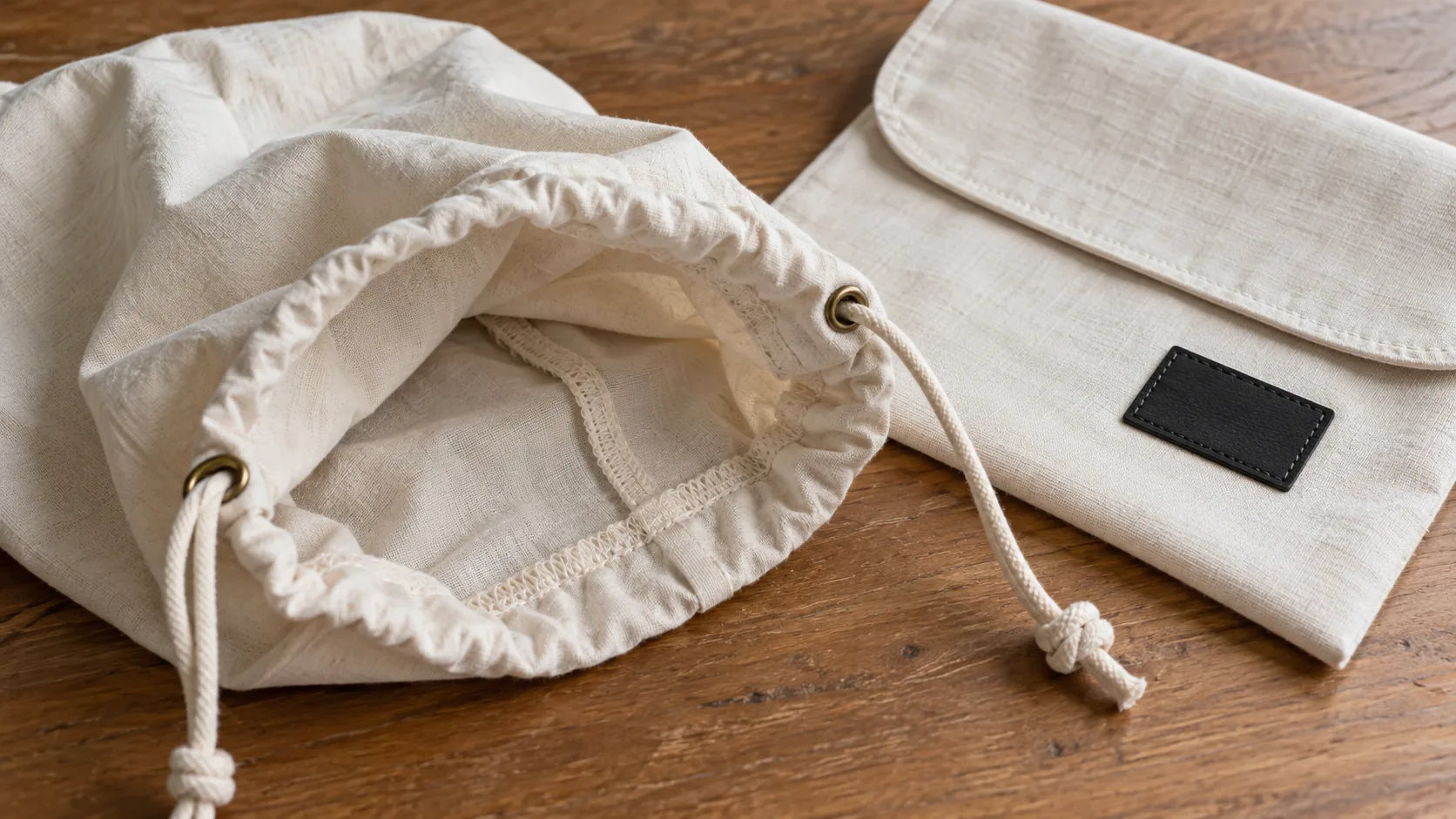
Closure choice affects access, coverage, and handling. A drawcord gathers the opening; a flap overlaps it; an open top leaves access unobstructed. Try the finished design with the product inside to see whether the opening stays covered in the intended storage position.
For a drawcord, specify the channel, cord, exit points, end finishing, and any stopper. A stopper is a design option rather than a required feature of every pouch. Check whether the cord or hardware rests against the stored product.
Interior seams and edges need inspection at the contact points identified during fitting. Bound, enclosed, or other finished seams may be options, but approval should depend on the actual edge, fabric, and product finish. Do not reject or approve a construction solely by its seam name.
Screen printing, heat transfer, and embroidery need trials on the selected fabric. Check location, color, attachment or adhesion, and any change to the contact face. Outer-face placement can keep the visible logo away from the product, but embroidery backing or a transfer may still affect the reverse. Specify which surfaces must remain clear and inspect the finished sample after any agreed care process.
What Should Brands Specify Before Sampling?
An RFQ describing only “cotton dust bag with logo” leaves size, construction, and contact requirements open. Use the checklist below to record the decisions already made and identify questions still needing a sample.
| RFQ item | What to record |
|---|---|
| Product and use | Product reference, stored shape, reuse plans, and storage versus presentation needs |
| Finished size | Usable dimensions, opening, insertion orientation, measurement method, and agreed tolerances |
| Material | Supplier material code, composition, construction, weight, finish, and confirmed swatch reference |
| Contact face and color | Which face touches the product, color reference, and concerns about lint, rubbing, or dye transfer |
| Closure and seams | Cord or flap details, hardware, edge finishing, and contact-point requirements |
| Branding | Artwork version, method, position, size, color reference, and reverse-face requirements |
| Care | Proposed instructions and evidence that the complete pouch, including branding and closure, can tolerate them |
| Checks or testing | Sample identity, agreed method and conditions, acceptance criteria, and the claim each check addresses |
| Packing and quantity | Folding, retail presentation, delivery packing, order quantities, and quoted inclusions |
| Approval reference | Sample ID, specification version, approval date, retained reference, and unresolved items |
Use the material code to connect the quote, swatch, and sample. Where a drawing shows a seam or logo position, refer to the same controlled specification instead of maintaining conflicting descriptions.
Care instructions here are a recommended purchasing field. The rule for textile apparel should not be treated as an automatic legal requirement for a dust pouch.
To discuss sampling with a custom bag manufacturer, provide the product reference, fit requirements, material options, artwork, and quantity. Mark unresolved choices so the sample request makes clear what still needs approval.
How Should a Dust Bag Sample Be Approved?
Use the actual product for fitting and contact checks. A swatch can support material selection, but it cannot show how a finished opening, seam, or logo backing behaves around the product.
| Check | What to observe or document |
|---|---|
| Fit and coverage | Insertion and removal, stored shape, closure position, and exposed areas |
| Contact points | Seams, corners, channel, cord, hardware, and branding reverse against vulnerable surfaces |
| Loose fibers and color transfer | Visible transfer during agreed screening; suitable tests if the decision requires measured evidence |
| Closure and edges | Operation under intended handling, fraying, snagging, and any loss of coverage |
| Branding and care | Artwork, position, attachment or adhesion, and changes after the proposed care process |
| Storage exposure | Product and pouch condition before and after agreed representative storage |
| Odor or other unexpected changes | The observation, sample identity, timing, and conditions; investigate without inferring a cause from smell alone |
A cloth-rubbing check can reveal visible lint or transfer during screening. It does not establish formal colorfastness or prove there will be no transfer during long storage. If a test report supports approval, match it to the current material or sample, method and edition, date, conditions, measured endpoint, and result. Complete paperwork still needs checks for authenticity and applicability.
Retain the approved sample as a reference for appearance, feel, and assembly. Future lots need their own agreed checks; the reference sample does not guarantee their conformity. If the material source, finish, print, or closure changes, identify which fit, contact, care, or test evidence needs reviewing. Reopen the affected checks rather than assuming either that nothing changed or that every check must be repeated.
Frequently Asked Questions
What is a dust bag used for?
A dust bag covers handbags, shoes, and accessories during storage or presentation. It provides a separation layer whose suitability depends on the product, fabric, and construction. It can sit inside shipping packaging, but it does not replace the packaging needed for impact or compression protection.
Can the same dust bag fit shoes and handbags?
Possibly, if both products pass the finished fit and contact checks. Compare stored dimensions, opening requirements, hardware, soles, and vulnerable finishes. Separate shoe pouches may be preferable where shoes would otherwise contact each other.
Is cotton or nonwoven better for a dust bag?
Compare the specified samples against reuse plans, product finish, cost, and care needs. Cotton leaves weave, weight, and finishing unresolved; nonwoven leaves fiber or polymer identity, bonding, and basis weight unresolved. Neither name establishes suitable protection by itself.
Should a dust bag be washed?
Follow the pouch maker’s instructions and clean it when needed. Check whether the complete pouch, including print, embroidery, coating, and closure, allows washing. Let it dry fully before putting it around the product again. Avoid inventing a washing schedule from the fabric name.
Are dust bags waterproof or mold-proof?
The name establishes neither property. Water resistance needs evidence for the complete pouch under stated conditions, including its seams and opening. Mold risk also depends on the stored product and environment. Keep the product and pouch clean and fully dry, and follow the product maker’s storage guidance.