
A lambskin label gives you a starting point for material selection. A bag design still needs a defined finish, thickness, construction, and care plan.
Lambskin leather refers to tanned skin from a young sheep. In a purchase specification, confirm the supplier’s source claim and whether wool is retained. The name alone does not establish softness, thickness, durability, waterproofness, or suitability for a particular bag panel.
For buyers comparing “lamb skin leather” with other materials, the useful next step is to examine the actual swatch and the bag it will become. The checks below separate material identity, design requirements, and sample approval.
What Is Lambskin Leather?
The Museum of Fine Arts, Boston’s CAMEO materials database describes lambskin as tanned skin from a young sheep and also notes fleece-retained preparations. That provides a definition without making the name a performance grade.
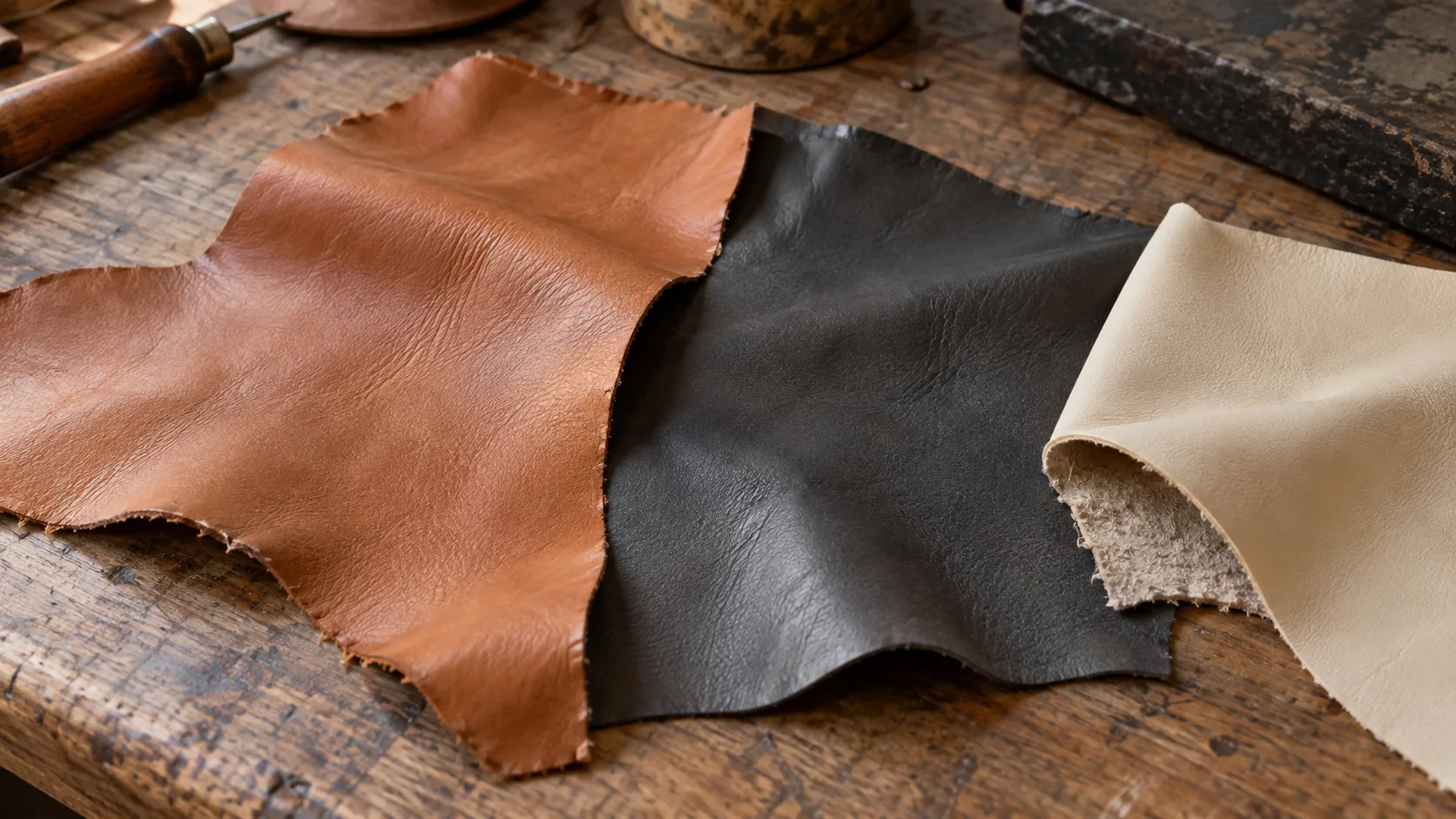
Ask the supplier to identify the animal source, leather layer, tanning process, surface finish, backing, and material code. If an age or origin claim forms part of the product description, request evidence for that claim. A smooth surface or soft hand cannot confirm it.
Leather also needs to be distinguished from material made to imitate it. Leather Naturally’s labelling guide describes leather in terms of animal skin or hide whose fibrous structure remains substantially intact after tanning. A coated textile with a leather-like appearance needs its own composition description.
For a synthetic alternative, our PU leather bag material guide explains why the coating and supporting material should be recorded separately. Keep the supplier’s stated name alongside those fields so quotations refer to an identifiable material.
Is Lambskin the Same as Sheepskin or Sheep Leather?
Lambskin points to a young sheep; sheepskin is a broader source term. A seller’s use of either word may leave the age claim, wool status, and finished construction unclear. Confirm those details rather than assuming that two listings describe the same material.
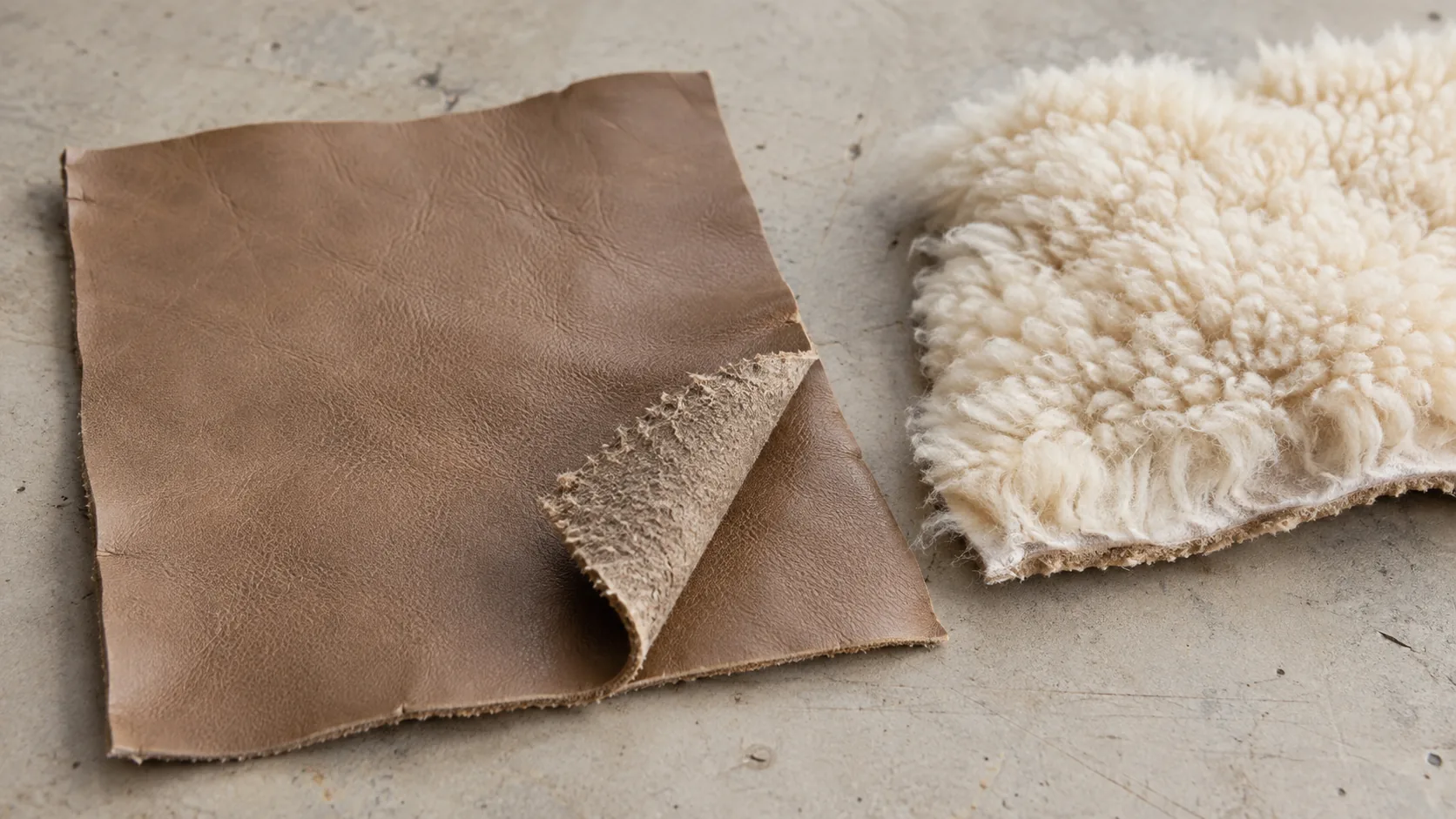
The CAMEO reference includes a fleece-retained form under lambskin. A smooth bag leather and a wool-on lining therefore need separate descriptions even when the supplier uses related animal terms. Specify which face will be visible, whether wool remains attached, and what the reverse or backing contains.
You do not need to settle every seller’s vocabulary before ordering. You do need an answer to these questions:
- What animal source does the supplier declare, and what supports any age claim?
- Is the material hair-off or wool-on?
- Is it leather, a coated textile, or another composite construction?
- Which material code and sample will the order reference?
For products sold in the United States, the FTC’s Guides for Select Leather and Imitation Leather Products cover handbags and similar articles. They address misleading material descriptions, imitation-leather disclosures, and backing disclosures in specified circumstances. Check the actual product and representation against those provisions before using a supplier’s wording on a label.
Which Variables Change How Lambskin Performs?
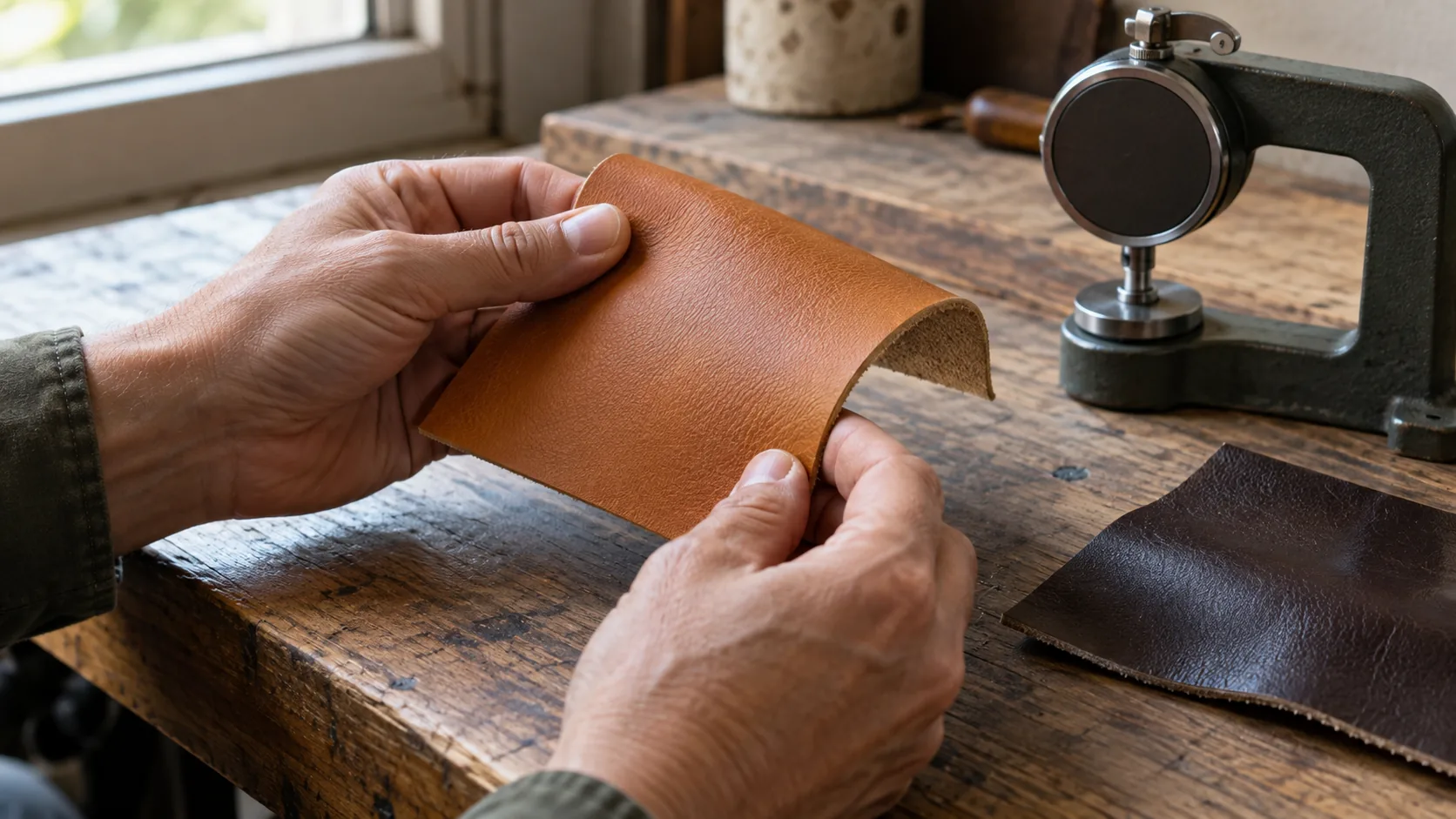
Two materials sold as lambskin can have different thicknesses, surface treatments, backings, and handling characteristics. Record those differences before asking either one to meet the same bag specification.
| Variable | What to request | What to check on the sample |
|---|---|---|
| Thickness | Range, measurement basis, and agreed tolerance for each part | Fit at folds, seams, edges, and the complete layer stack |
| Temper or hand | Physical reference for flexibility and firmness | Drape and shape recovery in the proposed construction |
| Leather layer and surface treatment | Supplier description of the layer, correction, or embossing | Agreement between the declared construction and retained sample |
| Tanning and later processing | Declared process and any project restrictions | Documents and results relevant to the selected material |
| Finish and topcoat | Finish description and material code | Appearance, flexing, rubbing, and colour transfer under agreed conditions |
| Backing or interlining | Composition, attachment, and intended location | Whether assembly changes hand, thickness, or movement |
| Colour and usable area | Colour reference, usable dimensions, and matching rules | Whether the required panels can be cut and matched |
Temper describes how a leather handles, including flexibility and firmness. Agree on a reference you can compare physically; a word such as “soft” leaves room for different interpretations.
A tanning or finish name also needs context. Request the actual process instead of assuming that lambskin is chrome-tanned. The leather production guide explains where tanning and finishing fit into making the material.
Embossed patterns describe an appearance. If a quotation calls a surface Saffiano, confirm the substrate and finish separately. The pattern name does not provide an abrasion, scratch, or water test result.
How Does Lambskin Compare With Cowhide for Bags?
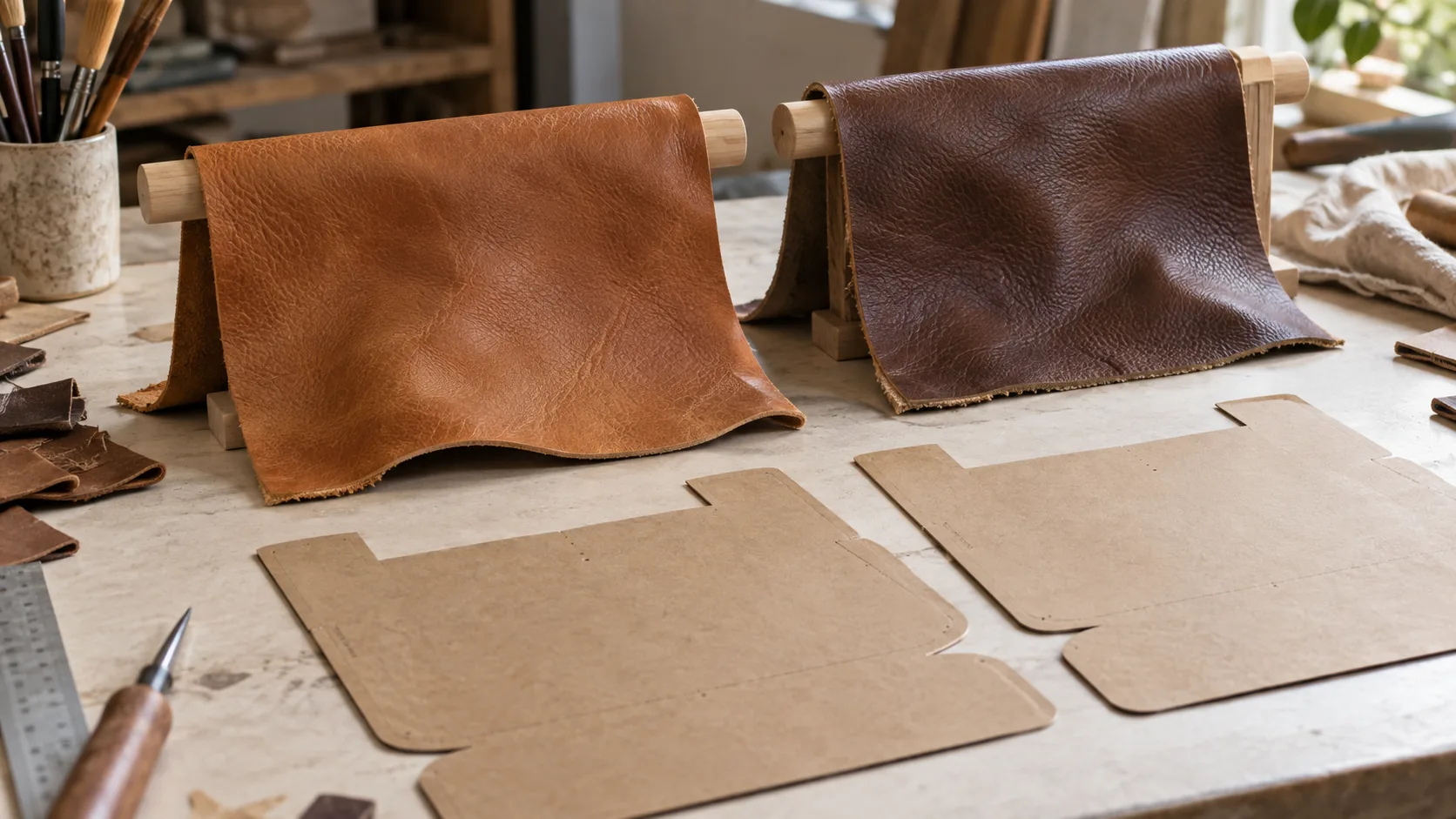
Compare actual samples against the same design requirement. The animal name does not establish which material will hold a shape, tolerate rubbing, or work at a strap attachment.
| Design requirement | Check for either lambskin or cowhide |
|---|---|
| Soft, folding body | Drape, thickness, fold behaviour, and the effect of lining or interlining |
| Self-supporting shape | Shape retention in the assembled bag and any support layers needed |
| Large uninterrupted panel | Usable dimensions of the supplied pieces and the cutting plan |
| Consistent appearance | Colour, surface and grain matching across adjacent panels |
| Abrasion exposure | Results for the actual finish, plus checks at edges and contact zones |
| Loaded straps and anchors | Complete attachment construction, reinforcement, and finished-bag checks |
| Care expectations | Instructions suitable for the finish, backing, hardware, and intended use |
A supplier’s available piece sizes may affect whether a front panel can be cut in one piece. Ask for usable dimensions against your pattern rather than converting one catalogue’s hide sizes into a universal lambskin-versus-cowhide rule.
Our cowhide leather guide covers the other source term. For a purchasing decision, ask both suppliers for the same fields and compare samples in the same construction. Keep cost, appearance, and performance as separate decisions.
Where Can Lambskin Work in a Bag?
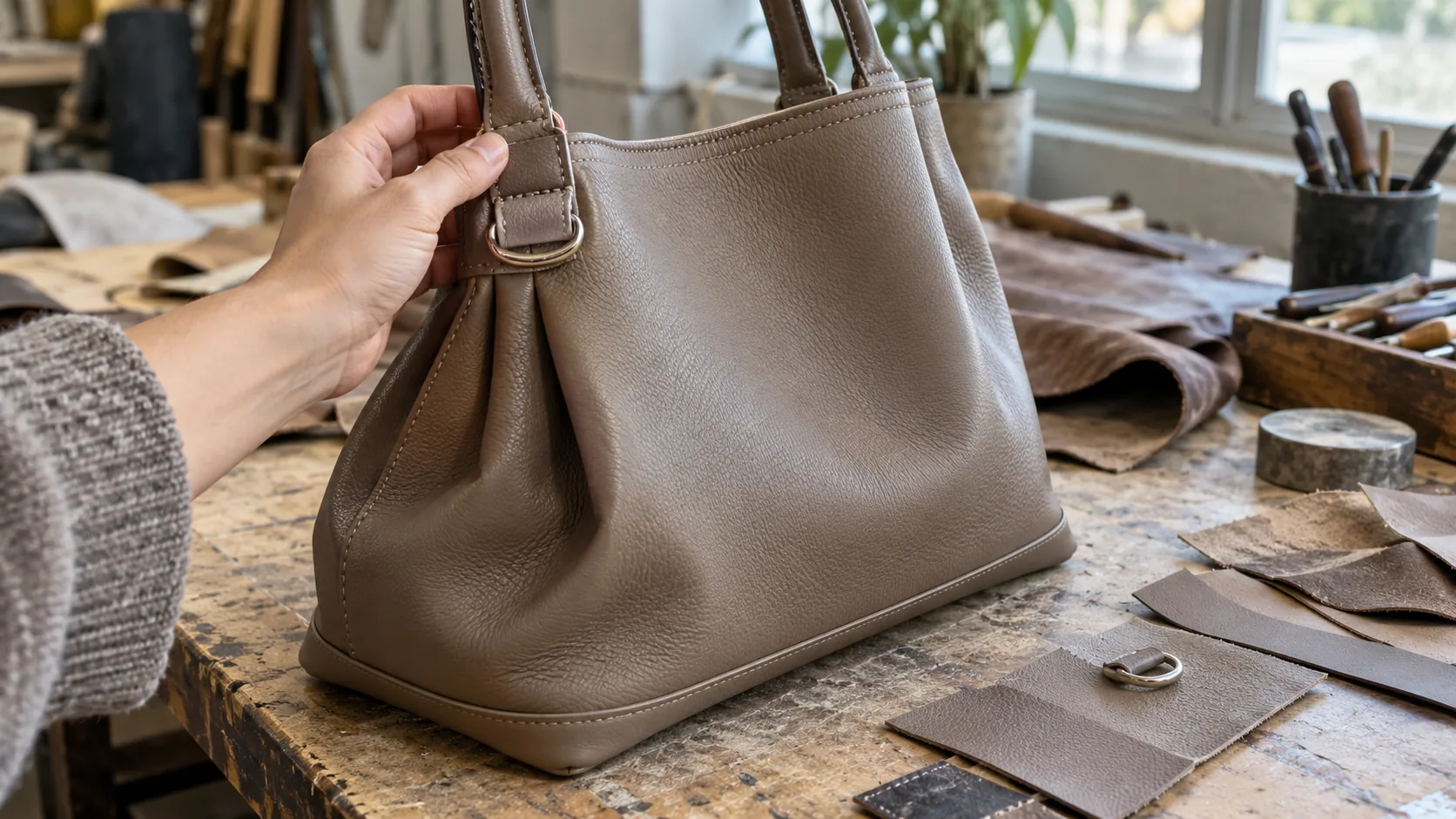
Assign the material to a bag zone only after defining what that zone must do. A swatch that drapes well on a table still needs approval at a seam, fold, or loaded attachment.
| Bag zone | Design question | Sample check |
|---|---|---|
| Unstructured body | Does the design need a loose drape or a stable silhouette? | Assemble with the proposed lining and compare the loaded shape |
| Small goods and pockets | Does the material fit the available space and edge construction? | Insert the intended cards or contents; inspect seams and edges |
| Piping, gussets, and folds | Can the selected construction fold as intended? | Inspect the folded sample for finish changes, bulk, and movement |
| Leather lining | Is the finish suitable for contact with the contents? | Check rubbing and colour transfer against the expected contact materials |
| Base | What support and wear exposure will the base have? | Inspect the complete base, support layers, seams, and loaded shape |
| Straps and anchors | How will force move through the attachment? | Check webbing or leather, hardware, sewing, reinforcement, and body together |
| Edges and hardware contact | Where will repeated contact occur? | Inspect the actual edge treatment and surrounding finish |
These are approval questions, not a universal permission list. If a zone fails the agreed requirement, review the material, reinforcement, or construction and build another sample. Record which change was approved.
What Should Buyers Specify Before Sampling?
Give each quotation a material reference and a defined construction. The following fields help separate supplier terminology from what you can inspect and reorder.
| Field | Record before sampling |
|---|---|
| Identity | Supplier-stated name, animal source, any age claim, wool status, and supporting declaration |
| Construction | Leather layer, surface treatment, finish, coating and backing where present |
| Traceability | Supplier material code, lot reference, and sample identifier |
| Thickness and hand | Agreed range, measurement basis, tolerance, and physical hand reference |
| Colour | Physical colour reference, comparison lighting, and panel-matching rules |
| Cutting | Pattern requirements, usable piece dimensions, and permitted visible variation |
| Bag zones | Which parts use the leather and which use other materials or support layers |
| Evidence | Report object, method and edition, conditions, result, and acceptance basis |
| Care and claims | Proposed care instructions and evidence for advertised performance |
| Approval | Dated swatch and finished-sample records, plus the procedure for substitutions |
Material identity, a confirmed swatch, and a test report serve different purposes. A swatch establishes the agreed reference; a report covers its identified object and conditions. Neither one automatically establishes the life of the complete bag.
When discussing a project with a custom bag manufacturer, provide this information with the drawing and intended contents. It gives the supplier a defined basis for estimating the construction and proposing a sample.
How Should a Lambskin Bag Sample Be Approved?
Approve the material reference first, then inspect the finished bag. Retain records for both stages so a later change in appearance or performance can be investigated.
- Compare the material code, lot, colour, thickness, finish, backing, and hand with the agreed reference.
- Inspect adjacent panels and seams under the agreed lighting. Record visible variations and the acceptance decision.
- Operate folds, gussets, closures, and handles under the conditions defined for the project. Inspect the finish and construction afterward.
- Check edges, hardware contact and attachment layers. Use representative contents for the agreed finished-bag checks.
- Review colour-transfer evidence for the actual contact surfaces and care instructions for the complete construction.
- Retain the swatch, sample record, reports, and approved changes under matching identifiers.
For each report, record the tested material or bag, method, conditioning, direction where relevant, endpoint, and acceptance basis. Abrasion, flexing, colour transfer, and water resistance are separate questions. One “pass” cannot stand for all of them.
Set criteria before testing. The project needs conditions that reflect its intended use; this guide supplies no universal cycle count, load, or thickness that certifies every lambskin bag.
Frequently Asked Questions
Is lambskin leather real leather, and how can I check it?
Lambskin leather refers to tanned sheep skin, but a label alone does not verify the product. Request the supplier’s composition and traceability records. Touch, smell, grain appearance, and a water-drop test can be affected by finishes and backing; they should not decide an important identity dispute. Obtain independent verification suited to the actual material if needed.
Is lambskin leather softer or more durable than cowhide?
Compare the specified samples. Animal source alone does not fix hand or durability. Thickness, processing, finish, backing, and bag construction need to be considered against the same use requirement.
How do I care for a lambskin bag?
Follow the maker’s instructions for that finish and construction. Remove loose dust gently, support the bag during storage, and avoid soaking or direct heat when drying. Ask the maker before applying cleaners, oils, or conditioner. The Canadian Conservation Institute’s leather care guidance explains that water damage depends on processing and condition and that dressings can cause problems in heritage leather. Those conservation cautions do not replace a current bag’s own care instructions.
Is lambskin leather waterproof or scratch resistant?
The name establishes neither property. Ask what was tested, under which conditions, and whether the claim applies to a material surface or the complete bag. In the United States, FTC leather guides separately address waterproof and scratch-resistance representations; a finish name is not evidence for those claims.
What thickness of lambskin should I choose for a bag?
Specify a range for the intended part, then evaluate its folds, seams, support layers, and finished sample. There is no single thickness suitable for every body panel, lining, base, or strap. Keep the agreed measurement basis and tolerance with the material reference.
From Material Reference to Bag Sample
Send the supplier the drawing, intended contents, bag-zone requirements, and an identified lambskin swatch. Confirm the material description before sampling and retain the approved construction and reports for the order. If the material or support layers change, review the affected zones again before production.