
A leather swatch shows color and surface, but it hides the production decisions that determine thickness, temper, finish, and usable panel yield.
Leather is made by preserving and cleaning an animal hide or skin, tanning its collagen, then retanning, dyeing, fatliquoring, drying, and finishing it. The route changes with the raw material, tannage, equipment, and intended end use.
Understanding how leather is made helps a bag buyer separate animal source from processing choices and approve the material on evidence rather than a trade name.
What Is Leather Made From?
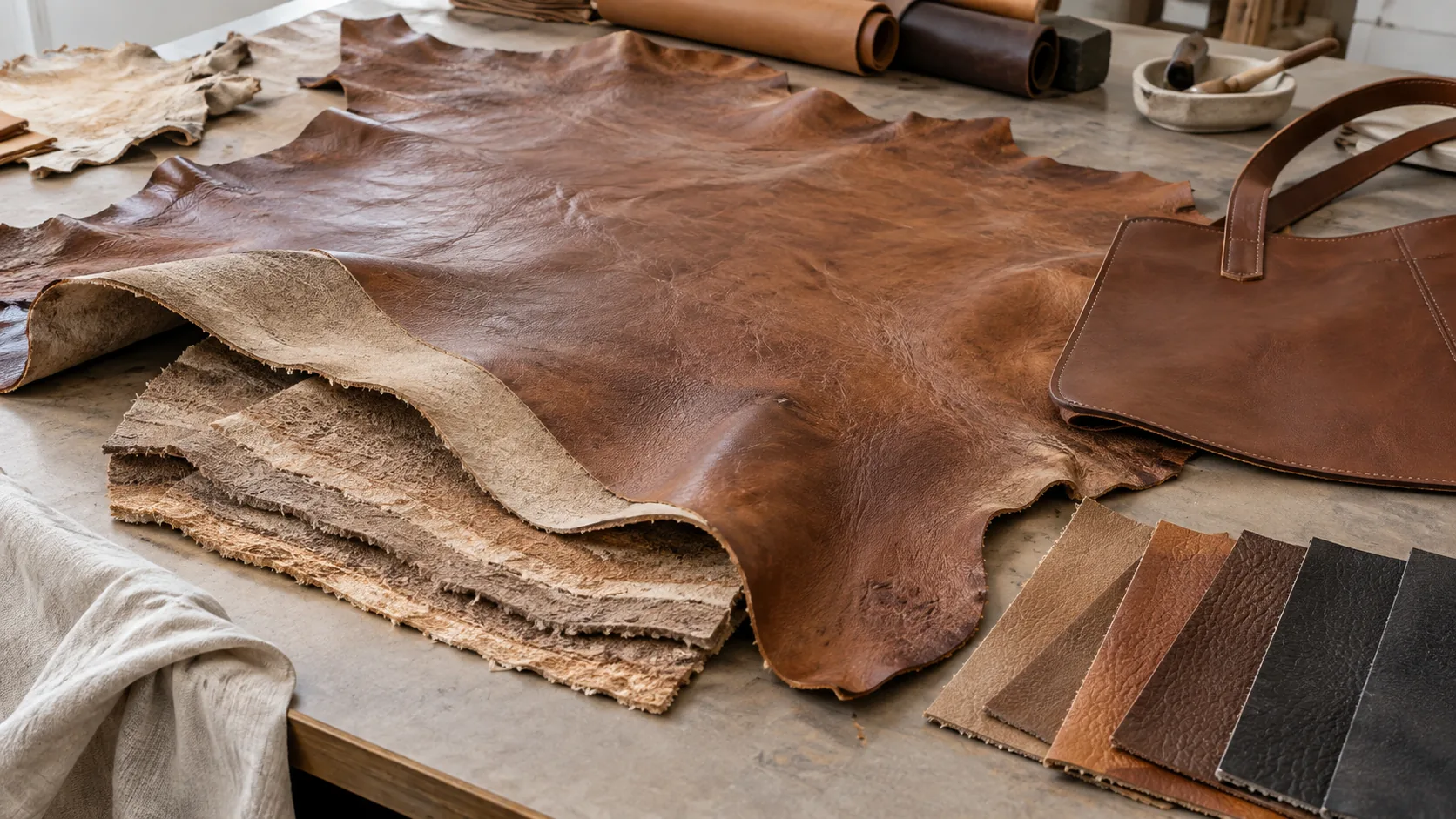
Leather begins as an animal hide or skin. Cattle, sheep, goats, and pigs are common sources, but the species name alone does not define the finished material.
The raw material supplies the collagen-fiber structure, size, shape, and natural marks. The tannery then makes separate decisions about layer, tannage, substance, color, temper, and surface finish. A cowhide can therefore produce more than one commercial material, and two cowhide leathers can behave differently in the same bag pattern.
Layer also matters. Splitting can separate the grain-bearing upper portion from lower split material. Those layers should be identified separately rather than compressed into a broad label such as “genuine leather.” The current ISO 15115:2019 catalog confirms that the leather industry has a dedicated vocabulary standard; the 2019 edition remains published and was confirmed in 2025, while a replacement edition is still under development.
Natural marks, shape, and usable area vary from hide to hide. A small swatch can approve color and surface direction, but it cannot represent every part of a full hide or predict how many large, clean panels a production lot will yield.
Animal source should therefore be recorded as one field, not used as a shortcut for quality, durability, softness, or price.
How Are Hides Preserved and Prepared?
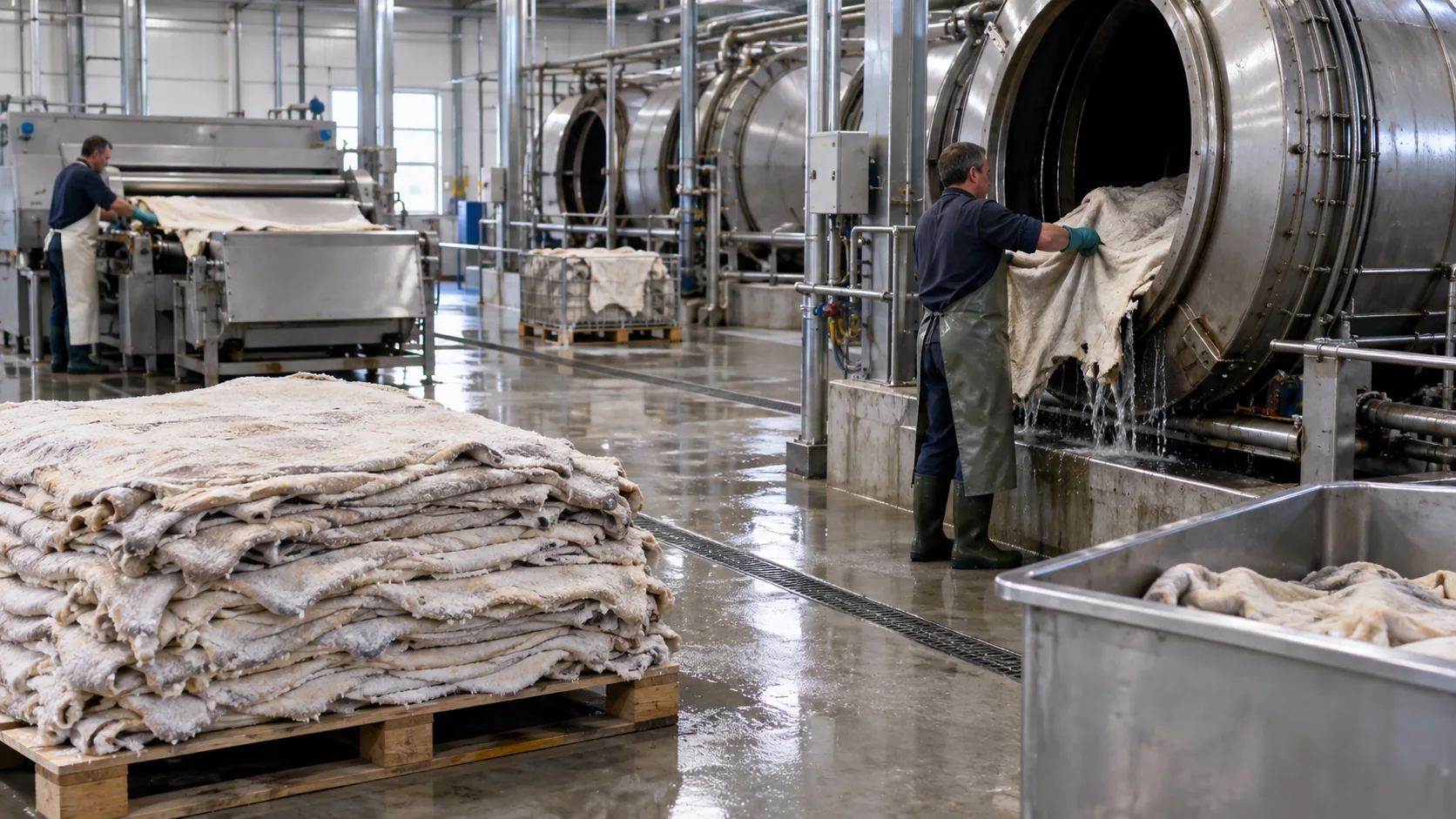
Raw hides must be preserved during transport and storage, then cleaned and prepared before tanning. The exact sequence varies by material, tannery, and intended leather.
The Leather Naturally process fact sheet describes salting and refrigerated shipment as preservation routes. At the tannery, beamhouse work removes preserving salt, dirt, flesh, hair, or wool and prepares the fiber structure for tanning.
Common high-level operations include:
- soaking to rehydrate and wash the material;
- fleshing to remove remaining tissue from the flesh side;
- unhairing and liming where the intended leather requires them;
- deliming, bating, or pickling when required by the chosen process.
This list is a map, not a universal recipe. A buyer does not need a tannery’s chemical formula to approve bag material, but the buyer should know what stage the supplied sample represents. A pelt, wet-blue side, crust, and finished leather are different approval objects.
Preparation quality also affects what remains usable. Damage or deterioration in the raw material cannot be treated as a surface-color issue later. Lot identity and representative sampling matter before the material reaches the cutting table.
What Does Tanning Do?
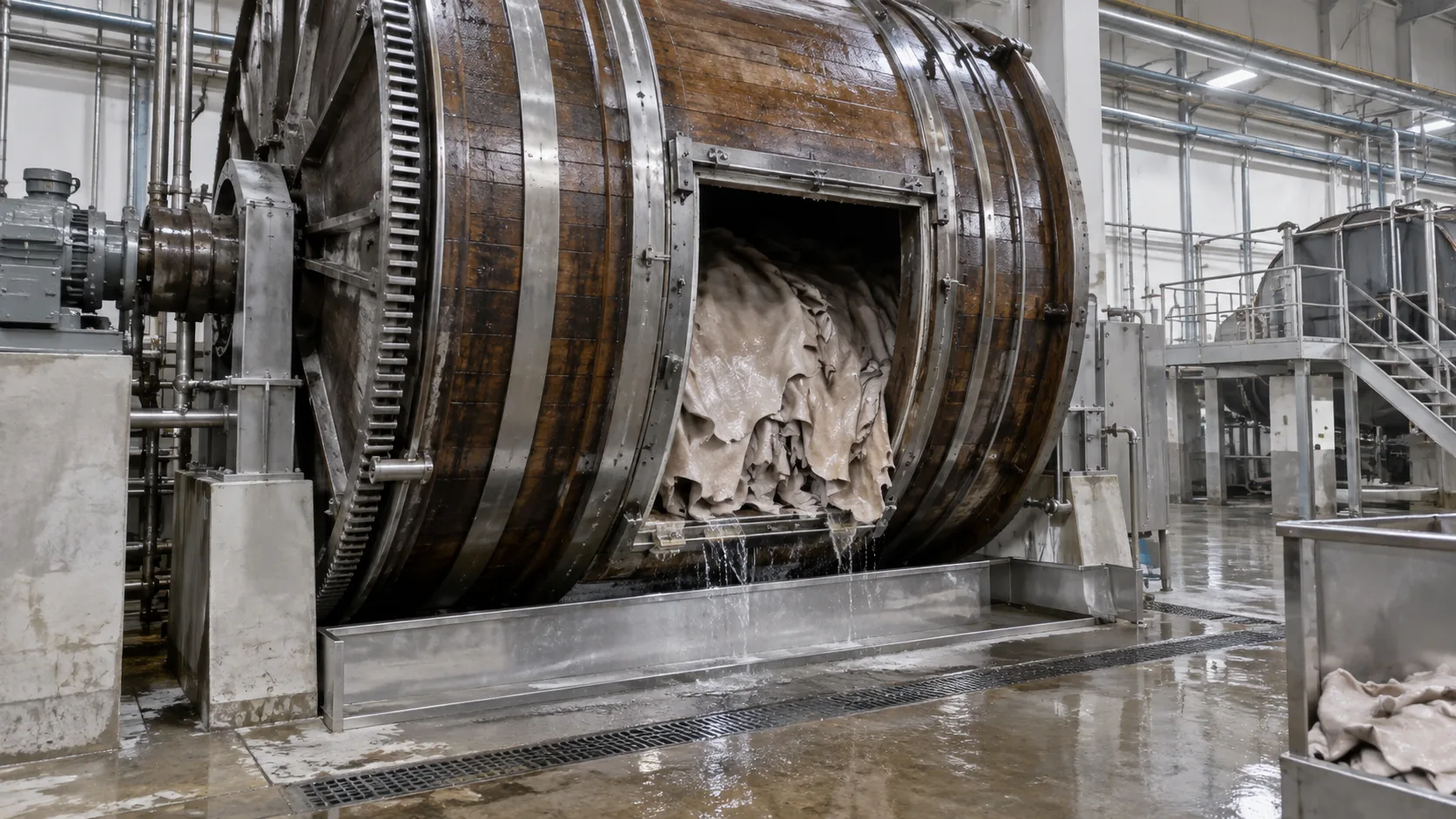
Tanning stabilizes the hide’s protein structure so the prepared hide becomes leather. It does not, by itself, define the final appearance or prove a quality grade.
Major tannage families include chrome, vegetable, chrome-free, and combination systems. They use different tanning agents and create different intermediate materials, but later retanning, dyeing, fatliquoring, drying, and finishing still shape the leather a bag buyer receives.
Industry terminology helps identify intermediate states:
- Wet blue is leather in a wet condition after chrome tanning.
- Wet white is a light-colored intermediate leather produced with specified non-chrome tanning systems.
- Vegetable-tanned leather uses vegetable tannins as part of its tanning system.
The Leather Working Group terminology guide lists wet-blue, wet-white, crust, grain split, and flesh split as distinct terms. These names identify material states or structures. They do not establish abrasion life, water resistance, finished-bag strength, or suitability for a particular design.
Avoid selecting a tannage from a simple “better versus worse” ranking. Define the bag’s structure, appearance, feel, care expectations, target market, and evidence requirements, then compare actual material codes and representative samples.
What Happens After Tanning?
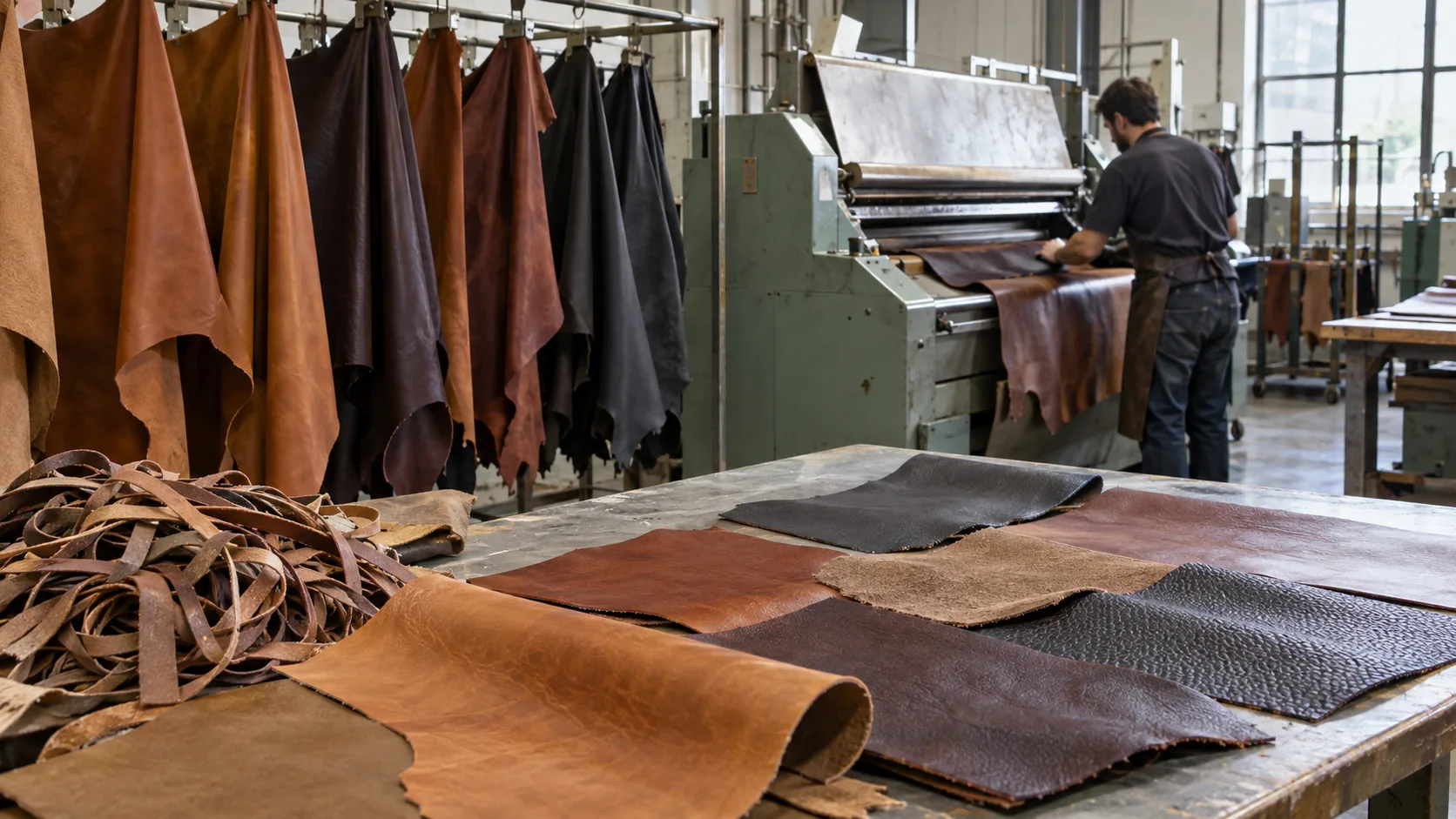
After the first tannage, further mechanical and chemical operations establish much of the leather’s thickness, color, feel, and surface.
The precise route is product-specific, but buyers will commonly encounter these stages:
| Stage | What changes | What a bag buyer should record |
|---|---|---|
| Splitting and shaving | Layer and substance are adjusted | Layer identity, thickness or substance, measurement unit |
| Retanning | The material is prepared for a target character and later operations | Tannage description and supplier material code |
| Dyeing | Color is introduced into the leather | Color standard, depth or appearance requirement, approved swatch |
| Fatliquoring | Lubricating materials are introduced into the fiber structure | Required hand and temper on the confirmed sample |
| Drying and mechanical softening | Moisture is removed and physical character develops | Flatness, temper, surface condition, lot consistency |
| Finishing | Coatings, pigments, embossing, glazing, or other surface work may be applied | Finish system, gloss, texture, backing, care and claim evidence |
The Leather Panel self-training guide, prepared with IULTCS, SLTC, and UNIDO, provides a more technical treatment of these manufacturing stages and was updated in 2024.
“Crust” also has a specific place in the chain. Leather Working Group defines it as leather that has been tanned, fatliquored, and dried before finishing. That distinction explains why two materials that share an animal source and basic tannage can still receive different colors, textures, coatings, and final handling characteristics.
Processing words describe operations. “Drum dyed,” “embossed,” “buffed,” or “finished” does not function as a complete performance grade. Each term needs an actual material reference and a defined acceptance basis.
How Does the Process Affect Leather Used in Bags?
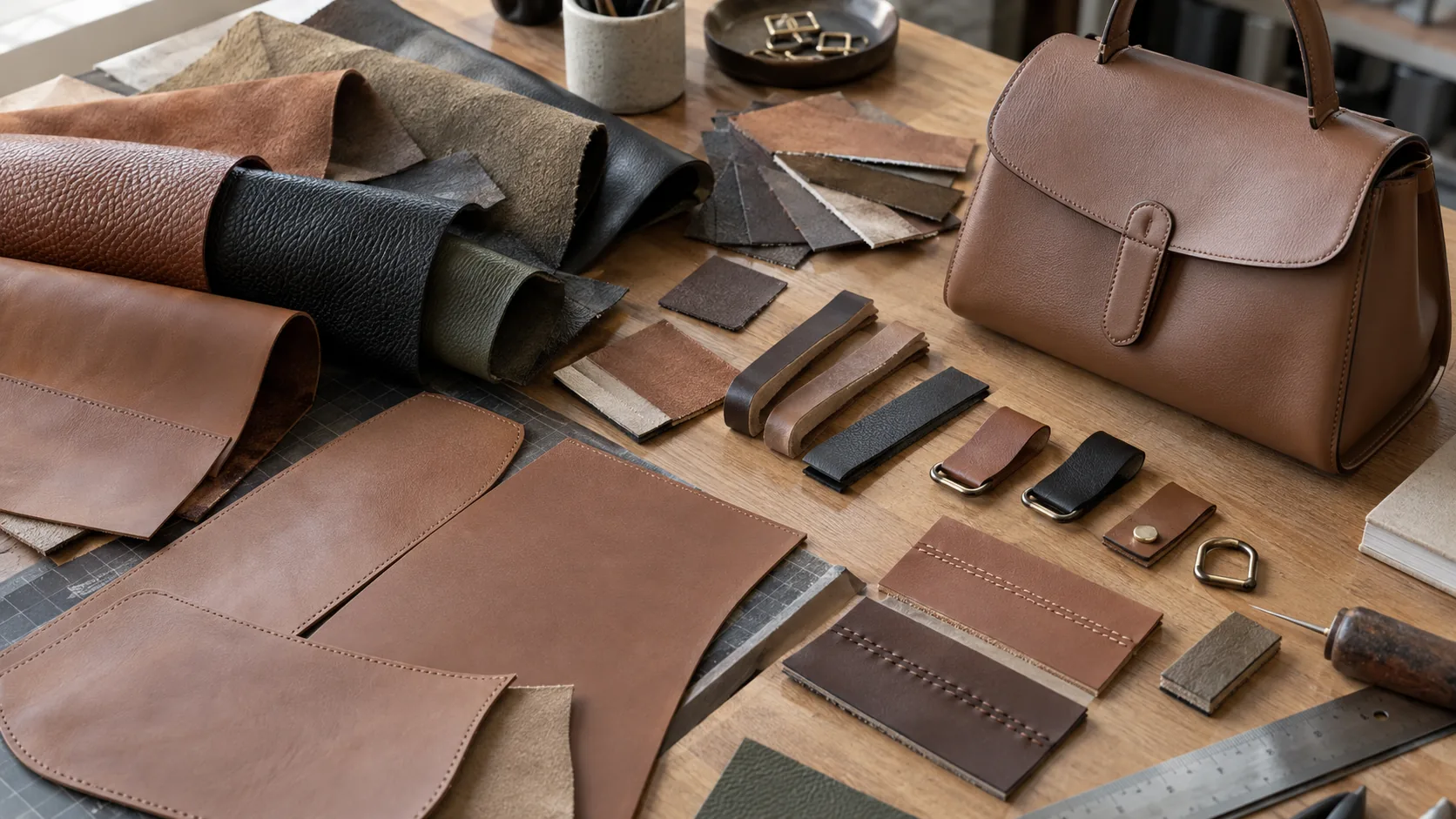
The process affects a bag through the material that reaches cutting and sewing: its substance, temper, surface, variation, edge behavior, and compatibility with the construction.
Substance influences fold bulk, seam stacks, skiving, turned edges, and the reinforcement needed behind hardware. Temper affects whether a panel holds shape or collapses. The finish affects appearance, touch, care, color transfer risk, and compatibility with edge paint, adhesives, printing, or embossing. None of these outcomes can be confirmed from the word “leather” alone.
Hide geometry creates another constraint. Unlike a continuous roll of woven canvas bag material, a hide has an irregular outline and variable natural marks. Large front or back panels may need different placement rules from straps, tabs, trim, or small pocket parts. Defect tolerance and usable-area criteria therefore influence cutting yield and appearance consistency.
The material must also work as part of a sewn assembly. Needle size, stitch construction, seam allowance, skiving, lining, reinforcement, edge treatment, and hardware attachment all interact with the selected leather. The commercial backpack-production guide explains why construction decisions need approval on the assembled product rather than on loose material alone.
For a synthetic alternative, PU leather bag material requires a different specification. PU leather is a layered polymer-and-backing construction, not hide-derived leather, even when the surface is designed to look similar.
What Should Bag Buyers Verify Before Approval?
Material approval and finished-bag approval are separate gates. A swatch can establish a visual and tactile reference, but it cannot approve seams, edges, reinforcement, or hardware attachment.
Use four records:
- Material identity. Record the supplier-stated name, animal source, layer, tannage, substance and unit, finish, backing if present, material code, lot, and intended bag component.
- Representative approval samples. Review more than one small cutting when hide-to-hide variation, natural marks, or large panel yield affects the project. Keep the approved color, grain, gloss, and temper reference under a controlled version.
- Evidence for specific claims. File each test report with the tested object, method and edition, conditioning, direction where relevant, endpoint, and acceptance basis. A tear result and a color-transfer result answer different questions.
- Finished-bag sample. Approve panel placement, seams, turned or painted edges, lining attachment, reinforcement, branding, hardware attachment, and the completed bag’s defined use checks.
Industry insight: Approved cards `LEATH-01`, `LEATH-04`, `LEATH-07`, `LEATH-08`, and `LTYPE-01` keep the material name, process terms, confirmed sample, and test reports as separate evidence layers. No one layer replaces the others.
If a supplier presents a Leather Working Group certificate, check the facility, rating, validity period, and scope against the current record. The LWG Leather Manufacturer Standard assesses manufacturing facilities across defined areas such as traceability and chemical management. It does not replace the material specification or prove the performance of the finished bag.
Frequently Asked Questions
Is leather just dried animal hide?
No. Drying or preserving a hide does not complete the leather-making process. Tanning stabilizes the prepared hide or skin; retanning, dyeing, fatliquoring, drying, and finishing then create the commercial material supplied for cutting and sewing.
What does tanning change?
Tanning stabilizes the hide’s collagen structure. The chosen tannage also affects the intermediate material and later processing, but it does not independently determine the final color, surface, substance, temper, or performance of a finished bag.
Is chrome-tanned or vegetable-tanned leather better for bags?
Neither is universally better. Compare the exact material specification and sample against the intended bag, finish, construction, care, target market, and evidence requirements. Do not turn the tannage name into a quality rank.
Does “genuine leather” identify a leather grade?
The phrase alone is not a complete purchasing specification. It omits the animal source, layer, substance, tannage, finish, backing, supplier code, and approved sample. Keep the supplier’s wording, then record those fields separately.
What is crust leather?
Crust is leather that has been tanned, fatliquored, and dried before finishing. Dyed crust has also been dyed. Because final finishing has not yet been applied, a crust reference should not be confused with the finished leather approved for the bag.
What should a buyer approve before leather bag production?
Approve the written material specification, representative physical samples, and any evidence required for specific claims. Then approve a finished bag sample for panel selection, seams, edges, lining, reinforcement, branding, and hardware attachment.
From Material Specification to Bag Sample
Send the material code, layer, substance, finish, color reference, panel-placement rules, acceptable variation, and evidence requirements with the bag drawing. Mark which details are approved on the leather sample and which still need confirmation on the finished bag.
A custom bag manufacturer can then review cutting, skiving, seams, edge treatment, reinforcement, lining, hardware, and branding against the same controlled material brief before bulk production.