
PEVA is a flexible plastic used in liners, pouches, covers, and other products that need a film-like surface. In material specifications, the name usually refers to the ethylene-vinyl acetate copolymer family. It does not tell you the exact grade, film thickness, additives, backing, joining method, or compliance status.
That distinction matters when you are sourcing bags. A PEVA film sample may look suitable on a desk but still crease, block, puncture, delaminate, or leak at a seam once it becomes part of a finished product. Treat “PEVA” as the material family at the start of the specification, then confirm the construction and evidence behind it.
What Is PEVA Material?
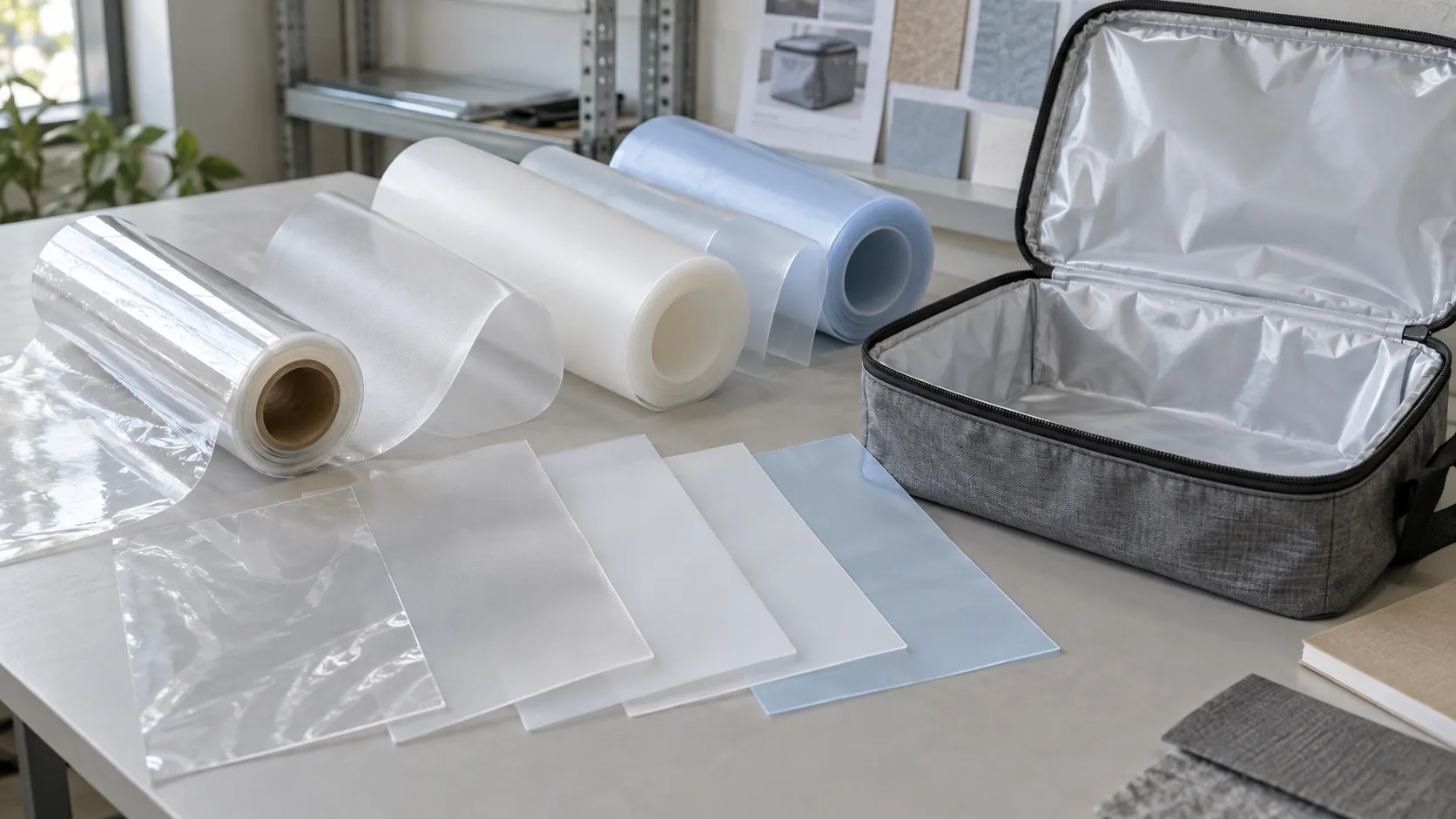
PEVA generally means poly(ethylene-vinyl acetate), an ethylene-vinyl acetate copolymer also described as EVA or EVAC in technical references. It is a thermoplastic material that can be processed into film, sheet, pellets, coatings, adhesives, or foam, depending on the grade and manufacturing route.
The useful part of the name is the polymer family. The ISO designation standard for EVAC materials distinguishes grades by fields such as vinyl acetate content, melt mass-flow rate, intended application, processing method, additives, colorants, and fillers. ISO also states that materials with the same designation do not necessarily deliver the same performance.
So a purchasing line that says only “PEVA liner” is incomplete. A workable description should identify the supplier product code or grade, physical form, thickness and tolerance, surface, color, backing, layer position, and intended joining method.
Is PEVA a Plastic, Film, or Fabric?
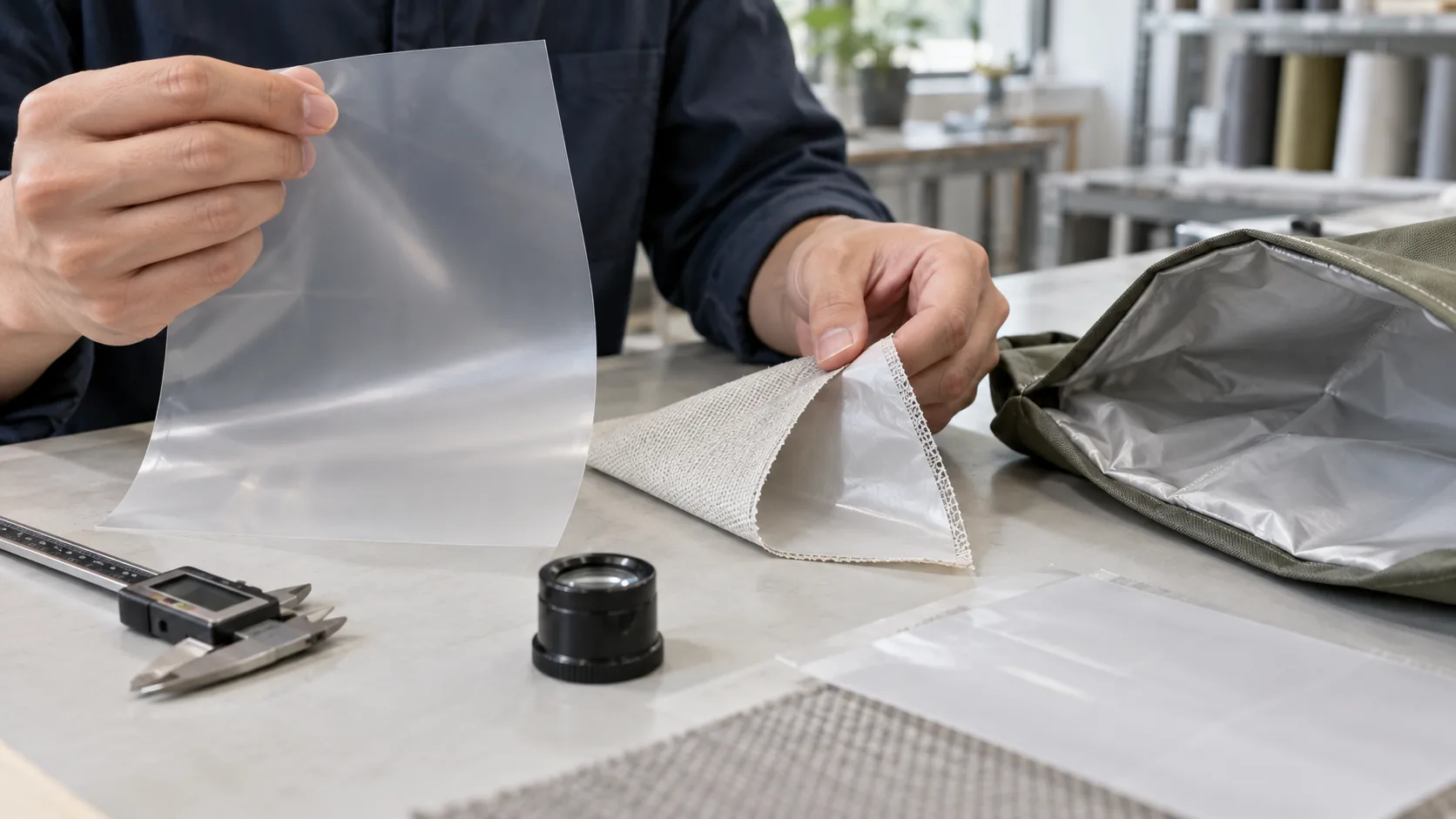
PEVA is a plastic polymer family. In a bag, however, the supplied component may be a free-standing film, a film laminated to textile, a coating, or a finished liner assembly. Those are different purchasing objects.
- Resin or compound: the formulated material before it is turned into film or another form.
- Film or sheet: a continuous layer with a specified thickness, finish, color, and surface behavior.
- Coated or laminated textile: a polymer layer combined with a carrier fabric. Adhesion, total thickness, and which side carries the film now matter.
- Finished liner: cut panels joined by sewing, heat welding, adhesive, or a combination. Folds, seams, zipper ends, and attachment points become part of performance.
This separation prevents a common comparison error. A free film and a textile-backed laminate can both be called PEVA, yet they will not have the same drape, tear path, edge behavior, or assembly method. Ask the supplier to name the form and layer structure rather than presenting PEVA as if it were one fabric.
Is PEVA the Same as EVA?
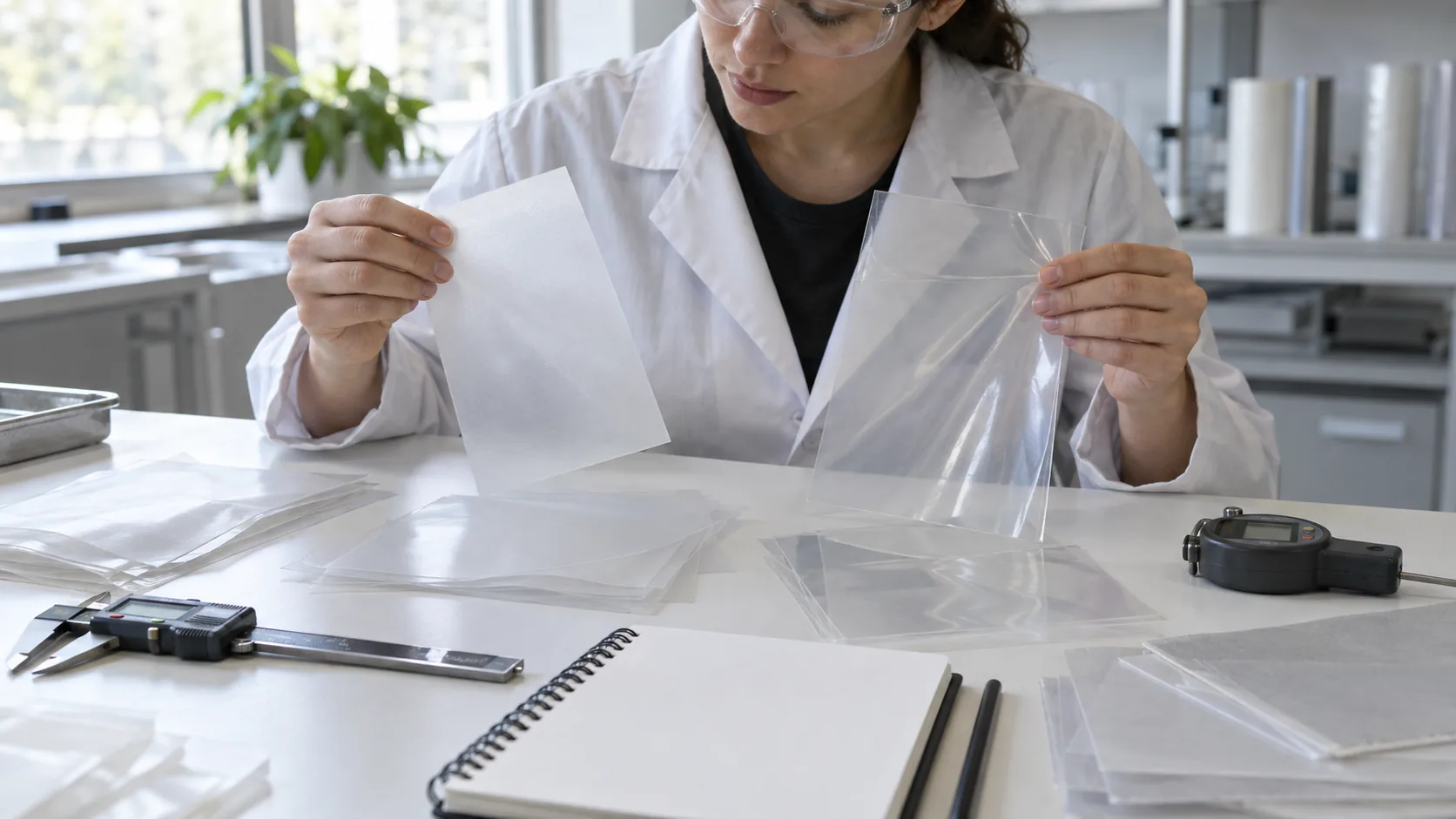
In technical usage, PEVA and EVA commonly point to the same ethylene-vinyl acetate copolymer family. The naming on commercial film quotations is less consistent. One supplier may use PEVA as another name for EVA film, while another may use it for a particular formulation or product line.
Do not try to resolve that ambiguity by the acronym alone. Match the quotation to a composition statement, supplier product code, and data sheet. Then confirm which reported properties belong to that exact grade and thickness.
Vinyl acetate content is one important grade variable, but it is not a complete performance forecast. ISO 21301-1 also treats flow behavior, processing route, intended use, additives, fillers, and colorants as specification information. For a buyer, the practical question is not “Which acronym is correct?” It is “Which controlled material will be used in the approved sample and production lot?”
PEVA vs PVC vs TPU: What Actually Changes?
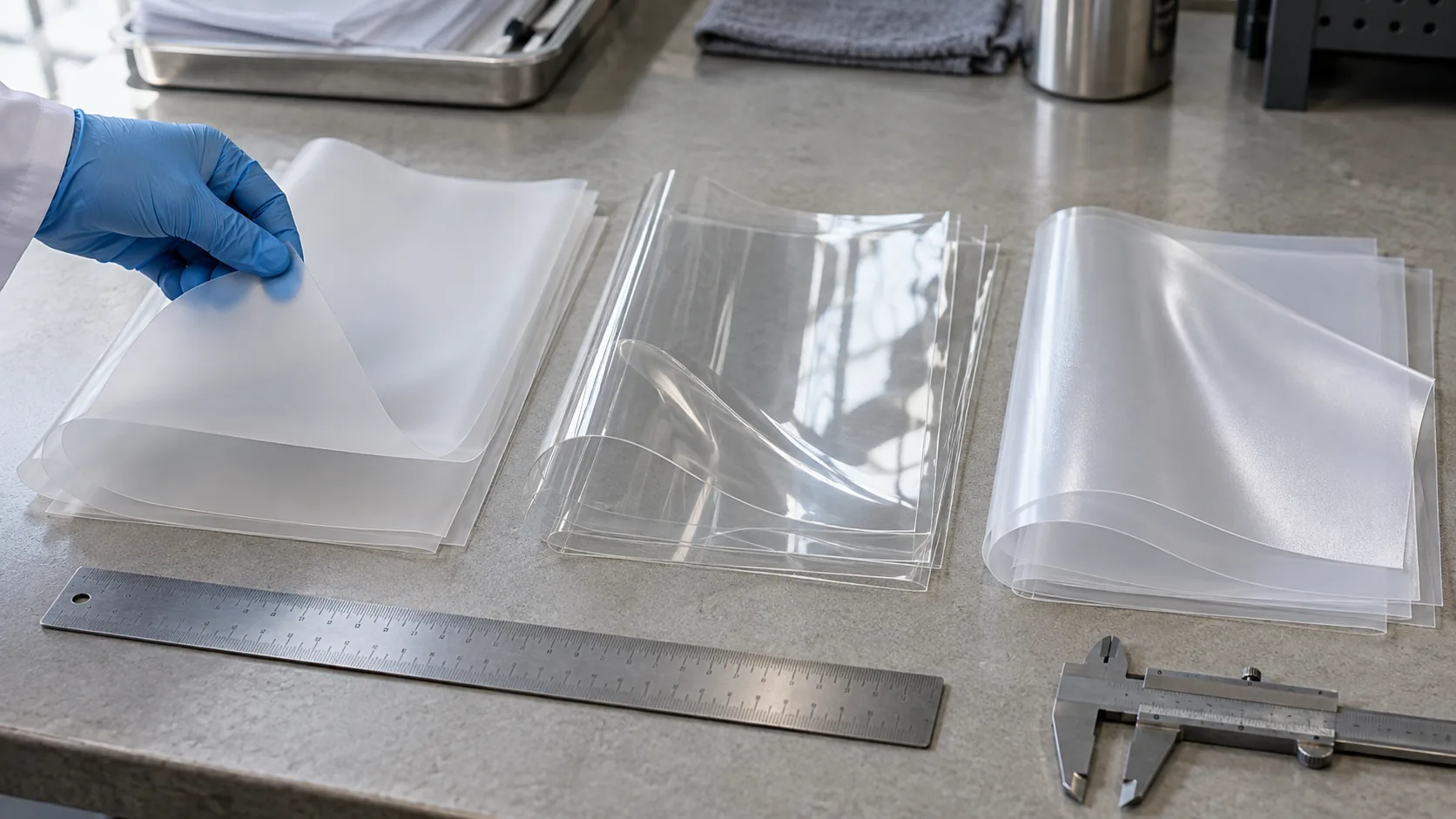
PEVA, PVC, and TPU are different polymer families, but a family name does not choose the finished construction for you. Compare the exact forms offered for the product: film against film, or textile-backed material against textile-backed material.
| Comparison point | PEVA / EVA | PVC | TPU | What to verify |
|---|---|---|---|---|
| Polymer identity | Ethylene-vinyl acetate copolymer family | Polyvinyl chloride | Thermoplastic polyurethane family | Composition statement and grade code |
| Chlorine in the named base polymer | Not part of the EVA copolymer repeat units | Present in PVC | Not part of the TPU polymer name | Scope of any finished-product “chlorine-free” claim |
| Common bag form | Flexible film or liner laminate | Clear film, coated textile, synthetic leather, or component | Film or coated/laminated textile | Form, carrier, layer position, and total thickness |
| Flexibility route | Grade, vinyl acetate content, formulation, and thickness | Formulation, including the plasticizer system where used | Chemistry, grade, and construction | Actual data sheet and production sample |
| Joining | May be welded, bonded, sewn, or combined | Depends on form and formulation | Depends on grade and construction | Seam or bond trials on the exact material |
| Compliance and environmental claims | Not established by the name | Not established by the name | Not established by the name | Market, intended use, formulation, and claim-specific evidence |
The related PVC material guide explains why PVC film, coated fabric, and synthetic leather also need separate specifications. Use the same discipline for PEVA and TPU. Terms such as “non-toxic,” “eco-friendly,” “phthalate-free,” “recyclable,” or “biodegradable” need evidence for the supplied construction and intended market; they do not follow automatically from the polymer name.
Is PEVA Waterproof?
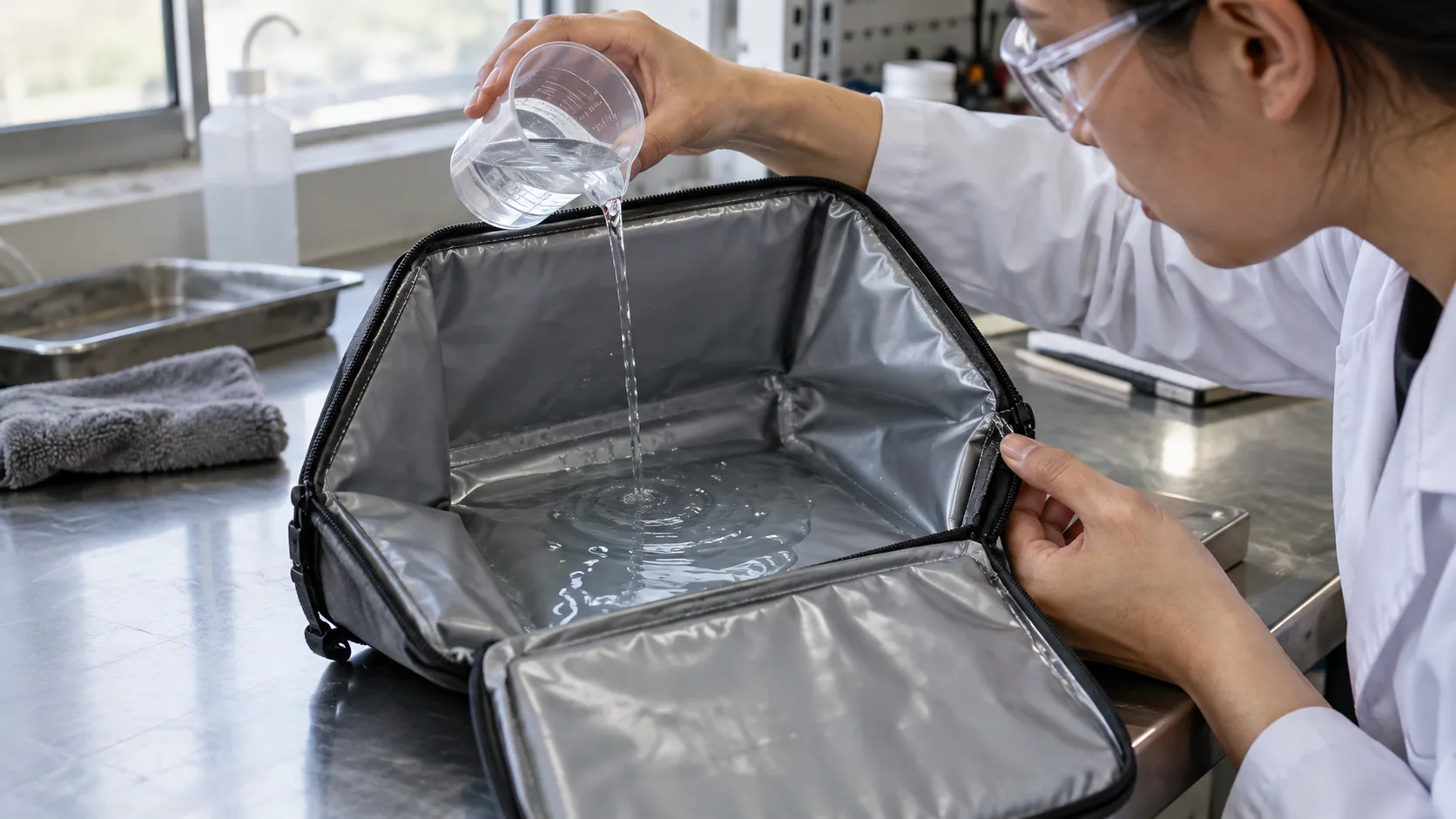
A continuous PEVA film can act as a liquid-water barrier under suitable conditions. That does not make every PEVA-lined bag waterproof or leakproof. Water may travel through sewing holes, an incomplete weld, a zipper end, a fold, an attachment point, or damage from use.
Define the exposure before choosing evidence. Spill containment inside a lunch bag, wipe-clean use, rain exposure, and submersion are different jobs. They should not share one unqualified “waterproof” claim.
The current ASTM D751 scope separates hydrostatic resistance, puncture, tear, coating adhesion, low-temperature behavior, seams, aging, and blocking into different test areas for coated fabrics. That is a useful warning against treating one film result as proof of the whole liner system. The same boundary applies when asking whether polyester is waterproof: material, interfaces, openings, and finished construction answer different questions.
For a PEVA liner, record the intended exposure, bag orientation, closure state, load, duration, and acceptance endpoint. Inspect each likely ingress path after the test. A film data sheet is supporting evidence, not a finished-bag result.
Is PEVA Safe for Food Contact?
“PEVA” by itself does not establish food-contact suitability, non-toxicity, or compliance in any market. The answer depends on the exact resin, additives, colorants, adhesives, backings, printing, intended food type, contact conditions, and applicable regulation.
In the United States, the FDA food-contact inventory for poly(ethylene-co-vinyl acetate) directs users to the relevant regulatory sections and says the intended use and conditions in those regulations control authorization. 21 CFR 177.1350 permits qualifying ethylene-vinyl acetate copolymers for food-contact articles under stated composition, additive, extraction, and use conditions. It is not a blanket approval for every PEVA liner.
For the EU, the current consolidated Regulation (EU) No 10/2011 covers plastic materials and articles intended for food contact, including certain multilayer constructions. A report or declaration must still match the exact construction, intended use, and market.
Many insulated bags hold food in separate containers rather than placing unwrapped food directly against the liner. Write the actual contact scenario into the brief. Also separate liner compliance from thermal performance: the liner contains spills and provides a cleanable surface, while insulation, closures, and the full construction influence temperature retention. The guide to how lunch bags keep food warm explains those roles separately.
Where Is PEVA Used in Bags?
PEVA film or PEVA-based liner constructions appear in insulated lunch bags, soft coolers, cosmetic pouches, toiletry bags, wet-item pouches, garment covers, storage organizers, and protective covers. The sensible use depends on the grade and construction, not on the product category alone.
Check these use conditions before selecting it:
- likely contact with sharp container corners, utensils, or hardware;
- repeated folding at the same crease lines;
- cleaning chemicals and cleaning temperature;
- exposure to cold, heat, sunlight, or long storage;
- whether the liner is sewn, welded, bonded, or laminated;
- whether contents are packaged or touch the liner directly;
- whether spill containment, rain protection, or a stronger water claim is required.
For an insulated program, the lunch bag manufacturing page shows where liner selection sits inside the wider product build. PEVA is one layer; foam, exterior textile, binding, zipper construction, and assembly still have their own jobs.
How Should Buyers Specify and Approve PEVA?
Start with a written material identity, then approve the finished assembly. A short field list is more useful than a page of unmeasurable adjectives.
- Name the supplied object. State whether it is free film, coated textile, laminate, or a finished liner component.
- Freeze the material identity. Record supplier, product code or grade, composition statement, color, finish, and any disclosed additives relevant to the claim.
- Set dimensions and tolerances. Specify film thickness, total laminate thickness where relevant, and the unit and measurement method used.
- Define the interface. Record carrier fabric, layer position, adhesive or joining route, seam type, and edge treatment.
- State the use condition. Include contents, temperature and cleaning range, contact scenario, water exposure, folding, and expected handling.
- Match documents to the item. Check that declarations and reports cover the same grade, color, thickness, laminate, and intended market as the quoted material.
- Approve a production-representative sample. Review crease whitening, blocking, odor, puncture points, seam or weld continuity, edge adhesion, cleaning response, and the defined water scenario.
Blocking deserves its own check when film surfaces sit together in a warm or compressed carton. ASTM D3354 defines blocking as unwanted adhesion between layers of plastic film and measures separation under a specific method. It should not be merged with tackiness, migration, or lamination peel as if they were the same failure.
If PEVA is one choice inside a larger product brief, use the custom bag manufacturing process to connect the material specification to sampling, hardware, branding, and production approval.
Frequently Asked Questions
Is PEVA the same as EVA?
They commonly refer to the same ethylene-vinyl acetate copolymer family, but suppliers may use the labels differently. Confirm the composition statement, supplier grade, and data sheet instead of relying on the acronym.
Is PEVA better than PVC?
Not in every application. The base polymers differ, but suitability depends on the exact film or laminate, thickness, required clarity and hand, joining method, service conditions, compliance needs, and claim evidence.
Is PEVA non-toxic?
The material name cannot prove that claim. Review the exact formulation and finished construction against the regulations and restricted-substance requirements for the target market and use.
Is PEVA biodegradable or recyclable?
Do not assume either claim. End-of-life options depend on formulation, additives, attached layers, collection systems, and local processing capability. Ask for claim-specific evidence and state the relevant market.
Can a PEVA liner hold hot food?
There is no universal temperature limit for all PEVA grades or liner assemblies. Keep food in appropriate containers, obtain the supplier’s temperature and care guidance for the exact construction, and verify the intended use on production-representative samples.
How thick should a PEVA liner be?
There is no single correct thickness. Choose it against puncture risk, drape, fold behavior, joining method, backing, weight, and cost, then approve the tolerance and finished sample.
Turn the Material Name Into a Sample Plan
The useful conclusion is short: PEVA identifies a polymer family, not a finished bag specification. Ask for the exact grade and construction, define the exposure and contact conditions, match every document to that item, and verify the assembled sample. That process gives you a defensible material decision without leaning on broad safety, environmental, or waterproof claims.