
Cowhide leather is leather made from cattle hide. That identifies the animal source, but it does not tell a buyer which layer was used, how the leather was tanned or finished, how thick it is, or how it will perform in a finished bag.
This distinction matters when comparing quotations. Two suppliers can both offer “cowhide leather” while quoting different materials. A useful specification therefore separates animal source from layer, substance, finish, backing, color, construction, and the approved sample.
What Is Cowhide Leather?
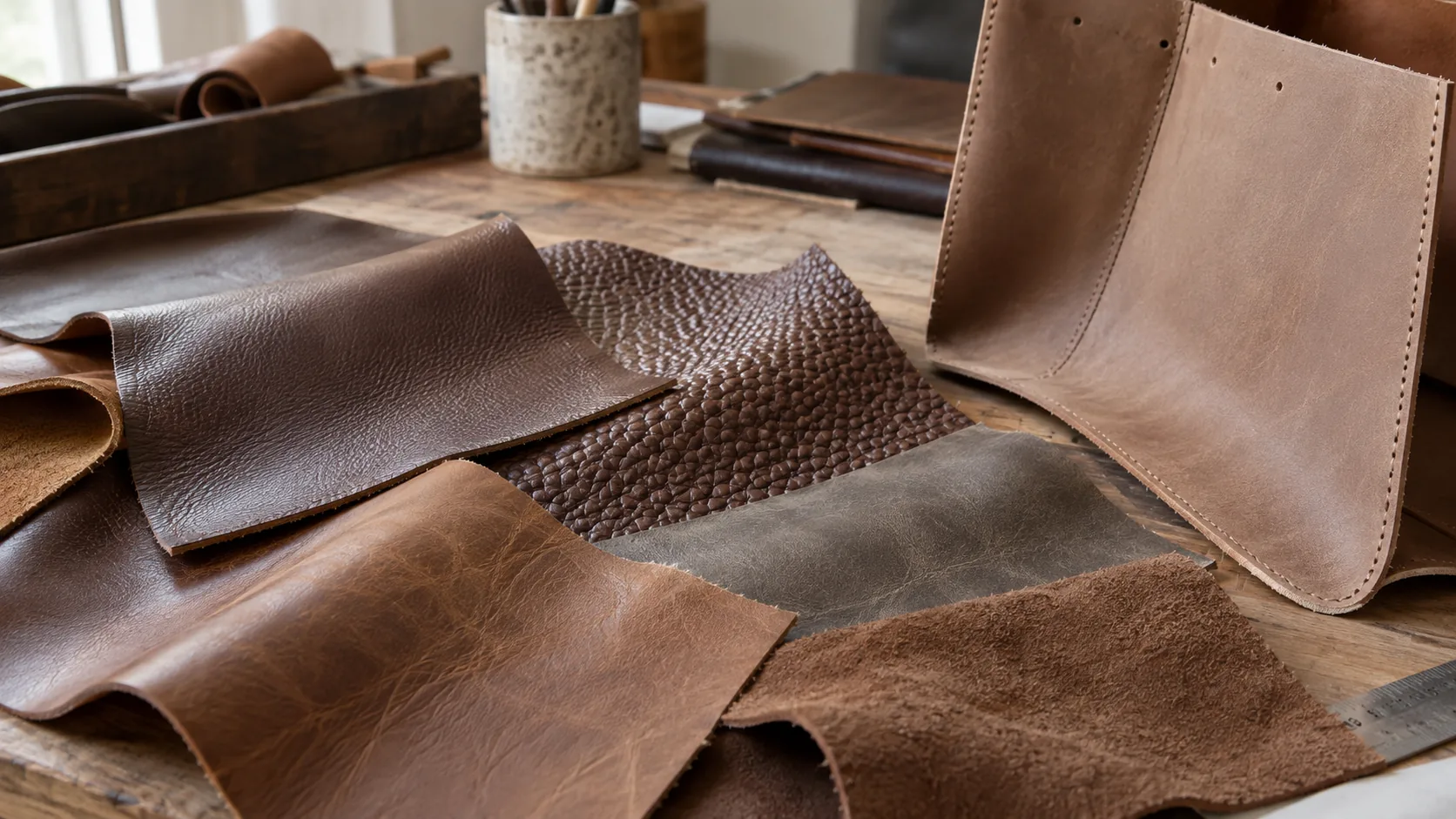
Cowhide leather is cattle hide that has been tanned so that its original fibrous structure is preserved and the material resists decay. The ISO 15115 leather vocabulary also distinguishes leather from split leather, laminated leather, and material made by binding disintegrated leather fibers.
The word “cowhide” answers only one question: which animal supplied the hide. It does not establish:
- full-grain, grain split, flesh split, or another layer description;
- chrome, vegetable, or another tannage;
- substance or thickness;
- pigment, wax, embossing, coating, or backing;
- colorfastness, abrasion, flex, water, or finish-adhesion results;
- the durability of the completed bag.
“Genuine leather” is also incomplete as a purchasing specification. It does not identify the animal, layer, finish, backing, supplier material code, or the bag parts in which the material will be used. Keep the supplier’s original term in the record, then add the missing fields.
How Does Cowhide Become Finished Leather?
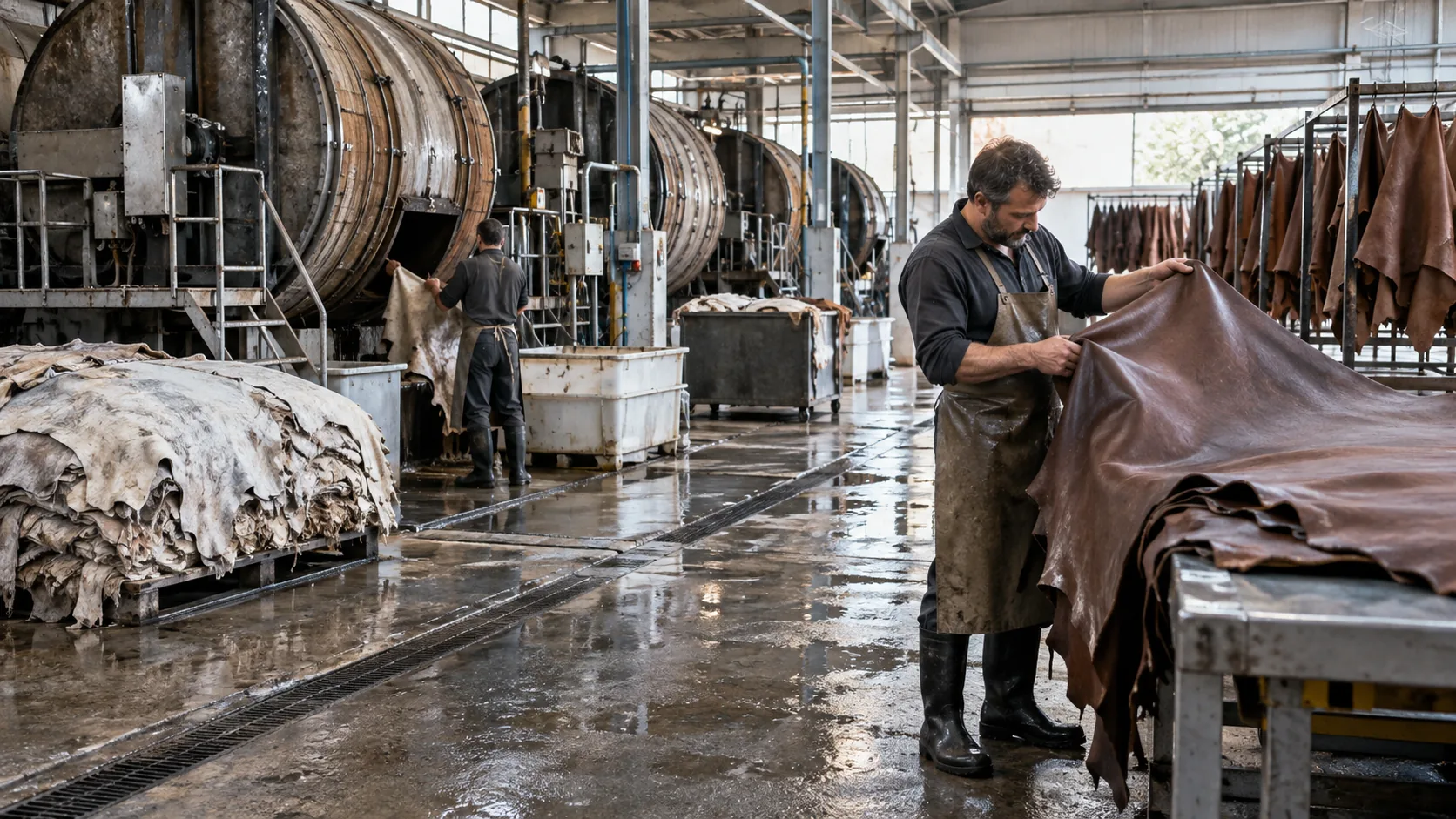
Leather production is a sequence, not a single treatment. Raw hides are preserved and prepared, tanned, adjusted to the required substance, and then dyed and finished. The exact sequence and chemistry vary with the intended leather. The how leather is made guide follows these stages from raw material through finishing and shows what a bag buyer should approve at each level.
The UNIDO and IULTCS leathermaking guide covers raw-material properties, manufacturing procedures, and the production of bovine leathers. At a buying level, four stages deserve separate attention:
- Hide preparation: preservation, cleaning, dehairing, and other preparatory work make the hide ready for tanning.
- Tanning: stabilizes the hide’s protein structure. The tannage should be recorded rather than inferred from color or touch.
- Substance control: splitting and shaving bring the leather toward the required thickness. A tolerance is more useful than a nominal number alone.
- Finishing: dye, pigment, wax, embossing, coating, milling, and other operations change appearance and surface behavior.
Processing terms describe what was done; they are not universal quality grades. “Vegetable-tanned,” “milled,” or “embossed” still leaves open the leather layer, substance, finish system, and the result required from the material.
What Do Full-Grain, Top-Grain, and Split Mean?
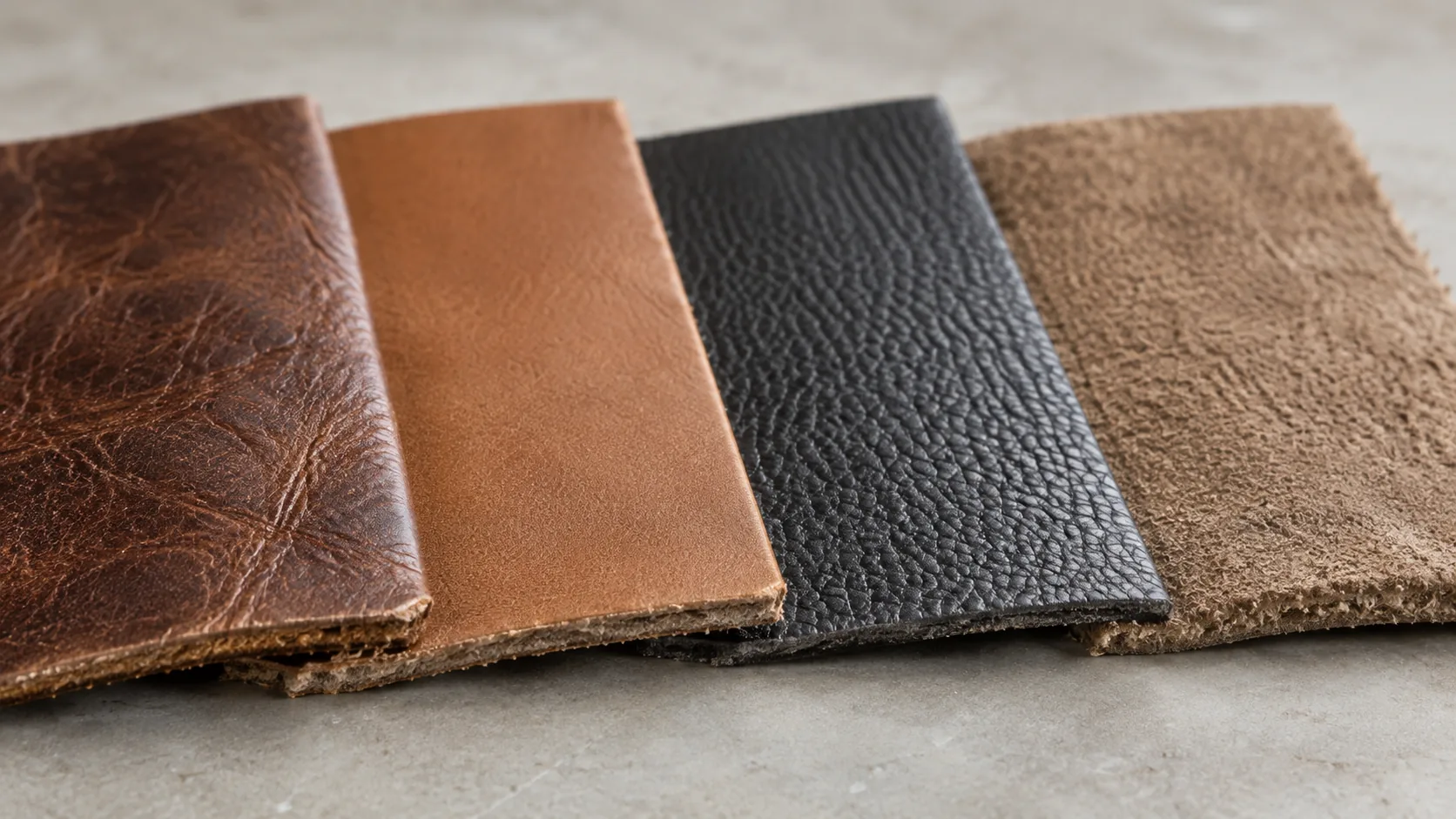
These terms describe material structure or surface treatment more usefully than a simple best-to-worst ladder.
| Term | What it can tell you | What it does not prove |
|---|---|---|
| Full-grain | The grain surface has not been mechanically removed | A fixed finish, thickness, color consistency, price, or bag life |
| Grain split or top layer | The upper layer retains the grain structure after horizontal splitting | That the surface is uncorrected or lightly finished |
| Corrected or buffed surface | The grain surface has been mechanically altered before finishing | One standardized degree of correction or one performance level |
| Split leather | The layer comes from a flesh or middle split without grain structure | The type or thickness of its coating, backing, or finish |
| Suede or velour | The wearing surface has been finished to create a nap | Animal source or a specific performance result |
The ISO vocabulary notes that when the grain layer has been completely removed, “leather” should be qualified, for example as split leather or suede leather. For products marketed in the United States, the FTC Leather Guides address misleading composition claims and disclosure where non-leather material appears to be leather.
A supplier grade name should therefore lead to a definition, not end the discussion. Ask which layer is present, how the surface was treated, whether a coating or backing is used, and which material code and sample represent the quotation.
Which Cowhide Properties Matter for Bags?
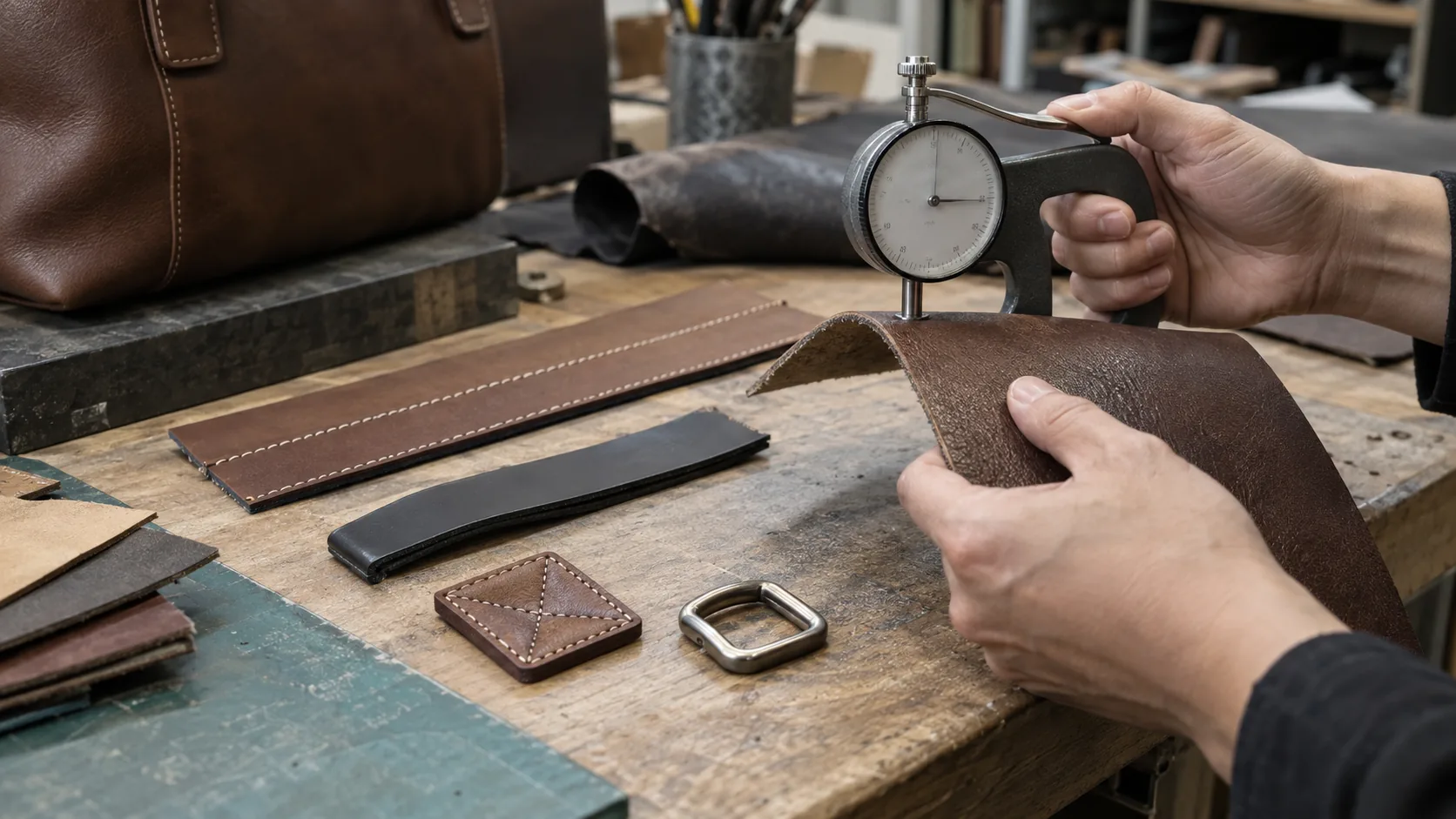
The useful properties depend on the bag design. A leather selected for a soft pouch does not need the same substance, flex, surface, or reinforcement plan as leather used for a structured briefcase.
Check the candidate material and the sewn sample for these points:
- Substance and variation: record the target thickness, unit, tolerance, and where measurements are taken.
- Hand and flex: approve the bend and drape on the actual panel size, not only on a small swatch.
- Surface and finish: define color, gloss, grain appearance, embossing, and accepted natural variation.
- Seam response: confirm stitch length, seam allowance, fold construction, and the appearance of needle holes on a sewn sample.
- Edge construction: specify turned, bound, painted, or raw edges and approve the selected method.
- Hardware zones: review reinforcement at handles, strap anchors, feet, snaps, and other load points.
- Color transfer and finish adhesion: tie any requirement to the actual leather code, test method, and acceptance basis.
- Cutting yield: agree how scars, wrinkles, brands, holes, and shade variation may appear or be excluded.
Testing must identify the object and sampling conditions. ISO 2418:2023 specifies where laboratory specimens are taken from leather and how they are marked for identification. A result from one location, lot, direction, or finish should not be treated as a universal result for every cowhide supplied under the same name.
The same material-to-construction logic appears in how a backpack is made. Leather, reinforcement, thread, hardware, lining, and assembly need to be evaluated as one bag system.
Is Cowhide Leather Waterproof and Durable?
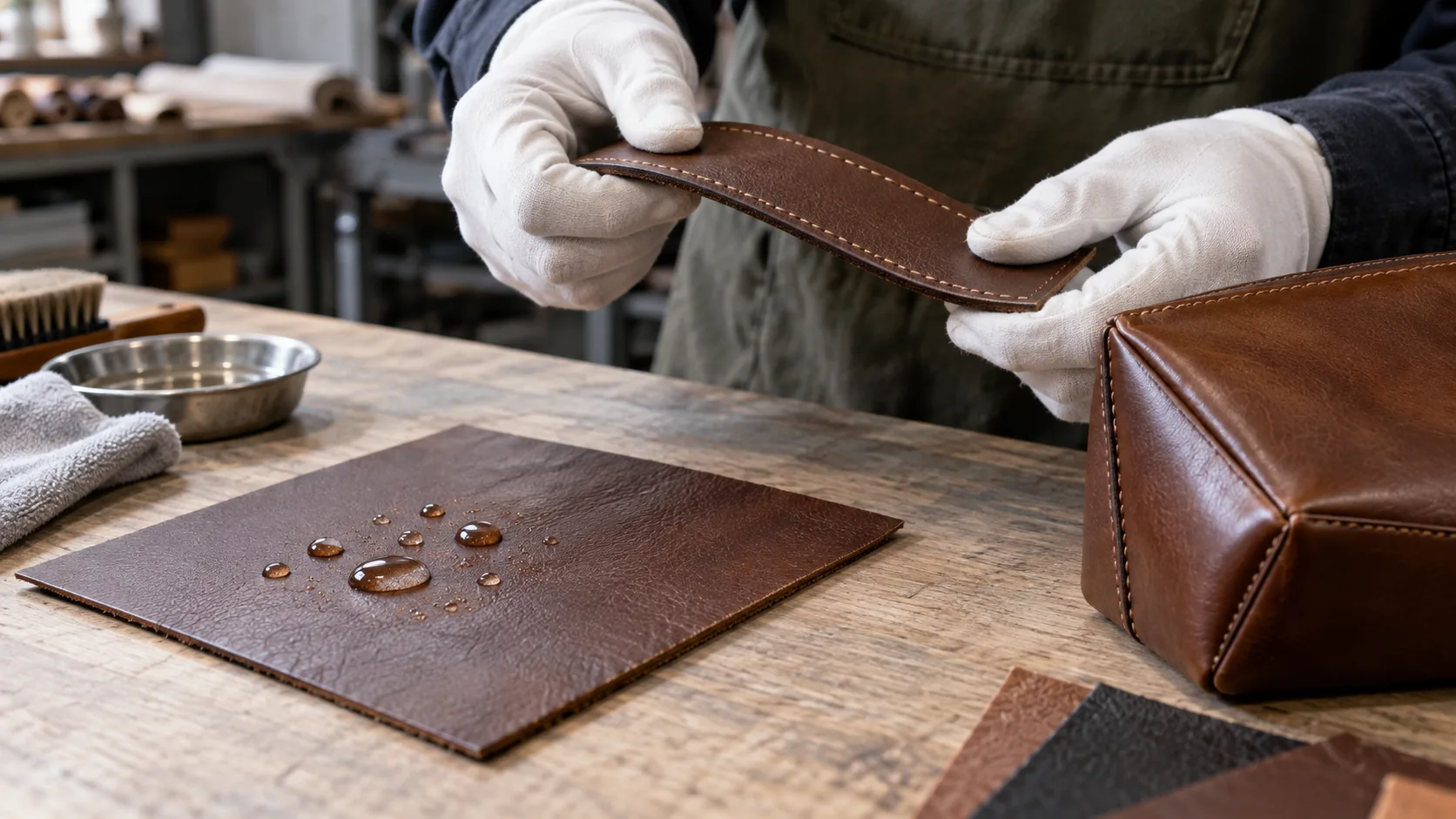
Cowhide is not automatically waterproof, scratchproof, or durable simply because it comes from cattle. Tannage, surface finish, coating, backing, substance, seams, openings, and care all change the result.
The FTC Leather Guides specifically address use of claims such as “waterproof,” “scuffproof,” “scratchproof,” and related resistance wording. A buyer should not convert a material name or a casual water-drop observation into one of those claims.
If water exposure matters, define the intended condition first. Then decide whether evidence is needed for the leather, a seam, or the completed bag. These are different test objects. A leather-panel result does not establish that water cannot enter through stitching, closures, or construction gaps.
Durability also needs a named endpoint. Abrasion, flex, tear, finish adhesion, colorfastness, and hardware attachment are different questions. A single pass result cannot stand in for the service life of the entire bag.
How Does Cowhide Compare with PU Leather?
Cowhide and PU-coated materials are different material systems. Neither name supplies enough information for a complete comparison.
Cowhide has an animal-derived fibrous structure. A PU material generally uses a polymer surface with a textile or other substrate, but its exact coating, backing, thickness, and construction still need to be stated. Compare actual material codes against the same product brief rather than relying on broad labels such as “real,” “synthetic,” or “vegan.”
For a structured breakdown of the synthetic option, see PU leather as a bag material. If natural texture is not required, canvas bag material is another useful reference point for weight, finish, construction, and decoration decisions.
How Should Buyers Specify Cowhide Leather?
An RFQ that says only “cowhide leather” allows several material decisions to remain hidden inside the quotation.
Industry insight: Approved cards `LTYPE-01`, `LEATH-01`, `LEATH-07`, and `LEATH-08` lead to one practical rule: record animal source, layer, substance, finish, backing, supplier material code, confirmed sample, and test evidence as separate fields. The name of the leather should not substitute for any of them.
Use a specification table that can be checked during sampling:
| Field | What to record | How to confirm it |
|---|---|---|
| Supplier material | Supplier-stated name, material code, color code, and lot | Match documents and sample labels |
| Animal and layer | Cattle source plus grain, grain split, flesh split, or other stated layer | Obtain a written material declaration |
| Substance | Target thickness, unit, tolerance, and measurement approach | Measure agreed points on representative pieces |
| Tannage and finish | Tannage, dye or pigment system, embossing, wax, coating, and backing | Compare with technical documents and confirmed sample |
| Appearance | Color reference, gloss, grain, and allowed natural variation | Review more than one area or hide where practical |
| Product construction | Bag part, lining, reinforcement, seam, edge, thread, and hardware | Approve the completed prototype |
| Performance evidence | Actual object, lot, method, edition, conditions, endpoint, and acceptance basis | Read the report within its stated scope |
| Care and claims | Care instructions and any product wording that must be supported | Check against the exact finish and target market |
Keep a confirmed sample linked to the material code and prototype version. For traceability questions, the Leather Working Group overview explains that leather traceability can be assessed through physical marking and documentation back to a slaughterhouse, group of slaughterhouses, or collection region. That framework does not replace a project’s own chain-of-custody requirements, but it shows why origin claims need records.
When the material brief is ready, custom bag manufacturing connects the leather decision with prototype construction, sampling, and production planning. Buyers comparing factory capabilities can also review the backpack manufacturer selection guide.
How Should a Cowhide Bag Be Cared For?
Care should follow the exact finish, not the word cowhide. A pigmented surface, waxed leather, suede-like split, and uncoated vegetable-tanned leather can respond differently to water, cleaner, friction, and heat.
Ask the leather supplier for care guidance tied to the material code. For a finished bag, also account for lining, adhesive, edge paint, hardware, print, and trim. Test any cleaner on a concealed area before wider use, avoid soaking the bag, and allow damp leather to dry away from direct heat unless the material supplier specifies another method.
Frequently Asked Questions
Is cow leather the same as cowhide leather?
In normal product language, both usually refer to leather made from cattle hide. A purchasing document should still state whether it refers to raw hide, partly processed material, or finished leather, then add the layer, substance, finish, and material code.
Is cowhide always full-grain leather?
No. Cowhide identifies the animal source. Cattle hide can produce grain leather, split leather, suede-like material, corrected surfaces, coated material, and other finished forms.
Is genuine cowhide a leather grade?
No universal grade is established by that phrase alone. It confirms neither the layer nor the amount of surface treatment. Ask for the supplier’s definition and the material fields needed for comparison.
Is cowhide good for bags?
It can suit many bag designs, but suitability depends on the selected leather and construction. Substance, flex, finish, edge method, reinforcement, hardware, lining, and the intended load should be reviewed on a prototype.
How can buyers tell whether cowhide is real?
Appearance, touch, smell, edge inspection, or a water-drop check can help screen a material, but none is a universal identity test. Use supplier traceability, composition documents, the confirmed sample, and appropriate independent verification when material identity is important.
Final Decision
Cowhide leather names an animal source, not a complete grade or performance specification. The buying decision becomes clearer when layer, substance, tannage, finish, backing, material code, construction, and evidence are recorded separately.
Compare quotations against those fields, approve the material and the sewn prototype as separate objects, and keep the confirmed sample connected to the production record. That reduces ambiguity without claiming that one cowhide label guarantees a particular result.