
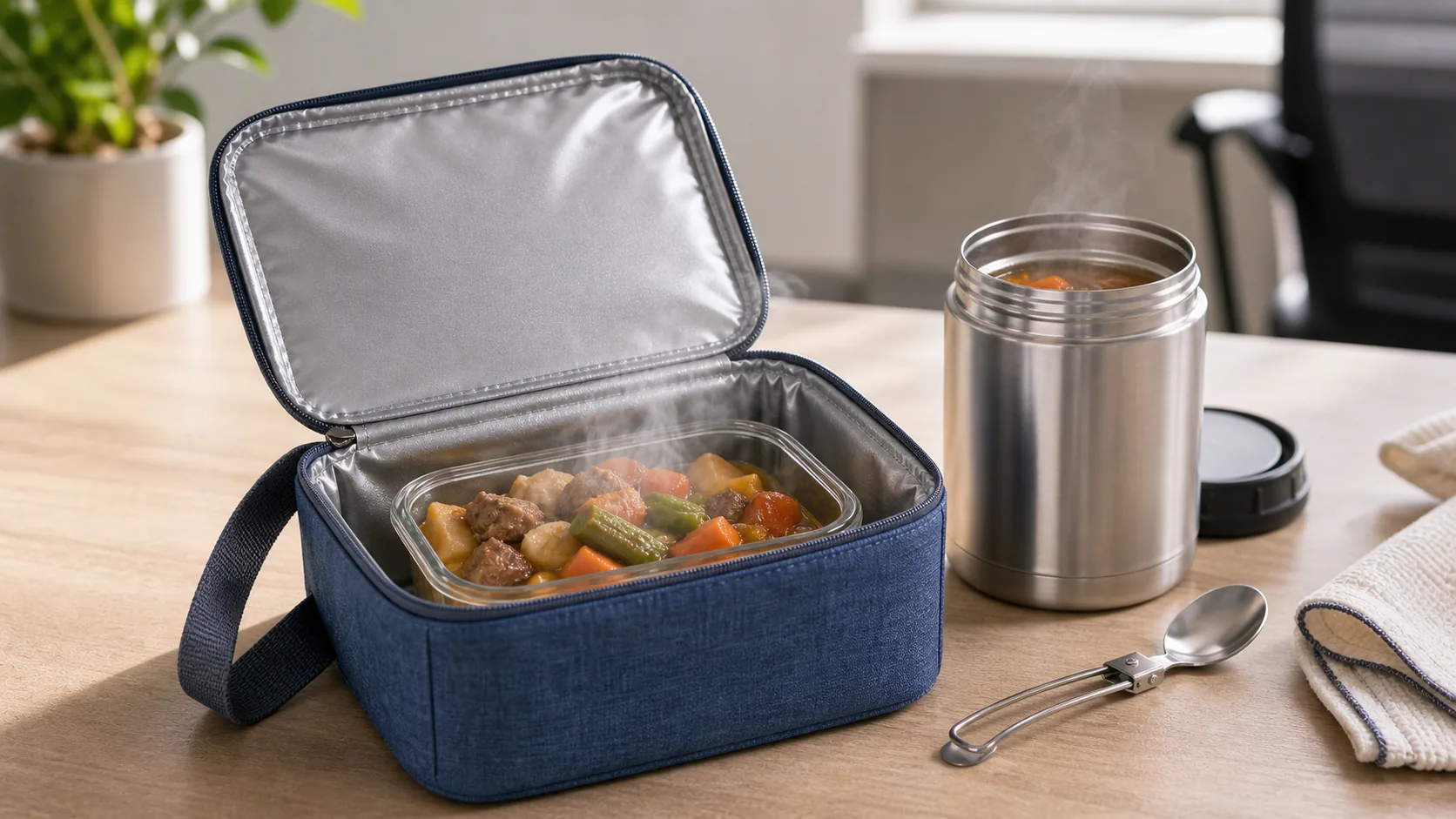
A warm lunch keeps food safe above 140°F, preserves flavor, and gives you steady midday energy without a microwave. If you pack a hearty stew at 7 a.m. and it feels lukewarm by noon, that daily letdown pushes teams toward costly takeout. A properly built insulated lunch bag, paired with smart packing habits, solves that problem in a repeatable, professional way. Based on more than a decade of factory-side product development for B2B buyers, we know exactly how to keep food warm in lunch bag systems for commuters, students, and field workers.
Why Do Warm Lunches Matter for Your Daily Routine?

Warm lunches matter because they lift mood, support digestion, and help workers stay productive through long afternoon shifts. Knowing how to keep food warm in lunch bag routines directly affects team satisfaction and repeat customer buying behavior for retail buyer scenarios.
A hot midday plate does more than fill your stomach. You feel comforted, you feel valued, and you keep working with real focus.
Which Benefits Do Warm Meals Deliver at Work?
Warm meals deliver higher satisfaction, better nutrient release, and stronger portion control than cold sandwiches or vending snacks. Studies from occupational nutrition groups suggest hot lunches improve reported energy levels by up to 25%.
You also spend less on impulse takeout when your bag delivers a proper hot meal every day.
- Better appetite satisfaction with lower calorie waste
- Steadier blood glucose from cooked whole foods
- Fewer afternoon snack purchases
How Do Warm Lunches Support Employee Wellness Programs?
Employers use warm lunch culture as a low-cost wellness tool that promotes home cooking, mindful breaks, and team bonding around real food. HR data often ties meal quality with retention rates in shift-based industries.
The reason a simple bag can move those numbers is that behavior follows tools that actually work.
Key Takeaway: A warm lunch program lifts morale, cuts spending, and turns midday breaks into a productive, professional ritual for any workforce.
| Benefit Area | Cold Lunch | Warm Lunch |
|---|---|---|
| Reported satisfaction | Low | High |
| Digestion comfort | Moderate | Strong |
| Afternoon focus | Variable | Stable |
| Takeout spending | High | Reduced |
The table above signals a clear pattern: warm meals win on every practical metric buyers care about.
What Factors Affect How to Keep Food Warm in Lunch Bag?

Several factors shape how to keep food warm in lunch bag results, including insulation thickness, lining material, seal quality, food density, and outside weather during your commute.
No single trick keeps a meal hot for six hours. You need every layer of the system pulling its weight, from the container up to the outer shell.
How Does Insulation Thickness Change Heat Retention?
Insulation thickness controls conductive heat loss, so a 5mm PE foam layer usually holds warmth two to three times longer than a thin foil liner alone. Thicker foam also cushions food containers against knocks.
Thicker foam alone can push weight up and shelf appeal down. You want engineered balance, not overbuilt bulk.
- Thin foil: 1-2 hour heat window
- Standard foam: 3-4 hour window
- Premium foam plus reflective liner: 5-6 hour window
Do Food Density and Moisture Content Affect Warmth?
Yes, dense and moisture-rich foods like stews and rice bowls hold warmth much longer than dry sandwiches because water carries far more heat energy than air pockets. Preheating your container amplifies that effect.
Key Takeaway: Match your food type with the correct insulation grade, and your lunch stays hot through even the longest commute.
| Factor | Impact on Warmth | Practical Fix |
|---|---|---|
| Insulation foam | High | Choose 5mm PE minimum |
| Lining seal | High | Request sealed seams |
| Food density | Medium | Pack dense meals |
| Ambient temperature | Medium | Add outer wrap in winter |
| Bag opening frequency | High | Keep zipper closed |
Buyers who audit these five factors together see far fewer heat-loss complaints from end customers.
How to Keep Food Warm in Lunch Bag: Top Proven Techniques?

The top techniques for how to keep food warm in lunch bag results include preheating the container, using thermoses, wrapping food in foil, adding heat packs, and layering with dense textiles inside.
These five habits stack together, so combining two or three of them delivers stronger gains than any single fix.
Why Should You Preheat Your Container First?
Preheating your container removes the cold shock that steals heat from your food during the first thirty minutes. Simply pour boiling water inside, wait five minutes, drain fully, then add your hot meal.
This five-minute habit often adds usable warmth without any extra hardware.
- Boil water in a kettle
- Fill container fully for 5 minutes
- Drain completely before packing food
- Seal quickly to trap residual heat
Can Foil Wrapping and Heat Packs Extend Warmth?
Foil wrapping reflects radiant heat back into your food, and reusable heat packs add active warmth for another two to three hours during cold-weather commutes. Both cost pennies per use.
Key Takeaway: Stack preheating, foil wrap, and a small heat pack for a low-cost system that beats most premium single-item solutions.
| Technique | Added Warmth Time | Cost Level |
|---|---|---|
| Preheating container | +2 hours | Free |
| Thermos flask | +4 hours | Medium |
| Foil wrap | +1 hour | Low |
| Heat pack | +2-3 hours | Low |
| Dense food layering | +1 hour | Free |
These numbers show why buyers should promote layered technique guides alongside product pages, not just spec sheets.
Which Expert Tips Improve How to Keep Food Warm in Lunch Bag?
Expert tips that improve how to keep food warm in lunch bag performance include picking double-walled containers, choosing bags with sealed seams, and packing items in the correct thermal order.
Small refinements separate a pleasant lunch from a truly premium one, and buyers who understand these details win repeat purchases.
How Do Double-Walled Containers Trap More Heat?
Double-walled stainless steel containers create a vacuum gap that blocks all three heat-transfer modes at once, so contents stay hot for six to eight hours with very little loss. Pair one with a well-built bag and you can improve retention. Consider pairing your container with an insulated shell from a specialist custom lunch bags factory that handles seam sealing at scale.
The vacuum layer also blocks outside odors, keeping your bag interior fresher for months.
- Vacuum layer blocks conduction
- Reflective inner face blocks radiation
- Screw-on lid blocks convection
What Layering Order Keeps Food Warmest Longest?
Layering order matters because heat rises, so heavy hot items sit at the bottom, warm sides in the middle, and any cold snacks in a separate pouch away from thermal contact.
Key Takeaway: Smart layering costs nothing yet delivers measurable warmth gains that customers actually notice.
| Position | Item Type | Reason |
|---|---|---|
| Bottom | Main hot dish | Traps rising heat |
| Middle | Warm sides | Absorbs radiant heat |
| Side pouch | Cold drink | Prevents heat theft |
| Top zipper pocket | Utensils | No thermal impact |
This layout is exactly how top private label brands train their end users through in-bag instruction cards.
What Warm Lunch Recipes Pack the Best Heat Retention?

Recipes that pack the best heat retention include thick soups, stews, chili, curry, rice bowls, and pasta bakes because their density and moisture help how to keep food warm in lunch bag routines succeed for hours.
The meal you cook actually matters as much as the bag you buy. Dense, saucy dishes simply outperform anything dry.
Why Do Soups and Stews Retain Warmth So Well?
Soups and stews retain warmth well because water holds roughly four times more heat energy per gram than air, so a full thermos of broth stays piping hot far longer than an equivalent sandwich.
You are basically packing a small battery of thermal energy every time you ladle stew into a preheated flask.
- Beef and barley stew
- Chicken tortilla soup
- Lentil curry
- Creamy tomato bisque
Which Grain Bowls Travel Best in an Insulated Bag?
Grain bowls with warm rice or quinoa, roasted vegetables, and a hot protein travel beautifully because the grains act as thermal ballast and the sauce keeps everything moist during the wait.
Key Takeaway: Choose dense, saucy meals for the bag, and every technique you already use suddenly works twice as hard.
| Meal Type | Heat Retention | Ease of Packing |
|---|---|---|
| Beef stew | Excellent | Easy in thermos |
| Rice bowl | Very good | Easy in container |
| Pasta bake | Good | Medium |
| Sandwich | Poor | Easy |
| Salad | N/A | Cold only |
The data confirms what busy commuters already suspect: dense meals simply outperform light ones for midday warmth.
What Common Mistakes Ruin How to Keep Food Warm in Lunch Bag?

Common mistakes that ruin how to keep food warm in lunch bag results include overpacking, opening the bag repeatedly, skipping preheating, and buying thin cheap bags that lack sealed seams. Buyers can address many of these by choosing an insulated lunch bag with reinforced construction and proper thermal engineering.
Even a premium bag fails if the user habits work against physics.
Why Does Overpacking Hurt Heat Retention?
Overpacking hurts heat retention because tightly crammed items block warm air circulation, create cold spots, and force zippers open just enough to bleed heat away over the full commute.
Breathing room inside a bag is not wasted space, it is thermal engineering at work.
- Leave 10-15% headroom
- Group hot items in one pocket
- Keep drinks in outer sleeves
- Never force the zipper closed
Should You Open the Bag Before Lunchtime?
You should not open your bag before lunchtime because each brief peek releases warm interior air and pulls in cold room air, cutting effective warmth by roughly twenty minutes per opening.
Key Takeaway: Discipline your habits, coach end users through simple guides, and complaint rates on insulated products drop sharply.
| Mistake | Warmth Lost | Simple Fix |
|---|---|---|
| Overpacking | 30-60 min | Leave headroom |
| Frequent opening | 20 min per peek | Wait until noon |
| Skipping preheat | 2 hours | Preheat 5 min |
| Cheap thin bag | 3+ hours | Upgrade lining |
Retail buyers who address these mistakes with clear packaging inserts drive down return rates significantly.
How Do Insulated Materials Support Long-Lasting Heat?
Insulated materials support long-lasting heat by combining reflective foil, closed-cell foam, and sealed PEVA lining into a multi-layer barrier that slows every mode of heat loss during your daily commute. Neoprene construction can also work for lightweight, flexible thermal use cases.
The fabric on the outside is mostly cosmetic, and the real thermal action happens in the hidden middle layer.
What Role Does PEVA Lining Play in Warmth?
PEVA lining plays a critical role in warmth because it blocks moisture, resists odors, and holds a smooth food-safe surface that wipes clean after every meal. Sealed seams keep condensation from soaking the foam beneath.
Damp foam is dead foam, so a good seal actually protects insulation for years.
- Food-safe PEVA face
- Ultrasonic seam welding
- Sealed corner construction
Are Neoprene Bags Also Good Insulators?
Yes, neoprene bags provide natural insulation from the closed-cell rubber structure itself, delivering both cushioning and thermal control in a soft, flexible form factor.
Key Takeaway: Choose the material profile that fits your end-user scenario, and your bag delivers reliable warmth for the full product lifecycle.
| Material | Insulation Grade | Best Use |
|---|---|---|
| PEVA + foam | High | Standard lunch bag |
| Neoprene | Medium-High | Soft carry, gifting |
| Aluminum foil only | Low | Short trips |
| Canvas alone | None | Aesthetic only |
Material choice defines the ceiling of your product, so buyers should always start their spec sheet here.
How to Keep Food Warm in Lunch Bag for Kids on School Days?
For kids on school days, how to keep food warm in lunch bag routines rely on preheated stainless flasks, small dense meals, and cheerful bags built for daily rough handling and easy zipper operation. Selecting a properly insulated bag design built for a child’s grip and cleaning routine keeps parents loyal to your brand.
The physics for a child’s lunch is identical to yours, but the packaging and psychology require softer touches.
What Kid-Friendly Meals Stay Warmest?
Kid-friendly meals that stay warmest include mac and cheese, mini meatballs in sauce, chicken noodle soup, and warm rice with teriyaki chicken because they combine density, moisture, and flavors kids actually eat.
Small thermoses in the 10-12 oz range fit school lunch slots and match a child’s real appetite.
- Preheat thermos with hot water
- Pack meal at boiling temperature
- Add spoon in outer pocket
- Include a napkin for spills
How Do You Balance Warm and Cold Items for Kids?
You balance warm and cold items for kids by using a divided lunch bag with an insulated main pocket and a mesh outer pocket for fruits, keeping each temperature zone independent.
Key Takeaway: Give parents a product plus a simple habit guide, and your kids’ lunch line earns strong word-of-mouth loyalty.
| Kid Meal | Vessel | Warmth Duration |
|---|---|---|
| Mac and cheese | 10 oz thermos | 4-5 hours |
| Meatballs in sauce | 12 oz thermos | 4-5 hours |
| Chicken soup | 10 oz thermos | 5 hours |
| Rice and teriyaki | Insulated container | 3-4 hours |
School-day buyers rely on this warmth window, and any product that misses it earns fast negative reviews.
How to Choose the Right Lunch Bag for B2B Retail Buyers?
B2B retail buyers should choose lunch bags by auditing insulation specs, seam quality, MOQ flexibility, sample lead time, and factory pre-shipment inspection standards, because those five points predict resale success. For online launch planning, e-commerce bag projects connect these specs with review quality, returns, and repeat orders.
The wrong supplier turns a great design into a warehouse full of complaints, so vetting matters more than pricing.
What Specs Should Appear in Every RFQ?
Every RFQ should list insulation foam thickness, lining material grade, zipper brand, handle stitch count, and inspection protocol so no cost-cutting surprises appear in bulk production.
A two-page spec sheet prevents many of the disputes that plague new sourcing relationships.
- Foam thickness in millimeters
- PEVA or TPU lining grade
- Zipper brand and gauge
- Handle stress rating
- 100% pre-ship inspection clause
How Do MOQ and Sample Lead Time Shape Your Launch?
MOQ and sample lead time shape your launch because a 300-piece MOQ lets you test the market without heavy capital risk, and a 7-day sample turnaround keeps your product roadmap on schedule. A pilot order case can help buyers see how low-MOQ validation works before a larger launch.
Key Takeaway: Vet suppliers on specs and process discipline, and you protect margin, reviews, and long-term brand equity in one move.
| RFQ Criterion | Target Standard |
|---|---|
| Foam thickness | 5-8 mm |
| Lining | Food-safe PEVA, sealed |
| Zipper | SBS or YKK grade |
| MOQ | 300 pcs starter |
| Sample time | 7-10 days |
| Inspection | 100% pre-ship |
These benchmarks give sourcing managers a fast, defensible scorecard for every new lunch bag supplier they evaluate.
How to Maintain Your Lunch Bag for Lasting Heat Performance?
Maintaining your lunch bag for lasting heat performance means wiping the interior after each use, spot-cleaning stains promptly, and air-drying fully before the next commute so foam and lining stay in top condition.
A clean bag insulates better because dry foam retains its cell structure and sealed seams stay intact for years.
How Often Should You Deep Clean Your Bag?
You should deep clean your bag every two weeks under normal use, and immediately after any spill, using mild soap and a soft cloth without soaking the foam layer through the lining.
Aggressive machine washing destroys sealed seams and can cut a bag’s useful life.
- Empty crumbs after every use
- Wipe lining with warm soapy cloth
- Rinse cloth and wipe again
- Air-dry with zipper open
What Storage Habits Protect Insulation Long Term?
Storage habits that protect insulation long term include hanging the bag open in a dry space, avoiding compressed piles, and keeping it away from direct sunlight that degrades the reflective liner.
Key Takeaway: Simple habits stretch product life, protect your brand reputation, and turn one-time buyers into loyal repeat customers.
| Care Step | Frequency | Benefit |
|---|---|---|
| Wipe interior | After every use | Prevents odor |
| Deep clean | Every 2 weeks | Protects lining |
| Air-dry open | Every wash | Saves foam |
| Store hanging | Always | Keeps shape |
Users who follow this care rhythm often report three-year plus product lifespans, boosting perceived brand quality.
A warm lunch keeps flavor, safety, and satisfaction intact through the busiest workday, and this guide has shown exactly how to make that happen every single time. We covered the physics of insulation, the layering habits that stretch heat retention, the recipes that travel best, the mistakes that quietly ruin performance, and the sourcing checklist that separates strong suppliers from weak ones. Ready to take the next step? Whether you sell on Amazon, run a retail brand, or manage a wholesale program, your customers deserve a bag that actually holds heat and holds up. That is our mission as a factory-direct partner: build lunch bags that make midday breaks feel professional, warm, and worth the walk to the break room. Contact us today to start building lunch bags that turn everyday meals into a real brand experience.
FAQ
Can I keep food warm in a lunch bag for 6 hours or more?
Yes, you can, when you pair a preheated vacuum flask with a sealed insulated bag. The vacuum layer blocks all three heat-transfer modes and the outer shell buys extra buffer against cold air during your commute.
What’s the best material for maximum heat retention?
Sealed PEVA lining over closed-cell PE foam is the best choice for maximum heat retention in a soft bag. Neoprene works well for lighter loads, while stainless-steel vacuum flasks stay unbeatable for main dishes over long shifts.
How do I know if my lunch bag has quality insulation?
Check the foam thickness, feel the lining for seam continuity, and ask the supplier for pre-shipment inspection records. A quality bag holds 140°F contents above 120°F for at least four hours in a room-temperature test.
What’s the fastest way to preheat a lunch container?
Pour boiling water into the empty container, close the lid, wait five minutes, then drain completely before adding your hot meal. That single habit adds roughly two hours of warmth with zero extra hardware needed.
Can I reheat food inside an insulated lunch bag?
No, you cannot reheat food inside an insulated lunch bag because these bags maintain temperature rather than generate heat. Always reheat food in a microwave or on a stovetop first, then transfer it into a preheated container for the commute.