
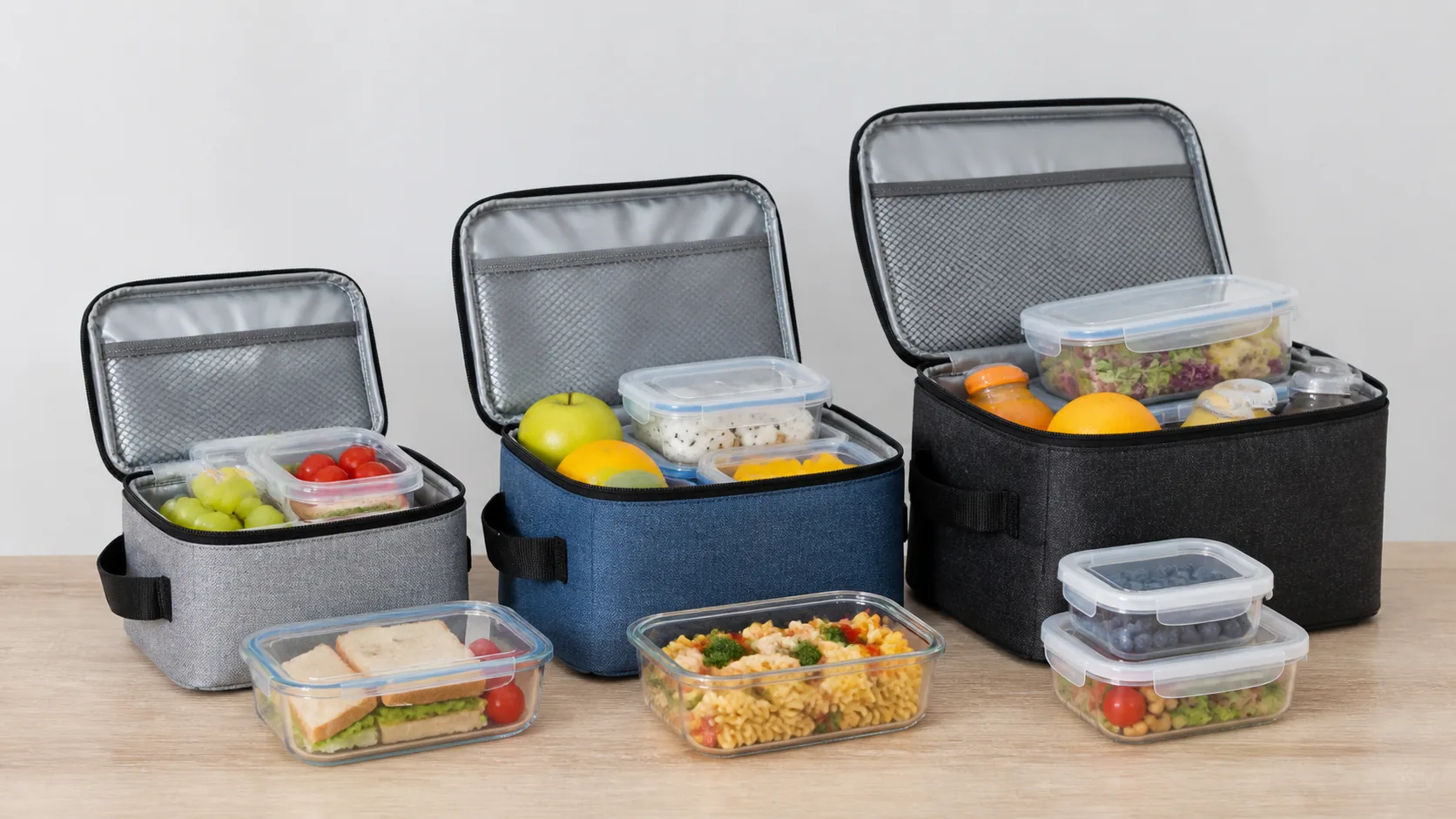
Standard lunch bags typically measure between 5 x 8 x 3 inches for compact styles and up to 11.5 x 10 x 5.5 inches for family-sized options, with capacities ranging from about 5 to 20 liters depending on the intended use.
Ever packed a fresh salad only to find it crushed by a water bottle three hours later? Or watched a child struggle to fit a sandwich, juice box, and apple into a bag that clearly was not built for the job? These small daily frustrations pile up fast. The fix is simple: match lunch bag dimensions to actual meal habits, so you stop guessing and start packing with confidence.
Choosing a lunch bag sounds trivial until the wrong size disrupts your day. If you have asked what size is a lunch bag for school, work, or bulk retail programs, this guide walks through common dimensions, capacity ranges, and use cases. For brands ordering custom lunch bags, sizing also affects freshness, portability, packaging, freight, and branding space.
What are the most common lunch bag size comparisons?

The most common lunch bag comparisons fall into three tiers: small (5-10 liters), medium (8-12 liters), and large (12-20 liters). If you have ever wondered what size is a lunch bag for daily commuting, most buyers land in the medium bracket because it handles a full meal plus a drink without feeling bulky.
Paper lunch sacks still dominate schools and delis, while insulated fabric bags rule offices and outdoor jobs. Paper versions run flat and light, whereas insulated models add roughly an inch on every side for foam padding.
How do paper and insulated bags differ in dimensions?
Paper bags usually come in narrow, tall shapes, while insulated bags sit wider and shorter for stackable containers. Paper sacks average about 5 x 3 x 10 inches, letting them stand upright inside a locker. Insulated versions widen at the base so rigid meal-prep containers lie flat.
- Paper sacks: lightweight, disposable, flat-bottomed
- Insulated fabric: padded walls, zip closures, reusable
- Hybrid designs: foil-lined paper for warm foods
Which size fits most adult meals?
An 8-12 liter bag handles most adult meals, giving room for a main container, a side, a drink, and an ice pack.
| Bag Type | Dimensions (inches) | Capacity (liters) | Best Use |
|---|---|---|---|
| Small paper | 5 x 3 x 10 | 5-7 | Sandwich lunch |
| Standard insulated | 9 x 6 x 8 | 8-10 | Adult daily meal |
| Large cooler-style | 11.5 x 10 x 5.5 | 12-20 | Family or shift work |
A clear tier system helps you skip trial-and-error shopping and pick right the first time.
What size is a lunch bag for small meals and snacks?

For light meals and snacks, a small lunch bag measuring roughly 5 x 3 x 10 inches with a 5-7 liter capacity does the job. When people ask what size is a lunch bag for a child or a mid-day snack run, this compact range often wins because it stays light enough for backpacks while still fitting a sandwich, fruit, and a juice box.
Small bags shine when portability matters more than volume. You can slip one into a tote or laptop bag and forget it is even there until lunchtime.
What fits inside a small lunch bag?
A small bag holds one main item plus two supporting snacks comfortably. You get a sandwich or wrap, a piece of fruit, and a small drink container without squeezing everything flat.
- One standard sandwich or wrap
- One 100-150 ml yogurt or fruit cup
- One 250 ml juice box or slim water bottle
- Room for a napkin and small utensil
Who benefits most from compact sizes?
Kids, minimalists, and snack-focused users lean hardest on small bags. A compact design keeps the carry weight low and prevents overpacking.
| User | Typical Contents | Recommended Size |
|---|---|---|
| Elementary kid | Sandwich, fruit, juice | 5 x 3 x 10 in |
| Office snacker | Salad cup, nuts | 6 x 4 x 8 in |
| Fitness user | Protein shake, bar | 5 x 5 x 9 in |
Right-sizing at this tier keeps meals fresh and prevents lunch clutter.
What size is a lunch bag for everyday office meals?

For everyday office meals, a medium bag around 9 x 6 x 8 inches with 8-12 liter capacity fits the bill. Many buyers asking what size is a lunch bag for typical desk lunches settle here because it holds a full meal-prep container, a piece of fruit, a drink, and a small ice pack without bulk.
Medium bags balance capacity and portability better than any other tier. You get room for variety without lugging around dead space.
How do you pick the right insulation level?
Insulation quality matters more than raw size for daily office use. Thicker foam walls help keep salads crisp until noon, especially in warm buildings.
- Single-layer foil: light meals, short commutes
- PEVA foam lining: standard 4-6 hour freshness
- Double-wall insulation: longer cold retention when paired with an ice pack
Which compartment layout works best at work?
Compartments separate wet from dry foods. A main insulated pocket paired with a front mesh sleeve for utensils and napkins keeps things organized.
| Feature | Benefit | Ideal For |
|---|---|---|
| Dual compartment | Hot/cold separation | Meal preppers |
| Side bottle pocket | Hydration on the go | Commuters |
| Interior mesh | Utensil storage | Office diners |
Layout can matter as much as liters when a desk lunch involves multiple textures and temperatures.
What size is a lunch bag for larger appetites or families?

For larger appetites or family outings, a large lunch bag measuring around 11.5 x 10 x 5.5 inches with 12-20 liter capacity handles the load. If you have wondered what size is a lunch bag for a full day of meals for two adults, this bracket gives room for multiple containers, drinks, and ice packs in one carry.
Large bags earn their keep on long shifts, road trips, and beach days. You pack once and stop worrying about running out of food.
When do you really need a large bag?
Large bags work best outside the standard 9-to-5 routine. Long shifts, outdoor events, and family picnics all demand extra capacity that smaller tiers cannot provide.
- 12+ hour hospital, warehouse, or trade shifts
- Road trips with kids
- All-day construction or field work
- Weekend picnics for 2-4 people
What features matter most at this size?
At this size, reinforced straps, leak-resistant liners, and dual zippers matter. Heavier loads punish weak stitching, so build quality determines whether the bag survives daily use.
| Feature | Why It Matters |
|---|---|
| Padded shoulder strap | Reduces fatigue on long carries |
| Leak-resistant PEVA liner | Helps contain spills from multiple containers |
| Dual-zipper access | Speeds up meal retrieval |
| External bottle holders | Frees interior space |
Durability pays off when you are hauling several pounds of food across a parking lot daily.
What size is a lunch bag that matches your lifestyle?

Matching lunch bag size to lifestyle means honestly assessing your meal habits, commute, and daily load. When shoppers ask what size is a lunch bag for their specific routine, the answer depends less on trends and more on how they actually eat during the day.
Lifestyle drives sizing more than age or gender does. A grazer needs different capacity than someone eating one large meal at noon.
Are you a grazer or a big-meal eater?
Grazers benefit from medium bags with multiple compartments, while big-meal eaters often do better with a large single-compartment design. Your eating style, not just your appetite, determines the layout that suits you.
- Grazers: 4-6 small containers, medium bag
- Big-meal eaters: 1-2 large containers, large bag
- Mixed style: modular bag with removable dividers
How does commute length change the answer?
Longer commutes need stronger insulation, regardless of capacity. A 30-minute train ride demands different specs than a two-block office walk.
| Commute Time | Recommended Insulation | Suggested Size |
|---|---|---|
| Under 15 min | Basic foil | Any size |
| 15-60 min | PEVA foam | Medium+ |
| Over 60 min | Double-wall + ice pack | Medium/Large |
Aligning insulation with commute length helps keep meals fresh and reduces daily frustration.
What size is a lunch bag best for kids versus adults?
Kids do best with 5-7 liter bags around 8 x 6 x 4 inches, while adults typically need 8-15 liter capacity in the 9 x 7 x 8 inch range. If parents are unsure what size is a lunch bag for a growing child, err slightly larger because portions expand fast between ages 6 and 12.
Age-appropriate sizing prevents both waste and hunger. Overpacking wastes food; underpacking leaves kids hungry before the day is over.
What should parents look for?
Parents should prioritize easy-open zippers, wipeable liners, and designs kids will actually carry. Function without appeal can leave the bag abandoned in the coat closet.
- Chunky zipper pulls for small hands
- Food-safe liners
- Bright colors or age-appropriate prints
- Name tag window
What do adults prioritize differently?
Adults often want understated aesthetics, professional colors, and durable business-appropriate materials. Adult buyers tend to trade novelty for longevity and workplace polish.
| Age Group | Priority Features | Typical Dimensions |
|---|---|---|
| Ages 5-10 | Fun design, easy zipper | 8 x 6 x 4 in |
| Ages 11-17 | Insulation, compartments | 9 x 6 x 6 in |
| Adults | Professional look, durability | 10 x 7 x 8 in |
Right-sizing by age reduces daily complaints and keeps meals more likely to be eaten.
What size is a lunch bag to match meal-prep containers?
Your lunch bag should match your meal-prep container footprint plus about one inch on each side for insulation and easy access. Anyone weighing what size is a lunch bag for bento boxes should measure containers first, then shop, not the other way around.
Container-first shopping eliminates many return trips. Guess-buying leads to bags that either swallow small containers or refuse to close over standard ones.
How do you measure containers correctly?
Measure length, width, and height in inches, then add 1-1.5 inches per dimension for padding and access. This buffer prevents the frustrating squeeze that damages both bag and container over time.
- Length + 1 inch = internal bag length
- Width + 1 inch = internal bag width
- Height + 1.5 inches = internal bag height
- Add extra room for ice packs
What about rigid versus flexible containers?
Rigid containers demand more exact matching, while flexible pouches offer more forgiveness. Your bag choice should reflect whichever container type you use most often.
| Container Type | Sizing Buffer | Best Bag Style |
|---|---|---|
| Rigid glass | +1.5 in all sides | Structured box-style |
| Rigid plastic | +1 in all sides | Semi-structured |
| Silicone pouch | +0.5 in all sides | Soft-sided |
| Flexible food bag | Flexible | Any style |
Matching container type to bag structure prevents crushed lids and forced zippers.
What size is a lunch bag for bulk and custom manufacturing?
Bulk and corporate buyers often standardize around 9 x 7 x 8 inch medium bags with custom branding options. When procurement teams ask what size is a lunch bag for employee wellness programs or promotional giveaways, this middle-tier size has broad appeal and reasonable shipping efficiency.
Corporate sizing decisions ripple across thousands of units. A one-inch overage per bag can multiply into higher carton, warehouse, and freight costs. This is why retail buyer scenarios often start with a standard size before moving into fully custom dimensions.
Why does standardization save money?
Standardized dimensions can help control freight costs, warehouse footprint, and per-unit production expenses. Exact savings depend on materials, order quantity, packaging, and destination, so buyers should verify the numbers during quotation.
- Lower minimum order quantities may be available on standard sizes
- Faster sampling can be possible when existing patterns are used
- Predictable carton configurations
- Easier reorder and inventory management
What branding options work at bulk scale?
Common decoration methods include screen printing, heat transfer, embroidery, woven labels, and hot stamping. Each method carries different setup costs, minimum quantities, and durability expectations.
| Branding Method | Common Fit | Best For |
|---|---|---|
| Screen print | Larger runs | Simple logos |
| Heat transfer | Medium runs | Full-color art |
| Embroidery | Premium styles | Raised texture |
| Hot stamping | Specific materials | Metallic finish |
For e-commerce bag projects, size standardization also affects listing photos, packaging weight, returns, and review expectations.
How do you communicate specs to a factory?
Custom-manufactured lunch bags can range from compact 6 x 4 x 8 inch snack bags to larger 14 x 10 x 8 inch cooler-style formats, depending on client specs. Send a tech pack with exact dimensions, material specs, color references, and finish requirements. Factories translate ambiguity into their own defaults, and those defaults may not match your vision.
- Dimensions in mm (L x W x H)
- Material weight or fabric specification
- Lining and insulation structure
- Color references
- Logo placement diagram
- Sample approval milestone
What OEM versus ODM route makes sense?
Choose OEM when the design is already finalized and ODM when you need factory design help. Each path serves a different brand stage.
| Service | Best For | Timeline | Cost |
|---|---|---|---|
| OEM | Established brands | Verify by project | Lower |
| ODM | New product lines | Verify by project | Higher |
| Hybrid | Iterative brands | Verify by project | Medium |
For a launch where quantity and response are still uncertain, a pilot order case approach is often safer than committing to a large assortment too early. Buyers also need to balance material, size, and packaging cost; the retail cost control case is a useful frame for that discussion.
What size is a lunch bag mistakes should you avoid?
Common sizing mistakes include buying purely on aesthetics, ignoring container dimensions, and underestimating insulation needs. Shoppers debating what size is a lunch bag for them often skip the measuring step and pay for it with returns or ruined meals.
Avoiding these pitfalls saves money and frustration. A short measuring session at home beats several return trips to the store.
Which mistake costs buyers most?
Oversizing can cost more than undersizing in the long run. Empty space inside a bag reduces packing efficiency and wastes shelf space in a kitchen, locker, or warehouse. Undersizing is also a problem because it crushes containers and stresses zippers.
- Oversizing creates unnecessary bulk
- Undersizing crushes containers and lids
- Shape mismatches stress zippers
- Skipping ice-pack space weakens insulation planning
How do you recover from a bad purchase?
You can repurpose oversized bags for weekend outings or gym use. Undersized bags work well for snack-only days or as accessory pouches inside larger totes.
| Mistake | Quick Fix | Long-Term Solution |
|---|---|---|
| Too big | Add divider inserts | Buy the right size next time |
| Too small | Use for snacks only | Upgrade to medium |
| Wrong shape | Reorganize contents | Match to containers |
| Weak insulation | Add gel packs | Replace with insulated model |
Getting lunch bag sizing right transforms a daily task into a smoother routine, whether you are packing for one student or ordering branded bags for a corporate program. If your brand needs custom packaging solutions with clear sizing, sampling, and production support, contact us today to discuss practical lunch bag options.
FAQ About Lunch Bag Sizes
Can I use the same lunch bag for both hot and cold foods?
Yes, if it has enough insulation and the contents are packed safely. Look for PEVA-lined models with separate compartments so hot and cold items do not sit directly against each other.
What is the best size for a college student’s daily meals?
A medium 9 x 6 x 8 inch bag works well for most college students. It holds a main meal, a snack, and a drink while still fitting inside many backpacks.
How do I know if a lunch bag is truly leak-proof?
Check for sealed seams and TPU or PEVA liners rated for liquids. Before daily use, test carefully at home with a small amount of water and check whether the seams leak.
What is the ideal MOQ for ordering custom-branded lunch bags?
MOQ depends on material, size, decoration method, and factory schedule. Some projects may start in the hundreds of pieces, while more customized designs may require higher quantities.
How do I keep my lunch bag from smelling after long-term use?
Wipe the interior regularly, air-dry fully before storage, and avoid leaving damp containers inside overnight. Odor usually starts when moisture and food residue stay trapped inside the bag.