
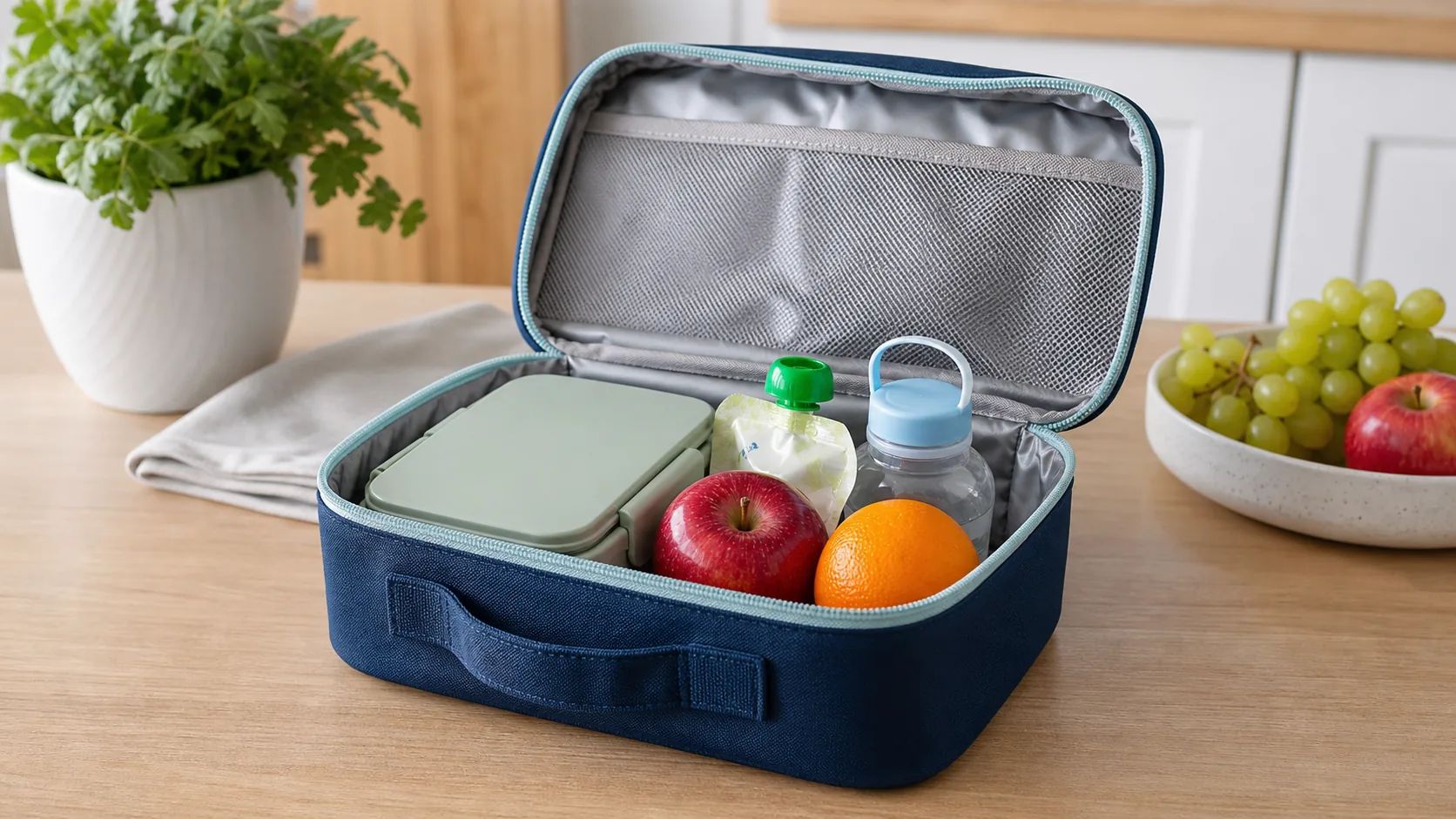
Choosing the right lunch bag comes down to matching size, insulation, material, compartments, safety, cleaning, style, and age fit with the user’s real daily routine. Parents want food to stay fresh until lunch. Retail buyers want a bag that looks good on the shelf, holds up in daily use, and avoids avoidable complaints about leaks, broken zippers, or weak insulation. If you are comparing custom lunch bags for school, work, or private label planning, the same practical checklist can help you make a better decision.
The best lunch bag is not always the largest, thickest, or most expensive option. It is the one that fits the meal, protects the food, cleans easily, and feels natural to carry every day. The checkpoints below show how to choose a lunch bag in a way that works for parents, students, and B2B buyers building a retail range.
Why Does Size and Capacity Matter?

The right size holds the usual meal without crushing food or leaving too much empty space. A lunch bag that is too small forces parents to skip fruit, drinks, or snacks. A bag that is too large becomes heavy, awkward, and harder for a child to carry to the cafeteria.
Most school-age children do well with a lunch bag around 8-12 inches long and 6-8 inches wide. The exact size depends on age, appetite, lunch containers, and whether the child carries a water bottle or thermos inside the bag.
What size works for different ages?
Younger children usually need compact bags, while older students often need more room for larger portions and extra snacks.
- Ages 4-7: about 8 x 6 x 4 inches for a small bento and juice pouch
- Ages 8-11: about 10 x 7 x 5 inches for a sandwich, snacks, and drink
- Ages 12+: about 12 x 8 x 6 inches for larger portions, fruit, and a thermos
How do you test lunch bag capacity?
Load the bag with the containers used on a normal day and zip it shut. If the zipper strains, the lid presses into soft food, or the drink must lie sideways, size up one tier.
| Age Group | Recommended Size | Ideal Capacity |
|---|---|---|
| 4-7 years | 8 x 6 x 4 in | 4-6 L |
| 8-11 years | 10 x 7 x 5 in | 7-9 L |
| 12+ years | 12 x 8 x 6 in | 10-12 L |
Capacity should scale with age and appetite, not just with shelf appeal.
How Does Insulation Keep Lunches Fresh?

Good insulation helps cold food stay cold and warm food stay warmer through a normal school or workday. When buyers ask how to choose a lunch bag with reliable thermal control, insulation thickness and lining quality are two of the most important checks.
Many school lunch bags use a PEVA or aluminum foil lining with foam insulation. A reusable ice pack can extend cold retention, especially when lunch is served later in the day or the bag sits in a warm classroom.
Which insulation materials perform well?
The best choice depends on climate, food type, and price target.
- PEVA lining: food-safe, wipeable, and easy to clean
- Aluminum foil lining: reflects heat and supports stronger thermal control
- Foam insulation: adds depth and helps stabilize the inner temperature
- Thermal batting: adds cushioning between fabric layers
Is thicker insulation always better?
Not always. Too much insulation can make the bag bulky and less comfortable to carry. For most school and office uses, a balanced structure with a wipeable liner, reliable foam, and a tight zipper gives better everyday performance than oversized padding alone.
| Insulation Type | Cold Retention | Best Use Case |
|---|---|---|
| PEVA + 5 mm foam | 4-6 hours | Mild climates |
| Aluminum foil + 6 mm foam | 6-9 hours | Standard school days |
| Thermal batting + PEVA | 8-12 hours | Hot climates or late lunch |
Thermal performance should match the lunch schedule and local conditions.
Which Materials Should You Trust?

Polyester and nylon are common outer fabrics because they resist tearing, stains, and light moisture. For lunch bag manufacturing projects, material choice affects cost, durability, print quality, and how the product feels in daily use.
Higher-denier polyester, such as 600D, is a practical option for mass retail lines. RPET recycled polyester can support sustainability positioning. Neoprene offers a soft, cushioned feel for more lifestyle-driven designs.
What fabrics balance durability and cost?
The right material depends on the product tier and the expected user.
- 600D polyester: strong, cost-effective, and widely used
- RPET recycled polyester: useful for eco-focused retail stories
- Nylon: lightweight, durable, and clean-looking
- Neoprene: soft, flexible, and naturally water-resistant
Are waterproof coatings necessary?
A water-resistant or coated base is useful because spills often start inside the bag and then spread outward. A TPU or PU coating can help reduce leaks from yogurt, juice, or condensation, especially when the bag is placed inside a backpack.
| Material | Durability | Best For |
|---|---|---|
| 600D polyester | High | Mass retail lines |
| RPET recycled polyester | Medium-high | Eco-focused brands |
| Nylon | High | Lightweight designs |
| Neoprene | Medium | Soft premium lunch bags |
Material choice defines both lifespan and brand positioning.
Are Multiple Compartments Worth It?

Multiple compartments improve organization and protect delicate food from getting crushed. A single-pocket design can work for simple meals, but it often forces sandwiches, drinks, fruit, and utensils into the same space.
Dual-compartment bags make it easier to separate cold items from snacks or dry food. This matters for parents and also for retail buyer scenarios where a clear, practical layout can make a product easier to explain and sell.
What compartment layout works best?
A useful layout should match how people actually pack lunch.
- Top compartment for snacks, fruit, napkins, or utensils
- Bottom compartment for the main container and cold drink
- Front pocket for a spoon, straw, note, or small ice pack
- Side pocket for a small bottle when the design can support it
Do children use every pocket?
They can, especially when the pocket system is simple. Too many small pockets may confuse younger children, but one main compartment plus one snack pocket is easy to understand.
| Layout | Kid-Friendly Score | Retail Appeal |
|---|---|---|
| Single compartment | Low-medium | Budget lines |
| Dual compartment | High | Mid-market bestseller |
| Triple + front pocket | High | Premium positioning |
The goal is not more pockets for their own sake. The goal is easier packing and less food damage.
How Much Should You Spend and Plan for Sourcing?

A good lunch bag should be judged by value, not just price. A very cheap bag may save money at checkout but fail early through weak stitching, poor insulation, cracked lining, or zipper problems. For B2B buyers, pricing also depends on material grade, construction, print method, and order quantity.
When building e-commerce bag projects, small test orders can help confirm size, user feedback, and packaging before a larger launch. A pilot order case is especially useful when a brand wants to validate a new lunch bag style without overcommitting inventory.
What drives the price of a lunch bag?
Several cost factors matter more than the retail price alone.
- Fabric grade and denier
- Insulation depth and lining material
- Zipper and puller quality
- Printing, embroidery, or heat transfer
- Inner structure, pockets, and reinforced seams
- Compliance testing and packaging needs
How should buyers evaluate a manufacturer?
Ask for the factory profile, sample policy, material options, compliance documents, and production timeline before placing bulk orders. MOQ, sampling time, and inspection process should be confirmed in writing because these details vary by supplier and project.
| Price Tier | Retail Range | Expected Lifespan |
|---|---|---|
| Budget | $8-$14 | About 1 school year |
| Mid-range | $15-$25 | 2-3 school years |
| Premium | $26-$40+ | 3-5 school years |
Price should be read together with expected lifespan, complaint risk, and target market.
Does Style Preference Affect Daily Use?
Style matters because a lunch bag only works if the user wants to carry it. A child who dislikes the print may leave it at home, while an older student may reject a design that feels too young. For retail planning, style can decide whether the product gets noticed at all.
Design preferences change with age. Younger children may like bright prints and characters. Older students often prefer sporty, outdoor, minimalist, or neutral designs.
What style categories sell well?
Different age groups respond to different visual cues.
- Character-themed prints for ages 4-8
- Bright graphic patterns for elementary school
- Sporty or outdoor themes for ages 8-12
- Minimalist solids or subtle patterns for older students
Should parents let children choose the design?
Yes, within practical limits. Parents can set the quality requirements first, then let the child choose from designs that meet those requirements. That balance protects function while increasing daily use.
| Age Group | Common Design Direction | Purchase Driver |
|---|---|---|
| 4-7 | Cartoon or playful prints | Parent and child excitement |
| 8-11 | Sports or adventure themes | Peer influence |
| 12+ | Minimalist or neutral styles | Personal style |
Style is not superficial when it affects whether the bag gets used.
What Safety Standards Should You Check?
A safe lunch bag should avoid restricted chemicals and use materials suitable for daily food-adjacent use. When choosing lunch bags for children, buyers should pay attention to BPA, phthalates, lead, AZO dyes, and other regulated substances.
For US and EU markets, documentation may include CPSIA, REACH, and material test reports. These documents should be checked project by project because requirements depend on the market, material, age group, and selling channel.
What certifications should buyers ask about?
Useful documents may include:
- CPSIA compliance for children’s products in the US
- REACH compliance for the EU market
- SGS or similar material test reports
- BSCI or similar social compliance audit
- GRS documentation when recycled materials are used
Are cheap lunch bags always unsafe?
No, price alone does not prove safety. However, very low prices can leave little room for better materials, testing, and quality control. Buyers should treat missing documentation as a warning sign rather than relying only on product photos.
| Certification | Region | What It Covers |
|---|---|---|
| CPSIA | USA | Lead, phthalates, children’s product safety |
| REACH | EU | Chemical restrictions |
| SGS Report | Global | Material testing |
| BSCI | Global | Social compliance |
Safety paperwork protects users and reduces import, recall, and marketplace risks.
How Do You Clean and Maintain a Lunch Bag?
Cleaning matters because lunch bags collect crumbs, spills, condensation, and odors. A bag with a smooth wipeable lining is easier to maintain than one with deep corners, absorbent seams, or rough inner fabric.
Most polyester and PEVA-lined bags can be wiped clean quickly. Some bags may allow gentle machine washing, but buyers should follow the care label because insulation layers can shift if washed too aggressively.
What cleaning routine works?
A simple routine keeps the bag hygienic and extends product life.
- Daily: empty crumbs and wipe visible spills
- Weekly: spot clean with mild soap and warm water
- Monthly: air dry fully and use baking soda for odor control if needed
Can you machine wash a lunch bag?
Sometimes, but only if the manufacturer says it is safe. Hand cleaning is usually safer for insulated bags because it protects foam layers, seams, and zipper shape.
| Cleaning Method | Frequency | Best Materials |
|---|---|---|
| Damp cloth wipe | Daily | Most lunch bags |
| Mild soap spot clean | Weekly | PEVA, polyester, nylon |
| Hand wash | Monthly as needed | Polyester and nylon |
| Machine wash | Only if labeled safe | Select washable designs |
Easy cleaning turns a lunch bag from a short-term purchase into a longer-lasting daily item.
Which Lunch Bag Design Fits Different Age Groups?
Different ages need different structures. Younger children need soft, easy-open bags. Elementary students often need zippered rectangles with enough structure to protect containers. Older students may prefer tote, messenger, or crossbody shapes that look less childlike.
Retailers and brands should match design to age before choosing prints or colorways. For cost-sensitive ranges, a retail cost control case can help frame how material, structure, packaging, and target price need to work together.
What structural features suit each age?
Each age group has different handling needs.
- Preschool: compact tote shape, easy grip, simple opening
- Elementary: zippered rectangle, handle, optional shoulder strap
- Middle school: messenger, tote, or crossbody shape with muted styling
Do older kids care about structure?
Yes. A middle-schooler may reject a lunch bag that looks too young, even if it works well. For that age group, structure and style are closely connected.
| Age | Best Structure | Closure Type |
|---|---|---|
| 3-5 | Compact tote | Velcro, magnet, or easy zipper |
| 6-10 | Zippered rectangle | Single zipper |
| 11-14 | Messenger, tote, or crossbody | Dual zipper |
Age fit helps the bag leave the house every morning, which is the real test of usability.
Final Thoughts
How to choose a lunch bag comes down to practical fit: size, insulation, material, compartments, price, style, safety, cleaning, age match, and supplier reliability. A strong lunch bag protects food, cleans quickly, carries comfortably, and fits the user’s routine. For brands building a retail or private label range, the same checklist also reduces sampling mistakes and makes product positioning clearer. If you are planning a custom lunch bag project, contact us today to discuss materials, construction, compliance needs, and launch planning.
FAQ
Can I put ice packs directly inside any lunch bag?
Yes, in most insulated lunch bags. PEVA or aluminum foil linings are commonly designed to handle ice packs, but you should still check the care label and avoid sharp frozen packs that can puncture the lining.
What is the best material for a leak-resistant lunch bag?
600D polyester with a PEVA lining is a strong all-around choice. The outer fabric gives abrasion resistance, while the inner lining helps with wipe-clean maintenance and spill control.
How do I know if a lunch bag is safe for my child?
Check for relevant compliance documents such as CPSIA for the US, REACH for the EU, and third-party material test reports. For younger children, avoid products without clear material and safety information.
What is the best size for a first-grader’s lunch bag?
Around 8 x 6 x 4 inches with a 4-6 liter capacity usually works well. It can hold a small bento, juice pouch, and snack without becoming too bulky.
How long should a good lunch bag last?
A mid-range lunch bag should usually last more than one school year with basic care. Premium bags with stronger stitching, better zippers, and durable linings can last longer, depending on daily use.