
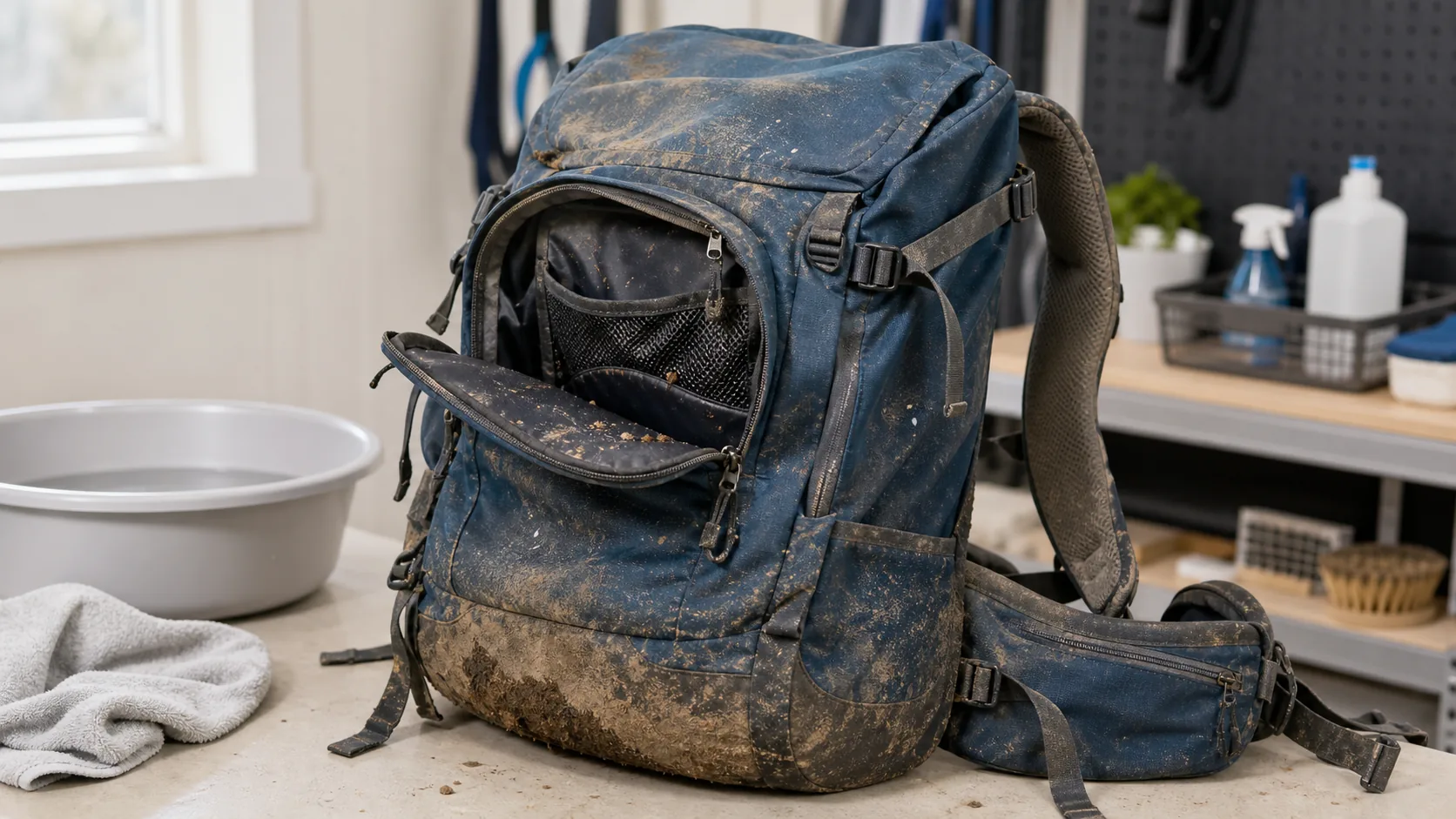
You wash a backpack by emptying every pocket, brushing off loose dirt, spot-cleaning stains, hand-soaking it in cool water with a gentle cleaner, rinsing until the water runs clear, and air-drying it in the shade. Do not put a structured hiking backpack in a dryer, and do not use bleach, fabric softener, hot water, or harsh detergent. That simple routine removes sweat, dust, food residue, and mildew odor while protecting coatings, seams, straps, and foam padding.
After a long season of trail miles, a backpack can smell sour, feel sticky at the shoulder straps, and show gray mesh or salt marks on the back panel. That does not mean the pack is ruined. It usually means the fabric has absorbed body oils, dust, sunscreen, and moisture. Learning how to wash a backpack correctly helps hikers, commuters, outdoor brands, and retail buyers keep gear cleaner for longer without shortening the life of the product.
Why Does a Backpack Get So Dirty?

A backpack gets dirty because it sits against the body, carries food and clothing, and picks up trail dust, rainwater, sunscreen, and sweat. Shoulder straps and back panels absorb the most odor because they stay in contact with skin and clothing for hours. Exterior fabric collects dust and mud, while inner pockets collect crumbs, spilled powder, wrappers, and damp gear.
For hiking packs and waterproof travel backpacks, cleaning is not just about appearance. Dirt and oils can affect coatings, zipper movement, and the feel of mesh padding over time.
What buildup appears after hiking?
Common contaminants include:
- Sweat and skin oils in shoulder straps
- Sunscreen or insect repellent on the back panel
- Trail dust, pollen, mud, and plant residue on the shell
- Food crumbs, drink powder, and snack residue inside pockets
- Mildew odor from damp rain gear or wet stuff sacks
How can grime damage fabric?
Oils, salt, and dirt can sit inside fabric and foam if they are never rinsed out. Over time, they may make straps stiff, reduce water beading, trap odor, and make the pack feel older than it is. Regular gentle cleaning protects hygiene and helps preserve material performance.
| Dirty Area | Common Cause | Cleaning Focus |
|---|---|---|
| Shoulder straps | Sweat and skin oils | Soak and hand-agitate |
| Back panel | Sunscreen, sweat, dust | Soft brush and rinse |
| Exterior shell | Mud and trail dust | Brush first, then wash |
| Inner pockets | Food crumbs and spills | Empty, vacuum, spot clean |
The first step in how to wash a backpack is knowing where the dirt is hiding.
When Should You Wash a Backpack?

You should wash a backpack after a long trip, at the end of a heavy-use season, before long-term storage, or whenever odor, salt marks, sticky straps, or mildew appear. Washing too often can wear coatings faster, but waiting too long lets odor and grime settle deeper into foam and mesh.
For a weekend hiking pack, one or two deep cleanings per year is usually enough. For custom tactical backpacks or field-use packs exposed to dust, sweat, and outdoor abrasion, cleaning frequency should follow real use rather than a fixed calendar.
What signs mean it is time to wash?
Watch for these signals:
- A sour or mildewy smell that does not air out
- White salt marks on shoulder straps
- Sticky or tacky foam padding
- Water no longer beading on the outer fabric
- Dirt shaking loose when you tap the bottom panel
Can you wash a backpack too often?
Yes. Even gentle washing can slowly reduce factory water-repellent treatment. Spot clean small stains when the rest of the pack is still fresh, and save full washing for real buildup, heavy odor, or storage prep.
| Usage Level | Recommended Wash Frequency | Notes |
|---|---|---|
| Weekend hiker | 1 time per year | End of season |
| Regular backpacker | 1-2 times per year | Mid-season if needed |
| Thru-hiker | After each long trip | Spot clean during use |
| Daily commuter or trainer | 2-4 times per year | Watch sweat buildup |
Wash timing should match dirt level, not habit.
What Cleaning Products Work Best?

The best cleaning products for a backpack are mild, residue-free, and safe for technical fabrics. A technical fabric wash is the safest routine option. Unscented oxygen-based cleaners can help with odor or organic staining when used carefully. Mild dish soap can help spot-clean grease, but it should be diluted and rinsed thoroughly.
Avoid bleach, fabric softener, scented laundry detergent, aggressive stain removers, and strong solvents. These can leave residue, damage coatings, weaken seams, or make the pack attract more dirt on the next trip. The same sweat and odor logic also applies to custom gym bags, which face similar moisture and bacteria buildup.
Which cleaners are safe for technical fabrics?
Good options include:
- Technical fabric wash for routine cleaning
- Unscented oxygen-based cleaner for odor and organic stains
- Mild dish soap for small grease or sap spots
- Clean cool water for light rinsing and spot care
Use brand-name technical cleaners only according to their labels, especially when the backpack has waterproof coatings, laminated fabric, or taped seams.
What products should you avoid?
Avoid these products:
- Bleach
- Fabric softener
- Scented laundry detergent
- Hot water
- Dry-cleaning solvents
- Stiff wire brushes
| Product Type | Safe? | Best Use |
|---|---|---|
| Technical fabric wash | Yes | Routine cleaning |
| Unscented oxygen cleaner | Usually, if diluted | Odor and organic stains |
| Mild dish soap | Spot use only | Grease or sap |
| Bleach | No | Damages fibers and seams |
| Fabric softener | No | Leaves residue |
| Scented detergent | No | Can clog and attract dirt |
Choose the mildest cleaner that solves the problem.
How to Wash a Backpack Step by Step?

The safest way to wash a backpack is by hand in a bathtub, utility sink, or large basin. Hand washing gives you control over water temperature, pressure, soaking time, and delicate areas such as mesh, straps, and zippers.
This method is especially useful for brands and buyers focused on outdoor gear applications, where coated fabrics, reinforced stress points, and durable stitching all need care during washing.
What are the exact steps?
Follow this sequence:
- Empty every compartment and check hidden pockets.
- Remove detachable hip belts, frame sheets, and loose accessories if possible.
- Shake out dust and vacuum crumbs from the inside.
- Brush dry mud from the exterior with a soft brush.
- Spot-clean stains with diluted cleaner and a soft cloth.
- Fill a tub or sink with cool water and a technical wash.
- Submerge the pack with zippers open.
- Gently agitate straps, back panel, pockets, and bottom corners.
- Drain and rinse with clean cool water until no soap remains.
- Press out excess water without twisting the frame or foam.
How long does washing take?
Most of the active work takes less than an hour. Drying takes much longer, so start early and avoid washing right before a trip.
| Stage | Time Required | Critical Detail |
|---|---|---|
| Empty and vacuum | 10 minutes | Check every pocket |
| Spot cleaning | 10-15 minutes | Use a soft cloth or brush |
| Hand wash soak | 15-20 minutes | Cool water only |
| Rinse cycle | 10-15 minutes | Rinse until water is clear |
| Air dry | 24-48 hours | Shade and airflow |
The rinse step matters. Leftover soap can make fabric stiff and attract more dirt.
Can You Wash a Backpack in a Washing Machine?

Some backpacks can be machine-washed only if the care label clearly allows it, but hand washing is safer for most hiking, tactical, travel, and structured backpacks. Frames, foam padding, buckles, coated fabrics, zipper pulls, and mesh panels can all suffer from machine agitation.
If a pack is small, frameless, and explicitly marked machine-washable, use a front-loading machine, cold water, gentle cycle, mild cleaner, and a mesh laundry bag. Never use a top-loader with a center agitator for a structured backpack.
When is machine washing acceptable?
Machine washing may be acceptable only when:
- The care label permits it.
- The pack has no metal frame or rigid frame sheet.
- Buckles and straps can be secured.
- A front-loading machine is available.
- Cold water and a delicate cycle are used.
When any of those conditions are missing, wash by hand.
What damage can a washing machine cause?
Machine washing can:
- Tear mesh pockets
- Pull stitching at high-stress points
- Crack or bend frame sheets
- Scratch buckles and zipper pulls
- Strip coatings faster than hand washing
- Trap soap inside padding
| Method | Convenience | Fabric Safety | Recommended? |
|---|---|---|---|
| Hand wash in tub | Medium | Excellent | Yes |
| Front-load machine, delicate | High | Fair | Only if label allows |
| Top-load with agitator | High | Poor | No |
| Dryer | High | Very poor | Never |
If you are unsure, hand wash. It is slower, but it protects the pack.
How Do You Dry a Backpack Correctly?
Dry a backpack by hanging it upside down or laying it open in a shaded, ventilated area for 24 to 48 hours. Keep every compartment unzipped and open. Direct sunlight, heaters, and dryers can damage coatings, warp foam, and weaken synthetic materials.
Most mildew problems start when a pack is stored before the inner seams, straps, and foam are fully dry. A pack can feel dry outside while the shoulder straps still hold moisture inside.
Why should you avoid direct heat?
Heat can damage backpacks in several ways:
- Foam padding can warp or stiffen.
- Coatings can soften or crack.
- Plastic buckles can deform.
- Elastic and webbing can lose recovery.
- Colors may fade faster.
What is the best drying setup?
Hang the pack from a shower rod, porch beam, or garage hook with all zippers open. Place a fan nearby for airflow, but do not point high heat at the pack. Turn pockets outward where possible so hidden corners can dry.
| Drying Method | Time | Risk Level |
|---|---|---|
| Shaded outdoor hanging | 24-36 hours | Low |
| Indoor with fan | 24-48 hours | Low |
| Direct sunlight | 12-18 hours | High |
| Clothes dryer | 1-2 hours | Critical |
Drying is not finished until straps, seams, and inner corners feel dry to the touch.
How Should You Store a Backpack After Washing?
Store a backpack only after it is completely dry. Loosen straps and buckles, open pockets slightly, and keep the pack in a cool, dry, dark place. Light stuffing can help it hold shape without compressing foam or bending the frame.
Poor storage can undo a careful wash. Damp basements, hot attics, sealed plastic bins, and sunny windows all increase the risk of mildew, odor, fading, and material damage.
What storage conditions extend pack life?
Good storage includes:
- A dry closet, gear room, or shelf
- Low humidity and steady temperature
- No direct sunlight
- No compression under heavy gear
- Clean towels or paper used lightly to hold shape
What storage mistakes damage backpacks?
Avoid these habits:
- Storing the pack while damp
- Crushing it under boxes or tools
- Keeping it sealed in plastic with no airflow
- Hanging it in direct sun
- Leaving food crumbs in pockets
| Storage Location | Fabric Safety | Recommended? |
|---|---|---|
| Ventilated gear closet | Excellent | Yes |
| Dry basement shelf | Good | Yes |
| Under bed in cotton bag | Good | Yes |
| Damp basement | Poor | No |
| Hot attic | Poor | No |
| Sealed plastic bin | Poor | No |
Cool, dry, and ventilated storage keeps the backpack ready for the next trip.
How Do You Restore Water Resistance?
After washing, you can restore water resistance with a spray-on or wash-in DWR treatment if water no longer beads on the fabric. DWR does not make every backpack waterproof, but it helps the outer fabric shed light rain and reduces wet-out.
For backpack brands, retailers, and sourcing teams, the need for long-term coating performance is also part of product design. A field-use bag durability example can help frame why fabric strength, seam quality, and coating choices matter before the product ever reaches the wash stage.
What DWR products work?
Useful options include:
- Spray-on DWR for targeted exterior panels
- Wash-in DWR when the care instructions allow it
- Technical waterproofing products made for outdoor fabrics
Spray-on treatment gives more control around straps, mesh, and inner surfaces. Wash-in treatment can cover more evenly, but it may not suit every construction.
How often should you reapply DWR?
Reapply only when water stops beading or after a full wash if the fabric wets out quickly. Occasional users may not need DWR after every wash. Heavy outdoor users may need it more often.
| DWR Method | Application Time | Best Use |
|---|---|---|
| Spray-on treatment | About 10 minutes | Targeted outer panels |
| Wash-in treatment | About 20 minutes | Full-fabric treatment |
| Combined wash + spray | About 30 minutes | Heavy outdoor use |
Test water beading after the pack is dry before deciding whether DWR is needed.
What Common Washing Mistakes Should You Avoid?
The most common backpack washing mistakes are using hot water, machine drying, harsh cleaners, skipping the rinse, and storing the pack before it is dry. Any one of these can create stiffness, odor, coating damage, or mildew.
Good cleaning habits also extend service life. A well-maintained pack smells better, carries more comfortably, and keeps zippers, buckles, straps, and seams working longer.
What are the top errors?
Avoid these mistakes:
- Using hot water on coated fabric
- Running the pack through a dryer
- Using bleach or fabric softener
- Scrubbing mesh with a hard brush
- Leaving soap residue in padding
- Storing the pack while damp
How can you recover from a wash mistake?
Some mistakes can be corrected. Re-rinse if the fabric feels soapy or stiff. Air-dry longer if odor returns. Reapply DWR if water stops beading. If heat has warped foam, damaged mesh, or cracked hardware, the repair may require replacement parts or warranty support.
| Mistake | Damage Type | Reversible? |
|---|---|---|
| Hot water wash | Coating stress | Partially |
| Machine drying | Warped foam or coating damage | Rarely |
| Bleach exposure | Fiber and seam damage | Usually no |
| Skipped rinse | Stiff fabric and residue | Yes, re-rinse |
| Damp storage | Mildew and odor | Sometimes |
Final Thoughts
How to wash a backpack comes down to patience and gentle handling. Empty it fully, brush off dry dirt, hand wash with a mild cleaner, rinse thoroughly, air-dry in shade, and store it only when every strap and pocket is dry. Those habits protect comfort, odor control, water resistance, and long-term durability. If your team is developing outdoor, travel, or tactical packs and wants construction that stands up to real cleaning and field use, contact us today to discuss custom backpack manufacturing options.
FAQ
Can I put my hiking backpack in the washing machine?
Usually no. Hand washing is safer for most hiking backpacks because machine agitation can stress seams, mesh, straps, foam, buckles, and frame parts. Use a washing machine only if the care label clearly allows it.
What is the best cleaner for backpack shoulder-strap odor?
A technical fabric wash or carefully diluted unscented oxygen-based cleaner can help remove sweat odor from straps. Rinse thoroughly so no cleaner remains inside the foam or mesh.
How do I know if my backpack needs a full wash?
Spot cleaning is enough for isolated stains. A full wash is better when odor remains after airing out, salt marks cover the straps, water no longer beads, or dirt is trapped in several compartments.
Can I use regular laundry detergent?
It is better to avoid regular scented detergent, fabric softener, and strong laundry products. They can leave residue, reduce water beading, and make fabric attract dirt faster.
How long does a backpack take to dry?
Most backpacks need 24 to 48 hours in a shaded, ventilated area. Thick shoulder straps and back panels dry slowly, so do not store the pack until every padded area feels dry.