
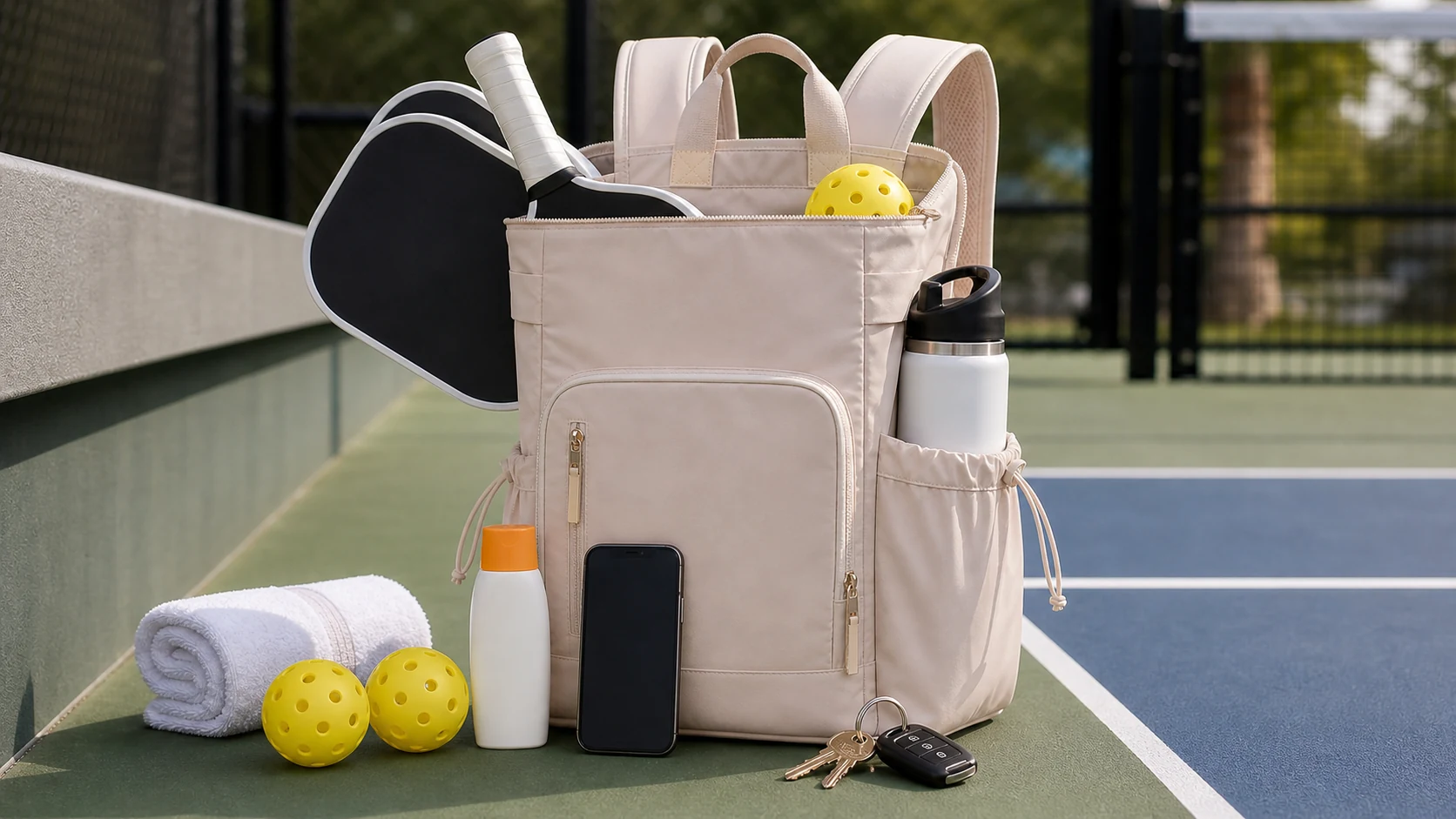
You choose the right size pickleball bag by matching capacity to paddles, balls, water, shoes, apparel, personal items, and the way the player travels to court. Size is only the first filter: paddle protection, pocket layout, material, carry comfort, branding space, and full-load quality checks decide whether that capacity is actually useful. For brands and retailers asking how do i choose the right size pickleball bag, bigger should not be the default. A bag that is too small causes messy packing, while a bag that is too large feels heavy and can be harder to position online.
How do I choose the right size pickleball bag for daily play?
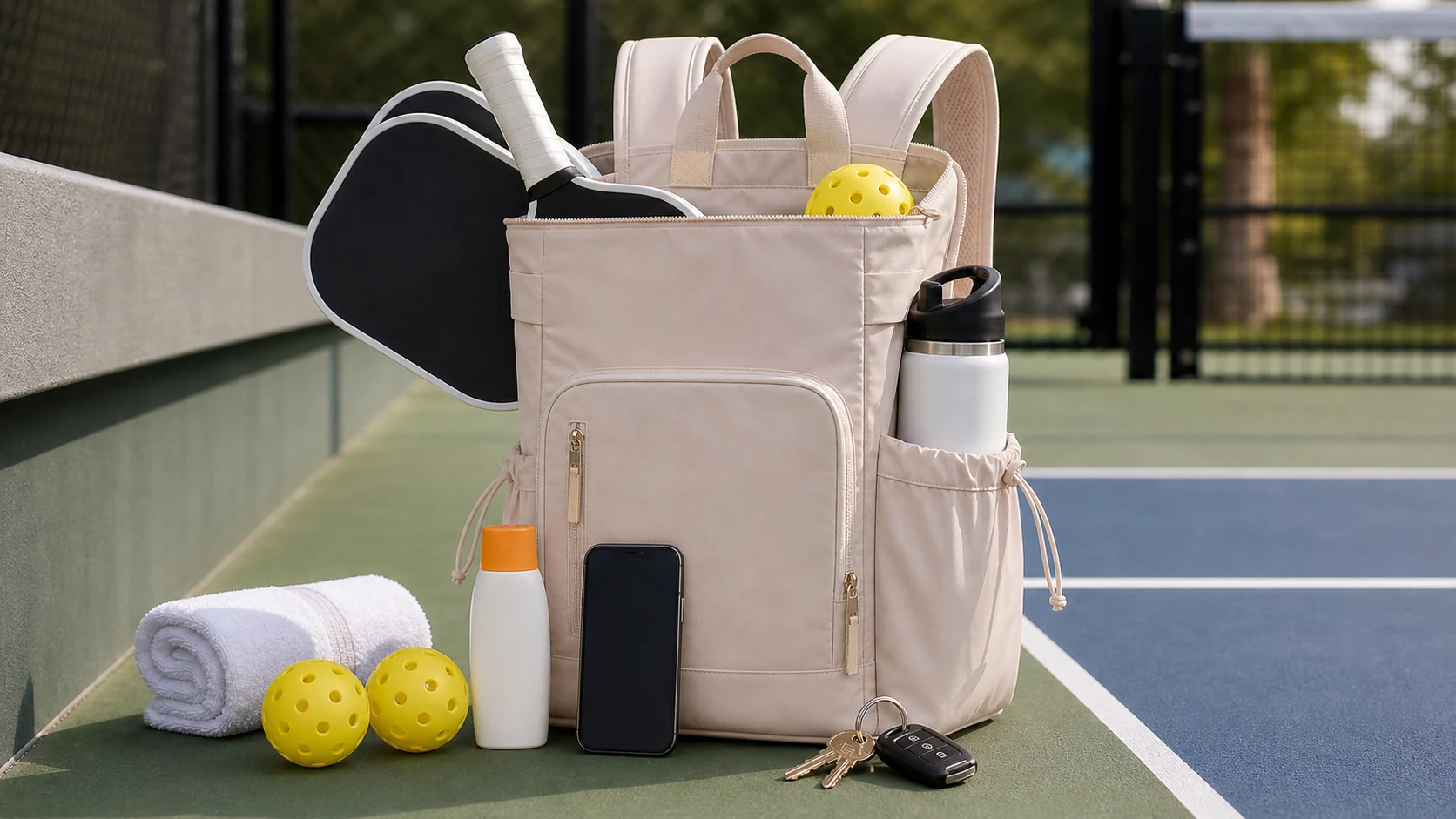
To answer how do i choose the right size pickleball bag for daily play, start with the gear a player carries most often. One or two paddles, several balls, a bottle, towel, phone, wallet, keys, and sunscreen usually fit a compact backpack or medium tote style.
What daily gear should define the size?
Pack real items before locking dimensions; product photos alone do not show usable capacity.
- One or two paddles
- Three to six balls
- Bottle and towel
- Phone, wallet, and keys
- Small care items such as sunscreen or grip tape
After confirming the item list, assign each item a location. Paddles need a protected sleeve, balls need quick access, bottles need secure upright storage, and keys or phones need a dry zipped pocket. This pocket map prevents a nominally large bag from wasting space through poorly sized compartments.
| Daily load | Suggested bag size |
|---|---|
| Light open play | Compact backpack or sling |
| Regular club play | Medium backpack or tote |
| Extra towel and apparel | Medium-plus backpack |
Key Takeaway: Daily-use sizing should feel easy to carry while still keeping gear separated.
How do I choose the right size pickleball bag by paddle count?
To answer how do i choose the right size pickleball bag by paddle count, decide whether the target user carries one paddle, two paddles, or backup paddles for doubles and practice. Paddle count affects width, sleeve padding, and opening size.
How much paddle space is enough?
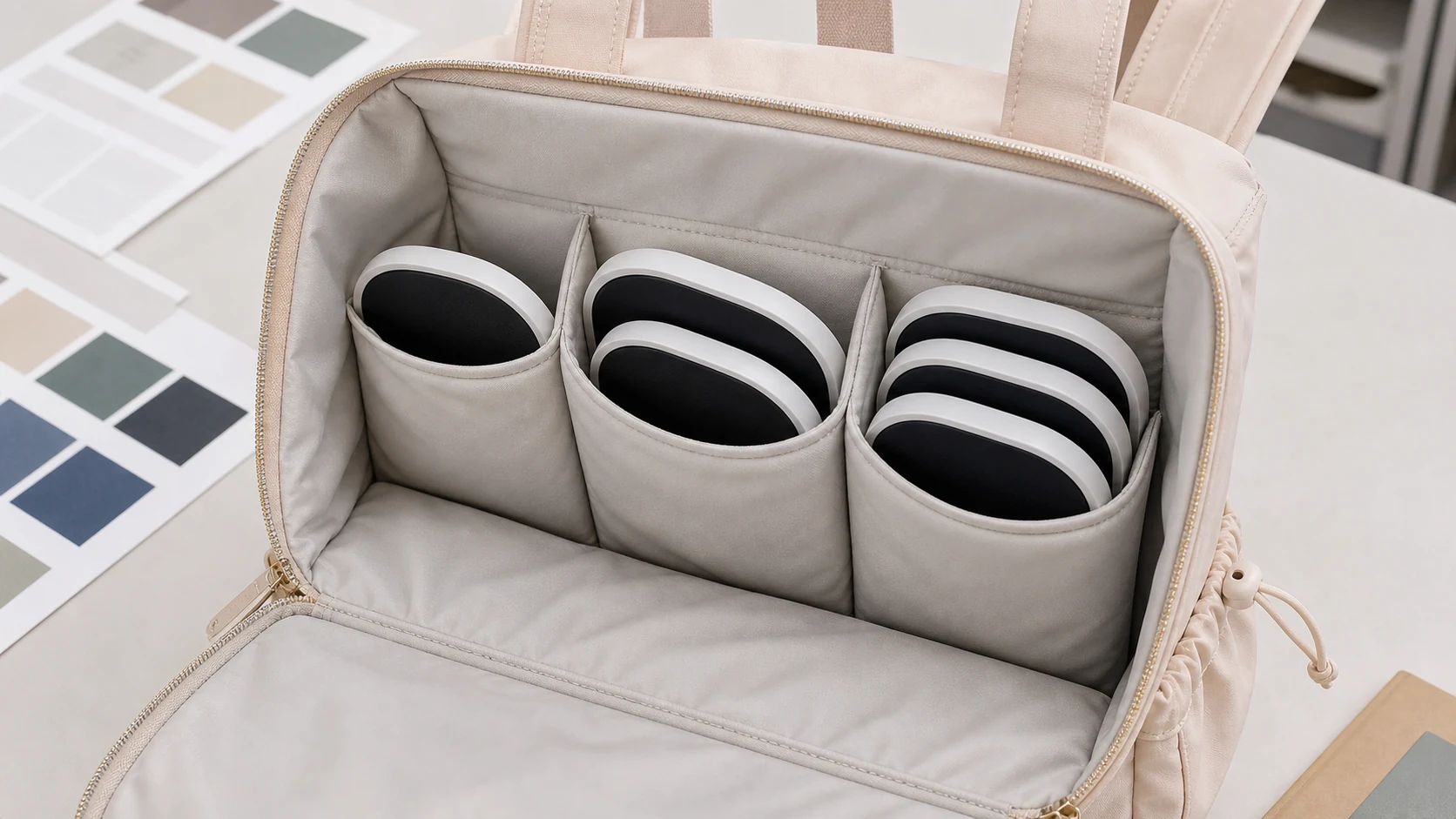
A useful sourcing rule: paddle sleeves should protect gear without swallowing the whole bag. Buyers planning pickleball gear bags should test sleeve dimensions with real paddle samples.
- One-paddle sleeve for slim entry styles
- Two-paddle divider for most retail SKUs
- Larger sleeve for tournament or club use
- Soft lining to reduce surface scuffs
- Reinforced sleeve opening for repeat packing
Protection depends on fit as well as padding. Load real paddles into the sample, close every zipper, carry the bag, and check for frame rubbing, handle crowding, and pressure from bottles or shoes. A soft lining and stable divider are useful only when the paddle cannot shift into harder contents.
| Paddle count | Size impact |
|---|---|
| 1 paddle | Slimmer profile |
| 2 paddles | Standard medium size |
| 3+ paddles | Tournament capacity |
Key Takeaway: Paddle storage should guide bag width before extra pockets are added.
How do I choose the right size pickleball bag for bottles?
To answer how do i choose the right size pickleball bag for bottles, include hydration in the size test from the beginning. A full bottle adds weight and changes how the bag hangs on the shoulder or back.
What bottle pocket details matter?
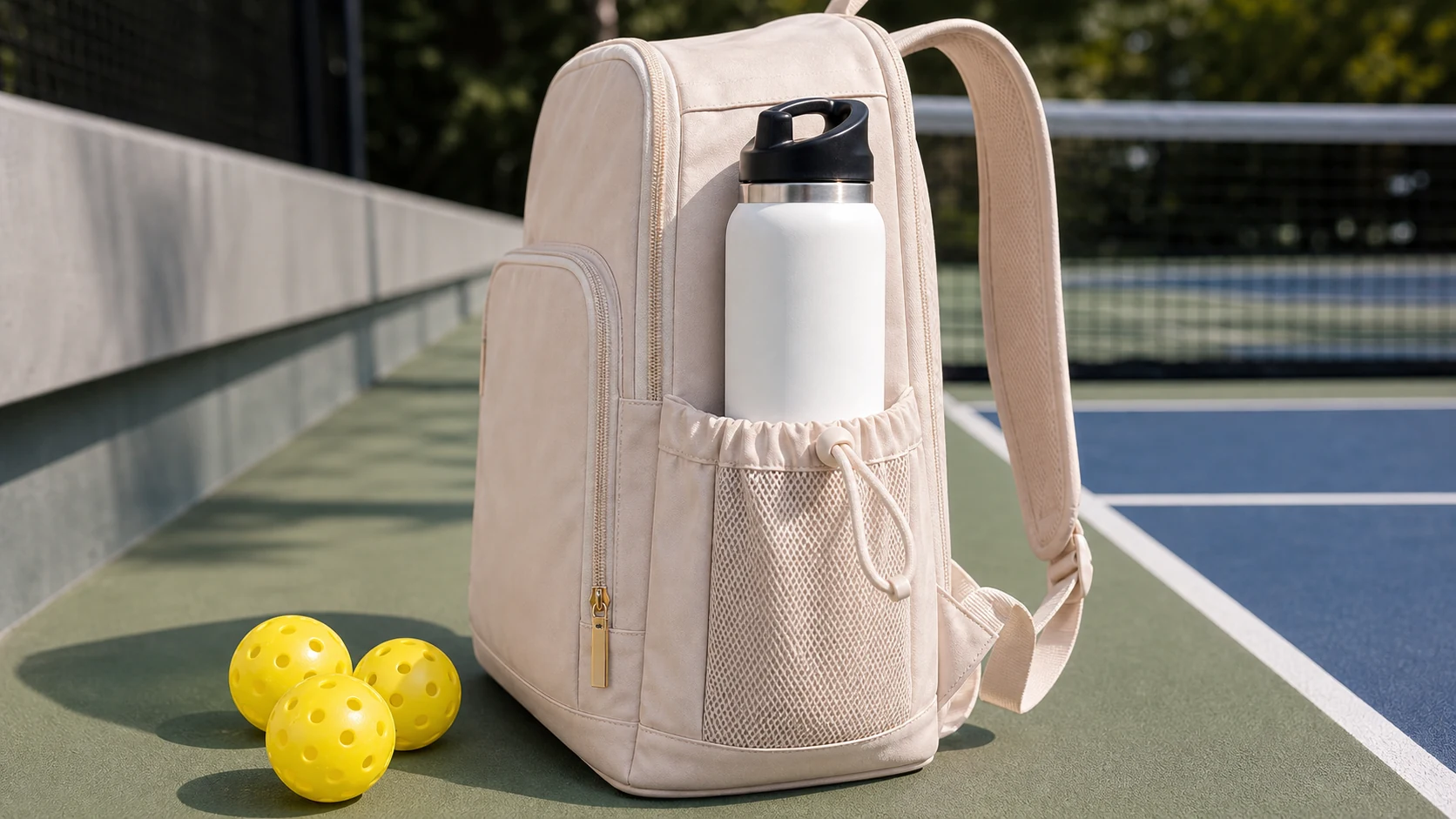
Do not skip this check: bottle pockets often fail because the bag body is fine but the side pocket is too shallow. This can create poor reviews even when the main compartment works.
- Test common bottle diameters
- Reinforce the lower pocket seam
- Keep bottle weight close to the bag
- Use elastic, mesh, or adjustable panels
- Check whether the bag tips over when loaded
| Bottle need | Size choice |
|---|---|
| Small bottle | Compact side pocket |
| Large bottle | Taller elastic pocket |
| Long summer play | Dual pocket or larger bag |
Key Takeaway: Bottle storage should be sized for real use, not only for catalog photos.
How do I choose the right size pickleball bag for shoes?
To answer how do i choose the right size pickleball bag for shoes, decide whether shoes belong inside the main bag or in a removable pouch. A shoe compartment adds depth and can push a compact bag into a medium or larger category.
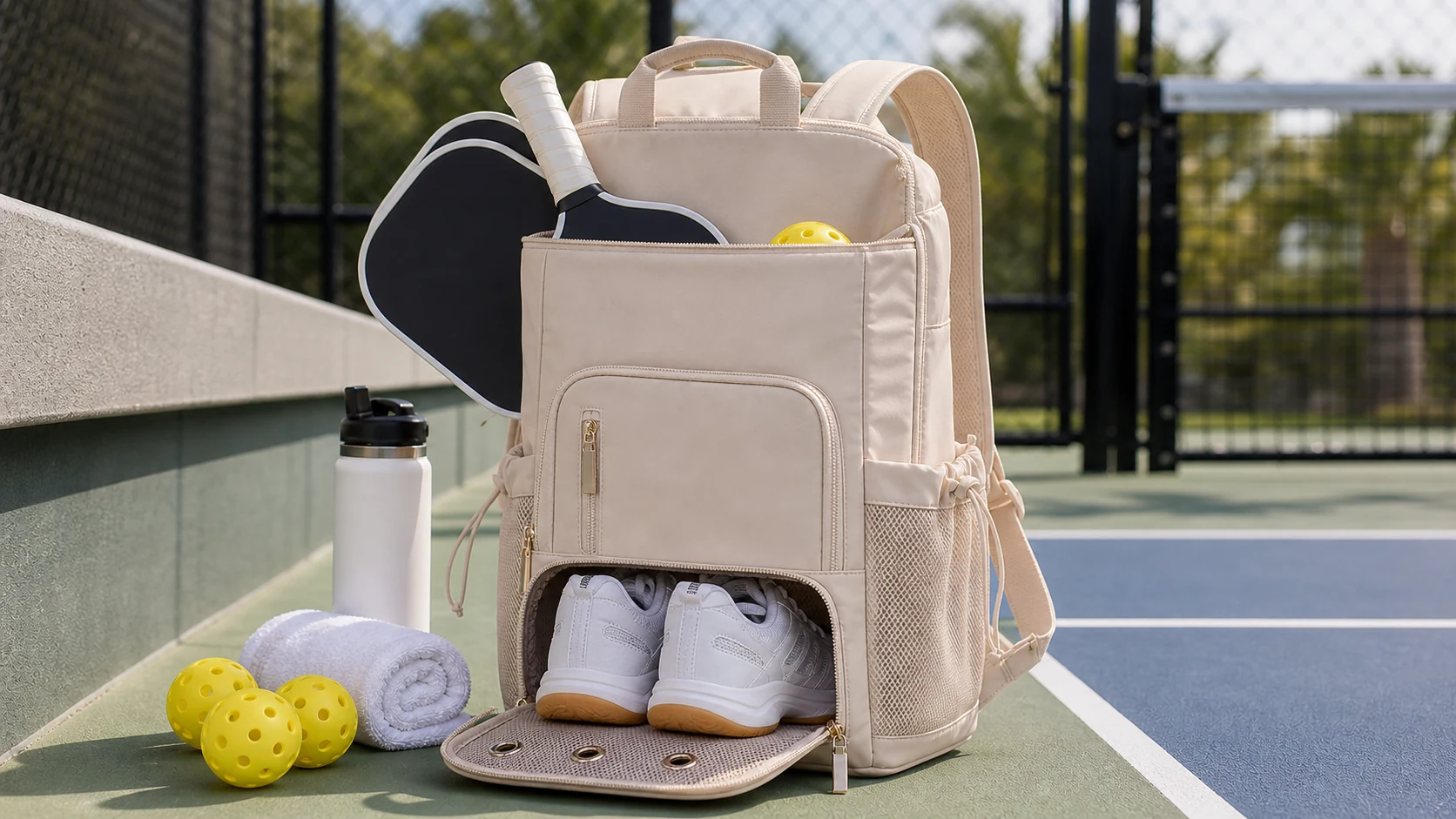
When should buyers add shoe space?
Shoes often consume more space than a liter rating suggests. The sports bag market context can help buyers match bag size with court habits and retail expectations.
- Use a bottom compartment for backpack styles
- Use a side tunnel for sportier builds
- Use a removable pouch for lighter products
- Add ventilation when shoes stay inside
- Test common shoe sizes before approval
| Shoe option | Best bag size |
|---|---|
| No shoes | Compact or medium |
| Removable shoe pouch | Medium |
| Built-in shoe compartment | Medium-plus or large |
Key Takeaway: Shoe storage can be valuable, but only when size and balance still feel natural.
How do I choose the right size pickleball bag for tournaments?
To answer how do i choose the right size pickleball bag for tournaments, plan for backup paddles, more balls, extra water, snacks, towel, socks, clothes, and personal care items. Tournament use usually needs a larger backpack, duffel, or hybrid court bag.
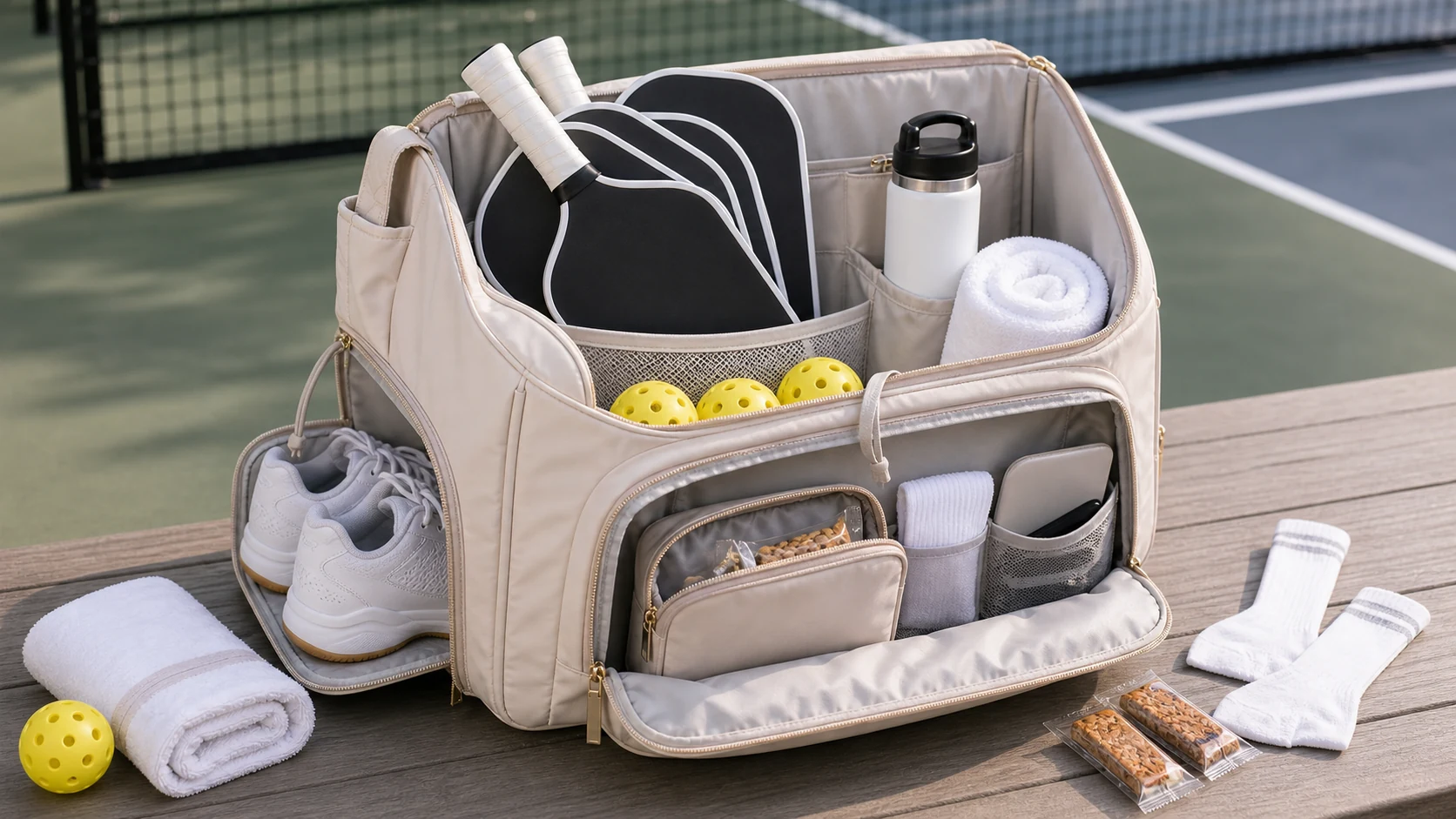
What changes in tournament sizing?
The big shift is duration: players carry more because they wait, warm up, play, recover, and repeat. A product upgrade case can guide brands that need stronger straps, zippers, and structure for heavier loads.
- Extra paddle sleeve capacity
- Larger towel or apparel zone
- More secure small-item pockets
- Stronger strap anchors
- Better bottle and snack storage
| Use case | Size direction |
|---|---|
| Open play | Medium |
| Local tournament | Medium-plus |
| Team or club event | Large |
Key Takeaway: Tournament bags should be sized around long carry time and heavier packed weight.
How do I choose the right size pickleball bag for online sales?
To answer how do i choose the right size pickleball bag for online sales, choose a size that photographs clearly and matches shopper expectations. Online buyers need to see what fits before they trust the product page.
How should sellers prove the size?
This is a listing advantage: a clear packed layout reduces size confusion. Sellers in e-commerce bag projects should build product photos around real capacity.
- Show paddles inside the sleeve
- Show bottle pocket with a real bottle
- Show towel, balls, and phone placement
- Show model or hand scale only if needed
- List dimensions in inches and centimeters
| Listing asset | Size proof |
|---|---|
| Packed flat lay | What fits |
| Side view | Bag depth |
| On-body view | Carry proportion |
Key Takeaway: Online size claims work best when buyers can see the actual packing logic.
How do I choose the right size pickleball bag for comfort?
To answer how do i choose the right size pickleball bag for comfort, test the packed weight, strap width, back panel feel, and carry style. A bag can have enough capacity and still feel wrong if weight sits badly.
Which carry details affect size choice?
Comfort is a sizing signal: if a sample pulls backward, twists, or digs into the shoulder, the size may not match the load. Buyers should review comfort before approving production.
- Padded straps for backpack styles
- Wider strap for tote or sling styles
- Back panel padding for heavier bags
- Balanced bottle and shoe placement
- Adjustable strap length for varied users
| Carry style | Size fit |
|---|---|
| Sling | Light gear only |
| Tote | Daily gear and style |
| Backpack | Medium to heavy gear |
Key Takeaway: Choose size together with strap design because capacity alone does not determine carry comfort.
How do I choose the right size pickleball bag by material?
To answer how do i choose the right size pickleball bag by material, consider how fabric weight and structure change the finished feel. A large bag in heavy fabric may feel too bulky, while a compact bag in thin fabric may collapse.
What material choices support size?
Material, lining, padding, and binding all affect usable space and the way a bag holds its shape. Compare fabric swatches, sample structure, and cost before bulk production.
- Polyester for balanced cost and color range
- Nylon for lighter sport styles
- Canvas-look fabric for lifestyle retail
- EVA or foam padding for protection zones
- Water-resistant coating for outdoor use
Material selection should also match the product tier and care plan. Confirm zipper quality, reinforcement at strap anchors, wipe-clean areas near shoes, and color consistency on production-intent samples. Reserve a clean panel for the chosen logo method instead of adding branding after the pocket layout is finished.
| Material choice | Size effect |
|---|---|
| Lightweight nylon | Easier medium bag |
| Structured polyester | Cleaner retail shape |
| Heavy canvas-look fabric | Better for compact styles |
Key Takeaway: The right material keeps the chosen size useful, stable, and easy to carry.
How do I choose the right size pickleball bag for MOQ testing?
To answer how do i choose the right size pickleball bag for MOQ testing, start with one size that serves the widest buyer group. A medium backpack or backpack-tote hybrid often gives brands enough function without too much production complexity.
What should a pilot order test?
Test before you scale: a pilot order case helps new sellers reduce inventory risk while checking whether size, pockets, and price fit the market.
- One core size with two color options
- One paddle sleeve layout
- One bottle pocket standard
- Optional shoe pouch instead of built-in shoe bay
- Clear packing photos for the listing
| Pilot choice | Why it helps |
|---|---|
| Medium size | Broad user fit |
| Limited colors | Lower inventory risk |
| Optional pouch | Flexible feature testing |
Key Takeaway: A pilot order should test the most sellable size before expanding into compact or tournament versions.
How do I choose the right size pickleball bag before production?
To answer how do i choose the right size pickleball bag before production, create a packing checklist, load a sample, carry it, photograph it, and revise pocket dimensions before approval. This process turns a size guess into a production-ready spec.
How should buyers approve the final size?
Use the sample like a real player: pack it, zip it, carry it, set it down, then unpack it. To compare size, pocket maps, materials, MOQ, and sample timing for your next pickleball bag project, contact us today.
- Load real paddles, balls, bottle, towel, and phone
- Add shoes only if the product promises shoe storage
- Check zipper flow with the bag fully packed
- Review comfort under realistic weight
- Confirm carton size and shipping weight
- Inspect strap anchors, zipper curves, paddle-sleeve seams, and bottle-pocket retention
- Freeze the approved dimensions, materials, colors, and pocket map in the production specification
| Approval step | What it proves |
|---|---|
| Packing test | Real capacity |
| Carry test | Comfort and balance |
| Photo test | Online size clarity |
Key Takeaway: The right size is the one that passes packing, comfort, visual, and production checks.
FAQ
Can I choose one pickleball bag size for most buyers?
Yes, a medium backpack or backpack-tote hybrid often fits the widest group. It can hold paddles, balls, water, towel, and personal items without feeling too large.
What's the best size for a beginner pickleball bag?
A compact or medium bag usually works well because beginners carry fewer backup items. If the product targets shoppers who bring shoes or apparel, move up one size.
How do I know if a pickleball bag is too small?
It is too small if paddles bend the sleeve, bottles fall out, or personal items mix with damp gear. A real packing test gives a faster answer than measurements alone.
Can a large pickleball bag hurt online sales?
Yes, it can if shoppers think it looks bulky or hard to carry. Large bags work better when the listing clearly shows tournament capacity and comfort features.
What's the best size for a private label pickleball bag?
A medium size is usually the safest starting point. It gives enough room for useful pockets, strong photos, and broad retail appeal while keeping the starter SKU manageable.