
Pack a tennis bag by loading rackets first, placing dense items close to the carry side, separating shoes and wet gear, then keeping balls, water, towel, grips, comfort items, and valuables easy to reach. For brands asking how to pack a tennis bag, the same checklist becomes a product brief. A player may bring the right gear but still struggle if the bag leans, zippers jam, clean clothes touch damp towels, or small care items have no dedicated pocket.
How to pack a tennis bag from the bottom up?
To answer how to pack a tennis bag from the bottom up, start with shoes or heavier items at the base, then build lighter court items above them. This keeps the bag stable when carried and easier to stand near the court.
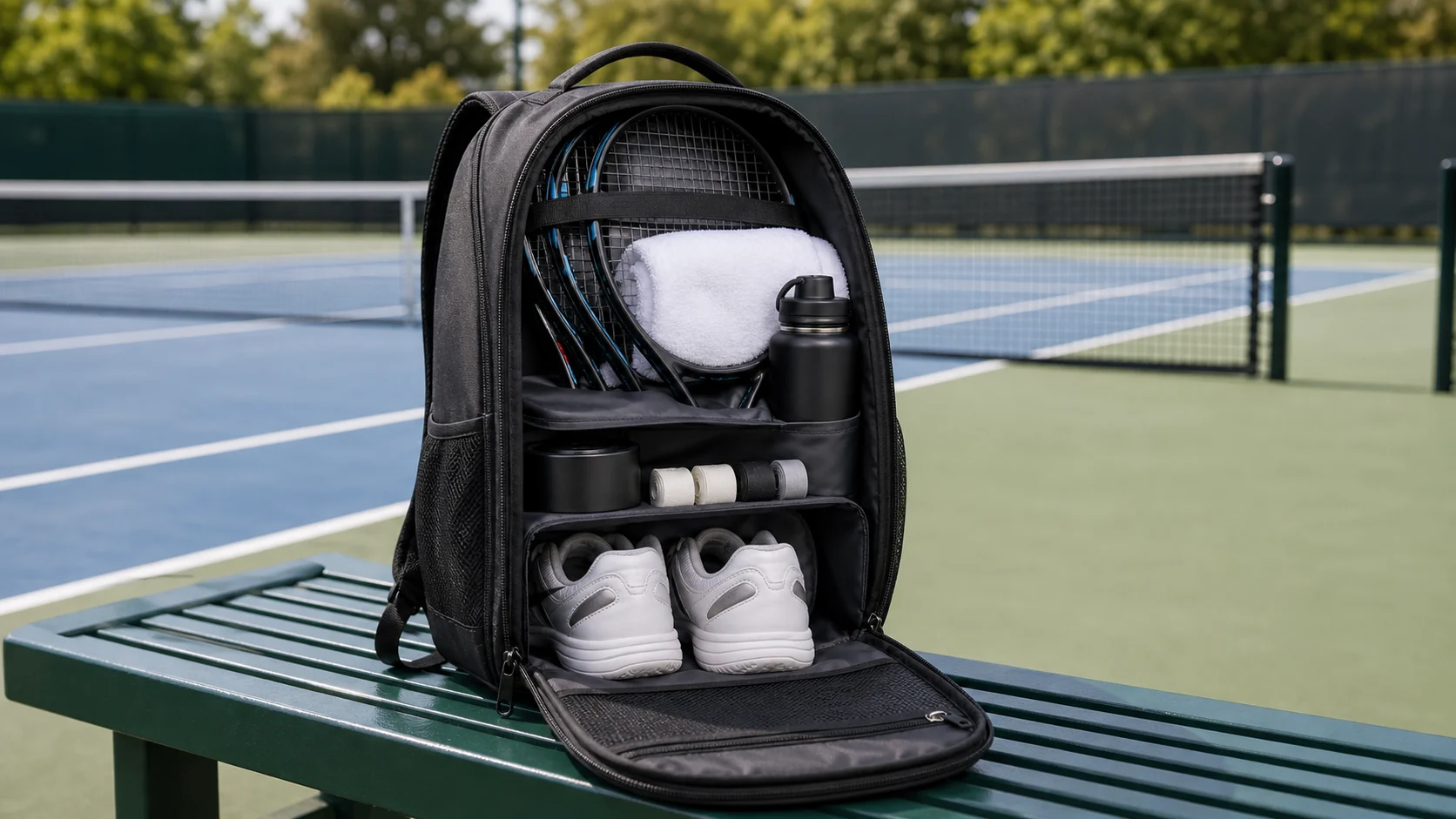
What should go into the lower zone?
Pack the sample, stand it upright, and check whether it tips. This shows whether the base, pocket depth, and fabric structure work together.
- Tennis shoes or shoe pouch
- Heavier towel or clean clothing roll
- Spare water if the bag has lower support
- Low-profile recovery items
- Items that do not need instant access
Before choosing zones, lay out the complete daily kit: rackets, balls, bottle, towel, overgrips, dampeners, hat or visor, sunscreen, spare shirt, socks, shoes, phone, keys, and a compact personal-care kit. Remove anything not needed for that session, then map each remaining item to a pocket. This prevents forgotten essentials without turning the bag into an unbalanced equipment store.
| Lower-zone item | Design signal |
|---|---|
| Shoes | Ventilated base pocket |
| Clothing roll | Soft space without hard pressure |
| Spare bottle | Strong bottom and side balance |
This table helps buyers test the packed shape before approving a sample. Key Takeaway: bottom-up packing works only when the lower zone supports real weight.
How to pack a tennis bag with rackets protected?
To answer how to pack a tennis bag with rackets protected, place rackets in a padded sleeve before adding balls, bottles, or shoes. Racket placement should guide the sleeve depth, lining choice, zipper path, and handle clearance.
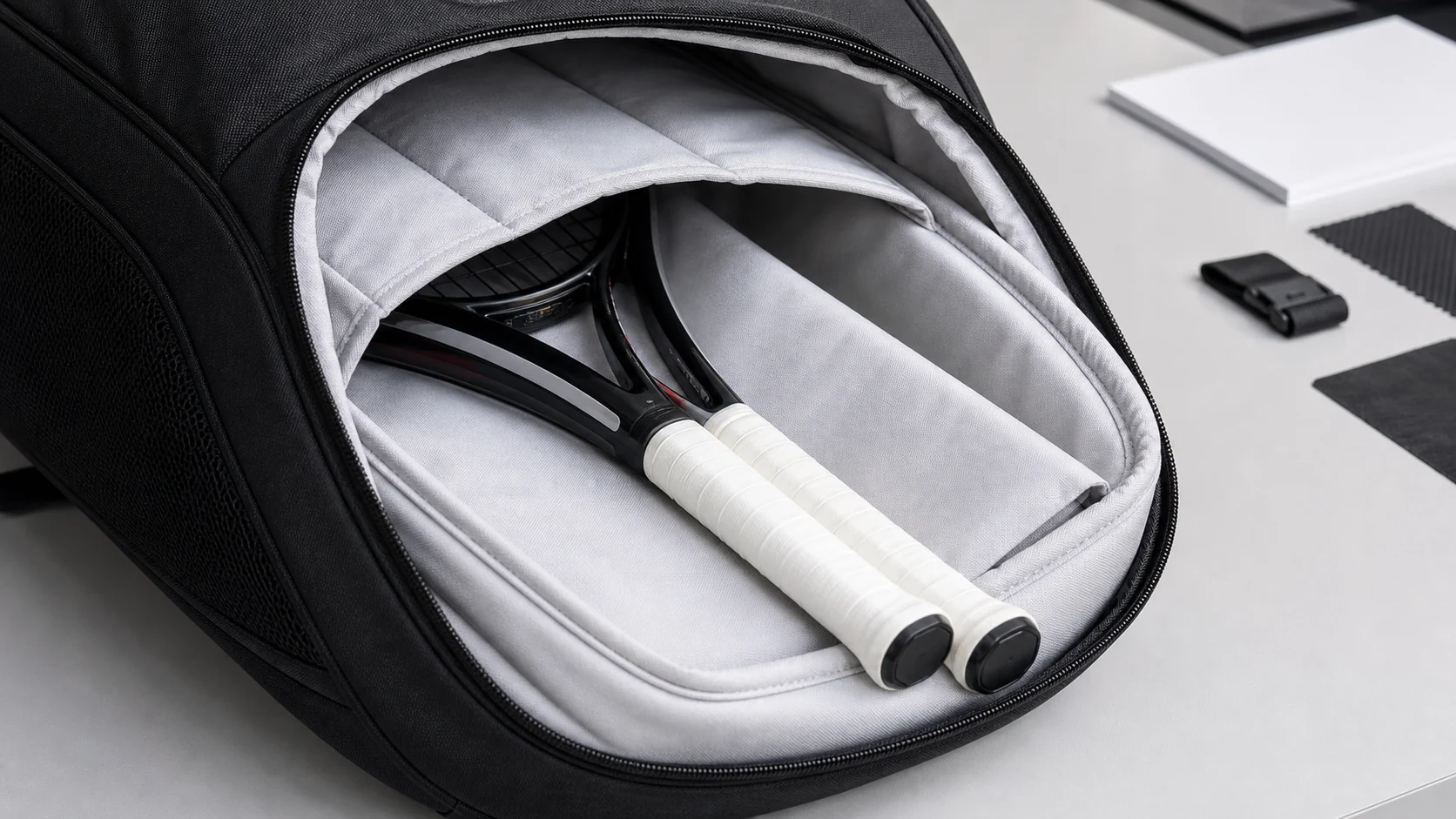
How should racket sleeves be checked?
More padding does not automatically provide better protection. Padding should cover the relevant contact points without crowding the racket compartment.
- Check sleeve depth with full-size rackets
- Keep handles easy to grab
- Avoid zipper paths that rub racket frames
- Use soft lining inside the racket zone
- Test one-racket and two-racket packing
| Racket issue | Factory response |
|---|---|
| Frame scuffs | Soft lining and sleeve edge |
| Handle crowding | Wider opening angle |
| Racket movement | Deeper compartment |
These checks help avoid a bag that looks good empty but fails when packed. Key Takeaway: racket protection should be tested with real rackets, not flat drawings.
How to pack a tennis bag for balls and grips?
To answer how to pack a tennis bag for balls and grips, keep balls in a small fast-access pocket and place overgrips or dampeners in a dry inner pouch. Small accessories need order because they disappear inside large compartments.
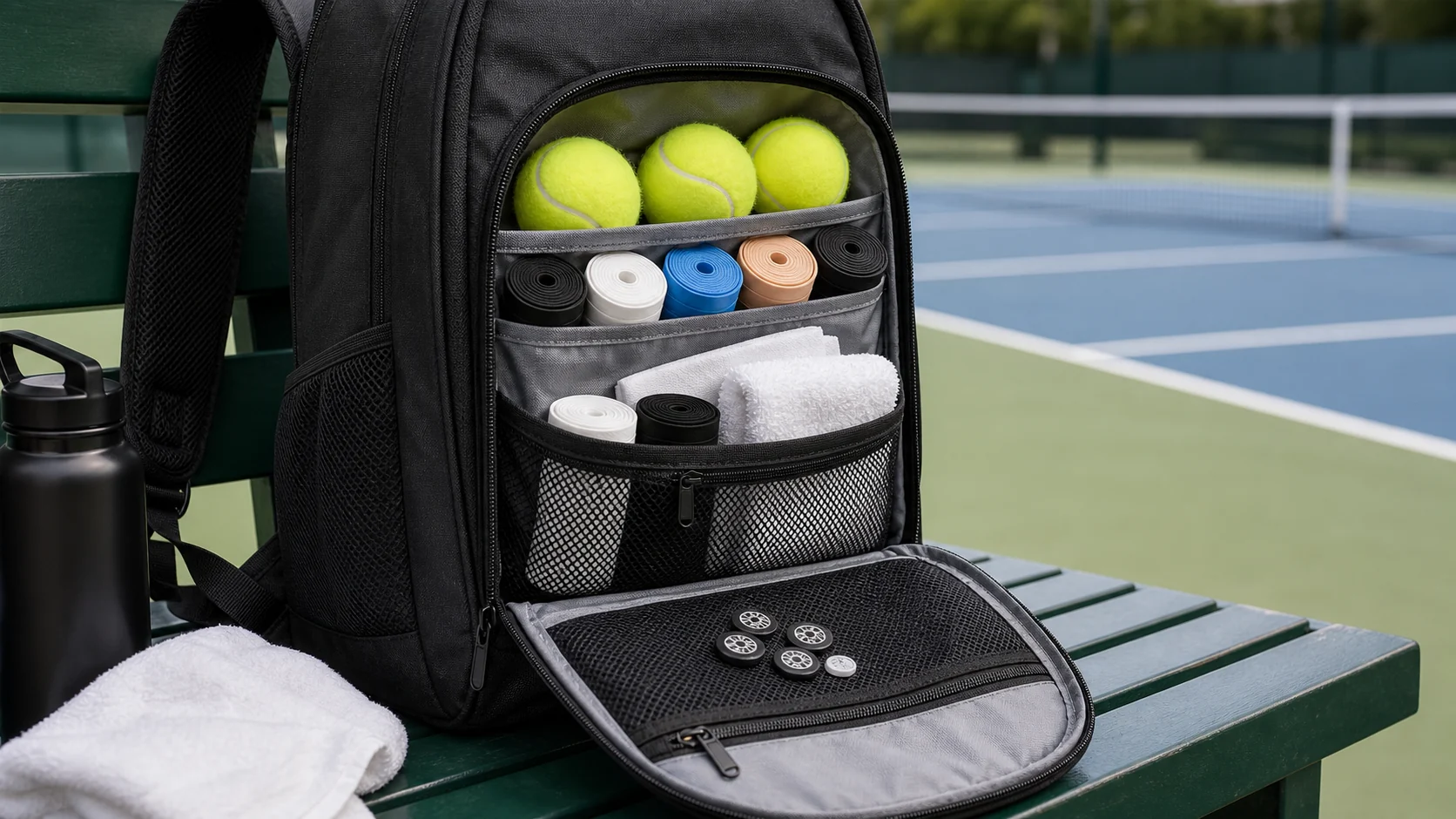
Which small items need their own pocket?
Keep this in mind: players reach for small items during breaks, not only before play. A smart pocket map can make a simple bag feel more useful.
- Tennis balls
- Overgrips or grip tape
- Vibration dampeners
- Small towel
- Pen, note card, or match tag
| Small item | Better pocket style |
|---|---|
| Tennis balls | Easy front or side pocket |
| Overgrips | Dry inner pouch |
| Dampeners | Tiny mesh section |
This setup gives brands cleaner product photos and clearer listing claims. Key Takeaway: small pockets can improve daily use without making the bag bulky.
How to pack a tennis bag for water and snacks?
To answer how to pack a tennis bag for water and snacks, secure the bottle upright and keep snacks in a crush-resistant dry pocket. For the sports bag market context, hydration storage also affects comfort, balance, and repeat use.
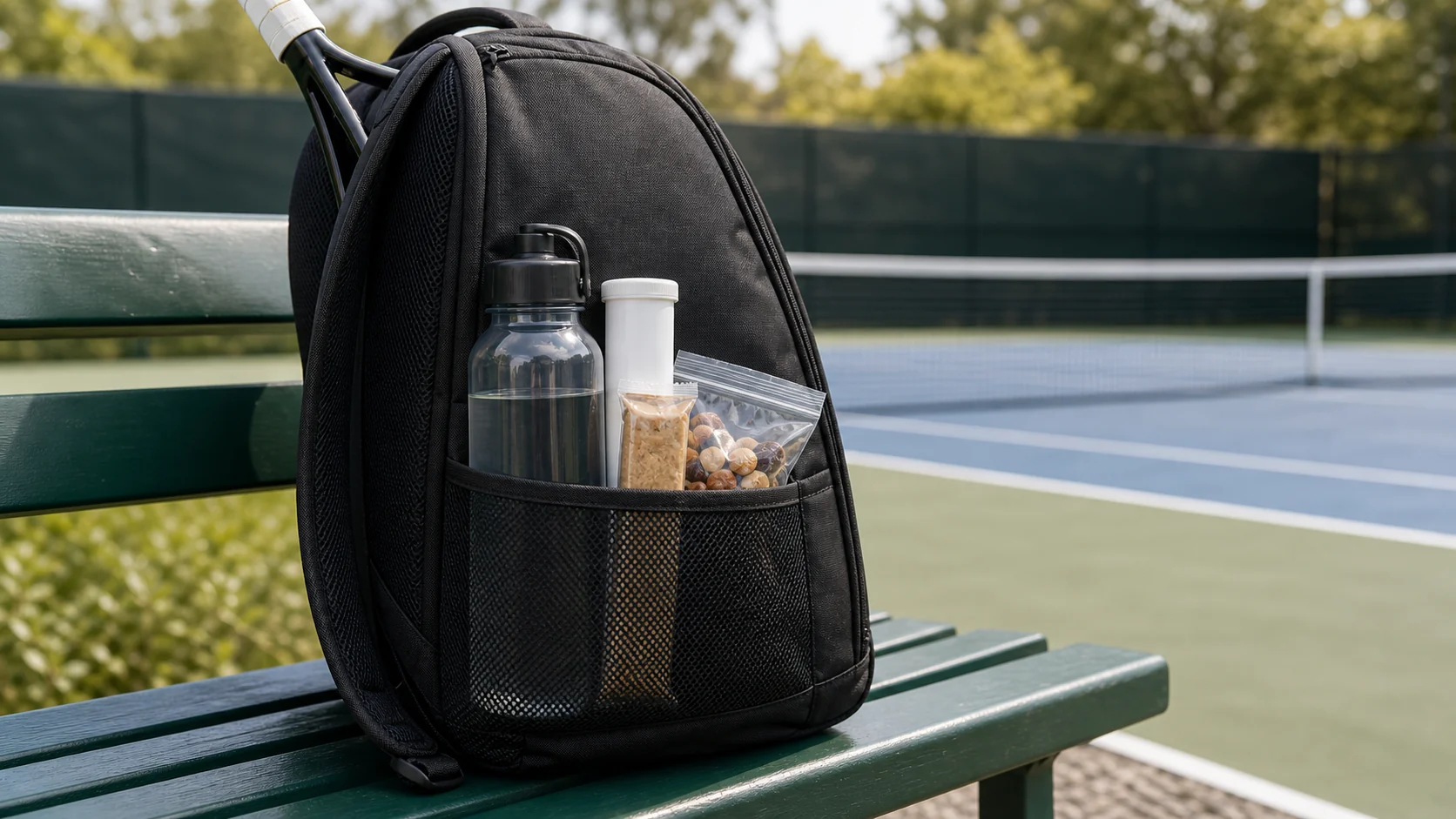
How can bottle storage avoid imbalance?
The smart move: test bottle placement while the bag is worn, not only while it sits on a table. A full bottle can pull the bag to one side if the pocket is too shallow.
- Use a deep bottle pocket
- Add elastic or a strap keeper
- Keep snacks away from damp towels
- Test common bottle sizes
- Check whether the bag still stands upright
| Packed item | Bag feature |
|---|---|
| Water bottle | Deep side pocket |
| Energy bar | Dry small pocket |
| Electrolyte tube | Narrow organizer slot |
This helps buyers connect hydration with structure and carry comfort. Key Takeaway: water storage should stay secure without shifting the whole bag.
How to pack a tennis bag with shoes and clothing?
To answer how to pack a tennis bag with shoes and clothing, put shoes in a ventilated compartment and keep clean clothing in a dry fabric section. If the same buyer also sells fitness products, OEM gym bags can guide wet/dry and shoe-pocket construction.
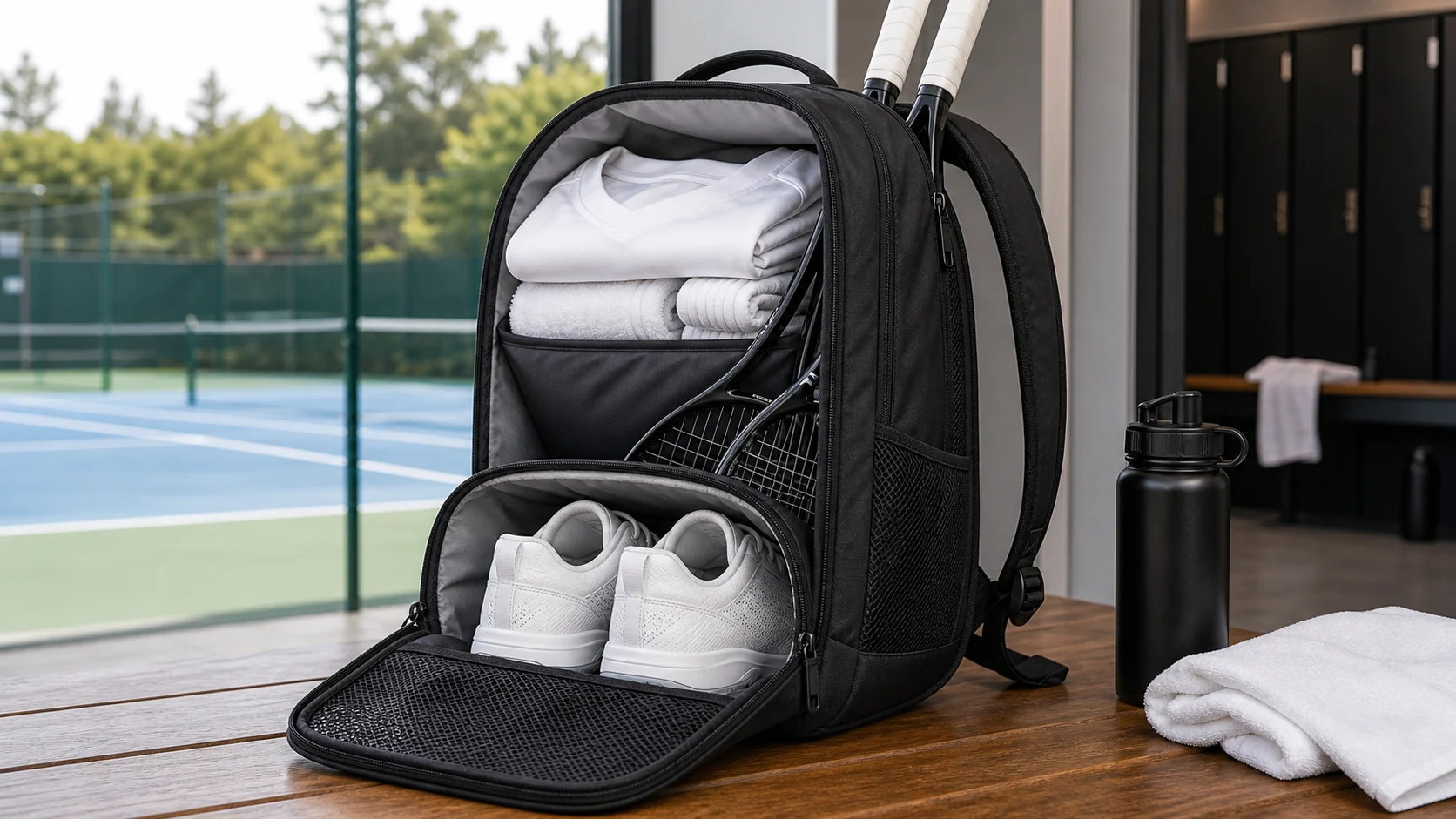
What separation details matter most?
Shoes, socks, and damp clothing can soil the clean interior. Physical separation and a wipeable lining make this area easier to manage.
- Ventilated shoe tunnel or lower pocket
- Wipe-clean lining near dirty gear
- Clean pocket for shirt and socks
- Laundry pouch for worn clothes
- Enough depth for common shoe sizes
| Separation need | Construction choice |
|---|---|
| Dirty shoes | Ventilated pocket |
| Clean clothing | Dry main section |
| Worn socks | Removable pouch |
This layout gives private label buyers a clear reason to approve a larger sample. Key Takeaway: shoe and clothing storage should not steal space from rackets.
How to pack a tennis bag for wet towels?
To answer how to pack a tennis bag for wet towels, use a coated pouch, wipe-clean lining, or separate pocket that keeps moisture away from grips and clothing. Sellers planning e-commerce bag projects can turn this into a clear listing feature.
Which wet-storage details should be sampled?
A quick reality check: wet storage does not need to be huge. It needs the right lining, zipper behavior, and ventilation.
- Coated inner pocket
- Removable wet pouch
- Ventilation eyelets
- Darker lining near dirty gear
- Easy-clean fabric surface
| Wet item | Better storage |
|---|---|
| Damp towel | Coated pocket |
| Sweaty shirt | Wet pouch |
| Used wristbands | Small washable bag |
This keeps the bag cleaner through repeated court use. Key Takeaway: wet storage should protect the rest of the bag without adding too much weight.
How to pack a tennis bag for valuables?
To answer how to pack a tennis bag for valuables, keep phone, wallet, keys, and earbuds in a secure inner pocket away from bottles and wet gear. This feature matters for retail buyers because personal-item storage feels useful every day.
Keep a small personal-care pouch nearby but separate from valuables. Adhesive bandages, blister care, personal medication, sunscreen, and athletic tape are common examples; the contents should match the player and event rather than being marketed as a substitute for professional first aid.
What makes a valuables pocket trustworthy?
Players may leave the bag near a bench or fence while warming up. A valuables pocket should be easy for the owner to reach but less visible from the outside.
- Hidden inner zipper pocket
- Soft lining for phone screens
- Key leash or small clip
- Dry placement away from bottles
- Pocket size tested with modern phones
| Valuable item | Pocket response |
|---|---|
| Phone | Soft inner pocket |
| Keys | Clip or leash |
| Wallet | Hidden zip pocket |
This detail can raise perceived value without large material cost. Key Takeaway: valuables storage should feel secure, dry, and easy to remember.
How to pack a tennis bag for tournaments?
To answer how to pack a tennis bag for tournaments, add backup rackets, extra balls, more hydration, snacks, recovery items, and a charger. A product upgrade case can help teams think through durability and review risk before a bigger model launches.
What changes when the bag is packed for match day?
This is where capacity gets serious: tournament packing stresses zippers, strap anchors, and base structure. A sample should be tested with a full load before bulk order approval.
- Two or more rackets
- Extra balls
- Larger water supply
- Cooling towel or recovery wrap
- Charger, ID, and match documents
- Spare grips, socks, sun protection, and the player's personal-care pouch
| Tournament item | Sample check |
|---|---|
| Extra rackets | Wider racket bay |
| More water | Stronger side support |
| Documents | Secure flat pocket |
This gives buyers a more realistic durability test. Key Takeaway: tournament capacity should be proven with a full packed kit.
How to pack a tennis bag for retail photos?
To answer how to pack a tennis bag for retail photos, pack real gear in a clean sequence that shows racket space, bottle pocket, shoe area, and small pockets clearly. Product photos should explain the bag faster than long copy.
Which photo setup helps shoppers understand capacity?
Show what fits and where it fits. A packed photo can reduce size confusion for online shoppers.
- Open main compartment photo
- Racket sleeve detail
- Side bottle pocket view
- Shoe pocket view
- Fully packed carry view
| Photo angle | What it proves |
|---|---|
| Open top | Capacity and pocket map |
| Side view | Bottle and bag depth |
| Shoe view | Separation story |
This helps brands build stronger listing images and retail sell sheets. Key Takeaway: packed photos should prove function, not only show a clean bag.
How to pack a tennis bag before sourcing custom bags?
To answer how to pack a tennis bag before sourcing custom bags, prepare a real packed kit and send the packing list with your product brief. For OEM tennis bag planning, contact us today to compare materials, pocket layout, MOQ, sampling, and QC with ZWbags.
What should a sourcing brief include?
Define the player, pack the real gear, map each item to a pocket, and test a sample under full load. This gives the factory a practical basis for structure and cost.
- Target user and sales channel
- Racket count and shoe size range
- Full packed-item list
- Carry style and comfort target
- Logo, color, MOQ, and sample timeline
| Brief item | Factory output |
|---|---|
| Packed kit | Pocket map |
| Channel goal | Material suggestion |
| Comfort target | Strap and back-panel plan |
This approach keeps development grounded in real use. Key Takeaway: a better packing test often leads to a better custom tennis bag.
FAQ
Can I pack shoes with rackets in one tennis bag?
Yes, you can if the bag has a separated shoe pocket. Shoes should not press against racket frames, grips, or clean clothing.
What's the best way to pack tennis balls?
A small quick-access pocket usually works best. It keeps balls from rolling through the main compartment and makes warm-up faster.
How do I know if my tennis bag is packed badly?
It is packed badly if the bag leans, zippers feel stressed, or wet items touch clean gear. Repack heavy items lower and keep small items in dedicated pockets.
Can I pack wet towels in a tennis bag?
Yes, but only with a coated pocket or wet pouch. Damp towels should stay away from grips, clothes, documents, and electronics.
What's the best packing test for private label buyers?
A full-load test is usually the best choice. Pack rackets, shoes, water, towel, clothing, balls, and valuables, then walk with the sample and inspect stress points.