
Look for padded racket protection, realistic capacity, comfortable carry, durable fabric, clean organization, shoe separation, and tested zipper strength before choosing a tennis racket bag. For brands asking what to look for in a tennis racket bag, the answer should connect player habits with production-ready specifications. A bag may look sharp in a product photo, then fail when rackets, shoes, balls, water, towels, and valuables compete for the same space. ZWbags helps OEM, ODM, private label, and wholesale buyers turn these selection checks into tennis racket bag samples with material planning, logo options, sample review, and 100% pre-shipment inspection.
What to look for in a tennis racket bag for racket protection?
To answer what to look for in a tennis racket bag for racket protection, check padded sleeves, soft lining, sleeve depth, zipper path, and handle clearance first. Racket protection is the feature that separates a true racket bag from a general sports bag.
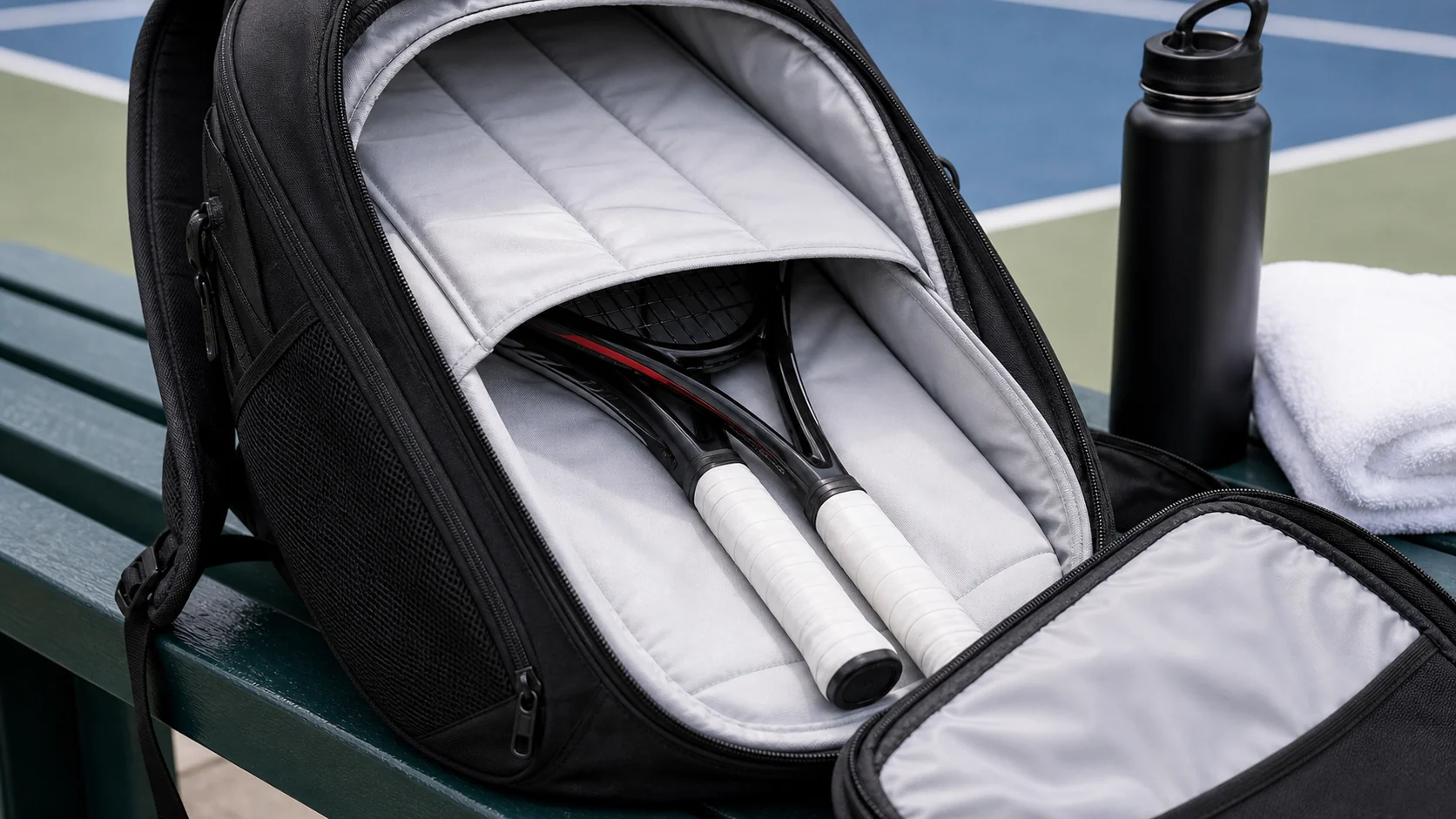
How should buyers test the racket bay?
Here is the useful test: place real rackets inside the sample, close the zipper, then carry the bag as a player would. If frames rub, handles crowd, or the zipper pulls tight, the compartment needs revision.
- Padded sleeve for one or more rackets
- Soft lining near racket frames
- Smooth zipper route around the racket area
- Enough clearance for racket handles
- Stable shape after the bag is packed
| Racket check | What it proves |
|---|---|
| Sleeve depth | Rackets stay stable |
| Soft lining | Frames feel protected |
| Handle clearance | Players can grab rackets faster |
This check helps buyers approve protection based on real gear. Key Takeaway: racket protection should be tested with rackets inside, not judged from an empty sample.
What to look for in a tennis racket bag for capacity?
To answer what to look for in a tennis racket bag for capacity, match the bag to racket count, shoe size, clothing, towel, balls, bottle, and small gear. Capacity should feel organized, not simply oversized.
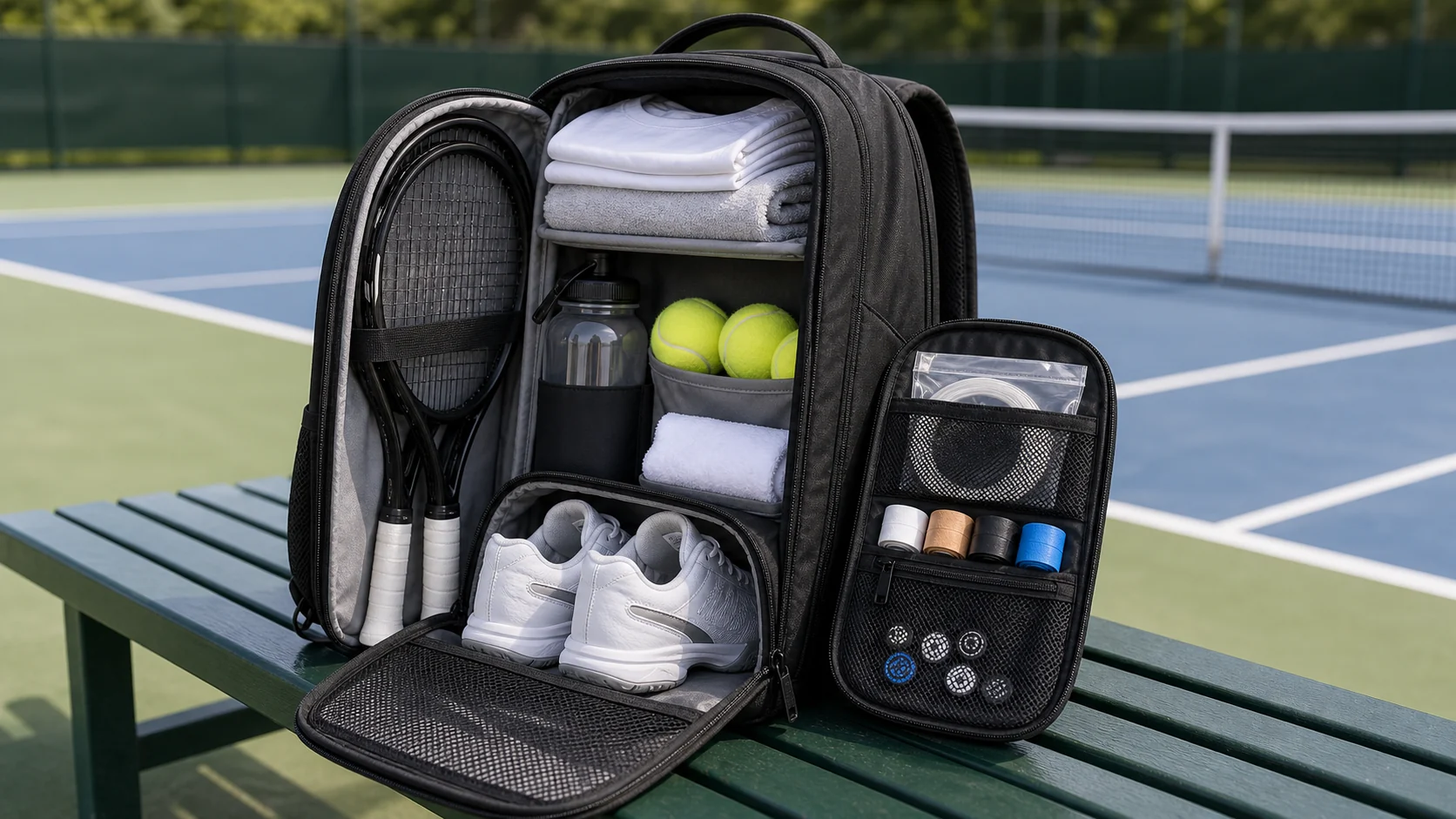
Which capacity details should be sampled?
Brands should not choose the largest model by default. A large bag can feel awkward if the pocket map does not guide packing.
- Racket count for the target player
- Shoe compartment depth
- Space for towel and clothing
- Bottle pocket height
- Packed weight after full loading
| Capacity detail | Sample question |
|---|---|
| Racket count | Does the zipper close without pressure? |
| Shoe depth | Do common shoe sizes fit? |
| Full load | Does the bag still carry well? |
This gives product teams a better way to compare shapes and sizes. Key Takeaway: capacity works when each packed item has a clear place.
What to look for in a tennis racket bag by carry style?
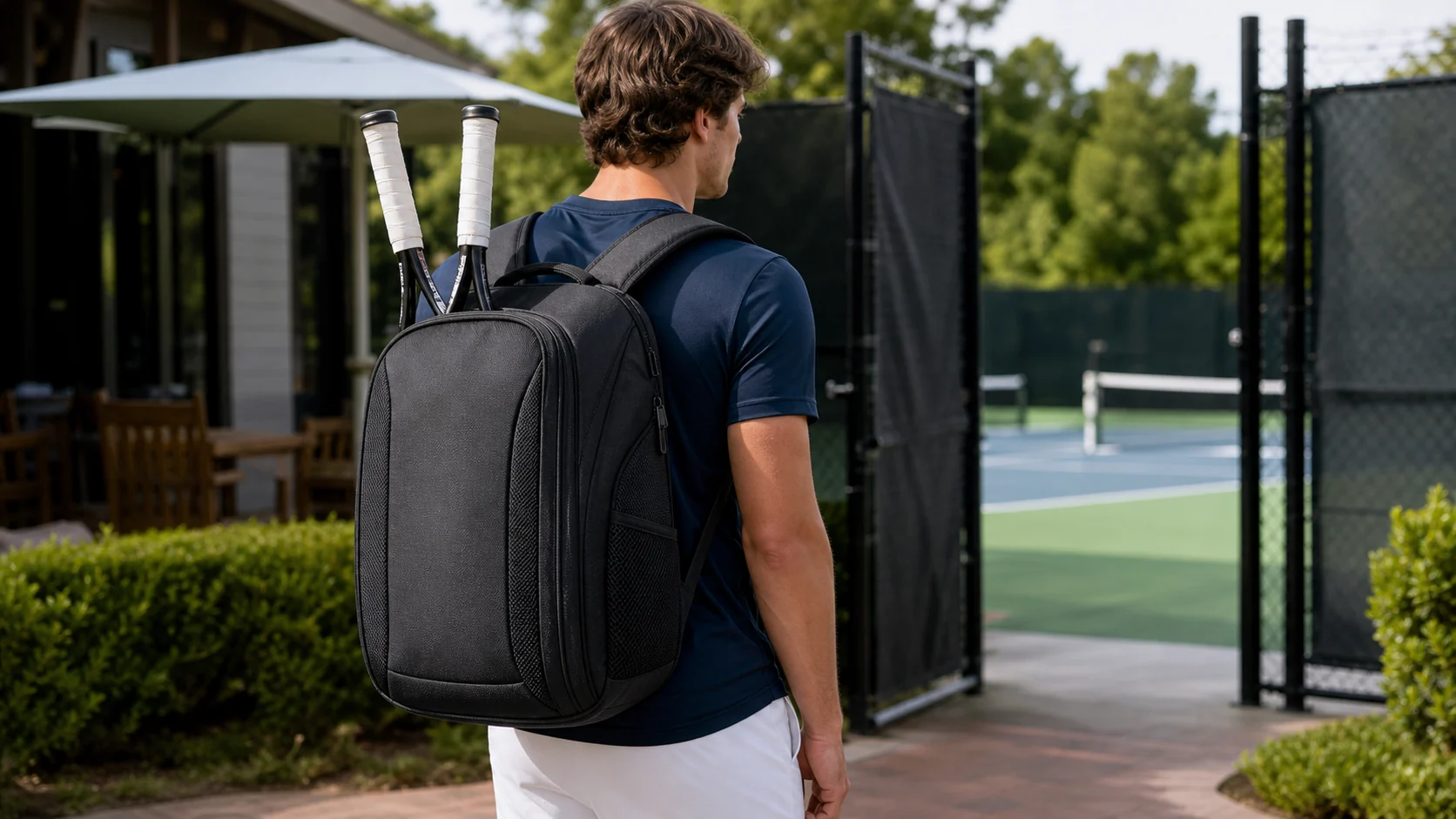
To answer what to look for in a tennis racket bag by carry style, compare backpack straps, shoulder straps, grab handles, and hybrid carry options. Carry style affects comfort, user photos, retail positioning, and perceived value.
Which carry style fits each user?
Keep this in mind: a junior player, club player, coach, and tournament user may carry gear differently. Buyers should test each carry mode with the bag fully packed.
- Backpack straps for daily movement
- Shoulder strap for short walks
- Top handle for locker or car use
- Padded back panel for heavier loads
- Strap adjusters that hold position
| Carry style | Better use case |
|---|---|
| Backpack | Daily practice and heavier gear |
| Shoulder | Short court-to-car trips |
| Grab handle | Quick movement and storage |
This helps brands match product structure to real user habits. Key Takeaway: carry style should be chosen after full-load testing.
What to look for in a tennis racket bag for comfort?
To answer what to look for in a tennis racket bag for comfort, review strap padding, back-panel support, load balance, handle placement, and packed weight. In the sports bag market context, comfort can help a racket bag feel like a stronger retail product.
How should comfort be checked?
The smart move: test comfort after packing rackets, shoes, towel, and bottle. Empty samples hide shoulder pressure, sway, and back-panel issues.
- Padded shoulder straps
- Breathable or cushioned back panel
- Stable load near the back
- Smooth strap edges
- Balanced side pockets
| Comfort factor | Review method |
|---|---|
| Strap pressure | Walk test under load |
| Back contact | Racket-frame pressure check |
| Balance | Side-to-side sway review |
This gives buyers a more realistic comfort standard. Key Takeaway: comfort should be measured through use, not by touching padding once.
What to look for in a tennis racket bag for shoes?
To answer what to look for in a tennis racket bag for shoes, check ventilation, lining, zipper access, compartment depth, and separation from rackets or clothing. If the same product line includes fitness bags, OEM gym bags can guide shoe-pocket and wet/dry construction.
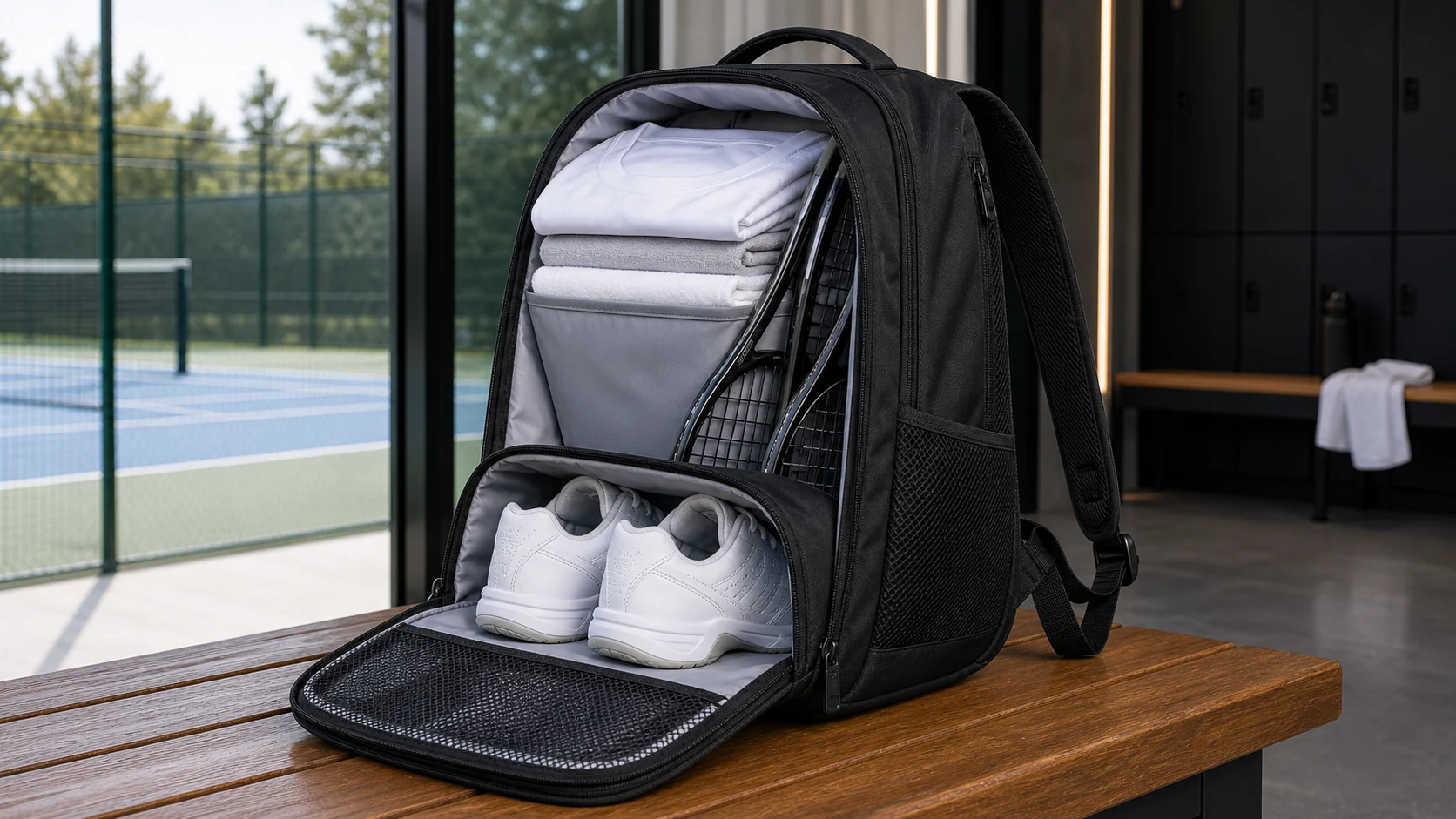
What shoe-pocket details matter most?
Here is where many samples fail: shoe pockets can steal space from rackets and clean clothing. Good separation protects the user experience.
- Ventilated shoe tunnel or lower pocket
- Wipe-clean lining
- Enough depth for common shoe sizes
- Zipper access that does not fight the main compartment
- Separation from towel and clothing
| Shoe feature | Why it helps |
|---|---|
| Ventilation | Reduces trapped moisture |
| Coated lining | Makes cleaning easier |
| Lower placement | Keeps weight more stable |
This layout supports cleaner use after practice or match day. Key Takeaway: shoe storage should be designed around dirt, moisture, and balance.
What to look for in a tennis racket bag for organization?
To answer what to look for in a tennis racket bag for organization, review ball pockets, grip storage, valuables pockets, mesh dividers, and bottle placement. Sellers planning e-commerce bag projects can use clear organization as a strong image and listing advantage.
Which pockets should be easy to understand?
A quick reality check: too many pockets can make a bag look busy if they are not sized for real gear. Each pocket should solve one visible packing problem.
- Ball pocket
- Grip and dampener pouch
- Phone and wallet pocket
- Key leash or small clip
- Bottle pocket with stable depth
| Pocket type | Best use |
|---|---|
| Front pocket | Balls and grips |
| Hidden zip pocket | Phone, keys, wallet |
| Side pocket | Bottle or quick towel |
This pocket plan helps buyers create clearer product photos and hangtags. Key Takeaway: organization should make packing faster, not make the bag more complicated.
What to look for in a tennis racket bag by material?
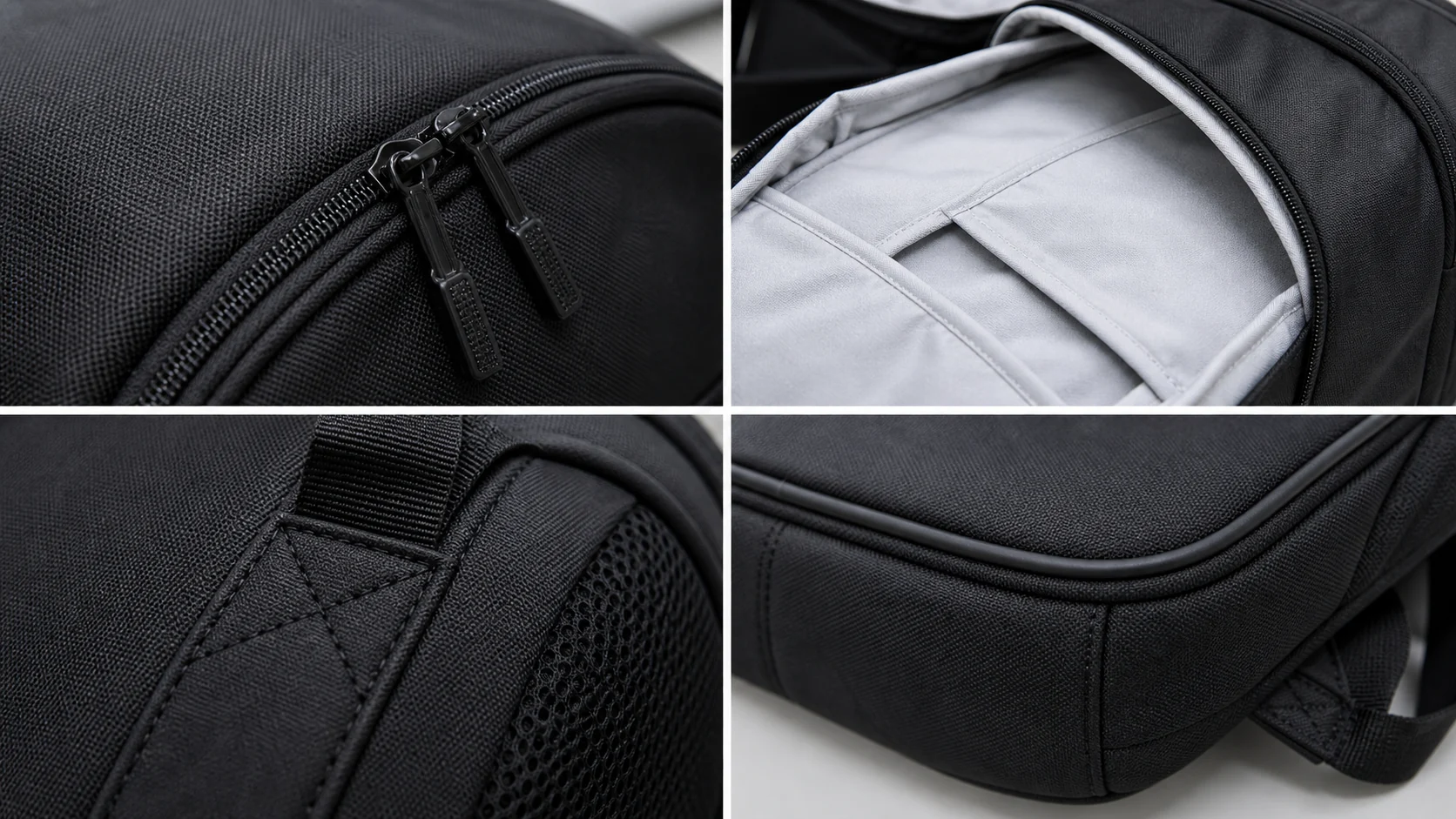
To answer what to look for in a tennis racket bag by material, compare fabric weight, lining, coating, zipper quality, reinforcement, and color consistency. Material decisions affect durability, structure, cost, and online appearance.
Which materials make sense for racket bags?
A value SKU and a higher-priced club bag may need different fabric, hardware, and finishing specifications. Buyers should compare swatches before sampling.
- Polyester for broad retail value
- Nylon for lighter sport positioning
- Coated lining for wipe-clean zones
- Reinforced strap anchors
- Smooth zippers with durable pullers
| Material detail | Sourcing value |
|---|---|
| Outer fabric | Shape, weight, and price |
| Lining | Protection and cleaning |
| Reinforcement | Stress-point durability |
This gives factories clearer direction than asking for a "nice fabric." Key Takeaway: material choice should match target channel and expected use.
What to look for in a tennis racket bag for QC?
To answer what to look for in a tennis racket bag for QC, inspect strap anchors, zipper curves, seam reinforcement, base shape, and full-load performance. A product upgrade case can help buyers think about durability and review risk before launch.
Which QC checks should happen before bulk orders?
This is where sample discipline pays off: many problems appear only after the bag is packed and carried. Empty samples can hide weak seams or zipper strain.
- Strap pull test
- Zipper cycle test
- Full-load walk test
- Base stability check
- Color and material consistency review
| QC point | Risk it catches |
|---|---|
| Strap anchor | Carry failure |
| Zipper curve | Sticking under load |
| Base panel | Tipping or deformation |
This gives teams a stronger approval gate before production. Key Takeaway: QC should follow how the racket bag is packed, carried, and cleaned.
What to look for in a tennis racket bag for private label?
To answer what to look for in a tennis racket bag for private label, review logo placement, color planning, packaging, MOQ, repeatable materials, and sample timing. Private label success depends on a repeatable product, not one attractive prototype.
What should brands confirm before sampling?
Here is the practical path: define target player, choose bag shape, map pockets, then confirm fabric and logo method before sampling. This keeps function and cost aligned.
- Logo method and position
- Pantone or fabric color plan
- Pocket map based on real packing
- MOQ and sample lead time
- Retail, wholesale, or FBA packaging
| Private label item | Decision point |
|---|---|
| Logo | Embroidery, patch, woven label, or print |
| Color | Core shade plus seasonal option |
| Packaging | Retail, wholesale, or e-commerce plan |
This makes the bag easier to reorder after the first run. Key Takeaway: private label specs should be built for repeat orders.
What to look for in a tennis racket bag supplier?
To answer what to look for in a tennis racket bag supplier, choose a partner that can discuss pattern structure, materials, sample revisions, QC, MOQ, and delivery timing. For your next OEM racket bag project, contact us today to compare feature plans, logo options, and bulk order details with ZWbags.
What should your sourcing brief include?
Here is a clean path: send racket count, target channel, pocket map, material preference, and quality standard before asking for price. Better input leads to a more useful sample.
- Target buyer and sales channel
- Racket count and bag shape
- Shoe, bottle, and valuables requirements
- Fabric, zipper, lining, and strap notes
- MOQ, sample timing, and QC checklist
| Supplier question | Why it matters |
|---|---|
| Can you revise samples? | Supports product refinement |
| Can you control materials? | Keeps repeat orders consistent |
| Can you inspect before shipment? | Reduces launch risk |
This turns bag selection into a stronger sourcing process. Key Takeaway: a good supplier helps buyers connect user needs with production control.
FAQ
Can I use a tennis racket bag for daily practice?
Yes, if it has enough room for rackets, balls, water, towel, and small items. A medium backpack or racket bag often works well for daily players.
What's the best size for a tennis racket bag?
The best size depends on racket count and gear load. Buyers should test one-racket, two-racket, and full-load packing before choosing a size.
How do I know if a racket bag protects rackets well?
Check padded sleeve depth, lining softness, handle clearance, and zipper movement. Real racket testing gives a better answer than photos alone.
Can a tennis racket bag include a shoe pocket?
Yes, when the bag has enough depth and balance. The shoe pocket should be ventilated, wipe-clean, and separated from rackets and clean clothing.
What's the best feature for private label racket bags?
A clear pocket map is often the most useful feature because it supports product photos, user access, and repeatable factory specifications.