
Carry a gym bag around the workout area only if your club allows it and you have an approved place to keep it. Otherwise, use a locker or designated storage. A smaller bag can be convenient, but its size does not override the club’s rules.
Bringing a bag to the gym and taking it from machine to machine are separate decisions. You may need a duffel for your commute, work clothes, or shower kit, while needing only a bottle and a few permitted items during training.
Does your gym allow bags on the workout floor?
Check the club’s written rules before choosing a spot for your bag. If the rules prohibit floor bags, use the designated storage even when your bag is small or other members leave theirs beside equipment.
For example, Planet Fitness’s published club policies say bags and clothing not in use are not allowed on the club floor. The same page prohibits outside fitness equipment. A small bag of lifting accessories therefore needs more consideration than whether it fits beside a machine.
Those are Planet Fitness’s rules, not a description of every gym. At another facility, ask two specific questions: may you bring this bag into the workout area, and where should you put it? If you need personal equipment, ask about that separately. Permission to carry a bag does not necessarily include permission to use everything inside it.
A useful question at reception is: “I need these straps and my logbook during training. Can I keep them in this pouch, or is there a storage spot I should use?” Show staff the actual bag when possible. Recheck with staff when visiting a different location or using a studio with its own rules.
Should you use a locker or carry a small bag?
Choose according to the club’s rules and what you will use during the session. Keep clothes, toiletries, and other items needed afterward in permitted storage. Consider a small bag only when carrying it is allowed and it solves a specific access problem.
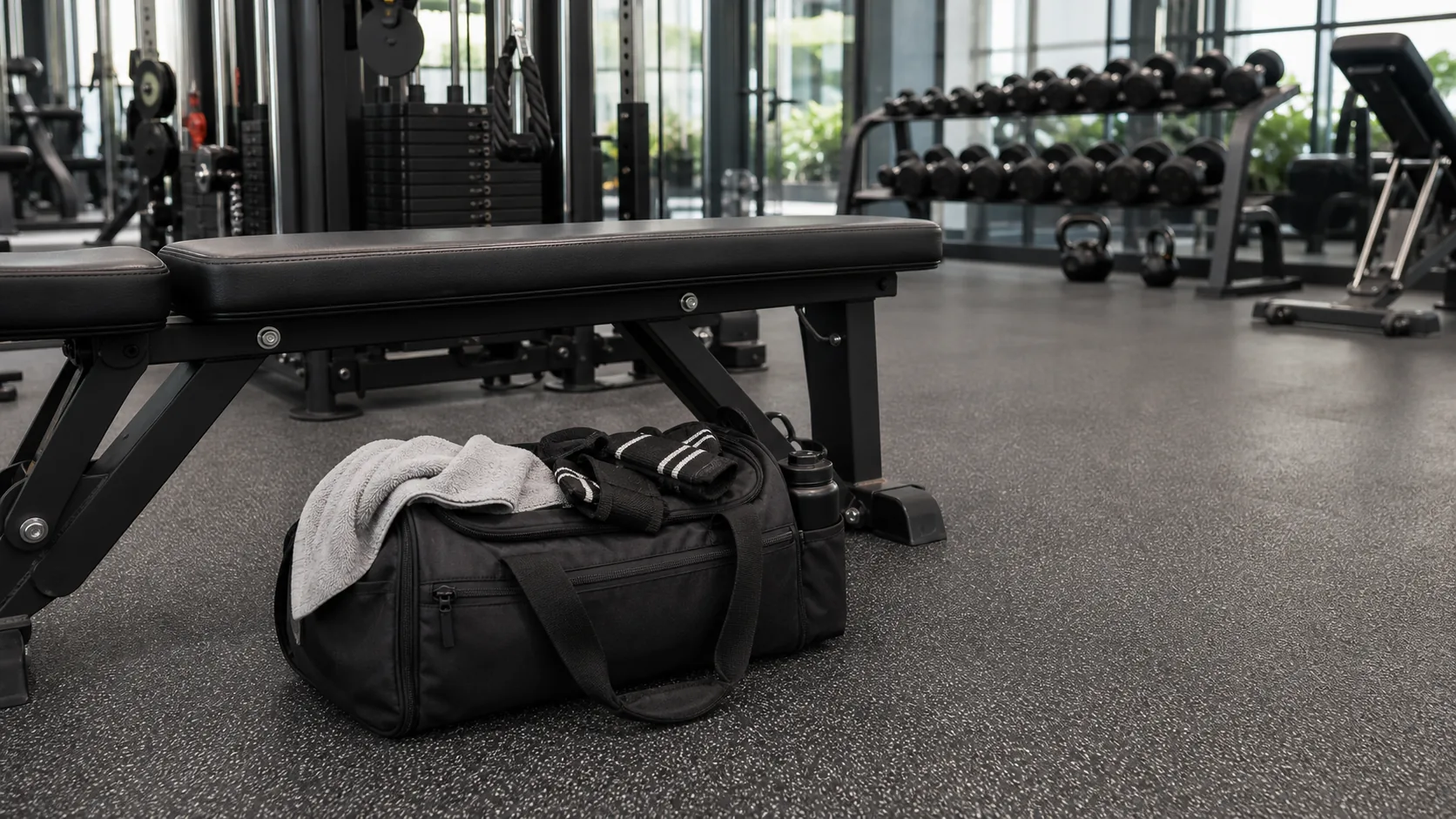
| Your situation | Practical choice | Check before training |
|---|---|---|
| The club prohibits bags on the workout floor | Use a locker or other designated storage | Which individual items may go into the workout area? |
| You need only a phone, keys, water, and a towel | Leave the main bag in storage; carry permitted essentials | Are pockets, bottle holders, or other storage available for those items? |
| You use personal accessories throughout the session | If permitted, use a small pouch or bag for those accessories | Are both the accessories and the bag allowed? Where should the bag stay? |
| You arrive from work with clothes or a laptop | Separate the workout items from the commute load | What storage arrangements does the club offer? Can you leave unnecessary valuables at home? |
| The lockers are full or unavailable | Ask staff for an approved alternative before starting | Is there another storage area, or should you change what you bring? |
A strength session might require straps or a belt, while a short treadmill session may need fewer items. That difference helps you decide what to pack; it does not create an exception to a bag policy. If you repeatedly return to a locker, review which permitted items you need for the next part of your session rather than assuming the whole duffel must come with you.
Where should your bag go if floor bags are allowed?
Use the location approved by the club and keep access to equipment clear. A bag fitting under a bench does not, by itself, establish that the space is suitable or that storage there is permitted.
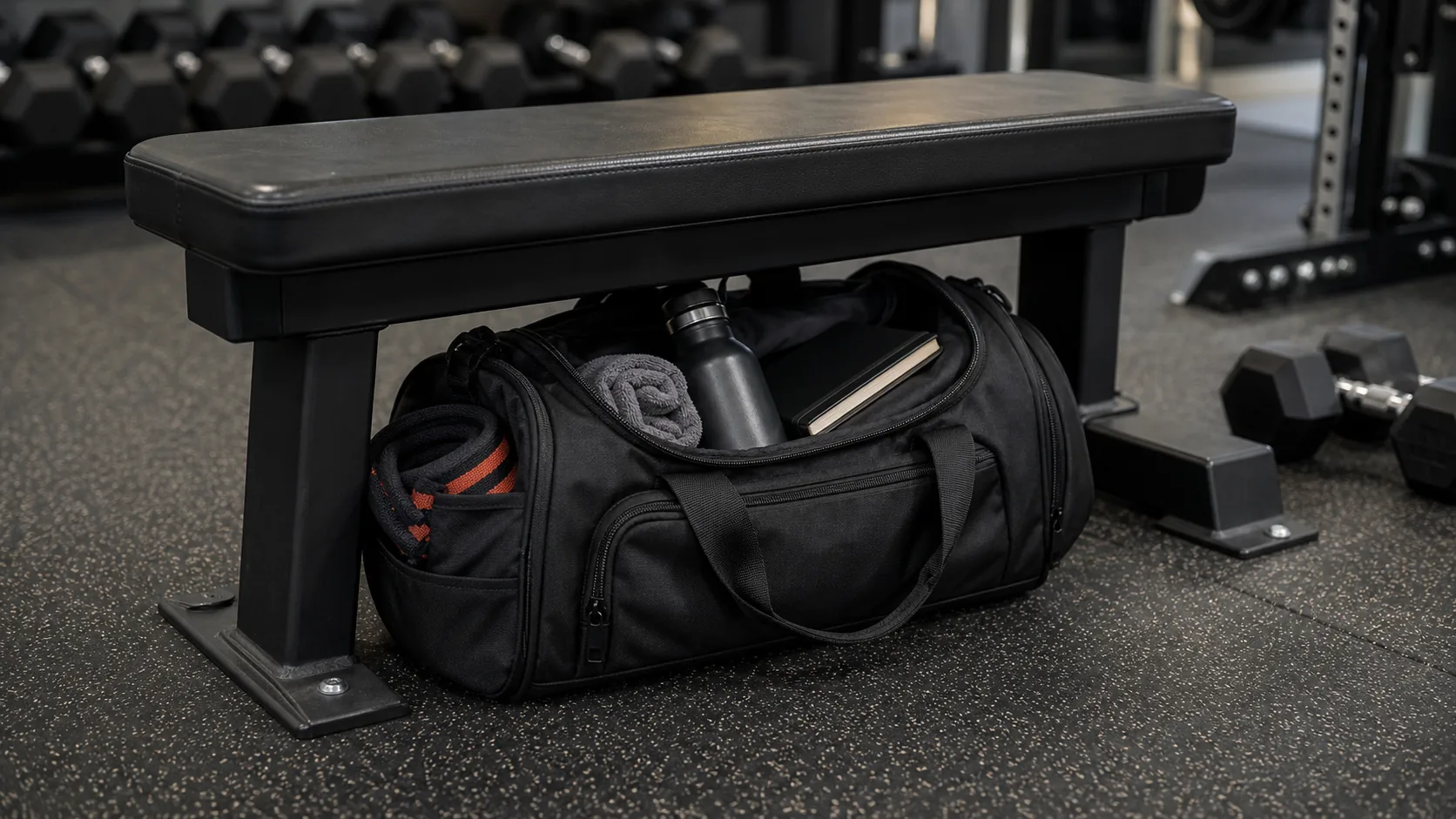
Before setting the bag down, check how the space is used. Someone may need to step around the bench, adjust it, load plates, reach a rack, or move through the aisle. An empty-looking space may be part of those movements.
- Keep the bag out of walkways, exits, and routes to racks.
- Leave room for people to enter, leave, and adjust the equipment.
- Keep the bag and its straps clear of cables, pedals, weight stacks, and other moving parts.
- Close compartments and gather loose straps so they do not spread into nearby space.
- Move your belongings when you change stations, and relocate them if staff ask.
Keep workout benches and seats available for people. Placing a bag on an unused machine also makes it harder for someone else to know whether the equipment is available. During a circuit, use approved storage instead of leaving belongings at several stations to hold your places.
If you cannot find a permitted position that keeps access and movement clear, return the bag to storage. Buying a smaller bag will not resolve a rule that prohibits all floor bags.
What should you keep with you during a workout?
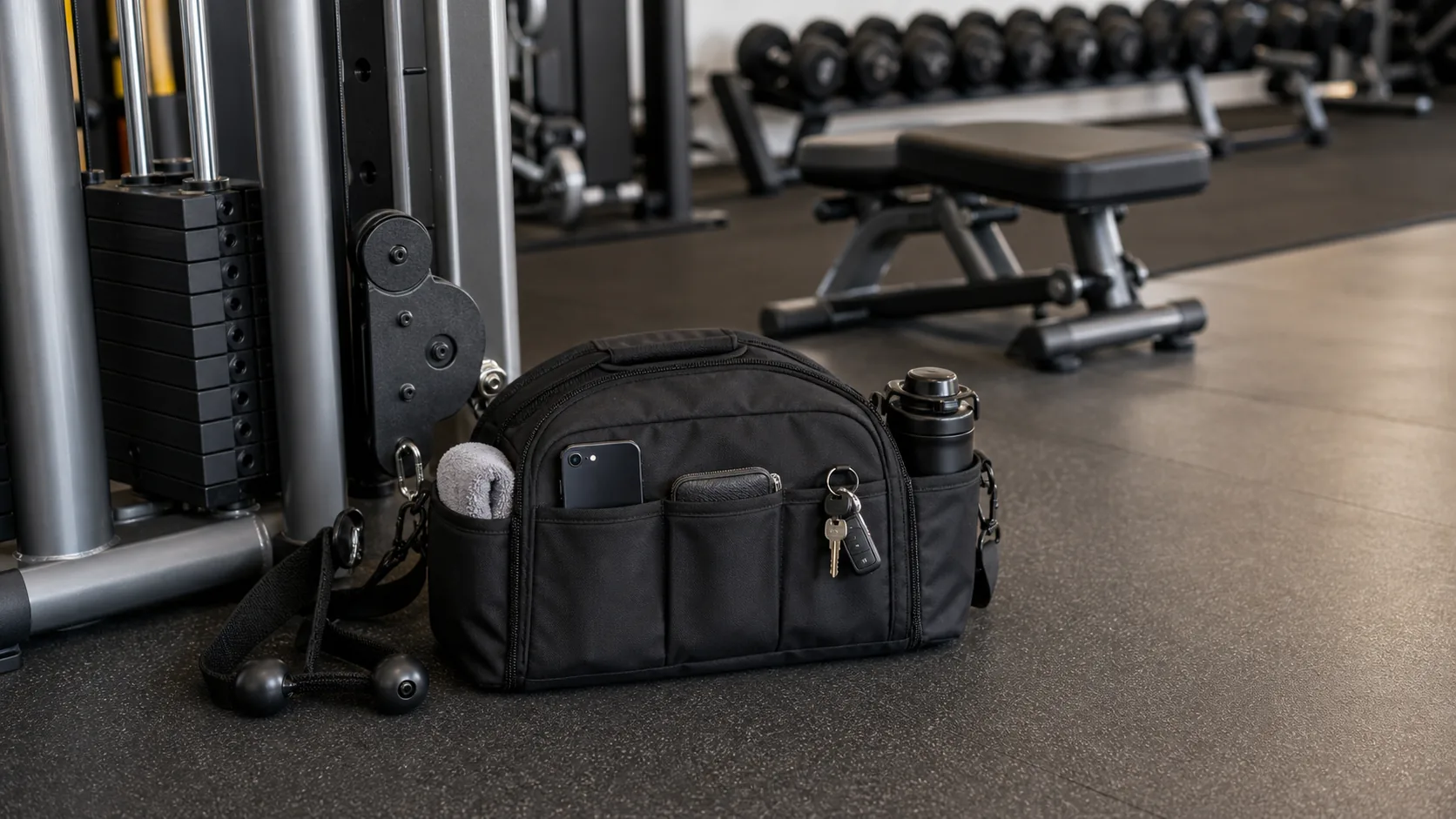
Keep only the items you are permitted to use and expect to need during that session. Water, a towel, a phone used for music or logging, and approved accessories are a starting point, not a universal packing requirement.
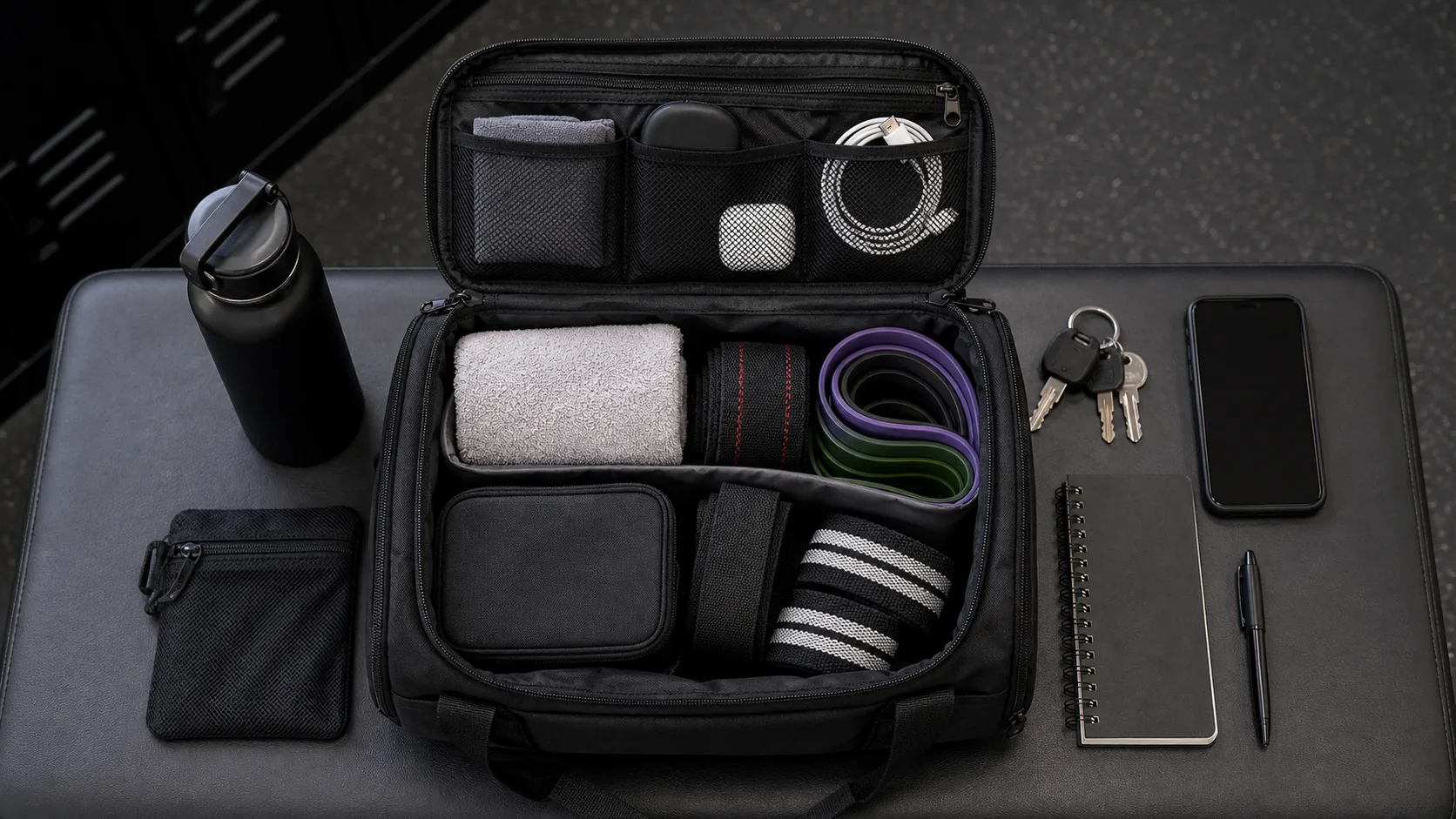
Separate your load before leaving the changing area. Clothes, shower supplies, food for later, and spare shoes do not all need to travel between stations. Put small accessories together so you can take the relevant items out of your main bag without unpacking everything.
Check the details that affect your routine. A gym may provide towels, restrict chalk or outside equipment, or specify the type of bottle allowed. Carrying equipment in a compact bag does not make it exempt from those rules.
Keep keys apart from items they could scratch, close pockets after use, and avoid loose cords hanging from the bag. After training, remove damp towels and clothes rather than leaving them packed until the next visit. Follow the bag’s care label for cleaning; a fabric name alone does not establish an antimicrobial or odor-prevention benefit.
For the layout of your full commute and workout kit, see our guide to organizing a gym bag.
How should you handle valuables and locker concerns?
Follow the club’s storage instructions and bring only the valuables you need. Neither watching a bag between sets nor locking a locker provides a guarantee against loss. Concern about theft is a reason to discuss storage with staff, not evidence that floor storage is always safer.
24 Hour Fitness’s locker policy recommends using a lock, says not to leave valuable property in lockers, and limits locker use to the time spent at the gym. Check how your own club handles lockers, valuables, and belongings left behind rather than assuming all facilities use the same system.
If your locker needs a separate lock, bring the appropriate one and check that the door is secured before walking away. Keep the key or access method available in a way that suits your workout. Do not leave an open bag beside equipment while you go to another part of the gym.
If you must bring a laptop or another valuable item, ask about the available arrangements before your visit. Where the arrangements do not meet your needs, change what you bring or when you visit. The fact that other members carry bags around does not establish a reliable security practice.
What bag features matter when carrying one is permitted?
Choose around your permitted items, the available storage space, and how you will move the bag. There is no universal capacity cutoff in the club policies checked for this guide. A “15-liter” label cannot establish permission or suitable placement.
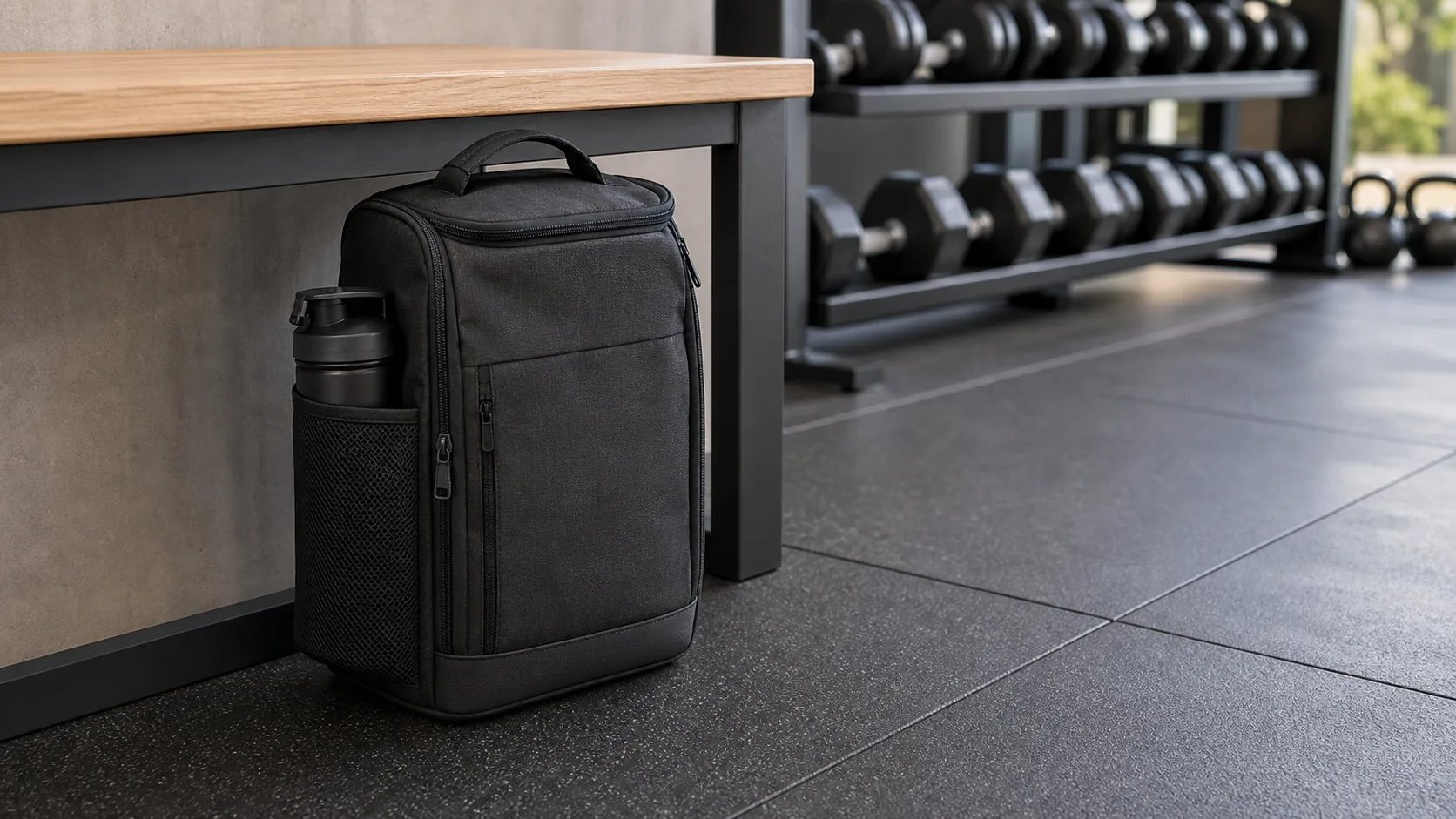
Check the packed dimensions, including an outside bottle, a full pocket, and any projecting straps. A handle you can grasp easily helps when moving between approved locations. Closures should keep small items contained, and the opening should let you retrieve an accessory without spreading the contents onto a bench.
Try packing your actual gear before choosing a size. Check whether the filled bag fits the locker or approved storage area and whether you can carry it without loose straps trailing.
In one ZWbags gym bag sample, the outer dimensions were 46 cm wide × 25 cm high × 27 cm deep. Its separate shoe compartment held a pair of standard low-top shoes in US men’s 12 / EU 46, while the main compartment held a workout top, shorts and a sports towel, with both compartments zipped closed. That shows one packing arrangement, not a universal shoe fit or locker size. Check your own shoes, load and club’s storage space.
For care, inspect the label and construction rather than treating nylon, polyester, or neoprene as proof that the finished bag is waterproof or resistant to odors.
For a gym or fitness brand developing custom gym bags, we recommend starting with the intended storage setting and an agreed packing list. Then review packed dimensions, pocket access, closures, and strap management in a sample. This is a design-review approach; it does not certify a bag for use on another operator’s workout floor.
Frequently asked questions
Can I use a backpack or tote instead of a gym bag?
Yes, if it suits your belongings and the club allows it in the intended area. The bag’s name does not determine permission. Check its packed shape, loose handles or straps, and storage fit. A backpack brought for the commute may still need to stay in a locker.
Does a no-bags rule also apply to a tiny pouch or waist bag?
Do not assume a small size creates an exception. Ask the club about the specific pouch and how you plan to use it. Rules may distinguish between items worn on the body and bags placed on the floor, but you need the facility’s answer before relying on that distinction.
What if I forget my locker lock?
Ask reception whether a suitable lock or another approved storage option is available. Do not assume the club sells locks or has keyless lockers. If you cannot secure your belongings as required, adjust your plans before training instead of leaving the bag unattended or using a prohibited floor space.
Can I attach a magnetic gym bag to a machine?
Check with staff before attaching a bag or accessory to gym equipment. A magnetic attachment does not override a bag policy. If attachment is permitted, confirm the intended location and keep the bag clear of controls, adjustment points, moving parts, and other users’ access to the machine.
Can I leave my bag at a bench while I use another station?
Use the club’s designated storage when you move away from your belongings. Avoid using a bag to reserve a bench or several stations during a circuit. Other members need access to the equipment, and leaving your bag behind also means you are no longer keeping it with you.
Conclusion
Before your next session, confirm the bag rule and decide where your belongings will stay. Pack the permitted items you need for training separately from the rest of your kit.
If you are developing a bag for a gym or fitness brand, discuss your gym bag project with ZWbags using your intended storage setting, packing list, and dimensions as the starting brief.