
You can pack a small backpack for travel by choosing an under-seat soft bag, compressing clothing into flat modules, wearing bulky layers on the plane, and keeping airport-access items near the top. For many travelers, a cheap ticket stops feeling cheap once gate staff measure an overstuffed carry-on and add a last-minute fee. The smarter approach is to treat how to pack a small backpack for travel as a simple system: pick a flexible pack, build compact clothing zones, protect tech, and test the loaded size before you leave home.
Why master how to pack a small backpack for travel?
Packing a small backpack carefully can reduce bulk and keep priority items accessible. Airline limits vary by carrier, fare, route, and aircraft, so a soft-sided under-seat backpack may provide some sizing margin but does not guarantee acceptance. Remove trapped air, duplicate clothing, and poorly placed items. For longer trips, the same compact core can work when laundry and resupply are part of the plan.
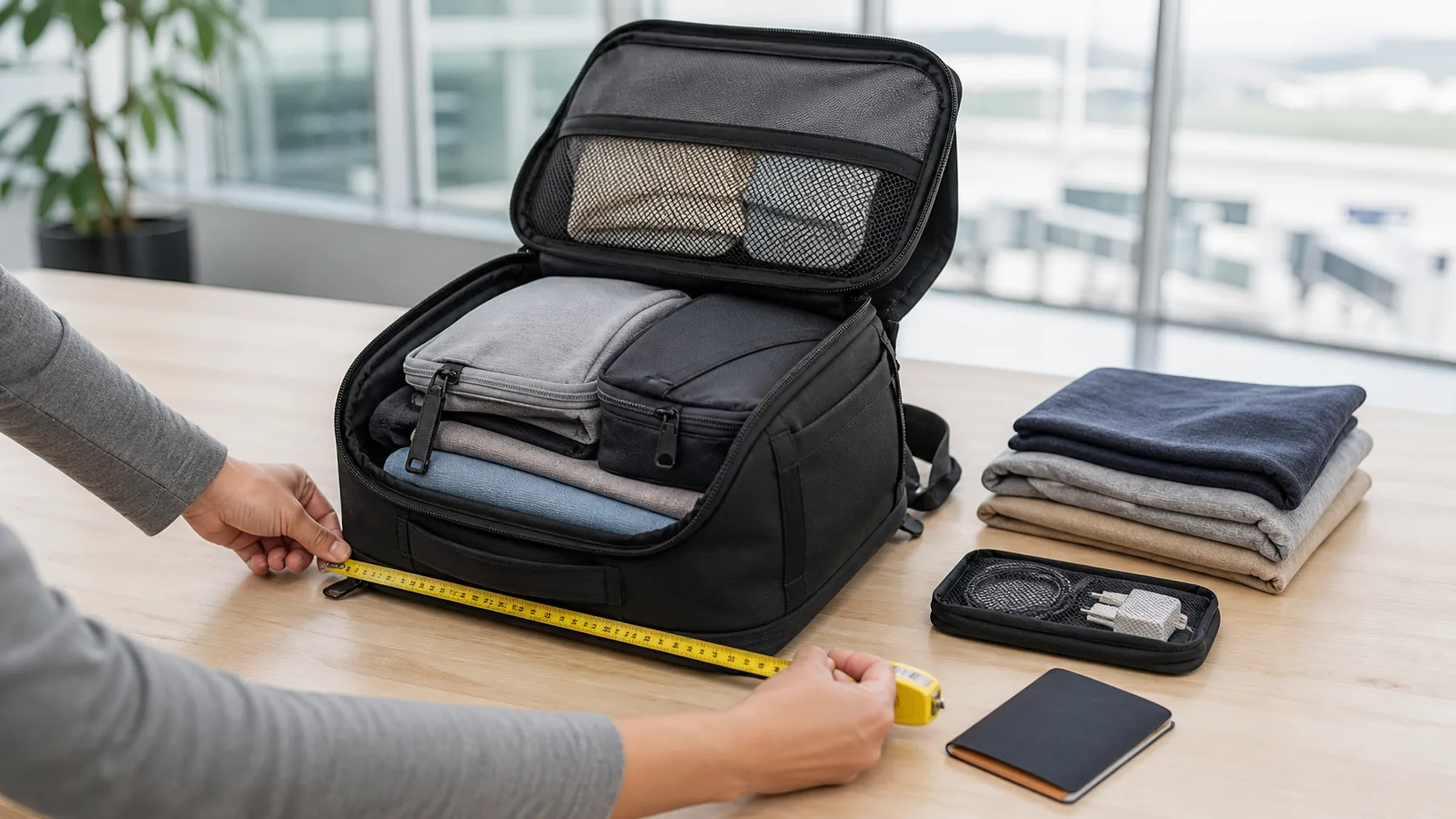
What does the under-seat rule really mean?
The under-seat rule means your personal item must slide fully below the seat in front of you. Gate checks focus on the loaded outer shape, not the empty product label.
- Measure your packed bag at its widest points.
- Keep depth slim because rigid sizer boxes punish bulging pockets.
- Use soft fabric panels that can compress without cracking.
Key Takeaway: A small backpack works best when the loaded shape stays slim enough for the airline sizer, not when the empty bag looks compact online.
| Airline Check | Packing Risk | Smart Response |
|---|---|---|
| Metal sizer | Bag is too thick | Use compression straps |
| Visual gate check | Front pocket bulges | Move small items inside |
| Under-seat fit | Shoes block flex | Pack shoes flat or wear them |
This measurement-led mindset turns airline rules into a packing checklist instead of a stressful airport surprise.
Which bag supports how to pack a small backpack for travel?
The right bag for how to pack a small backpack for travel has a flexible shell, clean compartments, padded tech storage, and side compression. A frameless backpack usually fits strict personal-item rules better than a hard carry-on because it can mold around clothing cubes and squeeze into tight spaces. For rugged trips, tactical backpacks can add load control, stronger fabric, and useful external attachment points.
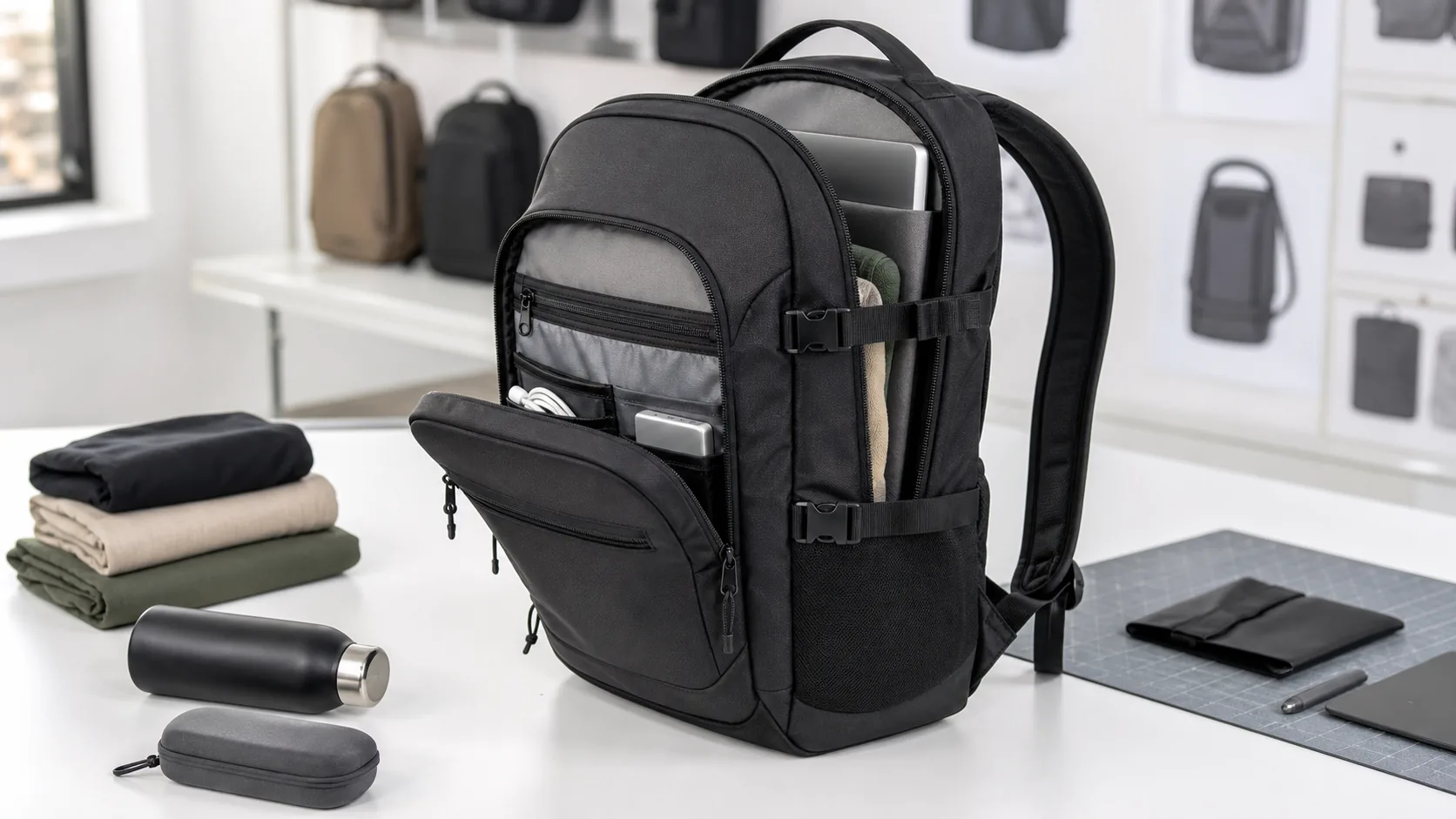
What features matter most in a small pack?
A useful small travel pack controls thickness while keeping daily items reachable. One open cavity can waste space if small items move around freely.
- A clamshell or wide U-shaped opening makes packing flatter.
- A suspended laptop sleeve keeps electronics against your back.
- Side straps reduce depth after cubes are loaded.
Key Takeaway: Choose a bag that shapes your load; do not rely on packing tricks to rescue a poor compartment layout.
| Feature | Why It Helps | Best Use |
|---|---|---|
| Compression straps | Pulls depth inward | Airline sizer checks |
| Laptop sleeve | Keeps weight stable | Work trips |
| Front pocket | Speeds access | Passport, cable, pen |
The best small backpack feels boring in the right way: tidy, flexible, and easy to measure.
How do cubes change how to pack a small backpack for travel?
Compression cubes change how to pack a small backpack for travel by turning soft clothing into flat blocks that stack cleanly. Without cubes, shirts and pants trap air and spread into rounded piles. With cubes, you can group outfits by day, activity, or fabric type, which also makes hotel unpacking faster. This packing cube guide explains how standard and compression designs differ and how to match cube dimensions to the bag.
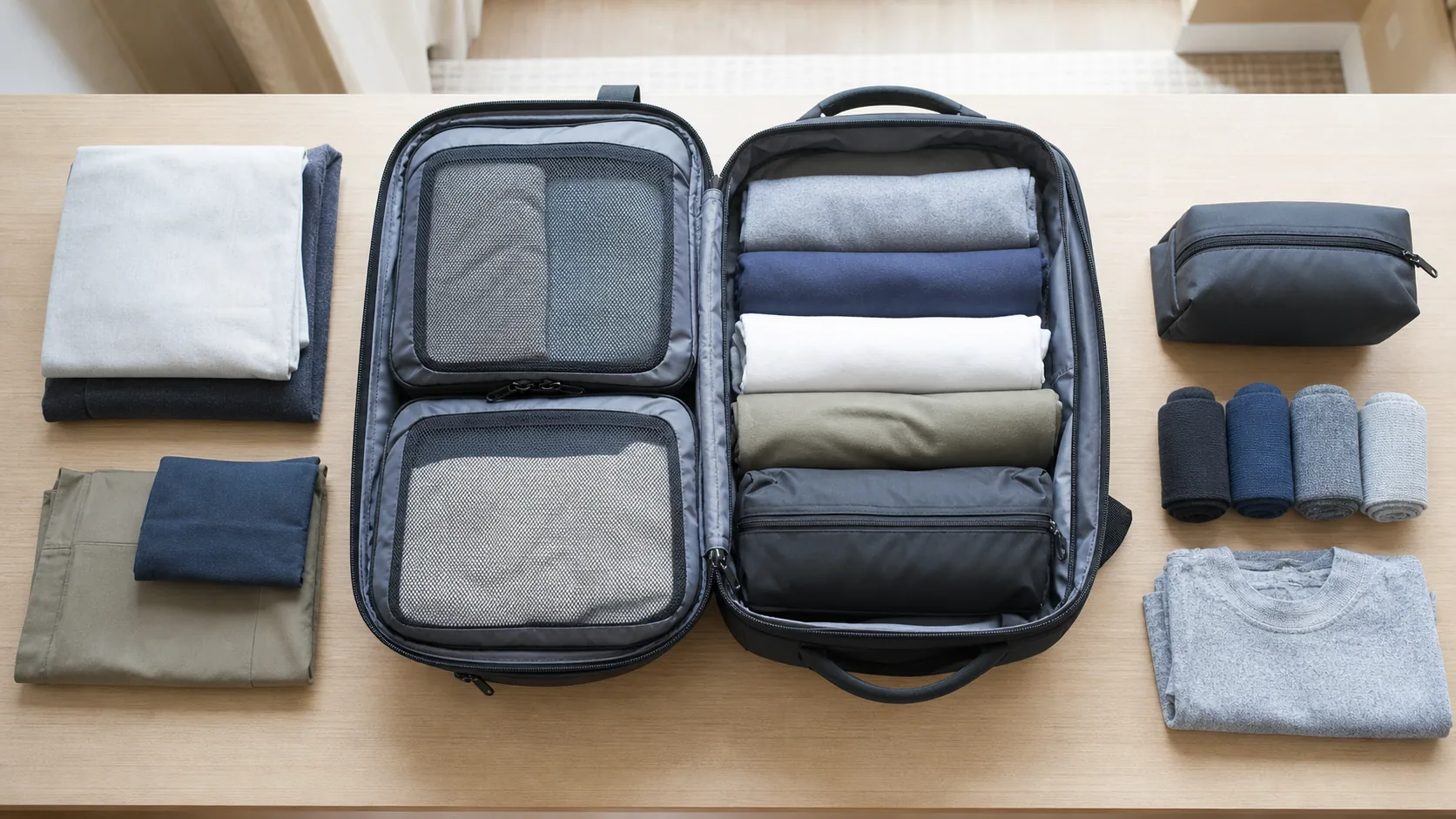
How should you sort clothing cubes?
Sort cubes by use case instead of garment type. The good part: you can pull out one cube without disturbing the rest of the bag.
- Use one cube for daywear tops and bottoms.
- Use one slim cube for underwear and socks.
- Use a flat pouch for sleepwear or swimwear.
For brands and sellers planning e-commerce bag projects, cube-friendly dimensions can improve real customer use because online buyers judge a pack by what it holds after purchase.
How tight should compression be?
Compress clothing enough to flatten it, but not so tightly that zippers strain. Too much pressure can wrinkle shirts and push the backpack into an awkward barrel shape.
Key Takeaway: Cubes work when they create flat layers, not when they force every garment into a rock-hard brick.
| Cube Type | Best Contents | Packing Note |
|---|---|---|
| Medium compression cube | Shirts, pants | Place near back panel |
| Slim mesh cube | Socks, underwear | Fill side gaps |
| Waterproof pouch | Laundry, swimwear | Keep away from tech |
This system keeps your small backpack neat even when you unpack and repack every day.
After the cubes are filled, build the backpack in zones: dense items close to the back panel, soft clothing around the perimeter, low-frequency items at the bottom, and airport-access items at the top. This arrangement improves balance and prevents one hard cube from creating a rounded front panel.
What should you wear for how to pack a small backpack for travel?
What you wear is part of how to pack a small backpack for travel because bulky clothing should usually travel on your body, not inside the bag. Jackets, hoodies, boots, and heavy denim consume space quickly. Wearing those items during boarding keeps the backpack slim and leaves room for lighter layers.
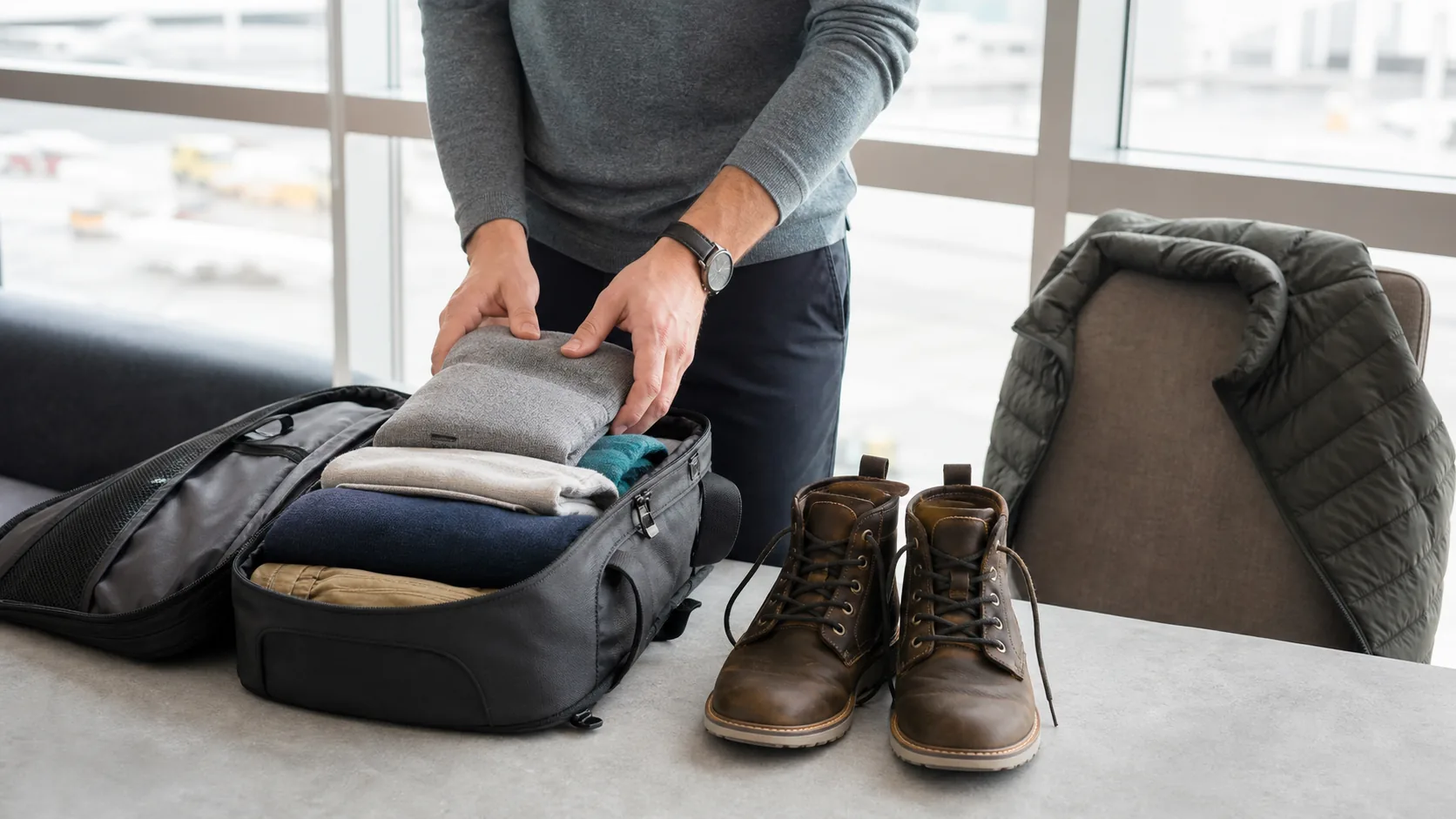
Which layers belong on the plane?
Wear the bulkiest layer that remains comfortable in the airport. After boarding, fold the jacket into your lap or use it as a pillow where permitted.
- Wear boots or heavier sneakers.
- Carry one warm outer layer instead of packing it.
- Keep a thin shirt in the bag for arrival.
How many shoes should you pack?
Pack no more than one spare pair, and choose a flat, lightweight option. Shoes are awkward because they steal both volume and shape.
Key Takeaway: A wearable packing plan frees more space than any folding method when jackets and shoes enter the equation.
| Item | Wear It | Pack It |
|---|---|---|
| Heavy jacket | Yes | No |
| Boots | Yes | No |
| Sandals or flats | No | Yes |
This approach also keeps weight balanced because dense items stay with you rather than pulling the pack backward.
How to pack a small backpack for travel day outfits?
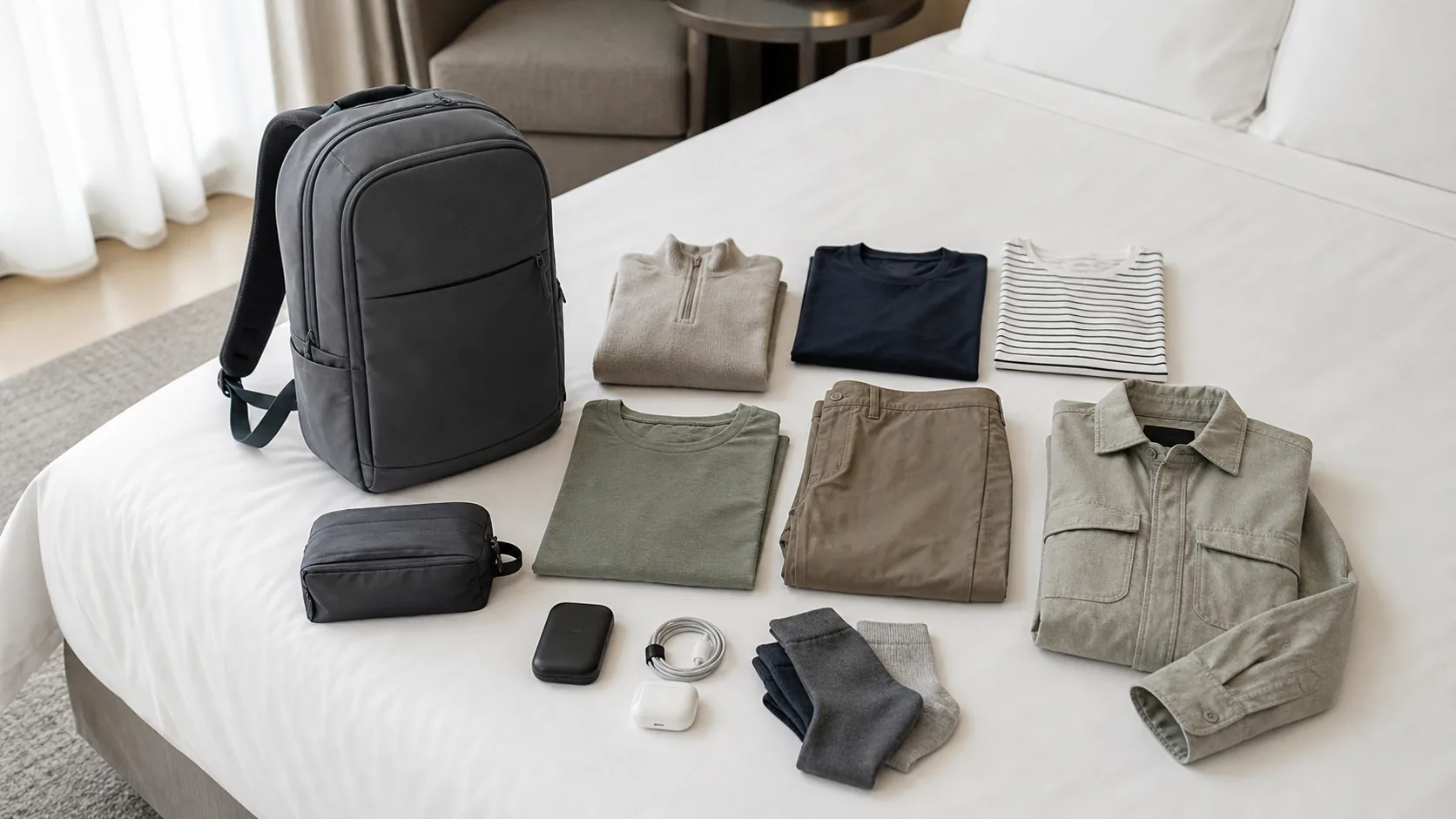
To pack a small backpack for travel day outfits, build a capsule wardrobe where every top works with every bottom. A neutral color plan gives you more outfit combinations with fewer garments. For a three-to-five-day trip, you usually need fewer clothes than you think if fabrics dry fast and layers mix well.
What fabrics save the most space?
Choose fabrics that resist wrinkles, dry quickly, and feel comfortable after repeated wear. Let us keep it practical: one good travel shirt can replace two bulky cotton shirts.
- Merino wool handles odor well.
- Nylon blends dry faster than heavy cotton.
- Stretch woven pants pack flatter than denim.
Should you roll or fold clothes?
Roll soft garments and fold structured pieces. Rolling reduces gaps in corners, while flat folding keeps collars and dress shirts cleaner.
Key Takeaway: A small backpack rewards clothing that works across several outfits, not single-use pieces that only match one plan.
| Garment | Packing Method | Reason |
|---|---|---|
| T-shirts | Roll | Fills gaps well |
| Button-down shirts | Flat fold | Reduces collar crush |
| Travel pants | Flat fold | Keeps stack stable |
The best daywear plan feels repeatable, simple, and easy to refresh during a short or extended trip. A practical long-trip rotation is three tops, two bottoms, one warm layer, and enough underwear to reach the next laundry stop. Two months of travel does not require two months of clothing; it requires a reliable washing and drying rhythm.
How to pack a small backpack for travel evening wear?
To pack a small backpack for travel evening wear, choose one polished outfit that shares pieces with your daytime wardrobe. A dark pant, wrinkle-resistant shirt, and thin overshirt can cover dinner, meetings, or a nicer event without adding a separate clothing set. In private-label travel packs, this is where flat main compartments and garment-friendly panels can support better user satisfaction.
Can nicer clothes stay wrinkle-free?
Nicer clothes can stay presentable if you use a flat fold and avoid crushing them under shoes or toiletry pouches. Small detail, big payoff: place structured items against the back panel or on top of cubes.
- Button shirts should sit flat near the top.
- Belts can trace the bag wall instead of being rolled.
- A thin overshirt can replace a blazer for many trips.
How do you build a capsule look?
Build around two colors and one accent layer. This keeps your evening outfit intentional without adding bulk.
Key Takeaway: Evening wear belongs in a small backpack only when it shares pieces with the rest of your travel wardrobe.
| Evening Item | Space Cost | Better Choice |
|---|---|---|
| Full blazer | High | Thin overshirt |
| Dress shoes | High | Clean dark sneakers |
| Extra trousers | Medium | One versatile pant |
That tradeoff keeps your bag compact while still giving you a polished option.
How to pack a small backpack for travel small extras?
To pack a small backpack for travel small extras, use gaps inside shoes, corners, and slim pockets for socks, underwear, chargers, and laundry bags. Tiny items become space-wasters when they float around loose. They become helpful fillers when each one has a clear zone.
Where should underwear and socks go?
Underwear and socks can fill gaps around cubes or sit inside spare shoes. Small soft items fit where rigid items cannot.
- Stuff socks into packed shoes.
- Keep underwear in a slim mesh pouch.
- Place a laundry pouch along one side wall.
How do you separate dirty laundry?
Use a thin waterproof pouch or drawstring bag for laundry. This keeps odor away from clean clothes without adding much weight.
On longer trips, choose the laundry interval before choosing the clothing count. A three-to-seven-day wash cycle usually controls volume better than adding an outfit for every day. Keep one clean set outside the laundry pouch so a delayed wash does not disrupt the next travel day.
Key Takeaway: Small extras should tighten your load, not scatter through every pocket.
| Small Item | Best Location | Why It Works |
|---|---|---|
| Socks | Inside shoes | Preserves shoe shape |
| Underwear | Mesh pouch | Easy count check |
| Laundry | Side pouch | Odor separation |
Small-space packing depends on using every odd-shaped corner with purpose.
How to pack a small backpack for travel tech and toiletries?
To pack a small backpack for travel tech and toiletries, place heavy electronics against the back panel and liquids in a top quick-access pouch. That layout protects fragile items and helps with airport screening. It also keeps leaks away from clothing cubes and cables.
Where should a laptop sit?
A laptop should sit in a padded sleeve close to your back. This is where comfort matters: the heaviest item should stay near your center of gravity.
- Use a suspended sleeve if available.
- Keep chargers in a small tech pouch.
- Avoid placing liquids above open electronics.
How should toiletries fit?
Use travel-size containers, solid toiletries, and one clear pouch. Solid shampoo, toothpaste tablets, and stick deodorant reduce leak risk.
Keep medication, documents, valuables, and any battery-powered items that must remain in cabin baggage in a removable top pouch. If the backpack is unexpectedly gate-checked, you should be able to remove that pouch quickly and follow the current airline and security rules for the route.
Key Takeaway: Tech and toiletries need fast access, firm protection, and separation from clothing.
| Item | Packing Zone | Risk Reduced |
|---|---|---|
| Laptop | Back sleeve | Impact damage |
| Charger pouch | Front pocket | Cable clutter |
| Toiletries | Top pocket | Leak spread |
For product teams, a small-batch product testing example can show whether real users can reach tech and liquid pouches without unpacking the whole bag.
How to pack a small backpack for travel under airline limits?
To pack a small backpack for travel under airline limits, finish packing early, measure the full bag, and remove anything that makes the front bulge. A soft backpack can pass a strict sizer when depth stays controlled. If you also use the same pack for commuting or fitness, OEM gym bags show how wet/dry pockets and shoe zones can support multi-use storage.
How do you run a home sizer test?
Run a home test with a tape measure, luggage scale, and a box or chair gap similar to the airline space. Do this before you leave: a five-minute test can prevent a gate fee.
- Measure height, width, and depth after packing.
- Walk for ten minutes with the loaded bag.
- Remove one bulky item if the front panel rounds outward.
- Check the allowance for every operating airline, not only the company that sold the ticket.
- Leave margin for handles, stuffed pockets, and items bought during the trip.
What should you remove when the backpack is too full?
Remove duplicate clothing, heavy toiletries, and spare shoes before you cut useful tech or medication. Then tighten straps and recheck the shape.
Key Takeaway: Airline compliance is a loaded-bag test, so the final packed form matters more than the product capacity number.
| Problem | Fast Fix | Result |
|---|---|---|
| Front bulge | Move pouch inward | Slimmer depth |
| Heavy load | Wear jacket | Lower bag weight |
| Shoe bulk | Pack flats only | Cleaner shape |
This guide solves the main small-bag problem: carrying what you need without paying for unused space. If your brand needs compact, airline-ready travel bags for retail, e-commerce, or OEM programs, contact us today to discuss durable materials, smart compartments, and buyer-ready customization.
What FAQs clarify how to pack a small backpack for travel?
These FAQs clarify how to pack a small backpack for travel by answering the practical questions travelers ask before a tight under-seat trip. Keep the answers simple, then adjust the list by airline, weather, and trip length.
Can I pack a week of clothes in a small backpack?
Yes, you can pack a week of clothes in a small backpack if you use a tight capsule wardrobe and plan one laundry stop. Pack three tops, two bottoms, underwear, socks, and one spare layer, then rely on quick-dry fabrics.
What's the best way to fold bulky jackets?
The best way is not to pack the jacket at all; wear it during boarding. If you must pack it, roll it into its hood or compress it in a thin pouch.
How do I know if my backpack will fit under the seat?
Measure it after packing, not before. If height, width, or depth exceeds your airline's personal-item limit, remove bulky extras and tighten straps.
Can I carry toiletries in my personal item?
Yes, you can carry toiletries if liquids meet airport rules and sit in a clear pouch. Solid toiletries save more space and reduce leak risk.
What should I remove if my backpack is too full?
Start with spare shoes, duplicate outfits, full-size liquids, and bulky cotton items. Keep medication, travel documents, chargers, and weather protection.