
This comprehensive guide to tactical EDC backpacks and MOLLE is designed to help you navigate rugged materials, modular configurations, and specialized carry designs. Imagine packing your bag for a demanding day, only to have a cheap seam split or a zipper stick when you need your gear most. A low-quality, unreliable backpack turns a routine commute or outdoor excursion into an organizing nightmare.
Carrying an unreliable pack limits your readiness and puts your expensive tech or outdoor tools at constant risk of damage. Fortunately, upgrading to the OEM tactical backpack projects ensures military-grade durability, modular expansion via webbing, and absolute peace of mind. This system adapts to your unique workflow, protecting your items under any circumstances.
How do you choose the best edc backpack?
Choosing the outdoor and tactical industry requires a systematic evaluation of your daily carry environments, payload weight, and durability requirements. You must assess how raw materials and structural engineering work together to protect your essentials. By understanding these variables, you can select a platform that transitions seamlessly from city streets to rugged trails.
What are your key daily requirements?
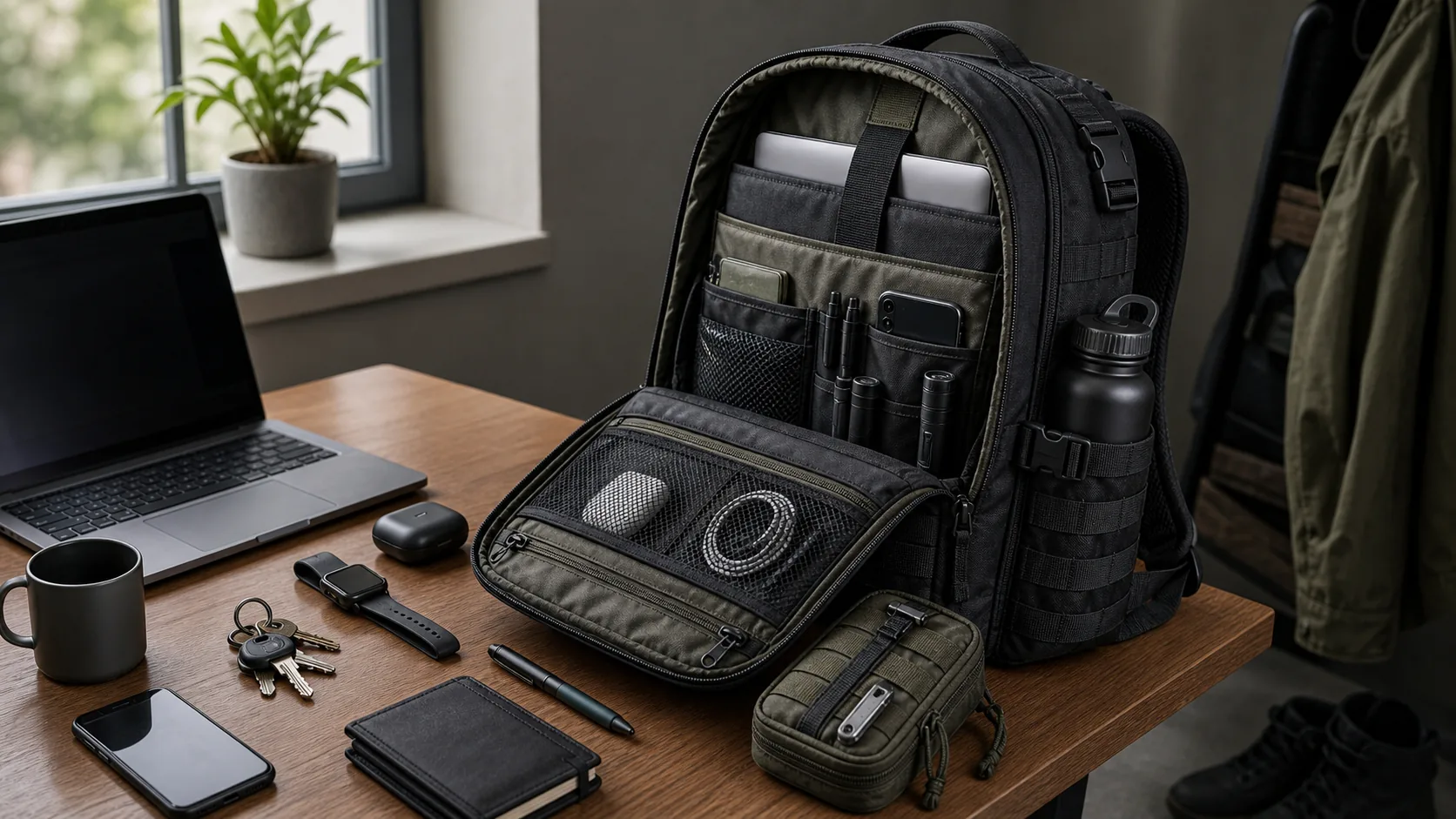
Defining your daily loadout dictates the internal volume and pocket layouts your carry system must provide. Think about it: carrying a 16-inch laptop requires vastly different protective compartments than hauling basic medical kits or climbing gear. You should document your daily essentials to avoid over-packing or under-protecting your valuable items.
Your choice in pack layout should match your physical access habits during transit. Consider these critical parameters when mapping out your functional needs:
* Electronic Compartments: Dedicated, padded laptop sleeves with suspended bottoms.
* Quick-Access Pockets: Top-loading or exterior zippered slots for keys, wallets, and optical gear.
* Expansion Potential: Exterior lash points for water bottles or modular tool pouches.
Balancing weight against overall load capacity
Heavy-duty packs offer unmatched protection, but carrying excessive fabric weight day in and day out takes a physical toll. You want a lightweight harness structure that does not compromise on the tear strength of the exterior shell. Finding this balance prevents premature fatigue during extended commutes.
Here is the kicker: a bag with premium structural support can carry heavier loads more comfortably than a flimsy, ultra-light alternative. Selecting the right frame sheet transfers stress away from your shoulders. This structural design ensures that even a packed 25-liter bag feels completely balanced on your back through these elements:
* Rigid Frame Sheets: Distributes heavy weight across your entire back.
* Padded Hip Belts: Transfers heavy load burdens to your skeletal system.
* Contoured Harnesses: Conforms to your natural shoulders to prevent painful chafing.
Key Takeaway: Finding your ideal everyday pack depends on aligning fabric weight with your physical load demands. You must prioritize specialized layouts that organize your gear without adding unnecessary bulk.
| Metric | Everyday City Commute | Outdoor & Tactical Use |
|---|---|---|
| Ideal Fabric Weight | 500D Nylon | 900D – 1000D Polyester/Nylon |
| Typical Capacity | 15 – 20 Liters | 24 – 30 Liters |
| Key Feature | Padded Laptop Sleeve | MOLLE Webbing / Hydration Sleeve |
Use this comparison to establish your baseline volume and material specs before examining specific structural features.
What makes the best edc backpack tactical?
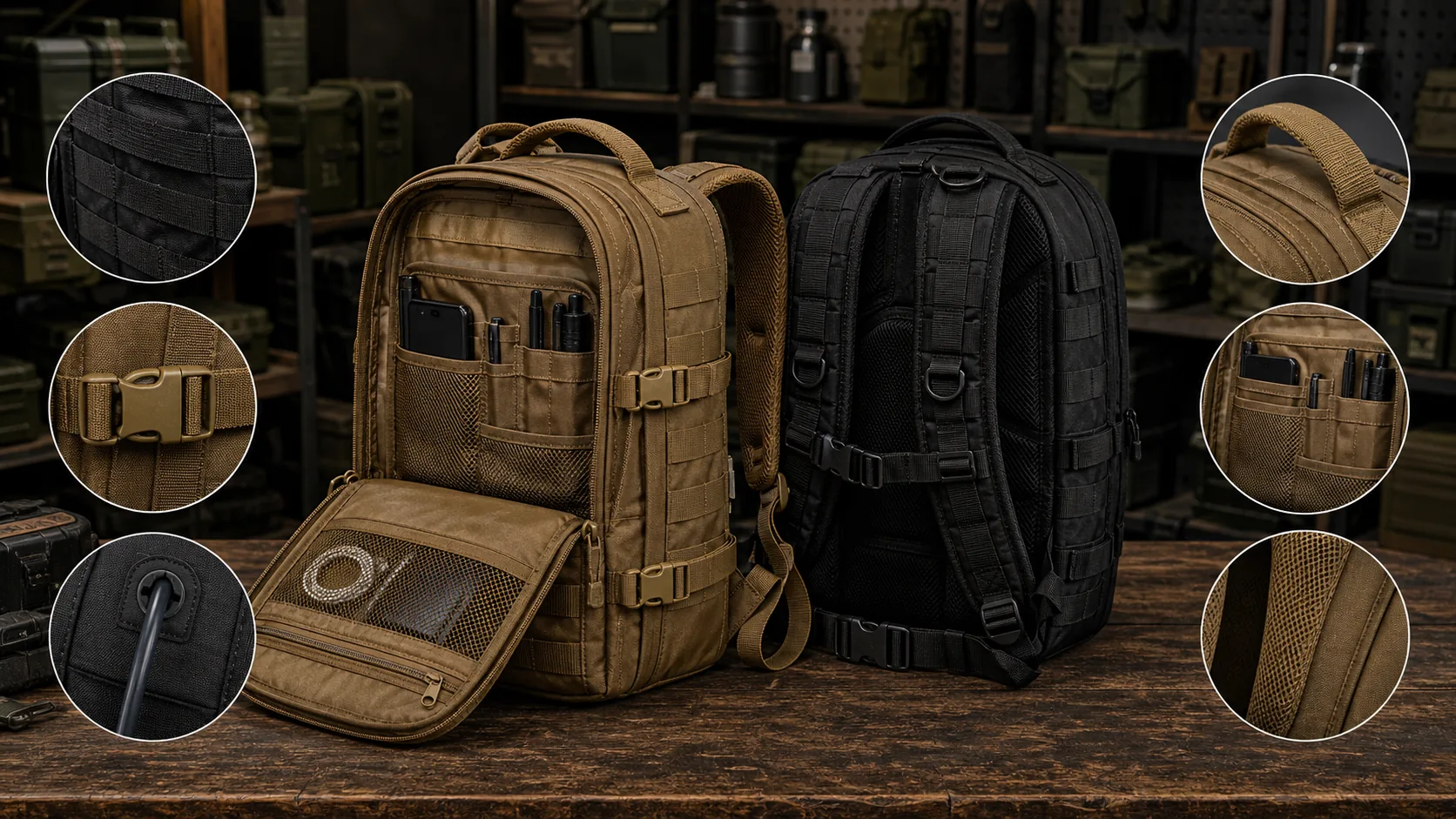
A tactical design elements integration makes the best edc backpack tactical by incorporating military-spec materials, modular attachment platforms, and reinforced load-bearing construction. These features are engineered to survive extreme stress levels that would easily destroy standard fashion packs. When you carry a military-inspired pack, every single seam, zipper, and pocket serves a dedicated functional purpose.
Military-inspired design versus civilian utility
True military packs are built for battlefield deployment, while tactical civilian versions optimize these features for urban environments. You do not need to carry heavy field ammunition, but you do benefit from the weatherproofing and abrasion resistance built into tactical lineages. This design transition keeps your gear dry during unexpected downpours.
Let's face it: civilian life requires modern conveniences like padded laptop compartments and discreet profiles. The challenge is blending these consumer needs with rugged, field-tested build quality. High-grade custom manufacturing bridges this gap, offering tactical performance without making you look out of place on your morning train:
* Urban Adaptability: Sleek outer shells that conceal advanced organizational features.
* Reinforced Bases: Heavy-duty fabric panels that prevent wear when placed on concrete.
* Discreet Aesthetic: Low-profile color options that blend into professional work spaces.
Why is pure function favored over fleeting fashion?
Aesthetic trends fade quickly, but a pack built around functional utility remains highly useful for decades. When you choose function, you invest in bar-tack stitching, reinforced stress zones, and heavy-duty buckles that perform under pressure. This operational reliability is the core philosophy behind genuine tactical equipment.
But that's not all. Fashion-focused bags often use cheap hardware and thin fabrics that fail within months of active use. Tactical engineering replaces these weak points with high-performance components:
* Double-Stitched Seams: Prevents tearing along high-stress load borders.
* Reinforced Grab Handles: Allows for quick hauling of heavily weighted packs.
* Heavy Duty Buckles: Ensures secure closure under high tension.
Key Takeaway: Tactical packs excel because they prioritize raw material strength and structural integrity over superficial styling. You receive a durable carrying tool built specifically to withstand daily abuse.
| Design Element | Fashion Backpacks | Tactical EDC Packs |
|---|---|---|
| Stitching Standard | Single-line polyester thread | Double-stitched nylon with bar-tacks |
| Load Support | None (soft bottom) | Reinforced base & frame sheets |
| Aesthetic Goal | Visual trend alignment | Long-term operational utility |
Evaluating these construction standards helps you understand why tactical builds consistently outperform fashion-grade alternatives.
Is MOLLE needed on the best edc backpack?
Whether MOLLE is necessary on the OEM tactical backpack projects depends entirely on your need for external modularity and on-the-fly gear expansion. This standard layout allows you to weave external pouches directly onto your bag's face or sides. For users who value custom organizational frameworks, MOLLE provides an adaptable foundation that evolves with your daily mission profiles.
Understanding the modular carrying standard
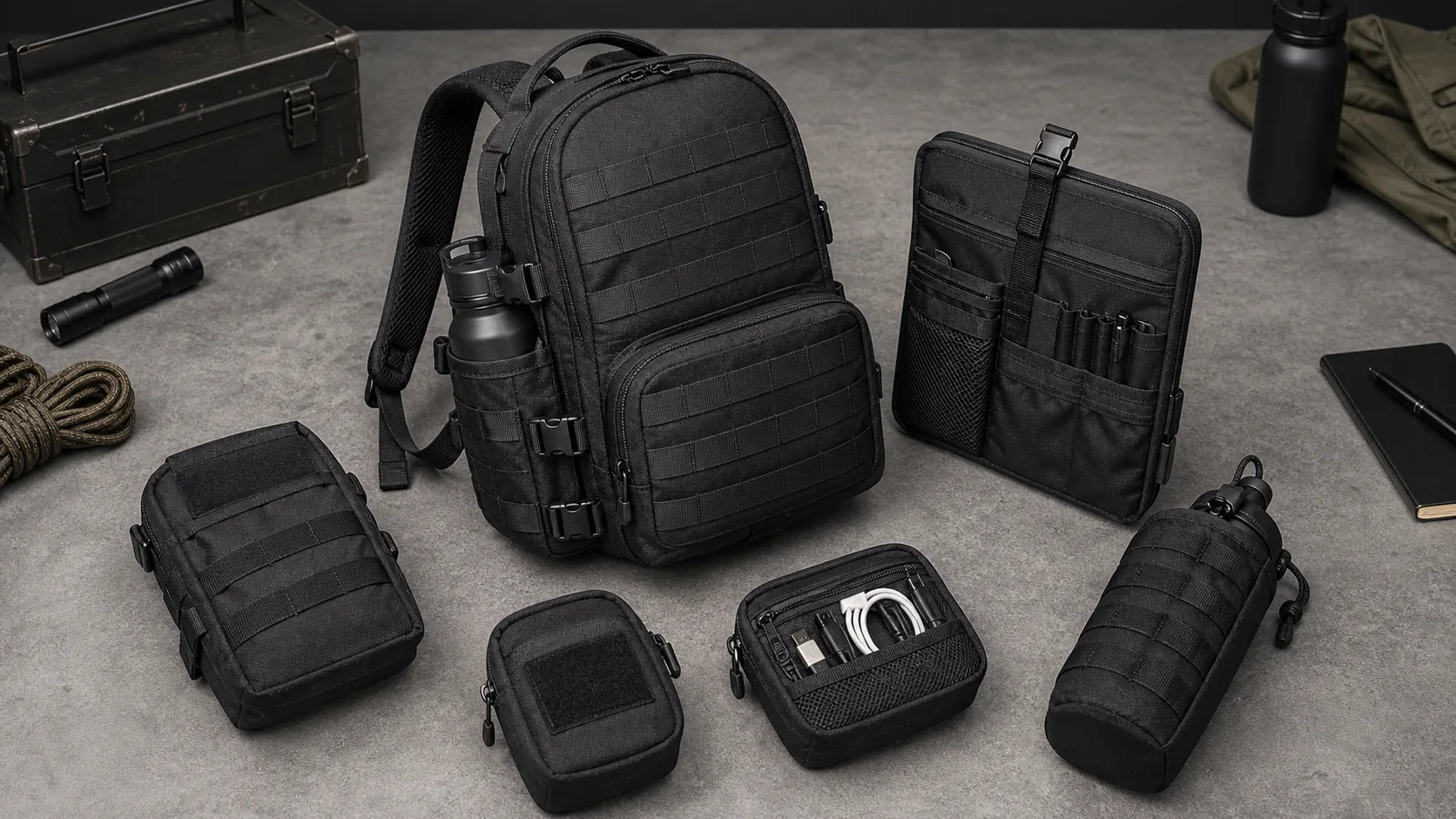
MOLLE utilizes standardized rows of heavy-duty nylon webbing to create secure anchor points for gear pouches and tools. You weave specialized straps through this matrix to lock external accessories securely against the main pack body. This ensures your added pouches will not sway, rattle, or detach while you are moving.
Think about it: a standardized system means you can mix and match accessories from different specialized manufacturers. You are never locked into a single brand's proprietary storage ecosystem. This open compatibility is why modular webbing has remained the global standard for modern gear carriage:
* Standardized Spacing: Precise horizontal rows designed to align with universal straps.
* Interchangeable Pouches: Allows attachment of any compatible modular accessory.
* Secure Mounting: Eliminates shifting or movement of attached accessories during physical activity.
Can you attach external organizer pouches?
Adding external pockets lets you expand your pack's carrying capacity without buying an entirely new bag. If you need to carry medical supplies, tools, or extra water on some days but not others, modular attachments solve this problem perfectly. You simply mount or remove pouches as your schedule dictates.
Look: modularity keeps your main compartment clean and organized for large, bulky items. Consider these highly functional add-ons to mount onto your webbing lines:
* Admin Pouches: For writing utensils, small notebooks, and multi-tools.
* Medical Kits: Rapid-access individual first aid kits for emergency medical supplies.
* Utility Pockets: For carrying charging cables, external batteries, and tech adapters.
Key Takeaway: Modular webbing provides unmatched adaptability for users who need to scale their pack size up or down. You can customize your storage layout to match changing daily carry requirements.
| Feature Set | Standard Fixed Storage | MOLLE Modular Storage |
|---|---|---|
| Capacity Adjustability | Fixed volume limit | Scalable via external mounts |
| Gear Organization | Pre-determined pocket layouts | User-defined custom pouch positions |
| Versatility | Optimized for single use-case | Adaptable across multiple industries |
Wehing fixed storage against modular freedom helps you determine the physical layout required for your workflow.
Why does the best edc backpack use 900D?
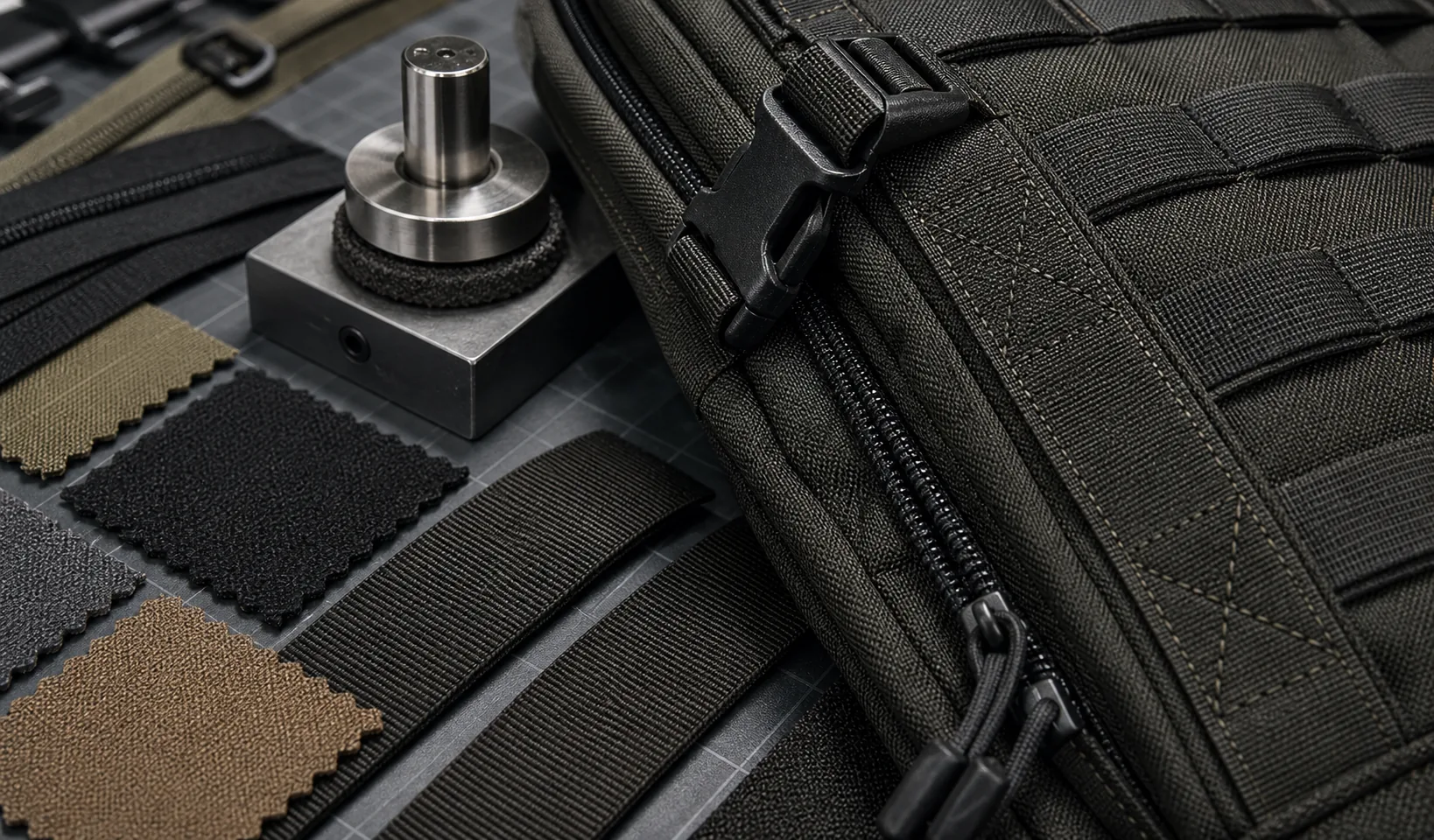
The best edc backpack uses 900D fabrics because this denier rating delivers the absolute perfect balance between extreme tear resistance and manageable daily weight. Denier measures fabric density, and 900D polyester or nylon ensures your bag survives concrete scrapes, trail briars, and baggage carousels. This high-density weaving keeps your pack looking brand new even after years of continuous daily abuse.
Comparing high-tenacity nylon denier ratings
Understanding denier ratings helps you choose a fabric thickness that matches your actual physical environment. Nylon thread of 500D is lightweight but can wear through under heavy abrasion, while 1000D is incredibly tough but adds significant baseline weight to your shoulders. Choosing a mid-range denier gives you robust protection without dragging you down.
Here is the kicker: high-tenacity nylon weaves offer twice the strength of standard polyester at identical weights. You must look at the fiber quality alongside the denier number to judge a fabric's true capabilities. Premium fibers resist fraying and puncture damage far better than cheap, recycled alternatives:
* Lightweight Strength: High tensile strength that minimizes physical load.
* Wear Prevention: Tight thread configuration that resists continuous rubbing.
* Long-Term Durability: Remains structurally intact through continuous bending and folding.
How does material density prevent early wear?
Dense weaves prevent abrasive particles like dirt and sand from embedding deep within the fabric fibers. If dirt gets inside the weave, it acts like sandpaper, grinding down the threads every time your bag flexes. You want a tightly packed weave that sheds debris easily to maintain long-term structural strength.
But that's not all. Tighter weaves also resist water penetration and protect internal coatings from degrading over time. Review these fabric behaviors under extreme environmental stresses:
* Abrasion Resistance: High-density fibers resist friction wear from concrete or rock.
* Puncture Defense: Prevents sharp tools or branches from piercing the main compartment.
* Tensile Strength: Supports heavy loads without stretching or warping the bag's profile.
Key Takeaway: Selecting high-density fabrics like 900D ensures your pack survives daily abrasive contact without suffering structural damage. You enjoy a long-lasting carry solution that maintains its clean profile over time.
| Fabric Spec | 500D Nylon | 900D Polyester | 1000D High-Tenacity Nylon |
|---|---|---|---|
| Relative Weight | Light | Balanced | Heavy |
| Abrasion Resistance | Moderate | High | Excellent |
| Best Application | Light Commuting | Rugged EDC / Work | Expedition / Tactical |
Use this material breakdown to select a fabric density that supports your payload without over-burdening your frame.
What zippers protect the best edc backpack?
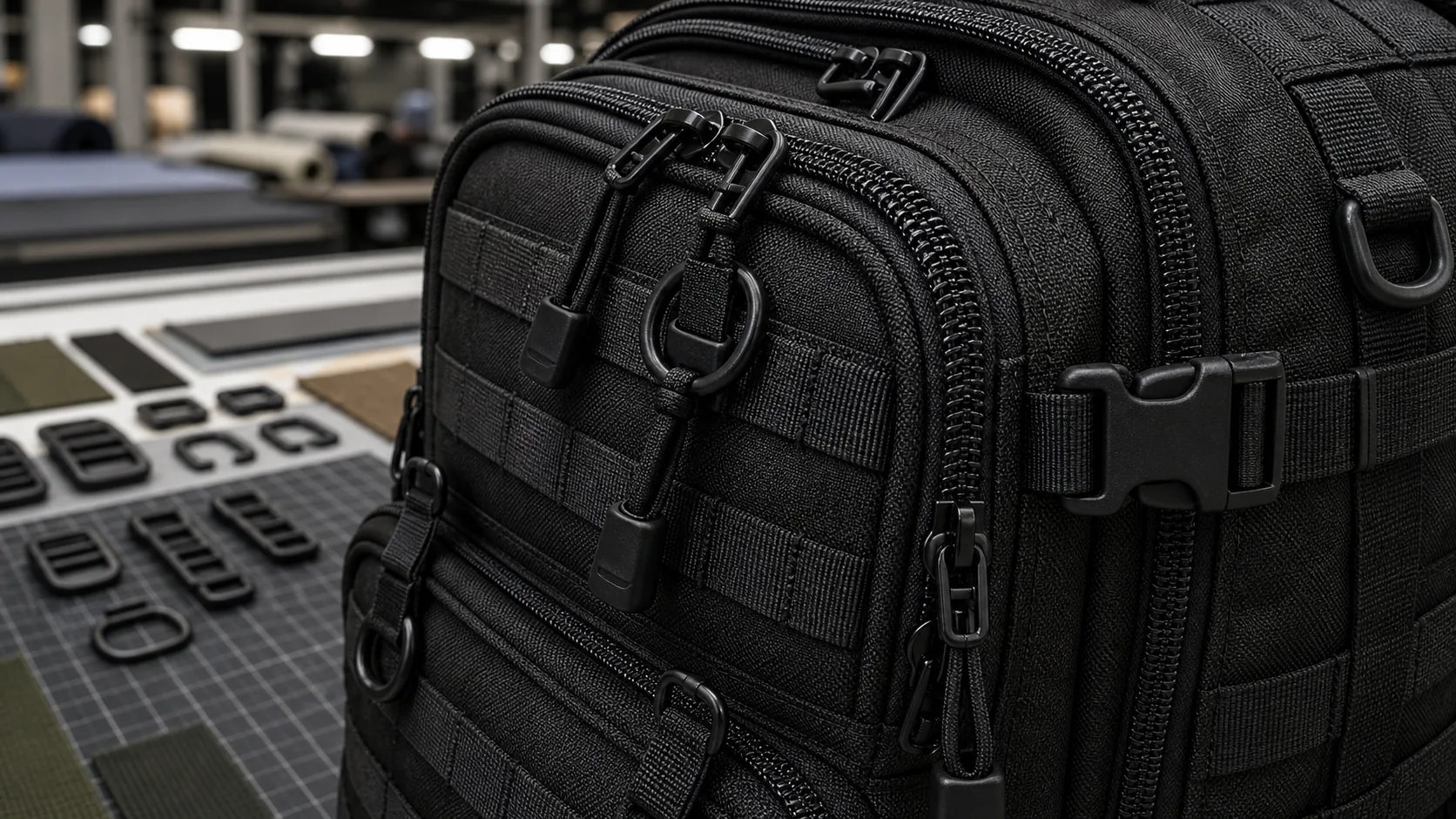
Genuine YKK and heavy-duty RC zippers protect the durability-focused backpack project because they resist bursting open when the main compartments are fully packed. Zippers are the single most common failure point on any soft carry system. Standardizing on top-tier closure systems ensures that your contents remain securely enclosed under heavy lateral tension and repeated daily cycles.
Why YKK and premium hardware matter most
Why do serious gear geeks obsess over brand-name hardware like YKK zippers and ITW Nexus buckles? Think about it: a broken buckle or split zipper slider instantly renders your entire premium pack useless. You want hardware that functions flawlessly in freezing cold, blazing heat, and muddy trail conditions.
Industry-leading hardware brands use specialized polymer and metal alloys engineered for repeated mechanical stress. They design their sliders to slide smoothly without catching on internal lining fabrics. This attention to detail eliminates frustrating zipper jams when you need to access gear quickly:
* Mechanical Precision: Perfectly aligned teeth that prevent misfeeds.
* Material Durability: Strong alloys that resist bending under lateral tension.
* Self-Lubrication: Sliders that run smoother over time with regular use.
The hidden cost of cheap outsourced components
Cheap, unbranded zippers are a major warning sign of a manufacturer cutting corners on overall build quality. These budget components often use thin metals that bend or teeth that misalign under normal packing pressure. You save a few dollars upfront but face expensive replacement costs when the bag fails prematurely.
Let's face it: investing in high-end construction protects your expensive daily electronics from accidental drops. Ensure your prospective pack utilizes these specific heavy-duty hardware standards:
* YKK #10 Sliders: The gold standard for main compartment entries under tension.
* Water-Repellent Coils: Polyurethane-coated zippers that block rain from seeping inside.
* Locking Sliders: Prevents main compartments from creeping open while you walk.
Key Takeaway: Quality hardware is the backbone of a reliable tactical EDC pack, preventing catastrophic closure failures. You must prioritize proven components to protect your gear from sudden exposure.
| Hardware Type | Budget / Unbranded | Premium / YKK Standard |
|---|---|---|
| Material Base | Weak aluminum alloys | Tempered brass & specialized plastics |
| Failure Rate | High under lateral load | Extremely low across thousands of cycles |
| Gliding Action | Prone to catching on lining | Clean, consistent movement |
Checking hardware specifications ensures you do not compromise your entire carrying setup over a single cheap plastic component.
Is the best edc backpack fully waterproof?
No standard carry system is fully waterproof, but the best edc backpack achieves exceptional weather resistance using internal polyurethane coatings and durable water-repellent exterior finishes. Fully submersible packs require heavy airtight zippers that are difficult to open daily. Highly weather-resistant designs protect your valuable tech through heavy rain while maintaining fast access.
Differentiating water resistance from proofing
Understanding the difference between water-resistant and fully waterproof fabrics keeps your gear safe in bad weather. Water-resistant bags repel heavy downpours and wet snow, keeping your internal compartments dry during a typical commute. Fully waterproof bags are designed for immersion and are usually overkill for normal daily routines.
Look: unless you are kayaking to work, exceptional weather resistance is more than enough. High-performance bags achieve this with water-repellent fabrics and smart storm flaps over the zippers. This combination keeps your tech completely dry without the bulk of a heavy dry-bag:
* Water-Repellent Fabrics: Causes water to bead up and roll off the exterior surface.
* Storm Flaps: Fabric guards that protect zipper lines from direct moisture contact.
* Welded Seams: Alternative construction that eliminates needle holes where water enters.
How do protective coatings protect your tech?
How do fabric coatings prevent water from seeping through the weave and onto your expensive laptop? Premium manufacturers apply a durable water repellent (DWR) coating to the outside and a polyurethane backing to the inside of the fabric. This dual barrier stops moisture from penetrating the fibers.
But that's not all. Over time, these protective coatings can wear down if not properly cared for and maintained. Use these maintenance practices to preserve your bag's original weather resistance:
* Gentle Cleaning: Wipe down dirty spots with a damp cloth instead of harsh soaps.
* Air Drying: Always dry your pack in the shade away from direct heat sources.
* Reapplication: Use aftermarket spray-on treatments after years of heavy use.
Key Takeaway: Highly weather-resistant bags provide the ideal balance of rain protection and fast access for daily use. You get peace of mind in sudden downpours without dealing with stiff, airtight zippers.
| Protection Level | Water-Resistant (DWR) | Submersible Waterproof |
|---|---|---|
| Material Build | Coated Nylon / Polyester | TPU Laminates & Welded Seams |
| Zipper Design | Storm Flaps / RC Coils | Airtight TIZIP Closures |
| Daily Usability | High (easy to open) | Low (stiff to operate) |
Evaluate your local weather patterns to choose a level of water protection that matches your climate.
How should the best edc backpack fit you?
To prevent shoulder fatigue and back pain, the e-commerce bag projects should fit close to your spine and rest completely above your waistline. A proper fit ensures your shoulders do not bear the entire weight of your gear. High-quality ergonomic harnesses distribute forces evenly across your back, keeping you comfortable during long commutes or extended outdoor trips.
Do ergonomic shoulder straps distribute weight?
Do wide, contoured shoulder straps really make a noticeable difference when carrying your gear all day? Think about it: thin, straight straps dig into your collarbones and cut off blood circulation under heavy loads. Contoured straps match the natural shape of your shoulders, spreading weight over a larger surface area.
Premium harnesses also feature high-density foam padding that keeps its shape over years of use. This prevents the straps from collapsing and causing hot spots on your shoulders. Proper padding ensures a comfortable ride, even when carrying heavy laptops and full water bottles:
* S-Curve Shaping: Mirrors the natural curvature of your torso.
* High-Density Foam: Distributes weight without losing its shape over time.
* Mesh Ventilation: Encourages airflow to prevent heat buildup on your chest.
Utilizing sternum straps and load lifters
Sternum straps and load lifters are simple but highly effective tools for fine-tuning how your pack rides. A sternum strap pulls the shoulder pads inward, keeping them from slipping off while you run or walk. This stabilizes your pack and prevents it from shifting when you make quick movements.
Here is the kicker: adjusting these straps lets you shift weight between different muscle groups on the go. Make these quick harness adjustments to find your perfect carrying position:
* Tighten Load Lifters: Pulls the top of the pack closer to your neck to prevent sagging.
* Position Sternum Strap: Align the strap across your mid-chest to keep the shoulder pads secure.
* Adjust Shoulder Straps: Keep the pack high enough on your back to prevent lower back strain.
Key Takeaway: A well-designed harness is essential for carrying daily loads comfortably and protecting your spine. You must adjust your straps regularly to maintain an optimal carry position.
| Strap Feature | Purpose | Adjustment Guideline |
|---|---|---|
| Shoulder Straps | Primary load carriage | Rest snug against your shoulders |
| Sternum Strap | Stabilizes shoulder pads | Set at mid-chest height |
| Load Lifters | Adjusts weight distribution | Pull snug to bring load close |
Use these harness adjustments to prevent fatigue and keep your pack stable throughout the day.
What size is ideal for the best edc backpack?
An internal capacity of 20 to 25 liters is the ideal size for the best edc backpack because it comfortably holds your daily office essentials while remaining compact enough for tight commutes. This volume gives you plenty of room for a laptop, warm layers, and water bottles without becoming bulky. Selecting this versatile size range prevents you from over-packing or carrying a half-empty bag.
Finding the sweet spot between 15 to 26 liters
Choosing a capacity in the 15 to 26-liter range ensures your pack fits your daily routine perfectly. Bags smaller than 15 liters run out of room quickly if you need to pack a jacket, while bags over 26 liters can feel clumsy in crowded spaces. Staying in the middle gives you plenty of space for changing payloads.
Here is the kicker: a well-designed 20-liter pack can hold more than a poorly organized 25-liter bag. You must look at the layout and pocket designs alongside the raw volume numbers. Smart space planning ensures you utilize every cubic inch of your pack:
* Compact Commuters (15-18L): Ideal for lightweight electronics and minimal layers.
* Versatile Workhorses (20-24L): The perfect sweet spot for daily gear and gym clothes.
* Extended Packs (25-26L): Best for users carrying specialized tools or overnight gear.
Can you travel internationally with a 20L pack?
Can you travel the world with a compact 20-liter pack as your only piece of luggage? You absolutely can, if you embrace minimalist packing and use modular storage pouches. Packing light lets you bypass airport check-in lines and fit your bag easily under any airplane seat.
Let's face it: traveling light requires selecting highly versatile clothing and compact personal gear. These packing strategies help you maximize a 20-liter pack for multi-day trips:
* Compression Cubes: Pack your clothes tightly to save valuable space.
* Multi-Use Gear: Choose versatile layers that work in different climates.
* Exterior Lash Points: Secure bulky items like jackets to the outside of your pack.
Key Takeaway: A 20 to 25-liter pack is the most versatile size for daily commutes, short trips, and outdoor adventures. This volume handles changing payloads without adding unnecessary weight.
| Capacity Range | Best Use Case | Main Limitation |
|---|---|---|
| 15 – 19 Liters | Minimalist office commute | Too small for bulky winter gear |
| 20 – 25 Liters | Versatile daily use & short travel | Needs smart packing for long trips |
| 26+ Liters | Extended travel & heavy gear hauls | Can feel bulky in tight city spaces |
Match your typical cargo volume to these capacity ranges to find your ideal daily pack size.
Does the best edc backpack need a layout?
Yes, the OEM travel backpack projects needs a highly organized layout to keep your daily electronics, documents, and tools from settling into a messy pile at the bottom. Without clear compartments, you waste time digging around for small items throughout the day. A smart internal layout ensures every piece of gear has a dedicated home, allowing you to grab what you need in seconds.
Clamshell versus top-loading access styles
Choosing between a full clamshell opening and a classic top-loading design determines how you pack your gear. Clamshell bags unzip completely flat, giving you clear access to everything inside for easy packing. This is ideal if you carry tech pouches, camera gear, or travel clothing.
Think about it: top-loading designs are great for quick drops but make it hard to reach items at the very bottom. You have to pull everything out just to grab a charger or a small tool. Clamshell access solves this frustration by letting you pack and organize your gear with suitcase-like ease:
* Clamshell Benefits: Full visual awareness and rapid packing configuration.
* Top-Loader Benefits: Quick access to top items without exposing main contents.
* Side-Access Zippers: Hybrid option allowing retrieval without opening the main compartment.
How to organize small accessories cleanly?
How do you keep small items like pens, cables, and keys from getting lost inside your main compartment? You can use built-in admin panels or external organizer pouches to group similar items together. This keeps your small essentials organized and easy to find, instead of loose in your bag.
Look: using modular pouches lets you move your entire setup between different bags quickly. Use these smart storage tips to keep your daily gear organized and accessible:
* Color-Coded Pouches: Group your gear by category in different colored pouches.
* Built-In Key Clips: Keep your keys secure and easy to grab in the same pocket.
* Elastic Loops: Keep loose charging cables neat and tangle-free.
Key Takeaway: A smart interior layout is essential for keeping your daily gear organized, secure, and easy to find. You should choose an access style that fits your packing routine.
| Access Type | Main Advantage | Main Disadvantage |
|---|---|---|
| Clamshell (Lay Flat) | Fast access to all gear | Needs a flat surface to open fully |
| Top-Loader | Simple to use and pack | Gear gets buried at the bottom |
| Roll-Top | Expandable volume option | Harder to organize small items |
Choose an access style that fits your workflow to make packing and finding your gear effortless.
How do you test the best edc backpack?
You test the best edc backpack by loading it to its maximum weight limit and wearing it through realistic daily commutes, trail hikes, and bad weather. Testing under real-world conditions reveals how the bag handles heavy loads, how the fabrics wear, and if the straps cause discomfort. This hands-on evaluation ensures the pack performs flawlessly when you rely on it most.
Simulating real-world wear during trail runs
Simulating high-activity movements like running or climbing shows you how stable your pack really is on your back. You want to see if the bag bounces, shifts, or slides when you make quick turns or speed up. If a pack rides comfortably during a trail run, it will handle your daily commute with ease.
Think about it: a bag that shifts around constantly causes chafing and throws off your balance. Paying attention to stability during testing helps you avoid annoying fit issues later on. A stable, secure fit keeps you comfortable and focused on your surroundings:
* Torso Alignment: Ensures the pack stays anchored to your center of gravity.
* Strap Slippage: Verifies that adjusters hold tension under dynamic loads.
* Ventilation Flow: Checks if back panels breathe during heavy physical exertion.
Why you should check stitching under pressure
Why should you inspect every seam and stress point after carrying a heavy payload for several weeks? Checking the stitching reveals hidden tension points that could lead to tears down the road. You want to find any loose threads or pulling seams before they turn into a major failure.
But that's not all. Regularly checking these high-stress zones helps you catch and repair minor wear early. Inspect these critical stress areas on your pack to ensure long-term durability:
* Strap Connections: Check where the shoulder straps attach to the main pack body.
* Zipper Seams: Look for pulling threads along main compartment zippers.
* Bottom Panels: Inspect the base of the bag for signs of abrasion wear.
Key Takeaway: Real-world testing is the only way to verify a pack's durability, comfort, and layout under load. You must push your gear to its limits to ensure it stands up to your daily routine.
| Test Method | What It Evaluates | Signs of Failure |
|---|---|---|
| Max Load Carry | Strap comfort and strength | Slipping buckles or tearing seams |
| Wet Weather Exposure | Fabric water resistance | Damp interior compartments |
| Active Wear Test | Pack stability on the move | Shifting weight or chafing |
Use these testing steps to verify your pack is truly ready for the demands of your daily grind.
Conclusion
Finding a pack that balances rugged tactical durability with smart urban organization solves one of the most frustrating gear challenges you will face. You no longer have to choose between a fragile laptop bag and a bulky military rucksack. Our custom manufacturing facility builds versatile, high-performance carry systems that protect your valuable electronics while adapting to any daily mission.
We believe every bag should be engineered with absolute precision, utilizing premium fabrics and heavy-duty hardware that never let you down. Whether you are launching a private label line or need reliable B2B production, our team is ready to bring your vision to life. To start designing your custom, battle-tested carry solutions, contact us today to discuss your next project.
FAQ Section
Can I carry a laptop in a tactical MOLLE backpack?
Yes. Most modern tactical packs feature dedicated, padded internal sleeves designed to keep your laptop suspended and safe from drops.
What's the best material for maximum abrasion resistance?
1000D high-tenacity nylon. This high-density fabric delivers the best protection against scrapes, tears, and heavy daily wear.
How do I know if my pack has genuine YKK zippers?
Check the zipper slider. Genuine YKK zippers will have the "YKK" logo clearly stamped directly on the metal pull tab or slider body.
Can I wash my tactical backpack in a washing machine?
No. Machine washing can strip protective water-resistant coatings and damage the internal fabric backings; stick to spot cleaning by hand.
How do I know if the fit is correct on my back?
The bag rests above your waist. A properly fitting pack should sit snug against your spine and ride completely above your belt line to prevent back strain.