
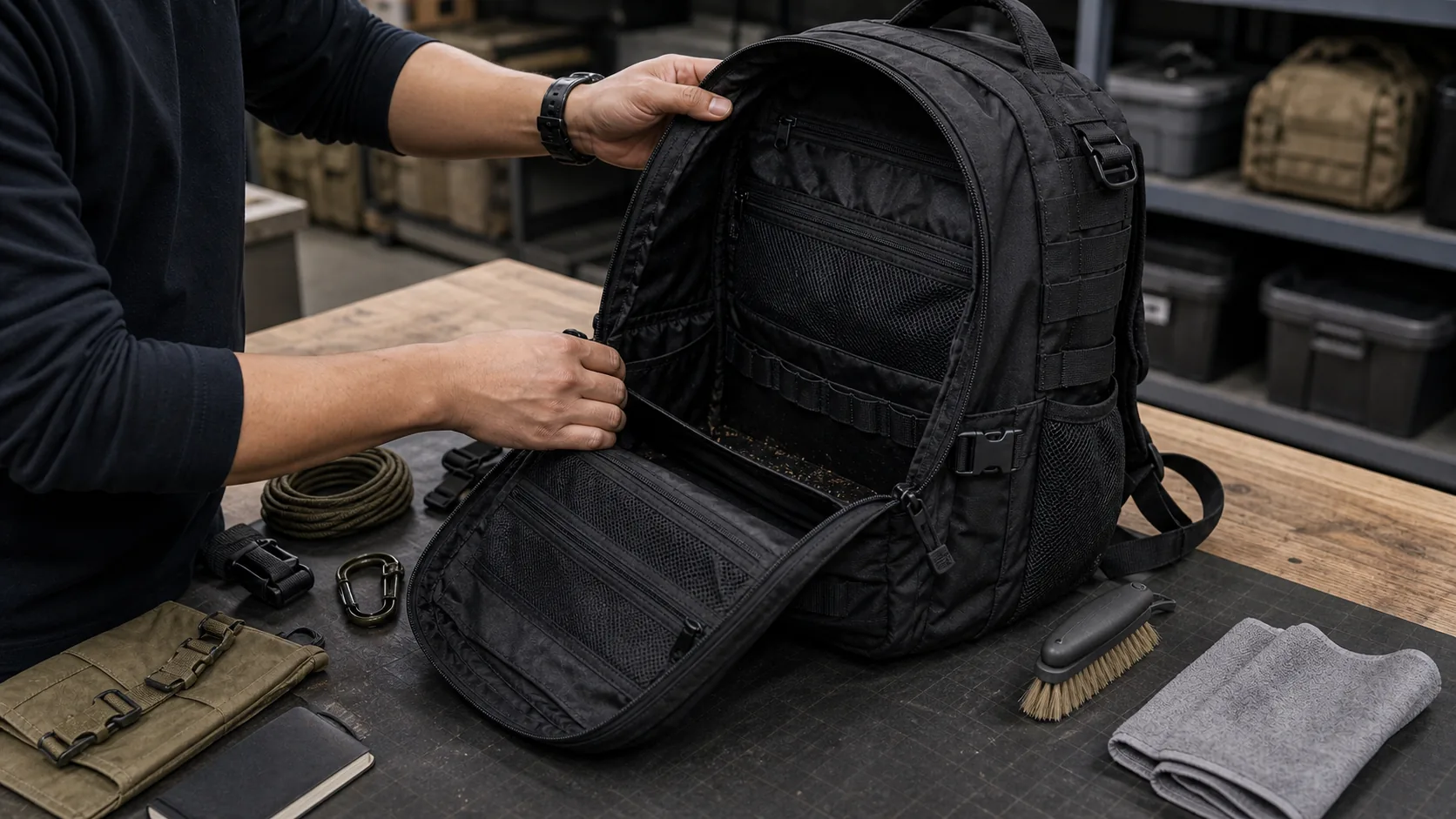
Cleaning a tactical backpack starts with emptying every pocket, removing detachable parts, brushing away dry grit, hand-washing with mild soap, rinsing carefully, and air-drying the pack in shade. The goal is to remove dirt without weakening coatings, zippers, webbing, foam, or reinforced stitching.
For B2B buyers, rental fleets, outdoor teams, and retail after-sales teams, cleaning guidance also protects product reputation. A strong care process helps users preserve custom tactical backpacks while reducing avoidable complaints about odor, stuck zippers, mildew, or coating damage.
How Do You Clean a Tactical Backpack Safely?

The safest way to clean a tactical backpack is to start with a dry inspection and avoid aggressive laundry methods unless the care label specifically allows them. Most tactical packs use coated fabrics, foam padding, webbing, zippers, buckles, and sometimes removable frame parts, so cleaning should be controlled rather than rushed.
Before adding water, inspect the entire pack. Open all compartments, loosen compression straps, remove loose debris, and check whether any metal, paper, electronics, batteries, or personal items remain inside.
What Should You Inspect First?
The first step is simple but important: empty everything. Hidden debris can scratch linings, stain fabric, damage zippers, or create odor during washing.
Use this pre-cleaning checklist:
- Empty all pockets and hidden sleeves.
- Remove detachable pouches and accessories.
- Shake out dry sand, leaves, and grit.
- Brush away mud before wetting the fabric.
- Check the care label and supplier instructions.
| Inspection Area | What to Check | Why It Matters |
|---|---|---|
| Main compartment | Loose debris and small items | Prevents staining and lining abrasion |
| Zippers | Grit in teeth or sliders | Reduces the risk of jamming |
| Hardware | Buckles, hooks, and frame parts | Helps avoid corrosion or damage |
This dry inspection also gives maintenance teams a chance to document broken pulls, loose stitching, or worn coating before cleaning begins.
Why Is Tactical Backpack Cleaning Important?

Tactical backpack cleaning matters because grit, sweat, mud, salt, and organic residue can shorten the life of fabric, stitching, zippers, and padding. A dirty pack may still look rugged, but embedded particles can act like abrasives during everyday movement.
For brands and distributors in the outdoor and tactical industry, clear care instructions can reduce avoidable returns and help end users get better performance from the product.
How Does Grime Damage Nylon and Polyester?
Sand and dust can grind against fibers and seams. Sweat salts can leave odor and residue. Mud can stiffen fabric and make zipper operation rough. None of this means the backpack is defective; it means maintenance matters.
Common contaminants include:
- Dry grit from trails, job sites, or vehicles
- Sweat and body oil on straps and back panels
- Mud around the base and webbing
- Salt residue after coastal or winter use
- Food spills inside organizer pockets
| Contaminant | Possible Effect | Cleaning Response |
|---|---|---|
| Sand and grit | Abrasion around seams and zipper teeth | Dry brushing before washing |
| Sweat salts | Odor and residue on padding | Mild soap and thorough rinsing |
| Mud | Stiff fabric and dirty webbing | Let dry, brush off, then spot clean |
Routine cleaning is especially useful after heavy outdoor use, dusty storage, long travel, or customer product testing.
What Should You Remove Before Washing?

Before washing a tactical backpack, remove detachable items and any structural parts that are designed to come out. This may include MOLLE pouches, waist belts, frame sheets, aluminum stays, hydration reservoirs, hook-and-loop patches, organizers, and detachable straps.
Do not force parts out if they are sewn in. If the frame or padding is not designed to be removed, clean around it carefully and avoid soaking longer than needed.
Can You Remove Frame Stays or Support Sheets?
Some tactical backpacks include internal support sheets or metal stays. If they are removable, take them out and wipe them separately with a dry or slightly damp cloth.
Remove or separate these items when possible:
- Detachable MOLLE or PALS pouches
- Hydration bladder and drinking tube
- Removable frame sheet or aluminum stays
- Loose hook-and-loop patches
- Electronic accessories or charging cables
| Component | Cleaning Rule | Safer Method |
|---|---|---|
| Frame sheet | Remove only if designed for removal | Wipe separately |
| Hydration bladder | Clean outside the backpack | Follow bladder care instructions |
| MOLLE pouch | Wash separately if heavily soiled | Hand wash and air dry |
Separating components helps the backpack dry faster and prevents trapped moisture inside thick or layered areas.
How Do You Hand Wash a Tactical Backpack?

Hand washing is the preferred method for most tactical backpacks because it gives you control over water temperature, pressure, and scrubbing. Use cool or lukewarm water, a small amount of mild detergent, and a soft sponge or nylon brush.
Avoid bleach, fabric softener, harsh degreasers, boiling water, wire brushes, and aggressive scrubbing. These can damage coatings, discolor fabric, weaken fibers, or roughen webbing.
What Scrubbing Technique Works Best?
Start with the dirtiest zones: bottom panels, shoulder straps, back padding, grab handles, and webbing rows. Scrub gently in short strokes and rinse away loosened soil before it dries back into the fabric.
Hand-washing steps:
- Fill a tub or basin with cool or lukewarm water.
- Add a small amount of mild detergent.
- Dip a sponge or soft brush into the solution.
- Clean panels, straps, and webbing without forcing water into padding.
- Rinse until soap residue is gone.
| Cleaning Tool | Recommended Use | Avoid |
|---|---|---|
| Soft sponge | Coated panels and lining | Hard scraping |
| Soft nylon brush | Webbing and textured fabric | Wire brushes |
| Microfiber cloth | Final wipe and spot work | Abrasive pads |
If the backpack is only lightly dirty, spot cleaning may be enough. A full soak is not always necessary.
How Do You Remove Stains from a Tactical Backpack?

To remove stains from a tactical backpack, blot the affected area, test any cleaner on a hidden spot, and use the mildest treatment that works. Strong chemicals can remove color, damage coatings, or leave residue that attracts more dirt.
Different stains need different handling. Mud should usually dry first so it can be brushed away. Food spills need mild soap and rinsing. Oil or grease may need a small amount of gentle dish soap, but solvent use should be avoided unless the fabric supplier specifically approves it.
Can You Remove Grease or Oil Safely?
For light grease, blot with a clean cloth first. Apply diluted mild dish soap to the stain, work gently from the outside inward, and rinse thoroughly. Avoid spreading the stain across a larger area.
Stain handling guide:
- Mud: let it dry, brush off, then spot clean.
- Sweat marks: use mild detergent and rinse well.
- Food spills: blot first, then clean with mild soap.
- Oil or grease: use diluted dish soap and test first.
- Unknown stains: avoid strong chemicals and test carefully.
| Stain Type | Safer First Step | Caution |
|---|---|---|
| Mud | Dry brush before water | Wet mud can spread deeper |
| Sweat and salt | Mild soap and rinsing | Soap residue can attract dirt |
| Oil or grease | Blot, then diluted dish soap | Avoid harsh solvents unless approved |
For B2B after-sales guidance, it is better to recommend conservative care steps than to promise full stain removal in every case.
How Do You Clean Tactical Backpack Zippers and Buckles?
Zippers, sliders, buckles, and pull cords should be cleaned separately from the main fabric. Dirt trapped in a zipper track can make a good backpack feel defective, while grit around buckles can reduce smooth adjustment.
Use a small soft brush to remove sand from zipper teeth. If needed, use a clean damp cloth around sliders and buckle openings. Let the hardware dry completely before storage.
How Do You Prevent Zipper Splitting?
Do not force a stuck zipper. First remove visible grit, align the track, and cycle the slider gently. If the zipper is still rough, use a zipper-safe wax or lubricant recommended for outdoor gear.
| Hardware Area | Maintenance Step | Avoid |
|---|---|---|
| Zipper teeth | Brush out grit | Pulling hard through sand |
| Slider | Wipe and cycle gently | Oily residue that attracts dirt |
| Buckles | Rinse and dry fully | Storing while damp |
This is also a good time to inspect zipper stitching, slider wear, pull cords, and end stops. If several samples show the same issue, buyers can review a durability-focused backpack project and update future specifications.
Can You Machine Wash a Tactical Backpack?
Machine washing a tactical backpack is usually not recommended unless the care label, supplier, or material specification allows it. Agitation, spin cycles, heat, and snagging straps can damage coatings, seams, padding, buckles, and zipper pulls.
If machine washing is permitted, use the gentlest possible setup: front-loading washer, cold water, mild detergent, low agitation, no fabric softener, no bleach, and no heat drying. Place the pack in a mesh laundry bag and secure loose straps.
Which Machine Settings Reduce Risk?
Front-loading machines are safer than top-loading machines with center agitators because they reduce snagging and twisting. Even then, machine washing should be treated as a last resort for washable designs rather than the default cleaning method.
| Machine Option | Risk Level | Buyer Note |
|---|---|---|
| Hand wash | Lowest risk for most tactical packs | Best default method |
| Front-loader gentle cycle | Conditional | Use only if care instructions allow |
| Top-loader with agitator | High risk | Avoid for structured tactical packs |
For product pages, manuals, and warranty documents, state machine-washing rules clearly so customers do not damage the pack by guessing.
How Should You Dry a Tactical Backpack?
Dry a tactical backpack by hanging it open in a shaded, well-ventilated area. Air drying protects coatings, foam, webbing, and buckles better than direct heat.
Do not use a tumble dryer, heated drying cabinet, hair dryer, or radiator. Excess heat can deform foam, warp plastic hardware, affect adhesive layers, or accelerate coating breakdown.
Why Avoid Direct Sunlight and Heat?
Short exposure during use is normal, but prolonged direct sunlight during drying can fade fabric and age some plastics faster. The bigger risk is trapped moisture inside padding, seams, and layered pockets.
Drying steps:
- Open every compartment and pocket.
- Hang the backpack upside down or at an angle.
- Use a fan for airflow if the room is humid.
- Turn the pack during drying if needed.
- Confirm straps and foam feel dry before storage.
| Drying Method | Safety Profile | Best Use |
|---|---|---|
| Shaded airflow | High | General drying |
| Fan-assisted air drying | High | Humid rooms or thick padding |
| Heated dryer | Low | Avoid for tactical backpacks |
A pack that feels dry on the outside can still hold moisture in shoulder straps or back padding, so allow extra drying time.
How Do You Maintain Water-Resistant Coatings?
After cleaning, inspect water resistance only after the backpack is fully dry. If water no longer beads on the outer fabric and the product was originally designed for water resistance, a compatible DWR-style spray may help refresh surface repellency.
Do not apply coatings blindly. Some fabrics, laminates, and finishes have specific care limits. Buyers sourcing waterproof travel backpacks or tactical outdoor packs should confirm coating compatibility during product development.
How Do You Apply Protective Sprays?
Use only products compatible with the backpack fabric and follow the spray manufacturer’s instructions. Apply thin, even coverage in a ventilated area and let the pack cure fully before use.
| Coating Step | Practical Rule | Caution |
|---|---|---|
| Compatibility check | Test a hidden area first | Avoid staining or residue |
| Application | Use thin, even coats | Heavy coating can feel sticky |
| Curing | Let dry fully before packing | Do not trap odor or moisture |
Water resistance also depends on zipper design, seams, stitch holes, and construction. A spray can refresh surface beading, but it cannot turn every tactical backpack into a waterproof dry bag.
How Should You Store a Clean Tactical Backpack?
Store a clean tactical backpack only after it is fully dry. Keep it in a cool, ventilated space away from direct sunlight, damp floors, chemical fumes, and heavy compression.
For warehouses, distributors, and teams managing bulk gear, storage conditions matter. Good storage protects foam shape, zipper function, coating condition, and retail appearance. An e-commerce product testing case is a useful reminder that packaging, storage, and handling can affect customer feedback after launch.
What Environment Prevents Mildew?
Mildew risk rises when moisture is trapped in pockets, padding, or stacked inventory. Keep compartments slightly open during post-cleaning drying, then store the pack in a clean and dry location.
Storage tips:
- Confirm all padding is dry before packing.
- Avoid stacking heavy cartons on shaped backpacks.
- Keep packs off damp concrete floors.
- Use breathable covers instead of sealed plastic when moisture is possible.
- Inspect stored inventory periodically.
| Storage Method | Benefit | Risk |
|---|---|---|
| Hanging or upright storage | Preserves shape | Needs more space |
| Loose shelf storage | Practical for inventory | Avoid heavy compression |
| Sealed plastic storage | Dust protection | Can trap moisture if pack is not dry |
Proper cleaning and storage help tactical backpacks stay functional, comfortable, and presentable for longer. For brands planning an OEM or private-label backpack with care requirements built into the specification, contact us today to discuss materials, coatings, hardware, and after-sales documentation.
FAQ
Can I use bleach on tactical nylon?
No. Bleach can weaken synthetic fibers, damage coatings, and discolor fabric. Use mild detergent unless the supplier gives different care instructions.
What is the best brush for muddy webbing?
A soft nylon brush is usually best. It can clear mud from webbing without roughening the surface like a wire brush.
How do I know if the internal foam is dry?
Press the padded areas and check for cool, damp, or heavy spots. If any moisture remains, continue air drying before storage.
Can I dry a tactical backpack in an industrial dryer?
No. High heat can damage coatings, foam, and plastic hardware. Air drying in shade is the safer method.
How often should I clean a tactical backpack?
Clean it after heavy mud, sweat, salt, odor, or dust exposure. Light spot cleaning is enough for routine dirt, while full cleaning is better after demanding outdoor use.