
To make a gym bag at scale, you must replace hand-cut sewing patterns with digital CAD blueprints and automated factory production. You have a strong concept for a custom sports bag, but attempting to construct it with domestic tools and basic fabrics yields a product that looks amateurish and falls apart. Weak seams, low-grade zippers, and unreinforced stress points lead to high return rates, negative reviews, and a damaged brand reputation. Moving to a contract manufacturer allows you to deploy heavy-duty materials, precise digital patterns, and industrial assembly lines that reduce per-unit costs while securing consistent retail quality. This guide shows how OEM gym bags move from concept to scalable mass production.
How to make a gym bag for a brand launch?
Learning how to make a gym bag for a brand launch requires you to move past home crafting and establish an organized commercial production plan for the sports and fitness industry. While creating a single prototype teaches you the basics of structure, it cannot meet the retail quality standards required for retail sales. Scaling up successfully demands that you analyze the operational differences between manual crafting and contract manufacturing to save capital.
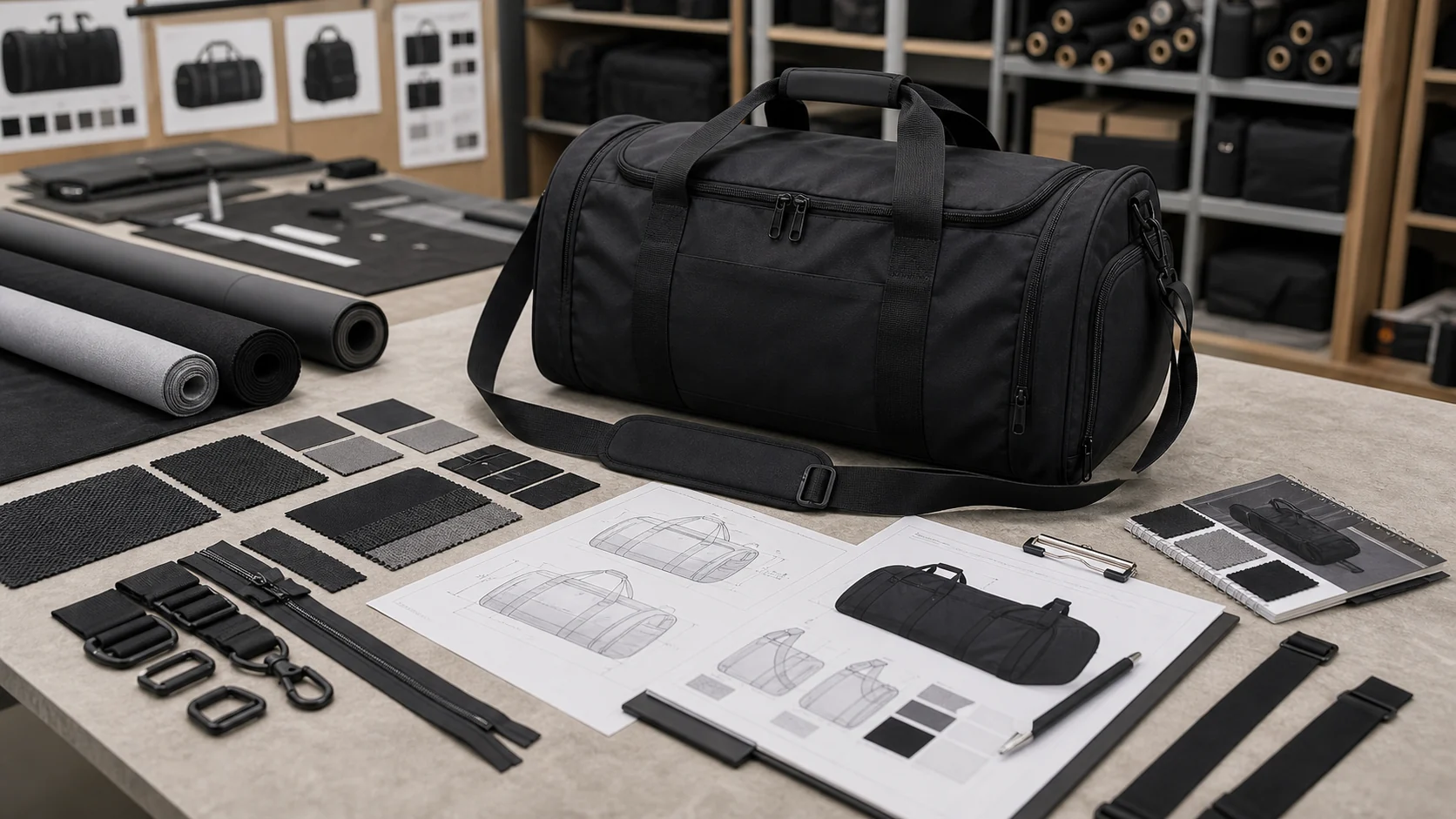
Why manual DIY fails to scale
Attempting to manufacture commercial gear with domestic equipment is a high-risk production method. Home sewing machines cannot handle high-tensile threads, and their single-needle setups lead to weak seams that fail under real-world athletic loads. Manual fabric cutting introduces human variation, leading to uneven panels that ruin the bag's shape.
To scale, you must replace home methods with industrial standards:
- High-tensile bonded threads for loaded seams.
- Automated cutting to eliminate human hand variation.
- Heat-welded reinforcements at stress points.
Factory manufacturing unit economics
Factory production can lower your per-unit cost through bulk raw material sourcing and automated cutting systems. When you partner with a factory, they buy fabrics directly from textile mills, bypassing retail markups. This efficiency means your brand can maintain workable profit margins while offering reliable gear to your customers.
To build a sustainable brand, you must focus on scalable operations:
- Direct textile mill fabric sourcing.
- Specialization of labor on automated lines.
- Improved fabric yields with layout nesting.
Key Takeaway: Scaling to a contract manufacturer lowers your raw material costs and ensures consistent, retail-ready quality.
| Production Metric | DIY / Manual Assembly | Factory OEM Sourcing | Cost & Quality Impact |
|---|---|---|---|
| Material Sourcing | Retail fabric shops | Direct textile mills | Can reduce raw material waste and cost |
| Assembly System | Single-operator manual | Specialized assembly lines | Cuts assembly time from hours to minutes |
| Defect Rate | High manual variation | Controlled inspection target | Helps reduce return risk |
This clear operational contrast shows why scaling brands must partner with automated factories to remain competitive.
How to make a gym bag with durable fabrics?
Deciding how to make a gym bag with durable fabrics involves evaluating the wear resistance and tensile strength needed to survive high-intensity athletic environments. Your choice of outer textile dictates not only the product's long-term durability but also its market positioning. Balancing raw material characteristics with target performance metrics is essential for product longevity.
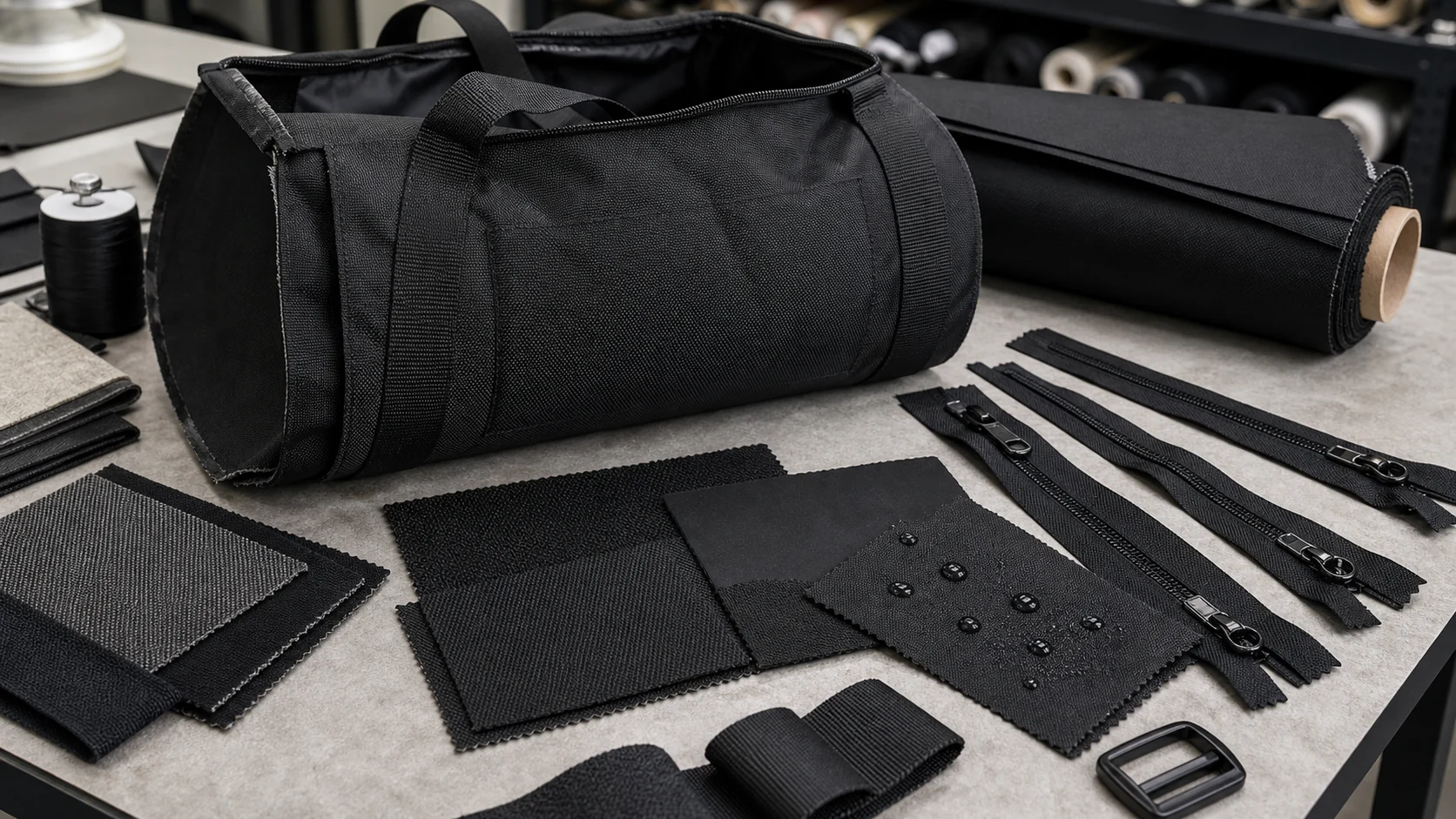
Sourcing heavy-duty canvas and denim
Traditional natural fibers like heavy canvas and denim offer a classic, higher-end aesthetic but require specific protective coatings to withstand gym moisture. Uncoated cotton quickly absorbs sweat and dirt, leading to mold buildup and unpleasant odors. To solve this, commercial lines treat natural fibers with water-resistant backings to preserve their structure.
When sourcing raw textiles, you must focus on heavy-duty specifications:
- 10-ounce to 12-ounce treated cotton canvas.
- Heavyweight raw denim for lifestyle gear.
- Polyurethane backings for moisture protection.
Why brands specify 1000D Cordura nylon
Performance athletic brands rely on high-density synthetics because they provide strong tensile strength and puncture resistance. 1000D Cordura nylon is very tough, easily resisting the sharp corners of weight belts, locker keys, and metal water bottles. Specifying these materials in your tech pack supports a long-lasting product that represents your brand well.
These advanced synthetics also feature built-in water and stain resistance:
- Strong puncture and tear resistance.
- Built-in water and stain protection.
- Lightweight but structurally rigid composition.
Key Takeaway: Specifying high-density synthetic fabrics ensures your gear survives the most active athletic environments.
| Fabric Material | Weight Rating | Abrasion Resistance | Target Brand Positioning |
|---|---|---|---|
| Standard Canvas | 10 oz – 12 oz | Moderate | Lifestyle and Heritage |
| Ballistic Nylon | 840D – 1680D | Very High | Durable Performance |
| Ripstop Polyester | 600D – 900D | High | High-Volume Value Retail |
This comparison highlights why selecting the proper fiber density is essential to balance production costs with target durability.
How to make a gym bag pattern that scales?
Designing how to make a gym bag pattern that scales is challenging unless you transition from physical paper drawings to professional digital CAD blueprints; a pilot order case can also help validate the pattern before larger production. Paper templates easily warp, stretch, or tear during repeated manual cutting, leading to subtle design shifts over a production run. Converting your concepts into digital vector files ensures that every panel is cut with repeatable precision.
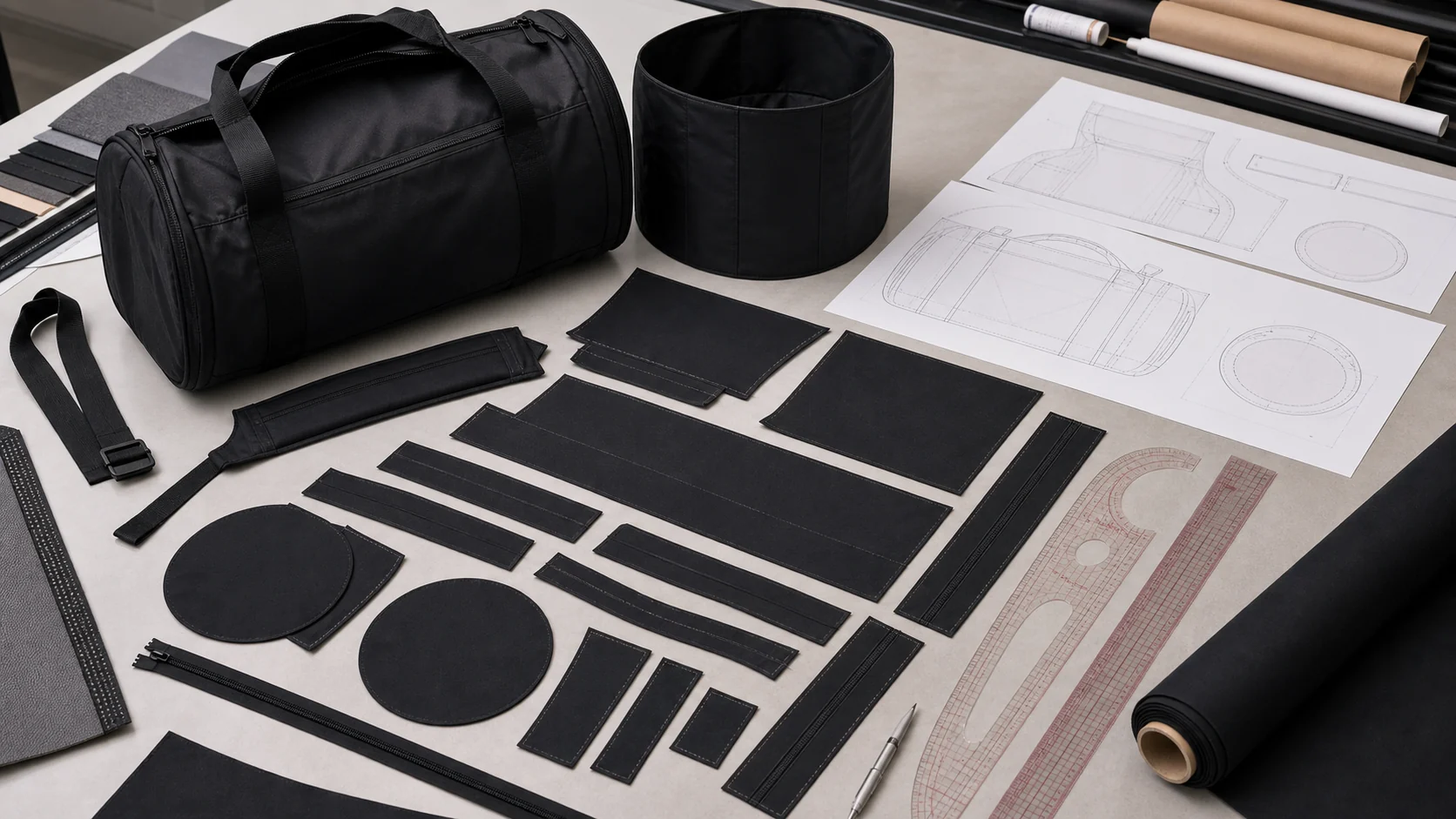
Moving physical templates to CAD drawings
Relying on simple circular hoops or hand-drawn shapes creates assembly errors on the factory floor. Digital CAD blueprints replace human guesswork with exact millimeter-level measurements for every curve and corner. This precise drafting ensures that complex components, like round end caps and zipper paths, align accurately during assembly.
Modern digital drafting tools offer several essential features for commercial pattern scaling:
- DXF or ASTM export format compatibility.
- Automatic graded nest calculations.
- Digital stress point mapping.
Designing exact seam allowances
Designing with precise seam allowances, such as exactly 0.5 inches, prevents fabric edges from fraying under tension. It also allows high-speed industrial sewing machines to glide along pre-determined paths without stopping for adjustments. This level of planning ensures that your assembly lines run efficiently, keeping your unit production costs controlled.
When your patterns are digitally optimized, your factory can nest panels tightly to limit fabric scrap:
- Standardized 0.5-inch seam allowances.
- Tight panel nesting to reduce material scrap.
- High-speed sewing machine path optimization.
Key Takeaway: Digitizing your patterns into CAD files eliminates assembly errors and optimizes material efficiency.
| Pattern Method | Dimensional Tolerance | Nesting Efficiency | Modification Speed |
|---|---|---|---|
| Manual Paper | +/- 5.0mm variation | Low / Manual estimate | Slow (Requires physical recut) |
| Digital CAD | +/- 0.5mm variation | High / Automated software | Fast (Vector adjustment) |
Transitioning to CAD blueprints serves as the vital step to support error-free panel cutting.
How to make a gym bag using industrial cuts?
You must learn how to make a gym bag using industrial cuts because manual cutting methods cannot achieve the accuracy required for high-volume athletic gear in e-commerce bag projects. When you rely on hand shears, slight deviations accumulate across multiple panels, making final assembly difficult. Industrial cutting equipment, on the other hand, processes hundreds of sheets of heavy fabric simultaneously with repeatable accuracy.
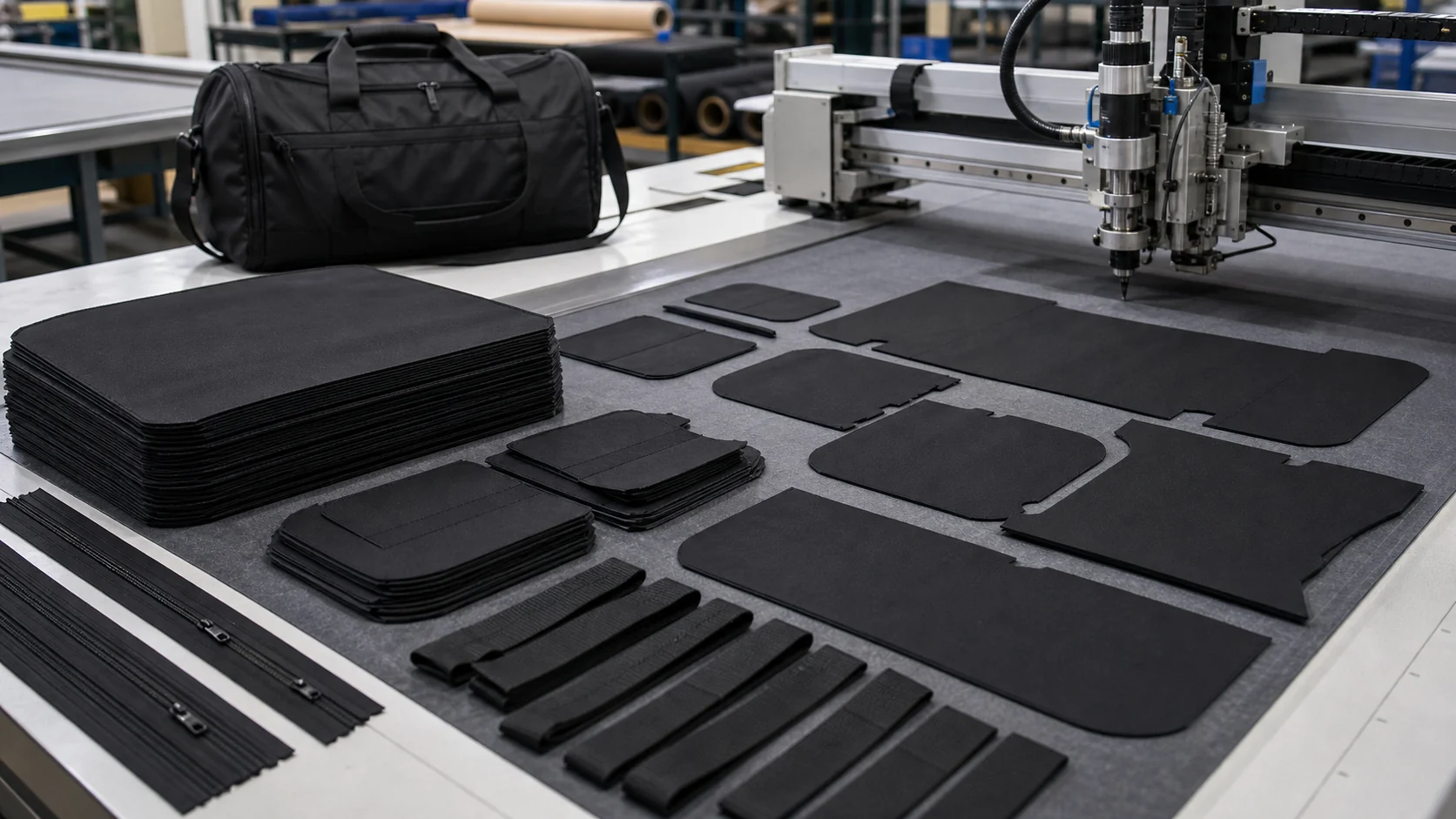
Why manual scissors fail mass fabrication
Cutting heavy-duty synthetics with manual scissors is slow, labor-intensive, and highly inaccurate. Hand cutting causes fabric to stretch and warp along the cutting line, creating jagged edges that compromise the final seam. This inconsistency leads to misaligned pockets, crooked zippers, and weak spots that easily tear under pressure.
Manual cutting remains a primary bottleneck in commercial fabric processing:
- Jagged cut lines that compromise seam integrity.
- Inability to cut through layered industrial synthetics.
- Slow production times that create shipping bottlenecks.
Utilizing lasers and hydraulic clickers
Industrial manufacturers use CNC laser cutters and hydraulic clicker presses to process fabrics at high speeds. CNC lasers guide a concentrated heat beam along digital vector lines, cutting and sealing synthetic fibers in a single motion. This thermal sealing prevents the woven fibers from fraying, even under high tension and repeated washings.
For high-volume cotton canvas or denim, hydraulic die presses stamp out identical panels quickly:
- CNC laser cutting for thermal edge sealing.
- Hydraulic die presses for rapid cotton canvas stamping.
- Fused synthetic edges that prevent long-term fraying.
Key Takeaway: Industrial laser cutting seals synthetic edges during the cut to reduce seam fraying.
| Cutting Technology | Production Speed | Edge Quality | Best Material Use Case |
|---|---|---|---|
| Manual Shears | Low | Frayed and Unfinished | Paper prototyping and mockups |
| Hydraulic Die Press | High | Clean and Cold Cut | High-volume cotton canvas |
| CNC Laser Cutter | Extremely High | Heat-sealed and Fused | Heavy synthetics (Nylon, Polyester) |
Utilizing laser-guided cutting systems ensures clean, fused edges that extend the lifespan of the bag.
How to make a gym bag with secure stitching?
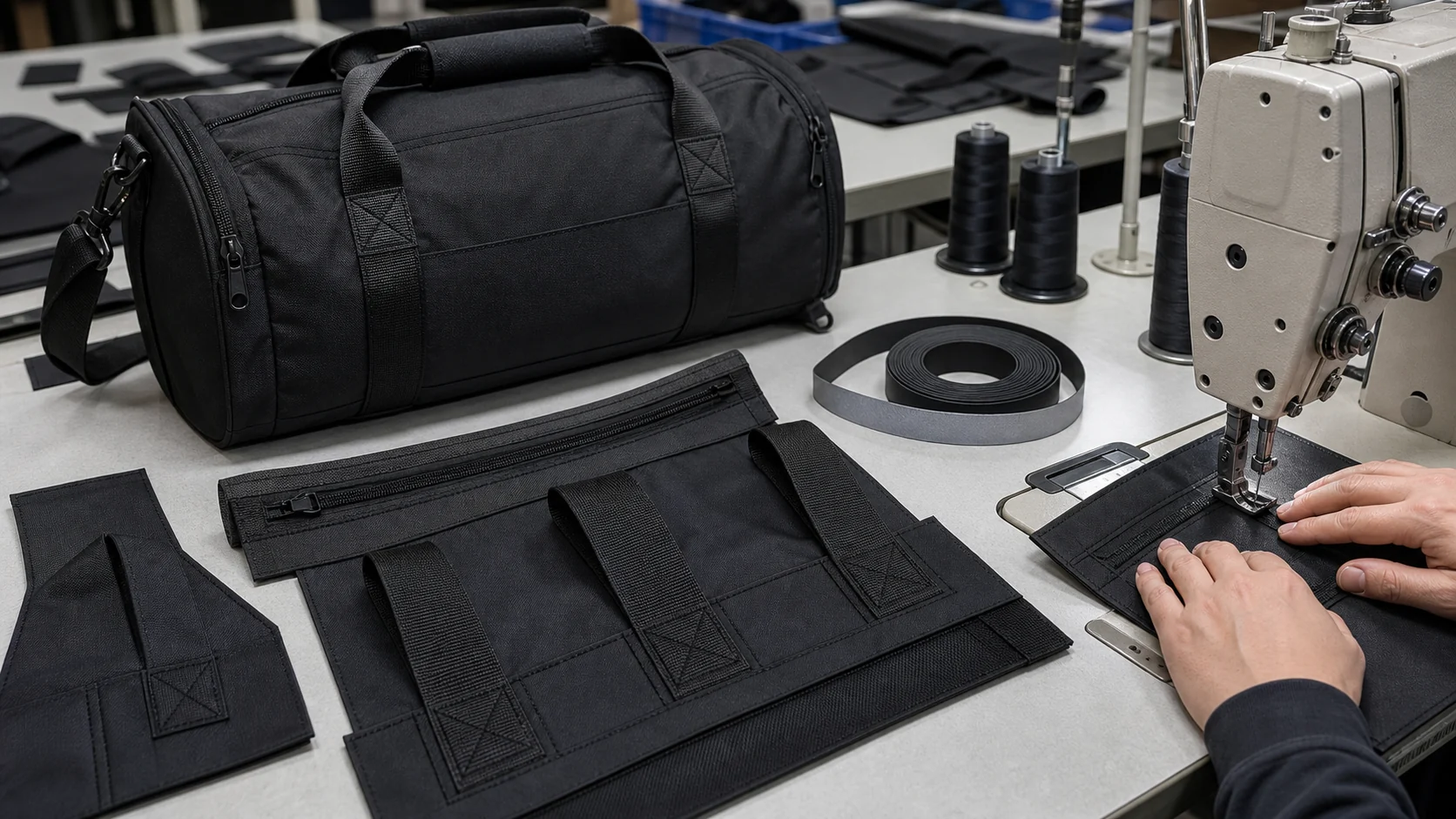
To understand how to make a gym bag with secure stitching, you must upgrade your sewing standards from light domestic stitches to industrial-grade walking-foot systems. Standard sewing setups often slip when feeding multiple layers of thick fabric, resulting in weak, uneven stitches that easily unravel. Walking-foot machines, however, grip the material from both top and bottom to feed it evenly.
Upgrading to walking-foot machines
Domestic sewing machines are designed for thin fabrics and will fail when tackling dense synthetics. Industrial walking-foot machines feature high-torque motors and heavy needles that easily pierce through multiple layers of Cordura and thick webbing. This power prevents skipped stitches, which are a major source of seam failure in athletic gear.
Commercial setups provide several key advantages for dense material assembly:
- Dual-feed dog mechanisms to grip fabrics evenly.
- High-torque motors designed for dense polymers.
- Thick needle systems that resist deflection.
Implementing the Box-X stitch
Gym bags carry heavy weights like water bottles, shoes, and weight plates, placing extreme stress on the handles. To prevent the straps from ripping away, you must reinforce these connections with Box-X stitches and tight bar-tack patterns. This structural reinforcement distributes pulling forces across a wider area, preventing fabric tears.
Using automated sewing machines ensures these complex stitch patterns are applied with identical precision:
- Box-X stitch patterns for load distribution.
- Automated bar-tacking on strap connections.
- Multi-needle structural reinforcements.
Key Takeaway: Heavy-duty walking-foot machines and Box-X stitches are mandatory to prevent handle failure under heavy loads.
| Seam Type | Sewing Machinery | Thread Specification | Tensile Break Strength |
|---|---|---|---|
| Standard Seam | Flatbed Industrial | Tex 70 Bonded Polyester | 11 lbs minimum |
| Handle Attachment | Cylinder-bed Walking Foot | Tex 90 Bonded Nylon | 15 lbs minimum |
| Stress Reinforcement | Automatic Bar-tacker | Tex 135 Bonded Nylon | 22 lbs minimum |
Specifying high-tensile bonded nylon threads combined with automatic bar-tacking prevents structural failures at key stress points.
How to make a gym bag with rugged hardware?
You can discover how to make a gym bag with rugged hardware by replacing fragile hobbyist plastic hooks with zinc alloys and seatbelt-grade nylon webbing. Hardware components like D-rings, buckles, and clasps act as the primary connection points for carrying straps and shoulder pads. Selecting commercial-grade, load-tested hardware is vital to producing a reliable retail product that stands out.
Selecting military-grade metal D-rings
Lightweight, split-metal rings and cheap plastic hooks will quickly fail under the weight of standard athletic gear. To ensure your product lasts, you must specify solid, welded zinc-alloy D-rings with corrosion-resistant coatings. These heavy-duty components can support heavy weights without bending or opening up, maintaining the bag's integrity.
When choosing durable hardware, you must verify these structural elements:
- Solid zinc-alloy construction.
- Matte black rust-resistant coatings.
- Welded connection points to prevent opening under load.
Sourcing high-density seatbelt webbing
Your choice of shoulder strap webbing is just as important as the metal hardware it threads through. Standard thin cotton or light polypropylene webbing quickly frays, slips through buckles, and cuts into the user's shoulder. Upgrading to high-density seatbelt nylon webbing ensures smooth adjustments and maximum carrying comfort.
Thick nylon webbing holds its shape under pressure, resisting wear from metal buckles:
- High-density seatbelt nylon webbing.
- Anti-slip metal slider buckles.
- Heavy-duty quick-release clasps.
Key Takeaway: Upgrading to solid metal hardware and seatbelt webbing prevents snaps and elevates your product's perceived value.
| Hardware Type | Standard Craft Option | B2B Commercial Spec | Structural Benefit |
|---|---|---|---|
| D-Rings | Plastic / Split Ring | Welded Zinc Alloy | Supports heavy weights without bending |
| Strap Webbing | Hollow Polypropylene | Seatbelt Nylon Webbing | Resists fraying and provides smooth adjustment |
| Buckles | Injection-molded ABS | Heavy-duty Aluminum | Rugged and long-lasting in cold weather |
This hardware upgrade is crucial to turn a basic prototype into a high-performance athletic product.
How to make a gym bag zipper run smoothly?
It is vital to know how to make a gym bag zipper run smoothly because a sticky or split zipper track is the quickest way to ruin a customer's experience. Gym bags are regularly packed to tight capacities, forcing zipper teeth to withstand extreme outward tension. Upgrading to heavy-duty, self-lubricating molded plastic zippers ensures the main compartment remains secure and easy to open.
Choosing heavy-duty YKK molded zippers
Low-grade, generic zippers are the leading cause of product returns in the athletic gear industry. To prevent this, professional brands specify heavy-duty #8 or #10 YKK zippers with molded plastic teeth for main openings. These commercial-grade components are built to resist dust, moisture, and high tension without slipping or splitting.
They also resist sweat salt corrosion to ensure smooth movement over time:
- Heavy-duty #8 or #10 size rating.
- Self-lubricating molded plastic teeth.
- High-stress pull tabs for easy access.
Reinforcing end tabs to prevent splits
When a zipper is pulled to its absolute limits, the slider can easily run off the ends of the tape. To prevent this issue, you must stitch reinforced fabric stop-tabs over both ends of the zipper track. These thick tabs act as physical barriers that contain the slider while providing a solid grip point for the user.
Double-stitching these end tabs directly into the bag's main seams prevents failures:
- Double-stitched end stop-tabs.
- Heavy fabric barrier reinforcements.
- Ergonomic finger loops for extra leverage.
Key Takeaway: Specifying heavy-duty molded plastic zippers with reinforced end-tabs eliminates the number-one source of product returns.
| Zipper Location | Track Size | Teeth Material | Performance Target |
|---|---|---|---|
| Pocket Zipper | #5 | Nylon Coil | Standard daily pocket opening |
| Main Opening | #8 or #10 | Molded Plastic | High-tension load resistance |
| Waterproof Pocket | #5 or #8 | TPU-coated reverse coil | Water-tight seal for electronics |
This careful component selection keeps the main opening functional and smooth over thousands of cycles.
How to make a gym bag with modular pockets?
You can design how to make a gym bag with modular pockets by partitioning the interior with dedicated wet/dry barriers and high-stretch outer utility compartments. Modern gym-goers carry a complex mix of clean work clothes, dirty sneakers, damp towels, and sensitive electronics. Incorporating smart organizational dividers is essential for creating a highly functional athletic product.
Creating independent dry and wet dividers
Throwing sweaty clothes or damp swimsuits into the same space as a clean laptop is a recipe for a ruined day. To solve this, you must pattern independent wet pockets lined with waterproof, odor-blocking TPU coatings. This keeps moisture and damp smells fully contained, protecting the clean gear stored in the main compartment.
These internal wet compartments require fully sealed edges to stop leakage:
- Independent wet/dry TPU-coated compartments.
- Odor-blocking liner materials.
- Sealed boundaries to contain fluids.
Stitching exterior elastic mesh slots
Users want fast, easy access to their shaker bottles, keys, and gym passes without unzipping the main bag. Attaching exterior elastic mesh pockets and secure slide-in slots provides this convenience while keeping the bag's profile neat. Using double-elastic bindings ensures these external pockets hold their elasticity and grip items securely over time.
Lining your quick-access pockets with soft micro-fleece also protects delicate screens:
- Double-elastic mesh bindings.
- Soft micro-fleece scratch protection.
- Secure exterior slide-in card slots.
Key Takeaway: Multi-functional compartments like wet shoe tunnels and mesh water holders drastically increase user satisfaction.
| Pocket Utility | Material Lining | Seam Sealing Method | Intended Contents |
|---|---|---|---|
| Wet Compartment | TPU-coated Nylon | Hot-air taped seams | Sweaty activewear and towels |
| Valuables Pocket | Brushed Micro-fleece | Double stitched | Phones and smartwatches |
| Bottle Holder | Heavy Elastic Mesh | Double elastic bound | Shaker bottles and flasks |
Adding these specialized pockets transforms a standard duffle bag into a versatile durable accessory.
How to make a gym bag waterproof lining?
Learning how to make a gym bag with waterproof lining is critical because it prevents damp clothes from leaking through the outer fabric and causing mold growth. Sweaty activewear and wet swimsuits quickly generate odor-causing bacteria if moisture seeps into the bag's raw woven seams. By installing a non-porous, waterproof liner, you isolate this dampness and keep the exterior fabric clean and dry.
Selecting TPU nylon over standard canvas
While basic canvas or thin polyester linings are inexpensive, they absorb moisture and quickly harbor mold and mildew. Upgrading to a TPU-coated nylon lining provides a non-porous, wipe-clean surface that blocks odors and fluids. This keeps the interior of the bag fresh and easy to sanitize with a damp cloth after tough workouts.
To ensure your waterproof lining delivers high performance, select advanced materials:
- TPU thickness of 0.15mm to 0.25mm.
- High tear resistance ratings.
- Eco-friendly, chemical-safe formulations.
Heat-welding seams vs traditional sewing
Even strong waterproof fabric can still leak water if you stitch the seams together using standard needles. Every stitch hole acts as a tiny pathway that allows moisture and sweat to slowly seep into the outer bag. To improve leak resistance inside the bag, you should apply hot-air sealing tape over vulnerable sewn seams.
This specialized heat-welding process melts a waterproof tape layer over the stitch holes:
- Hot-air taped seam processing.
- Melted thermoplastic barrier films.
- Reduced needle-hole exposure in lining joints.
Key Takeaway: Strong waterproofing requires a durable TPU liner combined with hot-air seam taping.
| Lining Material | Coating Type | Construction | Waterproof Performance |
|---|---|---|---|
| Uncoated Polyester | None | Standard Sewn | Splash resistant only |
| PVC-backed Canvas | Heavy PVC | Sewn & Bound | Highly water-resistant |
| TPU-coated Nylon | Durable TPU Film | Heat-sealed Seams | High waterproof performance |
Specifying heat-taped TPU linings helps prevent sweat and moisture from damaging your bag's outer fabric.
How to make a gym bag pass factory-level QC?
To understand how to make a gym bag pass factory-level QC, you must establish an inline quality control protocol that tests fabric strength, stitch tension, and hardware durability; a fast replenishment project depends on this repeatability once orders scale. Without strict quality checks, subtle variations in stitching, material alignment, and hardware coatings will slide past, leading to customer complaints. Factory-level quality control (QC) identifies and corrects these defects early, before products are packed and shipped.
Setting up in-line inspection protocols
Waiting until the entire production run is completed to inspect your products is a source of expensive waste. An effective quality control system inspects materials at every stage, from checking raw fabric rolls for weaving flaws to auditing completed seams. This inline monitoring allows sewing machine operators to adjust tension immediately, preventing widespread assembly errors.
Identifying and correcting minor issues early keeps your production lines moving smoothly:
- Raw material inspection at receipt.
- Inline sewing tension checks.
- 100% pre-shipment product audits.
Deploying tension and drop tests
Your completed bag must survive heavy stress tests designed to simulate years of regular athletic use. Automated machines drop heavily weighted bags repeatedly to check handle seam strength and pull zippers back and forth thousands of times. Passing these standardized tests proves that your product line is ready for major retail distribution.
These rigorous evaluations support that your products meet commercial expectations:
- Repeated static load drop testing.
- Automated zipper cycle testing.
- Colorfastness checks under friction.
Key Takeaway: Rigorous load and stress testing protects your brand from bulk returns and builds long-term retail trust.
| QC Test Protocol | Evaluation Method | Target Passing Metric | Purpose |
|---|---|---|---|
| Static Load Test | Hanging weighted mass | Supports 50 lbs for 24 hours | Verifies handle seam durability |
| Zip Cycle Test | Automated sliding machine | 5,000 smooth cycles minimum | Assures zipper longevity |
| Colorfastness Test | Wet and dry friction | Grade 4.0 minimum on scale | Prevents fabric dye bleeding |
This structured inspection approach supports that your commercial products maintain high, consistent quality standards.
Conclusion & B2B Action Plan
Developing a reliable product is only the first step. For scaling brands and retailers, managing in-house manufacturing can lead to rising costs, material waste, and quality issues. The most efficient way to scale is by partnering with an experienced OEM/ODM factory.
Our modern facility features over 88 skilled workers, ISO 9001-certified processes, and annual third-party BSCI social compliance audits. We offer full material customization, rapid 7-day sample turnarounds, and a low minimum order quantity of 300 pieces to help you launch new designs without tying up too much capital.
Let us help you bring your design to life with factory-direct pricing. To review options, get custom prototypes, and request bulk pricing, contact us today to connect with our product specialist team.
Frequently Asked Questions (FAQ)
Can I use a domestic sewing machine to manufacture gym bags for commercial sale?
No, standard domestic sewing machines lack the motor power and walking-foot mechanisms needed to sew through multiple layers of heavy-duty fabrics like 1000D Cordura, which often leads to skipped stitches and weak seams.
What's the best fabric weight and type for a retail-grade sports gym bag?
A 600D to 1000D polyester or nylon with water-resistant backing is the ideal choice. This combination provides the best balance of tear resistance, light weight, and cost efficiency.
How do I know if my gym bag design requires custom molded EVA compartments?
Your design requires molded EVA if you need to protect delicate electronics or shape rigid compartments. These features must be planned during the early prototype stages to ensure accurate integration.
Can I start production with a small batch to test market demand?
Yes, you can initiate production with minimum order quantities of 300 pieces per style. This allows you to test and validate your design in the market before committing to high-volume production.
How do I know if a factory's quality control standards meet retail compliance?
You must check their active ISO 9001 and third-party BSCI audit documentation. Reliable B2B manufacturers should be able to share current compliance documents during supplier review.