
To choose a travel backpack that is truly worth buying or sourcing, you need a durable, carry-on-ready, front-loading bag with ergonomic support, smart compartments, reliable security, and materials that can survive repeated travel. You may picture a crowded airport terminal, a tired traveler, and an old top-loading pack that forces every shirt, charger, and passport pouch into one messy chamber. That frustration is avoidable. Understanding exactly what to look for in a travel backpack helps travelers move faster, while giving B2B buyers clearer criteria for OEM, private label, and wholesale backpack projects.
What to look for in a travel backpack loading style?
When judging what to look for in a travel backpack loading style, start with how fast the user needs to reach packed items. A front-loading panel suits city travel, business trips, and short hotel stays, while a top-loading structure can serve outdoor use where compression and simple construction matter more.
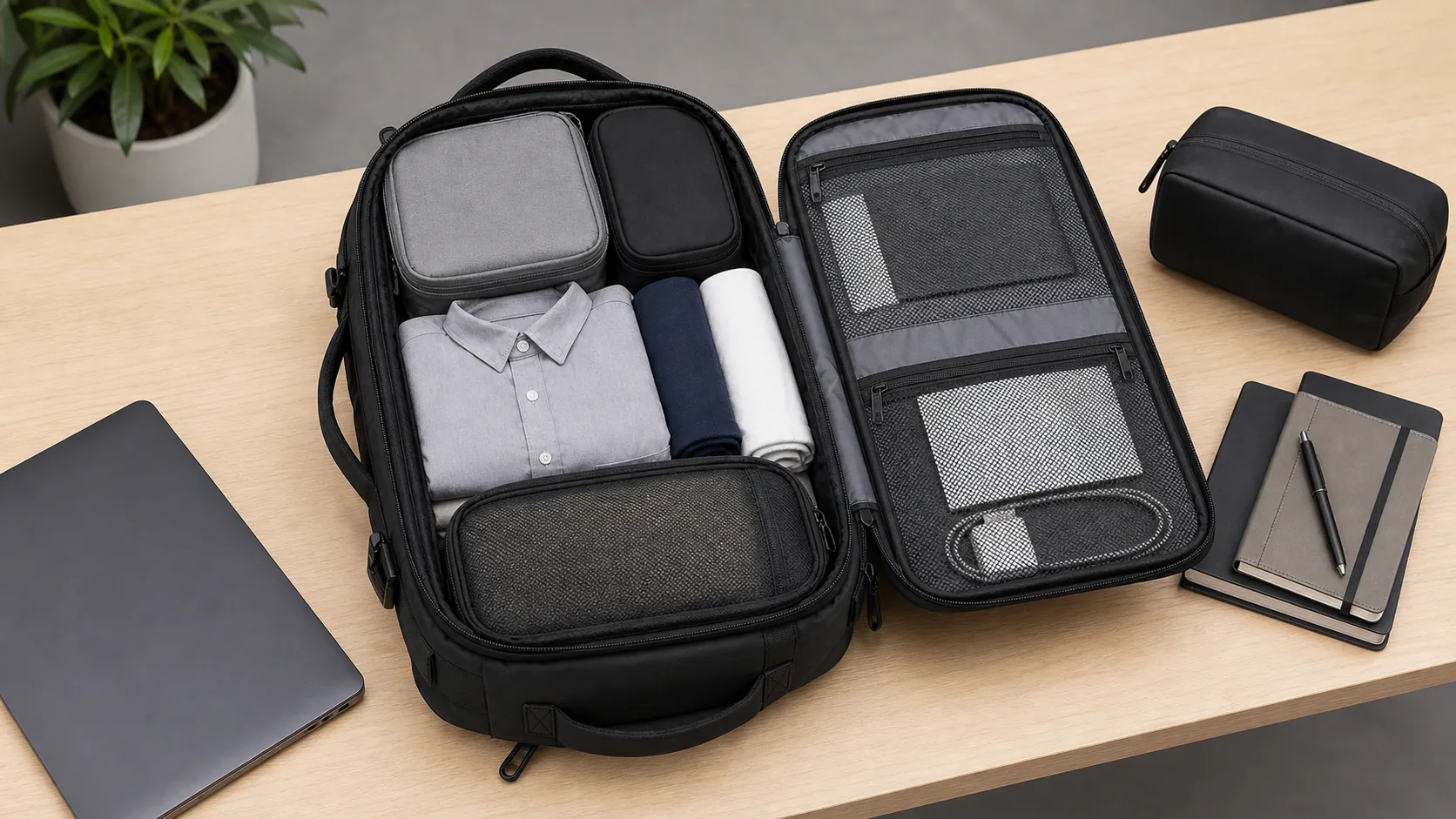
Why do front-loading bags work for rapid urban travel?
Front-loading travel bags unzip like a suitcase, giving full visibility across the main compartment. You do not have to pull out every item just to find a clean shirt at the bottom.
Think about it:
- Full-perimeter zippers let the pack lie flat.
- Packed clothes stay easier to view and sort.
- Airport repacking becomes faster.
- Packing cubes fit more naturally inside a rectangular opening.
Are top-loading packs better for outdoor expeditions?
Top-loading backpacks can work well for heavy hiking because they use a simple vertical chamber with fewer exposed zipper tracks. They allow bulky gear to compress downward and sit close to the spine.
| Loading Style | Best Use Case | Main Benefit |
|---|---|---|
| Front-loading | City transit, business trips, quick packing | Suitcase-style access and cleaner organization |
| Top-loading | Backcountry hiking, bulky outdoor gear | Vertical load stability and fewer zipper stress points |
Key Takeaway: Choose front-loading layouts for general travel and retail buyers who want easy access; reserve top-loading structures for outdoor programs where durability and compression lead the product brief.
What to look for in a travel backpack capacity?
When comparing what to look for in a travel backpack capacity, most buyers should focus on the 40L to 50L range for carry-on travel. This size can support multi-day or even multi-week trips while still staying practical for overhead storage, walking, and public transport.
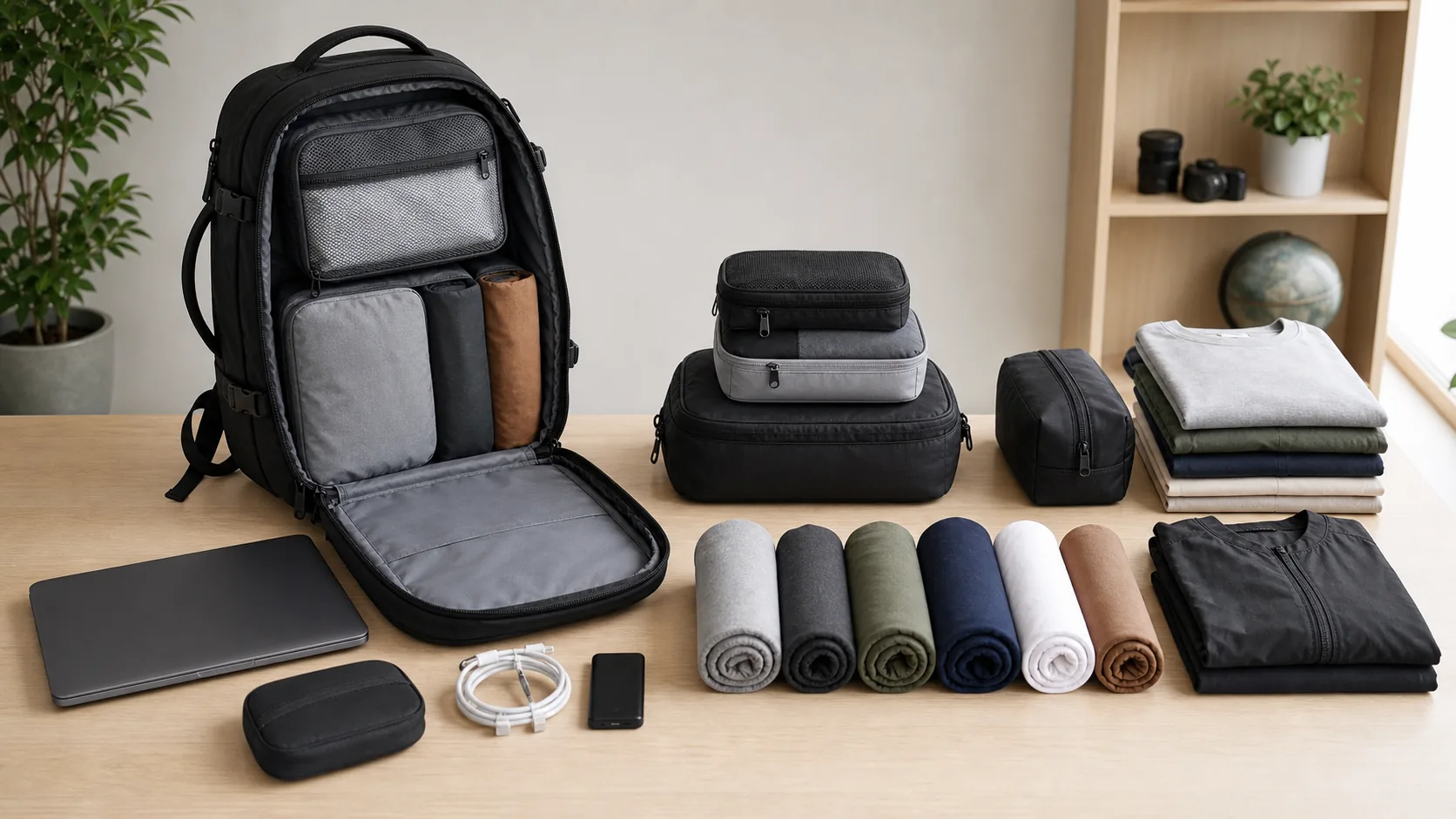
How does a 40L to 50L pack support smarter travel?
A 40L to 50L pack forces better packing discipline without feeling too small for normal travel. It encourages capsule wardrobes, compact toiletries, and fewer duplicate items.
Here is the deal:
- It can reduce checked-bag dependence.
- It keeps total load more manageable.
- It works across city trips, weekend travel, and moderate climates.
- It gives e-commerce bag projects a clearer size story for product listings.
Why do 70L or 80L bags create strain?
Oversized expedition bags often feel tempting because they hold more, but they can push travelers into overpacking. They may exceed carry-on dimensions, pull weight away from the back, and make crowded trains or buses harder to manage.
| Pack Capacity | Target Travel Style | Carry-On Fit |
|---|---|---|
| 30L-35L | Minimal weekend travel | Usually yes |
| 40L-50L | General carry-on travel | Often yes, subject to airline rules |
| 70L-80L | Remote trekking or expedition loads | Usually no |
Key Takeaway: A 40L to 50L travel backpack offers a strong balance of capacity, carry-on potential, and user comfort for mainstream travel markets.
What to look for in a travel backpack materials?
When evaluating what to look for in a travel backpack materials, check fabric denier, coating quality, stitching strength, and how well the shell resists abrasion and moisture. High-density fabrics help the backpack survive rough airport floors, overhead bins, bus holds, and daily friction.
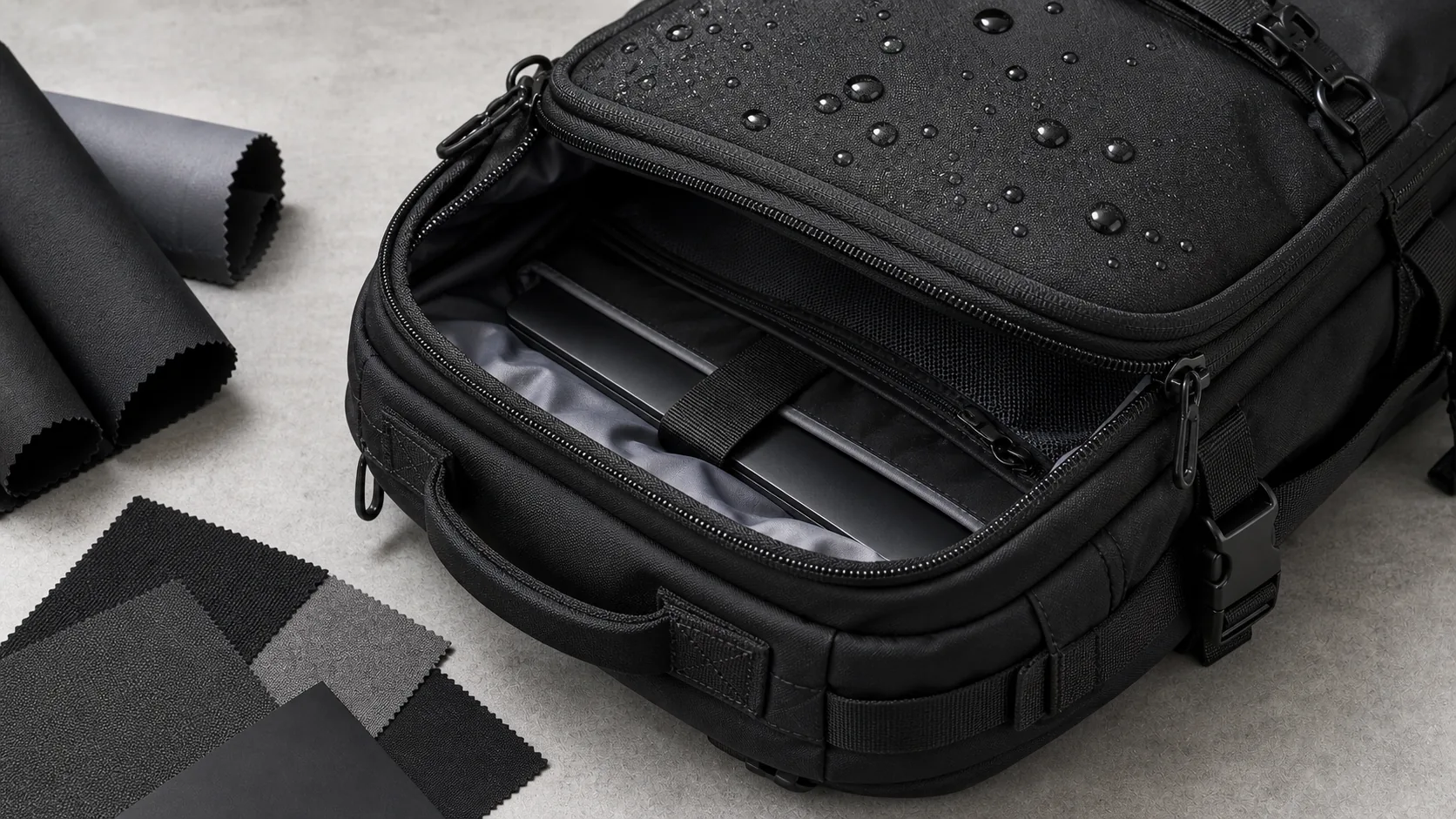
Why does high-density polyester matter?
High-density polyester, such as 600D to 900D fabric depending on the product tier, can provide a strong balance of structure, abrasion resistance, and cost control. A matte finish also gives travel backpacks a professional look.
Believe it or not:
- Higher-denier fabric can resist surface scuffs better.
- Reinforced stress points reduce seam blowout risk.
- Stable fabric helps the backpack keep its shape when loaded.
- Heavy-duty construction can support tactical backpacks and rugged travel collections.
Should you rely on built-in weather coatings?
Built-in PU or TPU coatings can help protect gear during rain, spills, and wet transit days. A loose rain cover may still help in harsh weather, but integrated coatings reduce daily user friction.
| Material Spec | Durability Profile | Weather Use |
|---|---|---|
| 900D PU polyester | High abrasion resistance | Strong daily water resistance |
| 600D polyester | Balanced cost and strength | Moderate protection |
| Low-denier nylon | Lightweight | Best for lighter loads |
Key Takeaway: Choose materials based on target use, not only appearance; fabric, coating, seam quality, and stress-point reinforcement decide how long the product feels reliable.
What to look for in a travel backpack ergonomic fit?
When reviewing what to look for in a travel backpack ergonomic fit, focus on torso length, shoulder strap shape, back-panel padding, hip support, and adjustability. A travel backpack that fits poorly can feel heavy even when the actual load is modest.
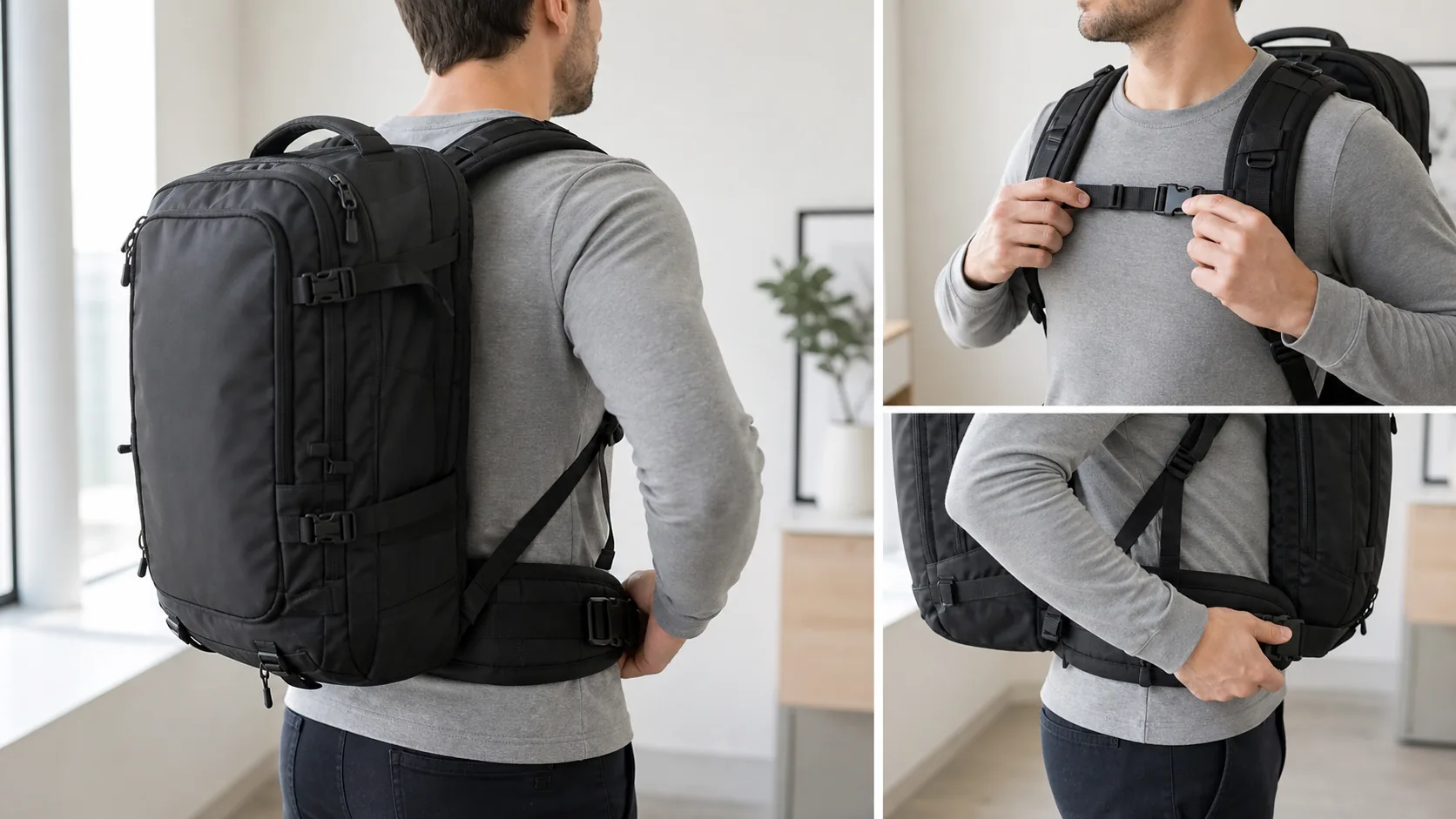
Why must a backpack match torso length?
Body shape varies, so a one-size harness rarely suits every traveler. Adjustable shoulder straps, sternum straps, and back-panel shaping help position the load closer to the spine.
You might be wondering:
- Does the pack sit too low on the back?
- Do the shoulder straps pinch near the neck?
- Does the bottom of the bag hit the lower back?
- Can the traveler adjust fit while moving?
Do padded hip belts reduce fatigue?
For heavier travel loads, a padded hip belt can move part of the weight toward the hips and legs. This helps reduce shoulder pressure during long walks, airport transfers, and standing queues.
| Fit Feature | Main Function | User Benefit |
|---|---|---|
| Adjustable torso | Aligns pack height | Better balance |
| Padded shoulder straps | Reduces pressure | More comfort under load |
| Sternum strap | Stabilizes upper body | Less strap movement |
| Hip belt | Shares load | Lower shoulder fatigue |
Key Takeaway: Ergonomic fit is a product-performance issue; sample testing should include real weight, walking, bending, and strap adjustment rather than only empty-bag review.
What to look for in a travel backpack organization?
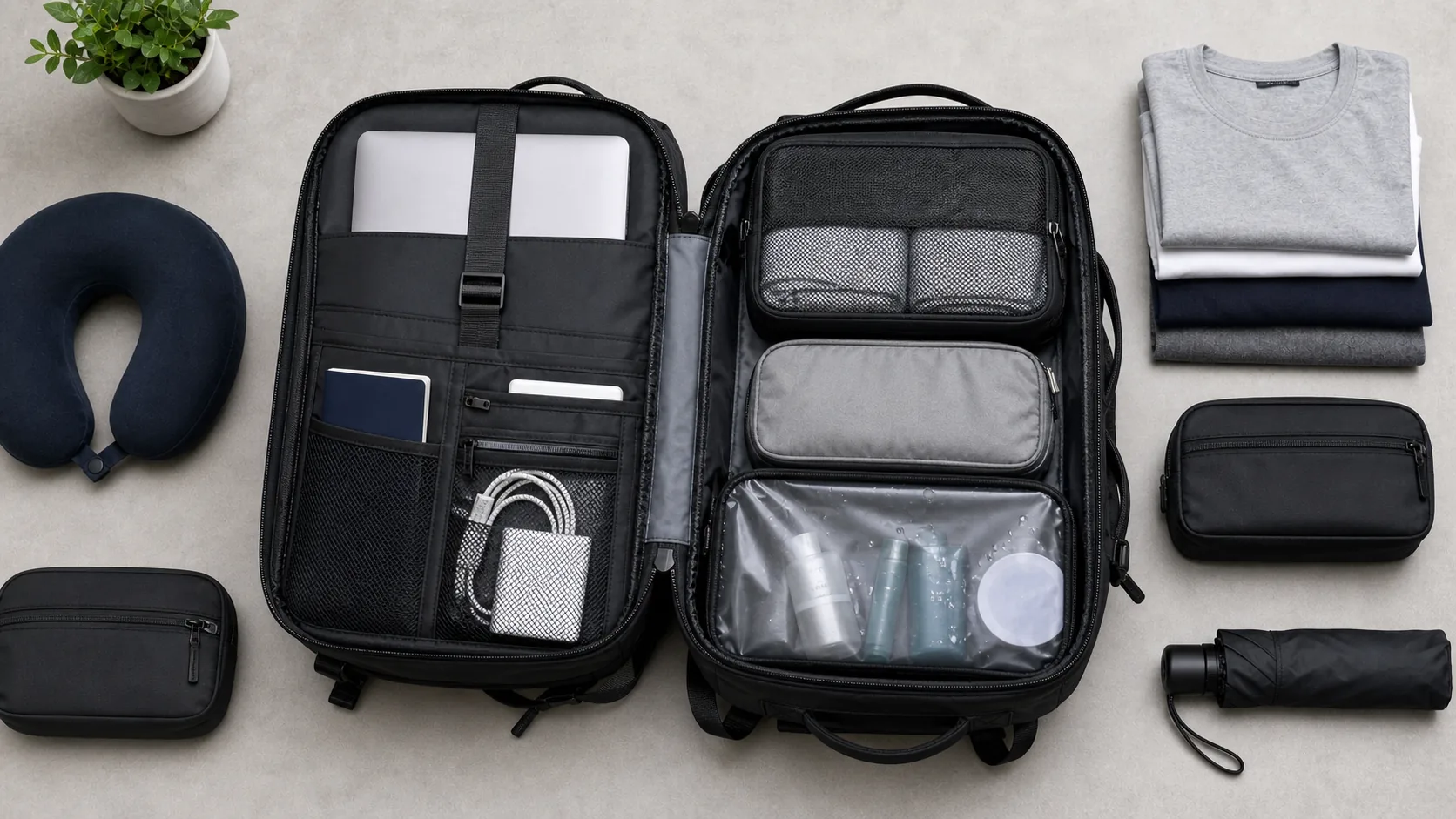
When deciding what to look for in a travel backpack organization, prioritize separate zones for clean clothing, dirty laundry, laptop storage, documents, toiletries, and quick-access items. A single large pocket may look roomy, but it often creates a chaotic travel experience.
How do laptop and passport pockets reduce airport stress?
Dedicated laptop and passport pockets let travelers move through security and boarding lines with fewer delays. They also help protect electronics from hard objects packed in the main compartment.
Make no mistake:
- Padded sleeves protect laptops and tablets.
- Quick-access pockets keep IDs and boarding passes close.
- Soft linings reduce screen scratches.
- Cable pouches stop chargers from spreading through the bag.
Why do wet and dry compartments matter?
Wet and dry separation protects clean clothing from damp towels, swimwear, gym shirts, or leaking toiletries. A coated pocket can also make cleanup easier after a trip.
| Compartment Type | Target Items | Strategic Benefit |
|---|---|---|
| Padded sleeve | Laptop, tablet, documents | Protection and quick access |
| Wet TPU pocket | Swimwear, towel, used gym gear | Moisture and odor isolation |
| Front pocket | Passport, phone, wallet | Faster transit access |
| Main cube zone | Clothing and layers | Cleaner packing workflow |
Key Takeaway: A strong organization system should match real travel behavior, not just add more pockets for marketing photos.
What to look for in a travel backpack security?
When reviewing what to look for in a travel backpack security, look for lockable zippers, hidden pockets, low-profile styling, and fabric placement that makes valuables harder to access in crowds. Travel security should deter quick theft without making the backpack annoying to use.
Why are lockable zippers a useful defense?
Lockable zippers help prevent casual opening during airport queues, public transport, and crowded tourist areas. They are not a complete security system, but they add friction for opportunistic theft.
Here is the practical view:
- Padlock-compatible sliders support travel locks.
- Reinforced zipper teeth resist easy separation.
- Covered zipper tracks reduce grab points.
- Tuck-away pulls keep the profile cleaner.
Why do neutral colors reduce attention?
Bright, flashy bags can draw attention in busy areas. Neutral black, grey, navy, or muted green colorways often work better for business travelers, students, and retail buyer scenarios linked to retail and supermarket channels.
| Security Feature | Defense Role | Best Use |
|---|---|---|
| Lockable zippers | Adds physical resistance | Airports and hostels |
| Hidden rear pocket | Protects passport or wallet | City travel |
| Neutral colors | Lowers visual attention | Daily commute and tourism |
| Slash-resistant panel | Adds fabric protection | Premium anti-theft ranges |
Key Takeaway: Security features should be subtle, practical, and easy for travelers to use every day.
What to look for in a travel backpack weight distribution?
When analyzing what to look for in a travel backpack weight distribution, check whether the bag keeps dense items close to the back and prevents loose gear from shifting. Good weight control affects comfort, balance, zipper stress, and the user's ability to move through tight spaces.
How do compression straps stabilize the bag?
Compression straps pull unused space inward so the load stays close to the body. This matters when a traveler carries a half-full pack or mixes hard tech items with soft clothing.
This is where fit meets structure:
- Side straps reduce width on crowded trains.
- Internal straps hold clothes in place.
- Tight loads reduce sway while walking.
- Better profile control improves overhead-bin handling.
Why do load lifters protect shoulders?
Load lifters pull the upper portion of the backpack closer to the back. Without them, heavy packs can lean backward and increase shoulder and neck strain.
| Adjustability Feature | Spine Impact | Dynamic Benefit |
|---|---|---|
| Side compression straps | Pulls load inward | Reduces shifting and width |
| Internal hold-down straps | Locks clothing modules | Keeps packing layout stable |
| Load lifters | Controls upper pack angle | Reduces shoulder pull |
| Sternum strap | Connects shoulder straps | Improves walking stability |
Key Takeaway: Strong weight distribution depends on both pattern design and hardware placement, so buyers should test packed samples rather than empty prototypes.
What to look for in a travel backpack carry-on compliance?
When checking what to look for in a travel backpack carry-on compliance, confirm the product's packed size, empty weight, and flexibility against airline limits. A bag that fits when empty may still fail a sizer bin when overpacked.
What dimensions should buyers check?
Many airlines use carry-on dimensions near 22 x 14 x 9 inches, though rules vary by airline and route. Buyers should avoid making universal claims unless the backpack has been tested against target airline requirements.
Keep this in mind:
- Measure the packed bag, not only the flat sample.
- Include front-pocket bulge in testing.
- Weigh the empty bag before setting product specs.
- Check how side straps compress the loaded profile.
How do soft-sided packs help with sizer bins?
Soft-sided backpacks can compress slightly inside overhead bins or airport sizers. Hard suitcases hold shape more rigidly, which can create problems on full flights or budget airlines.
| Bag Type | Frame Rigidity | Carry-On Advantage |
|---|---|---|
| Soft-sided backpack | Flexible fabric panels | Can compress under light pressure |
| Semi-structured pack | Balanced support | Holds shape yet still flexes |
| Hard suitcase | Rigid shell | Protects contents but does not compress |
Key Takeaway: Carry-on compliance should be tested with a realistic packed load so product pages do not promise more than the bag can deliver.
What to look for in a travel backpack supplier?
When sourcing what to look for in a travel backpack supplier, check certifications, sampling speed, MOQ, inspection process, material options, and experience with private label development. A strong product idea still fails if the manufacturing partner cannot control quality at scale.
Why do BSCI and ISO 9001 matter?
Certifications such as BSCI and ISO 9001 help buyers evaluate factory management, labor compliance, and quality systems. They are not the only proof of capability, but they provide a useful baseline for serious sourcing.
Here is the B2B angle:
- BSCI supports social compliance review.
- ISO 9001 supports structured quality management.
- GRS can support recycled-material programs.
- SGS testing can support buyer confidence for materials and claims.
How do low MOQs support new designs?
Lower MOQs help brands test a new backpack concept before committing to a large purchase order. This approach fits Amazon, Shopify, and wholesale launches where review feedback can shape the next production run.
| Sourcing Aspect | Certified Source Factory | Standard Trading Firm |
|---|---|---|
| Certifications | BSCI, ISO 9001, GRS, SGS options | Often less transparent |
| Quality control | Pre-shipment inspection workflow | May rely on spot checks |
| Product development | OEM/ODM sampling support | Often limited customization |
| Launch planning | Can support staged orders | Less control over timing |
For online sellers, a fast replenishment project can show how supplier speed and QC planning affect inventory risk.
What is the final sourcing recommendation?
Select a travel backpack by balancing loading style, size, fabric, fit, organization, security, weight control, airline compliance, and factory capability. ZWbags supports OEM, ODM, private label, and wholesale buyers with sample development, material selection, compartment planning, and production control. If your team is ready to build a travel backpack line for retail, Amazon, Shopify, or distributor channels, contact us today to discuss your capacity target, budget, materials, and sample timeline.
Key Takeaway: The right supplier turns feature requirements into repeatable production, which protects both user experience and brand margin.
What FAQs clarify what to look for in a travel backpack?
These FAQs clarify what to look for in a travel backpack by answering common questions from sourcing teams, private label brands, and professional buyers preparing a new travel backpack project.
Q1: Can I customize zipper pulls and logo badges on my custom order?
Yes, you can customize branding and hardware elements directly. OEM and ODM development can include rubber pulls, metal badges, custom zipper colors, woven labels, and branded interior liners.
Q2: What's the best fabric choice for a waterproof travel backpack?
High-density polyester with PU or TPU coating is a strong choice for many waterproof travel backpack programs. It balances abrasion resistance, structure, cost, and daily rain protection.
Q3: How do I know if my backpack meets airline carry-on rules?
Check the packed dimensions against target airline rules. A soft-sided backpack near 22 x 14 x 9 inches may fit many carry-on situations, but airline policies vary.
Q4: Can I request a production-accurate sample before bulk manufacturing?
Yes, a production-accurate sample is the right step before bulk approval. It lets your team validate dimensions, pocket layout, material hand feel, logo placement, and packed-load comfort.
Q5: What's the best way to compare two travel backpack samples?
Load both samples with the same weight and walk for several minutes. Compare shoulder pressure, zipper smoothness, pocket access, packed size, stitching, and how well each bag holds shape.