
Using a tactical backpack effectively involves organizing your gear by weight, utilizing the modular MOLLE webbing, and adjusting the ergonomic harness to suit activities ranging from rugged outdoor hiking to daily urban commuting.
Imagine rushing through a grueling morning commute or preparing for a demanding multi-day wilderness trek, only to find your shoulders throbbing with pain and your vital gear buried in an unorganized, chaotic mess. There is nothing worse than having to dump the entire contents of your bag onto a dirty floor just to find a simple charging cable or emergency first-aid kit. Fortunately, a high-quality tactical pack acts as the ultimate organizational solution, offering structured compartments, military-grade durability, and ergonomic support to transform how you carry your daily essentials.
Understanding how to use a tactical backpack correctly is the key to maximizing its durability, utility, and comfort. By partnering with a leading OEM tactical backpack projects, you can access heavy-duty gear built to withstand the harshest environments. Let us dive into the best strategies for organizing and utilizing your pack across different scenarios.
How to use a tactical backpack for outdoor hiking?
Using a tactical backpack for outdoor hiking requires balancing heavy loads close to your back and using external webbing to secure bulky trail gear. This strategic arrangement prevents severe physical fatigue and keeps your hands free on treacherous paths. Once you master how to use a tactical backpack for trail excursions, you will notice an immediate improvement in your overall endurance and physical stability.
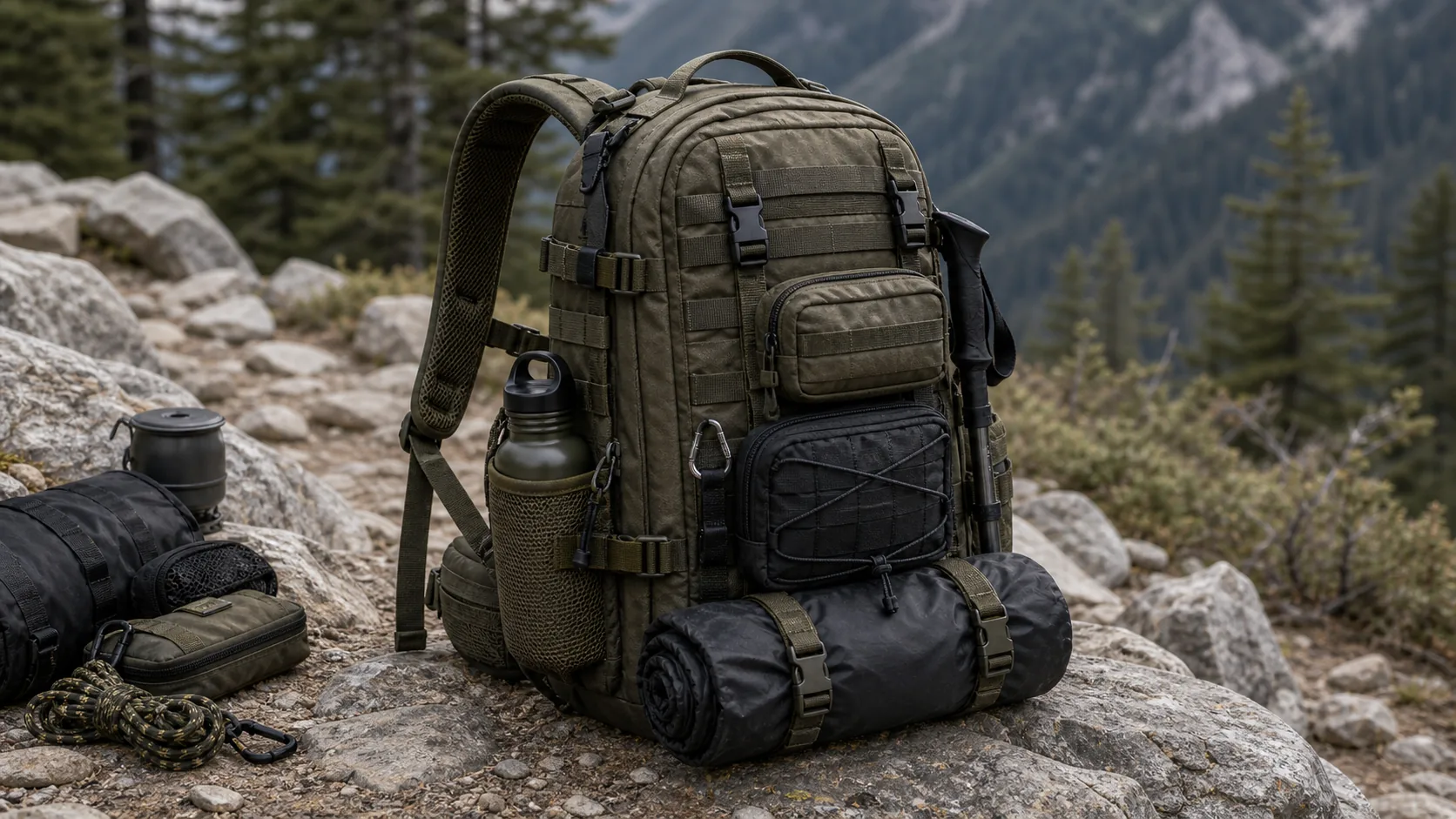
Organizing Essential Trail and Camping Gear
Preparing for a long-distance trail requires you to pack with strict mechanical balance in mind. You should always place your heaviest items-like your stove, fuel, and shelter components-in the middle of the pack, resting flat against your spine. Think about it: a poorly loaded pack will quickly ruin a great hike by throwing off your balance on rough terrain.
* Shelter and heavy stoves: Place deep in the mid-pack area.
* Spare layers and clothing: Pack in the bottom or outer layers.
* Navigational tools and headlamps: Place in the top lid for fast access.
Can MOLLE Webbing Support Heavy Tools?
The Modular Lightweight Load-carrying Equipment (MOLLE) webbing is designed to expand your carrying capacity by letting you attach gear directly to the exterior. But that's not all. When configuring your gear loadout for rugged environments, partnering with a reliable outdoor and tactical industry ensures that the load-bearing seams are double-stitched to prevent catastrophic failures on the trail.
* MOLLE attachment straps: Ensure they are threaded correctly through the webbing.
* Weight balancing: Distribute external attachments evenly on both sides.
* Securing loose ends: Tuck away dangling straps to prevent catching on branches.
Key Takeaway: Efficient trail packing is not just about fitting gear into a space; it is a safety measure. Keeping heavy items centralized prevents lumbar strain, while utilizing external web systems maximizes the internal volume for vital survival assets.
| Gear Classification | Ideal Placement Zone | Accessibility Level |
|---|---|---|
| Heavy (Tent, Stove) | Mid-pack, closest to the spine | Low (Camp site only) |
| Medium (Clothing) | Bottom & outer core | Medium (Rest stops) |
| Light (First-aid, Map) | Top lid & exterior pouches | High (Immediate access) |
This data highlights why strategic gear placement is vital for balanced load distribution.
How to use a tactical backpack for daily commuting?
Utilizing a tactical pack for daily commuting involves taking advantage of modern shock-absorbent laptop compartments and separating professional documents from personal gym gear. This dual-zone layout ensures that your sensitive corporate electronics remain safe while keeping your daily commute highly efficient. Learning field-use bag durability example in urban settings helps you seamlessly transition from professional boardrooms to high-energy workouts without changing your luggage.
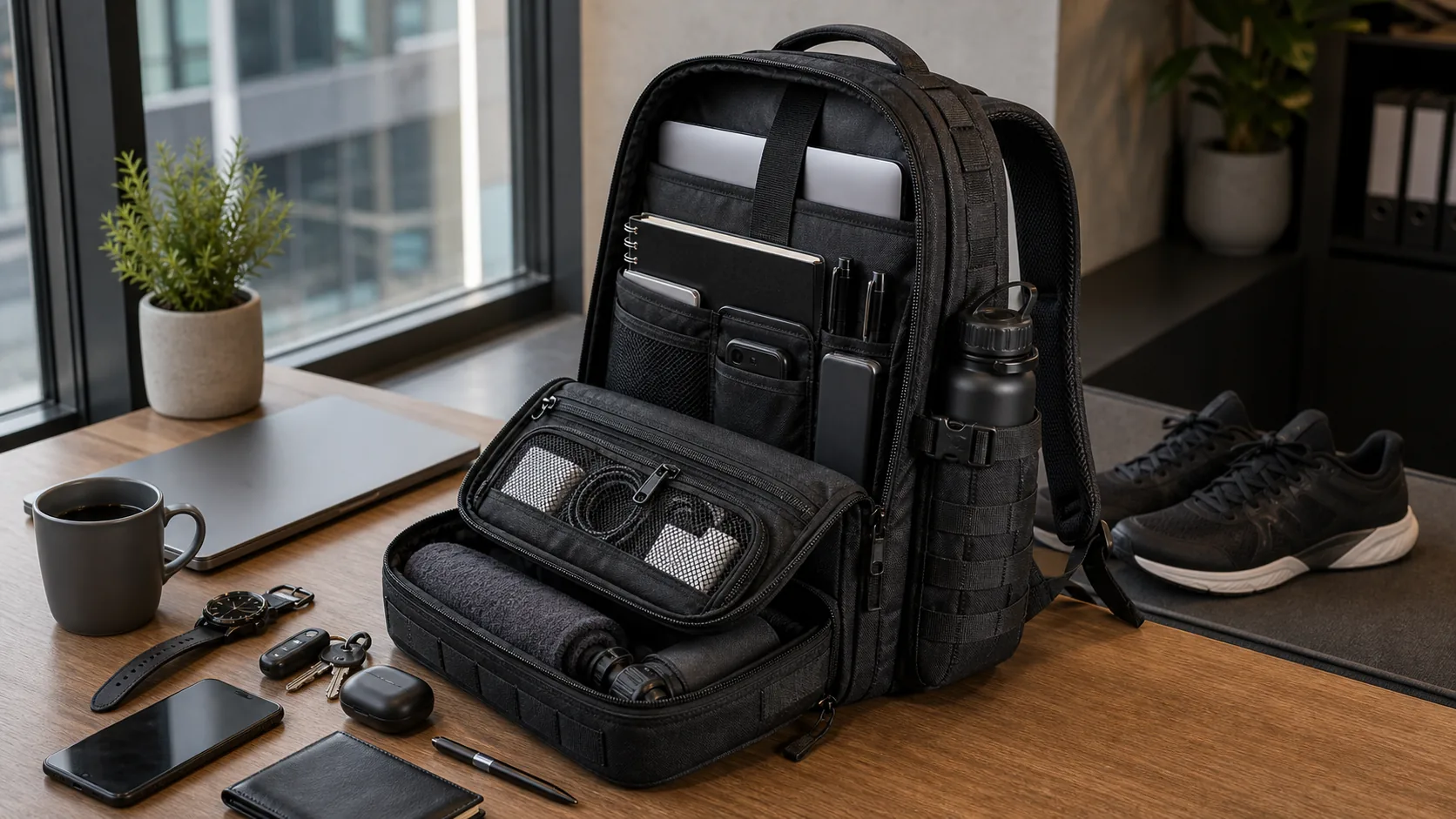
Protecting Laptops and Office Essentials
Navigating public transit with high-value laptops and tablets requires heavy-duty impact protection. Your tactical pack features dedicated, padded internal sleeves that suspend your electronics away from the bottom panel of the bag. Here is the thing: this suspended design prevents your laptop from hitting the hard floor whenever you set your bag down.
* Suspended laptop sleeve: Keeps your computer away from the base impact zone.
* Internal mesh pockets: Isolates delicate power adapters and charging cords.
* Zippered top pockets: Provides rapid access to commuter transit passes.
Can You Transition Your Pack to a Gym Bag?
The best part? You do not need to carry a second bag to the office just to fit your workout gear. You can easily use the dual-compartment layout of your utility pack to keep your clean professional clothes completely isolated from your post-workout gear.
* Separate shoe storage: Use the expandable bottom or outer pockets.
* Dry/wet isolation: Store damp gym towels away from professional files.
* Hydration pocket: Keep a shaker cup secure and leak-free in side loops.
Key Takeaway: Merging executive style with utility requires a bag designed for modularity. Dedicated protective zones ensure that corporate computing devices remain undamaged, while secondary dry/wet compartments facilitate a seamless transition from the office to the gym.
| Feature | Standard Commuter Bag | Tactical Utility Pack |
|---|---|---|
| Impact Protection | Low (Minimal padding) | High (Suspended sleeve & foam) |
| Compartment Isolation | Poor (Single main compartment) | High (Multi-pocket zoning) |
| Expansion Capability | Fixed volume | Expandable via external webbing |
This comparison demonstrates why a dedicated utility pack outperforms a standard commuter bag in both device safety and versatility.
How to use a tactical backpack as emergency gear?
Preparing a tactical pack as emergency gear means packing survival essentials according to rapid-access rules so you can deploy life-saving tools in seconds during critical situations. By focusing on vital 72-hour survival rations, medical kits, and basic shelter, you establish a reliable baseline for unpredictable disasters. When you establish standard operating procedures on how to use a tactical backpack as a bug-out bag, you significantly increase your readiness to face extreme environments.
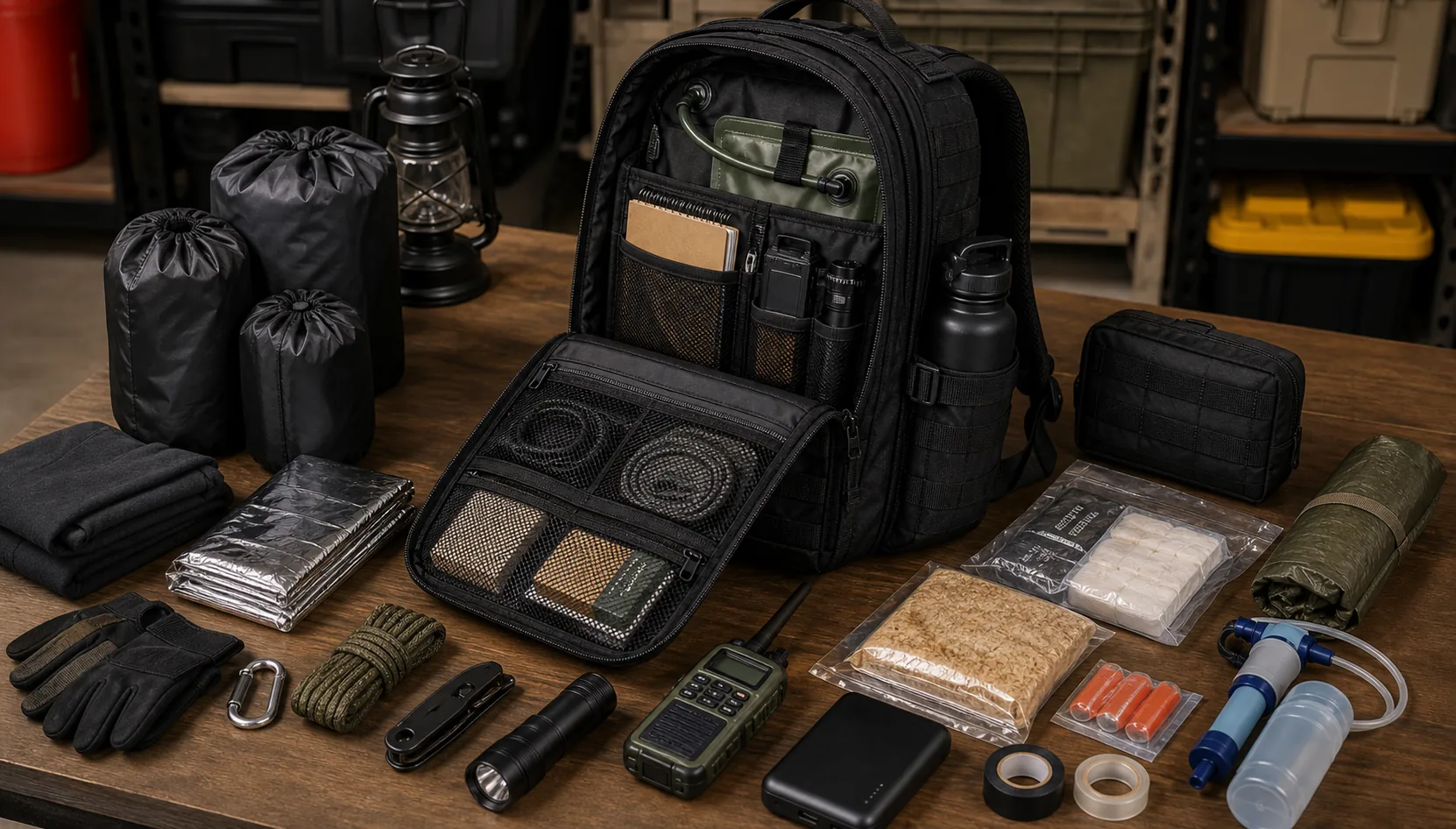
Building a Reliable 72-Hour Bug-Out Bag
When building an emergency survival system, your tactical pack must remain light enough for fast movement. You should keep the total weight of your fully loaded bug-out bag under 20% of your total body weight. Let's face it: carrying a bag that is too heavy will quickly exhaust your muscles during an evacuation.
* High-calorie food bars: Lightweight nutrition for 72 hours of survival.
* Water filter straw: Provides immediate clean water from any natural source.
* Emergency shelter: Compact space blankets or light bivy sacks.
How Should Medical Kits Be Accessed Quickly?
During an emergency, searching through a disorganized bag for a bandage is not an option. You should mount your Individual First Aid Kit (IFAK) on the outer lower panels using a tear-away Velcro backing. But that's not all. To guarantee swift access to life-saving supplies under stress, B2B procurement managers must work directly with an experienced OEM travel backpack projects to develop rapid-release pouch configurations.
* External trauma kits: Mount with bright red pull-tabs for easy identification.
* Velcro tear-away panels: Allow instant removal of the entire medical kit.
* Tourniquet loops: Keep major bleeding control gear exposed on the shoulder straps.
Key Takeaway: Emergency preparedness is defined by access speed and gear reliability. An unorganized survival pack is a liability; positioning life-saving gear in intuitive, standardized locations ensures zero-hesitation deployment during critical events.
| Emergency Component | Recommended Storage Zone | Access Mechanism |
|---|---|---|
| First-Aid / IFAK | Lower exterior or tear-away panel | Quick-pull tab / Velcro |
| Rations & Hydration | Internal bladder sleeve & side pouch | Integrated bite valve |
| Emergency Shelter | Base compartment | Dual zipper pull |
This comparison illustrates how rapid-access emergency layouts reduce deployment times during critical survival situations.
How to use a tactical backpack for travel comfort?
Adjusting a tactical backpack for travel comfort relies on tightening external compression straps to meet strict airline carry-on dimensions while keeping personal documents hidden in secure lumbar pockets. This configuration helps you navigate busy airport security checkpoints efficiently while protecting your highly sensitive valuables from pickpockets in crowded transit hubs. Knowing e-commerce bag projects for long-distance travel ensures you never have to sacrifice gear organization or physical comfort while on the move.
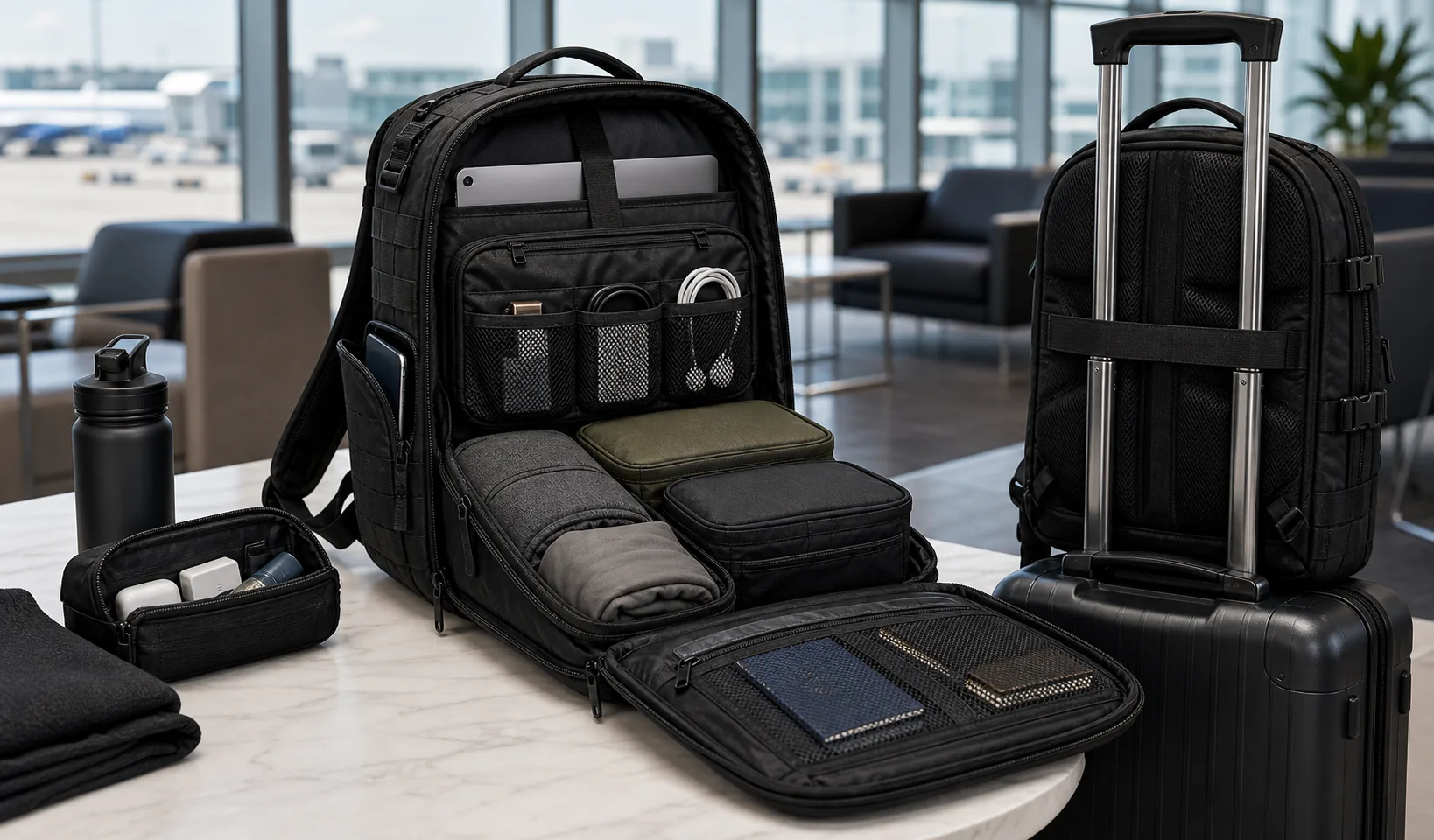
Utilizing Airline Carry-On Storage Options
Navigating crowded airports is much easier when you use your pack's side compression straps to shrink its outer profile. This lets you easily slide your tactical pack into tight overhead compartments or under the seat in front of you. Believe it or not: compressing your pack by just two inches can save you from checking your luggage at the gate.
* Side compression straps: Tighten to reduce the pack's exterior volume.
* Clamshell zip design: Lays flat for rapid TSA scanning and inspection.
* Low-profile grab handles: Allow easy retrieval from overhead bins.
Securing Valuables in High-Transit Areas
Protecting your cash, passports, and travel visas is a top priority when traveling through unfamiliar international transit hubs. You should use the hidden security compartment located on the back panel of your tactical pack. Here is the thing: pickpockets cannot access this zippered pocket while the bag is resting flat against your back.
* Concealed lumbar pocket: Keeps passports and wallets flat and hidden.
* Lockable zipper sliders: Prevent opportunistic thieves from opening compartments.
* Slash-resistant base material: Guards against knife-slitting thefts in dense crowds.
Key Takeaway: By leveraging a clamshell layout, travelers can skip the stress of airport checkpoints. Tactical designs allow rapid flat-lay inspection, keeping security checks quick and highly organized.
| Travel Priority | Tactical Feature Utilized | Operational Advantage |
|---|---|---|
| TSA Compliance | Compression strap tightening | Reduces overall exterior volume |
| Security | Hidden lumbar security pocket | Keeps passports/wallets flat and hidden |
| Fast Retrieval | Clamshell opening design | Lays flat for rapid airport screening |
This checklist outlines how strategic travel configurations maximize compartment security and airline space compliance.
How to use a tactical backpack for college campus?
Carrying a tactical pack on a college campus involves distributing heavy textbook weight evenly across your upper back using ergonomic S-shaped shoulder straps. This method prevents the chronic posture issues and muscle strain often caused by lugging heavy academic loads across sprawling campuses. Once you understand how to use a tactical backpack for school, you can easily carry heavy binders and devices while maintaining a clean, modern aesthetic.
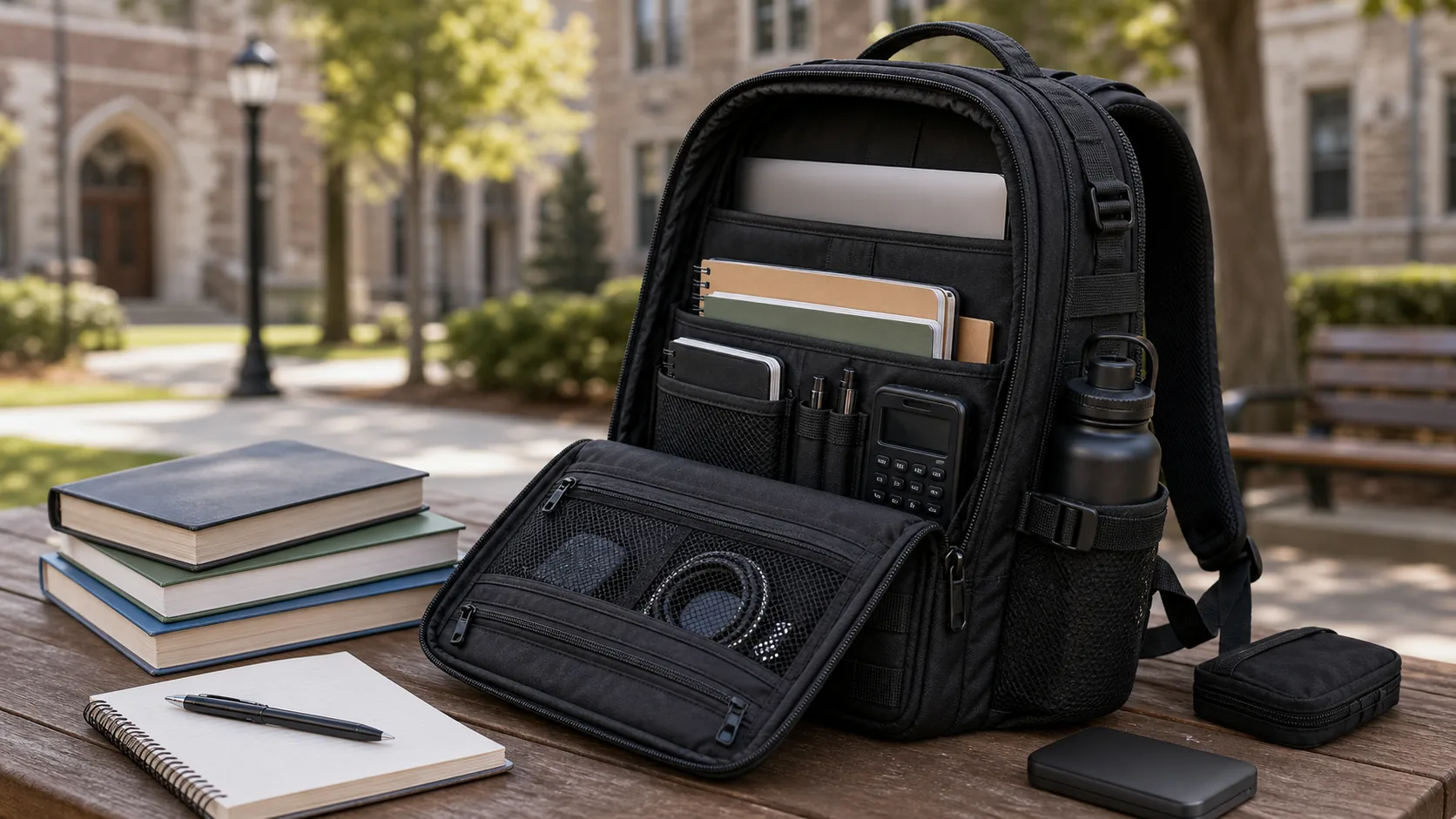
Distributing Weight of Heavy Textbooks
Carrying multiple massive textbooks and heavy reference binders can cause serious muscle fatigue and back strain. To protect your spine, you should adjust the load-stabilizing sternum strap to pull the shoulder straps inward. The best part? This simple adjustment keeps the pack from shifting while you walk between class buildings.
* Sternum strap: Pulls shoulder straps inward to relieve arm tension.
* Contoured shoulder straps: Distribute weight evenly across your collarbones.
* Padded mesh back panel: Promotes air ventilation and reduces sweat.
Choosing a Sleek and Minimalist Design
You don't have to look like you're on a military mission just to carry your homework. Many modern tactical packs are designed with clean, urban-friendly colors like matte black or dark charcoal. Think about it: you can enjoy all the heavy-duty features of tactical gear while keeping a low profile in the classroom.
* Low-profile color options: Choose black, slate gray, or dark navy.
* Recessed MOLLE loops: Clean laser-cut slots that don't draw attention.
* Removable hip belts: Keep the bag streamlined for short campus walks.
Key Takeaway: Students carrying heavy academic gear daily require advanced load distribution. Transitioning to a minimalist tactical pack offers industrial-grade durability without drawing unwanted attention on campus.
| Academic Payload Stress | Physiological Impact | Ergonomic Solution |
|---|---|---|
| Off-center heavy textbooks | Shoulder strain & muscle fatigue | Load-stabilizing sternum strap |
| Prolonged carrying times | Lower back compression | Padded mesh lumbar support panel |
| Device heat build-up | Device performance degradation | Breathable back ventilation channels |
This analysis highlights how proper physiological support mitigates the daily strain of carrying heavy academic materials.
How to use a tactical backpack with hydration?
Setting up a tactical backpack with hydration systems requires securing the flexible drinking tube along the shoulder harness and routing it through the dedicated top exit port for hands-free drinking on the move. This setup allows you to maintain optimal hydration without having to stop or remove your pack during intense physical activities. Discovering OEM tactical backpack projects with an integrated water bladder ensures constant liquid delivery during demanding tactical operations.
Routing Drinking Tubes for Active Movement
Staying hydrated while keeping your hands completely free is essential during long outdoor treks. You should slide your hydration bladder into the dedicated internal sleeve and pass the drinking tube through the exit port. But that's not all. You must secure the tube along your shoulder strap using the built-in elastic loops to keep it from bouncing.
* Hydration sleeve: Holds the water bladder upright and close to your spine.
* Top exit port: Allows the drinking tube to pass cleanly out of the pack.
* Elastic strap loops: Keep the tube secured tightly against the shoulder harness.
What is the Best Way to Clean a Water Bladder?
Letting moisture sit inside your water bladder will quickly cause mold and bacteria to grow. To keep your water clean, you should wash the reservoir after every single use with warm water and mild soap. Let's face it: drinking contaminated water on a remote trail can be highly dangerous.
* Warm water and mild soap: Safe cleaning agents that won't degrade plastic.
* Flexible wire brush: Reaches deep inside the tube to scrub away residue.
* Inverted hanger drying: Ensures no standing water remains inside the bladder.
Key Takeaway: Hydration integration transforms a standard gear carrier into a high-end endurance system. Regular maintenance and proper tube routing prevent performance failure and water contamination on long missions.
| Component | Cleaning Agent | Frequency | Dry Method |
|---|---|---|---|
| Bladder Reservoir | Warm water + mild soap | After every use | Air dry inverted on hanger |
| Delivery Tube | Flexible wire brush tube cleaner | Bi-weekly | Hang vertically with tube open |
| Bite Valve | Isopropyl alcohol wipe | Weekly | Air dry after disassembly |
This schedule demonstrates how consistent component hygiene extends the functional life of hydration bladders.
How to use a tactical backpack for range training?
Organizing a tactical pack for range training requires dedicated pockets for ammunition, ear protection, and secure compartments designed specifically to transport handguns safely and legally. This layout prevents dangerous gear shifts and helps you comply with range safety rules at all times. Knowing how to use a tactical backpack at the firing range ensures your tools are easily accessible and your environment remains completely safe.
Organizing Ammunition and Safety Gear
Heading to the shooting range requires you to organize heavy boxes of ammunition and bulky safety gear. You should place heavy boxes of bullets at the bottom of the main compartment to keep your balance steady. Here is the thing: loose ammunition can tear your bag or get lost if it is not stored in dedicated zippered pouches.
* Heavy ammunition boxes: Store flat at the very bottom of the pack.
* Mesh pockets: Perfect for holding eye protection and earplugs.
* Target storage: Roll up paper targets and secure them with external straps.
How Should Handguns Be Secured Safely?
Transporting firearms safely and legally requires secure, isolated storage spaces inside your pack. You should use a dedicated, padded handgun sleeve lined with hook-and-loop fabric to keep your pistol from moving. Think about it: designing high-speed gear arrays requires tailored designs; agencies looking to buy custom products should source OEM tactical backpack projects built specifically for their team's standard operating gear.
* Padded pistol sleeve: Keeps the handgun safe, secure, and isolated.
* Lockable compartments: Ensure compliance with local firearm transport laws.
* Magazine organizers: Store spare magazines vertically in custom elastic loops.
Key Takeaway: High-speed missions require prioritizing speed and gear accessibility over maximum storage space. Streamlining your loadout to include only mission-essential tools prevents fatigue and improves movement times.
| Performance Attribute | Sustainment Pack (3-Day) | Lightweight Assault Pack |
|---|---|---|
| Average Volume | 55L – 75L | 18L – 30L |
| Movement Speed Profile | Slow / Pace-set | Fast / High-agility |
| Main Focus | Survival self-sufficiency | Specialized rapid mission tools |
This comparison details why matching pack volume to mission duration directly improves user mobility.
How to use a tactical backpack in wet weather?
Protecting your gear in wet weather involves deploying integrated rain covers and organizing sensitive electronic accessories inside durable interior dry bags. Understanding outdoor and tactical industry during rainstorms prevents catastrophic water damage to vital electronics and keeps your spare clothing perfectly dry. This multi-layered approach keeps moisture out so you can focus on your journey rather than your gear.
Applying Rain Covers and Waterproof Liners
Heavy rain can quickly soak through standard zippers and stitch seams, damaging your expensive gear inside. You should always carry a lightweight waterproof rain cover that fits snugly over the entire exterior of your pack. But that's not all. You can use internal waterproof liners to add an extra layer of defense for your most critical items.
* Elastic rain cover: Instantly wraps around the pack's exterior to block moisture.
* Durable waterproof liners: Protect the interior compartments from sudden leaks.
* Storm flaps: Keep water from dripping directly into the zipper tracks.
How Do Dry Bags Protect Electronic Devices?
Placing sensitive electronics like phones, cameras, or GPS units directly into a damp backpack is a major risk. You should pack these items inside lightweight roll-top dry bags before placing them in your pack. Believe it or not: a simple dry bag will protect your devices even if your pack is accidentally dropped in a shallow stream.
* Roll-top closure: Creates a completely airtight, waterproof seal for devices.
* High-denier materials: Resist tears and prevent moisture from seeping through.
* Color-coded dry bags: Help you quickly identify which bag holds your electronics.
Key Takeaway: Water resistance requires a multi-layer strategy. Relying on fabric treatments alone can fail during prolonged downpours; combining heavy-duty fabrics with internal dry bags ensures your electronics and core insulation stay dry.
| Material / Feature | Hydrophobic Rating | Recommended Environment | Durability Factor |
|---|---|---|---|
| PU Coated Nylon | Moderate Water Resistant | Light showers, damp woods | Standard wear protection |
| 1000D Cordura | Water Repellent | Heavy mud, rough brush | Ultra-high abrasion resistance |
| Ripstop TPU Tarpaulin | 100% Waterproof | Heavy downpours, river crossings | Extreme tear resistance |
This material analysis highlights why choosing high-denier fabrics is essential for keeping internal gear dry.
How to use a tactical backpack for business travel?
Carrying a tactical pack for corporate travel involves utilizing professional file folders, keeping tablets in padded sleeves, and selecting low-profile color schemes that fit a corporate boardroom. This structured approach allows you to travel light while still projecting an organized, expert image to your business partners. Learning how to use a tactical backpack for executive travel allows you to carry high-value business assets safely without looking out of place.
Organizing Tablets and Professional Documents
Keeping your contracts, business proposals, and tablets unwrinkled is essential when traveling for business. You should use the rigid internal file organizers built into your pack to keep documents perfectly flat. The best part? This system ensures you always look prepared and professional during client meetings.
* Rigid file dividers: Keep paper contracts completely flat and unwrinkled.
* Dedicated tablet sleeve: Keeps screens safe from scratches and heavy pressure.
* Dedicated pen loops: Keep writing tools and styluses neat and ready to grab.
How Can You Maintain a Professional Image?
You don't have to sacrifice style for utility when traveling to important business meetings. You should choose a low-profile, clean-cut tactical pack without bright military camo patterns. Here is the thing: a sleek, matte black or solid navy pack looks highly professional while offering the extreme durability of military gear.
* Low-contrast designs: Avoid military camouflage in corporate spaces.
* Concealable shoulder straps: Let you carry the pack like a professional briefcase.
* Premium metal buckles: Add a sophisticated, executive look to your gear.
Key Takeaway: Selecting the wrong pack size causes poor weight distribution and premature wear. Matching your pack's volume to your trip length and utilizing compression straps keeps your load stable and balanced.
| Pack Volume (Liters) | Target Duration | Common Use Case |
|---|---|---|
| 15L – 25L | Under 12 Hours | Commuting, running, short bike trips |
| 30L – 45L | 24 – 72 Hours | Weekend camping trips, travel carry-on |
| 50L+ | 3+ Days | Deep-wilderness hiking, expedition |
This volume breakdown demonstrates why matching pack size to your travel timeframe prevents overpacking and muscle fatigue.
How to use a tactical backpack for the long term?
Maintaining your tactical backpack for the long term requires inspecting load-bearing seams regularly and cleaning dirt and debris out of the zipper teeth to prevent hardware failure. Proper cleaning routines and minor repairs extend the life of your bag, ensuring you get the absolute highest return on your investment. Learning how to use a tactical backpack and care for its materials keeps your heavy-duty carrying gear operational for years to come.
Inspecting Stitching and Zipper Quality
To keep your tactical pack in top condition, you must inspect its stress points regularly. You should look for loose threads along the shoulder harness and check the zipper teeth for trapped sand or dirt. Let's face it: for corporate buyers managing large inventories of field gear, choosing a high-quality manufacturer and maintaining direct communication via their contact us today page ensures easy access to replacement parts and technical care tips.
* Shoulder strap seams: Check for loose thread loops under heavy stress.
* Zipper teeth cleaning: Use an old toothbrush to remove grit and salt.
* Buckle inspections: Check plastic components for hairline cracks or wear.
How Do You Properly Clean and Wash Your Pack?
Washing your pack in a household washing machine can quickly ruin its waterproof coatings. You should always hand-wash your pack in a tub of cool water using a mild soap. Think about it: a gentle hand-washing routine will keep your pack looking brand new while protecting its durable materials.
* Cool water hand-wash: Protects delicate polyurethane and waterproof coatings.
* Mild liquid soap: Cleans fabrics safely without stripping protective layers.
* Shaded air drying: Prevents UV damage and fabric shrinkage.
Key Takeaway: High-quality tactical packs are built to last, but they still require regular care. Proper cleaning, prompt hardware repairs, and routine fabric treatments maximize your gear's lifespan and protect your investment.
| Interval | Target Component | Maintenance Action Required |
|---|---|---|
| Post-Mission | Zipper Tracks | Brush out sand, grit, and salt residue |
| Bi-Annually | Exterior Fabric | Hand-wash, air-dry, reapply DWR spray |
| Annually | Tension Buckles | Inspect for stress-fractures and replace worn parts |
This maintenance schedule outlines how routine checkups prevent unexpected component failure in active environments.
Conclusion
Whether you are navigating rough mountain trails, heading to the corporate boardroom, or preparing for unpredictable emergency situations, having a reliable carrying system is crucial. Standard bags simply cannot handle the physical demands of active environments, leading to broken zippers, failed seams, and painful shoulder strain. Transitioning to a high-quality, professional tactical pack solves these problems by offering unmatched durability, smart compartment organization, and superior ergonomic support.
If you are looking to source high-durability, custom-designed carrying solutions that stand up to the toughest field conditions, we are here to support your team's mission. You can explore our extensive production capabilities or reach out to our team to discuss your specific bulk procurement requirements when you contact us today. Our vision is to empower global organizations, professional hikers, and everyday commuters with rugged, dependable, and highly engineered gear that delivers ultimate comfort and absolute peace of mind under any circumstances.
Frequently Asked Questions
Can I wash my tactical backpack in a washing machine?
No. Machine washing will ruin the protective polyurethane or DWR coatings on tactical fabrics. The high-speed spin cycle can also catch loose straps in the drum, tearing seams and breaking buckles. Instead, clean your pack by hand in a tub of cool water using a soft-bristled brush and mild soap, then hang it to air-dry out of direct sunlight.
What's the best way to arrange heavy items for ergonomic carry?
Place your heaviest gear flat against your spine, centered vertically at shoulder-blade height. This keeps the pack's center of gravity aligned with your body's natural balance point, preventing lumbar strain and reducing the need to lean forward while walking.
How do I know if my tactical backpack is genuinely waterproof?
Most tactical bags are water-resistant rather than fully waterproof. High-quality packs feature water-repellent coatings (like DWR) on Cordura fabric and include storm flaps over the zippers. If a pack is truly waterproof, it will feature welded seams, roll-top closures, and a high IPX waterproof rating designed to handle complete submersion.
Can I attach a sleeping bag to the bottom loops safely?
Yes, but you must secure it tightly to prevent the load from shifting while you walk. Use heavy-duty utility straps or paracord to mount the sleeping bag to the pack's bottom loops or lower MOLLE field. Ensure the load is centered so it doesn't pull the pack to one side.
How do I adjust the chest and waist straps for optimal comfort?
Start by loosening all straps and putting the loaded pack on. First, tighten the hip belt so it rests on your pelvic bone to carry 60-70% of the total weight. Next, pull the shoulder straps snug so the pack sits flush against your back. Finally, fasten the sternum strap across your chest to pull the shoulder straps inward, relieving arm tension and stabilizing your load.