
You can organize a backpack for travel by giving every item a fixed zone, grouping gear into small modules, and keeping high-use items close to the opening. Airport stress often starts when a passport, charger, or liquid pouch disappears under clothing at the worst possible moment. A clear system for how to organize backpack for travel keeps your load balanced, protects fragile gear, and lets you reach what you need without emptying the bag.
Where do I start how to organize backpack for travel?
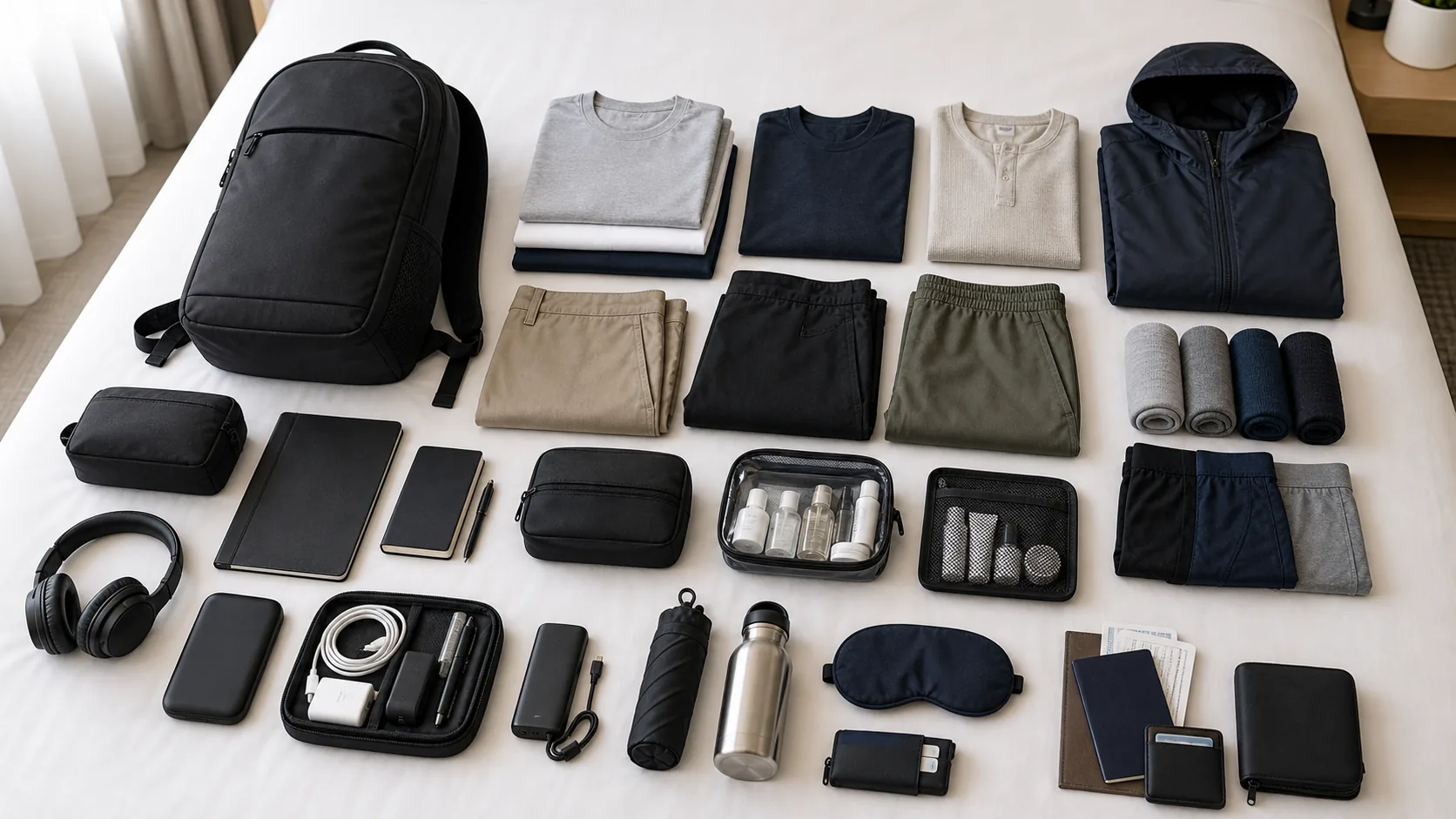
You start how to organize backpack for travel by laying out every item before anything goes inside the bag. This visual audit shows duplicate clothes, missing chargers, bulky toiletries, and gear that does not match the real trip. The goal is to pack from the plan, not from anxiety.
Why does a flat layout help?
A flat layout helps because you can see the full packing load at once. Here is the thing: a backpack gets messy when hidden items enter without a clear job.
- Group clothing, tech, toiletries, documents, and daily-use gear.
- Remove items that only serve one rare situation.
- Keep one small space for items bought during the trip.
How should you decide what stays?
Keep items that match your itinerary, climate, and daily routine. If two items do the same job, choose the lighter or more versatile one.
Key Takeaway: A clean backpack starts outside the backpack, where you can edit the load before clutter begins.
| Planning Step | Action | Result |
|---|---|---|
| Trip review | Match gear with activities | Less duplicate packing |
| Flat layout | View every item at once | Clearer choices |
| Category grouping | Build item families | Easier zone planning |
This layout stage gives the rest of the packing system a calm, logical base.
Why is layout key how to organize backpack for travel?
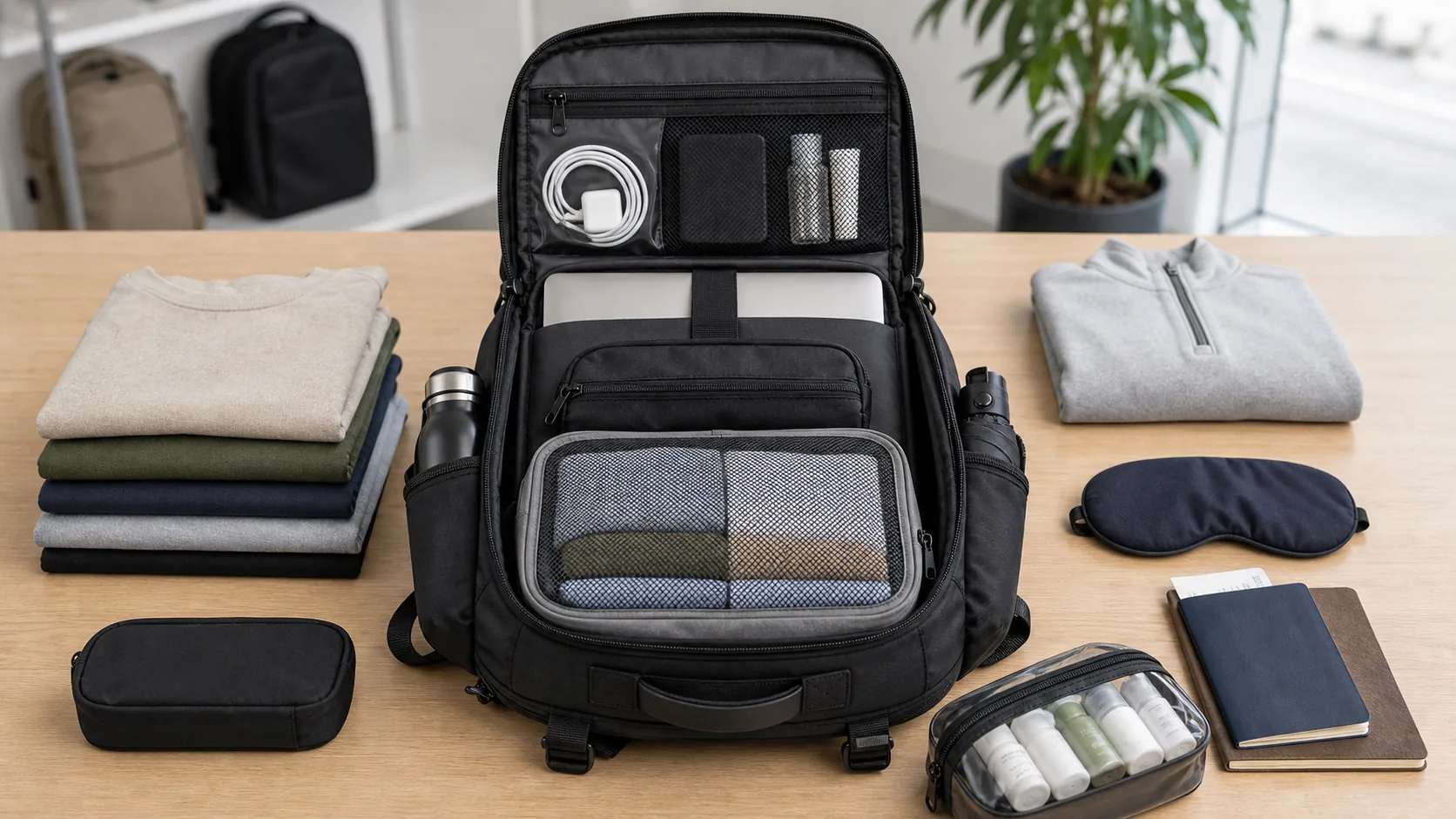
Layout is key to how to organize backpack for travel because weight, access, and protection all depend on where items sit. A backpack should work like a small mobile cabinet: dense items near your back, soft clothing in the center, and travel documents near the opening. For brands developing custom travel backpacks, layout decides whether buyers feel organized after real use.
What are the main backpack zones?
The main zones are the back panel, main cavity, front pocket, top pocket, and side pockets. Think about it: zones reduce searching because every item has a home.
- Back panel: laptop, documents, and other flat items.
- Main cavity: clothing cubes and soft gear.
- Top pocket: liquids, passport, earbuds, and snacks.
How does zone packing save time?
Zone packing saves time because you do not need to open the whole bag for one small item. It also helps during airport security because liquids and electronics stay easy to remove.
Key Takeaway: A zone layout turns a backpack from one big container into several predictable storage areas.
| Zone | Best Contents | Access Level |
|---|---|---|
| Back panel | Laptop, tablet, folder | Medium |
| Main cavity | Clothing cubes | Low |
| Top pocket | Passport, liquids, earbuds | High |
The more repeatable the zone map, the faster you can pack and unpack.
Is a list useful how to organize backpack for travel?
A list is useful for how to organize backpack for travel because it shows what you packed, where it lives, and what should return home with you. Multi-stop trips can scatter items across hotel rooms, airport bins, and rental cars. A short digital list protects expensive gear and keeps your routine consistent.
What should a packing list include?
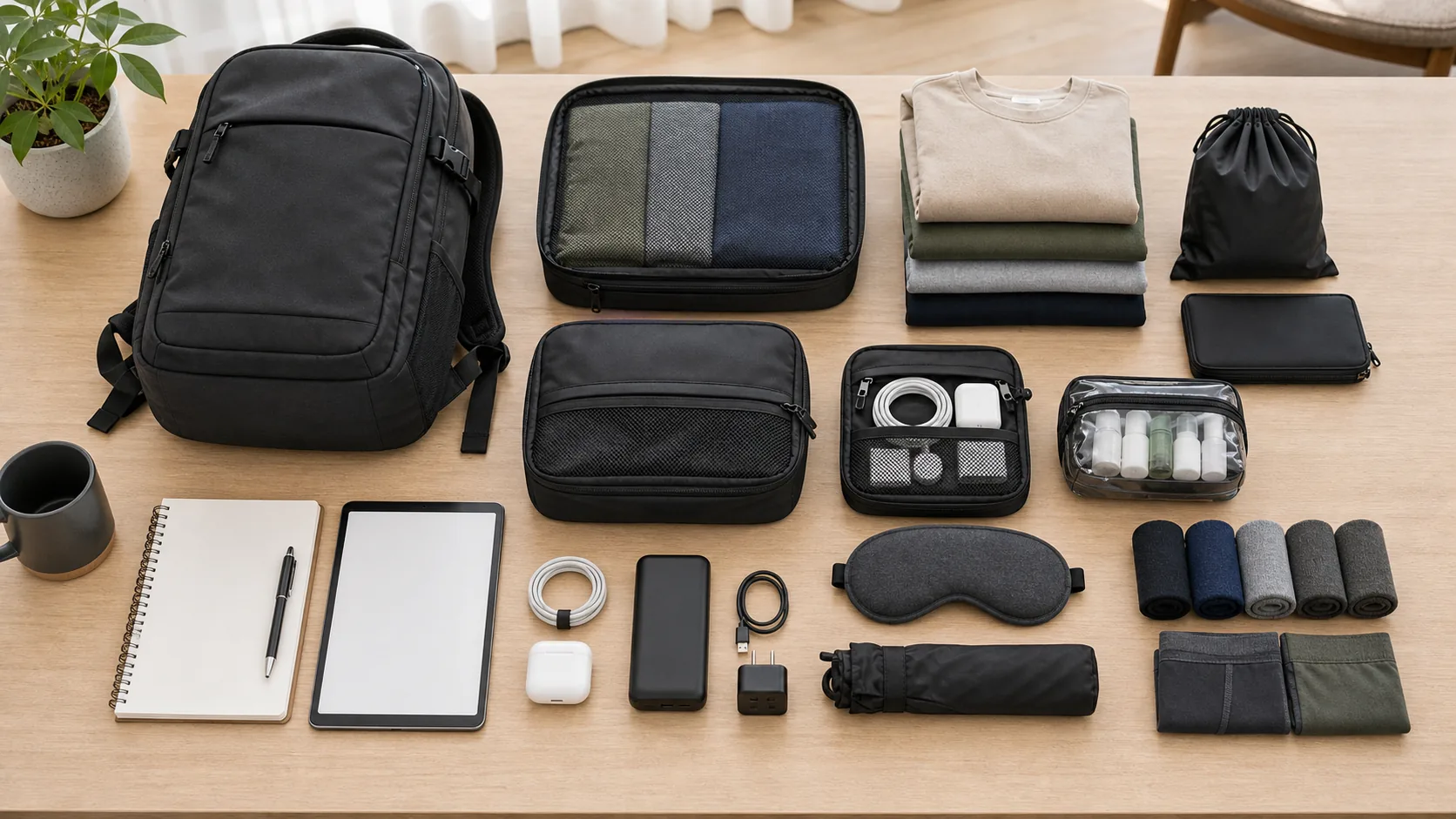
A packing list should include the item name, category, storage zone, and quantity. The good part: the list can be simple and still prevent costly mistakes.
- Tech pouch: charger, adapter, cable, power bank.
- Toiletry pouch: liquids, solids, medicine.
- Clothing cube: tops, bottoms, underwear, socks.
Can the list help during checkout?
Yes, the list helps during checkout because it gives you a fast room scan before leaving. Check each zone, then check drawers, bathroom counters, outlets, and bedside tables.
Key Takeaway: A list is not extra work; it is a fast recovery tool when travel days get rushed.
| List Column | Example | Why It Helps |
|---|---|---|
| Item | USB-C cable | Prevents loss |
| Zone | Tech pouch | Speeds repacking |
| Count | 2 | Catches missing gear |
For online brands, list-friendly pocket naming can also support e-commerce bag projects because buyers value clear organization in product photos and reviews.
Do cubes help how to organize backpack for travel?
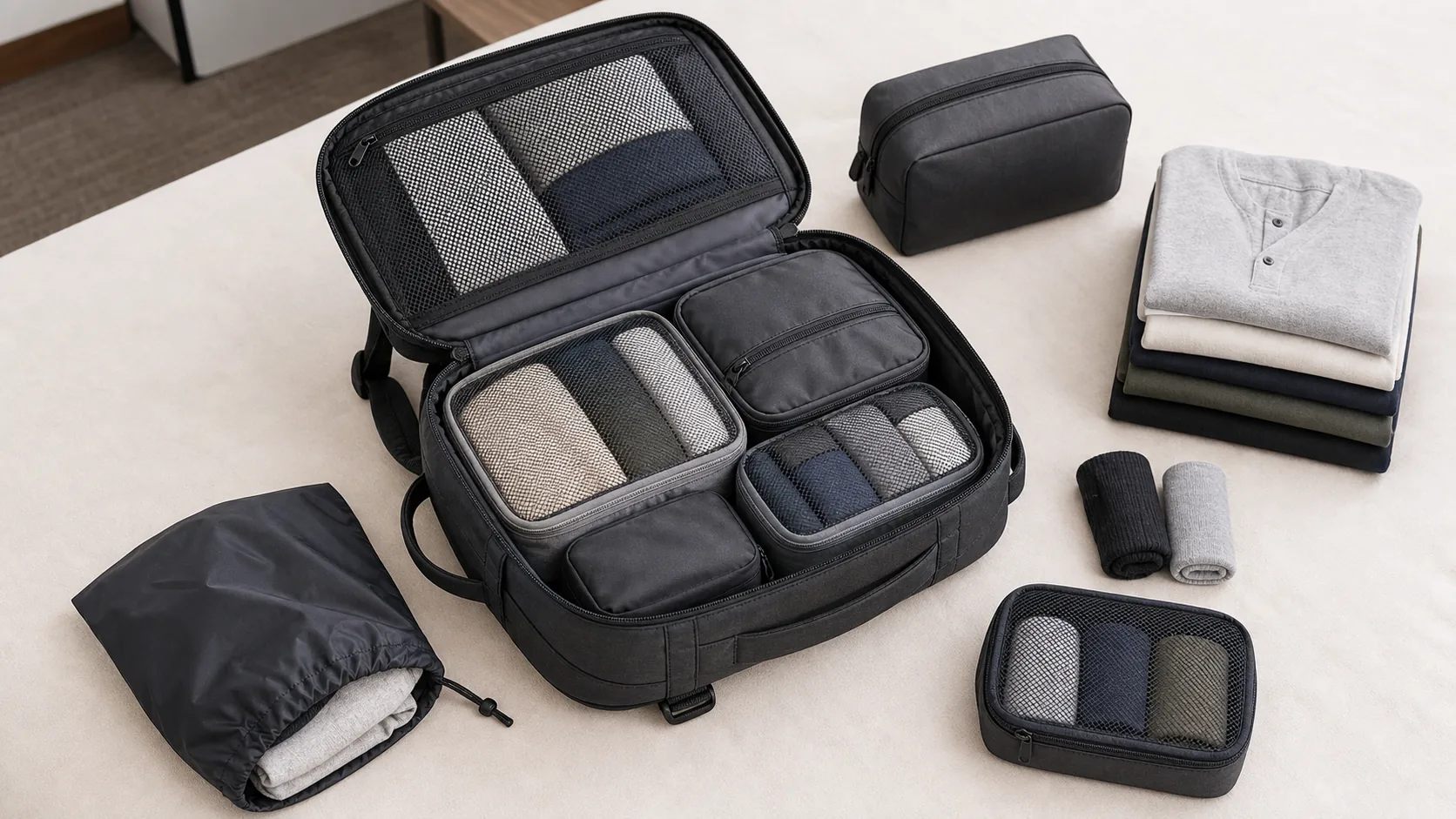
Cubes help how to organize backpack for travel by turning loose clothing into compact, removable blocks. Without cubes, shirts, socks, and sleepwear slide into corners and bury smaller items. With cubes, you can pull one module out, use what you need, and put it back without disturbing the whole backpack.
Which cube system works best?
The best cube system uses one cube per function instead of one cube per random pile. Simple works: give each cube a job and keep that job for the whole trip.
- Tops and bottoms in one medium cube.
- Underwear and socks in one slim cube.
- Laundry or swimwear in one dry pouch.
How do you separate clean and dirty items?
Separate dirty items with a thin waterproof pouch or washable laundry cube. Keep it along a side wall so odor and moisture stay away from clean clothes.
Key Takeaway: Cubes protect order by letting you move clothing as modules rather than loose fabric.
| Module | Contents | Placement |
|---|---|---|
| Clothing cube | Daily outfits | Main center |
| Slim cube | Socks, underwear | Side gap |
| Dry pouch | Laundry | Outer side |
This modular method makes backpack organization easier on both short breaks and longer routes.
Where do tech items go how to organize backpack for travel?
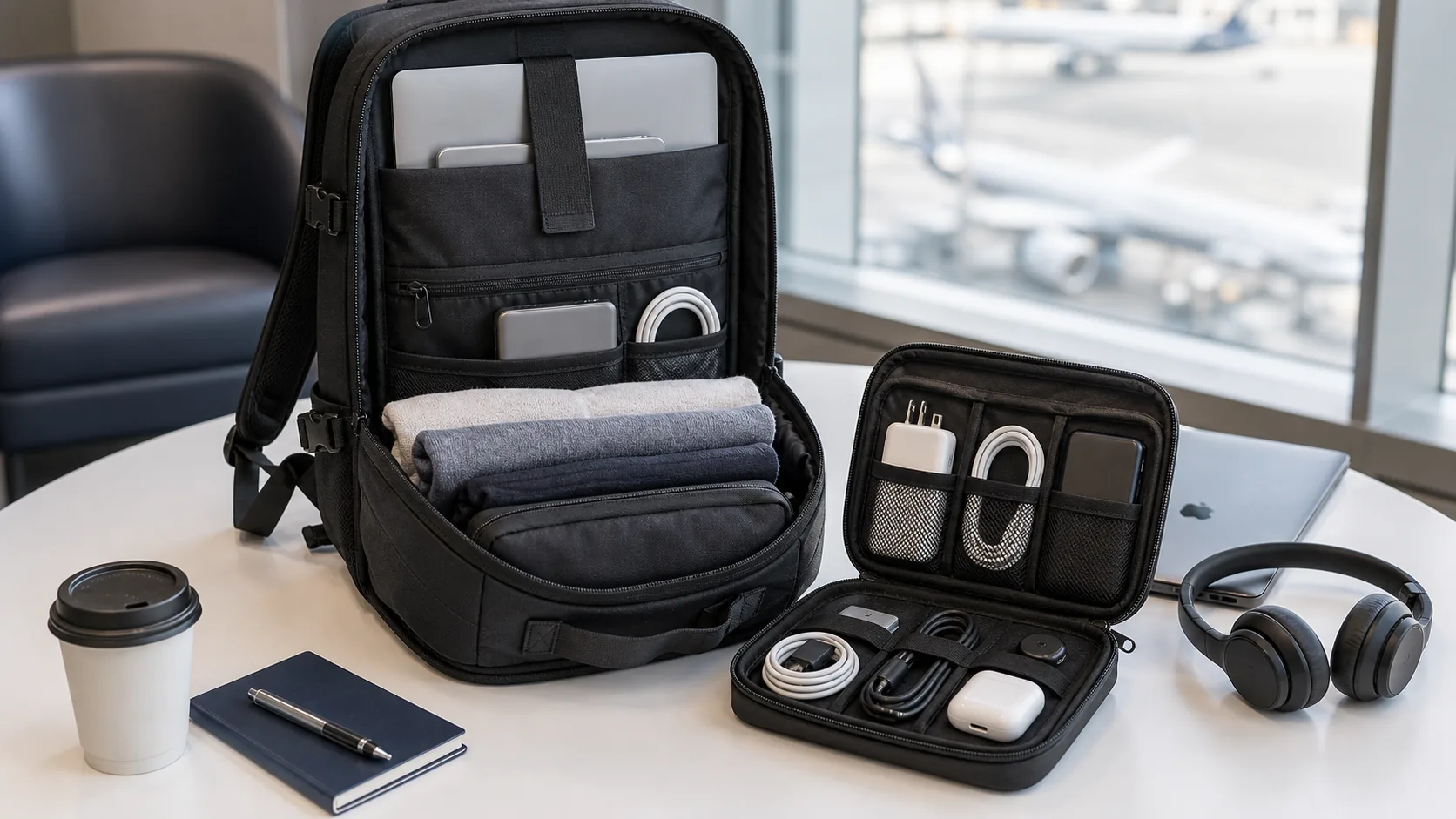
Tech items go into protected, easy-to-check zones when planning how to organize backpack for travel. Laptops should sit flat against the back panel, while chargers, adapters, cables, and earbuds belong in a padded tech pouch. This keeps electronics safe and stops cables from tangling with clothing.
What belongs in a tech pouch?
A tech pouch should hold small electronics that would otherwise vanish in pockets. Here is the move: keep it compact enough to pull out at security or on the plane.
- Charging cable and wall plug.
- Power bank and adapter.
- Earbuds, memory card, or small mouse.
How do you protect cords?
Protect cords by coiling them loosely and using elastic loops or small mesh sleeves. Sharp bends can damage cable ends, especially when a backpack is compressed.
Key Takeaway: Tech organization should protect devices while making every cable easy to count.
| Tech Item | Best Storage | Risk Reduced |
|---|---|---|
| Laptop | Back sleeve | Impact damage |
| Charger | Padded pouch | Cable clutter |
| Power bank | Middle zone | Weight imbalance |
A structured tech system is especially useful for work trips, study travel, and digital retail customers.
How does weight fit how to organize backpack for travel?
Weight fits how to organize backpack for travel by deciding comfort, posture, and whether the bag feels stable during long walking days. Heavy gear should sit close to the spine and near the middle of the backpack. Light clothing can fill outer areas, while fragile items should avoid pressure points.
Why place heavy items near the back?
Heavy items belong near the back because that position keeps the load close to your center of gravity. This is where comfort changes fast: poor placement can make a light bag feel heavy.
- Keep laptops against the back panel.
- Place dense pouches above the lower back.
- Avoid loading heavy items into front pockets.
Where should shoes go?
Shoes should sit at the bottom or side, inside a shoe pouch, with socks tucked inside to preserve shape. Wear the heaviest pair during travel if space is tight.
Key Takeaway: Weight organization protects your back and keeps the backpack from pulling away from your body.
| Item Type | Best Position | Reason |
|---|---|---|
| Laptop | Back panel | Stable weight |
| Shoes | Bottom or side | Keeps shape controlled |
| Clothing | Center cavity | Soft balance |
This balance rule matters for city travel, airport transfers, and outdoor routes alike.
Why use a sling how to organize backpack for travel?
A sling can improve how to organize backpack for travel by separating in-seat and daily-use items from the main backpack. It should not become another messy bag; it should hold only valuables and items used during boarding, security, or short walks. For rugged routes, tactical backpacks can also support modular add-ons without cluttering the main cavity.
What belongs in an in-seat sling?
An in-seat sling should hold the items you need after the backpack goes overhead or under the seat. Keep it tight: too many items turn the sling into another problem.
- Passport, wallet, phone, and earbuds.
- Pen, snack, lip balm, and medication.
- Small power bank and charging cable.
Can a sling improve security?
Yes, a sling can improve security because valuables stay in front of your body. It also reduces how often you open the main backpack in crowded places.
Key Takeaway: A sling works best as a controlled access layer, not as an overflow bag.
| Sling Item | Why It Belongs There | Access Need |
|---|---|---|
| Passport | Boarding and checks | High |
| Phone | Tickets and maps | High |
| Medication | Personal safety | High |
This small companion system keeps the main backpack cleaner and calmer.
Which bag is best how to organize backpack for travel?
The best bag for how to organize backpack for travel has a wide opening, defined compartments, a laptop sleeve, compression control, and enough capacity for the trip. Too many tiny pockets can be confusing, but too few pockets force everything into one cavity. A good backpack gives structure without overcomplicating the routine.
What capacity should you choose?
Choose capacity based on trip length, climate, and laundry access. A quick guide: short trips can work with 20-28L, while carry-on-only long trips often need 30-40L.
- 20-28L for short city trips.
- 30-40L for carry-on travel.
- 45L or more only for gear-heavy routes.
Which design details matter?
Useful design details include clamshell access, compression straps, mesh pockets, a suspended laptop sleeve, and one easy top pocket. These details support a clean routine without extra organizers.
Key Takeaway: The right backpack should make organization obvious before the traveler reads any instructions.
| Bag Detail | Organization Benefit | Buyer Scenario |
|---|---|---|
| Clamshell opening | Clear clothing access | Carry-on travel |
| Mesh pockets | Small item visibility | Family and business trips |
| Compression straps | Stable load shape | Airline checks |
For product teams, an outdoor durability case can show why strong fabric, zippers, and load points matter when organization features face real field use.
How to maintain order how to organize backpack for travel?
To maintain order while practicing how to organize backpack for travel, reset the backpack at every stop and run a short audit during longer trips. Five minutes of repacking at night prevents chaos before morning checkout. A mid-trip audit also helps remove unused gear and opens room for souvenirs.
What should a nightly reset include?
A nightly reset should return every item to its assigned zone. Small habit, big payoff: the next travel day starts with a clean pack.
- Put cables back into the tech pouch.
- Move laundry into its dry pouch.
- Refill the top pocket with travel-day items.
When should you remove unused gear?
Remove unused gear when you notice it has stayed untouched for several stops. Ship it home, donate it, or move it out of the main packing system.
Key Takeaway: Organization is not a one-time packing event; it is a small routine repeated across the trip.
| Routine | Timing | Purpose |
|---|---|---|
| Pocket reset | Every night | Restores order |
| Toiletry check | Every few days | Prevents leaks |
| Gear audit | Mid-trip | Reduces load |
If your brand needs organized backpacks for travel, retail, or OEM programs, contact us today to discuss compartments, materials, sampling, and production.
What FAQs clarify how to organize backpack for travel?
These FAQs clarify how to organize backpack for travel by answering common questions about cubes, materials, airline fit, liquids, and valuable gear. Use them as a final check before closing your backpack.
Can I wash modular packing cubes after a long trip?
Yes, you can wash most nylon or polyester packing cubes by hand with cool water and mild soap. Air-dry them fully before storage so coatings, mesh, and zipper tape stay in good condition.
What's the best material for a durable travel backpack?
The best material is usually water-resistant nylon, polyester, or Cordura-style fabric with strong stitching and reliable zippers. These materials handle airport floors, train racks, and daily abrasion better than thin fashion fabric.
How do I know if my travel bag fits airline limits?
Measure the backpack after packing, including bulging pockets. Compare height, width, and depth with your airline's posted limit before leaving for the airport.
Can I carry liquid toiletries in my main backpack?
Yes, but liquids should sit in a clear, leak-proof pouch near the top. This keeps airport screening simple and protects clothing if a bottle leaks.
What's the best way to secure valuable gear in transit?
Keep valuables in hidden pockets, a front-worn sling, or a locked compartment. Avoid placing passports, phones, or wallets in loose outer pockets during crowded transfers.