
To pack clothes in a backpack for travel and save space, roll soft garments, fold structured pieces flat, compress clothing into cubes, and place heavier items close to your spine. Many travelers lose space because clothes trap air, shoes sit in the wrong place, and small accessories drift through pockets. A clear system for how to pack clothes in a backpack for travel keeps clothing compact, protects the backpack structure, and makes every airport or hotel repack faster.
Why care about how to pack clothes in a backpack for travel?
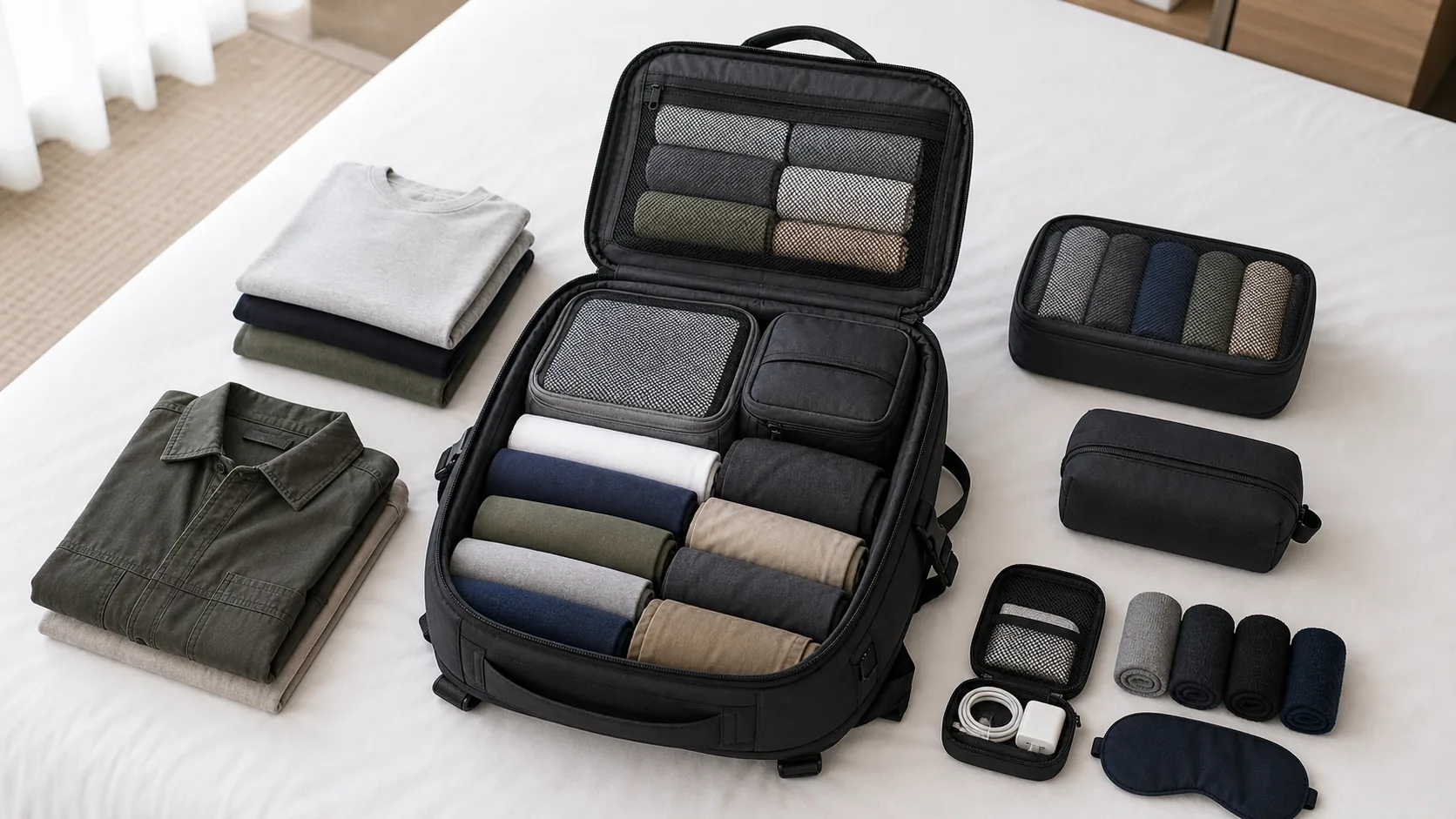
Caring about how to pack clothes in a backpack for travel matters because a better clothing layout improves comfort, saves space, and reduces airport stress. A backpack packed without order can strain zippers, wrinkle shirts, and pull unevenly on your shoulders. A simple clothing system turns the bag into a compact mobile wardrobe.
Can smart packing reduce travel stress?
Yes, smart packing reduces travel stress because you know where each garment and accessory belongs. Here is the thing: the easiest bag to carry is often the easiest bag to search.
- Keep full outfits grouped by use.
- Put airport items near the top.
- Keep laundry away from clean clothes.
What comfort gains come from better clothing placement?
Better clothing placement supports comfort by keeping the load stable and close to your back. Soft clothing can cushion hard items, while dense objects should stay near the spine.
Key Takeaway: A space-saving clothing system helps the backpack feel lighter, cleaner, and easier to control.
| Packing Problem | Common Cause | Better Fix |
|---|---|---|
| Wrinkled shirts | Loose folding | Flat fold structured pieces |
| Bulging pack | Trapped air | Use compression cubes |
| Shoulder strain | Poor weight map | Keep dense items near back |
This balance between space and comfort is the foundation of practical backpack packing.
How to pack clothes in a backpack for travel after editing?
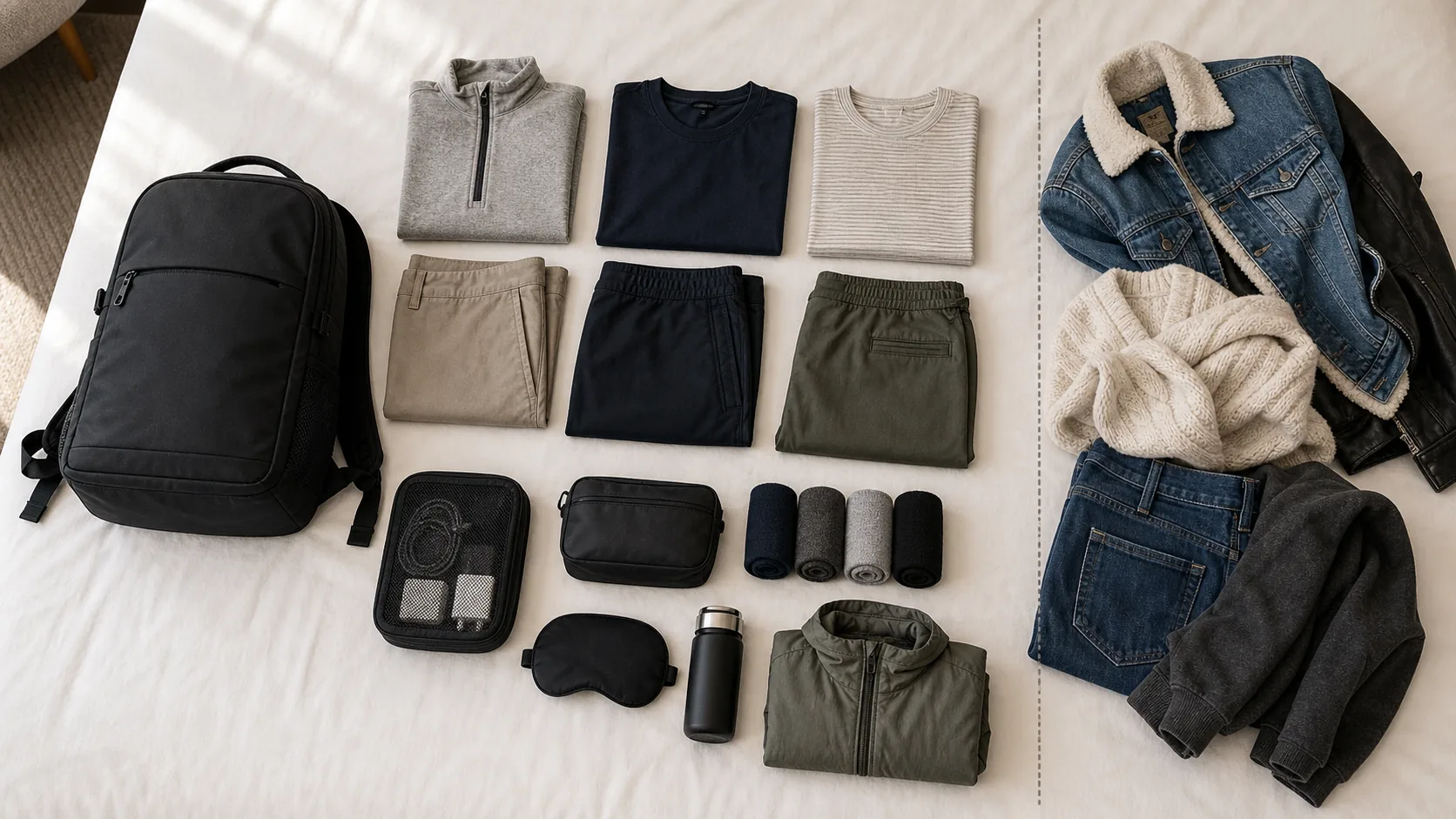
The opening move in how to pack clothes in a backpack for travel is to edit your wardrobe before loading the bag. Lay every garment on a bed or table, then remove duplicates, heavy fabrics, and pieces that do not match the trip. Editing early gives the rest of the packing system room to work.
How should you run a pre-trip edit?
Run a pre-trip edit by grouping clothes by activity and weather. Start here: if one item works for only one rare situation, it probably does not deserve backpack space.
- Choose tops that match all bottoms.
- Limit bulky cotton and denim.
- Wear the heaviest layer during travel.
Which fabrics save the most room?
Lightweight merino blends, nylon, polyester, and stretch wovens usually pack smaller than heavy cotton. They also dry faster, which means you can carry fewer total pieces.
Key Takeaway: Better packing starts with fewer, smarter garments, not stronger compression.
| Fabric | Space Use | Travel Value |
|---|---|---|
| Merino blend | Low | Odor control |
| Nylon or polyester | Low | Fast drying |
| Heavy denim | High | Slow drying |
Choosing compact fabrics gives your backpack more usable volume before any folding method begins.
Should you roll or fold how to pack clothes in a backpack for travel?
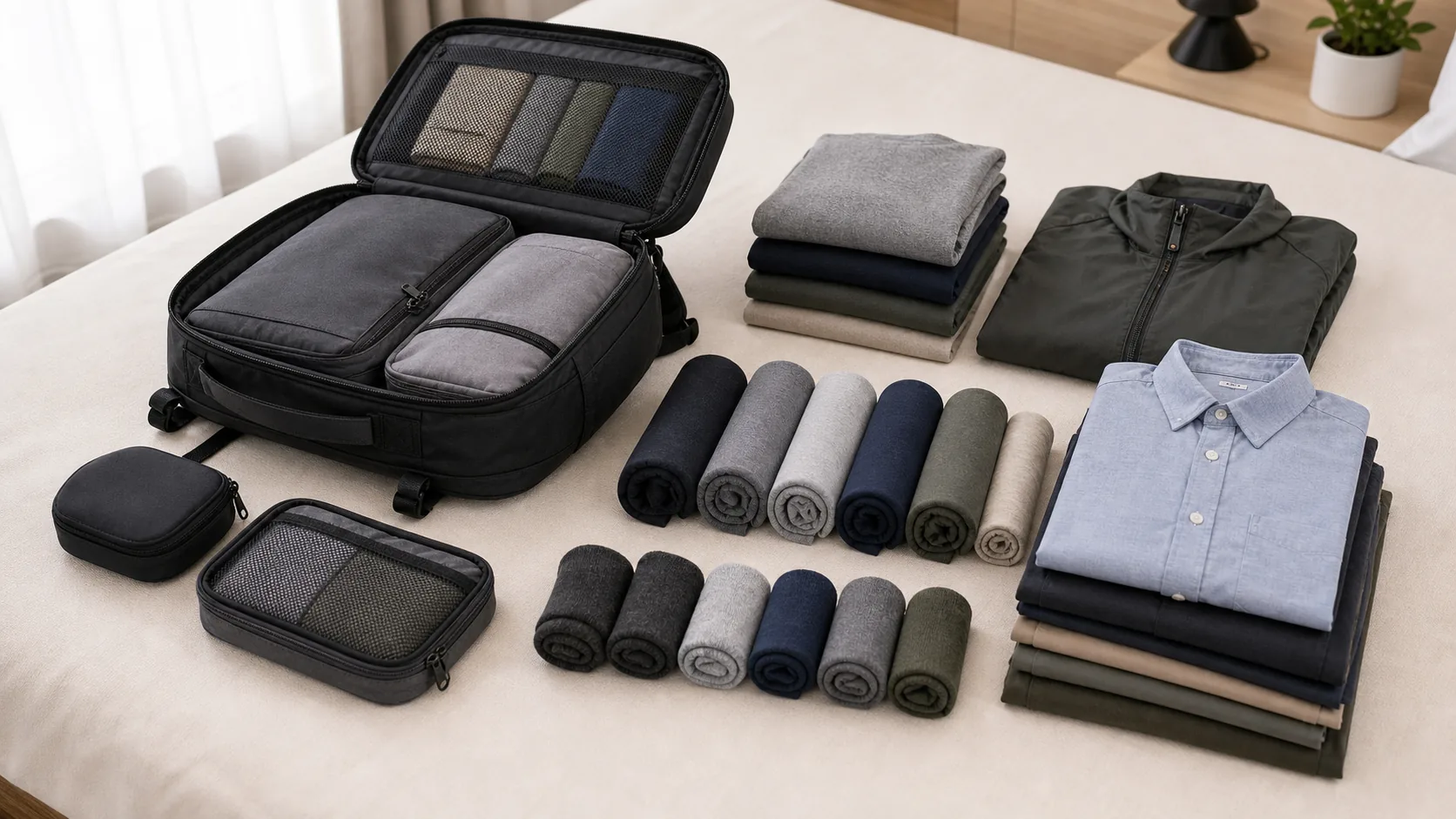
You should roll soft clothing and fold structured clothing when deciding how to pack clothes in a backpack for travel. Rolling works well for T-shirts, socks, underwear, and gym layers because it fills gaps. Flat folding works better for button-down shirts, trousers, and garments that need cleaner lines.
When does rolling work best?
Rolling works best with soft, stretchy fabrics that do not need a sharp crease. The payoff: rolled items fill narrow corners and side gaps that folded stacks often miss.
- Roll T-shirts into tight cylinders.
- Place socks inside shoes.
- Use rolled layers to stabilize cubes.
When should clothes stay flat?
Clothes should stay flat when collars, pleats, or structured seams need protection. Put these pieces near the top of the clothing stack or against a flat back panel.
Key Takeaway: The best method is mixed: roll flexible clothing, fold structured clothing, and let each garment type decide.
| Garment | Best Method | Reason |
|---|---|---|
| T-shirts | Roll | Saves space in gaps |
| Button-down shirts | Flat fold | Reduces collar crush |
| Trousers | Flat fold | Keeps shape cleaner |
This hybrid approach keeps the backpack compact without turning formal pieces into a wrinkled bundle.
How to pack clothes in a backpack for travel on long trips?
For long trips, how to pack clothes in a backpack for travel depends on repeatable outfits, laundry rhythm, and compact clothing modules. A two-week trip and a two-month trip can use the same clothing count if you wash small batches regularly. The backpack should carry a system, not a calendar of outfits.
How many clothing groups do you need?
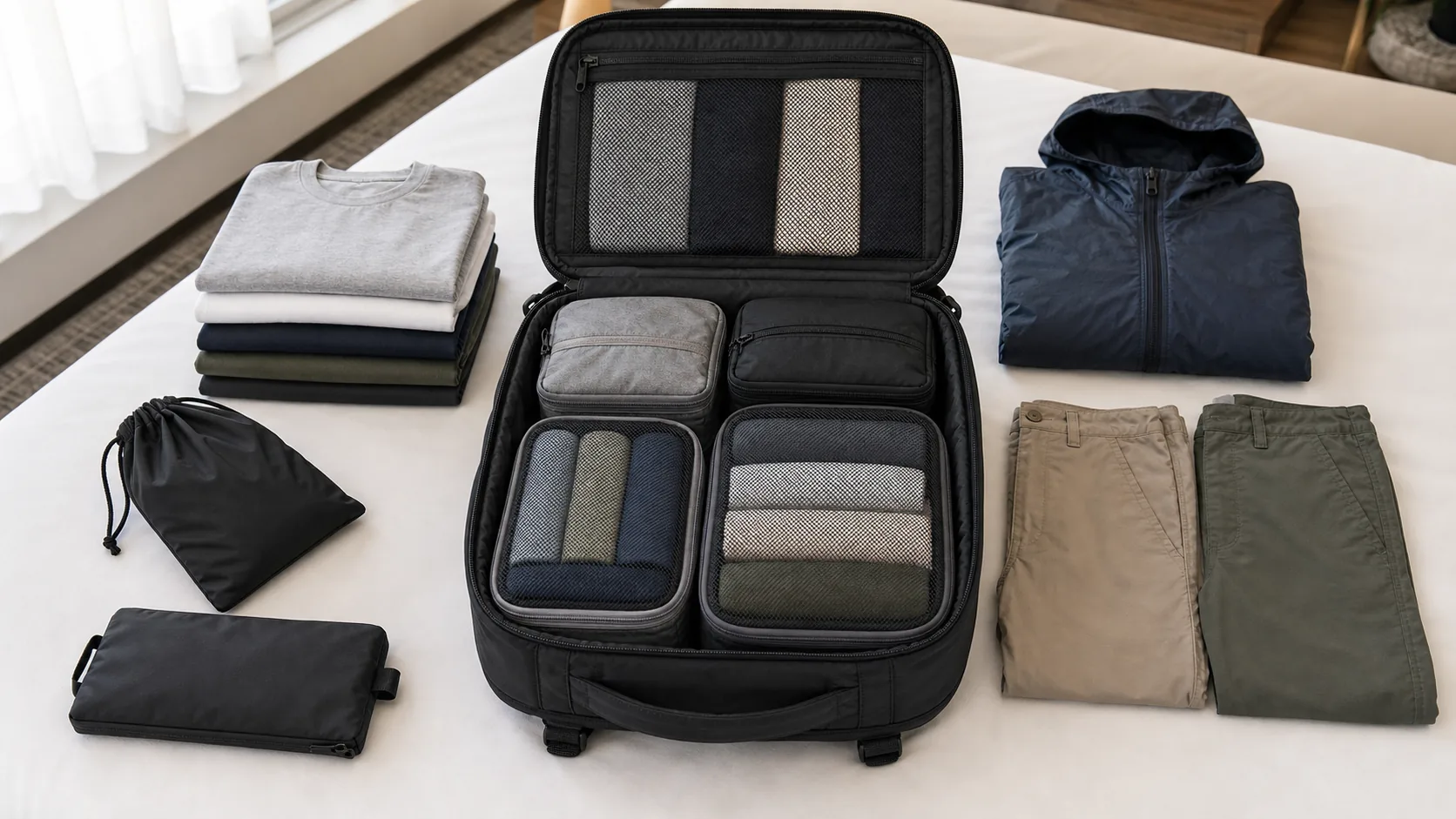
Most long trips need one worn outfit, one clean backup, and one drying or laundry set. Keep it simple: the clothing count should reset through washing, not keep growing.
- Three to five tops.
- Two bottoms.
- One warm layer and one rain layer.
How do quick weekend trips differ?
Weekend trips need fewer layers and more speed. Pack one cube, one toiletry pouch, one tech pouch, and one spare outfit.
Key Takeaway: Long-trip packing works when clothing repeats cleanly and weekend packing works when the system stays small.
| Trip Type | Clothing Strategy | Packing Note |
|---|---|---|
| Weekend | One compact outfit set | Keep one cube |
| Two weeks | Capsule wardrobe | Add laundry rhythm |
| Multi-month | Same count plus washing | Avoid extra backups |
For DTC and marketplace sellers, e-commerce bag projects often need product layouts that support both weekend and long-trip buyers.
How to pack clothes in a backpack for travel to work or gym?
To pack clothes in a backpack for travel to work or gym, separate clean clothing, wet gear, shoes, and electronics into clear modules. Work travel needs wrinkle control and laptop protection, while gym travel needs odor and moisture separation. The same backpack can support both if each zone has a job.
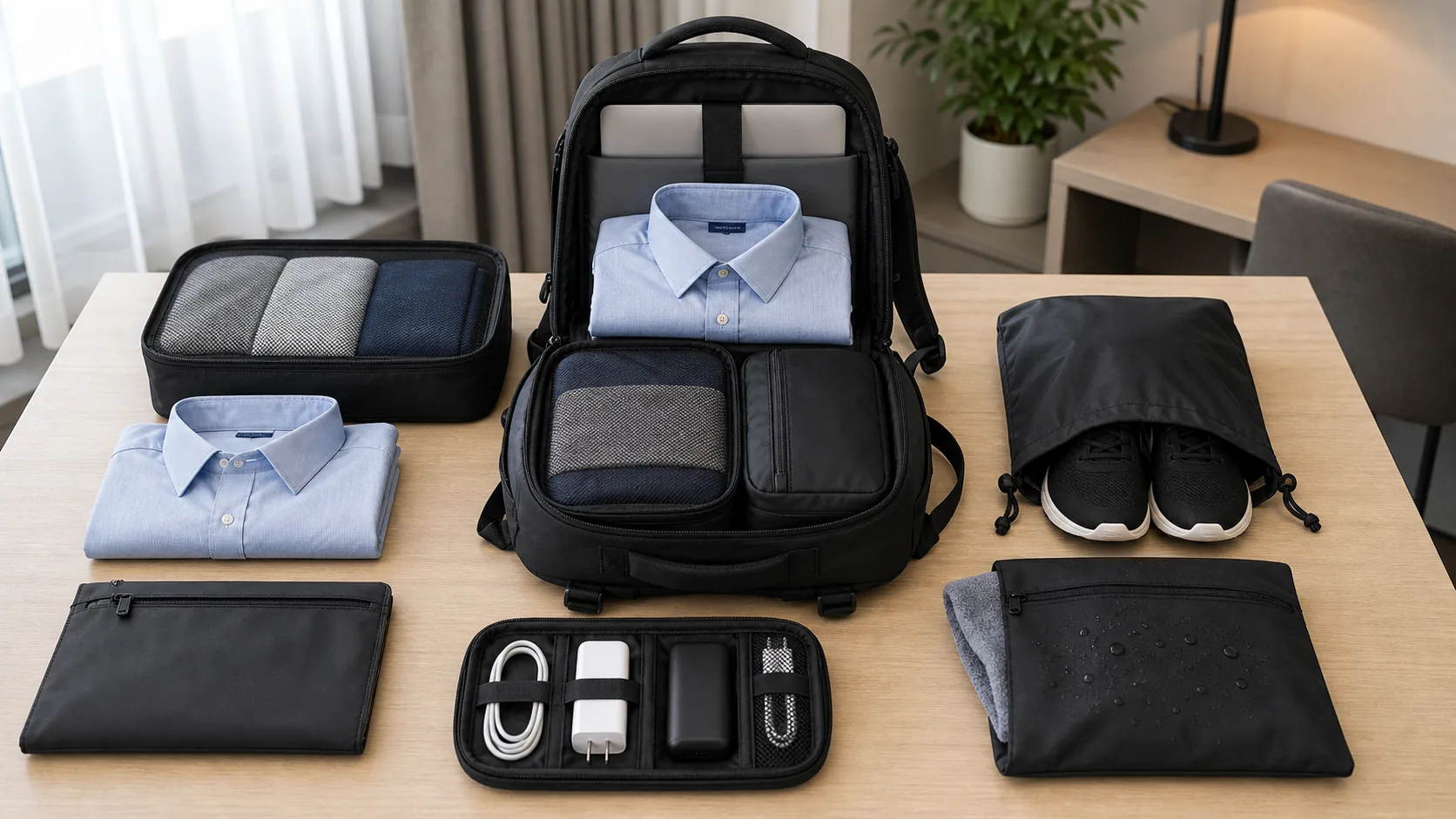
How do you protect work clothes and tech?
Protect work clothes and tech by keeping laptops flat against the back panel and dress items folded near the top. A neat trick: use soft clothing cubes as padding around hard accessories.
- Keep chargers in one tech pouch.
- Place documents in a flat sleeve.
- Avoid packing liquids above electronics.
How do you separate wet gym gear?
Separate wet gym gear with a waterproof pouch or dedicated laundry cube. Shoes should go into a dust bag or shoe pocket so soles never touch clean clothes.
Key Takeaway: Work and gym packing both rely on separation: clean from dirty, dry from wet, and tech from liquids.
| Use Case | Main Risk | Packing Fix |
|---|---|---|
| Work travel | Wrinkles and laptop damage | Flat sleeve and top layer |
| Gym travel | Odor and moisture | Wet/dry pouch |
| Mixed day | Pocket clutter | Separate modules |
For fitness crossover products, OEM gym bags show why wet/dry zones and shoe storage matter to daily users.
How to pack clothes in a backpack for travel by weight?
Packing by weight is central to how to pack clothes in a backpack for travel because placement decides how the load feels on your body. Dense items should sit near the back panel and slightly above the lower back. Soft clothing can wrap around those items to reduce movement.
Why keep heavy items close to your back?
Heavy items belong close to your back because that position keeps the load near your center of gravity. This is where comfort changes fast: a front-heavy pack pulls your shoulders backward.
- Laptop against the back sleeve.
- Toiletry pouch near the middle.
- Shoes low and close to the center.
How do you balance the clothing stack?
Balance the clothing stack by placing firm cubes in the center and soft rolled items along side gaps. Avoid building one heavy side.
Key Takeaway: Good weight placement keeps the backpack stable during airport walks, train transfers, and daily movement.
| Item Type | Best Position | Reason |
|---|---|---|
| Laptop | Back panel | Stable weight |
| Clothing cubes | Main center | Load balance |
| Shoes | Bottom center | Controlled density |
Weight mapping is the part of packing that makes a full backpack feel manageable.
What tools help how to pack clothes in a backpack for travel?
The best tools for how to pack clothes in a backpack for travel are compression cubes, slim pouches, laundry bags, and small dry bags. These tools reduce loose fabric, stop small items from drifting, and make repacking faster. They should support the backpack layout rather than replace good editing.
Why use compression cubes?
Compression cubes help because they flatten clothing into stackable modules. The main benefit: you can remove one clothing category without disturbing the rest of the bag.
- Use one cube for tops and bottoms.
- Use one slim cube for underwear and socks.
- Use one dry pouch for laundry.
Do vacuum bags make sense?
Vacuum bags make sense for bulky winter clothing, but they can create stiff slabs that are hard to fit in small backpacks. Use them only when the trip truly needs heavy layers.
Key Takeaway: Packing tools work best when they create order, not when they tempt you to carry more.
| Tool | Best Use | Watch-Out |
|---|---|---|
| Compression cube | Daily clothing | Do not overstuff |
| Dry bag | Laundry or swimwear | Vent when needed |
| Vacuum bag | Bulky layers | Can become rigid |
For durability-focused product planning, an outdoor durability case shows why zippers, seams, and fabric strength matter when users compress loads often.
What bag works for how to pack clothes in a backpack for travel?
The best bag for how to pack clothes in a backpack for travel has a wide opening, compression straps, a supportive harness, and enough structure to hold clothing modules. A narrow top-loader can work for hiking, but a clamshell or wide U-shaped opening makes clothing access easier. Custom travel backpacks can be designed around cube-friendly dimensions and airport-ready access.
Which opening style helps most?
A clamshell opening helps most because the backpack opens like a suitcase. Small design choice, big result: you can see the clothing stack without digging from the top.
- Wide opening for visual access.
- Mesh pockets for small items.
- Compression straps for depth control.
What materials handle tight packing?
Ripstop nylon, polyester, TPU-coated fabric, and reinforced webbing handle tight packing better than thin fashion fabrics. Strong zippers also matter because compression adds stress.
Key Takeaway: A good backpack makes clothing organization visible, repeatable, and easier to maintain.
| Bag Feature | Packing Benefit | Travel Value |
|---|---|---|
| Clamshell opening | Full view | Faster packing |
| Side compression | Slimmer depth | Better carry-on fit |
| Strong fabric | Handles pressure | Longer service life |
The bag itself should help the packing system instead of fighting it.
How to pack clothes in a backpack for travel with shoes?
To pack clothes in a backpack for travel with shoes, wear the bulkiest pair and pack only one spare pair if needed. Shoes take space, add weight, and can dirty clean clothing. Treat them as heavy gear that needs a clear location, not as loose accessories.
Should you wear bulky layers?
Yes, wear bulky shoes, jackets, and heavy pants during transit when practical. This simple move: frees backpack space before you compress anything.
- Wear boots or heavier sneakers.
- Carry one packable jacket.
- Avoid packing multiple shoe pairs.
Where should packed shoes sit?
Packed shoes should sit at the bottom or side, inside a shoe bag, with socks tucked inside. Keep soles away from clean clothing.
Key Takeaway: Shoes and bulky layers can steal backpack volume, so wear the heaviest pieces and pack only what earns the space.
| Bulky Item | Better Choice | Space Result |
|---|---|---|
| Boots | Wear them | Saves main volume |
| Spare shoes | Pack flats or sandals | Reduces bulk |
| Jacket | Wear or compress lightly | Opens clothing space |
If your brand needs travel backpacks built for clothing cubes, shoe zones, or carry-on organization, contact us today to discuss materials, compartments, samples, and production.
What FAQs clarify how to pack clothes in a backpack for travel?
These FAQs clarify how to pack clothes in a backpack for travel by covering formal wear, jeans, overload warning signs, vacuum bags, and travel document placement. Use them as a final check before closing the bag.
Can I pack suits and formal wear in a backpack without creasing?
Yes, you can pack formal wear if you keep it flat, protected, and away from shoe pressure. Use a garment folder or fold the jacket carefully against the back panel.
What's the best way to roll jeans to save space?
The best way is to fold jeans lengthwise, press out air, and roll from the waistband toward the cuffs. Heavy denim is bulky, so pack only one pair when possible.
How do I know if my backpack is overloaded for travel?
Your backpack is overloaded if zippers strain, seams pull, or you need to lean forward while walking. Remove duplicate clothing and heavy toiletries before forcing the closure.
Can I use vacuum storage bags for a standard carry-on?
Yes, you can use travel vacuum bags, but choose roll-up versions that do not need a pump. Use them for bulky seasonal layers, not everyday clothing.
What's the best pocket placement for passport and travel documents?
The best pocket is a secure, quick-access pocket close to your body. Avoid loose outer pockets in crowded terminals or train stations.