
Washing a sports bag safely involves emptying it, checking the care label and materials, removing loose debris, cleaning by the permitted method, rinsing away residue, and air-drying every compartment. Odor should be removed at its source rather than covered with fragrance: damp clothing, spilled drinks, dirt, and trapped moisture need to leave the bag before a deodorizer can help. For brands developing washable OEM gym bags, cleanable linings, zipper access, and drying behavior matter as much as storage capacity.
Why must you learn how to wash gym bag odors?
Sweat, damp towels, spilled drinks, and organic residue can create odor when they remain in closed compartments. The same sports bag market context explains why odor control and cleanable construction matter to gym members, commuters, and teams. Remove the residue and dry the bag fully before using any deodorizer.
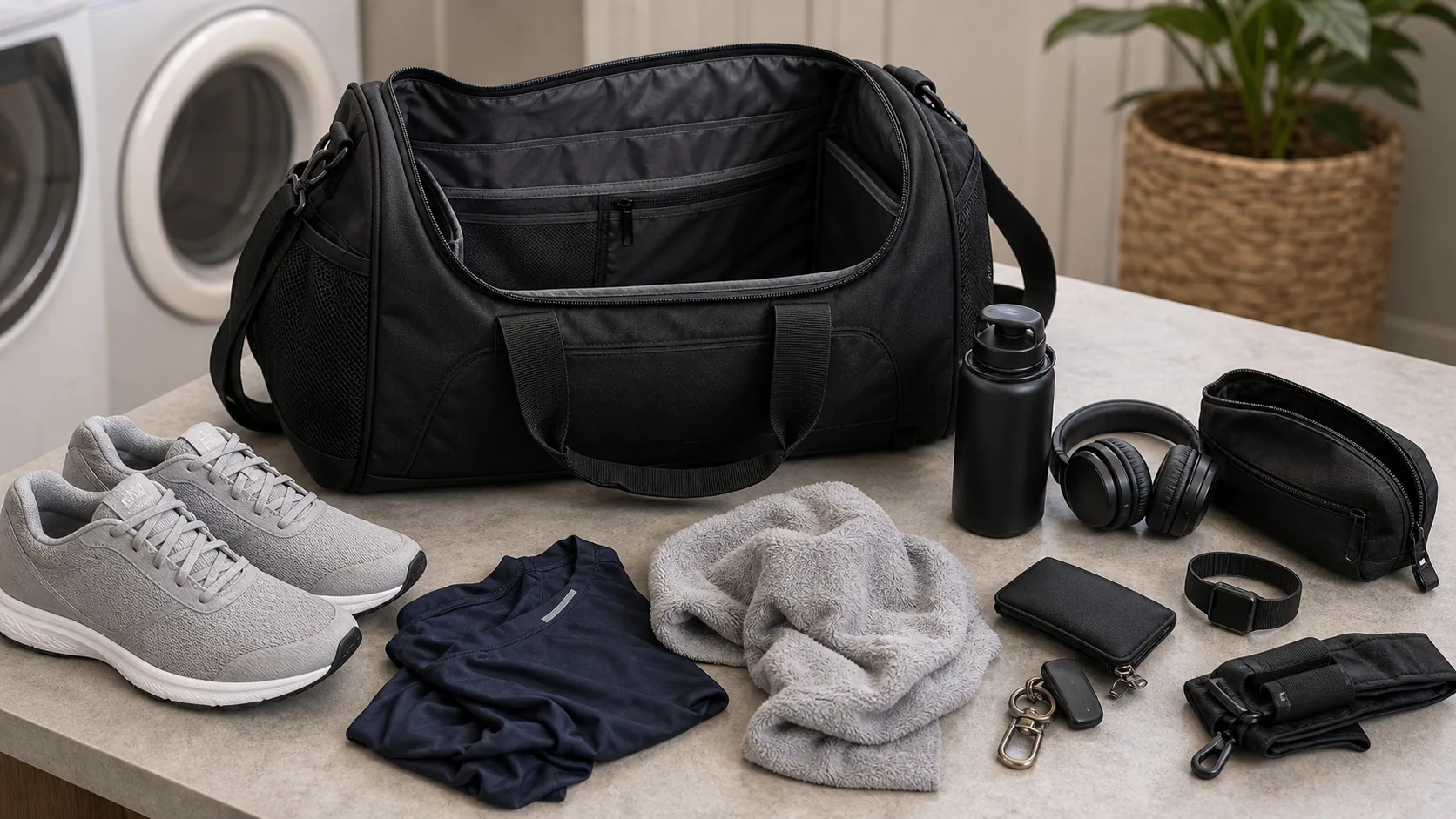
The biology of locker room stink
Moisture from athletic gear can remain in closed compartments. Microorganisms and residue contribute to persistent odor, especially when damp clothing is left in the bag overnight.
Common warning signs include:
- Persistent sour or musty odor.
- Visible spotting around seams or pocket corners.
- Damp lining that remains cool or tacky after unpacking.
How fabrics hold onto sweat
Synthetic linings can retain body oils and residue. Light soil may respond to wiping, while a care-label-approved wash may be needed when odor remains after ventilation and spot cleaning.
- Polyester bonds tightly with sebum.
- Nylon absorbs sweat-induced salts.
- Linings trap residual moisture.
Key Takeaway: Understanding the biological source of the odor allows you to target bacteria rather than just masking the smell with temporary perfume sprays.
| Factor | Impact on Odor | Mitigation Strategy |
|---|---|---|
| Trapped Moisture | High bacterial growth | Air-dry after every workout |
| Synthetic Fibers | High oil absorption | Regular deep laundering |
Fragrance sprays may cover odor without removing the underlying moisture or residue.
Is machine washing safe for how to wash gym bag methods?
Use a washing machine only when the care label permits it and the bag has no rigid frame, cardboard panel, molded insert, or hardware that could be damaged by agitation. When the construction is uncertain, spot cleaning is more conservative than full submersion.
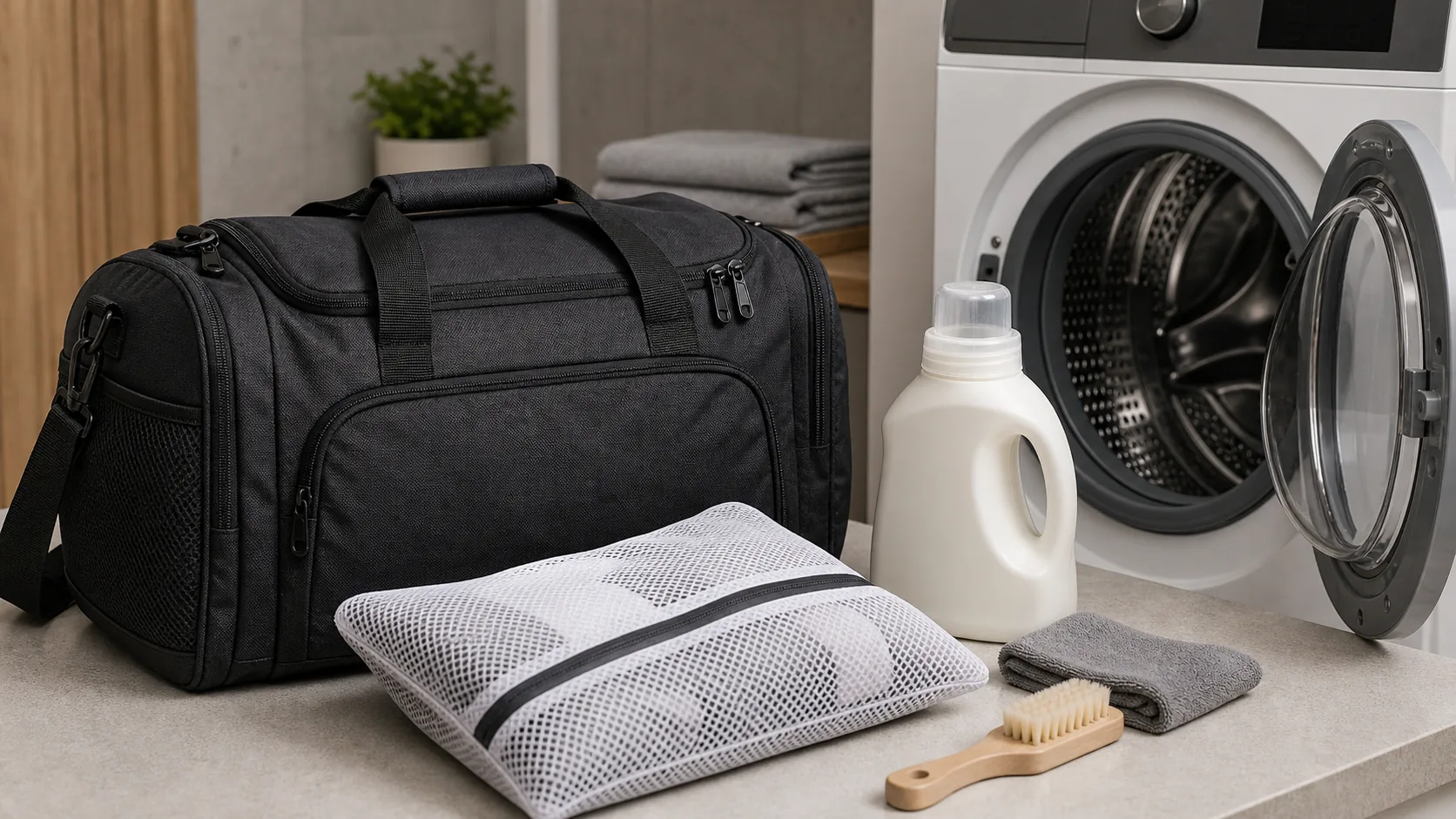
Deciphering fabric care labels
Use a washing machine only when the care label explicitly permits it. Also inspect removable panels, foam, coatings, prints, and hardware before selecting a cycle.
Relevant label instructions include:
- A wash basin icon indicates safe hand-washing.
- Crossed-out machines warn against drum agitation.
- Temperature numbers define the maximum heat limit.
Protecting zippers and hardware
Zipper pulls and buckles can strike the drum or be damaged during a spin cycle. If machine washing is permitted, close fasteners, remove detachable parts, and use a laundry bag when the care instructions allow it.
- Metal zipper pulls can scratch drums.
- Heavy buckles can break off in spins.
- Mesh bags buffer physical impact.
Key Takeaway: The care label and construction determine whether machine washing is appropriate.
| Method | Safety Rating | Best For |
|---|---|---|
| Machine Wash | Moderate | Simple nylon/polyester duffels |
| Hand Wash | Label-dependent | Soft bags that permit submersion |
Inspect hardware and structural panels before choosing any wash method.
How do you hand wash for how to wash gym bag tasks?
If the care label permits submersion, hand wash with lukewarm water, a small amount of mild detergent, and a soft cloth or brush. For structured or coated gym duffel bags, spot cleaning may be more appropriate. Test a hidden area first.
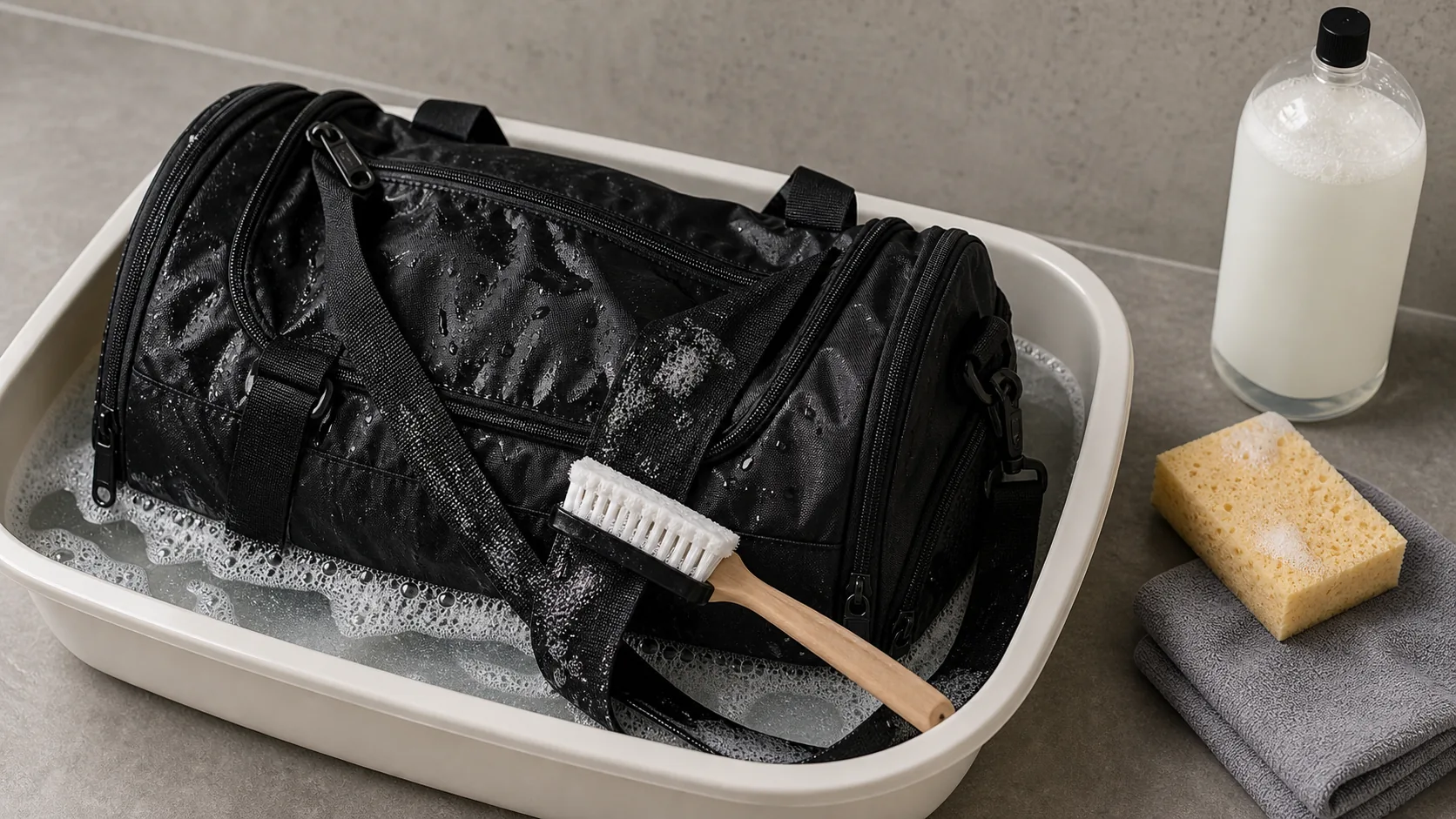
Setting up your cleaning station
Prepare lukewarm water, mild detergent, a soft cloth, and a soft brush. Do not submerge the bag unless its care instructions and construction permit it.
Use these tools:
- Grab a soft sponge or microfiber cloth.
- Prepare a soft-bristled utility brush.
- Keep clean, dry towels nearby for water extraction.
The manual scrubbing technique
Work gently on the bottom, straps, seams, and other contact areas. Rinse or wipe away detergent according to the care label so residue does not remain.
- Use gentle circular motions on seams.
- Focus scrubbing on high-contact straps.
- Rinse with cool, clean water.
Key Takeaway: Manual washing allows you to apply targeted pressure to high-sweat areas without stripping protective fabric finishes.
| Step | Action | Focus Area |
|---|---|---|
| Wet | Soak only if permitted | Loosen dry dirt |
| Scrub | Use soft brush | Straps, corners, and bottom |
This step-by-step hand-wash protocol balances deep soil extraction with fabric preservation.
Which detergents ruin how to wash gym bag materials?
Bleach, fabric softener, solvent cleaners, and some concentrated detergents can affect dyes, coatings, adhesives, or foam. Follow the care label and use a small amount of mild liquid detergent when it is permitted.
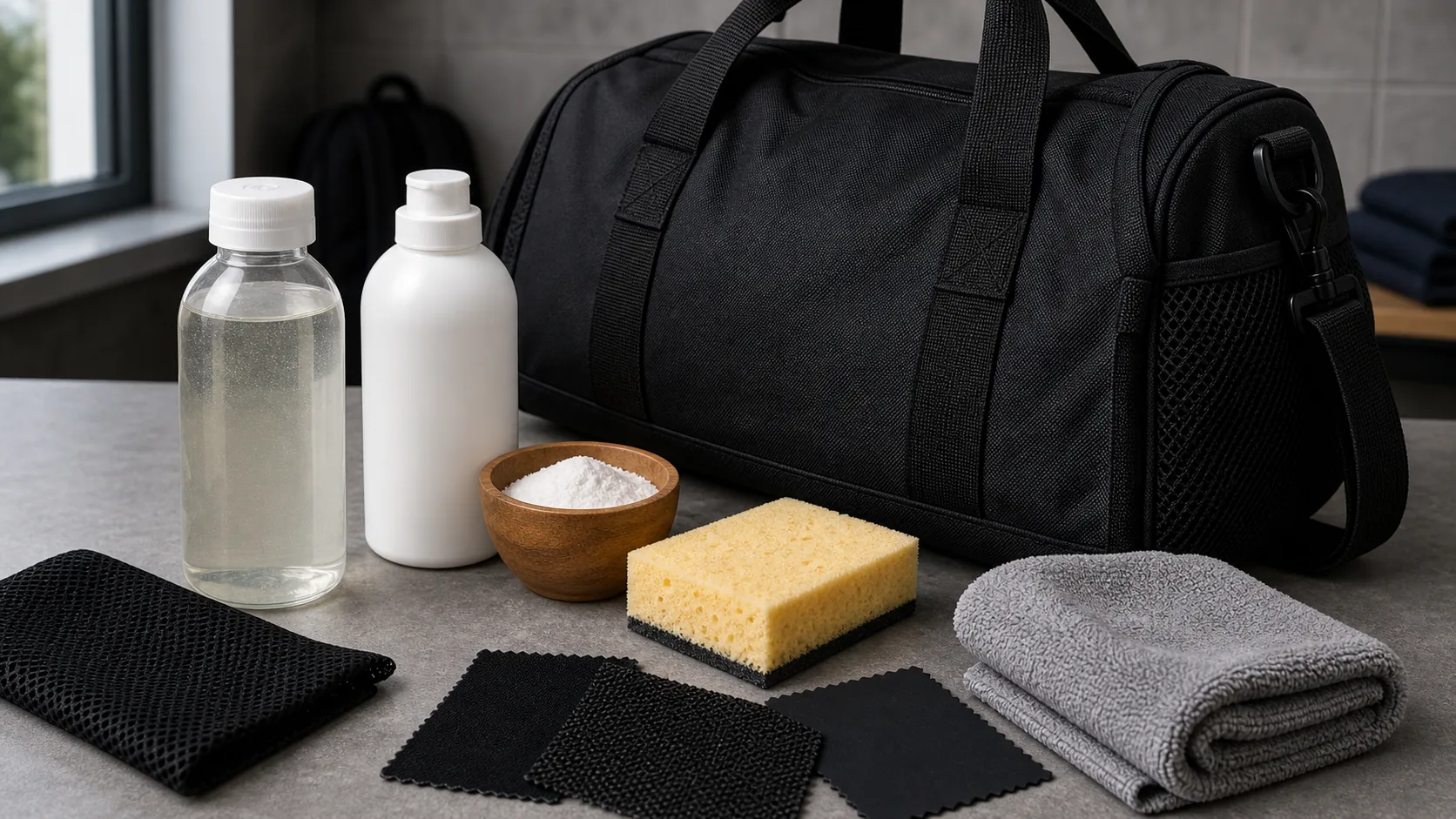
The danger of fabric softeners
Avoid products prohibited by the care label. Test any cleaner on a hidden area because material and coating compatibility varies.
Potential problems include:
- Fabric softeners can leave a coating on fibers.
- Bleach may discolor fabric or affect some components.
- Heavy fragrance can mask odor without removing residue.
Choosing synthetic-safe soaps
A mild liquid detergent is easier to distribute and rinse than a heavy powder. "Baby" or "sport" labels do not guarantee compatibility, so check ingredients and test first.
- Use only the amount needed for the soil level.
- Rinse until no visible foam or slick residue remains.
- Stop if a hidden-area test changes color or finish.
Key Takeaway: Use a care-label-approved cleaner, a small dose, and a hidden-area test.
| Detergent Type | Compatibility | Structural Risk |
|---|---|---|
| Mild Liquid | Label-dependent | Lower risk when tested and rinsed |
| Fabric Softener | Usually avoid | May leave residue on fibers |
Swapping out harsh chemicals for mild alternatives is the simplest way to extend your bag's operational life.
Can you tumble dry during how to wash gym bag care?
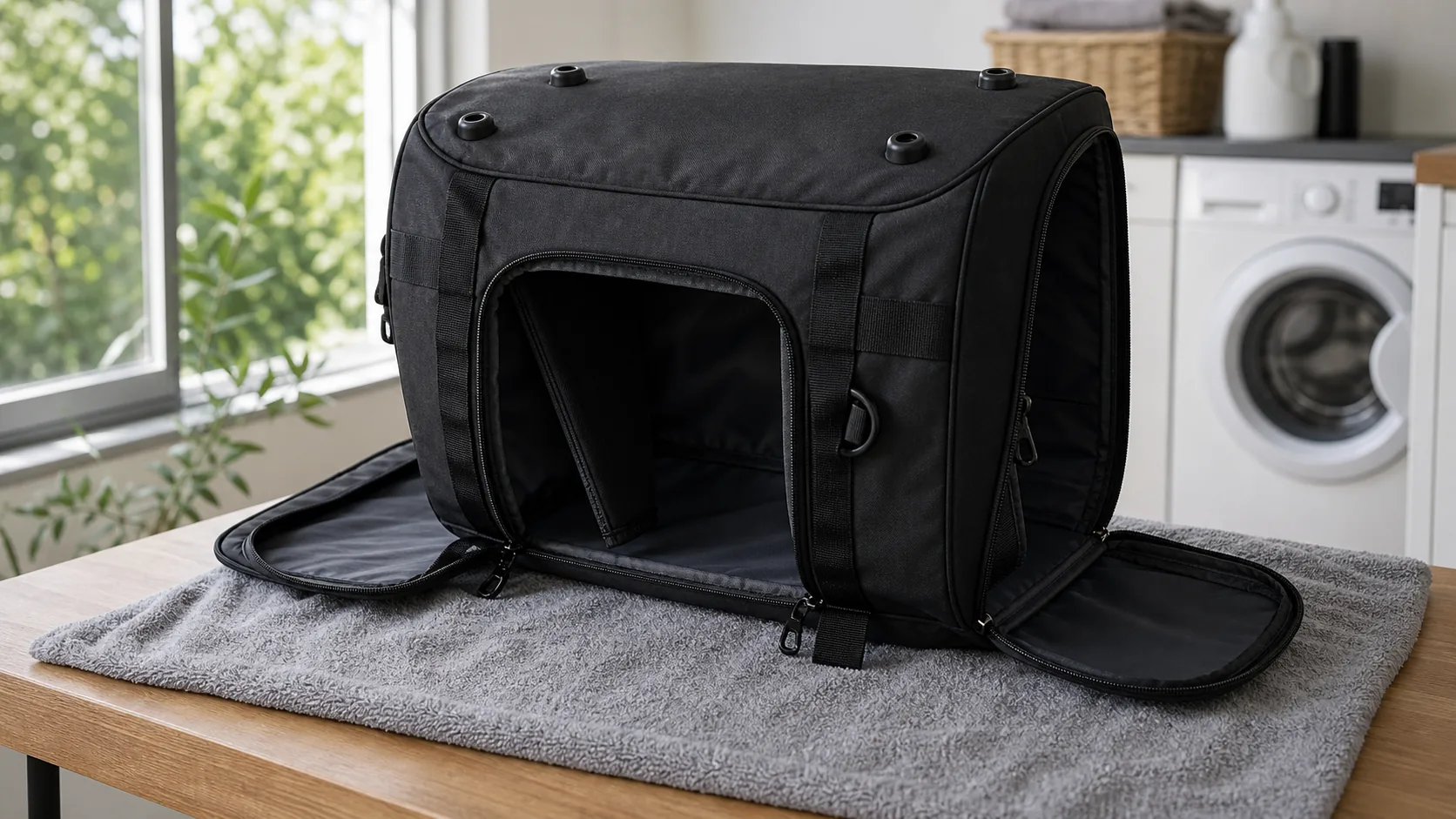
Unless the care label explicitly permits tumble drying, air-dry the bag with every compartment open. Heat and tumbling can affect coatings, foam, adhesives, prints, and plastic hardware. This is also relevant to coated custom travel backpacks.
Why heat is the main enemy
Do not use a dryer unless the care label permits it. Even low heat and tumbling may damage some structured or coated bags.
Possible effects include:
- Adhesives or seam tape may soften or separate.
- Coatings and foam may crack, shrink, or deform.
- Hardware may strike the drum.
The correct way to air dry
Open every zipper and place or hang the bag in a shaded, well-ventilated area. Reposition removable liners and pockets so air reaches seams and corners.
- Hang upside down to drain water.
- Keep all zippers fully opened.
- Avoid direct sunlight to prevent fading.
Key Takeaway: Air-dry until the deepest seams and pocket corners are fully dry.
| Method | Drying Time | Structural Risk |
|---|---|---|
| Machine Dryer | Varies | Use only when label permits |
| Hang Air-Dry | Varies | Lower heat-related risk |
Air-drying upside down utilizes gravity to pull residual moisture away from internal corner pockets.
How do you spot treat how to wash gym bag mildew?
For a small mildew spot, first check the care label and the cleaner manufacturer's instructions. Test a compatible treatment on a hidden area, work in a ventilated place, and avoid mixing cleaners. Large, recurring, or deeply embedded growth may require replacement rather than repeated treatment.
Identifying microbial growth
Isolate the bag from clean clothing and inspect the extent of the growth. Choose a treatment only after checking material compatibility and label directions.
Possible concerns include:
- Staining or changes to coatings and fabric.
- Transfer of residue to clean clothing.
- Persistent musty odor after drying.
Safe mold eradication techniques
If the care instructions permit diluted vinegar, apply it with a soft cloth for the label-directed contact time, then rinse or wipe thoroughly. Do not assume it disinfects every material or organism.
- Dip a clean sponge in diluted vinegar.
- Scrub gently with circular motions.
- Allow the solution to sit for ten minutes.
Key Takeaway: Treat only with a compatible product, never mix cleaners, and replace the bag when growth cannot be removed safely.
| Treatment | Concentration | Contact Time |
|---|---|---|
| White Vinegar | Follow material guidance | Test before use |
| Chlorine Bleach | Not Recommended | Corrodes nylon and polyester |
This target-scrub table emphasizes chemical safety when dealing with sensitive synthetic materials.
Does vinegar actually help how to wash gym bag steps?
Diluted white vinegar may reduce some odors on compatible materials, but it is not suitable for every coating, adhesive, print, or hardware finish. In e-commerce bag projects, clear care instructions matter because odor usually returns when moisture or residue remains.
The science of acetic acid
Vinegar changes surface pH and may help loosen some odor residue. It should not be described as a universal disinfectant or permanent odor cure.
Its practical role is limited:
- It may reduce some alkaline odors.
- It can help loosen light mineral or soap residue.
- Results depend on the source of the odor and the bag material.
How to rinse out vinegar smell
The vinegar scent usually decreases as the bag dries. Wipe or rinse as directed and continue ventilating if any odor remains.
- Wipe surfaces with clean, fresh water.
- Place the bag in a breezy spot.
- Let the natural airflow clear the vinegar scent.
Key Takeaway: Remove the odor source first; use diluted vinegar only when the care guidance permits it.
| Agent | Odor Removal | Fabric Safety |
|---|---|---|
| White Vinegar | Variable | Test for compatibility |
| Scented Spray | Masks odor | May leave fragrance/residue |
Neither vinegar nor fragrance replaces washing and complete drying.
Never combine vinegar with chlorine bleach or another cleaner unless the product label explicitly permits it. Test any treatment on a hidden area first, follow the bag's care instructions, and rinse thoroughly. If visible mold covers a large area, returns after cleaning, or the material cannot be cleaned safely, replacement may be more practical than repeated chemical treatment.
How often should you apply how to wash gym bag steps?
Cleaning frequency depends on use, spills, odor, and the care label. Empty and ventilate the bag after each workout, spot-clean visible soil promptly, and deep-clean when odor or residue remains.
The impact of usage frequency
Set the schedule from actual use rather than a fixed deadline.
Adjusting your cleaning frequency to match your gym schedule prevents deep-seated odor buildup. Use these simple guidelines:
- Frequent use: Inspect weekly and clean when needed.
- Occasional use: Clean visible soil and odor when detected.
- Seasonal storage: Clean before packing away.
Spot-cleaning vs deep washing
Spot cleaning can remove surface grime between full washes and reduces unnecessary submersion.
- Wipe down external panels weekly.
- Focus on high-contact straps and bottoms.
- Use mild soapy water for light spots.
Key Takeaway: Empty, inspect, ventilate, and clean according to actual soil and odor.
| Frequency | Action Type | Intended Outcome |
|---|---|---|
| Post-Workout | Shake out and ventilate | Prevents immediate moisture buildup |
| As needed | Label-approved full wash | Removes persistent soil and odor |
This routine reduces retained moisture and unnecessary wash cycles.
How do you manage how to wash gym bag custom fabrics?
Mixed-material bags should be cleaned according to the least tolerant component. A durability-focused backpack project shows why fabric, coating, adhesive, foam, print, and hardware need to be considered together. Avoid wringing neoprene, use gentle wiping on molded EVA, and check the backing before scrubbing woven panels.
Handling molded EVA and neoprene
Neoprene, molded EVA, and coated woven fabrics respond differently to water, cleaners, heat, and pressure.
Use these conservative handling rules:
- Never squeeze or wring out neoprene panels.
- Avoid harsh scrubbing on EVA surfaces.
- Use cold water to prevent heat-related glue failure.
Cleaning high-density ballistic nylon
A heavy woven face fabric may tolerate light brushing, but the backing, coating, and seam construction may be less tolerant. Start with a soft brush and increase pressure only if the care guidance permits it.
- Start with a soft nylon brush.
- Use a tested mild detergent.
- Hang dry to protect polyurethane backing.
Key Takeaway: Base the cleaning method on every material in the bag, including hidden stiffeners and coatings.
| Material | Best Cleaning Agent | Cleaning Method |
|---|---|---|
| Molded EVA | Water & mild dish soap | Wipe down only; no submersion |
| Ballistic Nylon | Sport detergent | Gentle nylon bristle scrub |
Matching the method to the materials reduces avoidable damage; cleaning cannot restore normal wear or existing coating failure.
How do you keep fresh between how to wash gym bag cycles?
Remove damp contents and ventilate every compartment after use. An odor or moisture absorber may help only after the bag is clean and fully dry.
The power of instant ventilation
Keeping your sports bag fresh between wash cycles requires immediate ventilation after use and an odor-control step only after the interior is clean and fully dry. Remove clothing, towels, wraps, and shoes as soon as possible, wipe spills, and leave every compartment open until seams and pocket corners no longer feel damp.
Useful ventilation steps include:
- Hang the empty bag near a window.
- Pull out internal liners to maximize airflow.
- Never store damp clothes inside the bag.
DIY moisture absorber pouches
A breathable pouch containing baking soda or activated charcoal can help adsorb residual odor in a dry bag. A reusable silica-gel pouch can help manage humidity when it is kept intact and regenerated or replaced according to its instructions. Keep loose powders away from zippers, coatings, and electronics.
- Use a sealed breathable pouch rather than sprinkling powder into the lining.
- Remove or replace saturated desiccant according to the product instructions.
- Skip dryer sheets, perfume sprays, and essential oils that only mask odor or may stain materials.
Key Takeaway: Prompt unpacking and complete drying reduce the conditions that cause odor.
| Prevention Tool | Function | Lifespan |
|---|---|---|
| Baking Soda or Charcoal Pouch | Adsorbs residual odor | Replace when no longer effective |
| Silica-Gel Pouch | Helps manage humidity | Regenerate or replace as directed |
Use intact absorber pouches only as directed and keep them away from children, pets, food, and loose bag hardware.
Safe cleaning starts with the care label: empty the bag, remove residue, use a compatible method, rinse when required, and dry every compartment. For a custom athletic bag project, specify cleanable materials, accessible pocket corners, removable components, and care instructions during development. To discuss those requirements, contact us.
FAQ
Can I put my sports bag in the washing machine if it has a water-resistant coating?
Check the care label. Agitation may affect PU or TPE coatings, seam tape, foam, and printed details, so use machine washing only when explicitly permitted. Otherwise, follow the approved hand-wash or spot-clean method.
What's the best way to remove sticky substance spills like protein shakes?
Blot fresh spills first. Test mild dish soap on a hidden area, then work from the edge of the stain inward with lukewarm water and a soft cloth. Do not soak a coated or structured panel unless the care instructions permit it.
How do I know if my bag can be safely hand-washed?
Check for a hand-wash symbol on the care label. Without a label, material names alone are not enough because coatings, adhesives, foam, prints, cardboard, and internal stiffeners may react differently. Use spot cleaning or ask the manufacturer when the construction is uncertain.
Can I use rubbing alcohol to sanitize the inside of my bag quickly?
Use isopropyl alcohol only when the manufacturer permits it. It can affect dyes, prints, coatings, and adhesives, and spraying does not guarantee disinfection unless concentration, wet contact time, coverage, and surface compatibility are controlled.
How do I know if my bag is dry enough to pack away?
Check the bottom seams, foam, and interior pocket corners. Continue air-drying if any area feels damp or smells musty; drying time varies with construction, airflow, humidity, and temperature.