
If you are asking "can a duffel bag be a carry on," an empty measurement can mislead once shoes, pockets, handles, and rigid contents change its shape.
Yes, a duffel or gym bag can be a carry-on when its packed external dimensions and weight meet the operating airline's current allowance and its contents meet applicable security rules. Bag style and liter capacity alone do not determine eligibility.
Check the carrier, pack the real load, measure the furthest points, and confirm the contents before traveling.
Can a Duffel Bag Be a Carry On?
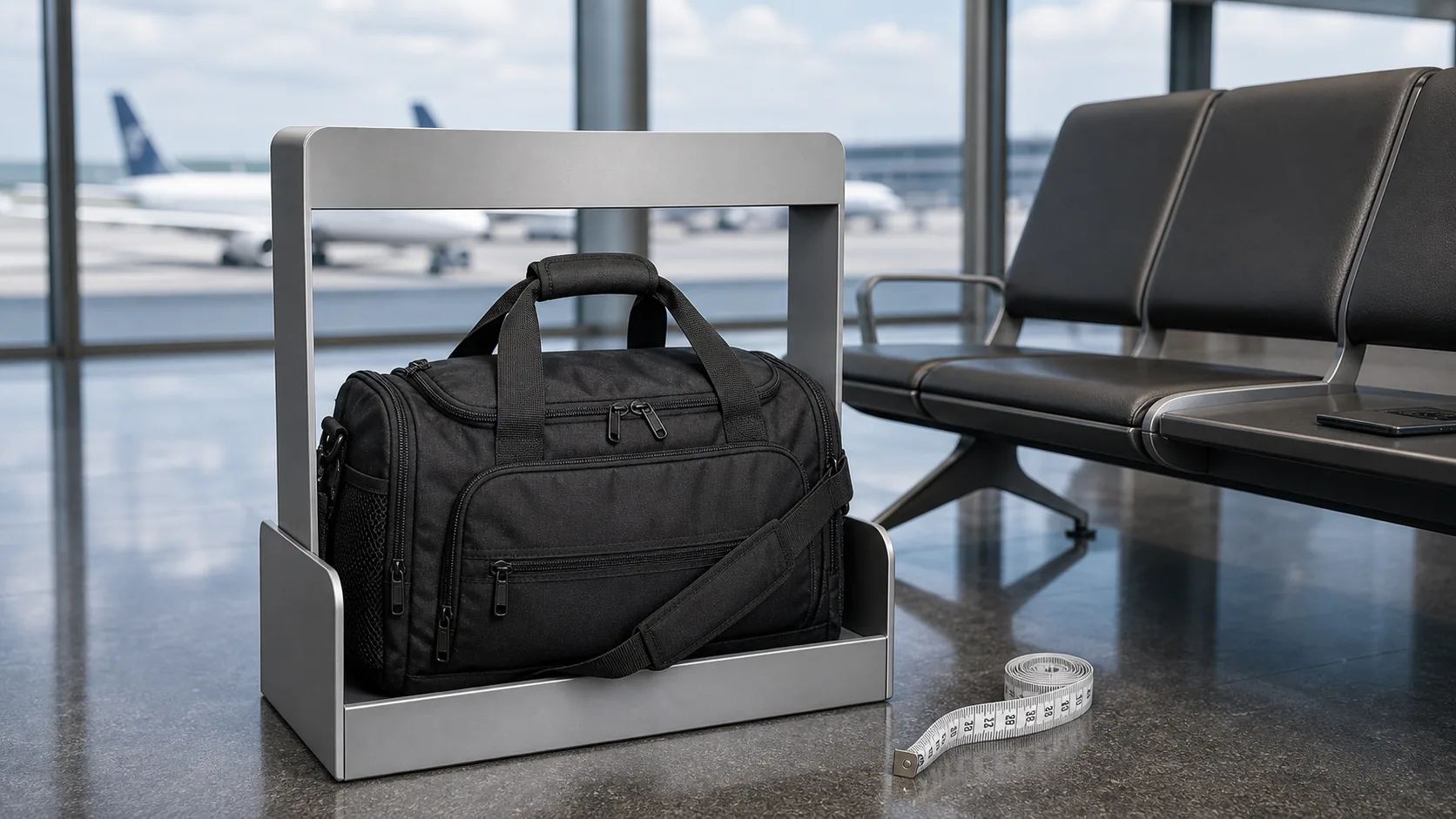
A duffel bag, duffle bag, or gym bag can serve as an overhead carry-on if the ticket includes that allowance and the packed bag satisfies the operating airline's current rules. The label on the product is not the deciding field.
Evaluate five separate conditions:
- the number and type of bags included with the fare;
- the packed outside length, width, and height;
- any weight limit the airline applies;
- the contents under TSA, FAA, and airline restrictions; and
- the available cabin space on the specific flight.
Soft construction creates both flexibility and uncertainty. A fabric body may compress when the contents allow, but shoes, electronics, wheels, a structured base, full pockets, and overpacking can hold the bag beyond the permitted envelope.
This article covers an overhead carry-on. The separate guide to whether a gym bag can be a personal item owns the under-seat question and its smaller limits.
Who Sets Carry-On Size and Security Rules?
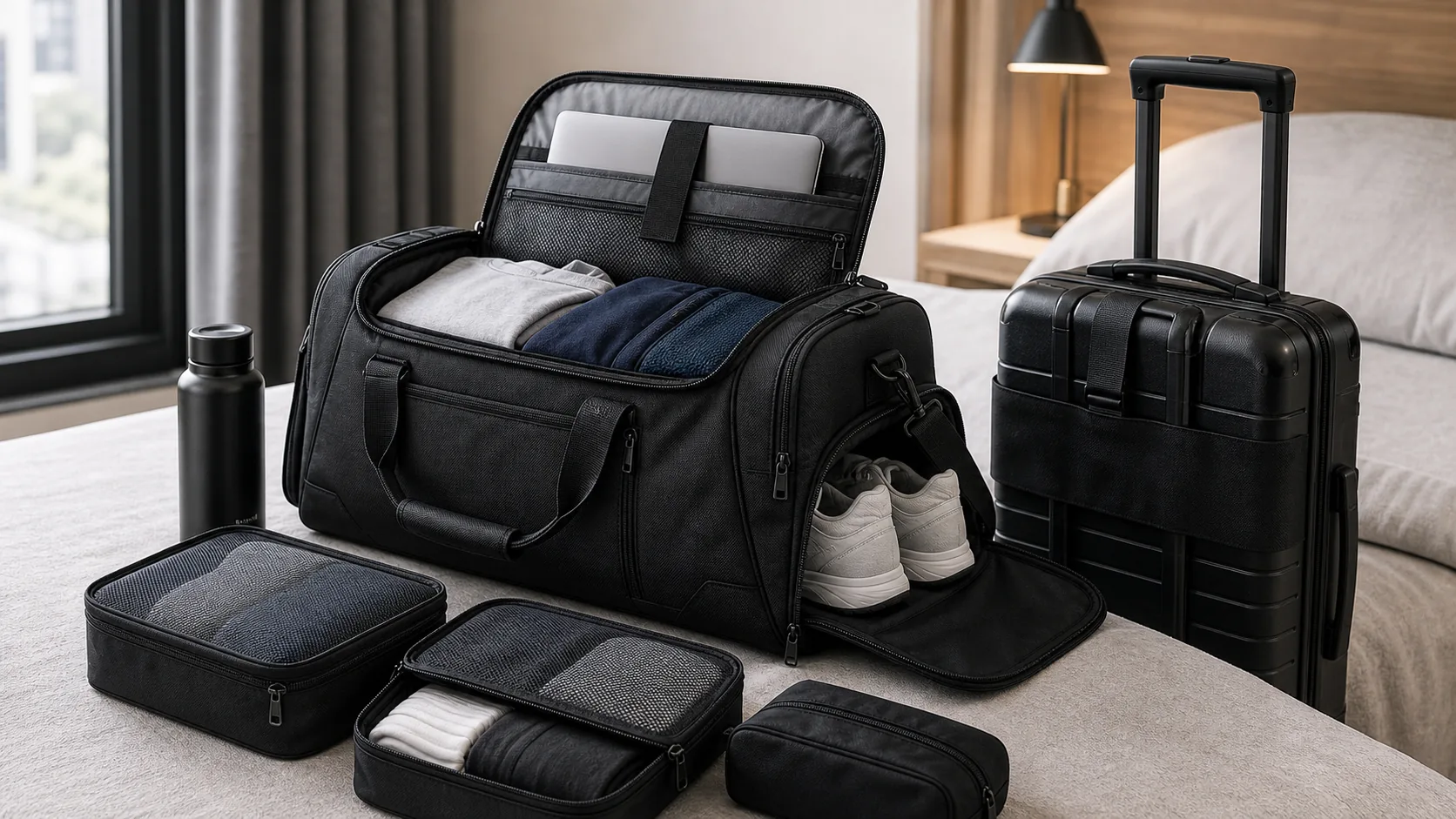
The airline and security authorities answer different questions.
- The operating airline publishes the baggage allowance, maximum dimensions, applicable weight limits, fees, and flight-specific carriage conditions.
- TSA screens the bag's contents at US security checkpoints. Its current travel tips state the 3-1-1 limits for liquids, gels, aerosols, creams, and pastes in carry-on baggage.
- FAA guidance covers aviation-safety considerations and tells passengers to check the airline's limits before packing. The FAA carry-on guidance also notes that some aircraft have limited overhead space and an airline may require bags to be checked.
Passing security does not confirm that a duffel meets the airline's dimensions. Meeting a carrier's dimensions does not make restricted contents acceptable at screening.
If a bag is gate-checked, the FAA advises removing spare batteries and lithium-battery-powered devices and keeping them in the cabin. Pack those items where they can be reached without emptying the duffel.
How Do You Check the Right Airline Limit?
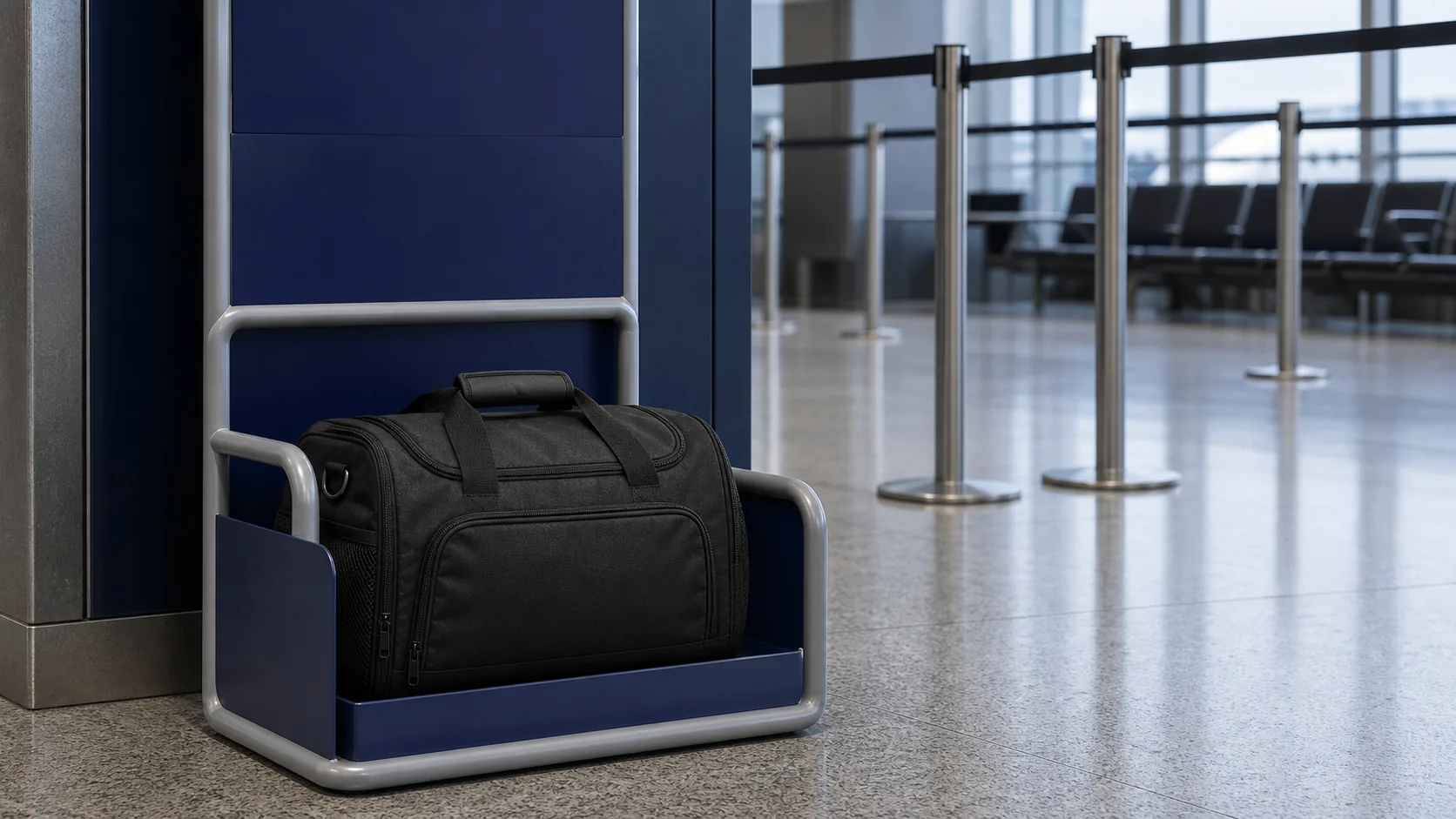
Use the operating carrier's official baggage page for the date of travel. On a codeshare or partner itinerary, the airline named on the ticket may not operate every segment.
Check these fields before comparing a bag with a limit:
- operating carrier for each flight segment;
- fare or ticket product and included bag count;
- route and any cabin-specific rule;
- listed length, width, and height order;
- whether handles, wheels, pockets, or attachments are included;
- any weight limit;
- aircraft or partner-flight exception; and
- date the official page was checked.
Two US examples, checked September 15, 2026, show why one universal table is unsafe:
| Operating airline | Current published overhead carry-on example | Important condition |
|---|---|---|
| Delta | Maximum 22 × 14 × 9 in; 45 linear in | Dimensions include handles and wheels; partner guidelines and limited cabin space can differ |
| Southwest | Maximum 24 × 16 × 10 in | Wheels, handles, and attachments count; partner-airline rules may differ |
These are dated examples, not a US standard. Recheck the operating carrier before every trip, including return and connecting flights.
How Should You Measure a Soft-Sided Duffel?
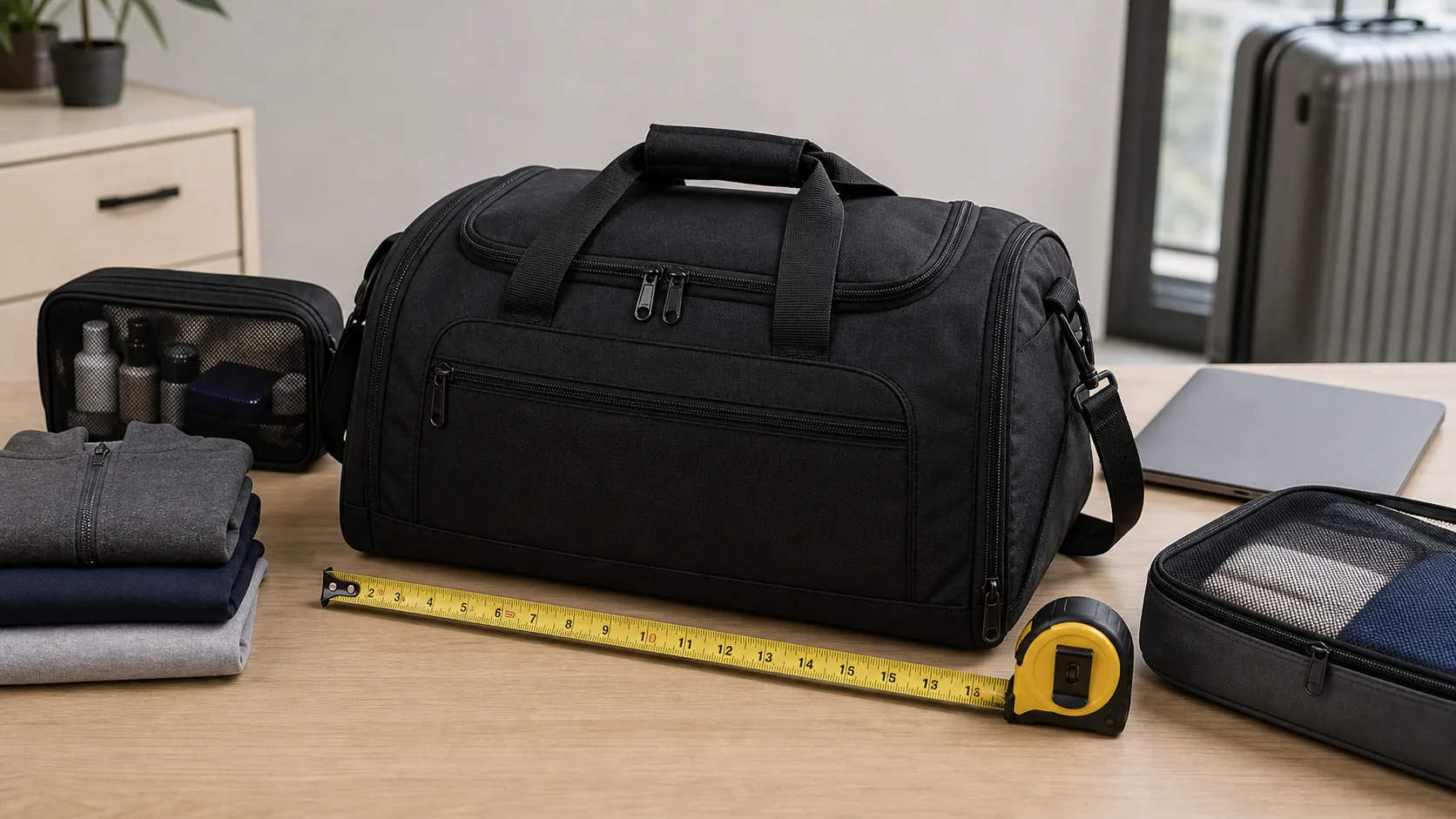
Measure the duffel in the state the airline will evaluate: closed and packed with the intended load.
- Pack the representative contents. Include the clothing, footwear, equipment, and accessories planned for the trip.
- Close every compartment. Set expansion panels and compression straps to the state that will be used at boarding.
- Place the bag on a level surface. Let the load settle without pressing the bag smaller by hand.
- Measure the furthest external points. Record end-to-end length, widest width, and base-to-highest-point height.
- Include protrusions. Full pockets, fixed handles, wheels, feet, hardware, and non-stowable attachments belong inside the measured envelope.
- Stow loose straps. The FAA advises tucking straps to reduce handling and tripping hazards. Remeasure after placing removable or stowable parts in their travel position.
- Record the state. Save the load, measurement points, units, bag configuration, and result with the sample or trip record.
An empty product-page measurement and a packed measurement answer different questions. For a product specification, dimensions also need a target, measurement method, and project tolerance before they can support sample acceptance.
Does Duffel Capacity in Liters Predict Carry-On Fit?
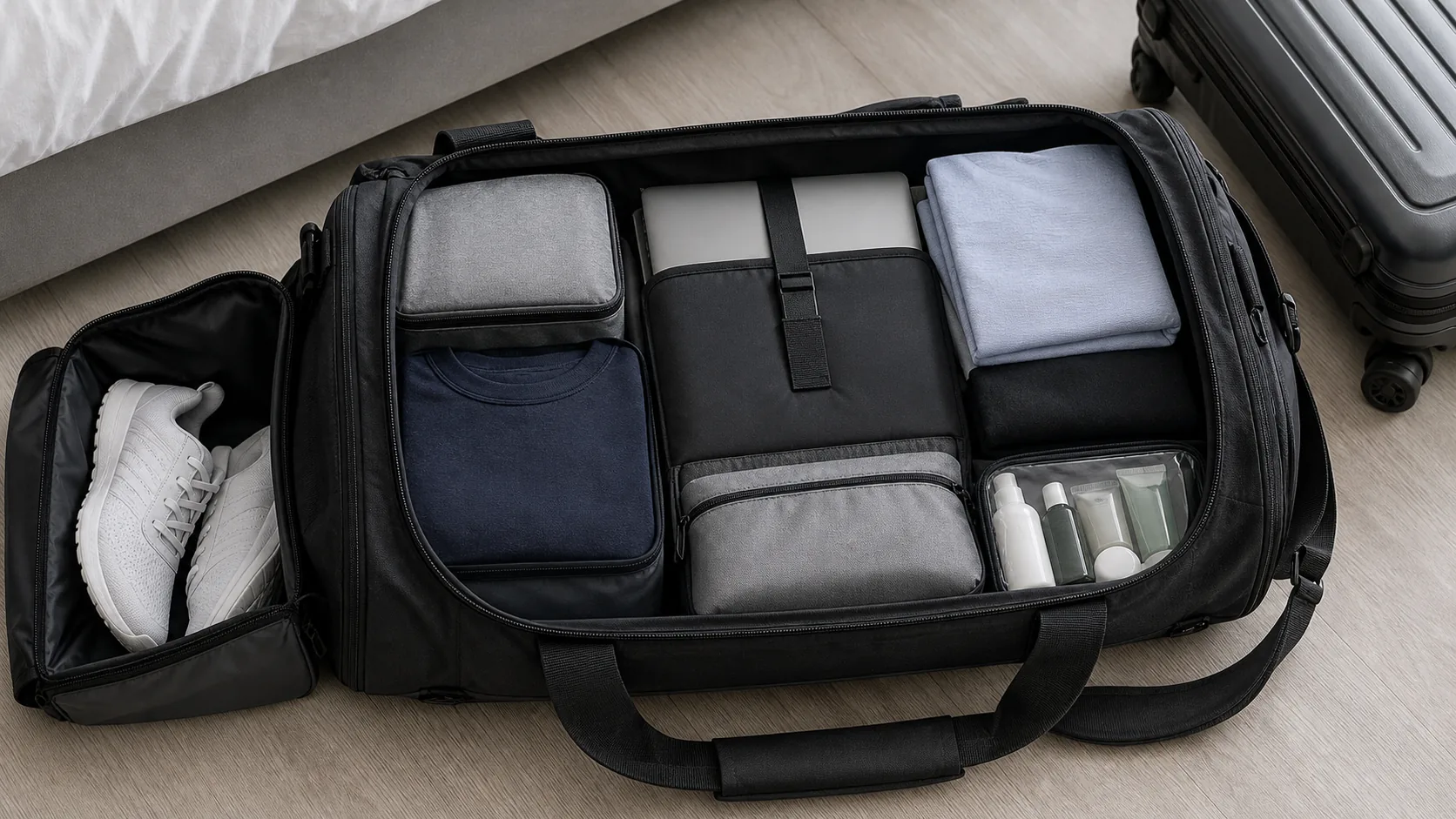
No. Liters describe volume, while airlines publish an external dimensional envelope. Bags with similar capacity can have different length, width, and depth because of their proportions, taper, pockets, padding, base, and loading pattern.
Outside length × width × height is also a bounding-box calculation, not a direct measure of usable internal volume. A comparable capacity claim needs a stated method, loading rule, and endpoint.
A 60L label therefore cannot answer whether the duffel is a carry-on. Treat that rating as a reason to check the packed dimensions carefully. A lightly loaded soft bag may occupy less space than its fully expanded shape, while rigid or bulky contents can prevent compression. The operating carrier's envelope and the actual packed bag decide.
Avoid universal statements such as "40L is carry-on size" or "60L must be checked." Neither connects the capacity rating to a specific geometry, loading state, airline, or date.
How Do Soft Duffels Compare with Rigid Luggage, and How Should You Pack Them?
A soft duffel can collapse for storage and may adjust to a load that compresses. A rigid case keeps a more predictable external shape and protects some contents through its shell. Compare actual products rather than assigning a universal winner.
| Decision | Soft duffel | Rigid rolling case |
|---|---|---|
| Packed shape | Changes with load and pocket fill | More stable around the shell |
| Compression | Possible where contents and structure allow | Limited by the rigid body and wheelbase |
| Carry method | Hand, shoulder, or convertible options | Rolling plus fixed handles |
| External components | Straps and filled pockets may protrude | Wheels and telescoping-handle structure remain fixed |
| Protection | Depends on padding, structure, and packing | Shell adds structure, but protection still depends on the complete product |
| Measurement risk | Empty size can understate the packed outline | Empty outline is more predictable, though external components still count |
Pack from the airline envelope rather than from the bag's maximum capacity:
- place shoes, electronics, and other rigid items where they do not create the widest bulge;
- keep external pockets flat enough to remain inside the target dimensions;
- use packing cubes for organization only, without assuming they reduce the outside size;
- close and adjust compression features without forcing the bag into an unstable shape;
- stow detachable or loose straps;
- remeasure after the final item is packed; and
- move or remove contents if the result exceeds the current limit.
The choice between hand, shoulder, backpack, and wheeled carry affects the trip but does not change the airline envelope. The duffel bag versus backpack guide covers that separate comparison.
Which Features Matter in a Carry-On-Oriented Duffel?
Every added feature affects space, structure, access, or handling. Specify the tradeoff instead of adding features by category convention.
- Target packed dimensions: name the intended carrier envelope and keep the measurement method and tolerance with the specification.
- Opening: define straight zip, U-shaped panel, clamshell-style access, or another arrangement around the packing sequence.
- Base: state the required shape support, abrasion exposure, and compression behavior.
- Compression: identify which loaded area the straps control and verify the closed shape.
- Strap stowage: show where shoulder or backpack straps go and include the stowed configuration in dimensional checks.
- Wheels and handles: treat fixed components as part of the minimum external footprint.
- Quick access: size document, liquid-pouch, and electronics pockets from the actual contents.
- Shoe or wet-item separation: state the item fit, lining, ventilation, cleanability, and any containment requirement separately. A separate compartment does not itself prove sealing, odor control, hygiene, or washability.
- Closure and hardware: verify access and retention with the representative packed load.
- Gate-check contingency: make batteries and electronics removable without unpacking the whole bag, and review how the product handles cargo transfer.
Brands building this product family can use custom gym bag development to move from a target envelope into a controlled pattern and sample.
How Should Brands Validate a Carry-On Duffel Sample?
Validate a declared product claim, not "airline compliance" in general.
- Select the target rule. Record carrier, allowance, dimensions, inclusion rule, exceptions, source URL, and check date.
- Identify the sample. Record sample version, materials, structure, pockets, straps, wheels, and expansion state.
- Define the representative load. List contents, mass, distribution, and which pockets are filled.
- Measure the packed outline. Use the same axes, points, units, and inclusion rules as the target record.
- Check pocket bulge and fixed parts. Confirm the filled side pockets, handles, feet, and wheels remain inside the target envelope.
- Evaluate carrying components. Check handles, straps, hardware, anchors, seams, and base with the declared load and movement.
- Evaluate access. Confirm the packed bag opens, closes, and provides the claimed access without changing the approved dimensions.
- Review the wording. State the dated envelope used for validation. Do not imply approval by every airline, route, aircraft, or security authority.
The record should identify the product configuration, load, state, conditions, endpoint, result, and acceptance criterion. A different material, base, pocket, wheel system, or pattern revision may require the affected checks to be repeated.
When those fields are ready, a custom bag manufacturing quotation can use the same assumptions as the sample and validation plan.
Frequently Asked Questions (FAQ)
Is a duffel bag the same as a gym bag for carry-on purposes?
The name does not decide. Duffel, duffle, and gym bag may describe overlapping soft-bag formats; the ticket allowance, packed dimensions, weight, contents, and flight conditions determine carry-on eligibility.
Can a 60L duffel bag be a carry-on?
Liters alone cannot answer. Measure the actual packed bag and compare all three external dimensions and any weight limit with the operating airline's current rule.
Can a rolling duffel be a carry-on?
Yes, if the packed dimensions and weight comply. Include the wheels, fixed handles, feet, full pockets, and other attachments in the measurement because they reduce how far the bag can compress.
What is the difference between a carry-on and a personal item?
The storage location and airline limit differ. An overhead carry-on uses the carrier's cabin-bag allowance; a personal item must fit fully under the seat and follows its own rule.
Does TSA approve the size of a duffel bag?
No TSA product-size approval is established by the cited guidance. TSA screens contents at US checkpoints, while the operating airline publishes and applies its baggage-size rules.
Conclusion
First identify the operating airline's current allowance. Then pack the real load, measure the closed bag at its furthest points, check its weight and contents, and verify the carrier again before travel.
For product development, record the dated target envelope, packed configuration, measurement method, tolerance, representative load, and validation result. That evidence supports a specific claim without presenting one duffel as universally accepted.