
The best gym bag is the one that fits the user's workout, commute, locker, and actual gear list. A structured medium duffel with a separate shoe compartment works for many people, while cyclists and transit commuters may prefer a backpack and studio users may need only a compact tote or sling. Good separation helps keep damp sportswear and footwear away from clean clothing and electronics, but ventilation, lining, and user care still matter. For B2B buyers comparing custom gym bags, the decision comes down to carry style, realistic capacity, clean/wet separation, fabric performance, and repeatable construction.
Which bag is best for gym workouts daily?
A classic medium-sized duffel configured with distinct clean and wet zones is a practical option for many daily routines. Its wide opening works well for clothing, towels, lifting accessories, and shoes, while a backpack carries more comfortably for walking, cycling, or public transit. A tote or sling can suit yoga, Pilates, or a short studio session with a minimal load. Determining the right daily training bag means analyzing what users carry, how far they travel, and whether gym duffel bags fit that use case better than backpacks or totes.
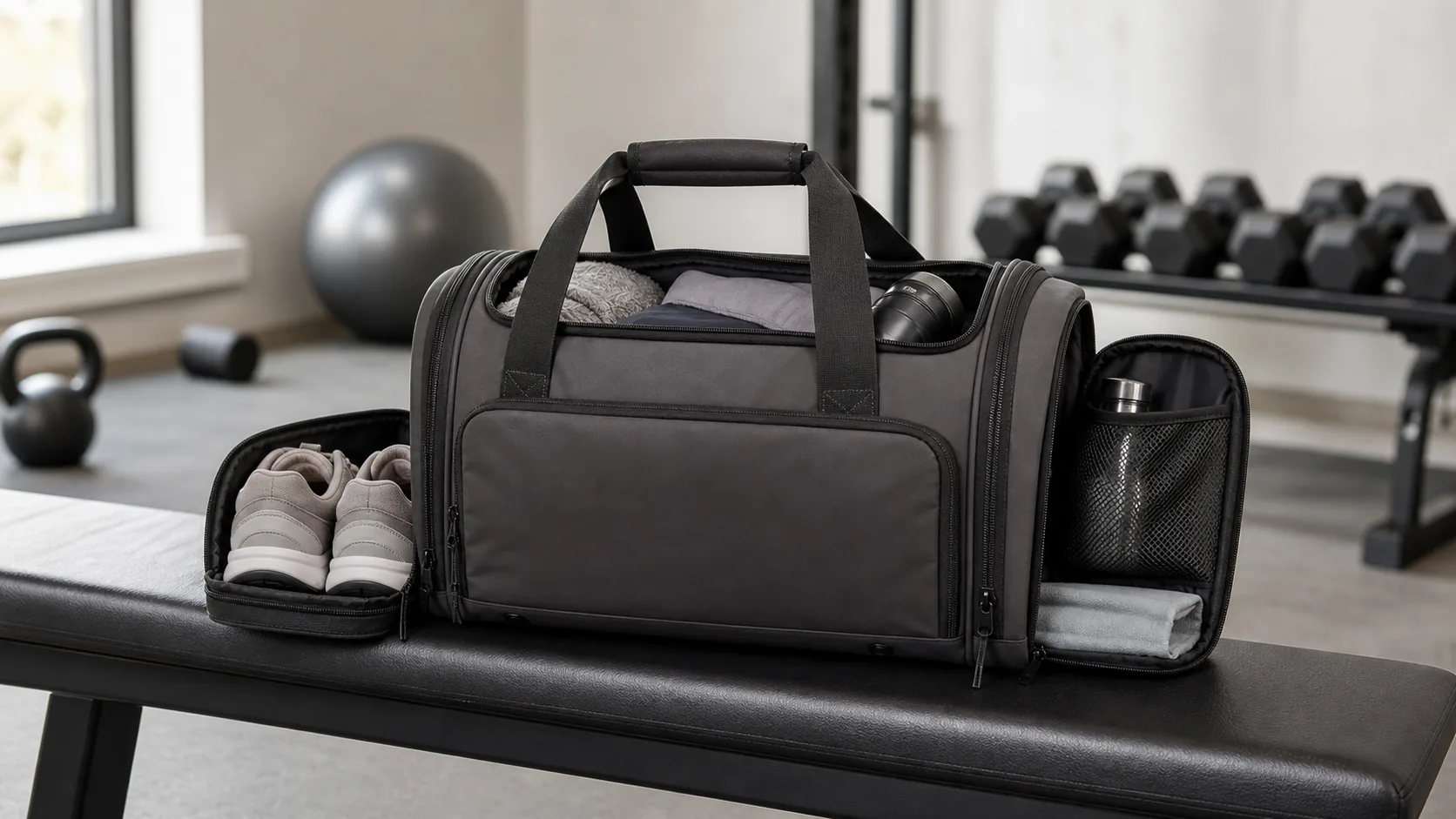
Daily users usually notice access, carry comfort, and separation first. A useful product brief should therefore define the main opening, shoe storage, bottle position, wet-item handling, and expected load before materials are selected.
Is a classic duffel your best daily fitness option?
Duffels provide a wide opening and flexible storage while remaining easy to place on a bench or locker floor. They can hold towels, belts, shoes, and a change of clothing, but strap and zipper performance depends on the construction specification and completed load tests.
A basic duffel may have only one main chamber. Adding a defined pocket map, a supported base, and a cleanable lining can improve organization, but each feature should be justified by the target load and price point.
- Volumetric Freedom: Duffels easily accommodate oversized items like boxing gloves, foam rollers, and weight belts.
- Ergonomic Adaptability: Users can rapidly switch between short grab handles and heavy-duty, padded shoulder straps.
- Flexible Profile: A soft-sided body can fit lockers more easily than a rigid case when it is not overpacked.
Key Takeaway: For bulk sourcing, test a loaded duffel against the intended locker size and carry weight before approving the design.
| Duffel Category | Volumetric Limit (L) | Base Fabric Denier | Target Athletic Persona |
|---|---|---|---|
| Standard Fitness Duffel | 30L | 600D Polyester | General Weightlifter |
| Pro Strength Carrier | 50L | 1680D Ballistic | Powerlifter / Boxer |
| Compact Studio Duffel | 20L | 420D Ripstop | Yoga / Pilates Practitioner |
Analyze these key parameters to determine which style fits your brand portfolio.
Why do athletes struggle with standard gear storage?
A single-compartment daypack offers little separation between damp towels, shoes, clothing, and work equipment. Absorbent fabrics and closed pockets can retain moisture when the contents are not removed after training. A gym-specific design can address this with washable barriers, ventilation, and a protected electronics sleeve.
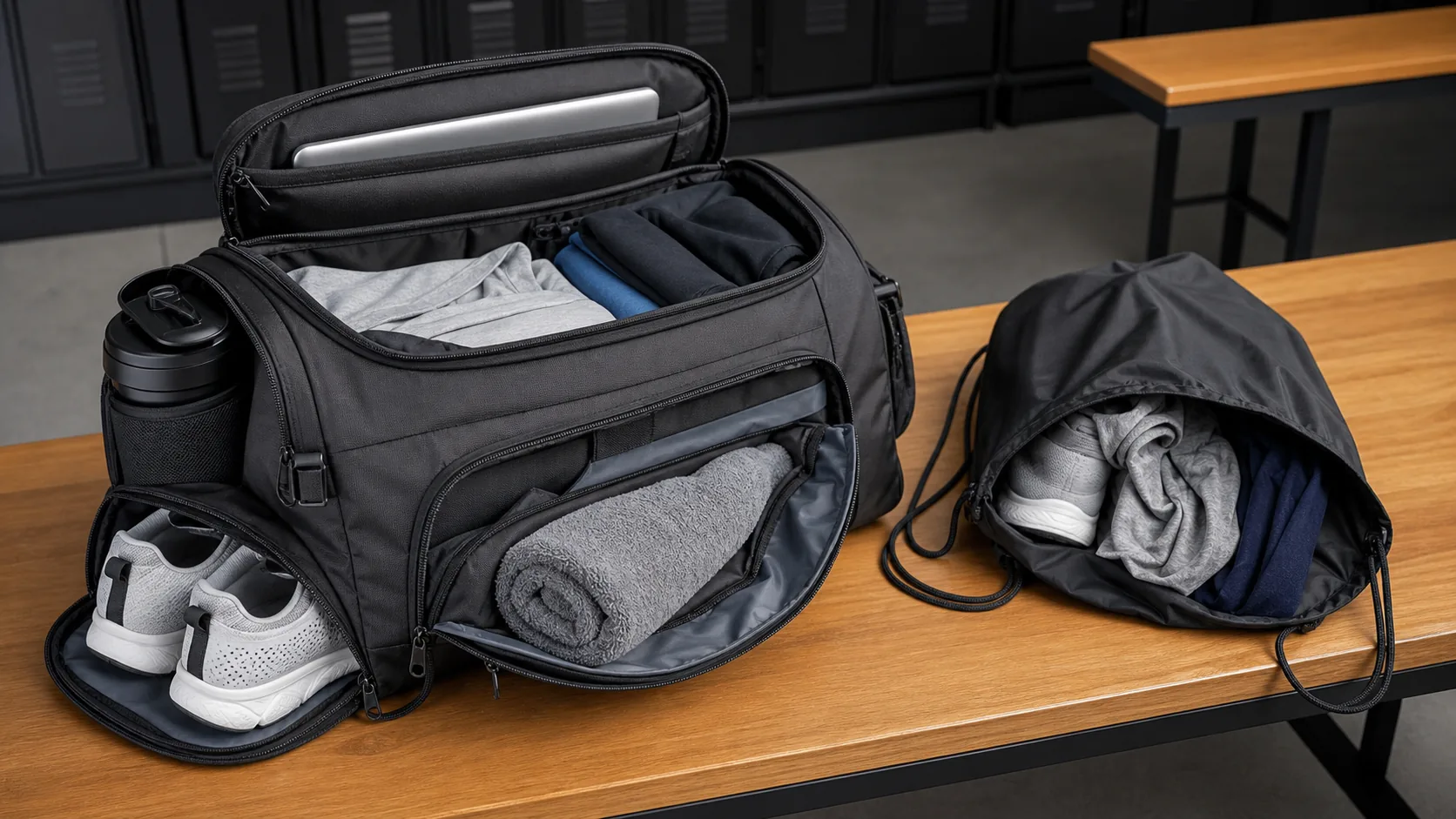
Wet swimwear can transfer moisture to clothing, papers, or electronics when everything shares one compartment. Physical separation reduces contact, although bottles still need secure closures and electronics should use their own protective sleeve.
Do standard bags cause gear organization headaches?
In a single large compartment, keys, headphones, and small accessories tend to settle below clothing and towels. Dedicated zones can reduce search time and keep hard objects away from screens.
When all gear shares one pocket, small items are harder to locate and hard objects may contact electronics. A key leash, small zipped pocket, and suspended device sleeve are simple ways to control those risks.
- Moisture Contact: A leaking bottle or wet garment can reach papers and electronics.
- Odor Transfer: Damp activewear stored beside clean garments can spread moisture and odor.
- Poor Access: Keys and passes are slower to find in an undivided main chamber.
Key Takeaway: Define wet, clean, footwear, bottle, and electronics zones in the sample brief, then test them with a complete commuter load.
| Bag Structure | Clean/Wet Barrier | Electronic Protection | Sourcing Unit Cost Index |
|---|---|---|---|
| Single-Compartment Pack | None | Minimal (Sleeve Only) | Low Cost |
| Multi-Zone Athlete Pack | Physical TPU Barrier | Fully Padded Compartment | Moderate Cost |
| Luxury Commuter Tote | Removable Insert | Semi-Suspended Pocket | High Cost |
Use this comparison to decide whether the target user needs a separate wet zone or only a removable pouch.
How do you determine which bag is best for gym use?
Determine the bag type by evaluating commuting distance, the normal gear list, storage limits, and expected weather. Bicycle commuters may prioritize balanced backpack straps and tested rain protection, while drivers may prefer a flat duffel with quick trunk access. Sourcing managers should connect sports bag market context with regional transit habits and the target activity.
Use four questions in order: What activity does the user perform? What must the bag carry? How will it be transported? Where will it be stored? Those answers narrow the choice faster than comparing feature counts. A swimmer needs a washable wet pocket, a lifter needs room and reinforcement for dense gear, a commuter needs balanced straps and protected tech storage, and a court player may need an equipment-specific silhouette.
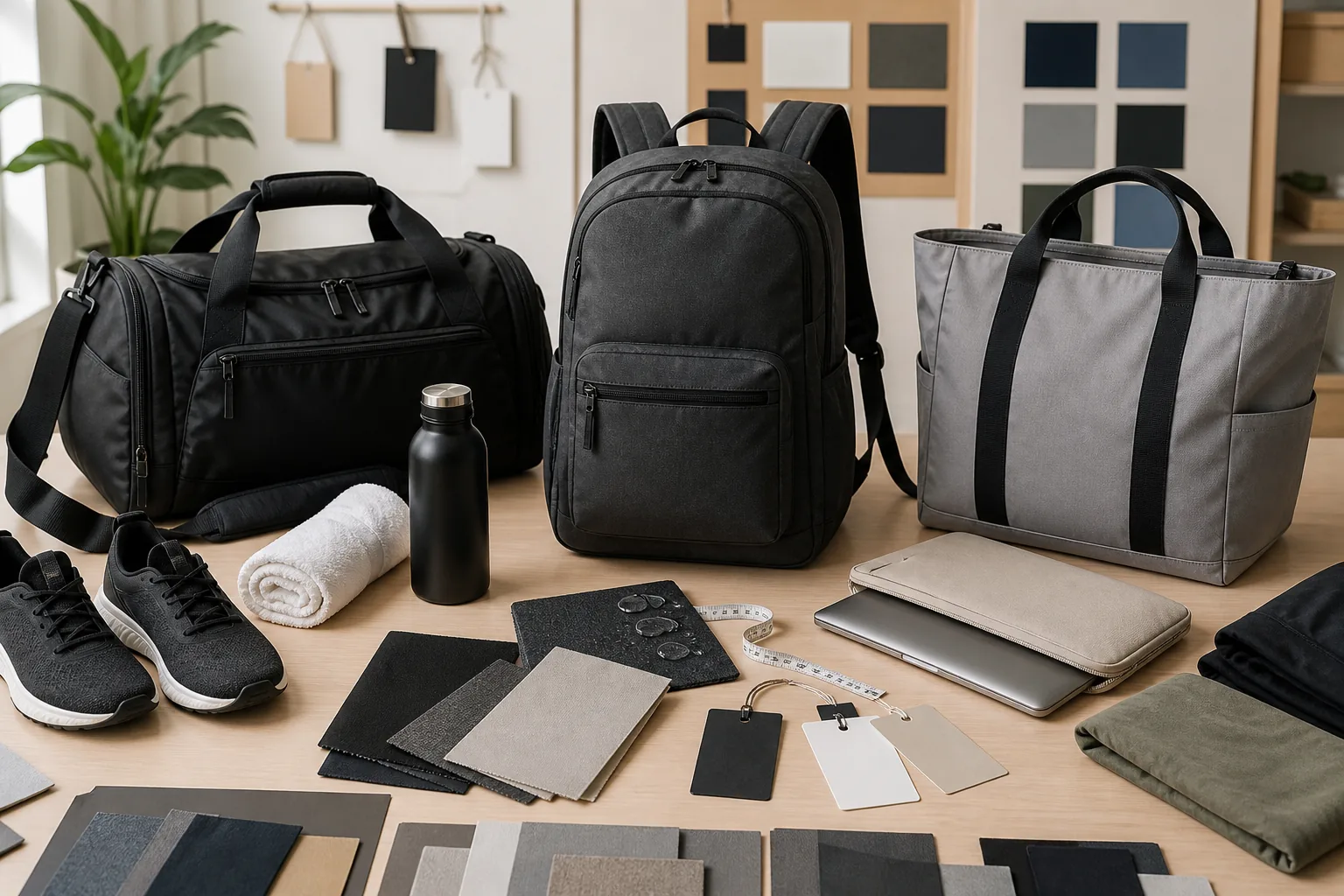
Fitness routines require different storage layouts. A runner may need a compact carrier, while a powerlifter may carry a belt, wraps, shoes, and other dense equipment. A product range should cover only the user groups the brand can specify and test clearly.
Should utility dictate your next fitness gear choice?
Appearance matters, but it cannot replace suitable construction. A sample should be tested at its stated load, with attention to handle anchors, shoulder straps, zipper ends, the base, and any wet-zone seams.
Hardware and stitch type should be selected from the load and use case, not from appearance alone. Metal hardware is not automatically better than engineered plastic, and a second stitch line does not compensate for weak fabric or poor seam allowance.
- Regional Transit Needs: Active commuters require lightweight, reflective, and secure carrying options.
- Sport-Specific Sizing: Court sport players demand dedicated racquet storage, whereas runners seek minimal, compact profiles.
- Material Selection: Bags placed on rough floors may need abrasion-resistant base fabric and reinforcement.
Key Takeaway: Align the carry method, capacity, and materials with a documented user profile and verify the result through loaded samples.
| Target Environment | Critical Feature | Preferred Fabric | Hardware Requirement |
|---|---|---|---|
| Wet Urban Commuting | Heat-Sealed Seams | TPU-Coated Nylon | Watertight Aqua-Zippers |
| Hardcore Powerlifting | Double-Stitched Bottom | 1000D Cordura | Industrial Steel Hooks |
| Corporate Fitness | Hidden Shoe Pocket | Matted Vegan Leather | Magnetic Snap Buckles |
Align these physical environment requirements with your main customer demographics to specify the exact raw materials needed for production.
What makes a waterproof backpack strong for active commutes?
A backpack with coated fabric, controlled seams, covered or water-resistant zippers, and a stable harness can suit wet commutes. The required protection level depends on exposure time and whether the bag must resist light rain, sustained rain, or water immersion. Buyers evaluating waterproof travel backpacks should ask for the test method behind each water-resistance claim.
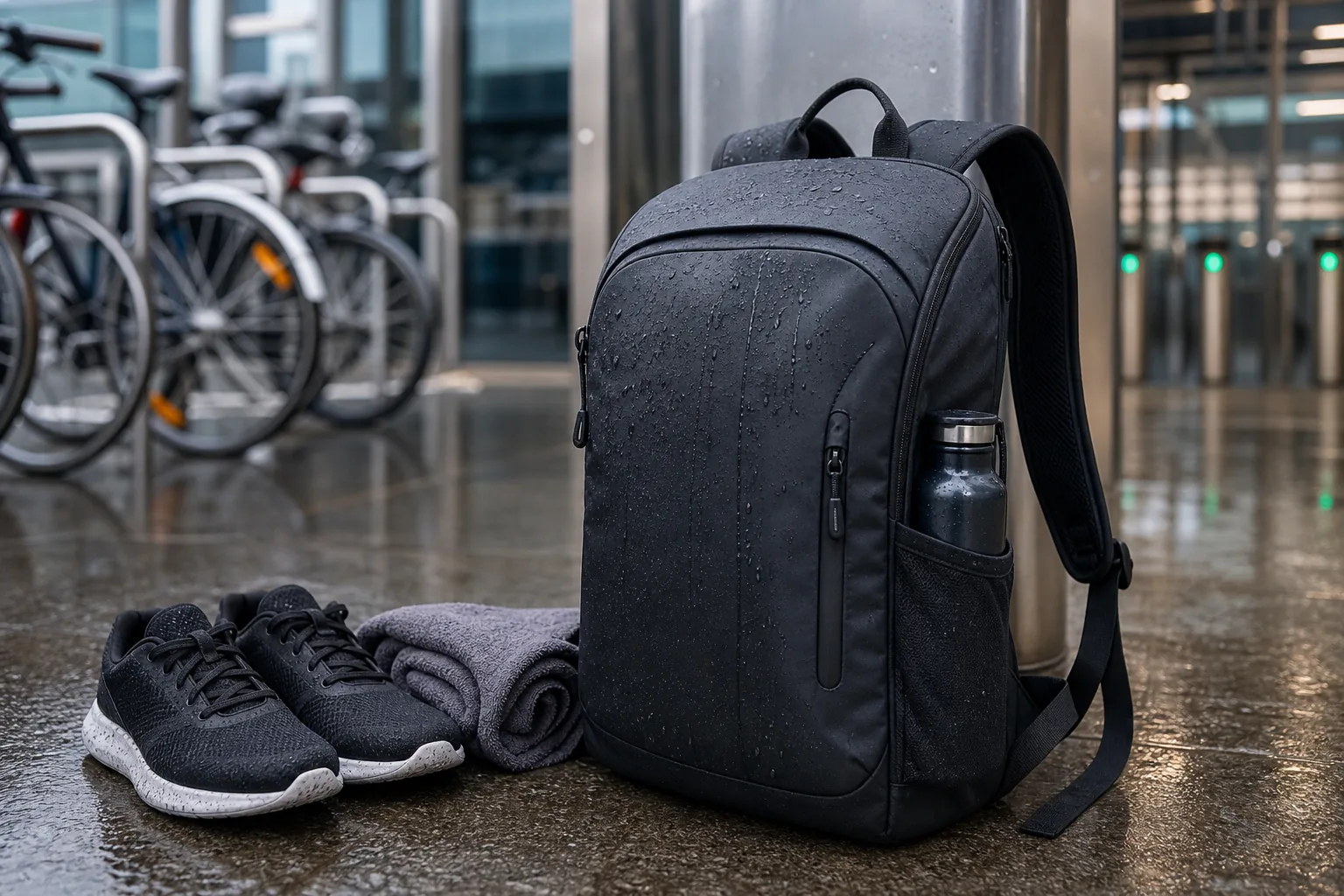
In sustained rain, untreated fabric, exposed seams, and ordinary zippers can allow water into the bag. Electronics still need an internal sleeve or dry pouch because an exterior fabric rating alone does not prove that the finished bag is waterproof.
Can a waterproof design solve your wet weather commuter woes?
Untreated fabrics can absorb water, while PU, TPU, or PVC constructions can improve resistance when the seams and closures are designed to the same target. An existing factory pattern may reduce development work, but the customized sample still needs finished-bag testing.
Adapting an existing pattern can reduce tooling and development time. Confirm that changes to pockets, seams, logos, and zippers do not weaken the tested construction.
- Coated or Laminated Fabrics: PVC and TPU constructions can provide a low-permeability shell when specified and tested correctly.
- Welded Seams: Welding can reduce needle holes, but seam geometry and process control still affect leakage.
- Padded Back Panels: Spacer mesh channels can improve airflow, though they do not prevent perspiration.
Key Takeaway: State a specific water-resistance target and verify the finished bag rather than relying on fabric names alone.
| Fabric Base | Hydrostatic Rating (mm) | Tear Strength Index | Sourcing Application |
|---|---|---|---|
| PVC-Coated Polyester | 10,000mm | High | Marine & Heavy Sourcing |
| TPU-Laminated Nylon | 15,000mm | Project-dependent | Outdoor sports |
| PU-Treated Canvas | 5,000mm | Moderate | Casual Lifestyle Bags |
Do not select by hydrostatic rating alone; seams, zippers, openings, and the finished-bag test determine actual protection.
Which bag is best for gym to office transitions?
A structured laptop gym bag with restrained styling and stowable straps can suit work-to-gym travel. The important details are a suspended device sleeve, separation for shoes or damp clothing, balanced carry, and dimensions that fit the user's commute and workplace.
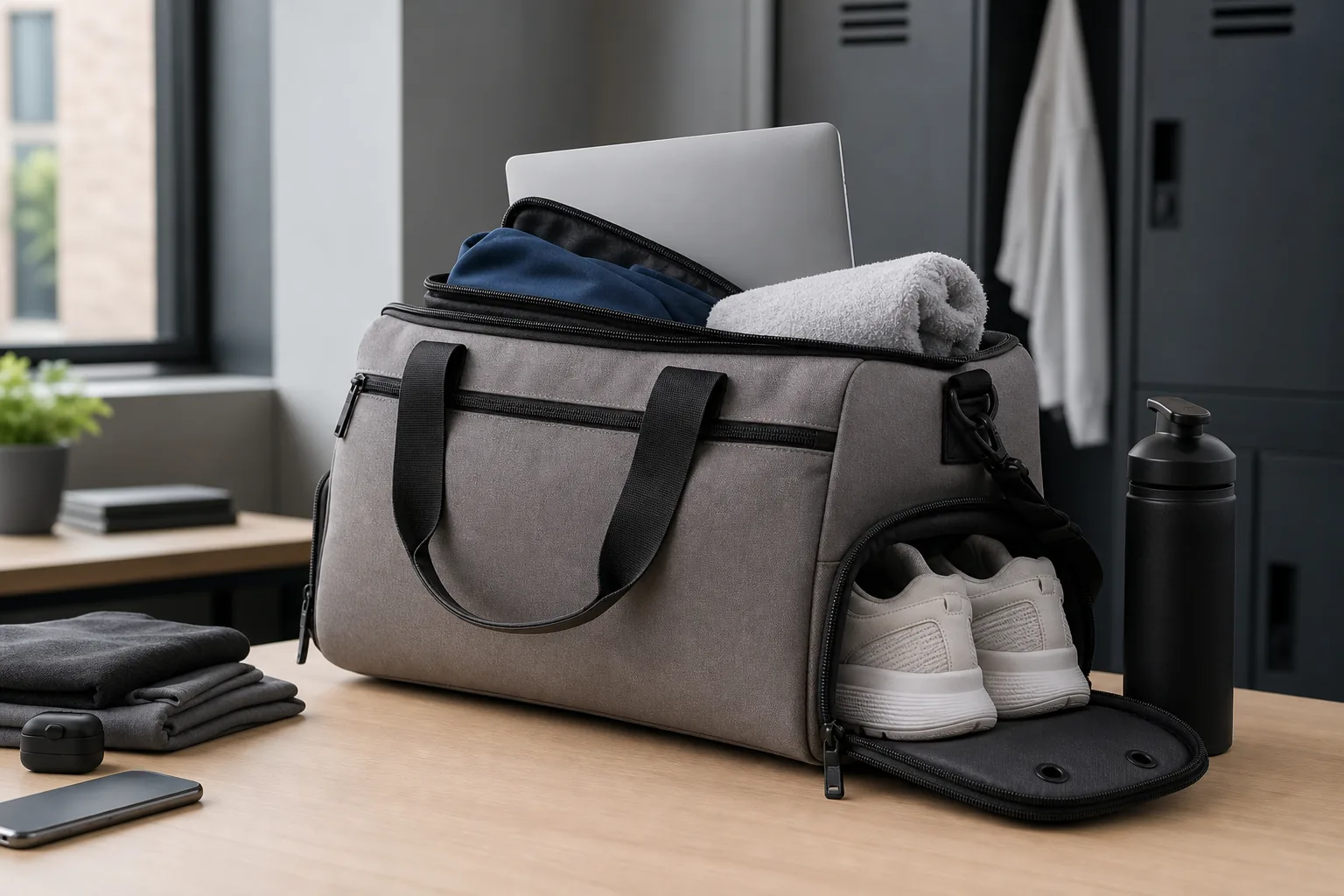
Some workplaces favor neutral colors and concealed athletic compartments. Material swatches and loaded prototypes should be reviewed in both office and gym settings before the appearance is approved.
Does a sleek hybrid tote bridge work and workout styles?
Hybrid bags combine a work-oriented exterior with storage for training gear. A suspended padded sleeve reduces direct contact between the laptop and the bag floor, but it does not replace a properly fitted protective case.
Some totes include hidden backpack straps for walking, cycling, or public transit. Test the conversion mechanism, strap comfort, and loose webbing in each carry mode.
- Boardroom Aesthetics: Matte black finishes, leather accents, and hidden zippers avoid looking overly athletic.
- Suspended Laptop Sleeves: Dedicated padded pockets protect fragile computer screens from hard floor impacts.
- Convertible Strap Systems: Users can change between backpack straps and shoulder carry handles.
Key Takeaway: A work-to-gym bag succeeds when office items and damp training gear remain accessible without sharing the same unprotected space.
| Design Style | Executive Appeal | Athletic Capacity | Laptop Pocket Size |
|---|---|---|---|
| Convertible Backpack | High | 28L | Up to 16 Inches |
| Executive Tote | Formal | 20L | Up to 14 Inches |
| Slim Tech Duffel | Moderate | 35L | Up to 15.6 Inches |
Ensure the laptop sleeve sizes correspond to current standard professional notebook dimensions in your target geographical market.
Why are dedicated shoe compartments a gym bag necessity?
A separate shoe compartment reduces direct contact between footwear and clean clothing. A wipeable lining supports cleaning, while ventilation and prompt unpacking help manage retained moisture and odor. The compartment should be tested with the intended shoe sizes because it also consumes main-cavity space.
An expandable shoe tunnel can separate footwear when used and fold flatter when empty. Its benefit depends on access angle, lining construction, ventilation, and the space left for clothing.
Will an isolated pocket keep your clean gear odor-free?
A physically separate, ventilated space can reduce odor transfer, but it will not stop odor if damp shoes remain sealed inside. Grommets or mesh panels should be placed where they provide airflow without allowing rain into sensitive compartments.
A closed shoe pocket dries slowly. Vent openings can improve evaporation, while users still need to remove wet shoes and leave the compartment open after use.
- Ventilation Grommets: Metal mesh vents allow continuous air exchange to dry sweaty footwear naturally.
- Wipe-Clean Materials: TPU or silicone liners allow consumers to quickly clean dirt off with a damp cloth.
- Expandable Collars: Deep fabric tunnels fold flat to maximize dry compartment space when no shoes are carried.
Key Takeaway: Evaluate shoe-pocket size, cleanability, ventilation, and lost main-compartment volume together.
| Isolation Method | Breathability Rating | Space Efficiency | Cleaning Difficulty |
|---|---|---|---|
| Side-Entry Mesh Pocket | High | Moderate | Low (Wipe Clean) |
| Under-Base Shoe Tray | Moderate | High (Isolated Base) | Moderate |
| Drawstring Shoe Sack | Low | High (Pack-Away) | Low (Machine Wash) |
Examine the spatial trade-offs of side-entry designs to ensure they do not excessively compromise main compartment packing volume.
How do bag size and capacity affect daily training?
Choosing the correct volume limits unused bulk and prevents gear from being compressed into an undersized compartment. Determine capacity from the packed load and external size limits; for online sellers, clear measurements also support more accurate e-commerce bag projects.
An oversized bag can be cumbersome for short trips, while a small bag may not fit shoes, a towel, and a change of clothes. Offer multiple sizes only when each size has a clear load example and external dimensions.
How do you match bag volume to your training style?
Capacity should correspond to the physical dimensions of the gear required for the activity. A swimmer's wet kit has a different storage pattern from a yoga mat and light clothing. Consistent size categories help customers compare the choices.
Measure the packed sample rather than relying only on the liter claim. A shoe tunnel, thick padding, or a rigid divider can reduce usable main-compartment space, while an oversized shell can invite clutter and exceed locker dimensions. Test common shoe sizes, a filled bottle, the intended towel, clothing, and any sport-specific equipment together.
Show external dimensions, usable dimensions, and a photographed packing example. This reduces ambiguity in product listings; for marketplace teams, a review improvement project shows why sizing clarity matters.
- Compact (15-20L): Best suited for running clubs, quick studio yoga sessions, and minimal weight workouts.
- Standard (25-35L): A common range for commuters carrying clothes, a towel, shoes, and selected work items.
- Oversized (45L+): Designed for gear-heavy athletic disciplines like powerlifting, hockey, and combat sports.
Key Takeaway: Pair liter capacity with dimensions and a real packing example because volume labels alone do not show usable space.
| Capacity Range | Best Training Matches | Physical Profile | Average Sourcing Weight |
|---|---|---|---|
| 15L to 20L | Yoga, Pilates, Road Running | Slim and compact | Project-dependent |
| 25L to 35L | Crossfit, Gym-to-Office, HIIT | Mid-Profile Daypack | 800 – 1,200 grams |
| 45L to 60L+ | Powerlifting, Boxing, Triathlons | Large carryall | Project-dependent |
Cross-reference these weight profiles with shipping costs to optimize your bulk importing logistics and margins.
Which bag is best for gym weekend travel plans?
A weekender duffel with a trolley sleeve and separate shoe storage can suit short fitness trips. Check the loaded external dimensions against the specific airline's current limit; no single profile is universally "TSA compliant" or accepted by every carrier.
A weekender provides more room than a daily gym bag, but the extra capacity adds size and weight. The intended trip length, laundry plan, footwear, and airline limits should set the volume.
Is an oversized weekender the strongest multi-day solution?
Multi-day trips may include casual clothing, sportswear, toiletries, and extra footwear. A trolley sleeve can stabilize the bag on rolling luggage when its width, stitching, and handle clearance are matched to common suitcase handles.
A compartmentalized weekender can combine travel and workout storage for users who prefer one carry-on. The trade-offs are bag weight, reduced main-cavity space, and airline size limits.
- Trolley Pass-Through: Heavy-duty fabric sleeves slide over luggage handles to simplify long airport commutes.
- Dual Carrying Straps: Reinforced webbing handles should pass the agreed loaded pull and carry tests.
- Airline-Aware Profiles: Publish external dimensions so users can compare them with their carrier's current limits.
Key Takeaway: A travel-focused gym bag should be approved against a complete packing list, loaded dimensions, and the intended carry method.
| Travel Feature | Sourcing Priority | Performance Standard | Consumer Perceived Value |
|---|---|---|---|
| Luggage Sleeve | Necessary | Dual-Stitched Ripstop | High Convenience |
| Wet-Dry Separation | Use-case dependent | Heat-Sealed Tarpaulin | Physical separation |
| Hidden Passport Pocket | Optional | Zipped lining pocket | Concealed storage |
Include a luggage sleeve when suitcase compatibility is part of the user brief, and test it on loaded samples.
What role does fabric durability play in fitness bags?
Fabric, coating, seam construction, and reinforcement influence how a gym bag handles abrasion from floors and lockers. Denier alone does not predict service life, so compare swatches and finished samples with agreed abrasion, tear, seam, and loaded-drop tests. A material optimization case can help balance cost and durability.
Premature failures can lead to returns and poor reviews. Material selection helps, but zipper quality, pattern geometry, seam allowance, reinforcement, and production consistency are equally important.
Do specialized materials ensure long-term bag survivability?
Ballistic-weave polyester, ripstop nylon, and recycled polyester offer different balances of abrasion, tear behavior, weight, finish, and cost. Environmental or recycled-content claims require the appropriate supplier documentation and chain-of-custody evidence.
RPET performance varies with yarn, weave, coating, and processing, just as virgin polyester does. Test the selected fabric rather than assuming recycled content makes it weaker or equivalent.
- Ballistic-Weave Polyester (1680D): A heavy fabric option whose abrasion and tear performance must be verified for the selected construction.
- Ripstop Nylon (420D+): Interlocking grid patterns isolate and prevent small punctures from expanding.
- Recycled PET (RPET): Eco-friendly polyester fibers sourced from post-consumer plastic bottles.
Key Takeaway: Approve materials from measured test results and production controls, not denier labels or marketing names alone.
| Fabric Category | Relative Tear Strength | Water Resistance Rating | Eco-Friendly Certified |
|---|---|---|---|
| 100% Recycled PET | Moderate | Good (Coated Base) | Yes (GRS Certified) |
| 1680D Ballistic Polyester | Project-dependent | Coating-dependent | Project-dependent |
| Ripstop Nylon | Project-dependent | Coating-dependent | Project-dependent |
Evaluate GRS-certified RPET options if your corporate responsibility goals demand verified sustainable manufacturing.
How do clean organizational systems streamline workout prep?
A clear pocket map can make passes, cables, bottles, and clothing easier to find. Too many pockets add weight and reduce flexible space, so each organizer should correspond to an item in the target packing list.
A light-colored lining and a few clearly sized pockets improve visibility. Validate the layout by timing access to common items on a fully loaded sample.
Can structured packing cubes transform your locker room speed?
Packing organizers can separate clean clothes, worn items, and toiletries. They add material and occupy space, so compare removable cubes with fixed dividers during sample testing.
Packing cubes group items into removable blocks. Wet gear still needs a sealed or washable pouch rather than an ordinary fabric cube.
- Elastic Mesh Barriers: Keeps socks, headbands, and smaller personal gear securely positioned inside main chambers.
- Fleece-Lined Slots: Protects sensitive items like sunglasses, smartphones, and smartwatches from friction scratches.
- Integrated Key Leashes: Keep car and locker keys in a defined location.
Key Takeaway: Add organizers only where they improve access or separation in a documented packing test.
| Organizer Element | Primary Functional Target | Convenience Rating | Sourcing Complexity |
|---|---|---|---|
| Zippered Mesh Wall | Underwear & Accessories | High visibility | Low Complexity |
| Fleece-Lined Pouch | Tech & Eyewear | High Protection | Moderate Complexity |
| Elastic Bottle Sleeve | Shakers & Bottles | High Utility | Minimal Complexity |
Consider a contrasting interior lining when small-item visibility is part of the user brief.
Strategic Sourcing Partner: ZW Bag Manufacturer
ZW Bag Manufacturer supports OEM and private-label gym bag development for brands, online sellers, and retail distributors. A useful sourcing brief should define the target workout, complete gear list, carry mode, size range, material direction, pocket map, logo method, packaging, and the tests required before shipment.
Sample review should reproduce real use: load the shoes and clothing, add a filled bottle, cycle every zipper, carry the bag by each handle or strap, wipe the lining, and confirm that wet and dry zones do not compromise the space promised in the product listing. Record approved materials and construction details so repeat orders can be compared with the same standard.
To discuss a custom athletic bag specification, sample plan, or wholesale quotation, contact us.
Frequently Asked Questions
Can I use a standard school backpack for gym gear?
Yes, for a light routine, provided damp gear is placed in a separate washable pouch and electronics are protected. A gym-specific bag becomes more useful when the load includes shoes, wet towels, or work equipment that needs dedicated separation.
What's the best way to clean a synthetic gym duffel?
Follow the care label. Hand washing or spot cleaning with mild soap is often suitable for coated or structured bags, while machine washing may damage foam, coatings, seam tape, or hardware.
How do I know if a 30L bag is big enough for my workout?
A 30-liter bag can fit a change of clothes, a towel, shoes, and selected work items, but usable space varies with the shoe tunnel, padding, and pocket layout. Check dimensions and a loaded example against your own gear.
Can I wash my dirty running shoes directly in the gym bag?
Remove shoes before cleaning them. Use the shoe compartment for transport, then empty and wipe it after use according to the care label.
What's the best material for a highly durable fitness bag?
There is no universal best material. A heavy ballistic-weave polyester may suit high-abrasion panels, while lighter polyester or nylon can reduce weight. Compare fabric, coating, seam, reinforcement, and finished-bag test results together.