
Yes, a duffel bag can be a carry-on as long as its packed dimensions do not exceed your airline's specific size limits, which are typically 22 x 14 x 9 inches for major U.S. carriers. However, travelers face serious stress and confusion at the boarding gate due to inconsistent baggage enforcement and fluctuating size rules. A single bulging pocket or an over-packed rigid base can quickly turn an otherwise compliant trip into an expensive problem. You may be forced to surrender your sensitive gear at the jet bridge or face gate-checking fees.
To avoid these travel headaches, you might wonder whether custom gym bags can fit under the seat or always require overhead storage. Understanding how to select, pack, and measure your luggage is the key to smoother boarding. This practical guide provides the reliable roadmap for navigating aviation rules, security checkpoints, and soft-sided bag engineering. By mastering these guidelines, you will ensure your soft luggage always passes airline inspections with fewer surprises.
Can a gym bag be a personal item on flights?
Yes, a gym bag can be a personal item if its packed size fits fully under the seat in front of you and your airline allows that item type. Most airlines treat soft-sided duffels as compliant carry-on bags because their flexible nature allows them to fit easily. However, you must always verify your carrier's specific dimension and weight limits before boarding. When planning short weekend trips, many travelers also wonder can a gym bag be a personal item if they want to avoid overhead fees entirely.
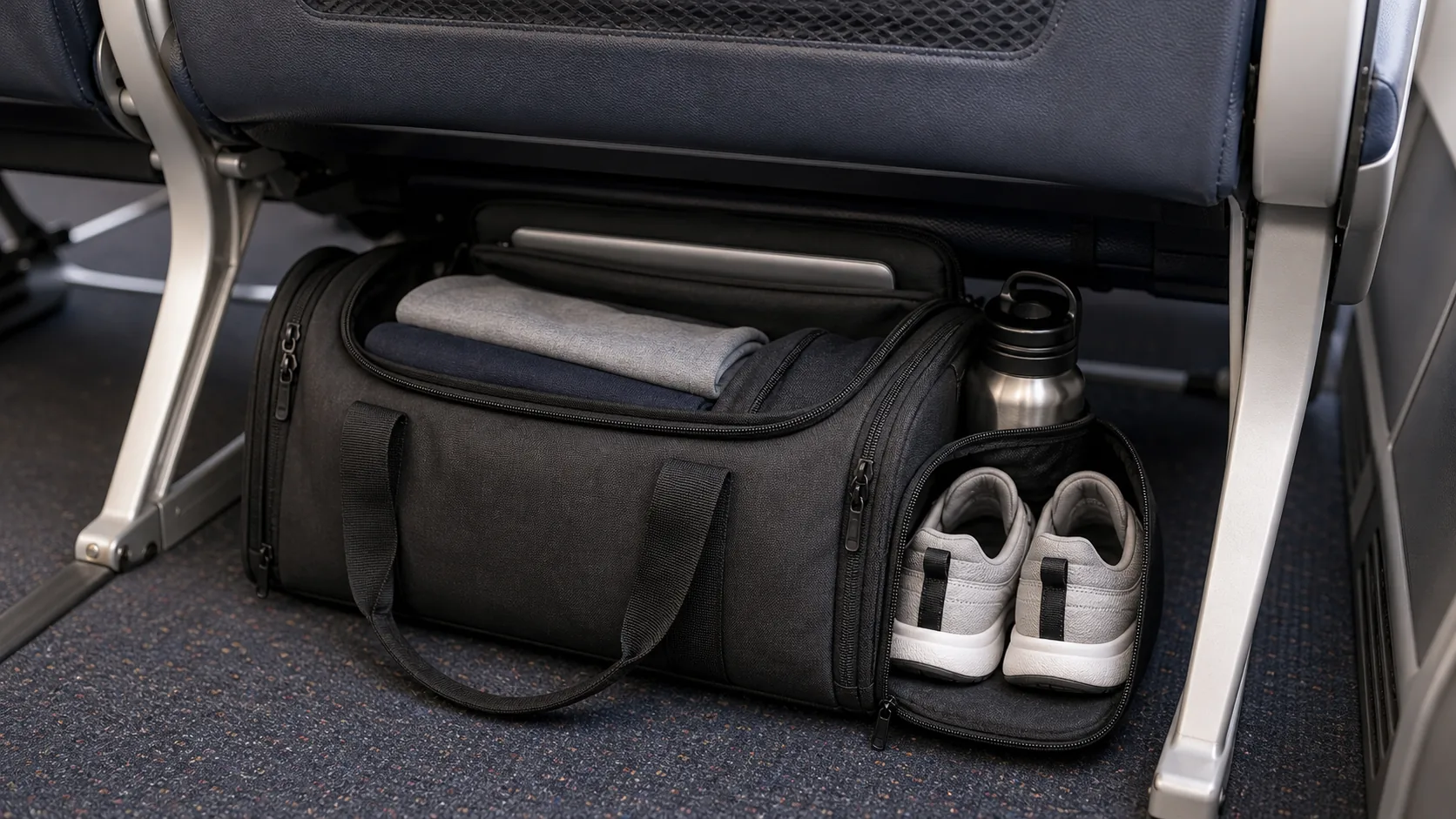
What Are Standard Overhead Bin Requirements?
When planning your journey, you must focus strictly on the physical dimensions of your luggage. Most legacy airlines do not care about the style of your bag, focusing instead on whether it fits the overhead compartment. Here is the deal:
- The standard industry carry-on dimension threshold is 22 x 14 x 9 inches.
- Soft bags can often bypass strict gate checks if they do not look visibly over-stuffed.
- Weight limits are rarely enforced domestically but remain critical on international routes.
You should always research your airline's specific rules before you arrive at the airport. This simple step prevents unexpected boarding delays and ensures a smooth transition through the gate. Packing efficiently within these dimensions will guarantee a smoother travel experience.
How Does Soft-Sided Flexibility Provide an Advantage?
The greatest benefit of traveling with a duffel is its ability to compress and adapt to tight spaces. Unlike rigid, hard-shell rolling suitcases, premium soft-sided materials allow you to squeeze your bag into tight spots. Why does this matter?
- Soft-sided duffels flex easily to match the exact contours of crowded overhead bins.
- Partial packing allows a larger bag to compress down to legal personal-item limits.
- Materials like high-denier nylon and polyester provide both elasticity and tear resistance.
Key Takeaway: You should utilize the structural flexibility of a soft-sided duffel bag to maximize your packing potential while maintaining the ability to compress the bag into tight overhead compartments.
| Carrier Category | Standard Carry-On Size Limit | Weight Restrictions | Best Duffel Profile |
|---|---|---|---|
| Legacy Carriers | 22" x 14" x 9" (56 x 36 x 23 cm) | None (Domestic US) | 35L – 40L Soft-Sided |
| Budget Airlines | Fees apply / Stricter enforcement | 22 lbs (10 kg) limit common | 30L – 35L Ultra-Compressible |
Knowing that airlines permit these bags in the overhead compartments, you must next examine how security personnel handle them during screening.
How does TSA handle a gym bag as a personal item?
The Transportation Security Administration does not regulate baggage size limits or enforce airline-specific rules. Instead, TSA officers focus entirely on safety, threat detection, and standard passenger screening protocols. Many travelers still ask can a gym bag be a personal item when going through security. You can rest assured that as long as your duffel fits through the security X-ray scanner, TSA will not care about its dimensions.
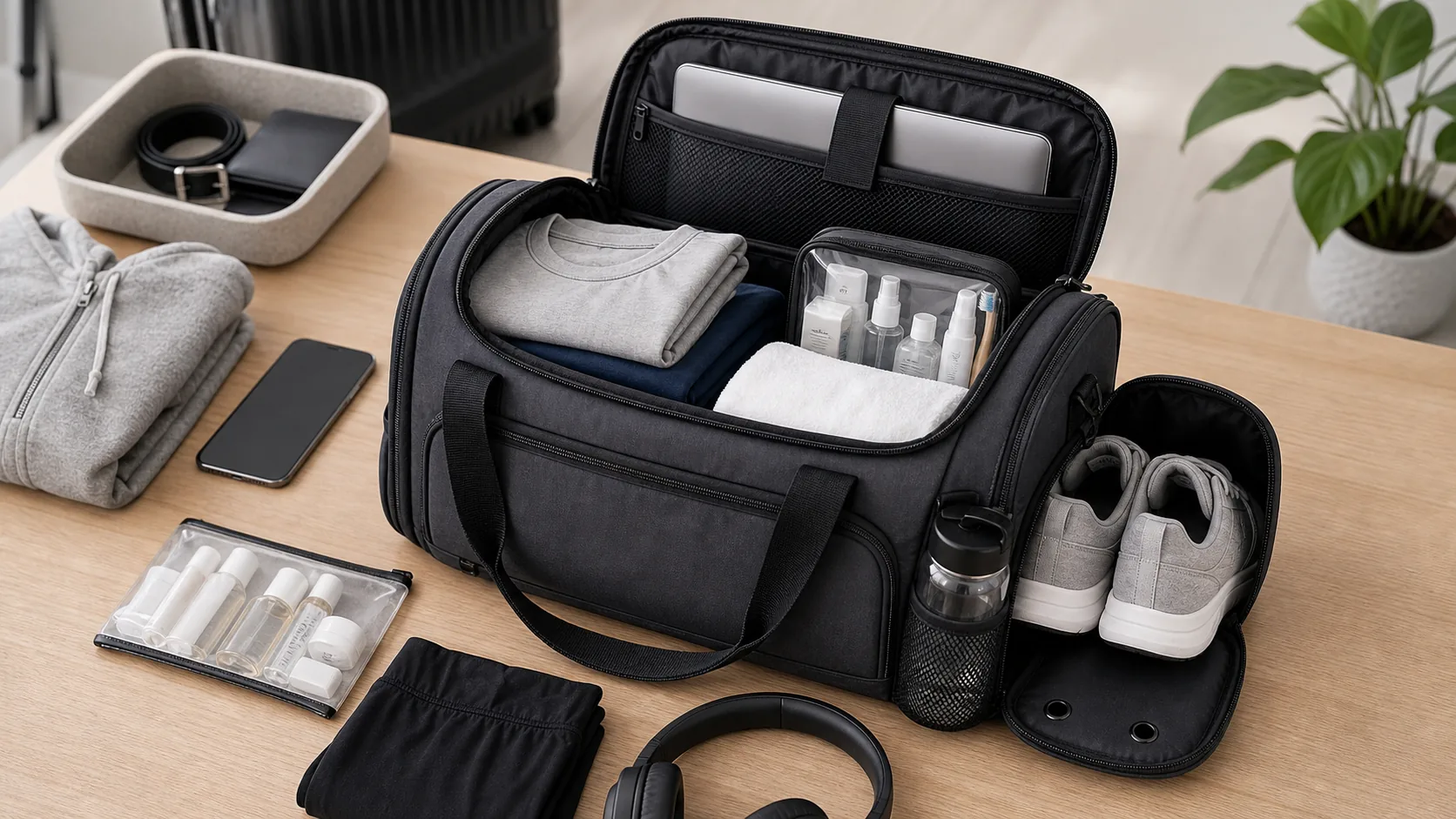
What Is the Primary Focus of TSA Screening?
You must understand that security officers are only interested in safety and threat detection. They do not work for the airlines and will not measure or weigh your duffel bag; the same distinction helps brands explain travel use cases in sports bag market context. It is important to remember:
- TSA officers will never measure or weigh your carry-on duffel bag.
- Bags must fit comfortably through the standard X-ray machine tunnel.
- Any bag containing prohibited items will be pulled for manual inspection.
You should focus your energy on packing your bag in a safe and organized manner. Keeping your gear sorted ensures you will pass through the checkpoint quickly without any issues. This allows you to focus on getting to your boarding gate on time.
How Do You Organize Liquids for Quick Access?
Navigating the security line requires you to have quick access to your liquids to prevent boarding delays. If you pack these items deep inside your bag, you will hold up the entire line. How do you solve this?
- Keep all your liquids in a single, clear, one-quart plastic bag.
- Pack this liquid bag in an easily accessible top or side pocket of your duffel.
- Avoid placing liquids deep inside the main compartment of your bag.
Key Takeaway: You should design your packing layout so that all liquids are stored in exterior pockets, which allows you to slide them out instantly for TSA inspection without unpacking your entire duffel.
| Checkpoint Element | TSA Protocol Requirement | Strategic Packing Location | Access Speed Impact |
|---|---|---|---|
| Liquids Bag (3-1-1) | Must be pulled out (unless TSA PreCheck) | Exterior side pocket or top slip pocket | High |
| Laptops / Tablets | Must be screened flat in a separate bin | Padded side-access zipper sleeve | Critical |
| Loose Accessories | Must be secured inside closed compartments | Internal mesh zippered pockets | Moderate |
Once you understand the security protocols, your next step is to master the size limits set by individual airlines.
What size gym bag counts as a personal item?
Personal item size limits are airline-specific and usually smaller than overhead carry-on limits, while standard carry-on limits often average around 22 x 14 x 9 inches for major domestic airlines. While legacy airlines share similar rules, low-cost budget carriers often enforce much stricter size and weight policies. Many travelers look for versatile gear and ask can a gym bag be a personal item to avoid paying extra for carry-on bags. Knowing these limits helps you choose the right duffel bag size before purchasing your ticket.
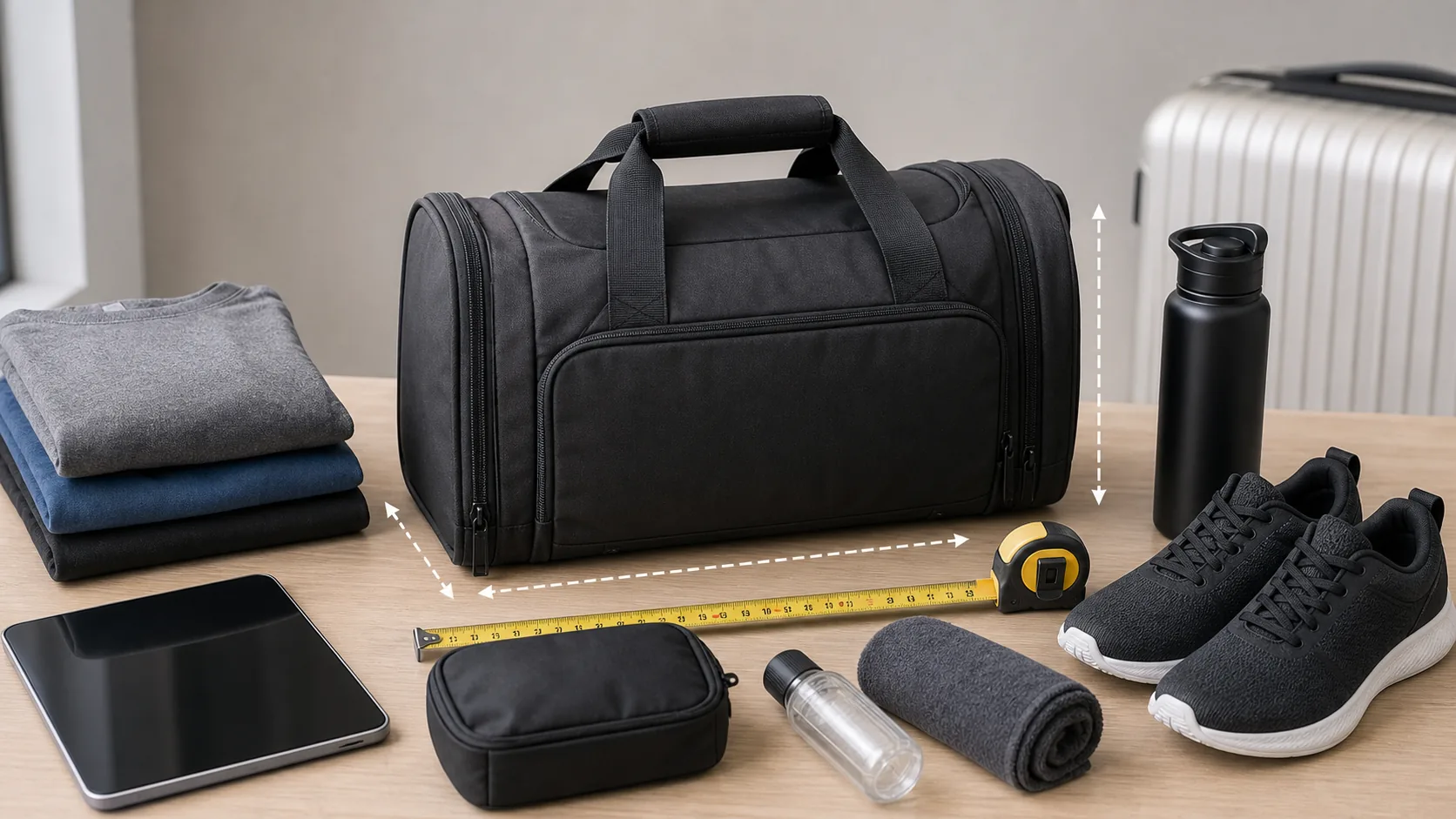
What Are the Dimensions for Legacy Domestic Carriers?
Major carriers like Delta, United, and American use standard sizing rules that allow for generous packing. If you stay within these parameters, you will rarely face issues at the gate. Generally speaking:
- Standard dimensions include all external handles, straps, and pockets.
- Most legacy airlines allow one carry-on bag plus one smaller personal item.
- Soft-sided bags can stretch slightly but must still fit inside the metal sizer.
You must remember that even legacy carriers can get strict when flights are full. Keeping your duffel slightly under the limit ensures you will never be forced to gate-check your luggage. This gives you peace of mind throughout your entire travel day.
How Strict Are Low-Cost Budget Airline Fleets?
Budget airlines make their profit by charging extra for carry-on bags and enforcing rules aggressively. If your bag exceeds their small limits by even an inch, you will face hefty fines. Here is the real problem:
- Budget carriers often allow only one small personal item for free.
- Standard carry-on bags require an extra fee, which is more expensive at the gate.
- Sizer boxes at budget gates are strictly enforced by boarding agents.
Key Takeaway: You must verify your ticket's baggage allowance and pack a highly compressible, small-capacity duffel when flying budget airlines to avoid unexpected gate-check fees.
| Airline Type | Example Carriers | Carry-On Size Limit | Personal Item Allowance | Sizer Strictness |
|---|---|---|---|---|
| Major US Legacy | Delta, United, American | 22" x 14" x 9" | Included (18" x 14" x 8") | Moderate |
| US Budget / ULCC | Frontier, Spirit | Paid (22" x 14" x 9") | Included (18" x 14" x 8") | High |
| International | British Airways, Ryanair | Varies (Stricter limits) | Varies by ticket class | High |
To optimize your packing, you must understand the difference between overhead carry-ons and under-seat personal items.
How is a gym bag personal item different from a carry-on?
A duffel bag differs from a personal item primarily in its physical dimensions and where it is stored on the plane. Carry-on duffels go in the overhead bin, whereas personal items must fit entirely under the seat in front of you. Travelers searching for versatile, budget-friendly options often ask can a gym bag be a personal item on commercial flights. Understanding this distinction will help you plan your packing strategy and avoid extra bag charges.
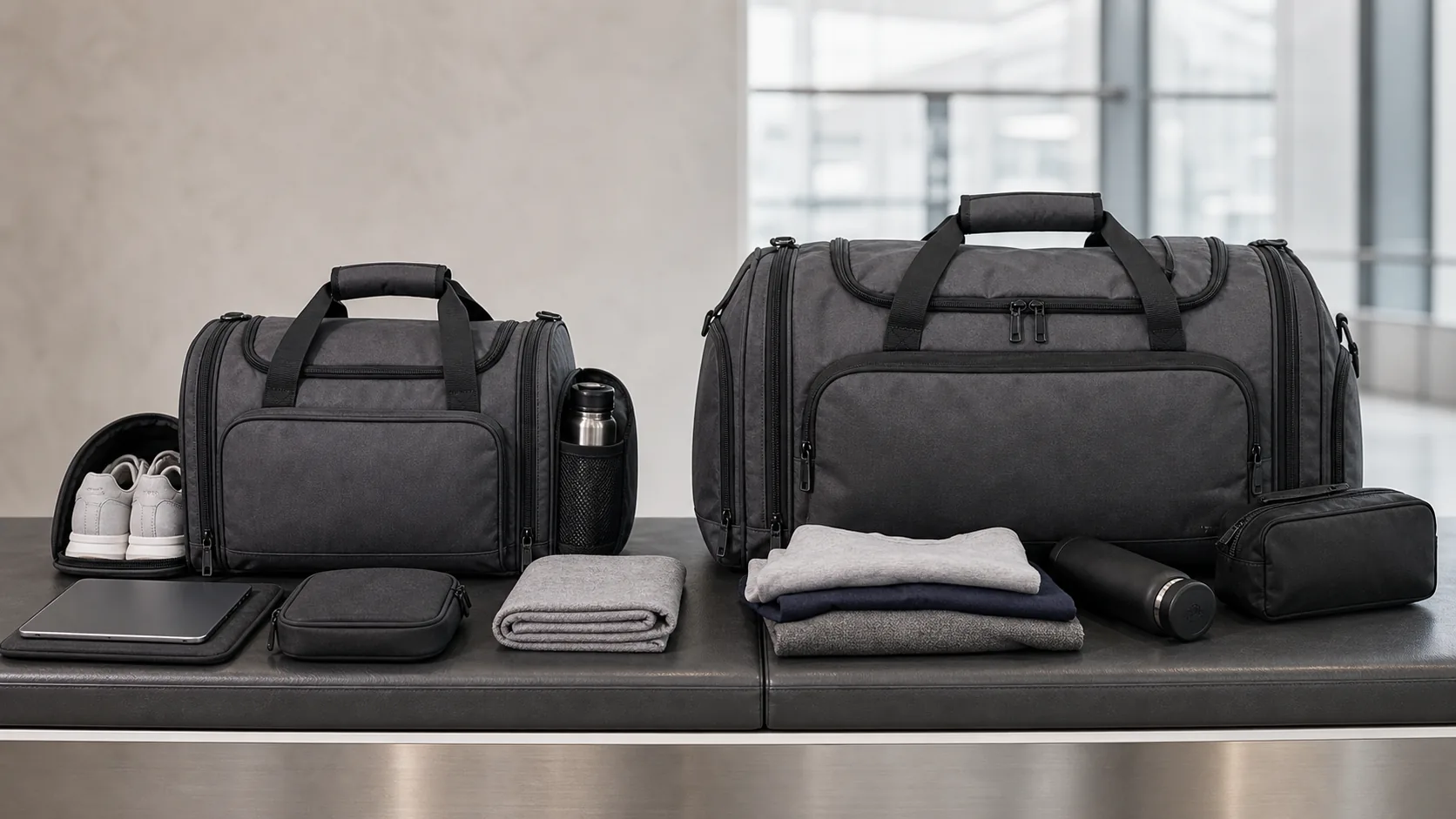
How Does Overhead Bin Storage Compare to Under-Seat Space?
You must evaluate your storage needs based on the size and flexibility of your luggage. Overhead bins accommodate larger, more structured bags, while under-seat spaces are highly restricted. In simple terms:
- Overhead bins accommodate larger, more structured travel bags.
- Under-seat spaces require highly flexible, compressible bags.
- Soft-sided bags are far easier to fit under the seat than rigid cases.
You will find that using a soft-sided duffel for under-seat storage gives you reliable flexibility. It allows you to keep your necessary gear close at hand during the flight. This eliminates the need to stand up and access the overhead bin.
How Do Gate Agents Conduct Visual Baggage Assessments?
Gate agents are trained to spot oversized or bulky luggage from a distance as passengers line up. If your bag looks heavy or too large, you will likely be stopped and asked to use the metal sizer. What is the secret?
- Gate agents look for bulky bags, rigid shapes, and struggling passengers.
- Wearing a duffel as a backpack often makes it look smaller and less noticeable.
- Keep your bag close to your body and walk naturally during boarding.
Key Takeaway: You should carry your duffel bag using its backpack straps or hold it close to your body to project a streamlined, compact profile that avoids drawing the attention of busy gate agents.
| Bag Style | Primary Storage Location | Typical Volume | Compression Need | Boarding Agent Impression |
|---|---|---|---|---|
| Overhead Duffel | Overhead Bin | 35L – 45L | Low to Moderate | Look for length and bulk |
| Under-Seat Duffel | Under-Seat Compartment | 18L – 25L | High | Look for footroom blockage |
| Convertible Backpack | Flexible Option | 20L – 30L | Moderate | Waved through routinely |
Once you understand where your bag will be stored, you can select the ideal capacity and size for your duffel.
What capacity works when a gym bag is a personal item?
The optimal capacity for a carry-on duffel ranges between 35 and 40 liters to maximize your packing space while staying compliant. Choosing a bag in this volume range ensures you have enough room for a multi-day trip without exceeding standard airline limits. If you prefer minimalist packing, you might wonder can a gym bag be a personal item and serve as your only travel bag; for adjacent compact travel formats, custom travel backpacks are useful comparison points. Finding the right balance between volume and dimensions is key to avoiding extra fees.
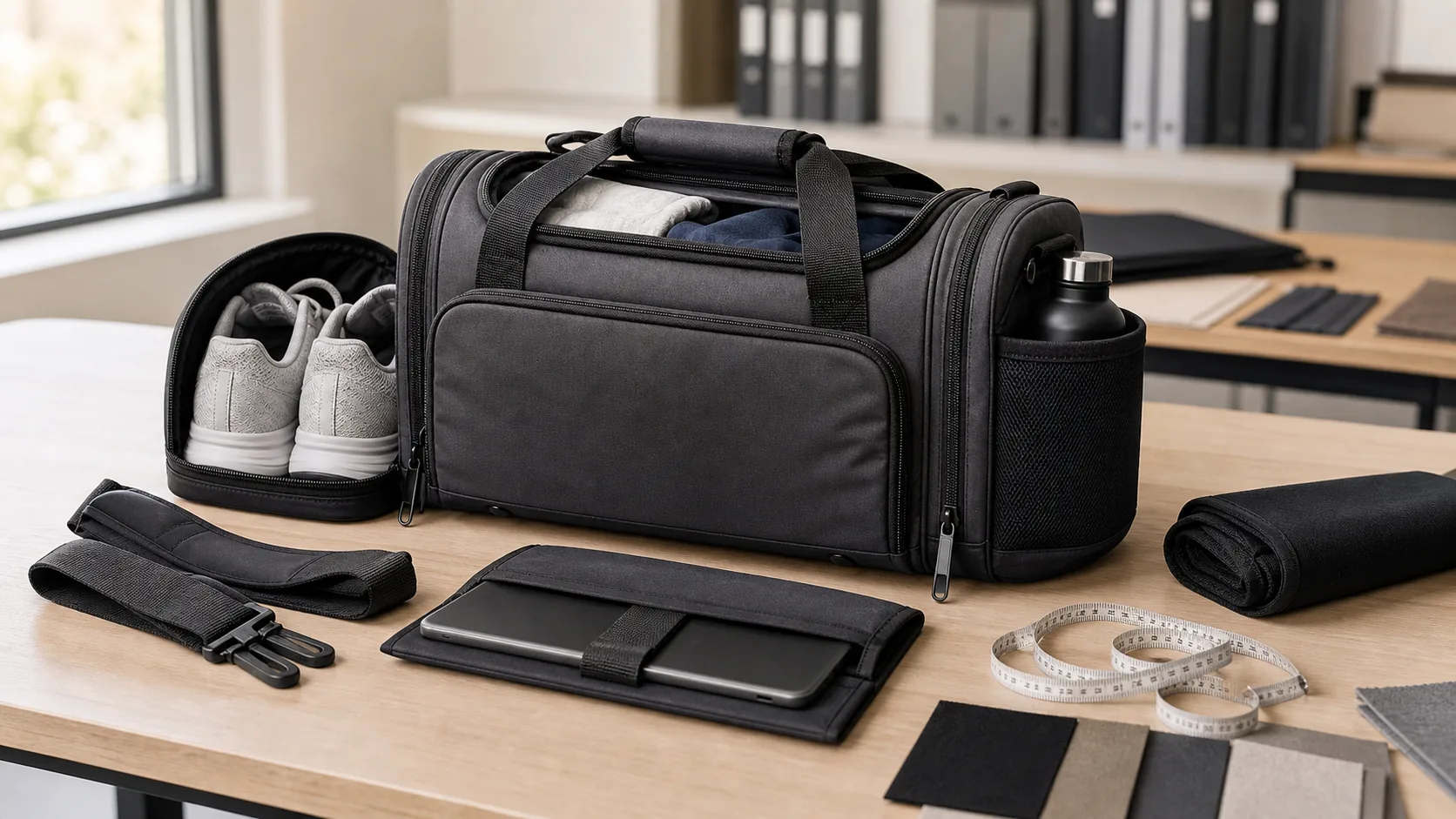
Why Is Thirty to Forty Liters the Sizing Sweet Spot?
Selecting the right capacity prevents your bag from becoming too heavy or bulky for the overhead bin. This capacity range provides ample space for a three-to-five-day trip. Here is the sweet spot:
- A 35-to-40-liter duffel easily fits within standard 22 x 14 x 9-inch airline limits.
- This capacity provides plenty of space for a 3-to-5-day trip.
- Bags in this size range remain easy to carry and lift into overhead bins.
You will find that a forty-liter duffel is incredibly versatile for various travel styles. It gives you the space of a small suitcase without the added bulk and weight of wheels. This makes it an excellent choice for active travelers.
How Do Expansion Compartments Impact Your Bag Compliance?
Many modern duffels feature expandable zippers that allow you to increase the bag's capacity. While this is great for bringing back souvenirs, it can cause problems during boarding. Do not make this mistake:
- Expanding your bag can push it past standard carry-on size limits.
- Keep the expansion zipper closed while traveling through the airport.
- Use the expansion feature at your destination for local travel or souvenirs.
Key Takeaway: You should keep all expansion zippers fully closed while boarding your flight to ensure your duffel easily passes visual gate inspections and fits the overhead bin.
| Duffel Capacity (Liters) | Practical Dimensions | Best Use Case | Compliance Level |
|---|---|---|---|
| 18L – 25L | 17" x 12" x 8" | Day trips / Gym / Under-seat | 100% Personal Item Safe |
| 30L – 40L | 21" x 13" x 9" | 3-5 day travel / Overhead carry-on | Standard Overhead Compliant |
| 50L+ | 24" x 15" x 12" | Extended travel / Checked baggage only | Must be checked (Oversized) |
To confirm your bag's compliance, you must know how to measure it accurately once it is fully packed.
How do you measure a gym bag as a personal item?
You must always measure your duffel bag after it is fully packed because packing changes its physical shape. An empty bag may meet size regulations, but over-packing can stretch the fabric past legal airline dimensions. Travelers often ask can a gym bag be a personal item when measured fully empty at home. Ensuring your packed duffel meets standard limits is the only way to avoid stressful gate-checking situations.
Why Must You Measure Fully Loaded Dimensions?
Measuring a soft-sided bag when it is empty will give you an inaccurate representation of its real size. When fabric stretches, a compliant bag can quickly become oversized. Here is the practical truth:
- Always pack your duffel fully before taking any measurements.
- Use a standard tape measure to check length, width, and height.
- Measure the widest points, including any bulging pockets or sections.
You should make it a habit to check your bag's dimensions every time you pack for a trip. Different clothing items can change the shape and bulkiness of your bag. Taking this precaution guarantees that you will never face unexpected fees.
How Do You Account for Straps, Handles, and Pockets?
Airlines do not just measure the main compartment of your bag; they measure everything that protrudes from it. Loose straps and bulging side pockets can cause your bag to fail the sizer test. Keep this in mind:
- Airlines include handles, wheels, and straps in their size limits.
- Tuck away or remove loose straps before measuring your bag.
- Ensure grab handles lie flat against the bag body.
Key Takeaway: You must perform manual measurements of your fully loaded duffel, including all external pockets and straps, rather than trusting manufacturer labels, to guarantee true gate compliance.
| Measurement Axis | Empty Dimension (Tag) | Packed & Stretched Dimension | Gate Sizer Impact |
|---|---|---|---|
| Length (End-to-End) | 20 inches | 22.5 inches (Over-packed end pockets) | Fails standard sizer |
| Width (Side-to-Side) | 13 inches | 14.5 inches (Stretched main body) | Fails standard sizer |
| Height (Floor-to-Top) | 8.5 inches | 9.0 inches (Within limits) | Passes height check |
After measuring your bag, you can use strategic packing techniques to help it fit into strict gate sizers.
How should you pack a gym bag as a personal item?
The way you pack your duffel directly affects its external dimensions and its ability to squeeze into metal airline sizers. Implementing smart packing strategies will keep your bag compact and streamlined throughout your journey. Many passengers ask can a gym bag be a personal item if they pack it using compression cubes to reduce total bulk. By using the right tools and layouts, you can ensure your bag always fits within standard airline limits.
How Can Compression Packing Cubes Help Control Shape?
Compression packing cubes are the reliable tool for organizing your gear and keeping your soft-sided bag compact. They compress your clothing to eliminate wasted space and prevent shifting. The secret lies here:
- Packing cubes organize your gear and compress clothes to save space.
- They prevent items from shifting and creating lopsided bulges.
- Use lightweight, durable nylon cubes for the best results.
You will find that using cubes makes packing and unpacking your duffel straightforward. They keep your clothes neat and wrinkle-free while saving critical space inside the bag. This allows you to travel lighter and more efficiently.
Where Should You Place Heavy and Bulky Cargo?
The distribution of weight inside your duffel plays a huge role in how the bag sits and looks. Packing heavy items incorrectly can cause the bag to sag and appear much larger than it is. Here is how you organize it:
- Place heavy items in the center or bottom of the bag.
- This distribution keeps the bag balanced and prevents it from sagging.
- Wrap bulky items in soft clothing to pad them and save space.
Key Takeaway: You should pack heavy items like shoes or toiletries in the center-bottom of your duffel to maintain structural balance and prevent the sagging that draws gate-agent scrutiny.
| Packing Technique | Tool / Method | Direct Benefit to Traveler | Gate Compliance Impact |
|---|---|---|---|
| Volume Compression | Double-zipper compression cubes | Saves up to 40% of interior space | Reduces total bag height and width |
| Weight Centering | Heavy items packed in the middle | Prevents bag sag and distortion | Maintains clean, compliant shape |
| Pocket Deflation | Flat packing in external compartments | Keeps the bag's exterior streamlined | Prevents width violations |
With your bag packed and ready, consider why a flexible duffel is often better than a traditional roller bag.
Why choose a flexible gym bag as a personal item?
Choosing a flexible duffel bag over a rigid rolling suitcase provides you with superior mobility and packing versatility. While roller bags are convenient on flat airport floors, they quickly become a burden on uneven terrain. Many travelers ask can a gym bag be a personal item and replace a rolling suitcase entirely on short business or weekend trips. Soft-sided duffels offer the practical alternative, blending the capacity of a carry-on with the lightweight convenience of a backpack.
How Does a Duffel Offer Better Real-World Mobility?
When you step outside the airport, you will immediately face stairs, cobblestones, and crowded streets. Rigid wheels struggle in these environments, while a duffel allows you to move freely. Let's face it:
- Roller wheels struggle on cobblestones, gravel, and stairs.
- A carried duffel lets you move quickly through crowds and train stations.
- Hands-free carry options keep you agile and comfortable.
You will appreciate the agility a duffel provides when navigating busy transit systems or walking to your hotel. It keeps your hands free to handle tickets, maps, or coffee. This level of convenience is unmatched by traditional rolling bags.
Why Is Stowing a Soft Duffel Easier in Small Bins?
Overhead bins on smaller planes fill up quickly, leaving late-boarding passengers with no place for their hard-shell cases. Soft duffels can squeeze into tight spots where rigid bags would fail. Here is the best part:
- Soft bags can compress to fit into crowded overhead bins.
- They are easier to stow in tight spaces than rigid, hard-shell cases.
- This flexibility is especially useful on smaller regional planes.
Key Takeaway: You should choose a soft-sided duffel over a roller bag when flying on regional routes, as its compressibility allows it to fit into tight overhead bins and avoid forced gate-checking.
| Travel Scenario | Flexible Duffel Bag | Traditional Roller Case | Optimal Winner |
|---|---|---|---|
| Cobblestones & Stairs | Easy to carry over obstacles | Hard to pull, damages wheels | Flexible Duffel |
| Regional Jet Flights | Compresses into small bins | Often forced to gate-check | Flexible Duffel |
| Long Terminal Walks | Can tire your shoulders | Rolls easily on flat floors | Traditional Roller |
If you choose a duffel, you should look for key design features that make it highly travel-compliant.
Which design features help a gym bag be a personal item?
Selecting a duffel with the right design features ensures both long-term durability and smooth airline compliance. Premium travel duffels combine lightweight materials with reinforced structures to handle the rigors of frequent flights. Brands often ask can a gym bag be a personal item if it features smart compartmentalization for business trips, and a material optimization case can help balance weight, fabric strength, and cost. Investing in high-quality hardware and ergonomic straps makes carrying your gear comfortable and secure.
What Materials Offer the Best Durability and Protection?
Your bag must withstand rough handling by airport workers, overhead bins, and weather elements. Choosing high-quality, water-resistant fabrics will keep your belongings safe and dry. This is crucial:
- High-denier fabrics (like 800D or 1000D nylon) resist tears and abrasions.
- Water-resistant coatings protect your gear from light rain and spills.
- Durable materials ensure the bag maintains its shape over time.
You should look for bags that feature reinforced stitching at key stress points like handles and straps. This prevents tearing when the bag is fully loaded and heavy. A durable exterior protects your investment for years of travel.
Why Are Specialized Footwear and Wet Compartments Vital?
Keeping your clean clothes separated from dirty shoes or damp gear is necessary for comfortable travel. Specialized internal dividers help organize your pack and protect sensitive items. Here is a game-changer:
- Dedicated shoe pockets keep dirty footwear separate from clean clothes.
- Waterproof wet pockets safely isolate damp swimsuits or toiletries.
- Ventilated compartments prevent odors from building up inside the bag.
Key Takeaway: You should source travel duffels that feature integrated shoe compartments and wet pockets to keep your clean wardrobe organized and fresh throughout your entire journey.
| Feature Category | High-Compliance Specification | User Benefit | Sourcing Priority |
|---|---|---|---|
| Primary Material | 1000D Cordura Nylon / TPU Coating | High durability and weather protection | Critical |
| Hardware / Zippers | YKK RC-Fuse Heavy-Duty Zippers | Smooth, reliable zips; burst resistant | High |
| Interior Layout | Separate shoe/wet compartments | Keeps clean and dirty gear organized | Moderate |
With the right bag design, the final step is to understand how international travel rules differ from domestic policies.
How do airline rules vary when a gym bag is a personal item?
International airlines frequently enforce much stricter baggage size and weight limits than domestic carriers. While a 40-liter duffel easily passes on domestic U.S. flights, it may exceed weight limits on global routes. Many international travelers wonder can a gym bag be a personal item to avoid paying high check-in fees at foreign gates. Preparing for these differences before your flight ensures you will not face unexpected delays abroad.
Why Are Global Sizing and Weight Limits Stricter?
European and Asian carriers often have smaller overhead bins and enforce strict weight limits. If your carry-on duffel is too heavy, you will be forced to pay high fees and check it. Make no mistake:
- Many international carriers limit carry-on weight to 15-22 lbs (7-10 kg).
- Carry-on size limits are often smaller than the standard U.S. 22 x 14 x 9 inches.
- Airlines weigh carry-on bags at check-in or boarding gates.
You must pack with extreme care when preparing for an international flight. Focus on lightweight, versatile clothing and avoid packing heavy, unnecessary items. This ensures your duffel stays within both weight and size boundaries.
How Do You Navigate the Unique Challenges of Regional Jets?
Regional flights connect smaller cities using narrow-body aircraft with tiny overhead compartments. On these flights, standard roller bags are almost always gate-checked, but soft duffels can often squeeze through. Here is what happens:
- Regional planes have smaller overhead bins that cannot fit standard roll-aboards.
- Soft duffels are often allowed in overhead bins where rigid bags must be gate-checked.
- Keep your bag light and flexible to maximize your chances of keeping it with you.
Key Takeaway: You should utilize lightweight, compressible materials when packing for international or regional flights to ensure your duffel complies with strict weight checks and fits into tiny overhead compartments.
| Carrier Region | Standard Dimension Limit | Standard Weight Limit | Recommended Duffel Setup |
|---|---|---|---|
| United States | 22" x 14" x 9" | Rarely weighed | 35L – 40L Duffel / Flexible packing |
| European Union | 21.5" x 15.5" x 7.8" | 22 lbs (10 kg) strictly enforced | 30L – 35L Lightweight Duffel |
| Asian Carriers | 22" x 14" x 9" | 15 lbs (7 kg) strictly enforced | 30L Ultralight / Minimalist packing |
By understanding these international variances, you can prepare your travel gear for any global route; sellers testing new sizes can also review a low-MOQ testing case before scaling inventory.
Conclusion
Navigating the changing landscape of airline baggage policies does not have to be a source of travel stress. This guide has resolved the confusion surrounding carry-on dimensions, TSA checkpoint protocols, and the key differences between airlines. By choosing a well-engineered, soft-sided duffel bag, you can maximize your packing space while maintaining the flexibility to pass strict gate checks. With the right packing strategies and high-quality gear, you can travel with practical confidence on any route.
At ZW Bag Manufacturer, we specialize in helping brands solve travel and fitness bag sourcing challenges by eliminating quality issues and design bottlenecks; a review improvement project often begins with clearer sizing and better compartment design. We provide premium OEM and ODM custom manufacturing services for travel, sports, and business bags, turning your visions into high-performance products. Our engineering team uses durable, weather-resistant materials and expert craftsmanship to deliver market-ready bags. If you are ready to design and manufacture your next line of airline-compliant travel bags, contact us today to partner with an industry leader.
Frequently Asked Questions
Can I bring both a carry-on duffel and a laptop backpack?
Yes, you can bring both bags if your airline's ticket class includes both a carry-on and a personal item. To do this, your duffel bag must fit in the overhead bin and your laptop backpack must fit under the seat in front of you.
What's the best way to handle a duffel that is slightly over the limit?
The best way is to use built-in compression straps to compress the bag before boarding. You can also wear it as a backpack to make it look smaller, or remove bulky items like jackets to wear them during boarding.
How do I know if my duffel bag is too large to fit under an airline seat?You must measure your packed bag manually at home to ensure its dimensions are under 18 x 14 x 8 inches, which is the standard size limit for personal items on most airlines. Do not rely on empty catalog tags, as packing fully changes the shape of soft-sided luggage.
Can I use a military-style tactical duffel as my primary carry-on?
Yes, you can use a tactical duffel if its packed dimensions fit within your airline's size limits. However, keep in mind that military-style bags often feature external straps and pockets that can catch in sizer boxes or machinery if they are not tucked away.
What's the best material option for a durable, water-resistant duffel?
The best option is a high-denier ballistic nylon or polyester fabric (such as 1000D or higher) with a TPU coating. This combination offers excellent durability, tear resistance, and weather protection for travel.