
Two garment bags with the same length label may leave different room for a hem, hanger, or folded load. An unclear measurement basis makes choosing between them harder.
Choose garment bag sizes from the actual garments and hangers, then check usable length, width, opening, depth, and the loaded shape. Ask what each published measurement includes. Hanging, exterior-body, interior, folded, and packed dimensions describe different conditions; one length label cannot confirm all of them.
Which Garment Bag Measurements Need to Be Compared?
Identify the measurement points and condition before comparing numbers. A listing may name its dimensions without showing where they start and end.
Request these fields where they affect your use:
| Field to define | What it describes | What to clarify |
|---|---|---|
| Hanging assembly | Bag in its intended hanging arrangement | Whether the hook, loop, or hanger is included |
| Exterior body | Outside fabric body at named points | Empty, flat, or naturally shaped |
| Usable interior length | Space available along the intended garment path | Start point, hanger fitting, bottom shape, and any obstruction |
| Shoulder area | Space around the garment and actual hanger | Width at the relevant height, rather than an unrelated widest point |
| Opening | Entry route with closure open | Access for the intended garments and hangers |
| Depth or gusset | Front-to-back dimension or a named sewn section | Empty, expanded, or packed condition |
| Closed dimensions | Folded or converted body | Exact configuration and contents |
| Packed thickness | Loaded front-to-back profile | Garment load, pockets, and protruding fittings |
These are definitions to agree with the publisher or supplier, not established conventions that every listing follows. A body-length figure may include different points from a hanging measurement; do not assume a fixed difference.
Use consistent units: NIST’s official tables define 1 inch as exactly 2.54 centimeters. Unit conversion does not resolve an unspecified start point or condition.
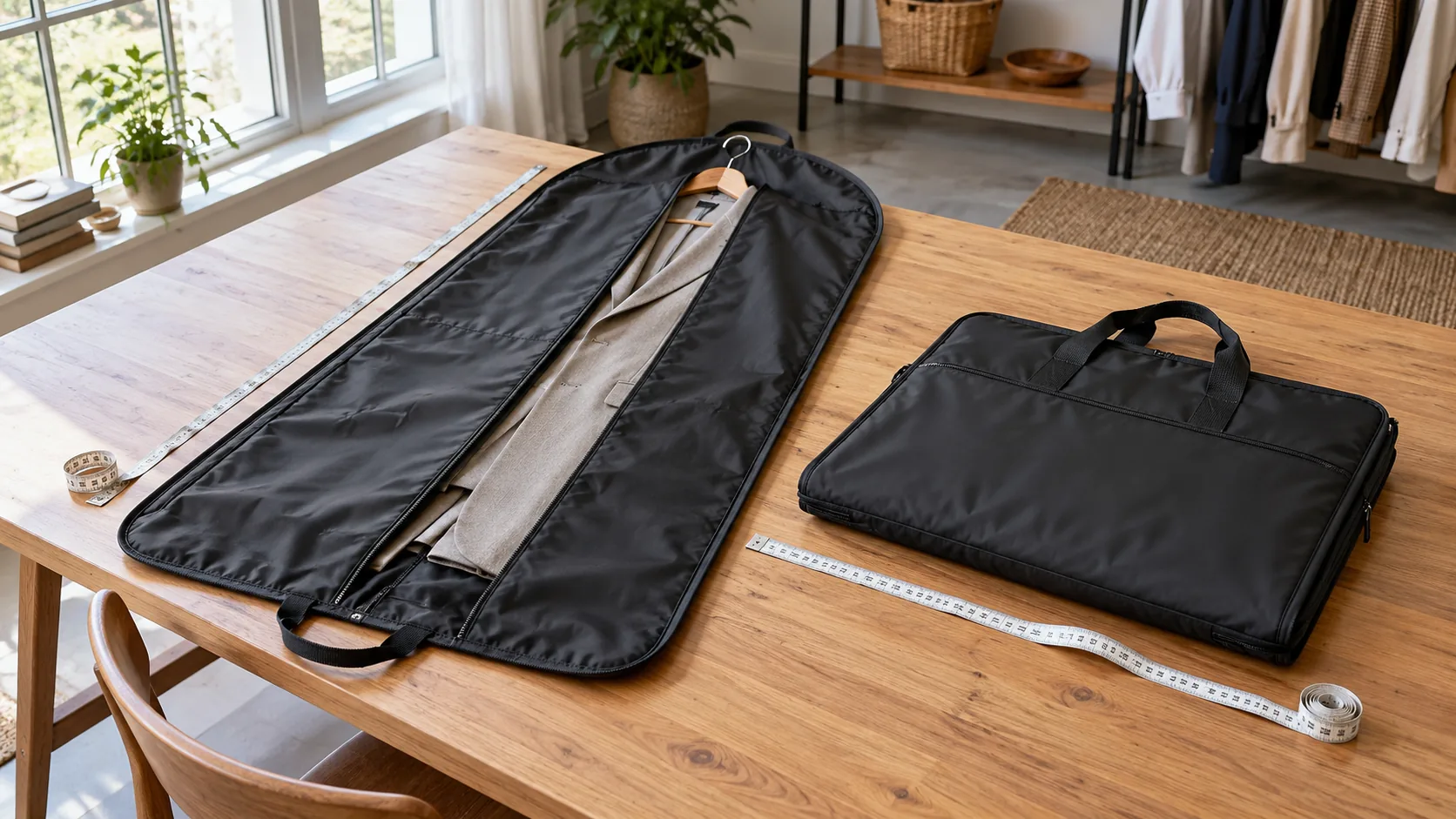
How Do You Measure the Garment and Hanger First?
Measure the garment in its intended carrying or storage arrangement, using the actual hanger if that arrangement requires one. Check the longest item, including any train, layered hem, or attachment.
Record both the garment’s own length and the space occupied by the hanger-and-garment assembly. Name the starting point for each. A measurement from the top of a hook cannot be compared directly with interior clearance measured below a hanger fitting.
Measure the hanger’s width and the garment’s occupied width too. Do not add those widths together: the sample must accommodate both in their intended positions. Shoulder-seam width can help describe a garment, but sleeves and drape may occupy additional space.
| Your load | Measurement or note |
|---|---|
| Longest garment | Start point, end point, and unit |
| Hanger-and-garment assembly | Intended orientation and relevant occupied length |
| Width | Hanger width and garment’s occupied profile |
| Garment count | Actual items carried together |
| Bulk | Structured shoulders, thick fabric, layers, or decoration |
| Fit requirement | Whether hem clearance, support, or permitted folding needs confirmation |
| Available space | Closet, shelf, case interior, or other physical constraint |
Check the arrangement rather than prescribing one hem allowance. A train or decorated edge may need a handling method that a simple straight hanging measurement does not settle.
Do not apply that method to a garment carrier without checking its instructions.
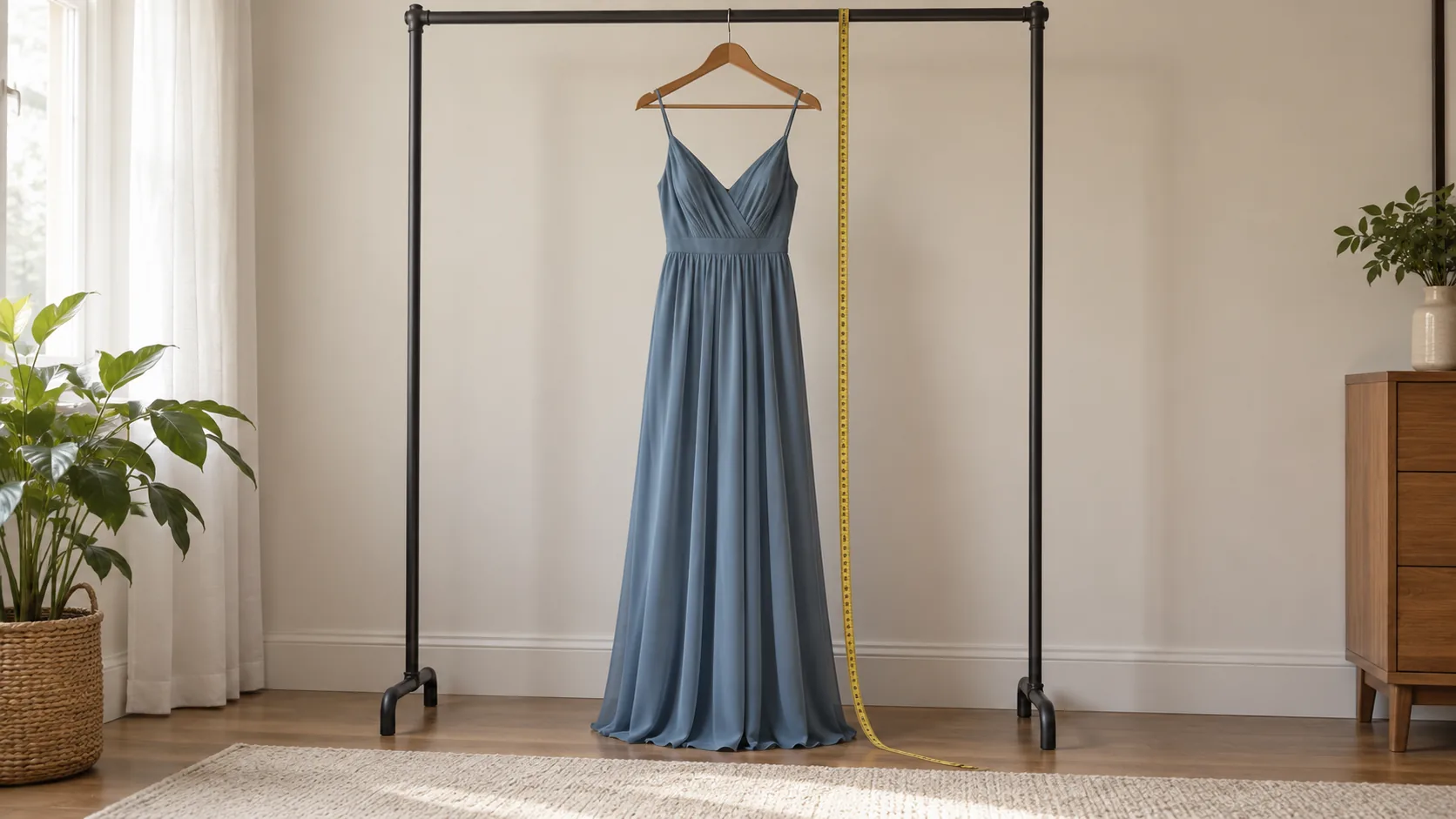
How Do Suit, Coat, and Long-Dress Bags Differ?
Product names suggest intended uses, but they do not establish exact dimensions or fixed trade-offs. Compare the actual model with the garments you intend to carry.
| Garment or use | Fit questions to check |
|---|---|
| Suit or jacket | Does the shoulder area accommodate the garment and hanger? Can the closure operate around the loaded shape? |
| Coat | Are the occupied length and fabric bulk accommodated together? |
| Long dress or gown | How are the hem, train, layers, and decoration supported or arranged? |
| Several garments | Do the hangers, combined bulk, and access path work with the closure? |
| Convertible carrier | What garment arrangement is allowed, and what shape does it have after conversion? |
| Storage cover | Does its intended storage arrangement suit the particular garment and available space? |
A longer bag does not automatically provide a wider shoulder section. A shorter product is not necessarily unsuitable for every long garment if its maker specifies an appropriate arrangement, but do not invent that arrangement from a label.
Travel and storage features also vary within each product family. A “storage cover” name does not prove preservation performance, and a “travel garment bag” name does not prove airline acceptance.
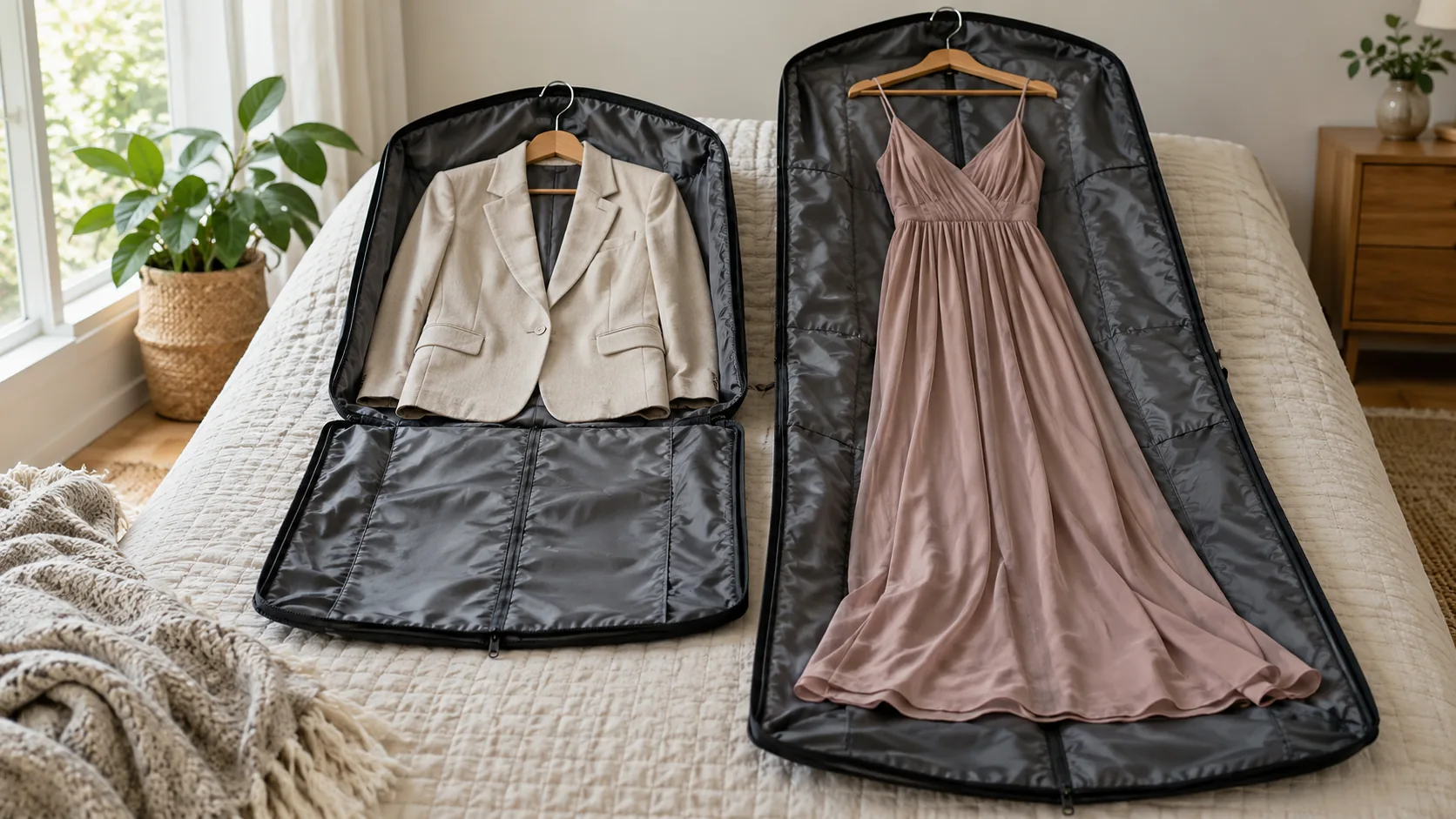
How Do Folded and Hanging Dimensions Relate?
Two bags with equal open lengths can close to different shapes. Fold points, panel proportions, closure geometry, contents, and hardware all affect the result.
Do not divide hanging length by two or three and treat the answer as verified packed size. A bi-fold or trifold label describes a design arrangement, not a complete closed-dimensions calculation. Nor can you add a nominal gusset depth at every fold to obtain reliable thickness.
Use the exact model’s permitted fold or conversion, then measure the loaded result. Check where the folds meet the garments and whether hardware contacts fabric. If the arrangement is unclear, request the model’s instructions rather than choosing extra folds to fit a suitcase.
Record the closed length, width, and depth at specified points, including protrusions where they matter for the intended space. Recheck after adding accessories or outside-pocket contents.
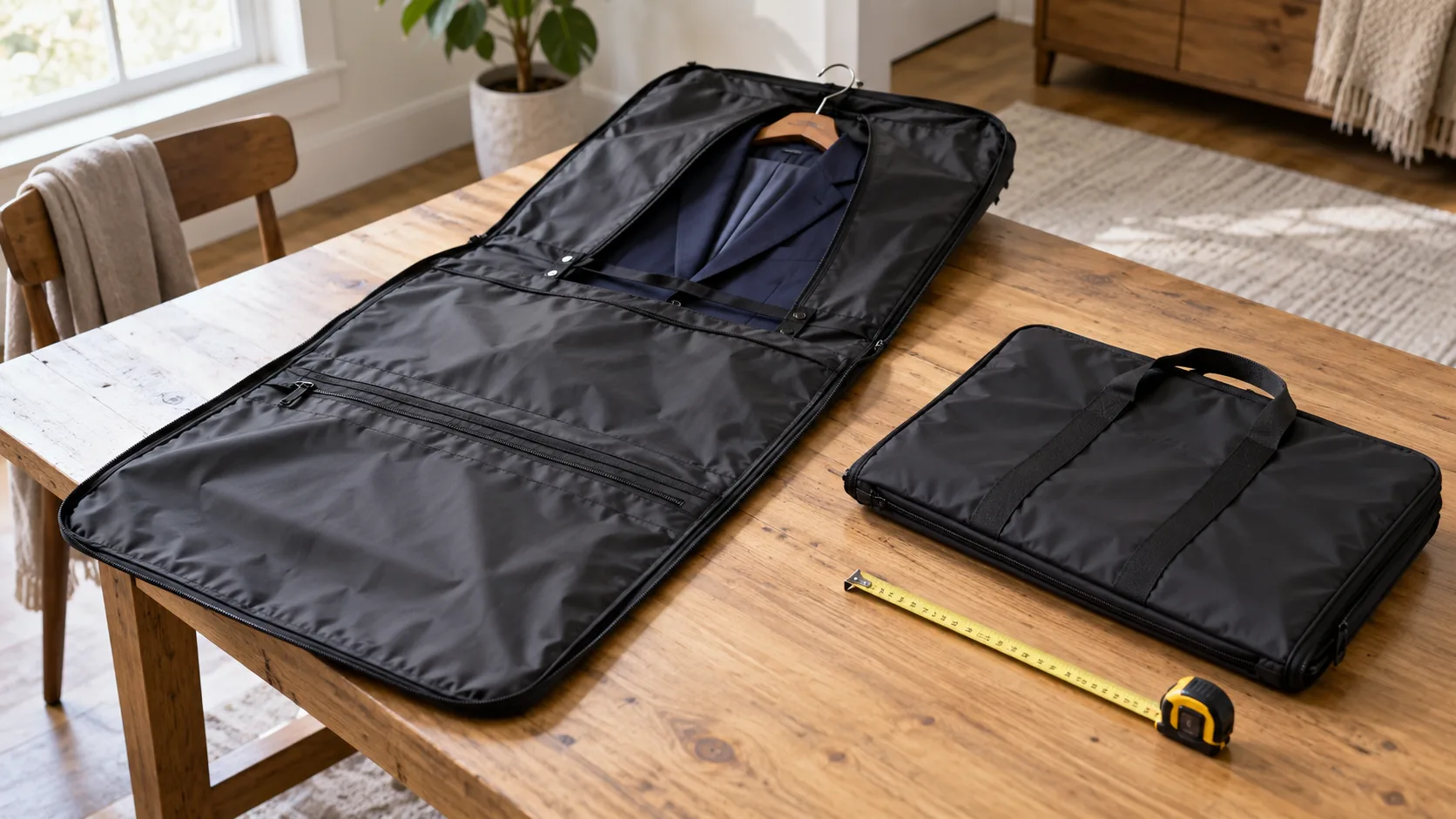
How Much Depth Is Needed for Multiple Garments?
Garment count depends on the whole internal shape, the actual clothing and hangers, and the permitted packing arrangement. Length, width, depth, opening, and closure all contribute.
A gusset adds a sewn depth section, but it does not establish how many garments fit. A bag without a separate gusset can still hold three-dimensional contents as its panels bend around them. Neither description supplies a dependable garment-count rating.
Arrange the actual garments together and check the sample. Record the item list rather than a vague “full load.” Inspect any crowded hanger area, structured shoulders, bulky layers, and points where the closure meets the contents.
YKK’s zipper-use precautions warn against forcibly closing an overfilled bag. If the zipper resists, reduce or rearrange the contents and check for an obstruction. A longer length label does not resolve a crowded opening or closure.
Do not infer capacity behavior solely from a center zipper or a wraparound zipper. Their effect depends on the particular bag’s shape, installation, and load.
How Should Travel and Storage Needs Change the Size Choice?
Write down both the garment requirements and the physical space available. If they conflict, reconsider the bag or carrying arrangement rather than assuming extra compression will solve it.
| Intended use | Dimensions and conditions to check |
|---|---|
| Carrying a folded bag | Loaded closed profile, handling position, and intended destination space |
| Inside a suitcase | Actual case interior, packed thickness, hardware contact, and removal |
| Hanging storage | The chosen garment-support arrangement and clearance from nearby shelves or the floor |
| One bag for both | Each arrangement checked separately on that model |
This guide states no universal airline allowance. Check the current policy of the carrier operating the flight if cabin use matters.
A garment that fits inside a cover is not automatically suitable for hanging storage. Fragile fabrics, decoration, and garment structure can require different support; seek garment-specific guidance. Size selection alone does not establish long-term preservation.
What Should Buyers Check on a Loaded Sample?
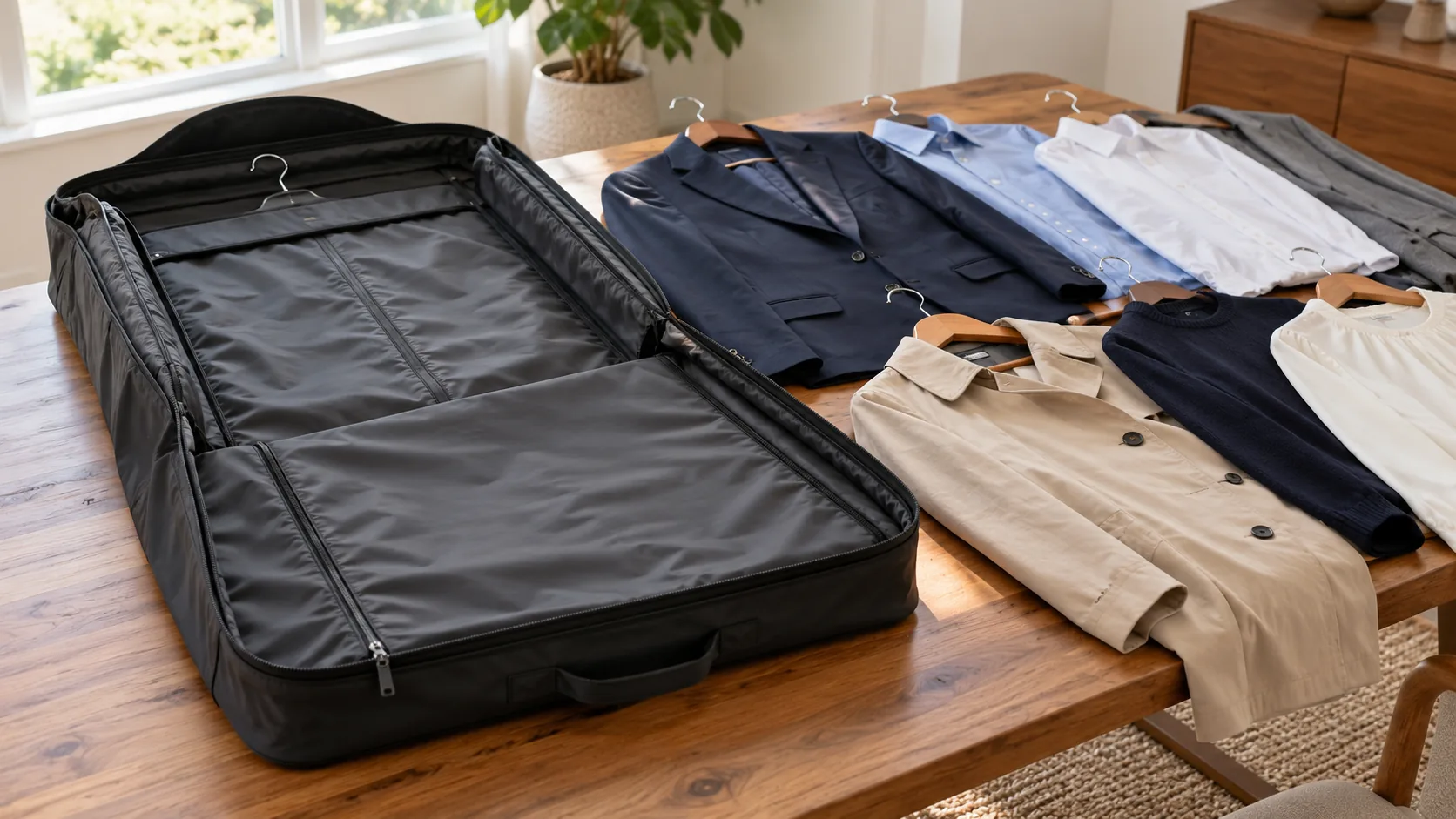
Use the actual garments and hangers. Check the intended open arrangement, closure, permitted fold, carrying position, and reopening.
| Check | Record on the sample |
|---|---|
| Garment placement | Hem, train, sleeves, and decoration in their intended positions |
| Width and access | Hanger and garment fit; insertion and removal without forcing |
| Retention | Operation of the hanger fitting where one exists |
| Closure | Obstructions, tension, and ability to fasten as intended |
| Fold position | Contact with garments and hardware under the permitted sequence |
| Packed dimensions | Named points and stated load |
| Handling | Carrying balance, access, and any issue after reopening |
For a specification, keep nominal measurements, agreed tolerances, and appearance references separate. Tie tolerances to the points, method, and state used to measure them; do not invent a universal centimeter or percentage allowance.
Identify the reference sample by version and date and record what it was approved to demonstrate. Approval does not guarantee that every future unit will match, or that all other garments will fit. Record changes to the load or configuration so a repeat check uses the same basis.
The brief for custom bag development can include this worksheet, the intended fold configuration, and unresolved fit issues.
Frequently Asked Questions
What size garment bag do I need for a suit?
Measure the suit in its intended arrangement with the actual hanger. Check occupied length, shoulder area, opening, and depth against the sample, then confirm closure and any permitted fold.
Is a longer garment bag a better choice?
Extra length helps only if it meets a requirement your garments have. Check width, depth, handling, and available storage or travel space too. Do not infer a universal packed-bulk penalty from length alone.
How do garment bag sizes compare across sellers?
Compare named measurement points, units, and conditions. Request missing definitions for hanging, body, interior, closed, or packed dimensions. The same size label need not describe the same measurement.
Does a longer bag hold more garments?
Length alone cannot establish garment count. Combined bulk, hangers, width, opening, depth, and closure affect the loaded arrangement. Confirm it with the actual items rather than a length-to-count rule.
Can one garment bag serve both travel and storage?
It may, if that model and its permitted arrangements meet both uses. Check each separately. Garment-specific storage needs and loaded travel dimensions can require different solutions.